
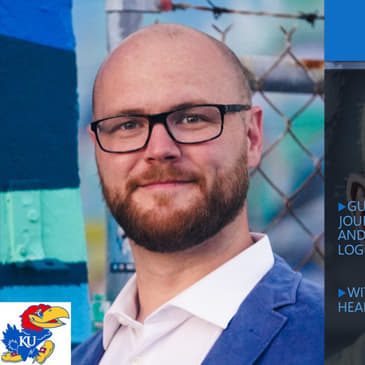

Todd Haselhorst is the CEO and Founder of the logistics startup HEALE. Born in Kansas to an entrepreneurial family, he started his first business at the age of 12 - a humble lawn and landscaping operation - and has been happily on an entrepreneurial track ever since. Having built and exited several successful businesses, including Auto Transport Plus (sold to NYSE-KAR) and the logistics venture CubeMonk (sold to Cend), his sole focus these days is on HEALE, an open and decentralized network designed to make the entire shipment lifecycle more predictable, profitable, and sustainable. With bad data costing the logistics industry $268 billion a year, HEALE is on a mission to reduce fraud, waste, and theft, delivering value for shippers, brokers, carriers, and drivers.
Before entering the business world as an adult, Haselhorst studied Economics & Game Theory at the University of Kansas, where he also played Defensive Line Tackle on the best team in school history – a squad that famously won the 2008 Orange Bowl in Miami, FL. He considers this among his proudest moments, business success aside.
Away from work, Haselhorst enjoys reading, learning, traveling, hiking, camping, fitness, and practicing daily breathwork, meditation, and self-development.
[00:00:00] Hello everybody and welcome to the crypto hipster podcast. This is your host Jamil Hasan the crypto hipster where I interview founders entrepreneurs executives thought leaders you name it all around the world of crypto and blockchain and I have another amazing guests most of my guests almost all of my guests actually are amazing.
[00:00:23] And this is no exception. Today I have the CEO of Heel Labs. His name is Todd Hasselhorst. Todd, welcome.
[00:00:34] Thanks for having me. Great to be on the show.
[00:00:37] You're very welcome. Very welcome. So let's kick things off and let me ask you first.
[00:00:42] What is your background and is it a logical background for what you're doing now?
[00:00:47] Yeah, great question. So I built my first company when I was 12 mowing my my neighbors got lawns and did landscaping and stuff like that for them.
[00:00:58] So I've always I've always had that entrepreneurial bent. I grew up in an entrepreneurial family third generation.
[00:01:06] When I got into high school, I got really good at athletics and it up getting a full right scholarship.
[00:01:12] Went to the University of Kansas where I learned the value of teamwork and how to you know the difference between a you know, a losing team and a winning team.
[00:01:25] And during my time in Kansas, I got a degree in economics and game theory and graduated in 2008 when the markets crashed.
[00:01:38] And so you know, my choices were pretty slim at that point because you know people with 15 years of experience and MBAs from Harvard and Yale were were competing for the same job.
[00:01:47] So I put my entrepreneurial hat back on and went into start a freight brokerage with a friend ended up starting a moving brokerage shortly after that and getting into the technology side where I learned product development and you know how to build software tools and things that ultimately streamline the shipping process.
[00:02:09] But the problem that we always had when building these different platforms is that we had all of this data all over the place and we had all these integrations that we had to do.
[00:02:22] You know, we had to manage these different data sources set up different web services build ingest the data and really just use it internally for us.
[00:02:32] So with my background in logistics I spent 15 years in the space built and sold two different companies, including my background in economics and game theory.
[00:02:46] When Web 3 came along with blockchain came along with tokenization came along and tokenomics came along in particular.
[00:02:54] That was very appealing to me so I've spent the last 12 years and in the Web 3 space really just studying you know what is Web 3, what's this technology, what's happening.
[00:03:06] And and waited ultimately waited had the idea in 2016 ended up waiting until the technology was mature enough scalable enough.
[00:03:18] You know now we have L2s we have account abstraction we have zero knowledge proves we can run a private network on a public chain.
[00:03:27] And so here we are.
[00:03:32] Very cool see played football for the University of Kansas.
[00:03:35] Yeah, yeah actually was on the best team in school history we went when I got there we were two and 10 and when I left we were 12 and one winning the Orange Bowl.
[00:03:46] I remember that.
[00:03:48] Very cool.
[00:03:50] I coached my son is literally football through sixth grade and then he decided he wanted to do something else.
[00:03:57] So he's doing rowing now but maybe some of that will play with the Kansas basketball team will see.
[00:04:03] That'd be great right?
[00:04:05] Yeah, yeah so in addition in addition to you know the software and economics and the game theory you have you have a really interesting
[00:04:13] and unique heroes journey right for your own for yourself in your life.
[00:04:19] What is that all about how like what is your hero's journey?
[00:04:22] Yeah, so you know everybody everybody has a story and mine has been rife with various different obstacles and challenges to overcome so
[00:04:32] when I got to Kansas I was you know at the peak of my career as a freshman I played I was you know they were talking about NFL and Scouts were talking to me you know all that and so everything was just moving in this direction in this culmination of all the things that I wanted to do as a child which was to be an athlete to be a you know a hero for my community.
[00:05:02] And so my sophomore year I ended up getting injured I tore both posterior labors in my shoulders.
[00:05:12] I had you know spinal and nerve damage because football is a very tough and brutal sport every hit you know as a delinemen in particular is like a 35 mile an hour car wreck and so my sophomore year was really the first time that I had experienced significant damage.
[00:05:32] And so I had a significant adversity you know in my athletic career and at that point that was my identity.
[00:05:39] So got the surgery spent six months you know for the first time since I was six years old not playing football which is a unique and very interesting experience.
[00:05:49] And during that time you know I that was a point in time when they you know that I don't know if you remember the whole OxyCotton thing where they were prescribing OxyCotton for you know a loose hangnail.
[00:06:07] And so I got caught up in that I ended up six months on on painkillers and you know from that point it really just completely altered my life and my career in particular in football because now I had this this thing that could numb my physical pain it could numb my emotional pain it could numb you know the feelings of not fitting in and all those types of things that I had.
[00:06:37] And so I was deep inside of me you know my whole life at that point.
[00:06:42] So, battle drug addiction and then when I was in.
[00:06:50] When I when I got done with school.
[00:06:52] I ended up you know the addiction kept going I found other ways of feeding that addiction and the summer of 2010 I was diagnosed with cancer.
[00:07:04] So, the night before the surgery.
[00:07:08] I ended up taking OxyCotton going in the morning of the surgery and having an adverse reaction with the anesthesia. And so thankfully my, my dad was there to look through my text and say oh, he would he took, you know whatever this OxyCotton thing is the night before the surgery.
[00:07:28] So that was my that was my brush with death that was my wake up call that was my you know the one of the pivotal moments in the, you know in the turning of my, you know that part of the hero's journey where you face great adversity and then you have this moment that is will forever change you.
[00:07:49] And so, yeah it was it was quite an experience so I ended up in ended up in rehab.
[00:07:59] After cancer in June I was in rehab in July.
[00:08:03] Once I got out just really focused on rebuilding my life and at that point I hadn't been able to address the underlying you know identity crisis that I was facing.
[00:08:14] Because my whole life I was going to be an athlete I was going to be a football player.
[00:08:19] I was going to go to the NFL that was my dream.
[00:08:22] And so fast forward a couple years.
[00:08:26] I end up living in Phoenix I end up having a tumor growing on my throat.
[00:08:33] And so I had my second bow.
[00:08:36] And you know cancer is a very interesting thing because it really forces you to put your life in perspective.
[00:08:46] Unless you faced your own mortality it's hard to you know have the proper perspective for life that every day is ultimately a gift it's a blessing.
[00:08:56] You know you're just you're even fortunate to be here.
[00:08:59] And so at that time I met I met a gentleman who really helped facilitate my hero's journey was there for me throughout that process helped me ultimately heal from you know from the diseases and things that I was faced with.
[00:09:19] And spent the last eight years really just as the culmination of all of that work all that experience I had coming back now on the other side which is the you know the redemption story in the hero's journey that everybody loves it's when the hero stands up and takes what they learn and brings it back to the community.
[00:09:45] And so that's what I'm doing now.
[00:09:51] I love it.
[00:09:53] We have a few things in common.
[00:09:56] Yeah.
[00:09:59] The cancer although I'm mine is not metastatic.
[00:10:05] And I have a friend named Bill for a couple decades over a couple of decades.
[00:10:10] So you know I'm glad you're on the other side and part of that and I'm looking at how you're doing as opposed to like I'm working in my company but not on my company.
[00:10:24] That but you are you are building because one of the things that you've learned in your life and I still have yet to learn is that teamwork Trump's talent you know why do you believe that's true.
[00:10:38] Yeah well so I would I would take a team that's less talented that works together as you know works together well as a team over a team of individuals that are very talented.
[00:10:52] Primarily because culture solves problems and when you have a team that is is focused on solving a problem and ultimately the mission at large.
[00:11:04] That's more important than you know an individual who's focused on themselves and what they can get out of it and you know with them what's in it for me.
[00:11:15] So in order to accomplish a mission or anything great you have to surround yourself with the right team the right people and you have to all align around a vision and a mission and then work together to make that happen if you're not working together to make that happen.
[00:11:34] Then one person's you know wandering in this direction and other ones wandering in that direction this person's going over here and you've probably heard the saying it's like hurting cats.
[00:11:47] That is a symptom of a lack of teamwork.
[00:11:50] And so it's it's that was what I learned ultimately from athletics I saw the difference you know and I was in high school as a sophomore we went from five and seven when I was a senior we were 12 and one college two and 10 senior 12 and one.
[00:12:11] And so I got to really see the difference between you know starting at point a and then moving to you know point B and focusing on a mission vision a goal.
[00:12:26] And when you have that everybody's working harder everybody's playing their part everybody's doing their role you have trust you have you have you know overall belief and and the motivation is there for people to put in that extra work because this is hard work it takes a lot to do anything to have any to accomplish any vision or any mission it takes a lot of work.
[00:12:56] And so for me it's most important that you have the right team they obviously also have to have the right skills, you know they have to have right talent.
[00:13:07] But even then somebody who doesn't have the skill but has is the right team member they'll go out and acquire those skills.
[00:13:15] And a lot of times they'll learn to do it better than somebody who is just purely talented.
[00:13:21] Yeah, so I'm excited about what you are building a heal labs right because you're taking those lessons and you're building this organization right what is he'll have out and what what do you guys do well together.
[00:13:37] Yeah, so healy labs is ultimately solving a pretty big problem in logistics industry which is the which is the data problem.
[00:13:47] And what we're focused on is building a network that a deep end data infrastructure that ultimately seamlessly connects systems together in the logistics industry, then standardizes the data between them tokenizes that data and the underlying assets.
[00:14:12] And then incentivizing best practices during the shipment with the overall goal of increasing profits for shippers brokers freight forwarders carriers drivers while ultimately by reducing fraud waste theft and errors.
[00:14:29] And so within that data problem you ultimately have all these poorly connected systems that people who are coordinating the shipments are ultimately relying on to make decisions and a lot of times the information those systems it's inaccurate it's incomplete it's out of date.
[00:14:51] And that ultimately opens up the opportunity for billions of dollars of fraud waste theft and errors from the equation.
[00:15:01] And when since the blockchain came out.
[00:15:07] The narrative in logistics industry was that this is the future of logistics, it was a narrative that's ultimately everybody saw this as a perfect fit to use blockchain in logistics.
[00:15:24] And there were various, you know problems with initial iterations, primarily to on the permissionless side it was that the technology wasn't scalable it was too expensive it was too slow.
[00:15:40] The tooling and infrastructure wasn't available.
[00:15:43] You couldn't run a private network on a public chain.
[00:15:46] And then on the permission side there was really a lack of trust.
[00:15:51] Ultimately you had, you know, IBM, mayors FedEx were all working in this consortium.
[00:15:58] It was a closed network it was centralized owned by the companies that were building it.
[00:16:05] There's anti competitive, ultimately at the end of the day the competitors didn't want to join they didn't want to share their data.
[00:16:13] And it was very expensive to implement so it was enterprise top down focused.
[00:16:20] And there was really no clear ROI not only for for trade lens and Meris FedEx project but it also had a lack of clear ROI for the end users that were using it.
[00:16:33] So, the cost of implementing it was too high to justify the limited benefits that they're going to get from security transparency and traceability.
[00:16:45] So what we did is we waited so we saw all of that happen we saw the permissionless attempts we saw the permission attempts and we waited until the technology was scalable enough on the permissionless side to run zero knowledge proofs to use account abstraction to have layer two roll ups so that the cost is low.
[00:17:10] The finality times are faster.
[00:17:13] And then all the tooling available to be able to actually run not only enterprises but also small to medium sized businesses.
[00:17:23] So that's why we built Healy as an open decentralized neutral network that has no upfront costs and adoption is streamlined and simplified for the.
[00:17:36] The, you know, everybody from the small fleet carrier that owns one to five trucks all the way up to, you know, the largest enterprises in the space.
[00:17:47] In addition to that, we changed the economics so that there's not only is there a substantially lower cost for each of the different parties involved in that shipment, but also adding additional.
[00:18:05] And then we added benefits of tokenization rewards data ownership, creating this new, this new operating model this new economic model that ultimately is a high ROI for them.
[00:18:25] I like it so you watch you watch the hyper ledger come and go you watched Accenture created editable blockchain which makes no sense come and go.
[00:18:35] You know, you know, that's smart.
[00:18:39] I try to I try to build something in 2017 against like that didn't work out so you watch.
[00:18:45] Yeah, yeah, it was it was a took a lot of patience, you know, to sit there and actually the idea for Healy actually came to me just through a flash of insight one day I was shaving my my head and I was.
[00:19:05] In the in the.
[00:19:08] I think I was like, mid stroke and all of a sudden, I had this flash of insight and immediately this whole idea came to me, like every piece of it and everything that I'm doing now is just, you know, putting one foot in front of the other it's it's culmination of steps that I've taken.
[00:19:28] And so not only is the heroes journey an internal one, you know, for the individual but at that point my whole life made sense.
[00:19:36] When I was in college, I didn't know why I studied economics and game theory.
[00:19:40] I didn't know why I was in the logistics industry and for whatever reason could could never get out of it.
[00:19:46] I didn't know why I was learning product development software development.
[00:19:51] I didn't know why any of these things were actually happening until I had the flash of insight and then you know all of a sudden my whole life made sense and was put into context.
[00:20:01] I can relate when I was in college they had to take that that career assessment tests like it then.
[00:20:08] I'm like, I was interested in many things that every time I came back with insurance and I was like, I have no interest in insurance.
[00:20:15] And you know, my career unfolded and I worked 12 years in AIG.
[00:20:19] So, you know, I was like, how about that?
[00:20:21] Yeah, how that happened?
[00:20:25] Yeah, so I'm I don't know.
[00:20:27] I'm looking at the logistics industry like, you know, at a high level right?
[00:20:31] You know, I don't get all the intricacies and everything but I'm just looking at, you know, I've had so few interviews with logistics and
[00:20:41] at a high level, what are the major like issues?
[00:20:45] You said fraud, you said waste.
[00:20:47] What are the major issues there and how are you tackling them?
[00:20:52] Yeah, so the major issues ultimately if you look at if you look at them one by one.
[00:20:57] So within fraud, about 5% of a transaction is lost due to fraud that all fraud also causes settlement times to be delayed.
[00:21:08] Ultimately, $140 billion in daily disputes and the average settlement time currently for those those shipments and those invoices is 45 days.
[00:21:18] The reason that exists is because there's no there's no ledger.
[00:21:24] There's no blockchain that can prove I picked up this shipment at this date and time.
[00:21:29] I did what you said I was going to what I said I was going to do.
[00:21:33] And therefore, you should pay me what we agreed to at the beginning.
[00:21:39] And so a lot of times what happens is, you know, different things get stuffed into the invoice where, oh, now all of a sudden I'm adding this this this different fuel charge than what this fuel surcharge than what we agreed to or I'm adding this fear I'm adding that
[00:21:55] feed or I'm removing this fear moving that fee.
[00:21:59] But when that's in a smart contract, there's no dispute on what we agreed to because it's in code.
[00:22:07] It's in if you know it's literally on chain.
[00:22:11] And so when you look at it from that perspective, you know just the invoice reconciliation and payments piece streamlining that process is going to reduce a lot of the fraud.
[00:22:25] And so there's fraudulent invoices that ultimately increase the settlement times and hold up these payments in dispute.
[00:22:34] So that's one piece of fraud.
[00:22:37] You also have fraud that's used to facilitate theft.
[00:22:42] One of the big things happening in the logistics industry right now is you have this process where thieves are going out and they're they're buying different MC numbers.
[00:22:53] Ultimately creating these fraudulent companies and then using those companies to intercept shipments and steal, you know, a truckload of TVs or gold or whatever it is.
[00:23:06] And so they're pulling off these heists and there's in the last year alone there was a 430% increase in this type of theft where they were stealing the carrier's identity or they were stealing the broker's identity.
[00:23:20] And they were going in and stealing shipments ultimately, which in the United States is 35 billion dollar problem annually.
[00:23:29] So those two things are very big, you know, from a risk perspective, those are big issues right?
[00:23:38] But then you have then you have more benign things like errors where you have multiple systems, those multiple systems have different data.
[00:23:51] And, you know, somebody over here accidentally pressed the wrong key or this software wasn't using address validation and so now we have two different addresses same location but two different addresses.
[00:24:04] So then when a driver goes out, I was sent to the wrong location. I need to now I need to turn around and you go drive this new location or there was an error on the shipment, you know, it was six pallets not five, or it was 1200 pounds, not 1500 pounds or even the other way around.
[00:24:29] And so that also creates a lot of the invoices that creates a lot of the dispute, the invoice disputes and billing issues billing errors.
[00:24:38] But you also all those coordination errors that are happening along the way.
[00:24:42] And again, the primary reason this problem exists is because you have all these different systems that are used by all these different parties.
[00:24:50] And you may have, you know, you may have multiple carriers working with the same shipment to go from point A to point B to point C to point D to point E.
[00:24:58] And so that coordination is very expensive. It's very inefficient and ultimately 20% of the costs associated with the coordination of that shipment, the back office costs are ultimately spent on trying to find the right information.
[00:25:20] So through email, through text, through phone call, how do I find the right information so I can properly coordinate that shipment.
[00:25:28] And so that's ultimately, you know, the life of a freight broker and a freight forwarder which play a pivotal role in this industry.
[00:25:36] Their job is going back and forth between the shipper and the carrier collecting information from both so that they can properly coordinate that shipment.
[00:25:46] So those are just a few of the of the many challenges that the industry faced.
[00:25:55] And ultimately, that leads to, you know, issues around sustainability you have, you have 92 billion annually that's wasted because drivers are driving 40 billion empty miles.
[00:26:11] Driving around with an empty truck doesn't make anyone money. Sitting on a dock longer than you weren't planning doesn't make anybody money.
[00:26:20] And so these are all different inefficiencies that exist in the industry.
[00:26:25] And the primary reason that that inefficiency exists is because of this network poorly connected systems, bad data.
[00:26:34] And so what he leaves focused on is again, connecting those systems, standardizing the data between them so that, you know, we can match addresses and say, hey, this is the right location or this is the right shipment or this data has been validated.
[00:26:49] But also tokenizing that to create a master record so that all the parties that are involved in that transaction can update that master record with accurate relevant up to date information.
[00:27:04] So everybody's coordinating the shipment around the same information.
[00:27:08] And that is, you know, it fraud, waste, theft, errors, you're eliminating all those on a scale that that is at this point, it's hard to actually quantify what that is.
[00:27:24] But we put our best guess and we said that 268 billion is lost due to fraud, waste, theft and errors globally.
[00:27:36] There's also been some estimates of 600 billion, but it's really hard to know because the problem is so prevalent.
[00:27:45] That to me it sounds like you're on the right track of standardizing everything and creating the master data records and everything.
[00:27:58] That makes a lot of sense. It's kind of similar to what I did building databases at AIG, but they were asked that's not to solve global problems.
[00:28:06] But, you know, in order to I remember in order to do it properly though, you know, we had to set up a set of data governance standards and best practices.
[00:28:19] Right. So what are some of those the best practices you're implementing that will help make this a reality and drive your economy forward?
[00:28:29] Yeah, so great question. So what we're doing is we're creating a data standard that no matter the data source it gets normalized into before we inject it into the network.
[00:28:44] So we're not telling them, hey, you have to change your internal data, your data model of your internal data standards.
[00:28:51] We're saying here's a unified format that our network will accept and then mapping their internal data to that standard, to that universal or unified standard before injecting it into the network.
[00:29:10] So that's where the mapping, the normalization, all of that comes in to be able to say in this system they refer to it as primary address.
[00:29:23] But in this normalized data model we call it address one. So now I'm mapping primary address to address one.
[00:29:32] So that's one component of it. But in order to make this functional and in order to make this as easy as possible, we had to actually take the complexity out of the hands of the user.
[00:29:47] So what we did is we created a wallet that is specific to our network, it's specific to the logistics industry that makes it easy for these people to interact with the network through the API.
[00:30:07] And the way that it works is that a user, let's say it's a driver, let's say it's a dispatcher, a company, whoever it is, could be the owner of a company, admin at a company.
[00:30:16] They download a wallet, they connect their wallet to their different applications through our app store and then they're on the network and start pushing and pulling data from the network and ultimately receiving rewards back from the network
[00:30:34] and interacting and interfacing with the network. And so we had to focus on the user experience, we had to take the complexity, we had to abstract away all the complexity so that the end user it's very easy user experience for them to use
[00:30:52] so that we can ultimately solve for the lowest common denominator and make it scalable enough for anybody to use.
[00:31:04] Makes sense to me. Sounds good. So I want to go back to your team work mission.
[00:31:14] Your goal is to unite the entire logistics space which is great commendable goal and I can see you working on that and doing it.
[00:31:25] There are other areas of blockchain where things are not united, things are very frightened.
[00:31:31] Social media projects all over the world. What lessons are you getting from your view and standpoint on unification that you think that other sectors can take and learn from you?
[00:31:49] Yeah, great question. So we're in the deep end space but we're in a segment that we call Titan token incentivize data infrastructure networks.
[00:32:02] So what is Titan? Titan is a concept around leveraging token incentives to create an economic model on top of data infrastructure so that an industry can leverage the same data source can create that master record for whatever it is.
[00:32:30] So you know one that comes to mind but there's a lot of complexity around this and I'm not an expert in medical records and stuff like that.
[00:32:41] But there's really no reason why the medical industry shouldn't have at the core that same data infrastructure and then leveraging tokens to create and incentivize healthy behaviors.
[00:32:57] So if you look at it through the lens of every industry should be using the same source of data. Everybody should be updating those master records within that particular industry within that particular segment and all of the behaviors that are beneficial to that industry that create efficiency within that industry.
[00:33:22] Those behaviors should be rewarded whether it's a B2B market or whether it's a B2C market. And so the way we're looking at Titan or token incentivize data infrastructure networks is that ultimately you're creating this shared back end for an industry to use
[00:33:43] and then you're leveraging behavioral economics on the supply side and the demand side to reward behaviors that ultimately make that data infrastructure more valuable across the entire industry by making it more efficient increasing productivity which ultimately increases the GDP.
[00:34:06] And makes all the companies involved more profitable.
[00:34:08] And makes them work ethically.
[00:34:13] Yeah.
[00:34:15] Yep.
[00:34:17] So if you look at it, if you made more money doing the right thing than doing the wrong thing, we wouldn't have 98% of 99% of the problems that we have in the world.
[00:34:29] The problems in the world come down to misalignment of incentives and the ability for people to make more money by doing the wrong thing than they have made by doing the right thing.
[00:34:41] And so that is just inherent in human behavior is that is that when you have a network, when you have a decision to make,
[00:34:53] typically people are going to want to make the decision that is more economically viable or socially viable.
[00:35:02] Does it increase their wealth? Does it increase their status in life?
[00:35:09] For the most part, those are the motivating factors behind decisions and that's one of the things around mechanism design and stuff like that.
[00:35:17] So when you can create systems that incentivize specific behaviors that use the carrot, not the stick to get people to play a better game, which ultimately is better for everyone.
[00:35:34] Then we're harnessing and leveraging human potential.
[00:35:37] We're harnessing and leveraging, you know, the human nature, the human condition.
[00:35:42] We're leveraging that to create a better world.
[00:35:49] I'm on board with you.
[00:35:52] I agree with that.
[00:35:53] That sounds good to me.
[00:35:57] One at a time.
[00:36:00] Yeah.
[00:36:02] Awesome.
[00:36:03] Well, I want to thank you very much.
[00:36:07] Thank you.
[00:36:08] I have one last question.
[00:36:10] How can people become part of your ecosystem?
[00:36:13] How can they become a client to Healy Labs?
[00:36:15] How can you help them?
[00:36:17] How can they reach out?
[00:36:18] How can they get no more information about you?
[00:36:23] Yeah.
[00:36:24] So you can go to HealyLabs.com on there, join our social channels.
[00:36:29] We're active in Telegram.
[00:36:31] We're active on Twitter, Discord.
[00:36:33] That's how you can become part of the conversation and engage with our
[00:36:37] engage with our community.
[00:36:39] And just that we also have our token generation event, our network
[00:36:45] launch that's coming up in Q3 2024.
[00:36:49] So take part, be a part of the community, be a contributor, help us
[00:36:54] make blockchain great again.
[00:37:00] I love it.
[00:37:01] Thank you very much for your time today.
[00:37:03] Thanks.
[00:37:05] Great to be here.