
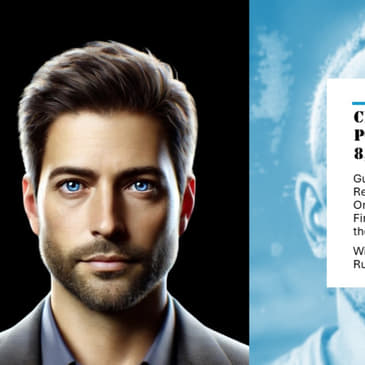

Kkrusher (Kevin Rusher) has been deeply involved in the cryptocurrency industry since 2017, transitioning to a full-time focus in 2020. With a background in accounting and finance, he explored Bitcoin academically during his third year of university, when writing a paper on Financial Technologies. Initially aspiring to become a crypto accountant, Kkrusher embarked on a diverse journey, which included creating an off-the-record index fund for family and friends, deploying capital to DeFi, building and managing a medium-scale GPU mining facility (formerly the largest Raven Coin miner), and working at a crypto exchange conducting KYC/AML checks for individuals and businesses. Inspired by the potential of DeFi after the 2020 DeFi Summer, Kkrusher shifted his focus to bridging traditional finance with decentralized systems. Today, he leads RAAC with a mission to make traditional assets accessible through innovative, blockchain-driven solutions.
[00:00:00] Hello everybody and welcome to the Crypto Hipster Podcast. This is your host, Jamil Hasan, the Crypto Hipster, where I interview founders, entrepreneurs, executives, thought leaders, amazing people all over the world of crypto and blockchain. And today I have another amazing guest and we are continuing on season eight, which has been wonderful so far.
[00:00:24] And my guest today, he is the CEO and co-founder of RAAC. His name is Kevin Rusher, also known as Crusher. Kevin, welcome to the show. Hey, thanks. Thanks for having me on. Pleasure to be here. Pleasure to have you. Thank you so much for joining me today. And let's kick things off. I ask the same question to everybody and I get wonderful, innovative, creative answers.
[00:00:52] And it's simple. What is your background and is it a logical background for what you're doing now? Yeah, it's a bit of a mix. So traditionally, I have a background in finance and accounting. And basically, I kind of geared myself to be a crypto accountant.
[00:01:18] And kind of what occurred was I had to write a fintech paper for a finance course. And one of the technologies was AI. And it talked about how corporate audits would be replaced by AI. And that didn't sound too great. And basically, one of the other topics was Bitcoin. So basically, chose Bitcoin and the rest is history.
[00:01:47] Kind of got the orange pill, essentially. A lot of people got the orange pill over the past year. So we keep expanding the ecosystem, which is wonderful. Wonderful. So I want to find out what RAC or AAC is all about, including your focus and your mission. Yeah, yeah, for sure.
[00:02:15] So what RAC is, is basically a protocol that brings RWAs on chain to be collateralized to access predictable and low cost financing. And what that looks like is exchanging a portion of the assets revenue to achieve that.
[00:02:37] And what we do is we basically deeply integrate into Curve Finance and essentially really exist on top of DeFi systems that are being used today. Okay, so you leverage use of Oracles or Middleware to do that? How do you do it? Yeah, it'll be Oracles.
[00:03:05] So we're starting with real estate. And what we're doing is bringing one-to-one backed NFTs on chain. And essentially, each NFT will have its own Oracle chain link price feed. And that allows it to basically be used within DeFi. You might ask people. People might say that NFTs are dead.
[00:03:31] They've definitely been in a lull for the past few years, right? What's the NFT market look like right now? And how are you going to be able to help, I guess, regenerate the NFT market? Yeah, I mean, that would be the most ideal scenario. But as you mentioned, NFTs kind of have taken a hit over the last year and a half, two years.
[00:03:59] But what we're seeing is a renaissance, in my opinion. And what that looks like is bringing different assets on chain, meaning that we're not using just profile pictures or online communities. These are real and tangible assets. And NFTs are a great way to kind of bring them on chain.
[00:04:26] Yeah, so the NFTs that I'm thinking about were artists or are pieces of art. And people said, you know, life is more than just the JPEG. And I believe NFTs are a heck of a lot more than just the JPEG, right? So what is this renaissance going to look like, you know, as far as items? As far as, you know, what NFTs are going to look in the future? What do you see?
[00:04:49] Yeah, I mean, obviously, RAC being part of that is, yeah, different assets being brought on chain. We kind of talked about back in like 2017, about how crypto would swallow real world assets. And I feel like we're kind of getting to that point. And you'll see like institutions like BlackRock are coming on chain.
[00:05:13] So in terms of bringing assets, you'll see a lot of different things represented. So titles, yeah, titles, hard assets, claims. We have a couple people who are interested in tokenizing mining claims. So yeah, it's pretty interesting, the use cases that can be applied.
[00:05:43] So I'm intrigued. Tokenizing mining claims. Interesting. How would that work? Yeah, so basically, we are partnered with a protocol called Instruxy. And they focus on the asset tokenization. So what they have is what we call the golden thread.
[00:06:06] And what they are able to do is kind of verify where assets are and kind of their life cycle. So in terms of like a mining claim, you could, yeah, tokenize it and then basically track the gold from the ground into a vault. Interesting. Cool. Very cool. Okay. So you mentioned earlier, you mentioned curve.
[00:06:34] So you bridge traditional finance and decentralized ecosystems to create low cost opportunities, right? How do you do it? And if you didn't do it, how could the otherwise, you know, I guess exist? Like what's the uniqueness and how do you do it? Yeah, I think that's a great question. I feel like when people focus on RWAs, it's very much TradFi kind of coming into DeFi.
[00:07:04] And I mean, as we've seen, there's a couple big players who launch stable coins and their supply has plummeted because they don't understand how to play the liquidity games that we do in DeFi. So Rack is really designed by DeFi natives for DeFi natives, as opposed to having traditional finance just tokenize assets and drop it on chain.
[00:07:34] So that's kind of the biggest difference between us and other protocols is we really focus on kind of where the market is at and not where we wish it could be. And what that means is a lot of people focus on onboarding the next billion users, whereas Rack is focused on onboarding the next hundred billion dollars.
[00:08:01] And the way that you do that is by having a seamless and frictionless kind of bridge between TradFi and DeFi. A hundred billion dollars. Trying to think that if you're shooting too low, you know, right now the market's four trillion. So is that one step at a time? How do you, is your approach for, you know, incremental?
[00:08:30] How do you, how do you do it? And, you know. Yeah, definitely, definitely incremental. One thing that I have noticed when, when I kind of started Rack was thinking like we needed to, to prove to, to DeFi first and prove the flow of the system and then kind of go to TradFi to onboard assets. But it's actually the opposite. TradFi is much more interested.
[00:09:01] And like you said, shooting, shooting low on the, on the hundred billion. When you, when you look at TradFi markets or even real estate itself, crypto is just a drop in the bucket, essentially. Yeah. I'm wondering how we go from being a drop to being a map, like an ocean. So, but like you said, everybody's focused on that. Yeah, yeah, for sure.
[00:09:27] And, and, and just to touch on that, I, I feel like we all want it to happen super fast. But, but I, I do feel like crypto as a asset class is kind of right where we were wishing it would be five years ago. So I feel like everything is in due time. Yeah. Yeah. If I look back five years, you're right. That makes sense. That makes sense.
[00:09:56] So you had said most people think about bringing TradFi over to DeFi, but there are certain DeFi decentralized finance principles, right? How can those principles, what are they and happen to be used to create, you know, stable tokenized assets that don't fluctuate every day or like that are just like consistent? Yeah. Yeah.
[00:10:20] I think, I think the, the biggest thing is obviously bringing on these assets in a way that can interact with the rest of DeFi. So, so what we focused on was a design that allows us composability and accessibility across secondary markets. So that's, that's kind of, I think the big focus should be on. Great. So can you give me an example of that?
[00:10:50] I mean, the, the most clear cut example is when protocols tokenize treasuries and things like that is a very simple and standard example that we kind of interact with all the time.
[00:11:34] So, okay. Okay. Got it. and it's a government program. So the counterparty to the rent is actually the government. So it's predictable and sustainable. And kind of what we're looking to do is take the yield from these real world assets and bring external dollar denominated yield on chain. Got it. So section A housing.
[00:12:03] You know, how would it, what do you like? So I'm thinking of California, right? There's the tragedy out there, right? So there's gonna, I mean, I don't know what they're gonna replace the current neighborhoods with, right? It might be section A housing. It might be smart cities. You know, we're impacted by something that we were, you know, it wasn't just a market condition, but an unforeseen natural disaster. How can you help?
[00:12:33] How can your platform help, you know, with the rebuilding? You know, any thoughts? Yeah. Yeah. Sorry. Didn't mean to cut you off there, but definitely. One of the products that Rack has is actually called Xenobonds. And what that allows us to do is basically take in capital from DeFi and lend it out to real world projects.
[00:13:03] How would that, how would that, could that possibly work in the case of California? Yeah. In terms of rebuilding loans, loans for rebuilding, essentially, is probably the most direct way that we could kind of help with that. Interesting. So, all right, you said you help, you help institutions, you help retail investors, you know, how do you help them take a calculated risk approach to embrace Web3?
[00:13:34] Yeah. I mean, I think the way that it's kind of been done and the way that we're doing it is I think stable coins are the next killer use case of crypto. We've kind of seen that pop up in kind of how many stable coins have come up over the last year or a year and a half. So, I think definitely the stability side of things is what attracts TradFi and institutional investors.
[00:14:05] Whereas, like, when you compare it to the average DGEN, it's a very different kind of risk management, if that makes sense. So, I think BlackRock launching on Ethereum and launching their stable coin was a very big kind of indicator to TradFi themselves. So, I think that's what also helped
[00:14:34] onboard a lot of capital. I have been in this industry since 2017 and I still struggle with my perspective investing in stable coins. right? I'd rather invest in Bitcoin or Avalanche or Salon or Chainlink because the potential to grow the money is there. It's like, can Chainlink do a 5x this year?
[00:15:04] Maybe. Can stable coins do a 5x ever? You don't know. So, what are the benefits for the stable coins? I think a really big benefit is, obviously, it's in the name, being stable. You're not going to, if the stable coin you're kind of investing in or utilizing does its job, it shouldn't lose its peg. So, that's kind of the big advantage and I think something that's really huge to TradFi
[00:15:34] that whenever I talk to people it kind of blows their minds is yield farming with stable coins because when you LP stable coin to stable coin there's no impermanent loss if they work as intended. I can see no impermanent loss. How does that help with yield farming? Well, when you yield farm you're susceptible to impermanent loss. That's a huge thing.
[00:16:03] When the assets start to deviate that's what you're faced with. So, when you use stable coins you're not facing any losses and what you're able to do is generate yield but there's a lot of strategies that can be done where you can leverage these LP positions and loop them and yeah, do quite a lot of things. Okay. So, you chose to build on top of using chain link
[00:16:33] you're building on top of curve, right? Correct. Okay. What are the benefits to doing that? I've seen a lot of chain link projects built on top of Aave. You know, I want to find out what, you know, we're talking about yield farming what are the benefits to using curve? Yeah, I would say I mean, I feel like curve is sometimes overlooked but it's a critical piece of infrastructure to DeFi.
[00:17:03] I would almost call it like the backbone of liquidity and when it comes to stable coins and things like that, the liquidity is primarily housed on curve finance. I did not know that. Yeah, yeah, it's a pretty great system that they have and part of what happens is you decide on how curve emissions are directed in the protocol. So if you
[00:17:33] have like a LP, like a stable coin LP, you can basically have curve rewards directed to that pool. interesting. And that's what generates the yield. I did an analysis. There was a I think Goldman, there was Goldman, came out a few years ago and said we're creating a digitized portfolio
[00:18:03] and I expected it to have all cryptos in it but it had no companies that were crypto. It had banks, Morgan, had a whole bunch of stuff. And I did analysis versus the grayscale funds and I said everything moves together except curve is kind of an independent owned thing. It's not correlated to anything. You know? Yeah,
[00:18:32] I would say part of that is curve kind of had like two black swan events in the last year. So that's been a big dampener on the ecosystem or price specifically. And what were those black swans? One of them was there was an issue with Viper, like the coding language. So that led to loss of funds. And then the other kind of black swan
[00:19:02] event was I believe it was Uwuland that got hacked. And basically it set off a cascade of liquidations on Curve token. But they recovered since. Yeah, it was at a low of like, I think it hit like around 18 cents and it's probably back up to like 70 to 80 cents, something like that. Okay. because people still say, you know, DeFi is
[00:19:32] risky. And I know we clean, the industry has cleaned up a lot of the, you know, the risks inherent with DeFi, but there still are some, right? So when people use their protocol, what risks should they keep in mind and how are you addressing them and improving upon them? Yeah, I think no matter what, the biggest risk in my opinion, very humble opinion, is smart contract risk. So obviously we're doing everything that should be done in terms of
[00:20:02] audits and making sure the code is all good. But I would say smart contract risk is a very big kind of issue within DeFi. And it's something that you can't really get rid of unless like you're using like centralized layer 2s or layer 1s, I guess. But in terms of a decentralized kind of layer 1, that's definitely a huge risk factor, especially when it comes to TradFi. All right, so let me back up a
[00:20:32] little bit. For people who don't even know what a smart contract is, who think it's a brain on a piece of paper, what are the risks? Yeah, the biggest risk is loss of funds due to hacks. There's manipulation of oracles and things like that. So that to me is kind of the biggest risk when it comes to DeFi. Okay. But you have a very good platform you're using as Chainlink.
[00:21:02] Correct, yes. So in terms of oracles and stuff like that, that shouldn't really affect Rack in that sense because we're kind of the asset issuer and it's tied to a real world asset. So in terms of like a hack or something on the Rack platform and NFTs were stolen, then that's not really a risk to users because they could be reissued technically. Got it. So people's NFTs are secure.
[00:21:33] Correct. So yeah, lending is probably where most of the risk lies within the platform due to stable coin peg and smart contract risk. Got it. So the other day I got in the mail and I applied for this. I got access to I got a credit card for the first time in a while, you know, which is good, you know, but a lot of people
[00:22:02] still around the world don't have access to credit, right? How can they use, you know, your D platform, the DeFi, you know, protocols, combination of that to not have to rely upon, you know, receiving credit from the traditional finance institutions and be able to move their wealth and their, you know, business and lives going forward? Yeah, I definitely think, like once again, stable coins are the killer
[00:22:32] use case here when it comes to, like, accessibility. And that's like evident, I believe, Ghana, Ghana is a big one. Africa has a lot of stable coin adoption because there's a dollar shortage. So it really is the easiest way for people to kind of access U.S. dollars. Got it. Yeah, so it's interesting you mentioned Africa. I went to
[00:23:01] an event at the World Bank back in November, and the topic there was the electrification of Africa, of sub-Saharan Africa. Unfortunately, I couldn't understand a thing they said because all the people on stage spoke French and I can't speak a word in French except bonjour. You know, how can we as an industry help DeFi
[00:23:30] in those areas of the world, like DeFi grow in those areas of the world that are not yet up to speed on electricity? What do you see as the ability of our future being able to access those regions? I think it's definitely something that will just take time, especially reaching communities and areas without electricity. That's just kind of a hurdle that
[00:23:59] needs to be overcome. And I personally, unless it's like some sort of RWA protocol or something like that, I don't see how crypto can help accelerate that without kind of physical infrastructure in terms of electricity and things like that. When it comes to banking and accessibility, most people in the world have a smartphone. There's a ton of people who have smartphones, but they don't have access to banking. So I think that's a really
[00:24:30] big way or a way that crypto will expand in those areas. Got it. Yeah, I hope so. I hope so. All right. So what do we have to look forward to with RAC over the next year or so, short, medium term? And what do you see as the path forward for DeFi? DeFi? Yeah, that's an awesome question.
[00:24:59] I think short term we're going through testnet beta launch Q1. So expecting the platform to be fully available and TGE would be end of Q1. And what we're doing is RAC focuses on real estate. And I had mentioned tokenizing gold claims, mining claims. So what we're looking to do is kind of create silos
[00:25:29] essentially and onboard these different assets. So we would have like a precious metal silo, RAC acts as the real estate silo, an energy silo, an oil silo, essentially, where we're onboarding these assets and looking to mint a stable coin off of treasury tokens, essentially. So you're minting tokens off of each of the sectors? Correct. Yes.
[00:25:59] Okay. And that allows people to kind of select their exposure rather than kind of like an index of all of them. Okay. So you're empowering the users, the retail users, really to create their own portfolios then? Yeah, pretty much. And a big thing that is lacking within DeFi is
[00:26:27] proper diversification of assets. As more retail and trad fi investors come on chain, the need for these stable asset classes will become more evident. Like I said, the DGENs aren't too, in my personal opinion, aren't really focused on stable assets and RWAs. But we'll see that shift
[00:26:57] in due time. Yeah. I think they're more focused on meme coins. Yeah, exactly. Turning $1,000 into $1,000, right? I think in terms of crypto, the sophisticated financial products are the last to be appreciated, especially by retail. If
[00:27:33] systems that retail uses every day, I don't think that shift will happen in the next year or anything like that. Yeah. But they are really good on looking at that new meme. I don't know what the platform is again, but you see a thousand new meme coins pop up on the chart every day. I had to turn off my notifications on that thing. I don't remember the name of it. the knowledge of sophistication
[00:28:03] is there looking at the charts. It's just what are you looking at? Right. No, for sure. Okay. DeFi summer, I've been waiting for it since 2020. DeFi summer 2.0. Right? I don't know if it's ever going to come. If we're going to have that hit like we did in that summer, what are your thoughts on the next DeFi summer? Or if it's going to from here on out, it's going to be a gradual process.
[00:28:32] Yeah, I definitely think more on the gradual side of things. I think there's a lot more fragmentation in the space now compared to DeFi summer. The concentration of tokens that were coming out is nowhere near what it is today. I think a really big difference is crypto and DeFi is like speed running financial history essentially. The
[00:29:02] incentive structures of protocols was very different from what it is now. In terms of you're not going to get the 5,000 10,000 percent APY deals. I don't see them too. If I saw them I'd be on a cruise right now. I feel like that's a lot of
[00:29:33] majority but that was definitely present in the 2020 DeFi summer in my opinion. I agree. Very good. I want to thank you very much for your time today. I enjoyed speaking with you. I have one last question really. How can people find out more information about you? How can they become users, customers? How can they be an institution that relies on you going forward?
[00:30:04] We're still ramping up getting our test geared up over the next week. Right now, the best way to keep up to date is following us on X. That's probably the best way. We'll be opening up our Discord and things like that soon. Very cool. Thank you very much for your time today. Thank you so much. It was such a pleasure to be here
[00:30:34] and have this chat with you.