
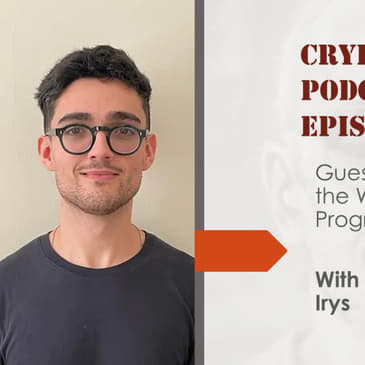

Josh Benaron is the Founder & CEO of Irys, the first L1 programmable datachain. Seeing firsthand that the existing data infrastructures weren’t built for scalability, Josh created Bundlr, an L2 solution on Arweave that gained early success scaling Arweave from 15k transactions per day to 15 million. Bundlr evolved into what is now Irys to become the first truly programmable datachain. As a builder with a background in database architecture, Josh is committed to driving the adoption of programmable data that empower developers to continue building an onchain future.
[00:00:00] Hello everybody and welcome to the Crypto Hipster podcast. This is your host Jamil Hasan the Crypto Hipster where I interview founders entrepreneurs
[00:00:09] executives thought leaders
[00:00:11] Amazing people all around the world and today I have an amazing guest coming to me from Dubai
[00:00:17] And whether there's a little hotter than it is right here in Connecticut where I am
[00:00:20] so
[00:00:22] He is the CEO and founder of Iris his name is Josh Benaron
[00:00:28] Josh welcome to the show
[00:00:31] I appreciate having me
[00:00:33] Thank you for joining me and I'll kick things off and hopefully I pronounced your last name properly
[00:00:38] usually asked before before time but
[00:00:42] Asked this what is your background and is it a logical background for what you're doing now?
[00:00:49] Someone so so my background is pretty minimal
[00:00:52] So I started Iris now three and a half years ago, but before that
[00:00:56] I was actually just studying computer science at the time in the UK
[00:01:00] And so I guess that is it that does support with doing stuff in the world of crypto
[00:01:05] But in terms of what I was doing outside of just my degree, which I found quite boring at the time
[00:01:11] Was mostly things around databases
[00:01:14] and specifically sequel data access
[00:01:17] To try and draw some kind of similarities between the two that were kind of where we are now
[00:01:23] What we're doing now Iris which is in the data chain space and
[00:01:26] What I was doing then which is around kind of data space stuff in the open source world
[00:01:29] There are some kind of storage components databases
[00:01:33] So database is a combination of storage and compute really
[00:01:37] So and it's about optimizing performance between the two so you start to kind of realize that databases are
[00:01:45] Bottle next by things like storage. So a little bit ties into ties into what what we're doing today in a day chain space
[00:01:53] Yeah
[00:01:56] Interesting I had a sequel background to when I built databases. So I'm interested
[00:02:01] Personally, I know how your transition was to go from creating databases and sequel to to crypto
[00:02:09] Yeah, it was a very I want to say it kind of helped but it doesn't
[00:02:14] When you do computer science that
[00:02:16] You know, it teaches you how to learn in some way
[00:02:19] But it doesn't kind of teach you you know
[00:02:21] It doesn't map straight things straight to a blockchain the blockchain world
[00:02:24] So I think as as with anyone I gone scripted about in early 2020 and as with you know, anyone who
[00:02:33] You know gets into crypto that your initial reaction is like well
[00:02:36] This this doesn't make any sense
[00:02:38] Especially if you don't come from a distributed systems background because everything is so different
[00:02:42] It's not like it's the centralized database
[00:02:45] That it's like okay
[00:02:46] You have a hundred different you know people in the network and somehow they will have some kind of single-manus database
[00:02:51] How else does that how on earth does it work? So
[00:02:54] It definitely is something that one wasn't it wasn't the smoothest entry
[00:02:58] But I think once you spend a few months kind of studying this stuff and you
[00:03:02] Adopt the correct mental models and frameworks then it all becomes very it all becomes very easy
[00:03:08] I mean after now being in the space for you know over four years
[00:03:11] I can comfortably say that I think I think I understand it but definitely back then it was
[00:03:16] It was a little bit more of a more of a shock. Yeah, definitely a shock. I came in 2017. It was definitely a shock
[00:03:26] Iris I want to find out what iris is all about and what doesn't mean to be the first programmable data chain
[00:03:36] Yeah, so I guess to give some some quick background on iris
[00:03:40] So we actually started back in
[00:03:44] Early 2021 April time 2021 and we actually entered to the our we've existed specifically so we Iris was initially a
[00:03:52] L2 or scaling solution of our week. So our weave is the permanent storage chain
[00:03:57] The idea is they pay once your data is stored forever if you come back at 100 years time
[00:04:01] then you'll be a still be able to retrieve your data kind of the core idea and
[00:04:07] Iris was essentially a way to scale that so you can serve doing only a few writes per second
[00:04:11] You can actually do 10,000 writes per second or uploads per second
[00:04:15] Anyway, so we launched that and kind of later 2021 and then you know end up dropping dropping out of university to obviously focus on iris and
[00:04:24] We yeah, we took our weave from doing about 10,000 transaction stasting about 15 million a day
[00:04:28] We onboarded kind of two 300 plus projects and then about kind of
[00:04:33] We announced we've been working on it obviously for a while, but we now announce kind of iris is the first programmable data chain
[00:04:40] For four weeks ago from recording or five weeks ago actually losing track of time time moves to faster crypto
[00:04:46] But yes, so yeah
[00:04:47] So that's kind of the context of how we got here and the idea behind the
[00:04:52] The reason I got into the data chain space because I remember back in late 2020. I discovered
[00:04:57] Are we far going stored see even cheer back then which is not?
[00:05:03] spoken much anymore
[00:05:06] The I kind of built conviction that one
[00:05:09] Which ever story which kind of types of messaging whichever whichever kind of data chain one would become this kind of canonical record of history source of truth
[00:05:16] That was always the messaging are we back when kind of pumped out whether being kind of it's the store of kind of humanity's most valuable information
[00:05:22] And I still believe in that end goal
[00:05:24] but over time I built conviction on this more kind of utilitarian vision, which is that
[00:05:30] crypto has been very indexed on these financial rails
[00:05:32] With this new bitcoins with their slana, but there's been very little innovation on you know
[00:05:38] Basically what the rest web is run on which is data and infrastructure rails
[00:05:41] And the question was for me was always okay
[00:05:43] How do we bring those kind of traditional kind of data kind of more data more centric?
[00:05:47] Webservices on chain
[00:05:49] And you know initially kind of start what are we even now launching her in L1?
[00:05:53] And so when I talk about the when I talk about kind of the vision virus
[00:05:55] It's about how do we actually bring those web services on chain?
[00:05:58] And I think about like a subjective like KPI almost is if we can
[00:06:02] Increase they bring more web services on chain over time then we will essentially be winning in in years to come
[00:06:08] So that's gonna have a very high level, but at a more kind of concrete level
[00:06:13] Iris is a programmable date a programmable data chain
[00:06:15] So data chain means that it's a chain optimized for storage and we
[00:06:18] Dive into what that means
[00:06:20] But the idea is that how can you kind of store a yotabai which is like you know many many petabytes?
[00:06:26] Worth or exabytes worth of what worth of storage and chain
[00:06:29] What's the data on chains right and then also how do you have a closely coupled execution there with that?
[00:06:34] But enable you to do computation on the data as well because
[00:06:38] Data by itself would useless, but when you add to kind of useful computation with it now
[00:06:42] It becomes kind of it becomes more data is not oiled by itself
[00:06:45] It's kind of because it's more like sand when you add computation. It becomes more like it comes more like oil
[00:06:51] So that's kind of the core idea and in terms of our focus on where we see this being applied in the real world
[00:06:57] The way I kind of talk about this is that we want to
[00:07:00] Essentially build a layer unified layer that is optimized for applications that operate that rely on data to operate in scale
[00:07:07] so if you think about
[00:07:09] Deeper networks a lot of deeper networks essentially aggregating much data
[00:07:14] Defining monetary policy based off of that a lot of them doing computation on that data
[00:07:18] and the question is how can we kind of bring those kind of stacks fully on chain?
[00:07:23] And AI is another interesting use case because it's very data heavy as well a different computation heavy
[00:07:27] And then there's some consumer kind of there's some interesting consumer angles
[00:07:31] But anyway, that's a very long and long answer, but it gives you at least a high level
[00:07:35] perspective on what work what we're cooking. It's interesting because a lot of because a lot, you know, I
[00:07:43] Look at Bitcoin
[00:07:45] That created the lightning network and I'm looking at theorem that created all these L2s
[00:07:48] They're looking to take
[00:07:50] Information and data off chain to make it faster
[00:07:53] You're bringing on chain. So I'm really interested to see how you bring you on chain makes it more robust and faster and you know more efficient
[00:08:03] Looks at the opposite direction. Why is it myself?
[00:08:06] It's a good good good good question. So
[00:08:10] There are kind of a lot of dimensions to that
[00:08:14] one is a
[00:08:16] Pure cost perspective
[00:08:17] So if you want to extrapolate data chains as a form of deeper network where you have the supply side is basically a bunch of
[00:08:24] Storage providers or people with a bunch of hard drives
[00:08:28] Our hard drive capacity and then the demand side is people wanting to store data in some way
[00:08:33] Then the cool thing about all deeper networks. I'll generalize it
[00:08:36] Is that what they do is they enable huge amounts of supply at a mega low cost choose token incentives
[00:08:41] Maybe that the cost of the actual service quality that providing is much lower
[00:08:46] So there's that but that's definitely one component
[00:08:48] We can tie it and kind of tie that into the how that will how that will look in the future
[00:08:51] But I think they're also kind of very traditional qualities that you know, the old blockchains have here
[00:08:57] So the data to the store the sense of resistance to centralize
[00:09:00] It can be globally replicated and the idea of a time is
[00:09:03] How can you actually kind of allow different levels of replication?
[00:09:07] Allow it in specific locations as well for compliance reasons as well
[00:09:11] And it's obviously a mutual by default right so because it's based on typical blockchains and cryptography
[00:09:18] So those are kind of the key the key the key properties. It should be cheaper
[00:09:21] It should be immutable and to centralize that slash sensor resistant a censorship resistant and in terms of like
[00:09:30] The goal here is that as you as you bring these
[00:09:34] The efficiency and speed of these things up and it's already pretty fast and we can we can go into that
[00:09:39] then the benefit of using centralized providers were essentially 10 to 0 and
[00:09:44] every band all of the
[00:09:46] Yeah, everyone was actually confused towards using these decentralized networks
[00:09:51] Because it's just way cheaper to use and it's the same same performance
[00:09:56] Yeah cost is part of it but
[00:09:59] Part of optimization so how do you how you optimize data storage and execution?
[00:10:04] I guess one of the elements is cost and as others elements, please can you elaborate?
[00:10:10] Yeah, so the idea is how can we one
[00:10:14] Enable any amount of data to be stored on chain that's kind of one way to make it to make it more efficient
[00:10:19] And then to for the data that's stored in chain. How can we?
[00:10:24] Use very efficient methods to verify that data
[00:10:26] So if you look at existing data chains that have existed up to this point, so the summit file coin
[00:10:32] Which is like a good amount of model is that's like a temporary store a temporary like days chain where an agent enables you to store data for a temporary
[00:10:39] Time period and then are we which is permanent a chain. So if you look at something like file point
[00:10:44] They use a bunch of very complex cryptography mostly zk is an honest cryptography, which makes everything exceedingly slow
[00:10:52] Which means that uploading is slow retrieving is slow like even just the base commodity that they're providing is
[00:10:58] Fundamentally very very very very slow. So one of the goals we
[00:11:02] We had and something that we learned from running kind of Irish previously as the scaling solution probably was that people care about performance
[00:11:08] Sounds very profound
[00:11:09] But it's it was just an obvious thing where people would just use us because we're the most performant
[00:11:14] And it's the way to kind of enable that in the world of a virus is actually
[00:11:20] It's it's a kind of a multi-dimensional thing again. So that one one of the cool features is that we actually use a
[00:11:26] dual ledger approach which enables
[00:11:30] essentially data to be quickly seeded to the network or quickly kind of
[00:11:34] Yeah uploads the network and then you know eventually kind of
[00:11:37] Replicates across the world. So that's number one and then two we don't use we obviously actually don't use any of the zero knowledge
[00:11:45] Approaches because there's absolutely no benefit to it. In fact, they're only drawbacks the cost of zero knowledge
[00:11:50] Doing on kind of extra bites of data is many many many millions of dollars a year worth of GPU compute
[00:11:57] So when you're looking at something like file coin, you might think okay
[00:12:00] well, most of the cost goes into strong data will know the actual actually when you look at the
[00:12:04] inflation
[00:12:05] Emissions versus the fear liabilities or basically how much of miners are spending to operate it most of it goes towards
[00:12:12] ZK releases operation. So GPU based compute which is just in my in my mind kind of stupid because
[00:12:20] You're your network is meant to provide kind of a cheap way to do storage, etc
[00:12:23] If the most complex part is right the most expensive part is doing with this computation that users don't even care about because they really care
[00:12:30] That they use easy K or something else then you're basically printing a bunch of money and giving it to people and you're just you're just
[00:12:36] Burning money. So if you look at it from an economy perspective like they're printing a hundred million dollars
[00:12:40] Yeah, let's say making numbers up
[00:12:42] Why are they giving away 50 million dollars to your mall to do this CK process that?
[00:12:47] You know has no benefit it just deflates the token and the values the devalues the entire existence
[00:12:53] So there's kind of like a multi-dimensional interconnected thing to look at
[00:13:01] you know
[00:13:02] It's interesting because I've had a number of podcasts
[00:13:05] Where people have thought that ZK is the next trillion dollar opportunity
[00:13:11] And you're saying ZK stupid
[00:13:13] No, no, no, so I
[00:13:18] Think ZK down people on Twitter gonna kill me but no
[00:13:21] I think I think ZK is absolutely massive and I think it's getting exponentially better
[00:13:26] I think it's not great when you're dealing with
[00:13:30] You know exabytes of data so CK is being used for ZK EBMs
[00:13:34] But the amount of data we're talking is tiny the amount of computation. We're talking is tiny
[00:13:37] But you're equally not running
[00:13:40] ZK you're doing ZK
[00:13:42] AI training right now the ZK is way too way too expensive
[00:13:45] They're definitely initiatives to do this and again, I don't anyone can get into triggered
[00:13:49] I believe in ZK but the ZK in my view is at least five to ten years away
[00:13:54] for
[00:13:56] Using a scale for something like extra bites of extra bites of storage. It's just a different problem
[00:14:01] Where's the care think is less of a good fur?
[00:14:06] got it so
[00:14:07] Well, you're building your building a robust data infrastructure, you know
[00:14:12] And
[00:14:13] What is the key to that you said the worst scalability and also I'm assuming security is also important
[00:14:19] So how do you build it? Why you maintain both scalability and security?
[00:14:24] Yeah, so
[00:14:27] Scalability is mostly an architecture
[00:14:31] Mostly an architecture thing when it comes to the storage and days chains
[00:14:34] So when you're talking about me and anything scale it is here
[00:14:38] You're doing that through horizontal scaling which is basically saying if there are more minors of the network or more people providing capacity
[00:14:43] Then the net kind of throughput of the network should go up, which is a property that you can have with data chains
[00:14:49] It's not true for other execution chains like Salana for example
[00:14:53] But it is true for execution chains because you can scale them horizontally where security is a very different problem
[00:14:58] well, it's slightly different problem where I kind of break down security as a combination of
[00:15:04] Amuseability, which is the default property which uses whether it's Merkel trees or just traditional kind of cryptography
[00:15:10] techniques and then plus the economic components, right so
[00:15:16] basically
[00:15:17] allocating tokens to
[00:15:20] People or minors on the network that are doing the useful work
[00:15:23] So irish uses a proof-of-work stake hybrid algorithm actually and it's actually a useful proof of work
[00:15:29] So when you're looking at something like Bitcoin, you are you're dealing with a proof-of-work algorithm
[00:15:33] Which I would say is not useful the compute is not going towards any kind of real world kind of value creation
[00:15:40] So to speak token evaluation aside
[00:15:44] Whereas something like iris the proof-of-work algorithm is actually sampling the actual hard drives and storage
[00:15:50] Which is a core function of the network
[00:15:52] so it's actually useful proof-of-work algorithm and then we have staking as
[00:15:56] Because the key reason why staking is very important for data chains and some of them don't have staking is
[00:16:04] If some provider on the network or mine on the network drops your data
[00:16:07] Well, they need to be punished for that and they should be slashed for that
[00:16:10] So the idea is you have to have this collateral the network and miners will essentially lose this money if you stop storing the data
[00:16:16] So that's a very crucial point for data chains. I'll punish them too for wrong data
[00:16:22] No, but
[00:16:24] Hey
[00:16:25] So so there are there are definitely rules in the network where if you propagate anything that is
[00:16:30] Cryptographically incorrect so to speak that in some edge cases you will also get slashed
[00:16:35] So there are a bunch of different scenarios like random edge cases where you get slashed as well
[00:16:39] But the cool thing is that no one does that because it cryptography is maths or math Americans
[00:16:45] and
[00:16:47] No one can no one can refute that
[00:16:50] God so I have to refuse something that you said about Bitcoin
[00:16:53] I'm not a maximus by any means and I have a little bit of Bitcoin. I have a lot of other things
[00:16:59] But you know, you said it has no the proof of work has is value
[00:17:03] Value lists or has no value doesn't bring a value like and I'm like I'm thinking about how we can improve energy
[00:17:09] You know and usage, you know
[00:17:13] So what would you say to a Bitcoin maximum of what you just said to me?
[00:17:17] Yeah, so
[00:17:19] I'll actually kind of conflict against myself here and go against myself. I think a
[00:17:26] Bunch of different proof of work chains makes no sense
[00:17:28] I think the reason why a proof of work for Bitcoin actually makes sense from a societal standpoint
[00:17:33] And the reason why I think all of the energy fudders
[00:17:36] You say that it's kind of bad for the bad environment
[00:17:39] Don't realize how Bitcoin is one creating a massive incentive for
[00:17:44] Decreasing the cost of electricity, which is beneficial for society
[00:17:48] More electricity usage and lower cost is like one of the biggest
[00:17:53] One of the biggest indicators for improved improving quality of life globally or basically moving people out poverty globally
[00:17:59] So when you look at GDP of these countries, it's usually tied to a lot of a lot of these kind of factors
[00:18:03] So I think that innovation is in itself is is a good reason to have Bitcoin around
[00:18:07] Because you make money by having cheap electricity
[00:18:09] And then the second thing is that there's actually a lot of wastage of electricity that exists with a lot of these plants and yeah plants renewable energy and
[00:18:19] the
[00:18:20] It actually kind of there's an argument that it would actually enable
[00:18:25] Using some of this what typically would be wasted energy to and just use that from mining Bitcoin
[00:18:30] So they actually the net effect on the climate is kind of like
[00:18:33] Actually zero but when you're looking at you know, if there are a thousand proof of work chains
[00:18:38] Well the other
[00:18:39] 999 don't exist Bitcoin itself is providing the incentives to reduce the cost of electricity the other 999 are just
[00:18:46] Wait wasting energy and that's in that might and in my mind. That's why that's useless proof of work
[00:18:52] So hopefully that makes sense
[00:18:55] Makes sense makes sense great
[00:18:57] So you mentioned earlier, you know about applications that are heavy data reliant like how
[00:19:05] best can data rely on applications thrive
[00:19:09] By being on chain and what some of the application examples
[00:19:13] Yeah, so there are a
[00:19:17] There are kind of many kind of examples, I think one of the interesting
[00:19:22] angles is
[00:19:24] One again the cost component the cost of running these things on chain
[00:19:28] Should tend to zero much quicker than in the real world
[00:19:32] So if you're using just traditional web services, that's kind of the end goal
[00:19:35] Which is that how can the cost did you building a web service tend to zero?
[00:19:39] How can the cost of implementation also tend to zero as well?
[00:19:43] Those are kind of too very those are two very important things
[00:19:45] I think that's one way that these kind of applications will forever scale
[00:19:49] I also think we're very focused and also serving the crypto economy of applications
[00:19:54] which are ones that have tokens and
[00:19:56] needs to find monetary policy based off of that and also wanted to do a lot more things on chain. So for example
[00:20:05] if you want to give out tokens based on
[00:20:08] People uploading useful data whether you're trying to aggregate specific subsets of data
[00:20:13] Plus specific data sets and you essentially dish out tokens based on the data that's uploaded
[00:20:19] Those are kind of specific on chain use cases where we're really focused
[00:20:24] So where I kind of data meets liquidity is definitely really interesting
[00:20:28] and I think another
[00:20:31] Another thing to consider is that right now will see very early in you know our lifetime as an L1
[00:20:38] But you know in five in five years in five years down the road a five years down the road
[00:20:44] There'll be kind of lots more applications hundreds thousands of applications of iris
[00:20:49] And the amount of data that will exist will be massive and amount of services that exist
[00:20:54] And where the network effects really come in and whether benefit comes for people to deploy at that point is now you have this
[00:21:00] massive crypto economy of services which you can tap into and also a crypto economy worth of data as well
[00:21:05] So that there's this kind of component of composability
[00:21:08] Between all of these services and all these data sets that exist on iris
[00:21:14] Trying to look at think about who the big data
[00:21:17] Storage companies are in web 2. I think you know Google. I think Amazon
[00:21:24] You know there's maybe Ali Baba some others. How do you?
[00:21:28] compete or you know someday
[00:21:32] With with these guys and make it a better world for people to access their data
[00:21:37] Yeah, so if you look at it from a pure storage standpoint
[00:21:40] where the competition comes in and it would take some time to get that is the
[00:21:46] Again it ties into the same concept where if cost is
[00:21:50] Tending to zero with these great. I guess I'll say a few things one is the cost of hardware
[00:21:56] Those are for things like storage attending to zero
[00:21:58] We will notice that the cost of using thinking like s3 and AWS etc. It's not sending to zero
[00:22:04] so this kind of disconnect between reality and
[00:22:09] and the actual pricing and
[00:22:10] And the idea is that crypto all crypto networks put up a data chain specifically are about removing middlemen
[00:22:18] And removing this like massive arbitrage that exists within the kind of traditional world
[00:22:23] So the idea is that storage will be way way cheaper with something like a data chain something like iris and
[00:22:31] But now the second thing to compete on is okay
[00:22:34] How do you improve performance and make the usage of these services identical to what exists today?
[00:22:41] And that's that's actually where the the tougher problem lies
[00:22:44] And that's actually what iris was very focused on for the last two years
[00:22:47] So my view is that in order for that to happen
[00:22:52] one is
[00:22:54] The the cost is already super low. So that's not the issue
[00:22:57] It's about building these other kind of peripheral kind of products and services around it to make it more kind of easy to use
[00:23:04] And some some of the services include CDNs
[00:23:08] Just like basic s3 wrappers around these networks and some other kind of mutability
[00:23:14] Primitives so that there are a bunch of different primitives that needs to be built in order to get to that endpoint
[00:23:19] Which is some of the stuff that we want to incubate
[00:23:22] But we're actually not that far away from having something that competes pretty like we as a space have something competing with
[00:23:28] The likes of AWS and Google. I'd love to see it
[00:23:36] Hopefully sooner than later, right?
[00:23:39] so
[00:23:40] I hope so. Yeah, so you
[00:23:44] Say that you are deep in in the trenches, right? What does it mean to be?
[00:23:51] Deep in in the trenches and why is it important to have
[00:23:55] The your community in the trenches with you
[00:24:00] Yeah, deep deep in the trenches is a nice kind of playing words
[00:24:03] That our team came up with but it's an initiative to kind of shed more light on the deep in space
[00:24:10] my view on deep in is
[00:24:13] That it is one of the biggest revenue drivers outside of DeFi
[00:24:16] But also one of the most underhyped
[00:24:19] Seemingly the world finds it very boring space side of the space for whatever reason
[00:24:24] And that just makes no sense to me. So I'm very kind of big advocate for deep in I think it is one of the only
[00:24:31] Categories outside of DeFi that have massive
[00:24:34] Product market fed to be honest when you look at helium, etc
[00:24:37] These guys are actually getting exponential adoption at this point exponential growth option
[00:24:41] so yeah, what one of its it's kind of a community initiative to
[00:24:46] Shed more light on all these deep in
[00:24:48] Networks we have a bunch of the deep in networks actually in that in that community. It's a Twitter X community
[00:24:54] And we'll be kind of going a little bit deeper on on that over time
[00:24:58] but I think to speak a little bit more broadly about
[00:25:02] Community more generally is it is one of the most important things in web 3
[00:25:06] You do need a great product a great network whatever and you do need to have very good kind of business team
[00:25:12] Etc etc, but if you don't have a good community then the sad reality within crypto is that you're always going to be one kind of
[00:25:19] You're gonna be quite a few steps behind
[00:25:22] So the goal is how can we actually support a lot of these?
[00:25:25] I mean, how can we build a strong community especially around?
[00:25:30] Categories that we think are actually important to the space
[00:25:33] And and deep in and deep in is one of those so so I always thought you know
[00:25:39] I forgot who told me this a few years ago. I said things that work don't need to be hyped
[00:25:47] They just work, you know, and I think it's deep in in that way
[00:25:52] And I think the opposite of that is meme coins that don't work
[00:25:55] But they're good for height, you know
[00:25:58] And the community seems to be really robust around meme coins. How do you attract?
[00:26:04] You know smart and smart investors smart users people will understand the tech into using deep in and growing that from there
[00:26:11] Yeah, so I think
[00:26:13] Deep in actually has a bunch of hype from a bunch of investment now from VCs
[00:26:17] Definitely more in the last 12 months. There are a bunch of deep in specific funds as well
[00:26:22] There's one on a cap table actually called eb3
[00:26:25] Who we have good kind of wish for as well
[00:26:28] And actually I can nail a bunch of funds now. They're very heavy and deep in
[00:26:32] I think multi-coin was one of the early seeds and
[00:26:35] Yes, so long but also helium and some of these other kind of big networks. So I think
[00:26:40] The investor side is less of an issue. I think on the retail side. It's kind of hard to point out
[00:26:47] Why there's why there's no hype
[00:26:51] it's I
[00:26:52] suspect it's because
[00:26:56] It might be it might be like a founder actually I don't want to call people out
[00:26:59] I might be like a founder archetype thing where a lot maybe they're very good at the demand side
[00:27:03] But perhaps don't understand the token web three game
[00:27:06] I don't know if that's actually true because helium raised a bunch of money and you know
[00:27:10] The token did fairly well in previous markets, but I think when I meet a lot of people who are in the deep in space right now
[00:27:17] They are absolutely like geniuses on one building the network and actually bootstrapping demand which is by the way
[00:27:23] The two hardest things and then the third perhaps is kind of attracting retail is
[00:27:29] a
[00:27:29] broadly quite broadly a macro thing and broadly a marketing problem and
[00:27:34] It's just a very different skill set. So maybe that's why there's less hype, but
[00:27:39] We're super bullish deep end simply because the fundamentals are so strong
[00:27:44] it's literally impossible to ignore if
[00:27:46] If a protocol goes from zero to a million dollars of revenue within a year or two
[00:27:50] That's literally better than 99.9999% of any
[00:27:55] Protocols that existed, you know in the last decade, right? So
[00:28:00] Yeah, that's kind of how I look at even
[00:28:03] Got it got it. It makes sense to me. Thank you. So a couple of questions
[00:28:09] One is what do we what do we have for to look what do we look forward to the most with
[00:28:15] With iris and an upcoming, you know six months a year. What people get excited about
[00:28:21] Yes, we have
[00:28:23] Three big milestones. I think one is we have private test
[00:28:26] We have a version one of the private test now, but we have a more kind of open version of private testing coming out soon
[00:28:32] We'll be able to do a bunch of execution related things
[00:28:34] Start to build defile on iris and things like that, which is going to be perhaps not a big public milestone
[00:28:40] But it's very important for us
[00:28:41] It's very important to start to build this kind of wider ecosystem because we want to launch with this very prosperous
[00:28:47] ecosystem by the time we go to mainnet and then thereafter we're looking to do
[00:28:50] Yeah, public test net and mainnet
[00:28:53] Within the next year within the next six to 12 months. I at least hope
[00:28:57] I
[00:28:58] See there isn't that but so those are probably the big those are the big milestones
[00:29:02] We've got also a bunch of other interesting things down the pipeline, which you know, you should should look on like follow us on
[00:29:08] on x to
[00:29:09] to keep updated
[00:29:11] Awesome, and that's my next question really is my life. I want to thank you very much for speaking with me today
[00:29:17] I enjoy let's talk into you and I love learning what you're up to at iris. This is great
[00:29:22] So my last question is how can people find out more information about you about iris?
[00:29:28] Twitter x obviously
[00:29:31] How else can they do that? How can they start using you know l1? How can they do that?
[00:29:35] Yeah, absolutely. So if you're just interested in keeping updated
[00:29:39] I think twitter is a really good place a combination of the iris underscore xyz
[00:29:44] account and then mine
[00:29:46] My account has a lot more of the kind of technical lower level stuff
[00:29:49] You're interested in that
[00:29:50] We obviously have our docs as well if you want to learn a little bit more about the technicals or if you want to start building with iris as well
[00:29:57] Um, I'd also say just DM me. I'm uh, terminally online. It's kind of bad for my mental health great great virus
[00:30:03] And but yeah, so I'm always happy
[00:30:05] So I'm always happy to chat and I guess if you're kind of not in those categories and you actually or if you want to get much
[00:30:10] Deeper into the community related activities
[00:30:11] We have a we have a bunch of really fun stuff going on our discord. So that's definitely that's definitely a place to uh
[00:30:16] To dwell if you're looking for some fun activities
[00:30:22] Awesome. Thank you very much for your time today
[00:30:25] Likewise, I appreciate it, sir