
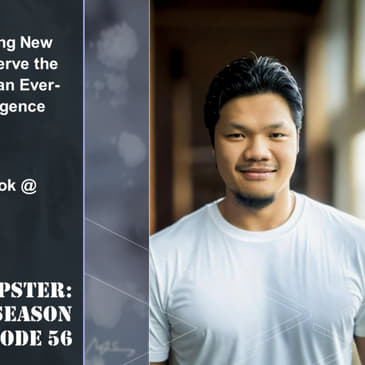

Terence Kwok, Founder and CEO of Human Institute Terence Kwok is the founder and CEO of Humanity Protocol, a leading organization dedicated to amplifying human potential amidst the transformative impact of artificial intelligence.
He is a visionary technology entrepreneur from Hong Kong and the CEO and founder of one of Asia's first unicorns. Kwok's journey has been marked by strategic partnerships with a broad spectrum of globally influential investors and partners, setting disruptive new industry standards.
With expertise in blockchain, Web3, and technology integration, Kwok's mission goes beyond technological advancement. He aims to use technology to bring people together, ensuring its benefits are widely accessible and impactful. His contributions are not only innovative but also pivotal in shaping the future of disruptive technologies. Recognized for his insightful vision, Kwok advocates for change that challenges conventions.
Kwok's entrepreneurial drive was nurtured at the University of Chicago, laying the foundation for his future endeavors. His journey from academia to the forefront of tech entrepreneurship highlights his influential role in pushing the boundaries of technology.
[00:00:00] Hello everybody and welcome to the Crypto Hipster Podcast. This is your host, Jamil Hasan, the Crypto Hipster, where interview founders, entrepreneurs, executives, thought leaders, musicians, artists, and other kind of politicians.
[00:00:15] But amazing people all around the world of Crypto and blockchain. And today I have another amazing guest. He's coming to us from Hong Kong. His name is Terence Kwok. He is the founder and CEO of Humanity Protocol. Terence welcome.
[00:00:31] Thank you Jamil. Thanks for having me. Very welcome. Thank you for joining me. And first question I have for you, a kick thing, so off this. What is your background? And is it a logical background for what you're doing now?
[00:00:43] I think in terms of backgrounds and the buffering crypto space, you can say everybody has a logical background and a logical background. I was always a tech entrepreneur. I started off my first company in the Travel and Hospitality Space back in 2012.
[00:01:08] I grew it to become one of the first billion dollar tech companies out of Hong Kong. And then COVID just completely made things really, really challenging because we were operating and the travel and hospitality industry right.
[00:01:26] And so it started dabbling into crypto, new that, hey, whether it's on the technology side of things or whether it's product, whether it's scaling a business. That is something that I know how to do and so decide to start working on humanity in the past year.
[00:01:45] And what does humanity protocol all about including like your recent and had a seed round to how to tackle as well? Yeah, so I mean, he may be critical for us. I think we're drawing a lot of comparisons to work coin for what we're trying to do.
[00:02:03] I think, you know, for us what we're also launching with soon is some sort of biometrics technology product for, you know, proving that you're human being.
[00:02:18] But ultimately for us, it's really about building an open identity graph on the blockchain. And what I mean by that is if you think about data and identity historically as the internet evolved over the last 10, 15, 20 years.
[00:02:34] It's always owned by somebody other than you, right? You're browsing stuff on Facebook, you're browsing stuff on Twitter, you're creating content on Twitter on YouTube. All that stuff, all that content, all your personal information is being controlled and known by somebody else.
[00:02:53] And so what we're doing is essentially say, okay, you know what, how do we actually create a blockchain leverage the technology that's out there right, you know, right now and then also proprietary technologies that were developing.
[00:03:06] Essentially, create a blockchain where different pieces of information about a human being about you, for example, your meal can be stored encrypted on chain and you have full control and access to it. And you can also potentially delegate access to different applications, developers, people, etc, etc.
[00:03:32] And so when we think about sort of the proof of humanity piece and we look at biometrics proving that you're human being, that's largely the first step.
[00:03:42] And what I mean by that is we actually think there's tremendous utility for that because if we think about air drops, we think about games, we think about in the current age of artificial intelligence.
[00:03:55] It's really difficult to figure out whether a person is really a person unless you meet them in person, right? You look at all the deep-fic videos, you look at content, you look at tweets, a lot of these are bots.
[00:04:09] We look at all the air drops, all the games that are coming up with millions, hundreds of millions of users. How do you know they're not really just people creating a lot of accounts and trying to earn sort of rewards and benefits?
[00:04:25] Right, so for us it's really how do we actually start by checking whether your human being or not and providing that as a service to different sort of developers and applications.
[00:04:37] And then beyond that, think about different sort of pieces of data about you that makes you human, right? Maybe it's your work, maybe it's your educational credentials. It's different sort of things that we want to encrypt.
[00:04:50] Have you essentially own it, control it and then whenever there is somebody in application, you know, another blockchain protocol, a company that wants to request for this information, then they're able to do that. And with your permission, as the first step.
[00:05:13] Or what's the other steps you see along the line? The other steps, as I said, right, the first step is like proving that you're a human being. The second step is actually piecing other things about you into the blockchain, right?
[00:05:27] So imagine the first step is, you know, you actually want to claim some tokens or rewards for an air drop.
[00:05:37] But you know, you have your an honest person so you have one address where you interact with the blockchain or the protocol and you want to claim your drops. But there are other people that are controlling a hundred thousand different accounts doing that.
[00:05:54] And so, you know, proving that your human being creates tremendous value for real human beings. The next step is different sort of pieces of data, right? If we look at something even as simple as KYC, you look at regulation, you look at enterprise D5.
[00:06:13] You know, different sort of platforms are now saying hey, you know what we need actually to do a full KYC on you to ensure that you're not a money laundering, right?
[00:06:23] And what we are saying is, you know, imagine being able to do that once, have that information encrypted, controlled by you.
[00:06:32] And then, you know, imagine a D5 platform wants to check whether you're an accredit investor or not or a D5 platform wants to check to make sure that you're not a sanctioned individual, right? Before using their services and applications, then they can also do so.
[00:06:50] And if we go beyond that, it's even potentially your medical records, your educational records. You know, imagine you apply for a new job, how do we know that all the stuff that you write in your resume is actually factually correct?
[00:07:07] Right, I could say hey, you know what, I actually work for Google. I work for Microsoft. I went to, you know, Cambridge University. I went to Harvard University who knows, right? So imagine there are actually these sort of snippets of information that are verified by in, in, in our terms, what we call an identity validator.
[00:07:27] Okay, where it might be a university issuing a verifiable credential saying that you actually did go to the university right or your previous employer, issue them a verifiable credential saying that you actually work there.
[00:07:39] Right, and then different sort of parties could then make use of this information with your permission. That's I like it. I like the, like the promises of blockchain is three right there's banking for the unbanked there's a voice for the voice list and there's identity for the unidentified.
[00:08:01] You know, so I'm totally, I love to see that your your proof of humanity is is fulfilling among, you know, that identity for the unidentified.
[00:08:12] So you offer the human layer of the internet. A lot of people don't know what the human layer of the internet is, you know, or that it's either even should be a human layer. You know, what are the benefits for them to get in touch with it?
[00:08:27] I think, you know, like historically the internet is filled with human beings. You know, I'm saying historically if you think about it. There is very little incentive for you for for the internet to not be made up of human beings right most content is created by human beings.
[00:08:50] You think about your first first sort of generation 25 years ago when you, you know people start creating their first email addresses right you had a bunch of them you created a bunch of them over time you probably use one maybe two.
[00:09:06] Maybe three one for your professional one for your personal and one just for shits maybe right so so the whole idea is that historically.
[00:09:16] The internet is made up of human beings but in recent times because of the advancement of AI and various technologies it's no longer filled with human beings.
[00:09:30] If we think about you know looking at something like a simple as Twitter one of the biggest problems when Elon was trying to buy it was saying, you know I didn't realize there are so many bought accounts these are not human beings right.
[00:09:46] Because now it's really easy to create bots in AI agents and potentially gardener some sort of economic benefit right like it might not even be monetary right it might be you know what I have 10 followers on Twitter but you might have a million followers on Twitter.
[00:10:06] I have 10 real human beings you might have a million bots to our empty but from a social proof perspective from you know the from other people's perspective they were like oh you know what this guy's followed by a million people that that's not really true nowadays right so.
[00:10:24] So so I think it's important to be able to differentiate why somebody's human being and I think the most concrete example also drawing from sort of the traditional web to tech internet world. Is as simple as that the entire industry has historically been driven by advertising.
[00:10:44] If you think about advertising what advertising is is you know somebody some business paying a platform to reach a human being who was previously unaware of that business right.
[00:11:03] The problem with this business model when you can't really be sure whether it there is a human being or not is that suddenly you might be advertising to a bunch of bots.
[00:11:14] And when you're advertising to bots you're essentially wasting money because human beings are able to spend money and go by soft drinks by a car or by whatever it is by clothing from brand that it's trying to advertising right.
[00:11:33] Butterna so all about money is going to waste and this is also sort of a phenomenon that we sort of call click fraud right in in the advertising space digital advertising space right so so from from my perspective it's only getting more and more important.
[00:11:49] Yeah I got a lot of people who say you know hey what give me your numbers my numbers on your business but my numbers if you look at my LinkedIn and my Twitter they're all real people I don't have bots about accounts.
[00:12:05] And I think that's one of the things that I follow over the follow me but the bottom the one people with the you know million followers maybe they know five people.
[00:12:12] You know so how do we how do we eliminate that fraud I call it fraud you know and how do we like.
[00:12:21] How do you really easily identify that how do you come and lay person how can you say hey this part these bots have eyes in ears and they don't how do you know how can you circumvent that those that fraud.
[00:12:32] The way we look at it and and you know but so much about work point is you're right like it's really ultimately done to buy metrics right now you know your if you look at KYC which is historically you know stamping the photo of your passport.
[00:12:46] That stuff can easily be fate.
[00:12:48] Super easy right if we look at sort of a video of your face that stuff is really easy to fake at this point you know like his study I just remember a couple years back you know like all the KYC for platforms was hey you don't want.
[00:13:07] I mean you know you're not going to have a passport and then please make sure you take a photo or video of you holding onto that passport in a piece of paper with the date today's date.
[00:13:19] So it was not easy to fake now today it's trivial a bunch of online tools you know like a 12 year old kid do it without any sort of coding skill right so so I think the the way we're thinking about this is really about biometrics and one thing that we realize is that.
[00:13:40] Your palm so your your prints so so a lot of parts about a human being or actually unique it will look at facial features you know everybody's facial features are unique.
[00:13:51] Obviously everybody has sort of a doppelganger lying out there but even so you know everybody's unique right you look at your fingerprint it's unique you look at your iris.
[00:14:02] It's unique and you know one thing that we are leveraging to start for humanity protocol is your palm right because your palm print and your veins underneath your palm are completely unique to every single person.
[00:14:15] And so what we're doing is we're leveraging that to say okay you know what if you scan your print and your veins. We know that you're a unique human being and if you've already scanned before and you try to do it again will be like.
[00:14:31] No can do because you're in an existing human being in the network right so so then we're able to say okay and what does blockchain address or this email address.
[00:14:41] And whatever it is form of identity or a DID issued on humanity protocol this is a real unique individual human being you know I like what you're doing so far. I want to get to you you compare yourself to the world one or in the same boat right.
[00:15:02] We're not just really about the humanity piece right like because we also want to get into different sort of information data.
[00:15:13] So we actually think what we're trying to do is sort of a wider idea than then work point but because of sort of the biometrics component which a little you know seem a little bit let's say advanced and novel for a lot of people that's why I mentioned work point because we sort of get compared to them from various media outlets and people.
[00:15:43] Well let's still look at comparison you know real coin has been under fire by governments who don't want the people and then the capture people's eyeballs yes there seems to be not a reluctance to capture poems like why it's the same thing as biometrics is individual capital that information capture why is the palms such a you know a lesser.
[00:16:10] What's the word feared.
[00:16:12] I think it's it's just a social stigma that's one thing right like when you look at dry balls you know that it's it's something a very personal thing if you look at sort of pom pranks as a form of biometrics and identification that's been used by governments a lot that's been used by you know even companies like Amazon for payments in the US it's been used by you know 10 cent in China as part of we chat paid.
[00:16:39] It's just not it doesn't seem as personal that's one thing and then the other thing is also very much to do with. How data is being handled right so it's the fact that you know the way we've designed humanity protocol even with the the palm registration.
[00:16:59] We're not taking any videos not taking any images. We're essentially converting sort of your patterns because biometrics is really just about pattern recognition right considering we're converting the patterns into. Along string of unrecognizable hashes that making comparisons against them.
[00:17:15] So versus you know when we look at something like war coin where. In the past but they were actually doing is storing essentially raw files raw images raw photos raw videos of the scan and then using it for.
[00:17:34] For training their machine learning models for pattern recognition I think that is sort of where. The biggest challenge likes. Okay so it's in the usage of the information that's captured is a usage of the information and sort of the call it the social stigma also. I don't.
[00:17:56] So the future on the future of on unordinated biometrics. Absent blockchain. I guess then you have AI running wild right what's the future of that or we can a circumvent or control you know. You use this as a checks and balance.
[00:18:15] Sorry, do mind to mind repeating the question I adding quite get that. Yeah, what is the so what that's the what is the future of unordinated biometrics. Absent the use of blockchain unordinated biometrics. What do you mean by that?
[00:18:34] I guess you know if it's not controlled by one you know if it's actually by government or or not there's not some regulatory. You know I think it's it's it's simple as it's as simple as you know. That's the best way to do that.
[00:18:52] But it's not a modification. I think that's one thing. But beyond identification. It's what we call proof of humanity right there is value and being able to know that you're a human being without necessarily even knowing who you are. Right.
[00:19:06] You know frankly if a company a big company that's trying to a big company that's and there are other pieces of data right like if you think about internet platforms it's.
[00:19:17] Really even care who you are they don't care about your name and different sort of things they kind of know what they want to think about your income level they care about your difference sort of interest.
[00:19:24] They care about difference sort of things or browsing history all that sort of stuff right but right now all of that stuff can sort of be think. You can sort of create many different bots that are making all of these sort of things.
[00:19:39] And when an advertiser tries to wants to reach a hundred people if they're really just reaching 99 fake people that are generated by by AI and you know reaching one person technically they really shouldn't be paying.
[00:19:57] 100x the advertising spend that they are right so that that I think is sort of one of the key things when it comes to sort of the biometrics piece in terms of what you're doing.
[00:20:06] And from our perspective because we're a bloke building and open blockchain for this we absolutely even think this could be something that we would make sense to work with governments forth right where you know if they do actually want to have.
[00:20:26] And so the first person personally identifiable information about people whether it's biometrics whether it's their their nationalities or passport all that sort of stuff.
[00:20:36] The whole idea is we're building a suite of technologies so that this information can be encrypted and it could be self sovereign to the the person who.
[00:20:46] And we can provide that data and they can control access to it sounds good to me I went down the government role because of one because really a one thing.
[00:20:57] You're in Hong Kong you got a very progressive and supportive government there you have a wonderful ecosystem in Hong Kong and mother people are aware of you know how how advanced Hong Kong is in far as blockchain and crypto.
[00:21:11] It's been a little bit a couple years a couple of 24s I found out the state of crypto in Hong Kong could you tell me you know with the state of everything there and how you are supporting the ecosystem and how the system supporting you.
[00:21:24] So I think you know for us humanity protocol is is a very you know in terms of the team it's super decentralized right I I don't you know I I'm from Hong Kong my family was my family's base chair.
[00:21:42] I grew up here but my I was born in the US I was actually born in the US and much of my team. You know the team for humanity protocol is very decentralized we have people everywhere from the US to Europe to Africa to Southeast Asia etc etc.
[00:22:02] So we definitely don't consider this to be sort of a humanity protocol to be sort of a Hong Kong thing right even I obviously you know it's it's. It's I'm very proud to be from here and and and have deep roots here deep roots here.
[00:22:19] But if I do have to comment on the Hong Kong piece a little bit, I think what the government is doing makes a lot of sense right it's very progressive they're attracting a lot of talent from all over the world to be here.
[00:22:34] The government's issuing you know sort of regular licenses for crypto exchanges all the way to creating different sort of schemes to incentivize companies to set up their headquarters here.
[00:22:48] For hiring etc etc. So we're we're definitely seeing a very vibrant ecosystem that's being built up in the city great.
[00:23:00] Now you're you're fully decentralized so this means that you know and I'm starting that there is use cases other than just you know advertising especially when you're in you know Africa and different areas of the world better or less you know.
[00:23:16] That's options and others so what are the key areas that you foresee adoption of your protocol and why do you see it being effective in all these areas.
[00:23:26] I think if we look at different sort of markets right like we just even look at the web three one I mentioned advertising because that's the closest in in terms of the web two world if we think about web three world.
[00:23:37] It's on-chain games it's deep in how do you ensure that people are operating these networks.
[00:23:42] You don't have one person running a very disproportionate percentage of of the infrastructure right if you look at air drops every single project coming out with air drops who incentivize your early users how to ensure that you know you don't have industrial farmers creating hundreds of thousands of net tens of thousands of accounts.
[00:24:05] To sort of milk these rewards in a way that is not beneficial to anybody.
[00:24:11] We look at and then we ultimately also look at you know developing countries how do we you know there's obviously the whole concept of universal basic income right where you know how do we actually distribute more to people on sort of the one person.
[00:24:32] One share sort of way right and and that's also something that we we were actively sort of working on but ultimately we don't even think it should be sort of universal basic income it's you know you know universal basic equity right how do we how do we look at you know different sort of projects different sort of companies that actually want to distribute.
[00:24:55] Whether it's equity whether it's tokens whether it's value right to many people and we see ourselves as sort of being the the portal. To do that. So you know it's it's we we anticipate a lot of different use cases and it's really not just.
[00:25:16] You know this one thing because you know we we do we do believe that the problem we're trying to solve is a pretty big problem down the road. I don't think I've heard it. Put that universal basic equity. It's interesting concept what what would the world look like.
[00:25:40] If they had if we have that. What would look like where you know we with the whole idea is like universal basic income is some sort of centralized entity.
[00:25:53] Saying okay you know what because you're human being we're going to give you some income right but when we look at sort of universal basic equity it's actually many different parties providing value.
[00:26:04] To individuals for whatever reason it is right you know it might be some sort of government entity that wants to give them you know basic income.
[00:26:14] It might be different sort of projects different sort of companies different sort of entities that have some sort of reason and incentive to also be providing value to various individuals.
[00:26:27] And for something that they do for for for who they are whatever it is and what is underpinning that is that you know this needs to be human being.
[00:26:42] Not necessarily who it is but we just need to know that it's a human being so that there's no there's no there's no cheating there's no fraud right and then if we actually even think about. In closer to the web three space.
[00:27:00] Historically if we think about blockchain networks one of the key utilities for a lot of tokens is governance right we hear about governance tokens a lot we hear about that was a lot right and a lot of these entities historically. It's not very democratic.
[00:27:24] It seems democratic because technically anybody can participate doesn't really matter where you're from you have a blockchain address. You can participate in a dial you can participate in governance but the challenge to that historically also is that every single one of these.
[00:27:44] Generally it's based on sort of a proof of state model right it's how many tokens you have determines how many votes you have right and it sort of makes sense because it can't because it can't be how many wallet addresses you have determines.
[00:28:05] How many votes you have because you can just generate unlimited number of wall of addresses right. And so it actually becomes a situation where. Voting and governance has historically been based on how rich you are okay so the more you have the more influence you have.
[00:28:26] And what we are able to do by creating this sort of infrastructure is actually start allowing companies and projects to be able to sort of get to a one person one vote sort of system.
[00:28:41] It may not you know you might not want to be a direct democracy where you know sort of the governance of a company or a dow or what three project.
[00:28:53] The entirely one person one vote it could might be a bicameral system it might be a tricameral system whatever it is right. So that you know you might even do something where it's similar to the US system where it's representative democracy people vote.
[00:29:15] You know people sort of vote for one side or the other. So you know there are a lot more things that can be done when you actually know that you're dealing with a human being and not necessarily a computer program.
[00:29:34] And you just got me present to the danger of yield farming your drops. I'm sorry and you just got me present to the danger of yield farming your drops.
[00:29:44] When you have what when you have bought you know only the supply of the of what should be supposed to be a democratic democracy government structure. I mean you look at some of the recent aerodrops is like big projects that have been aerodroping.
[00:30:01] And hundreds of millions of dollars. Some even over a billion dollars right worth the tokens and every single founder comes out and says, you know we can't solve the civil issue because we are not able to figure out who was a person or not.
[00:30:20] And that is a big issue right because everybody's incentivized to just create 510 20 50 100 5000 different wallet addresses and farm these aerodrops right.
[00:30:32] And most of these people or most of these addresses controlled by maybe one person are just dumping these tokens and not creating long lasting value for the for the blockings and for the projects.
[00:30:47] And so it's sort of essentially similar to advertising right like where the aerodrops is technically. Call an advertising and you look at all these you know industrial farming programs to be sort of you know like fraud right and. And we're sort of able to solve for this also.
[00:31:08] I like it. I like what you're doing. I love it actually. I like it too, you know. Well, I would thank you. I want to thank you very much for speaking with me today. I know it's laid over there. But one last question.
[00:31:26] It's how can people find it more information about you about humanity protocol. How can they start to use it happen? They've prayed their individual graph on your vertical. How can they do that?
[00:31:38] So we actually have not launched yet our test net is coming very, very soon. I'm not going to give an exact date but the idea is that it's going to be. Uh, sometime in the next couple weeks okay that's that's all I can say.
[00:31:58] So that's number one so do do stay stay stay informed about that and you can access our website which is humanity.
[00:32:07] Org, HUNA, and I T Y.org follow us on Twitter, you know which is you know X dot com slash humanity plot because you know humanity protocols too long of a name according to Twitter rules. So it's HUNA and I T Y P R O T and you know you can find all sorts of information about what we're doing and you know
[00:32:36] we do have a wait list on our website for joining the test net. I think right now we're up to like 7800,000 people so there's quite a fair bit of excitement about what we're trying to do. Awesome. Thank you very much for your time today. Thanks a lot, Jim.