
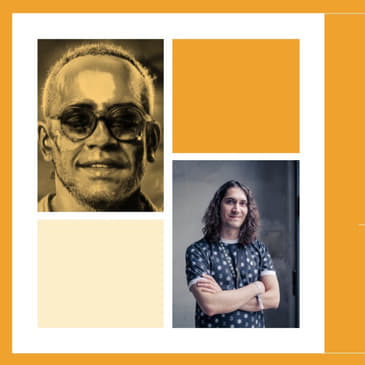

Vlad Costea is a Romanian bitcoiner who dropped out from his PhD in political philosophy to create the Bitcoin Takeover podcast. Over the last 5 years, he recorded more than 200 interviews with some of the most brilliant people in the space. He also created the free open source BTCTKVR magazine, which features educational articles about Bitcoin. Find his entire work at https://btctkvr.com
[00:00:00] Hello everybody and welcome to the Crypto Hipster podcast. This is your host Jamil Hasan who
[00:00:07] are interview founders, entrepreneurs, executives, thought leaders, artists and today a fellow
[00:00:14] podcaster. I'm really looking forward to this interview. I have an amazing guest for you
[00:00:19] today. His name is Vlad Kastia. He is the host of the Bitcoin takeover podcast. I'm
[00:00:28] really looking forward to this. Let's give Vlad a warm welcome.
[00:00:32] Hi, this is exciting. I finally get to talk to another podcaster.
[00:00:37] No, it's great. It's great. I was thinking about making a whole new line of this. You
[00:00:42] know, instead of Crypto Hipster podcast or under the Crypto Hipster podcast, shooting from
[00:00:48] the hip with the Crypto Hipster. So I might just do that. So thank you for joining me.
[00:00:55] Let's kick things off and ask you first, you know, kick things off. What's your background
[00:01:00] and is it a logical background for what you're doing now?
[00:01:03] I spent way too many years in university. I guess I pursued a PhD. I was planning to become
[00:01:12] a university professor and then Bitcoin happened. I've been aware of it since 2013 but I was
[00:01:20] afraid of it. And that's also the reason why I wrote a magazine that's called Breaking
[00:01:25] Fud that I also open sourced. You can find it on bitcoinstakeover.com in the magazine
[00:01:30] section. Basically, I did not touch Bitcoin for four years after I first found out about
[00:01:36] it but when I did find out about it, everything changed. You know, I dropped out in my last
[00:01:42] year of my PhD to pursue working in Bitcoin full time to seek some work, understand how
[00:01:49] this works, do interviews for myself just to convince myself that I made the right decision.
[00:01:56] And then once I discovered that there's nobody really behind this project because you first
[00:02:01] get in, right? Everyone tells you, oh, it's a decentralized project. Nobody controls it.
[00:02:05] And you say, oh, yeah, right. That's just what you tell people to convince them that this
[00:02:11] is a good investment. But then you dig deeper and you keep on searching for answers and you
[00:02:18] discover, okay, there's really, you know, it's pure energy. That's what drives this project.
[00:02:26] It's pure energy. It's people from all around the world contributing. Of course, you have
[00:02:31] maintainers of the code but these people are also overwhelmed and clueless most of the
[00:02:36] time. There is no roadmap. It's just based on the best design and community feedback from
[00:02:42] it. It's incredible. It's punk rock. It's DIY. I love it. I would rather do this as opposed
[00:02:51] to stay in some university office and do pointless research. I did try to do Bitcoin research
[00:02:58] in academia. And at the time, it was rejected. They did not really understand what's the
[00:03:03] point of it. And also they told me that even if I'm potentially some sort of genius, they're
[00:03:11] not going to be able to review my work because there's no expert in Bitcoin in my department.
[00:03:16] And, you know, as a PhD candidate, you're always regarded with skepticism which is good. You
[00:03:23] need someone to be able to understand what you're saying there and where you're getting
[00:03:28] with this. And since there was no expert, I just dropped out. I realized, okay, maybe
[00:03:33] I need 10 more years before this becomes safe. And I can write what I want about it. And
[00:03:41] I'm fine with it. If somebody else does it, that's perfectly fine. I'm in a good position
[00:03:47] right now, I guess much better than before. I do this Bitcoin takeover podcast. I've been
[00:03:53] doing it for five years now. And I'm so excited. I still discover new stuff. I still interview
[00:04:00] new people. I don't get bored. Nice. So what year do you start in Bitcoin was 2019 or before
[00:04:10] that? No, 2017. That was my official quote unquote start because I did hear about it before
[00:04:18] and I did need it before. I just didn't know that it works like this. All I knew about Bitcoin
[00:04:25] is that it's used on the Silk Road to buy drugs. And that was it. Yeah, you and I both started
[00:04:32] in 2017. It's a different world today than it was back then. That was with a wild crazy
[00:04:37] West. Right? So I want to get into the wild crazy West and get into your Bitcoin takeover
[00:04:46] podcast which is basically difference for mine. I interview people from all over and
[00:04:52] different chains. Double your focus has been quite right. So what's your podcast all about?
[00:04:56] What has been some of the greatest lessons you've learned and how do you must you enjoy it?
[00:05:01] What's it all about? My podcast is intermediate level in the sense that I do my best to get
[00:05:08] developers, to get business founders and all sorts of people who are super hardcore working
[00:05:14] on this 24 seven. I get a lot of OGs. For example, this week I got Brian Bishop who was
[00:05:22] on the Cypherpunk mailing list and actually found out about Bitcoin today that it came out.
[00:05:27] And he was 19 years old at the time. He's pretty much a mad scientist, a genius from this
[00:05:35] point of view. But he didn't touch it. It took him also a few years until he figured out
[00:05:41] that it's not just another proposal and it's the proposal. It's the one that survives
[00:05:48] and it's the one that drives and ends up becoming multi billion and even a trillion dollar asset.
[00:05:56] It's really incredible, you know? You discover all of these people and you see that there's so much
[00:06:03] to find in this community. You don't have time to get bored. I'm pretty sure that you have founders
[00:06:09] from all sorts of blockchains and you have entrepreneurs and you have innovators and you always discover
[00:06:16] something new. But a pattern that you're going to figure out along the way is that the talk is always
[00:06:24] about something else. There's Bitcoin and then there's something that changes gradually. That
[00:06:31] is the new kid in town, the new cool project that everyone talks about and the next cycle of changes
[00:06:37] and Bitcoin remains a constant and maybe that it seems boring from afar. But you don't really have
[00:06:43] time to keep up with everything that's happening. There are so many projects, there are so many
[00:06:50] wallets, there are so many people working on them and tinkering and trying to work around the
[00:06:55] limitations of this project because Bitcoin is hard to change, you know? It's very hard to get
[00:07:02] the community to agree on anything, to upgrade it, to add any functions to it. So people search for
[00:07:10] all sorts of workarounds just for the sake of adding some extra functionality or having some
[00:07:16] feature that they desire. And it's fascinating to talk with them, I think right now with season 15,
[00:07:24] I've interviewed mostly developers and people who came up with innovative ideas about Bitcoin.
[00:07:32] And if you listen to it as a whole, there's a YouTube playlist if you want to do that. I think
[00:07:39] it's future proof. I think five years from now, you're going to be listening to it again.
[00:07:43] Maybe some of this will become more mainstream as in there's scaling technology like zero knowledge
[00:07:50] rollups and there are some pretty avant-garde side chains that are being presented
[00:07:57] and all sorts of ideas on how to make this work more efficiently. I think five years from now,
[00:08:03] it will still not come to fruition entirely. And it's still going to be under debate but people
[00:08:09] listening to this will understand where this comes from and where it originates. And for better
[00:08:17] and for worse, Bitcoin is taking it slow. It's worse because right now you can't onboard six
[00:08:24] billion people at once, not in a non-custodial way. Of course they can buy paper Bitcoin from someone else,
[00:08:31] ETFs or whatnot. But it's also good because whatever gets added to Bitcoin is the most mature,
[00:08:38] the most tested, the technology that makes most sense. It's not the one that's on the cutting edge
[00:08:46] on the bleeding edge. That's the stuff that ends up in altcoins and that's the stuff that gets
[00:08:50] tested for a few years. But if if it ever comes to Bitcoin, it must be very well tested. And
[00:08:58] somehow there's some reassurance in this. You sleep better like knowing that nobody's doing
[00:09:04] wild experimentation with your asset. There's this there's this terminology back when I work
[00:09:12] in corporate America, so that the proper technology build is slowly incremental technology and not
[00:09:21] fast, immediate, high-based technology. And I put Bitcoin in that category of slowly incremental
[00:09:30] technology. If you look at some of the most successful companies right now in electronics,
[00:09:37] you're going to see that Apple is not necessarily the most innovating when it comes to hardware
[00:09:44] at least or adding software features. They're always like five years behind Samsung or Google Pixel
[00:09:52] or whatever, but whenever they add something it's more mature, it has a much better user experience.
[00:09:59] It's something that you don't need the tutorial to understand. And I can also think,
[00:10:07] I'm not sure if you're into video games, but I do pay attention to that scene and you have Nintendo,
[00:10:14] which for a few generations now hasn't had the most powerful hardware, but they do understand
[00:10:19] the importance of software optimization and working around some well-defined limitations.
[00:10:26] And it seems to work very well for them. They sell a lot of units specifically because of this.
[00:10:31] I see Bitcoin somehow within the same category even if it's not a company.
[00:10:36] And I'm pretty proud of the project, even though sometimes I'm frustrated and I realize okay,
[00:10:44] if we had better scalability then there would be no point to have all of these outcoins
[00:10:52] to help it scale, to have low fees and stuff like that. If we had proper privacy,
[00:10:57] there'd be no reason for Manero and Zcash and stuff like that to exist.
[00:11:02] But I guess I have to be more patient and understand that this stuff is still very young,
[00:11:10] is not mature enough. And you also need to figure out how to add it to a system like Bitcoin in a
[00:11:17] way that doesn't break it. So it takes experimentation first and then it takes elegant engineering
[00:11:24] to make it happen. I just hope that the Wall Street suits don't entirely take control of the
[00:11:32] narrative and we're not going to end up with a version of Bitcoin which never gets improved,
[00:11:38] you know, just because everyone is complacent and they only care about that number go up aspect
[00:11:44] of it because it has very cypherpunk roots and it's supposed to be this form of internet money
[00:11:53] that you can transfer around the world. That is sustainable in the sense that it builds a fee
[00:11:59] market over time but at the same time it should also be accessible. So there is a very fine
[00:12:07] line there which intersects these hopes and expectations. Another aspect is fungibility which means
[00:12:15] that one unit should be equal with any other unit of it. That's something you have with cash but
[00:12:21] it's not something we have with digital cash up to this point. Monero does a pretty good job
[00:12:27] accomplishing that but it's still not perfect, it's still not that fine design that is needed
[00:12:35] because right now it seems like there's there's this triangle where you have to choose your trade-offs
[00:12:43] you know. There's this concept of the Zuko's triangle that you find in computer science and especially
[00:12:49] in this space. In cryptocurrency, Zuko's triangle has been translated as scalability, privacy
[00:12:58] and what's the other one? Security. You can have all three of them you basically have to choose
[00:13:03] two and work around the limitations. Maybe one day we're going to be able to have proper cryptography
[00:13:12] but today it is what it is you know. The only thing I'm going to disagree with you on,
[00:13:20] I agree mostly what you said is calling Bitcoin internet money. I don't consider it internet
[00:13:26] money. I consider it probably the hardest form of money ever created. Other than that I agree with
[00:13:32] you. Let's talk about, let's talk about it often, I actually want to find out from you
[00:13:42] what is Bitcoin maximalism and then we'll get into some of the myths and facts about it once
[00:13:51] you explain it what that means. I spent a lot of time thinking about this my background is in
[00:13:58] political science and I had a fascination with political philosophy and I think that Bitcoin
[00:14:04] maximalism is one of the most interesting political philosophies of our time. If you look at it,
[00:14:11] it makes a statement. It says either we should maximize Bitcoin because there are multiple
[00:14:17] schools of taught and they originate either from Yastra and economists or from the Cypher punks.
[00:14:24] Yastra and economists think that Bitcoin maximalism is monetary maximalism which means that you should
[00:14:32] only hold BTC and nothing else. The Cypher punks on the other hand believe that Bitcoin maximalism
[00:14:39] is about maximizing what Bitcoin can do and you're going to build everything on top of it.
[00:14:46] The term originates from a 2014 or 2015, I'm not sure exactly but it's a blog post by Vitalik
[00:14:54] Bouterin the creator of Ethereum and he was appealing to an article that somebody wrote at the time
[00:15:03] and said whatever you do on Ethereum we're going to do better on Bitcoin. And he analyzed the
[00:15:10] aspects of what can be built on Bitcoin and he called it Bitcoin maximalism. So this is originally
[00:15:18] what this was about that whatever happens in Outcoins Bitcoin is going to do better but I think
[00:15:25] over time it became more of a new lucid term everyone started defining it however they want
[00:15:33] to sum it means that you only hold BTC and nothing else. To others it means that you become part of
[00:15:41] a cult where you only eat meat and you have to join regular meetings with other people and you
[00:15:49] have to show off your status with certain items that you're buying I think right now maximalism
[00:15:55] has reached the more absurd points where it's a lifestyle and you have to signal your lifestyle by
[00:16:01] buying all the right products and being friends with the right people and going to the events
[00:16:08] and that's how you show basically that you're part of the community and yes that that's what makes
[00:16:13] you a maximalist. There's also the toxic maximalist aspect of it which means you're going to be
[00:16:19] mean to anyone else who doesn't agree with you which is something that every cult has to some degree
[00:16:27] but in here it's justified by some virtue of ideas I don't know how I should present them like
[00:16:35] you're supposed to tell people that they're idiots and that they should sell all of their
[00:16:40] outcoins and column shit coiners and stuff like that and think it's for the best and tell them
[00:16:46] that over time you are the one who's holding the better performing asset and they're basically gamblers
[00:16:54] there are some merits to this idea but it doesn't always apply and to some extent I think Bitcoin
[00:17:03] maximalism became a dogma which sometimes is trying to hide its head in the sand away from market
[00:17:14] realities because if you look at Ethereum or you look at dodgecoin you're gonna see that their
[00:17:20] market performance very much mirrors that of BTC of course they're more volatile on the way down
[00:17:27] and sometimes they also pump harder but there's some correlation between certain coins and they
[00:17:34] have been around for years and some of them are useful for some use cases so it's easy to deny
[00:17:42] and say yes we don't need this because Bitcoin is enough but there's a whole market out there for
[00:17:50] trying new stuff and it's good to understand that the intentions behind this market is to mature
[00:17:57] the technology to mature proposals that maybe are not ready for Bitcoin maybe they will never be ready
[00:18:02] for Bitcoin but it's good to try them and there's another aspect to shit coinery that's what
[00:18:10] maximalist guys will call it I think shit coins are very useful for keeping regulators busy with something
[00:18:20] because if there was only Bitcoin they would focus their attention only on Bitcoin but if you have
[00:18:26] safe moon and all of these camps they're gonna keep everyone busy they're gonna grab the media's
[00:18:33] attention and they're gonna make Bitcoin look like a saint project or whatever and they're also
[00:18:39] gonna keep government agents busy with investigations and everything else so to some degree these shit
[00:18:48] coins are useful but it doesn't mean that they're good investments usually they pump during the
[00:18:54] bull markets they pump harder some people talk about 100x 1000x whatever but you never know
[00:19:02] when you should sell and that's the problem because people buy into them they buy into some narrative
[00:19:09] these outcoins are organized in a way that they have pre-mines they have initial investors who get
[00:19:16] more tokens and they get the largest majority of the supply and then they pay for marketing and
[00:19:22] by the time you hear about it it's probably kind of late so you should not be too greedy because if
[00:19:29] you get into this game and you follow some youtuber or influencer or Twitter should poster or whatever
[00:19:37] cartoon character they're going to tell yes this is the investment you should get it now but
[00:19:42] you're not going to know that they get paid to say that and you're not going to know that you
[00:19:47] might be pretty late at the party and you should not get too greedy because if you do get too greedy
[00:19:53] you're gonna end up becoming the bag holder and this is where the shit coin aspect comes around because
[00:20:00] very few of these coins come back after a bear market you get this bear cycle people move on to
[00:20:08] the next thing BC investors already set up their portfolios with shiny new ideas and new narratives
[00:20:17] and you're gonna end up holding the bag but if you only buy Bitcoin that's not going to happen because
[00:20:24] it's how should I put it the centerpiece it's the center of the world when it comes to this
[00:20:33] industry and for as long as the industry is around Bitcoin is king and everything gravitates
[00:20:40] around it nothing can succeed unless Bitcoin succeeds but you have to not be greedy I guess if you
[00:20:51] care about the long term you said a couple of things I want to follow up on one you made very
[00:21:02] interesting distinction that I had not made before Cypher Punk versus Austrian economics
[00:21:11] I've always viewed Bitcoin as from an Austrian economics perspective as money and all the other
[00:21:18] shit coins as technological advancements that are necessary coming from the world of corporate
[00:21:25] America how I would apply that into certain departments your areas right I never looked at it
[00:21:32] from a Cypher Punk point of view so maximalism is different from Austrian economics and Cypher Punk
[00:21:39] right what do you see as the ideal world for both those maximals under both of those different
[00:21:45] situations it's hard because Austrian economists basically they only care about BTC the token
[00:21:55] and they look at the network and they say is it secure right now yes then we don't care about
[00:22:00] anything else it's kind of hypocritical because some of them endorse custodial ways of handling Bitcoin
[00:22:09] and they say yeah banking is natural banking is normal we shouldn't brace it it helps scale the
[00:22:16] project why are you so angry about it but then Cypher Punk will say but the points of Bitcoin
[00:22:23] is not to pump indefinitely the point of Bitcoin is to be able to hold your own keys
[00:22:30] to be financially sovereign in a way that no government can confiscate your money
[00:22:35] no government can stop you from transacting and ideally you should also have a degree of privacy
[00:22:42] against the government so this is the Cypher Punk point of view it's not necessarily about sound
[00:22:47] money or getting rich it's more about having these advantages that Bitcoin as a system has
[00:22:54] as opposed to traditional financial system so it's delicate there needs to be a fine line where
[00:23:03] Austrians can agree on certain upgrades to keep the Cypher Punk happy and the Cypher Punk
[00:23:09] agree that they should not create inflation or something like that because that's what destroys
[00:23:16] the Austrians and makes them go away the only care about the fixed supply and this whole narrative
[00:23:25] of Bitcoin becoming maybe the only form of payments or the store of value I think I think Cypher
[00:23:33] Punk's are more concerned with medium of exchange but being able to make vast payments around
[00:23:39] the world and that's when economists are more into savings and store value so they're not
[00:23:47] polar opposites there is some middle ground between these two but it's delicate because it's hard to
[00:23:55] meet everyone's expectations and I think Bitcoin underwent a Cypher Punk upgrades with Taproot
[00:24:04] and Segwit and the Austrians who have been around and stuck around with the project they don't seem
[00:24:10] very happy with the fact that Bitcoin added some extra functions that they were not aware of
[00:24:18] and it's going to be interesting in the future I personally follow Paul Stortz
[00:24:25] and he's proposing this side chain system is called drive chains where everyone gets their own
[00:24:32] side chain to do whatever they want and this the point of this is that every project if
[00:24:40] in the future they're no longer profitable with their own coin they can just migrate to a Bitcoin
[00:24:45] side chain they can have all the features without having its own token it's going to be all backed by
[00:24:52] BTC everything is going to be under this 21 million system nothing that's pretty beautiful
[00:25:02] interesting um I want to talk about I want to talk about the you know what I got in when I got
[00:25:10] in the when I got in the Bitcoin in 2017 because I was in Bitcoin first and then I discovered
[00:25:15] a theory months later um I got an after I was laid off in corporate America right I was
[00:25:21] throwing onto the sidelines right I filled Bitcoin back then was a way for people who were throwing
[00:25:28] onto the sidelines to get back into the game um and that's what it peeled to me over the years
[00:25:36] you know Wall Street got involved you know you have all these ETFs you have you know um
[00:25:43] you mentioned earlier you hope that you know Wall Street doesn't bastardize the future in the
[00:25:48] current of Bitcoin you know um how is that freedom that was once promised by Bitcoin is that
[00:25:56] freedom still available or is that fading because of Wall Street there's still freedom and you can
[00:26:03] use Bitcoin as non custodial sovereign system you can run your own node you can transact with
[00:26:09] anyone around the world you can mine it you can participate this system in ways that don't
[00:26:15] necessarily mean that you interact with the financial layer the beauty of proof of work and Bitcoin
[00:26:21] is that you can get Bitcoin without buying it from someone else you can invest in some mining gear
[00:26:30] and get some rewards and that's gonna be your Bitcoin it's not the most efficient way but it's
[00:26:36] an indirect way and it's really beautiful because in proof of stake systems everything is pre-mined
[00:26:42] and you basically buy coins from the wealthiest people in the system if you don't want to do that
[00:26:49] you can just mine and in Bitcoin you're gonna be able to let's say that you are in a country like
[00:26:55] Venezuela where the electricity is cheap but the inflation is high if you get your hands on some
[00:27:02] sort of mining machine you're gonna be able to have some steady revenue which helps you pay bills
[00:27:08] because the bills are pretty inexpensive in that country so there is definitely the freedom aspect
[00:27:14] of it it's just that I think it's becoming more expensive over time as both the mining difficulty
[00:27:22] keeps on going up so one machine that you might be buying is not enough it might make you maybe
[00:27:28] a couple of dollars a month and there's also the transaction fee aspect of it which is natural
[00:27:36] in order for Bitcoin to become sustainable on the long term it needs the fees to increase
[00:27:42] or it needs for miners to collect more fees because every four years you have this
[00:27:48] have a name that's what we call it where the supply that becomes available through mining gets
[00:27:56] gets halved, gets split and half so if you're going to have in the beginning Bitcoin was
[00:28:03] issuing 50 bitcoins in every block for years later it was 25 then for years later it was 12.5
[00:28:12] now we're at 6.25 and next month it's gonna become half of that and for miners this can be pretty
[00:28:22] brutal unless the price doubles every four years so there needs to be a balance with fees what
[00:28:29] users being willing to pay transaction fees to make up for the diminishing block reward
[00:28:36] this is part of the controlled supply that's going to 21 million right now I think we have about
[00:28:42] 19 something that's on the market but yeah it is still a free and the freedom system it's just
[00:28:55] that it doesn't get promoted too much as such you still benefit from all of the freedoms that
[00:29:02] the system grants you but you have to educate yourself about it and most likely this cycle in
[00:29:10] the coming years there's gonna be fewer people talking about this as Bitcoin becomes more
[00:29:18] entwined with the mainstream financial system it's gonna become even harder
[00:29:24] to figure out what's the point of this people will just refer to the fixed supply and to the
[00:29:32] verifiable amount of coins that are out there they will say oh the open ledger is so great
[00:29:38] but they'll forget why this project started in the first place it wasn't I mean the first
[00:29:44] people who got into Bitcoin maybe some of them saw dollar signs and thought okay I'm gonna get rich
[00:29:49] because there will only ever be 21 million of this and look at me I can get 50 just by mining with
[00:29:56] my laptop but most of them were more ideologically driven and they were trying to basically use a
[00:30:07] form of money that the government cannot control they were trying to get off the dollar they were
[00:30:11] trying to live off grid or do some sort of cypherponc or anarchistic experimentation and project
[00:30:22] their own ideology into the world and that was super cool while it lasted right now I think there
[00:30:29] are fewer of these people even though some of them might still have a lot of Bitcoin so they have
[00:30:34] more freedom today than they had back in the day when they were sending to each other thousands of
[00:30:41] Bitcoin without knowing if it's worth anything or if it will ever be worth anything but yes you can
[00:30:49] still enjoy freedom with your Bitcoin and it's beautiful I guess there are some elements in
[00:30:56] me that are cypherponc or anarchist you know you mentioned that having it's next month what do
[00:31:04] you see happening as a result of it what a miner is gonna have to do because it's gonna be
[00:31:08] capitulation right how are they gonna remain in business how are they how is Bitcoin gonna continue
[00:31:13] to be you know mind with this upcoming having I think it's pretty convenient that the price doubled
[00:31:22] so I'm not sure they will be affected as much as some people expect we shouldn't forget that
[00:31:30] back in October the price was in in the range of 30,000 and as we speak right now it's around 70,000
[00:31:41] so the price more than doubled I think it makes up for the mining revenue of course
[00:31:46] the amount of miners increased when the price increased and when the reward is gonna go down I think
[00:31:55] the least efficient miners are gonna drop so the ones that don't have access to a sustainable
[00:32:04] form of electricity are not gonna be around for long but I see a lot of initiatives and I know
[00:32:12] that you're from the US I know that there's this trend of mining centralization in United States
[00:32:19] and there's excessive regulations but what's happening right now in Asia and Africa and Latin America
[00:32:27] with mining companies and individual miners going there and choosing these villages where they build
[00:32:34] the infrastructure they pay locals to manage it to protect it and protect it not just physically
[00:32:44] but also politically with the local authorities and it's really beautiful because this is
[00:32:50] sort of the point a bit point and this is what we always said would happen and it's beautiful to see
[00:32:55] it happening for many years most of the mining happened in China and this was happening for multiple
[00:33:02] reasons because manufacturing of chips mostly happens in China and it was very easy for these devices
[00:33:09] to get shipped to nearby villages and it was also because you had the communist party building these
[00:33:16] power plants sometimes there were water wheels and these sustainable ways of getting electricity
[00:33:24] and they were planning ahead maybe for the next 50 years so a lot of energy was getting produced
[00:33:29] and wasted it was getting produced and there was no way to store it so they found that they could use
[00:33:36] these Bitcoin miners to use that electricity and also bring some money to the local community
[00:33:43] but after the Chinese kicked out most of the miners and there was a migration to the US I think
[00:33:51] it was a very important step towards decentralizing Bitcoin mining and proving that it's resilient
[00:33:58] and it plays this geopolitical game and now that is in the US every senator and their mom once a share
[00:34:06] wants to get a piece of the pie get into this business and regulate it over-regulated get as much
[00:34:13] money as they can from it while they can and I think at one point it's not going to be super profitable
[00:34:20] and the miners have some leverage I think because they are important for local communities
[00:34:29] in some situations they even use energy that is super wasteful like converting
[00:34:36] May 10, May 10 I'm not sure how you pronounce that but it's
[00:34:40] the emission from oil flares so where they have these oil digging operations there is a flare
[00:34:51] and that one is very polluting and you can actually turn that through a chemical process
[00:34:57] into hot air and that's super cool because you take that methane you turn it into electricity
[00:35:06] and then you power up Bitcoin mining that's super bullish it's the best of this fossil fuel
[00:35:13] economy and it's used in a creative way that actually helps the environment
[00:35:19] but this is in the US in the rest of the world I think it's going to get super competitive
[00:35:26] because prices for energy are lower the only challenge is dealing with the local politicians
[00:35:34] and in some situations I guess you have to bribe them especially if there is no framework
[00:35:40] for legislation or something regarding this and to them it seems like colonization or something
[00:35:47] like that just some foreigners who are rich coming into your community and trying to do stuff
[00:35:53] with your electricity infrastructure but it does provide jobs it does help
[00:36:00] bring some technological advancements into that community and it will keep on happening especially
[00:36:07] as these wealthy western countries decide that they don't want mining and they think it's wasteful
[00:36:17] here in Europe they're doing their best to discourage mining and say no it's bad for the
[00:36:22] environment we should not be doing this it's the same situation as with electric cars they say oh
[00:36:28] we should not have any more combustion engine cars and cities and then you ask them okay but what are
[00:36:37] we gonna do get electric cars how how is the grid going to support that how how well the resources
[00:36:44] for lithium and all of these rare metals going to sustain a situation where we only have that but
[00:36:52] they don't have answers for that they just have virtue signaling and I think at one point it's gonna
[00:36:59] strike them back but until that point it's useful to have alternatives and the third world is
[00:37:07] waiting for these opportunities to make money basically to become part of the global economy
[00:37:14] and the fact that Bitcoin provides them this opportunity and the mining industry is coming to
[00:37:20] their village or in their small city is really beautiful and I'm hopeful that this will lead
[00:37:28] to some sort of rapid accelerated development in a way that these communities are gonna get
[00:37:35] stronger wealthier and they're gonna be in a much better position to negotiate and to keep their
[00:37:43] position it's beautiful really it's capitalism accelerated all of the developments that we saw with
[00:37:51] the industrial revolution now they're happening at a much larger scale with information
[00:37:57] floating around the world instantly and everyone wanting to become part of this well except for
[00:38:03] some European countries and some US states but other in Canadian but otherwise it's really interesting
[00:38:11] I love it capitalism expedited you know immensely expedited around the world that's great you know
[00:38:22] there are some thoughts you know with us upcoming having that
[00:38:27] miners are gonna have to do additional stuff right one of them is to be able to really
[00:38:34] make Bitcoin you know DeFi make it decentralized finance or find ways to to invest so that
[00:38:42] it becomes more decentralized finance such as you know wrapping it you know in Ethereum
[00:38:49] or you know offering it on Ethereum L2 chains you know as DeFi products you know how do you see
[00:38:59] uh that happening and um what are your thoughts on perhaps a multi-chain world
[00:39:08] well the multi-chain world is a reality right now because Bitcoin does not scale in is not private enough
[00:39:17] so there's a lot of room for experimentation and there are lots of ideas out there which
[00:39:24] to to an extent is incredible it just proves that people are interested in solving very
[00:39:30] sophisticated and complex problems the problem with the multi-chain world is that
[00:39:37] if the project is useful then you basically have an inflation to the expected 21 million points
[00:39:45] you have for example projects like Bitcoin Cash which is a carbon copy of your original Bitcoin which
[00:39:52] even has the copied UTXO sets so owners of BTC before the date of the first of August of 2017
[00:40:01] can claim their bch and become part of that network and i think it exists for blackmailing purposes
[00:40:10] because it clearly did not get traction it's clearly not the real Bitcoin
[00:40:16] but it's there and it has lower fees and it has 21 million coins of its own
[00:40:24] and people can buy into that and then there's Litecoin which has been around for
[00:40:30] almost 13 years now and that one is a different beast in some ways because it has its own
[00:40:37] hashing algorithm it has its own monetary policy even if it's very similar with Bitcoins
[00:40:45] and that one is super useful it's being used by merchants in the US
[00:40:50] for its low fees and for the fact that it's pretty not stable in the sense of
[00:40:59] monetary stable but it's a network that has 100% uptime and people can use it anytime for
[00:41:07] sending money cheap around the world and for payments processing that's pretty useful
[00:41:13] so there are all of these use cases and there are all of these
[00:41:19] blockchains that are being used for them i don't see that going away maybe in the next decade but
[00:41:26] as Bitcoin Motors and the community figures out that they should be having more of these features
[00:41:34] it will also be i think we'll have a situation where it becomes more clear how you're going to
[00:41:41] add these features right now when you say let's add privacy to Bitcoin most of
[00:41:48] the proposals that exist out there have large transactions meaning that the cryptography behind
[00:41:56] privacy makes everything more cumbersome slower and more costly and it occupies more block space
[00:42:07] that's not the elegant design for which Bitcoin is looking but there are some
[00:42:12] current experiments for example in zcash they have these mixing pools where the average transaction
[00:42:21] they made it almost to the size of the average Bitcoin transaction and once it becomes much
[00:42:28] smaller i think that's going to be discussed within the Bitcoin community because Bitcoin and
[00:42:34] zcash are very similar in design and i think that was on purpose the people behind zcash were very early
[00:42:41] Bitcoin adopters and they wanted to see how they can use zero knowledge proofs for this purpose
[00:42:48] for scaling that's going to be more delicate because the community has this sort of PTSD from
[00:42:53] the scaling worse that took place in 2017 and they think that increasing the block size is a
[00:43:01] bad idea even if it's with unreasonable and well documented and researched limits
[00:43:09] because at one point when Bitcoin was more centralized there was Gavin and Risen he was the
[00:43:15] maintainer of the project and the chief scientist or whatever of the Bitcoin foundation
[00:43:22] and he was trying to push this idea that every few years the block size should double just like
[00:43:30] more law and it was excessive in a sense but at the same time you have to understand that storage
[00:43:39] becomes more cheap internet becomes faster and some of the excuses for running a node and stuff
[00:43:47] like that making it harder they don't hold water after a while if you tell people yeah one megabyte
[00:43:55] is reasonable because everyone even in the middle of the desert can synchronize a node in 10 minutes
[00:44:01] that's pretty reasonable but when you think about it 5g internet is getting more widespread
[00:44:09] and maybe that Bitcoin could use some sort of block size increase for the purpose of
[00:44:15] allowing more users to access it non custodially and basically have more transactions that pay fees
[00:44:23] I think that can be beneficial of course some people right now will say well if we have more space
[00:44:30] for transactions are gonna be used for storing JPEGs and your dental inscription people are
[00:44:36] gonna take advantage of the cheaper block space to use it for that purpose but I don't see any issue
[00:44:46] with more users you know if I think Bitcoin is competitive and Bitcoin is permissionless
[00:44:53] and anyone around the world regardless of reasons can use it that's beautiful
[00:44:59] I don't think we've ever had that and it's something aspirational it's something that the pirates
[00:45:07] of the 17th century and 18th century really wanted to have a form of money that the government
[00:45:15] cannot control and that they can use sometimes I think of Bitcoin as pirate money because it
[00:45:21] leads to these parallel economies and it builds stuff but unfortunately right now these
[00:45:29] altcoins are useful to scale and to make Bitcoin private and to experiment with features
[00:45:36] I don't see them staying around for too long even Ethereum as solid as it seems right now because
[00:45:44] I guess they did something smart with paying developers and investing in these development studios
[00:45:53] I think it's being challenged very profoundly right now by Solana and it's interesting because most
[00:46:01] of the concerns that they had about centralization are being proved somewhat wrong by Solana and
[00:46:09] Solana is like yeah we don't care that it's centralized we're trying to provide features and we want
[00:46:14] to make this cheap and we're gonna keep regulators at bay we're gonna prove that we're not as security
[00:46:21] and stuff like that with huge legal teams and whatever of course it's a security but the process
[00:46:28] of going through all the steps can take years and by that time it's likely that they can figure out
[00:46:36] something that can help them sustain the system and make it less centralized I don't know I'm
[00:46:42] speculating at this point but the only constant over the last 15 years has been Bitcoin
[00:46:50] I'm not sure about anything else but Bitcoin is getting increasingly better at incorporating
[00:46:56] features from other chains either on second layers or side chains or off chain solutions like
[00:47:04] there's bit VM which is a way to do computation off chain Ethereum right now does computation on chain
[00:47:11] and stores all of that computation forever in full nodes Bitcoin is trying to do that off chain
[00:47:20] and I think it's really beautiful because it opens up lots of use cases that previously we're not
[00:47:26] considered for Bitcoin and we're gonna have much better contracts we're gonna have maybe trust
[00:47:35] minimized side chains because so far side chains have been sort of like federations where you had to
[00:47:41] trust some companies that operate the nodes now it's gonna get much better and whether or not in
[00:47:50] the next 10 years we're gonna talk about a multi chain world that's debatable but there's always
[00:47:56] room for experimenting with new features and I guess for that purpose there will always be more
[00:48:02] blockchains until I guess we figure out a way to do censorship resistant internet money without
[00:48:10] blockchains but that's like a trillion dollar problem to solve maybe maybe multi trillion dollars on
[00:48:19] so wow thank you um yeah I understand that off get off code I used to I was in my corporate days
[00:48:27] and efficiency guy and technology where I would take stuff out of the code and put it in mapping
[00:48:33] tables you know so I completely get and understand what's going on with the you know off code
[00:48:40] it's important for efficiency so I want to I want to thank you very very much for coming on today
[00:48:50] I enjoyed speaking with you and I learned a lot and appreciated greatly um I have one last question
[00:48:56] as probably you know it's probably easy so um how can how can people find out more information
[00:49:03] about you how can they find out more information about the big coin takeover podcast how can they become
[00:49:08] listeners how can they do that and um and also you know you're coming to the like point uh
[00:49:14] summit in July how can they see you speak there yeah so first of all go to btctkvr.com that's an
[00:49:25] abbreviation for a bit coin takeover if you want to take the long route you can also type bit coin
[00:49:31] takeover podcast into your search engine you're going to find it I have more than 200 episodes which
[00:49:37] I published in the last five years all of them are interviews with very interesting people
[00:49:43] you're gonna find something you like I'm pretty sure you're gonna find some big names that you
[00:49:48] might have heard of you're gonna find small names that are worth discovering and it's a pretty cool
[00:49:56] project and it's not because of me I'm not I don't consider myself a cool person but I do have some
[00:50:04] of the best guests and I'm super humbled by their presence and by the fact that they shared their
[00:50:10] knowledge with me I think podcasting and you're going to agree with me on this one is a very selfish
[00:50:16] way of getting information from people who maybe spend tens hundreds thousands of hours researching
[00:50:24] something and then you get that in a one hour format you get some answers and you're gonna be a
[00:50:30] much smarter person afterwards you're gonna be able to navigate into the unknown with more
[00:50:39] certainties than before and that's really beautiful I also regard podcasting as being first and foremost
[00:50:47] for myself for my own learning for my own growing or my ability to understand what's going on
[00:50:54] and to keep myself updated with insights from people who are much smarter than I'll ever be
[00:51:01] and yeah that's what Bitcoin Takeover podcast is all about if you are into learning about Bitcoin
[00:51:07] and you have questions or concerns and you're afraid to get into it I created the Breaking Fud magazine
[00:51:15] on the Bitcoin Takeover website you have the magazine section I have three of them right now
[00:51:22] that I published each year since I started doing magazines and you can download them for free
[00:51:29] you can print them you can sell them I don't care I publish them under an open source license
[00:51:36] and the point of them is to spread knowledge and to find a way for this information to get across
[00:51:43] and the beauty of open source is that once you publish it it takes a life of its own
[00:51:50] it's gonna be available out there there's a Spanish translation of my work there's a french translation
[00:51:56] there's a german translation there's someone working on an italian translation
[00:52:01] and you never know what's gonna happen in the future and where this content is going to end up
[00:52:06] and I'm super happy that I'm able to help some communities I know that
[00:52:12] some of my magazines were distributed in El Salvador to locals
[00:52:16] and I guess they learned a little bit about Bitcoin from my work which was translated to Spanish by
[00:52:23] somebody that's very beautiful you can do that of course if you're listening to this your
[00:52:29] fluent in english so you can read the originals and once again they're on the bitcoin takeover website
[00:52:35] btctkvr.com as for the light coins summit I got invited to speak to that one
[00:52:41] I'm gonna speak specifically about Bitcoin Maximism and where it sits in this debate about
[00:52:48] altcoins and to which extent altcoins are still relevant I think light coin is very interesting
[00:52:56] for Bitcoin because it activated segwit in a time when Bitcoiners were saying that segwit is not safe
[00:53:04] they even went as far as putting one segwit adress out there with a bounty of 1 million dollars
[00:53:11] and if anyone could break and find some vulnerability in that they could take the money
[00:53:16] to this date nobody was able to do that which proves that segwit as an upgrade was a safe choice
[00:53:24] light coin also was the first network to do a main net lightning network transaction
[00:53:32] and it was considered to be a contender for a long time for the lightning network
[00:53:38] it's just that it didn't get too much traction on light coins specifically because the fees are so
[00:53:44] that it makes no economical sense to bother opening and closing channels and stuff like that
[00:53:50] but right now light coin is also doing some interesting experimentation with a mimble wimble extension
[00:53:56] block or what they call the mweb and that one adds both privacy and scalability to the protocol
[00:54:04] it's a proposal that was first introduced in 2016 for bitcoin and they were able to figure out
[00:54:10] how to put it into practice and to me it's interesting i want to learn more about that i'm
[00:54:17] invited to speak i'm super honored to be part of the natville scene i'm also going to the bitcoin
[00:54:24] conference that takes place in natville just after the light coin conference so for me it's the perfect
[00:54:33] storm i can attend both events and i need to get a visa to travel to the u.s so it's hard to even get
[00:54:43] there maybe i should go to the mexican border or something and just walk in that's much easier
[00:54:50] for some reason but yeah i hope i'll see you there if you're listening to this i hope you're
[00:54:57] coming to the light coin summit or to the bitcoin conference by bitcoin magazine and yeah that's
[00:55:04] how you can follow my work i'm always excited about bitcoin and everything that's new about it
[00:55:11] and you should be too awesome awesome awesome thank you very much for your time to learn