
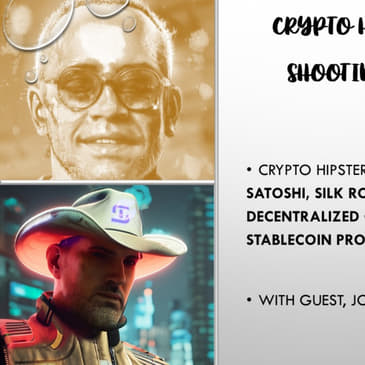

Joshua Scigala has been working in Bitcoin since Satoshi was still on the scene. His focus was on building transparency protocols for centralized exchanges after he lost a lot of money in the first ever Bitcoin exchange, Mt. Gox. Joshua and his brother Philip launched the world's first Bitcoin/physical gold order book exchange called Vaultoro in 2015. Joshua's main focus has been on building the ultimate decentralized stablecoin for the last 3 years.
" Badly designed Stablecoins are a threat to the entire cryptocurrency space. This is why I have made it my mission to create the ultimate decentralized stablecoin and borrowing protocol "
Joshua Scigala
[00:00:00] Hello everybody and welcome to the Crypto Hipster podcast. This is your host, Jamil Hasan,
[00:00:07] the Crypto Hipster where I bring you founders co-founders, entrepreneurs, executives, thought
[00:00:12] leaders, artists, you name it across the world of Bitcoin and blockchain, crypto all around
[00:00:20] the world. And today I have an amazing guest on the other side of the world from me,
[00:00:26] all the way from Adelaide, Australia. I'm looking forward to this interview. His name is Joshua
[00:00:34] Skiglia. He is the co-founder of the standard Joshua welcome. Thank you very much for having me.
[00:00:43] Yeah, it's it's it's pronounced shigala for those out there. No one gets it right so I don't blame
[00:00:49] you. I've butchered more names than you know. The butcher of names nice. Thank you for thank you
[00:00:59] for correcting me. I appreciate it. So let's kick things off. I look forward to this first question is
[00:01:07] what is your background and is it a logical background from what you're doing now?
[00:01:11] Right on. Yeah. Well, yeah, I think it's a logical background. I mean, I basically I started the
[00:01:22] world's first swap site back where people could swap clothes and this was like just after 9-11. So
[00:01:31] we're going way back. Yeah. And and I because I was researching a lot into where money what money is,
[00:01:41] where money comes from and all that after 9-11 because I didn't trust the official story.
[00:01:46] I thought there was holes all through it so it was sort of interesting following gold obviously
[00:01:52] then you get to central banking, fractional reserve banking. And so we developed this swap site
[00:01:56] thinking and also like with you know computers and jobs and AI coming in the future like I knew it
[00:02:03] was a while away but the talk was always there amongst the cipher punks and stuff. And so
[00:02:12] swapping was like once all the jobs are gone, maybe we can like have this great swapping economy.
[00:02:17] Yeah, you know obviously the vision was was crazy but at the time I realized how terrible swapping
[00:02:26] is. It just doesn't work because you have a whole marketplace of people all with their stuff.
[00:02:33] Let's say they've got a whole list of things, they want to swap like I've I don't know,
[00:02:36] I've got some headphones and some t-shirts and whatever else. And and I say to you hey I really
[00:02:44] love that that jumper you have there can you look through any of my stuff and see if you
[00:02:51] if you like any of it and then you say no don't like it. And I'm like but I really want that
[00:02:56] top of yours, like I've got some good stuff. So how do you make that war fluid? Well we have a whole
[00:03:03] marketplace there's thousands of other people obviously that's where money comes in right so
[00:03:08] we've gone full circle because I could have just paid you and then you could use that bit of
[00:03:13] paper to pay somebody else in the marketplace for something you do like rather than the deal
[00:03:18] just falling through. And and so I started I started thinking okay well I'll put some credit
[00:03:26] system on on swap style and which was the site was called at the time and the problem was then
[00:03:33] I was thinking well how many credits do I mint? And then I become the central bank. So we're
[00:03:40] again gone for 360. Oh you know I could just mint credits out of thin air and start buying people's
[00:03:46] stuff as a corrupt owner of the system. So I started looking around the web and I came across
[00:03:54] what the cipher punks were trying to solve. I didn't fully understand but I knew that they were
[00:04:00] looking for a way to do digital cash without a central authority. And I thought it was fascinating
[00:04:10] but I came to the conclusion back then that it was not possible because of the double spend problem
[00:04:16] where you you cannot I can't send you an MP3 and say I've sent it back to you you know
[00:04:23] and you go oh thanks digital things can be copied right. How do you know I haven't made a copy
[00:04:30] of an MP3 and send it back to you? You can't we can't use digital things as money because
[00:04:35] you need to absolutely know that I've sent you something and now I don't have it anymore. And so
[00:04:40] that double spend problem which has came to be known is basically what I thought was the problem
[00:04:51] that couldn't be solved in a digital space without a centralized authority that was keeping
[00:04:56] a database. And but yeah a few years later because I was already looking and I'd already found what
[00:05:06] those guys were trying to do people like Peter Todd, Julian Assange all those cipher punks types.
[00:05:15] I had I'd very early in 2010 found the white paper that Satoshi had dropped
[00:05:24] and and so I thought when I read that I thought my god they have solved this double spend problem
[00:05:30] this is this is the thing. And and really it was the name that grabbed me because I loved
[00:05:36] you know how BitTorrent took the centralized model of Napster and made a decentralized version
[00:05:45] using BitTorrent. And I thought a Bitcoin you know it made sense straight away and I read the white
[00:05:51] paper. Wow this is this is phenomenal they've done it. And and now ever since then I've been working
[00:05:58] in the space we we I lost then a lot of money in the very first Bitcoin exchange that got hacked
[00:06:05] which was called Mt. Gox empty Gox and and ever since then I got very very obsessed with transparency
[00:06:12] in centralized exchanges and how to solve that problem because I thought
[00:06:17] but if you can have the guy that ran Mt. Gox was a guy called Mark Carpellis and and he
[00:06:25] he basically I don't blame him for what happened because I think he just was overwhelmed by the
[00:06:31] amount of data flowing in and out there's no way to actually determine if you've been hacked
[00:06:36] very quickly without the right tools. And so I think he just you know if he didn't hack himself
[00:06:44] which I don't think he did. I think he just wouldn't have known that he was already running
[00:06:49] in fractional reserve because he was just dealing with all the you know putting out fires and everything
[00:06:56] and not seeing the forest with the trees. And so
[00:07:05] so yeah anyway so that's that's a little bit of my history. So then I started the very first Bitcoin
[00:07:10] physical gold exchange because I thought oh silly that was in 2014 I launched a built it in 2015
[00:07:17] we launched it was a very first audible exchange between Bitcoin and physical gold so people could
[00:07:22] trade those two assets because at the time every every time you took profits off the table
[00:07:28] and Bitcoin your bank account got shut down because the only headline that had anything to do with
[00:07:33] Bitcoin was about drug dealers and Silk Road and terrorism and you know everything else which
[00:07:39] was all fall sighted specifically the terrorism claimants are all nonsense they're all just
[00:07:44] using and also the drug war I mean the vast majority of transactions to do with drugs is done
[00:07:52] through US dollars all the way from you know paying for the seeds to planting the seeds to harvesting
[00:08:01] the the the opium to making the cocaine to then rolling it up and sniffing up the nose with
[00:08:09] the bloody US dollar note like on every section of the transaction is US dollars and
[00:08:17] it's been shown multiple times that that's case anyway banks just didn't like Bitcoin and
[00:08:21] that's fair enough because Bitcoin was there to invent it to surpass the banks
[00:08:26] yeah and so we built that we ran it to recently and and then I've I stepped away two years ago
[00:08:36] and started focusing on stablecoins because I don't like the fact that we have a vast majority
[00:08:43] of the stablecoin ecosystem which is a very very important part of this ecosystem now based on
[00:08:50] centralized companies holding US dollars in bank accounts because now we have
[00:08:56] companies that are officially and legally allowed to be in in fractional reserve
[00:09:01] issuing tokens so for those that don't know at home a USDC stablecoin or a USDT is basically an ERC
[00:09:09] 20 which is an Ethereum token and and and and they make one token for one dollar that's sitting in a bank
[00:09:17] but the bank can be in fractional reserve legally so you don't and it's very very hard to audit
[00:09:23] a bank and see actually how our liquid they are to creditors and everything else so
[00:09:28] so yeah I set out to basically build a truly decentralized
[00:09:34] and over collateralized stablecoin protocol so that there's always more assets backing it
[00:09:41] specifically I got up on stage in 2019 and warned people about terrelluna two years before it
[00:09:49] crashed saying this thing is a nightmare and that's not because I'm some sort of visionary
[00:09:56] it is basically because I'd seen it before I'd seen Dan Laramartry
[00:10:03] algorithmic stablecoin I've seen multiple algorithmic stablecoins fail because you fundamentally
[00:10:09] you can't back a coin with a crap coin that you can print out of nowhere because effectively
[00:10:16] you're doing the same thing as fiat you're just printing money out of nowhere to back a coin that's
[00:10:20] stable it might look stable for a while and then eventually you get more inflation than Venezuela
[00:10:27] would lash it you know but yeah that's that's my history on a deep dive there's a lot more new
[00:10:34] ones in between all of that with the block size wars everything else but but yeah now we're here
[00:10:41] and we're building basically the standard which is a 0% borrowing protocol where you issue yourself
[00:10:48] debt based on collateral that you lock up you don't give anybody else so we don't have the
[00:10:54] Celsius block fire FTX nonsense we don't you basically as a user send crypto to a wallet that you
[00:11:02] control with your private key you lock it and then the smart contract says okay now you're allowed
[00:11:07] mint new debt against that collateral and once you do you can still swap the collateral and trade it
[00:11:15] and stuff as long as the collateral value stays the same and this is what the standard does is
[00:11:21] allows people to lock up real rare assets like rare numbers like Bitcoin Ethereum and then borrow
[00:11:27] against that at 0% interest and no time limit to pay it back while still giving them the ability
[00:11:34] to trade those assets that is my second question but I want to go back
[00:11:42] I don't I don't talk to too many people who were cipher punks or they were knowledgeable cipher
[00:11:48] punks between 9 and 11 and between the advent of Bitcoin right but you were in the early 2000s
[00:11:57] so how's that landscape of the early cipher punks is changed into what we have today
[00:12:05] with all the institutions and everything what's been the evolution of the cipher punks and their
[00:12:10] view of Bitcoin. The initial cipher punks view hasn't really changed fundamentally the view is
[00:12:23] transparency for the week sorry transparency for the powerful sorry and privacy for the week
[00:12:32] so this is fundamentally what the goal was like that the powerful need to be transparent and
[00:12:39] the weak need to have privacy so that they you know don't get weaker basically
[00:12:47] and the weak meaning you know the unbanked or anything else in society Bitcoin is one of these
[00:12:57] inventions that allowed for us to to play out that dream and say look there's a pseudonymous
[00:13:06] system here and you can track the wallets of Blackrock now and see exactly how much they're holding
[00:13:14] you can track the wallets of the exchanges pretty easily with a lot of the software this
[00:13:19] channel is a software but you know every transaction is stored and if you have good enough software
[00:13:26] you can get pretty reasonable data if there is an aferious transaction in that network
[00:13:34] so it's good great for law enforcement you know we I'm a big believer that we shouldn't
[00:13:41] use money to to basically simply find baddies because what happens is if you give the power
[00:13:56] to police or governments to freeze or reach into people's money and say well the reason
[00:14:03] why we have this power is because we need to fight bad guys well that becomes a very very slippery
[00:14:10] slope towards tyranny because then like we saw with the truckers in Canada whether you like
[00:14:17] that to sit like the truckers or not it doesn't matter you can see that there was a group of people
[00:14:22] who didn't but didn't agree with the government stance on an on an issue and the government basically
[00:14:29] went in and froze their bank accounts froze their entire family assets for a political view now this
[00:14:37] this is just a very egregious move and so Bitcoin allows for people for true self-sovereignty
[00:14:47] and that not to be the case now it is important that police can hunt down predators and
[00:14:58] and sex offenders or whatever you know evil people and stop that but we shouldn't just say the
[00:15:05] easy way is freezing everybody's bank accounts until they're proven innocent like that that's
[00:15:12] that's a quick road to very very awful place and so we need to get back to good old-fashioned
[00:15:19] police work and the blockchain allows for that you can trace and do stuff pretty pretty amazingly
[00:15:26] I mean after we you know I've run a centralized exchange for a long time and and after a while we
[00:15:31] were forced by the government to use analysis systems and and I was I was blown away at
[00:15:40] the how absolutely phenomenal the data is that you get back from analysis from analysis of the
[00:15:47] blockchain but but yeah so in terms of from there till now I do think the problem that has a
[00:15:54] reason is you know the early bitcoins were very strong libertarian minded anarcho capitalist types
[00:16:02] and and we you know I remember thinking wow this is if this thing takes off we're going to have
[00:16:08] a lot of very wealthy anarcho capitalists that will do great stuff and and then you know over time
[00:16:16] as the conferences came along more and more conferences we went from just having those types
[00:16:22] to having more and more you know lawyers and regulators in there and you know and then every time
[00:16:30] there was a panel with and then you start getting these sort of celebrity lawyers and big names in
[00:16:35] and now we've got shark tank people and VCs and it has changed a lot from the original scene
[00:16:45] but fundamentally the idea is still a Trojan horse where we've gone oh yeah you like your moons and
[00:16:51] your lamboes you know all these types of ridiculous people who don't actually care about centralization
[00:16:56] and hence why you get projects like Salana that can have constant downtime as a blockchain yet still
[00:17:02] get pumped up and and told that they can they can run I think you tweeted about that recently
[00:17:10] as well like how can you have a blockchain take itself seriously when it just goes down for maintenance
[00:17:17] every so often like this is this is ridiculous but this is where we are now that people don't care
[00:17:26] because they can buy a part of it and it moons and so and this is where I see you know why regulators
[00:17:33] get pissed off like the SEC because they see it more as a security which I actually think is silly
[00:17:39] people should be able to invest in things without this ridiculous protection and maybe the
[00:17:45] SEC should turn into an educational arm instead where they can educate people of what scams look
[00:17:51] like instead of you know forcing them not to be able to invest in them I think that's a wonderful
[00:17:58] idea I agree with you so interesting you know I have my own opinions about Salana that we will
[00:18:09] probably won't get into because it would take a few hours you know but you allow people to
[00:18:18] you know to to earn yield on you know as an essentialized exchange by employing something called
[00:18:28] smart vault right is your smart smart vaults work yeah so like I touched on before so a smart vault
[00:18:40] you know the fundamental problem was there was a company called Celsius and FTX what they allowed
[00:18:47] you to do was you could send them your crypto your Bitcoin and you could borrow they would lend you
[00:18:54] some some you know whatever USDC or something they would lend you a stablecoin they would charge
[00:19:03] you like you know a lot of interest for that for that privilege and then in the back end they would go
[00:19:11] and trade that and try to make money and speculate on it hence why they don't exist anymore because
[00:19:16] their trades went south during a bear market and they lost everybody's money and and everyone's
[00:19:23] like I can't believe it my money's gone out of and and the other way around people were
[00:19:30] were giving were depositing money into these products to lend and they would lend that money
[00:19:37] to other people the other people would pay interest and they and the company would pay the people
[00:19:42] that lent the money the deposit the money you know some of that so what we've done with smart vaults
[00:19:48] is say look we don't need any of this leg because this is a typical legacy system this is a legacy
[00:19:54] financial system brought on chain rather so we don't need that we the whole thing is to think outside
[00:20:01] of the square so what do we do we built a smart contract and for those that don't know what a smart
[00:20:08] contract is maybe I can break it down a smart contract is nothing more than a computer program
[00:20:14] it's nothing more than a computer program the problem is a single computer program running on
[00:20:19] my machine here I don't know whether the output is true because I might have a virus that's
[00:20:25] manipulating that computer program if I have a computer program running so if in any virus can change
[00:20:33] the output so if I have one plus one in my computer program and it comes back four then there might
[00:20:41] there's probably a virus but let's say I don't know the what the outcome should be
[00:20:47] then I have to trust that that's true so what does it smart contract do differently will it runs
[00:20:53] a computer program on thousands of computers at the same time and if 51% of those computers come
[00:21:01] back with the same answer I trust that that is the truth that is the truth because it's very
[00:21:08] improbable that an attacker and a hacker has hacked every single one of those machines to give the same
[00:21:14] output and so a smart contract allows us to now deal with money because money is one of these things
[00:21:24] where you do need a computer program that's fully trustless I don't want to trust that a computer
[00:21:30] program is output incorrectly I want to make sure that that's a truth and you do that by running
[00:21:36] the same program on many many machines and seeing and saying okay anything over 51% or maybe it could
[00:21:43] be 80% whatever you choose 80% of the computers have the same output then I'm going to say well that's
[00:21:50] that's truth because the likelihood of every machine being hacked is very low.
[00:21:56] So we've written a smart contract where users create the contract with their metamask
[00:22:03] or their private key that they control that generates a new smart vault. This smart vault is running
[00:22:12] as a smart contract it's basically a wallet that's a smart contract and so you get a wallet
[00:22:18] address everything and none we don't have access to it no company has access no one it's your
[00:22:25] smart vault now you deposit some Ethereum you deposit some link you deposit some ARB whatever you're
[00:22:31] into into that smart contract and then you lock it now let's say you've put a thousand dollars worth
[00:22:41] of assets in there like you put you know $200 of e $200 of link and you know $600 of ARB but whatever
[00:22:48] it is some sort of portfolio and you lock it our mechanism has to be always 110% over collateralized
[00:22:58] that means more value locked up than what you're going to mint and borrow as a debt from yourself
[00:23:05] so when you lock it if you put a thousand in let's say you borrow 500 now you're 50% collateralized
[00:23:14] because you've still got 50% of that value sitting there does that make sense?
[00:23:20] Makes sense to me good so yeah the system is that you have to always be 110% collateralized
[00:23:27] you can borrow and the smart contract mints then a fresh brand new token called euro s where
[00:23:36] currently pegged to euro we're going to be releasing USDS then Indian rupee s and a whole bunch of
[00:23:41] different assets that are pegged to those local fiat's and the great thing is then you that
[00:23:50] is eventually going to be extremely stable once we scale out because there's always more value
[00:23:57] back the people will always want to buy that token back because they have more value locked up
[00:24:01] than that things were so and to get to that those assets that they've locked up they need to get
[00:24:08] those euro s's and pay it back once they've paid it back they can get those assets out and pay
[00:24:13] presto so this was invented actually a long time ago but make a doubt really implemented it for
[00:24:24] the first time years ago and so the problem with make a doubt is they only allow a single collateral
[00:24:31] type in a vault at once and this is actually across because a lot of people have forked make
[00:24:39] her and created their own versions and for me it was like I don't want to fork it I need to write
[00:24:46] this from scratch because we need to be thinking next generation how do we scale this how do we
[00:24:52] make it better for the borough because what people would do they'd borrow and then they would be
[00:24:57] liquidated and because what happens by the way is your smart contract has locked as locked your
[00:25:03] collateral you've borrowed against it now imagine China bands Bitcoin or some bad news happened
[00:25:09] and we start to see the whole market being red and bleeding then as soon as that the value of
[00:25:15] that collateral goes down your collateral ratio starts to go up to until you hit that 110% mark right
[00:25:21] remember you need 110% value for what you've borrowed as soon as it hits that the smart contract
[00:25:28] is is written in a way to to in math to regulate the regulation is mathematics here you know so
[00:25:37] the regulation says as soon as it hits 110% we liquidate the entire vault onto a whole bunch of
[00:25:43] people who have euro s and are willing to pay back the debt for you those euro s get burned and
[00:25:49] those collateral types get sent out for so they they basically buy these assets for 10% under market
[00:25:56] value because they get 10% more stuff for what they buy because it always has to be 110% over
[00:26:02] collateralized and so people are willing to buy these vaults at 10% under market value because hey
[00:26:08] you know it's 10% you get to buy Bitcoin for 10% under what it's currently trading for so
[00:26:13] and and those euro s's are then burnt and this this makes sure that there's always more value locked
[00:26:20] up in the system than there are stable coins floating around and this is what gives a value it's type
[00:26:25] of decentralized gold standard but fundamentally a gold standard had government holding all that
[00:26:33] value in a centralized vault an issuing debt against it and saying you can always get a $1
[00:26:40] gram of gold this shouldn't be the the way to go we should say hey people can lock up value all
[00:26:47] around the world as a sum there's this much TVL like total value locked and this much stable coins
[00:26:54] floating around and so that value is fundamentally secure because it's backed by rare numbers like
[00:27:00] Bitcoin and Ethereum and such but yeah you talked about yield sorry I'm going on and on on these
[00:27:06] big diadcribes I'm sorry audience if you get sick of my voice it's okay because at the end
[00:27:12] at the end of the diadcrib which is on a diadcrib at all I'll tell you about you know how I was
[00:27:17] the hostess customer and how the loans work there you know what we're talking about okay yeah good
[00:27:24] yeah I'd be definitely very interested to hear that so yeah so fundamentally how the yield
[00:27:29] happens because where zero percent interest where does the yield come in like how do people earn
[00:27:36] well because where the only protocol that allows you to lock up multiple assets and trade so once
[00:27:42] you come in for the zero percent interest and you say hey I've got some eath I'm getting whispers
[00:27:46] that link is going to do really well I want to convert some of my eath that I've got locked into link
[00:27:52] the system uses uniswap in the background but adds a 1% fee to that trading
[00:27:57] and people are locked in because they've already borrowed against it so they use the smart contracts
[00:28:03] they don't mind paying the 1% because the other option is to pay back your debt remove the collateral
[00:28:10] do the trade and then maybe take out a debt again and that and that people would rather pay the 1%
[00:28:15] than deal with that now that 1% fee gets dropped onto
[00:28:21] onto people staking the euro s in our staking pools and so the more people that lock up value the
[00:28:27] more trading because you can sort of assume that you can say about 5% of all total value gets
[00:28:34] traded on a daily basis sometimes more depending on the market sometimes 10% so if you can
[00:28:43] scale the TBL you can assume how much trading will happen and those trading fees will get dropped
[00:28:50] onto stakers and this is how are you and this is really important for the audience to know if
[00:28:55] you're going into the decentralized finance space and you get see some huge yield you have to ask
[00:29:01] where is that yield coming from because if you don't understand whether yields coming from do not
[00:29:08] do it because it's probably a Ponzi scheme or something like that it's really really important
[00:29:14] if you don't know whether yields coming from then you're the yield is the is the trope
[00:29:20] yeah I know that so yeah a couple times the last money in Celsius one was the bankruptcy obviously
[00:29:28] and it had my money was lost for 600 days and more 600 plus days and then I finally got some back
[00:29:35] like 57 57 percent I think it was which was you know as of the lock date but before that when
[00:29:42] there was an operational business I would take loans right and then I had like a bunch of loans
[00:29:48] and then the price of the market tank and then I got these margin calls and I'm like what is that
[00:29:56] so you always had to reach have like a 75% TBL like amount you know deposited there or you get
[00:30:06] the margin call and you know almost lost almost lost everything of that one you know so
[00:30:12] um but crypto loans should consent should continue to be you know something a product right
[00:30:21] so you know you're what you're doing is different and but what are the what is the future of
[00:30:27] crypto loans it should work the same way as a bank to people right you know um it should be a
[00:30:32] viable alternative to go into a bank so what do you think the future is there on of loans
[00:30:39] well I think the future is the standard I mean you know I'm I'm biased obviously because we're
[00:30:45] um you know we're building this this protocol but it's a free and open source protocol that's
[00:30:49] that's what the future should be free and open source we're building front and now open source
[00:30:53] front ends so anybody can take our code and create a front end for our smart contracts
[00:30:58] and and allow their customers start issuing themselves 0% interest debt the reason why we can do
[00:31:04] 0% interest debt is because we have no lender um there is no one coming and lending somebody else
[00:31:13] um and and because what's happening in our mechanism is people are locking up their own funds
[00:31:19] and using that to mint brand new stablecoin so it's a way of issuing new debt similar to a central
[00:31:26] bank except this is a decentralized bank uh and it's run by smart it's regulated by math
[00:31:33] regulated by smart contracts and this is really going back to syphapunk roots is that we need
[00:31:40] mathematics to regulate the system because um in a global world you can't comply with every
[00:31:48] single jurisdiction it's hard enough uh complying with all of these different countries around
[00:31:54] the world in terms of a centralized exchange if you have a centralized exchange
[00:31:58] it's it's it's phenomenal the amount of work it's something like the European Union allows you to
[00:32:04] passport so if you are regulated in the um you know in Germany you get then regular your
[00:32:11] compliant in the rest of the EU uh but something like America you need a license in every single
[00:32:18] uh state so it becomes extremely difficult so this is why smart contracts are really important
[00:32:24] because smart contracts are regulated have to be regulated by code they can be pre-read beforehand
[00:32:31] to say okay here's the regulation if this then that otherwise this and that is the law
[00:32:38] and something like FTX and even Celsius they were highly regulated FTX was extreme you know people
[00:32:45] go on like say oh this is why FTX is why we need regulation excuse me FTX was so highly regulated
[00:32:53] yet they still got through because they were run by a bunch of scammers or a bunch of fools that
[00:32:58] didn't know what they were doing and trusted one scammer or whatever the reason was at the end
[00:33:03] of the day they managed to get through and they were highly regulated you know what doesn't get
[00:33:08] through is when you regulate 2 plus 2 to equal foot 4 it's never going to equal 5 ever it's always
[00:33:17] going to equal 4 it's always going to put out the exact number that it should it is regulated by
[00:33:22] the laws of mathematics and of course you can get hacks you sometimes we write code where there
[00:33:31] is a vulnerability and so you could say that there is a weak point and it is and this is where
[00:33:38] I don't believe in the the trope of trustlessness there is no such thing as being totally
[00:33:44] trustless you have to trust the wallet that you're using isn't uh you know going to like run
[00:33:50] away with your private keys you have to trust a whole bunch of stuff especially if you don't code
[00:33:55] you have to trust other people reading the code to say in an open source project to say okay yeah
[00:34:00] we haven't found anything bad in here so trustlessness is there's trust minimal you know there's
[00:34:08] minimal trust and that's really what we have to aim towards that we don't need to trust as much
[00:34:14] and we try and we can see that many many programmers have looked over our code we had we recently had
[00:34:20] an audit of our system of 250 plus white hat hackers trying to break our system for over like a month
[00:34:29] and they came back with some vulnerabilities they came back with some some better ways to make
[00:34:36] the smart contract more efficient all sorts of stuff but um you know we've gone through that and
[00:34:42] patched anything they found and now we're releasing it's uh well we released it last a couple of weeks ago
[00:34:48] so um you know it's uh yeah I don't know where I was going with that but that's uh that's basically
[00:34:56] what what we want to get to is trust trust minimized as much as possible I want to talk about that
[00:35:03] trust because you mentioned a couple things earlier first you mentioned chain chain analysis
[00:35:08] and you also mentioned salana um so there are analytics that are provided by chain analysis
[00:35:17] and then there are made up contrived metrics made up by people who are shilling certain coins like
[00:35:23] salana right if you're new to that if you're new to crypto right and you don't know where it had
[00:35:29] a navigate and you see all these people coming up with with you know narratives and numbers and
[00:35:34] all this stuff like how do you begin to know what to pay attention to and decipher between what's
[00:35:42] trusted trusted and not trusted if you're new to bitcoin and somebody knows that you're new to
[00:35:52] bitcoin and they're shilling to you some like trying to sell you on a strange token that uh
[00:36:00] you know that that you've never heard of you do not buy it no matter what they say
[00:36:06] you know I'm here and I represent the standard because that's what we're working on
[00:36:11] we have our own governance token TST we have euro you know euro s as a debt you have to like
[00:36:16] use these smart vaults don't touch any of that stuff you know if someone is trying to get you
[00:36:26] to buy something and they know you're a newbie then you know that there's something in the
[00:36:31] ferris here but maybe there's maybe there's not there's a chance that they're not
[00:36:35] if you're new to this you buy bitcoin and maybe ethereum eith eth btc eth that's all you don't touch
[00:36:48] anything else because there are far too many holes to fall down then there are and look there
[00:36:57] are opportunities of course bitcoin is not going to do another thousand x in the next while you know
[00:37:04] it might double it might double and that that might be enough for you in fact that should be
[00:37:09] enough for you because the legacy banking system will barely give you any of that reward but fundamentally
[00:37:17] bitcoin has been when it was invented people would be like why is it so volatile and crazy
[00:37:23] well it's in a price discovery phase it's trying to find the right value for it we don't know what
[00:37:28] this is worth we've for the first time got rare digital assets we've got digital assets that can't
[00:37:33] be double spent so we don't know as a society what these things work that's why it's like crazy
[00:37:40] going up and down and that's why there's such massive crazy gains is because it's trying to find
[00:37:45] its fair value if someone comes out with another coin and says yeah you're gonna this is the next bitcoin
[00:37:53] I don't know you know like it you know there it might be it might be it absolutely I'm not saying
[00:38:01] it's out of off the table there might be a technology that will come and supersede it and get
[00:38:06] a better network effect be just as decentralized and wonderful but foundationally historically we
[00:38:14] have one asset right now hope bitcoin and it is it is a it's a good hedge against inflation
[00:38:24] um it's not perfect gold is better if you're older if you're heading towards retirement I would
[00:38:31] record I would not record or nothing I say is a recommendation but I would not buy vast amounts
[00:38:37] of bitcoin with your retirement um if you're getting close to retirement meaning you cannot
[00:38:42] re-earn any losses I would stick with gold because you're going to lose and we're already seeing
[00:38:48] the elderly are losing massive amounts I don't even know how my wife's mother is struggling to pay
[00:38:55] rent because rents have gone up so much she was unfortunate enough not to buy a purchase a house
[00:39:03] through her life and now she stuck paying rents that are off on some inflationary nonsense and
[00:39:10] and so if she was to take her savings her retirement fund and put it into gold it's probably
[00:39:16] a much better place to be because then at least you will keep up with inflation and that's the
[00:39:21] key as you retire um if you're younger put a percentage into bitcoin if you're new to this once
[00:39:28] you're you've been in this game for a year you've kept an eye you start to understand all the
[00:39:32] nomenclature you start to understand the concepts then you can maybe put a little bit into some of
[00:39:37] the other things but these people that come along they're new they get sold on some crazy coin
[00:39:42] it's probably going to be a scam the amount of people are sour scammed and lose everything is
[00:39:47] horrific so stick with btc bitcoin stick with some Ethereum maybe but yeah projects like mine they're
[00:39:57] more advanced if you're advanced definitely come and check us out um and helping the community
[00:40:02] and stuff like that but um but yeah that that's my that's my advice I'm taking it away but take
[00:40:09] it for what you paid for it's free i'm gonna take it there's a few years ago i might not have
[00:40:14] agreed with you but what's happened over the past few years i agree with you so um and uh
[00:40:21] see you also want to touch on one more thing um you said you made you had an announcement a couple
[00:40:28] weeks ago i believe that announcement you're talking about was the Ramsey's partnership uh the
[00:40:33] decentralized exchange partner um how's that how did that go so far what do you look forward to
[00:40:39] and what's now possible because of that partnership yeah so um you know we we looked for a decentralized
[00:40:47] exchange that had a mechanism to start to build deeper liquidity for euro s uh we've just launched
[00:40:53] so uh we're now incentivizing liquidity pools so that people can earn uh a yield by adding LP so
[00:41:02] going and getting euro s and getting uh ag euro which is um uh another euro stable coin um and
[00:41:10] and putting that into liquidity pools so again now we're gonna get more advanced for those viewers
[00:41:15] that are more advanced um uh you can these decentralized exchanges are wonderful are absolutely
[00:41:22] phenomenal why because they take away the power of the centralized exchanges we don't we want to
[00:41:28] get away from and this is a lot of the time i talked to like bitcoin maxi's you're like no
[00:41:33] Ethereum it's a scam and uh but i say look you don't like centralized exchanges and yet
[00:41:42] you know you need to we need to trade like that's the whole point of the world is trading and
[00:41:47] and um and allowing us to to move value we've invented these amazing things because those that
[00:41:54] don't know the Ethereum network is about as powerful as a Nokia 8 2 10 like it's it's really not a
[00:42:01] powerful network so these smart contracts can't handle full order book exchanges you know the
[00:42:06] order books you see on these central on these centralized exchange of constant trades happening
[00:42:11] the amount of computations that make that happen is far too massive uh for these decentralized so
[00:42:16] how these decentralized what these decentralized exchanges have done is they've invented automated
[00:42:20] market maker basically pools that um that basically always have to be even it's a little bit
[00:42:27] different now with v3 pools but the v2 pools are very very interesting you have these two
[00:42:32] pools and and there's not much computation and it basically allows for similar concept of trade
[00:42:39] and uh and price discovery within these markets anyway um uh on ramsers you can go and you can
[00:42:46] deposit uh euro s and uh and ag euro which is another euro stablecoin um we've done that because
[00:42:54] initially we had a pool with euro s which is our stablecoin for euro standard and um and
[00:43:03] usdc because we thought a lot of people will want that pair the problem was that having a lot of
[00:43:12] people trade stablecoins or use stablecoins as lp because there's no impermanent loss
[00:43:18] so i'm gonna get down on the weeds here guys but impermanent loss is basically when you've added funds
[00:43:24] into these pools and now you have you've bought the other side of the pair and now you're stuck with
[00:43:30] that um as why stablecoins are good is because they're both staying relatively stable right
[00:43:36] and if you have a euro dollar pair you've now introduced even though you've got stablecoins
[00:43:42] you've introduced or x impermanent loss because the dollar and the euro slightly deviate all the time
[00:43:49] so we and it makes it difficult for people to understand you know uh how much does that have
[00:43:57] to be today how much one dollar to one euro are point oh you know you know it's um it's difficult
[00:44:02] so pairing with a euro to euro makes it a lot easier age euros got very good deep liquidity against
[00:44:09] a lot of the other stablecoins like usdc and all of that so if you did want to trade
[00:44:15] the routing systems that are built on these decentralized exchanges meaning i want to trade euro s for
[00:44:21] i don't know um you know uh shibu inu or something crazy the the routers will find their way
[00:44:30] through like they'll go oh look there's a pool for euro s ag euro hop oh there's a pool from ag euro
[00:44:37] to usdc hop oh there's a pool from usdc to shibu inu hop so and that automatically happens in the back end
[00:44:46] and so our pool with ramsey is uh euro to euro stablecoins so it's nice and stable um uh of course
[00:44:54] there's always going to be slippage because we're what's called a soft peg um it's it's never hard
[00:44:59] we don't promise we promise like a centralized stablecoin could say always send us our ESC 20 will
[00:45:05] always send you a dollar this is a hard peg um uh a system uh a decentralized stablecoin system is
[00:45:13] more of a soft peg it's gonna it's gonna aim to be around one uh one euro or one dollar whatever
[00:45:20] it's peg two um but yeah anyway so you can go check out ramsey's decks m-r-a-m-s-e-s decks um we have
[00:45:30] great uh you know the whole system is built to start building incentives for people
[00:45:34] putting LP they start to earn the trading fees that are happening they start to earn um also uh
[00:45:41] ramsey has their own token that they uh issue out to people adding LP and um there's uh you know
[00:45:47] it's all very defy but if you know what you're doing uh it's definitely well worth it because we've
[00:45:52] incentivized those pretty strongly sounds good and i will add that you know when when we were
[00:45:59] watching the Celsius and FTX all the companies come bankrupt there were payments that were going on
[00:46:05] that were decentralized and that worked perfectly centralized components failed but the decentralized
[00:46:13] stuff worked perfectly so uh yeah yeah that this was the problem with Celsius is that they
[00:46:20] paraded around like a decentralized thing but they weren't decentralized they had a centralized
[00:46:26] the uh system that could get hold of everybody's assets and and use it to trade with and
[00:46:33] they made some bad calls by because they were looking for yield for these people
[00:46:38] they were looking for more and more yield now where was the heaviest yield it was in what was
[00:46:43] called staked eath and staked eath was basically um locked for like years um so once you
[00:46:52] staked it yeah you're getting yield but your assets are like locked so then when everyone was
[00:46:58] getting margin code and wanted or wanted their tokens out they Celsius couldn't get it out because
[00:47:04] it was staked yeah it was only could you but they couldn't get it out i think uh you correct me
[00:47:09] if i'm wrong but i think that was fundamentally the problem there and then FTX bailed them out
[00:47:14] i'm pretty sure or was that FT it was that a block fire i don't know but FTX then bailed them out
[00:47:20] and then FTX went bankrupt and uh yeah so it was a bit cascading uh you know i i dare call it
[00:47:31] comedy of errors but um it started to teraluna to begin with because that was an algorithmic
[00:47:39] statement one and not a pegs then not you know so maybe we can touch on that because a lot of
[00:47:45] people say well how are you different from teraluna yeah so how are you different from teralena
[00:47:53] i'm glad you asked um well let's let's talk about quickly how teraluna worked so teraluna
[00:48:01] um was a coin that had two tokens one is the stable coin and one was the governance token
[00:48:10] and the governance token didn't have a cap they could print as many as they want
[00:48:16] so how did they run how did they make the stable coin stable what they did is they said
[00:48:24] okay um let's say the governance token is worth 50 cents so what do you need we
[00:48:31] take two of those and we place it in this smart contract and we say oh look 50 cents 50 cents
[00:48:37] that's worth a dollar so it's backing that stable coin so if um now what happens if the value of
[00:48:45] the the governance token goes from 50 cents to um 10 cents then we just print ten of them
[00:48:54] and put ten of them in the smart contract and now well there's ten of them so that's still equals a
[00:49:00] dollar and so algorithmically we that what they did was they took algorithmically and printed more
[00:49:09] and more of them now in a bull market you get the illusion that this will work because hey everything's
[00:49:17] going up you know a rising tide floats all boats uh lifts all boats and so we had um we had these
[00:49:25] these uh rises going up and up and up uh teraluna had to print less and less and less
[00:49:32] and it always stuck now then we hit a bear market and the bear market meant oh we need to print more
[00:49:40] and more more more and people will buy were invested in teral in this in the governance token
[00:49:46] which was going down a value it was going down a value because they had to print more to
[00:49:51] to back their stable coin and that was going down in value so that people started selling
[00:49:56] that cell pressure made it even worse and then it built into a downward downward spiral where
[00:50:02] you know basically you cannot back a stable form of currency with fluff that you can print out
[00:50:09] of nowhere you cannot do it and this is why I saw it so clearly in in 2019 just as they were releasing
[00:50:18] their white paper but the problem is that when they offer 20% yield um through their anchor
[00:50:29] partners some weird Ponzi mechanic that they had i can't even explain how that worked
[00:50:35] people just went oh yeah and not just the dumb money meaning not just retail investment
[00:50:42] and actually I find the VC money they call the smart money it's just as dumb as everything else
[00:50:48] and when I say dumb I mean run by fear uncertainty and doubt run by greed all of this stuff we have
[00:50:56] what was his name the guy that got the teraluna tattoo like a week before it collapsed uh
[00:51:02] mark was it what was that uh novega grass novega grass yeah it was ha novega grass i mean he's a very
[00:51:10] intelligent guy I cannot believe that he didn't know and I have to assume that he didn't know because
[00:51:16] he got a goddamn tattoo of it um but he couldn't figure out the basics of economic theory and anyone
[00:51:25] that studied any sort of economic theory whether it's Keynesian or it's Austrian you have to know
[00:51:31] that value has to come from somewhere you can't just print value and say it's valuable it has to
[00:51:38] come from somewhere and uh this was the major issue with uh with teraluna and so how do we differ
[00:51:47] well we don't back the stablecoin with our governance so there's nothing to do with the
[00:51:53] governance the governance token does something else but we first of all only allow decentralized
[00:52:00] people not us a whole bunch of people to basically lock up more value than they're creating um and
[00:52:07] that value is locked they're basically transferring that value into this new thing because the new that
[00:52:12] value cannot be unlocked cannot be released cannot be withdrawn until they pay back that stablecoin
[00:52:18] that they've borrowed um and and so you're almost saying okay I probably have this value here
[00:52:27] and now it's in this thing that's a lot more stable and it's stable because the fluctuations are
[00:52:32] happening in here um and uh and so it's it's these are these are fundamentally rare numbers there
[00:52:41] are only 21 million bitcoin we can't print more and back the stablecoin with it there are only
[00:52:48] now Ethereum's a little bit more um wacky with its with its absolutism but it's actually in a
[00:52:56] in the client now there's more being burnt every day than there are being create so that is also
[00:53:02] a fundamentally rare number um and uh and there's a whole bunch of other assets that we accept
[00:53:08] we use chain link we partner with chain link chain link is an investor in us through the
[00:53:13] chain link build program uh they're they're accelerator program um they're helping us out a lot and uh
[00:53:20] yeah I think it's a it's a really nice is it of course it's all very very new so i i would recommend um
[00:53:28] that people don't recommend anything by the way it's wrong wording i would say have a look and check
[00:53:34] out the way to earn a yield is to issue yourself euro s and then go for zero percent interest and put
[00:53:40] that into these yield accounts to start buying up um uh any of the fees that are generated um but uh
[00:53:48] yeah that fundamentally we're very very different from any of the algorithmic nonsense uh so where
[00:53:54] a fully asset backed decentralized stablecoin and borrowing protocol and um and i think it's
[00:54:02] really fundamental that we have zero percent uh no user on on the foundation of money on the
[00:54:10] base level of money because that's you know the standard is where it's being printed it's being
[00:54:15] minted from people smart vaults fresh and um i don't have a moral problem with interest so to speak
[00:54:22] like if i lend you money i don't mind paying uh i don't mind charging interest because there is
[00:54:29] an opportunity cost for me i could be using that money to make my house better or to build a
[00:54:34] business instead i'm lending it to you so that's where interest is is morally absolutely fine
[00:54:40] when where interest is morally a per hit a reprehensible is uh where a central bank can issue
[00:54:46] money out of thin air and charge interest for it or when uh you know if the standard was to allow
[00:54:52] you to lock up funds and issue debt and then charge interest for it and that's what maker doubt
[00:54:57] does i mean it's ridiculous it's your own you're borrowing money from yourself yet
[00:55:02] you're charged interest for that um so it's no it's no good so that's where i think uh interest
[00:55:08] free really is the future and um and that's that's what we're hoping awesome so that makes last
[00:55:16] sense to me sounds great so i want to thank you very much for your time today speaking with me
[00:55:23] appreciate it and i have one last question um and as this is how can people find a more
[00:55:30] information about you about the standard how can they test cry out your platform how can they do that
[00:55:37] yeah just um head over to the standard.io and um yeah just log in with your web 3 wallet and
[00:55:44] click around have a go and and check out our discord as well or our telegram if that
[00:55:49] floats your boat um we've got a whole community in there and we're always looking because we're
[00:55:54] free to open source projects so we're always looking for people to help out and you know give us
[00:55:59] feedback and say hey you know this could be better or that could be better or um and uh and yeah
[00:56:05] if you want to follow me on twitter it's uh the project is at the standard underscore io and my personal
[00:56:13] twitter is at jsci gal so it should be here um at j shigala and uh yeah you can uh keep up with my
[00:56:24] ramblings and uh over there on twitter. Awesome uh thank you very much for your time today.
[00:56:34] Hey it's my pleasure thanks for having me jimin