
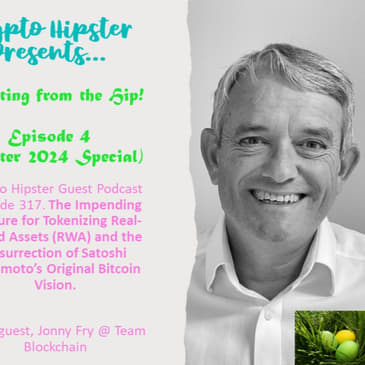

Jonny Fry is Group Head of Digital Assets Strategy for ClearBank Ltd, established in 2015 becoming the first bank in over 250 years to be regulated as a clearing bank in the UK. Jonny is also CEO of TeamBlockchain Ltd as research and publishing firm that produces Digital Bytes, a weekly analysis focused on the commercial opportunity of using blockchain technology and digital assets. He is a NED of TURN, a blockchain-powered reporting platform for the asset management industry and is an advisor to a number of other firms. Jonny is chairman at Gemini Capital UK, which owns a Dublin based fund administration platform where he is regulated by the Central Bank of Ireland. For over 20 years Jonny was CEO of Premier Asset Management Plc, a London Stock Exchange-listed asset management company.
RECORD OF EXCELLENCE
Respected speaker and moderator, Jonny Fry is a recognized figure in blockchain and digital assets sectors, earning him the CryptoA.M. 2022 "Influencer of The Year" Award.
More about ClearBank
ClearBank are the UK’s 5th clearing bank (Barclays, HSBC, Lloyds and NatWest being the others). They are Direct Participants of Bacs, CHAPS, Faster Payments and C&CCC, as well as being Principal Members of Mastercard and Visa. ClearBank also provide an API driven multi-currency solution (12 currencies) offering 24 x 7 access to the UK Payment Schemes processing payments in almost real time. All funds are held at the Bank of England, ClearBank does not lend or provide overdrafts/credit – Client funds are therefore accessible in full, 24 x 7.
[00:00:00] Hello everybody and welcome to the Crypto Hipster podcast. This is your host, Jamil Hasan
[00:00:08] the Crypto Hipster where I bring you founders entrepreneurs executives artists thought leaders all around the world of crypto on blockchain and today I have an amazing guest why how I know he's amazing because I interviewed him three years ago when I first started out as a podcaster.
[00:00:30] Johnny Frye, he is the founder and CEO of team blockchain in UK. Johnny welcome back.
[00:00:37] Thank you very much. Good to be honest I can't believe it's three years your crypto hipster that is incredible.
[00:00:44] Time flies man. Yeah we haven't fun time flies so I have a lot of fun on this so thank you.
[00:00:51] Good well I'm looking forward to be back on the show and showing you some updates and thoughts on kind of where we are and more importantly where is it going because we've seen a huge maturity in this sector.
[00:01:04] I look back as you say I write a weekly analysis that you're very kindly read. Been doing it now for six years and when we started it out it was very much people were intrigued and fascinated I think by this but they thought was a new technology blockchain although it went back really to file sharing in apps as you know all that sort of stuff.
[00:01:29] It's been around quite a long time distributed ledger technology but really sort of 2016-17 we first started to more and more people became aware of this thing called Bitcoin and understandably it gone from like one cent to sort of thousand dollars.
[00:01:45] And then I said well the party's over that's it it's not going to do anymore and learn behold it's just recently hit an all time high over seventy thousand dollars and what started out as a form of electronic or an alternative to electronic cash according to the great famous and saccharin neck and neck and he says name for goodness sake.
[00:02:10] The event the inventor of Bitcoin. He's a touchy satoshi Nakamoto he basically was quite worried about people thinking of Bitcoin as a speckled investment because he very much saw it as an alternative electronic form of cash but the trouble is is that we've seen it go as I say from a cent to seventy thousand dollars.
[00:02:31] A lot of people have lost money and a few people are made a pretty penny and what it's done is really forced something called cryptocurrencies which you know huge amount about I know but it's really forced the whole concept of blockchain technology and the digitization.
[00:02:48] Of assets and that's something when we look at the size of different asset classes but we'll come on to that anyway I'm standing a thunder so what's on your mind how can I perhaps help.
[00:03:03] You can never steal my thunder my guests are the thunder so appreciate you coming on and we are going to touch on some themes some I like and some I don't like so much but I'm learning you know the first thing I really want to do is give a refresher to folks about your background and if it's a logical background for what you're doing now and then touch on some of the themes that we've seen since we last spoke three years ago.
[00:03:33] Okay so if we want back in time I I first got involved in financial services back in nineteen eighteen five so it's quite a while ago now and it basically led to me setting up an investment management business what so we were managing portfolios for individuals and getting recommendations from sort of accountants and financial advisors and lawyers and the like.
[00:04:01] And that led to us buying a unit trust company from a company called Brundolf in a stockbroker and it shows how old it was units trusts where we converted those into use it's.
[00:04:12] Which is what more most people are familiar with now and along with that came a range of funds in Luxembourg called C cabs which like European equivalent of open any mutual funds and basically ran that business for over 20 years as the CEO.
[00:04:27] So I'm floating on the London stock exchange and about fifteen years ago decided well that's kind of what I've done almost since leaving college so thought I better sort of look at something something different and got involved in a number of different businesses at a personal level sort of being non-exec or chairman or angel investor in the sort of tech space in the manufacturing space in the property area but but I kept getting drawn back into financial services.
[00:04:56] So I'm not having time and this is sort of 2016 17 started looking at this thing called blockchain.
[00:05:01] I'm not a technologist so it wasn't so much interest in the technology per se but I was very interested in what could it do how could you commercialize it and at the time the main the main chatter was around ICOs and and obviously around the performance of things.
[00:05:19] Look back in 2018 ripple or XRP went up by 38,000% in one year and that kind of grabs people's attention because they kind of say you know could I shut up would I or wish I had.
[00:05:34] And that whole FOMO drove a huge amount of interest because had you put it in a thousand or five thousand or ten thousand then you'd be sitting on a beach not in a recording studio and that tended to be people sort of I wish I had
[00:05:48] and they were looking for the next ripple they're looking for the next Bitcoin and that's how that sort of interest but I was more interested in how could you use the technology to shine much greater transparency in different ways and that led me to setting up digital bites which is this weekly analysis looking at who how where and why blockchain and digital assets are being used in different countries and different industry so that that sort of how how it sort of morphed and then obviously got involved in a number of different businesses.
[00:06:17] I currently head up the strategy for a UK clearing bank company called clear bank here in the UK and we're looking at how can digital payments impact the markets we've seen a lot of talk in the UK about getting rid of things like backs and what's going to happen to chaps and we meant to have the new payment agreement which the bank of England are saying why it's not going to come out for another couple of years.
[00:06:41] We've seen what's been happening in Australia with the new payment platform done some really interesting things there in America you got fed now which was meant to be this 24 seven instant settlement system came out last July July add out of the nine and a half thousand banks and credit unions only 450 ish are using fed now so we're that there is definite realization we need to move with the times and as people want to be able to do it.
[00:07:10] People want to be able to do basically 24 hours a day seven days a week the current banking system and payment system arguably aren't fit for purpose you know i was talking to someone earlier on today and they wanted to transfer some money out of one bank account another said yeah yeah you can do 10,000 pounds a day what happens when to more I've do chaps what's that we're going to cost you 26 pounds 50.
[00:07:32] And what but this my money and I want to move from one bank to someone else yeah you're going to pay 26 pounds 50 or come back every day the next three or four days move that 30 40,000 pound across because it in the UK its tax season at the moment people want to move money into ises and things like that.
[00:07:48] And it kind of just again struck me straight in the middle of the face and thought wow you know why can't we you know I am when I write my weekly analysis I use analysts in Asia in Africa and I send the money using a stable coin and it's instantaneous and it's free.
[00:08:06] So little wonder that stable coins according to how I'm beven the you know the very well known hedge fund management operation they did report and found that stable coins had a turnover of 11 trillion in 2022 11 trillion.
[00:08:20] And that compares to visa which is 11.6 trillion.
[00:08:25] So when people say these things are scalable no one's using them or look at CC data last week they came out some statement saying that the turnover in stable coins last month was just under 1.1 trillion.
[00:08:38] So not only is the technology ideal to eat a blockchain scalable but this is being used at scale right now and a lot of people don't understand that but you've really got to wake up and smell the coffee and say there is now an alternative that doesn't mean you've got a ban cash and checks and chaps and you know why transfers not at all but in some cases it doesn't make a lot more sense to look at alternative payment mechanisms.
[00:09:08] So you realize what I'm pointing to and that's so that's yeah that's that's a lot that's good you know that's a lot of money in that.
[00:09:14] Yeah so you mentioned themes one and you mentioned a word you mentioned a word FOMO and maybe we'll get into that later as a theme but one of the more important themes right now is the rise of tokenized cash funds and digital payments.
[00:09:33] What is the current label and their other than stable coins?
[00:09:37] Okay so depending on where your listeners are these things are called have different labels here in the UK we call them a cash mutual fund.
[00:09:47] In the States you call them money market funds in Europe you call them a prime fund and basically very approximately in the UK we have about 50 billion dollars worth of this stuff which is it's a reasonable sum but not that much when you compare to the Europeans have 1.7 trillion or the Americans have got over 6 trillion dollars in money market funds.
[00:10:10] And what these are these are basically mutual funds managed by arguably some of the best treasury managers in the world because the likes of state street at goldmonds and fidelity black rock they can afford to pay hundreds of thousands to get the best brains to manage your cash.
[00:10:28] And so what these are a low reshort dated instruments whereby you can get a better return in a money market fund than you can by simply holding your money in the bank and also your money is very diversified it's across many different holdings so it's actually very safe.
[00:10:43] The trouble is it normally takes two or three days at least to feed you to get your money back so if you want to transfer and put some money in and get it back out it's going to take at least two or three days and that's two or three working days and if you have to want to do that on a Friday
[00:10:58] it might not be until maybe the following Tuesday or Wednesday you get your hands on the cash so it's not really that accessible if you want to use it as a proxy as a treasury management service.
[00:11:09] But once you digitize these money market funds you can actually put your money in and get your money straight out the same day if you so wanted.
[00:11:18] Now that's not to say you want to encourage people to be trading these things that's not the design for but if you're a company or a wealthy individual and got more than the investor protection schemes and they alter you know the states it's much more than the UK UK so only 85,000 pounds for example but you've got more than 85,000 pounds in a bank then you have no protection.
[00:11:38] So you're a line on that bank that will all be okay well the trouble is in the states last year there were 580 billion dollars worth of bank deposits which were not okay Silicon Valley bank and you know etc they went broke.
[00:11:51] In this country we obviously we saw problems with northern rock a few years ago going back in the states we obviously saw Cherson Lehman disappear so banks inherently have a degree of risk which is why they have an investor compensation scheme attached to them.
[00:12:07] But put your money in a money market fund is actually being professionally managed across a number of different instruments and institutions and if you can get your money out the same day arguably it then becomes an alternative to leaving your money in the bank.
[00:12:21] So it's an alternative to a deposit or a savings account and some of these money market funds not only are they trading 24 seven but they're going to start making distributions not every six months but monthly as we've seen with black rock they're just an average.
[00:12:36] Black rock they're just announced last week or indeed I think we're going to go to weekly distributions so you the investor can get your access to your cash to your interest much much more frequently and then finally these funds are going to possibly manage or priced by independent market makers.
[00:12:55] So in the same way with an ETF for a share that's quoted or any security coach on a stock exchange the prices made by the issuing house or the asset manager it's made by independent market makers so therefore you've got transparency of pricing which from a consumer point of view that has to be a better deal and with nine trillion in money market funds.
[00:13:16] The question has to be from the regulator hey black rock you've just digitized tokenize your money market fund Aberdeen standard Franklin Templeton a Monday biggest asset manager in Europe you've tokenized your money market fund why don't you tokenize your real estate fund your fixed interest fund your equity fund.
[00:13:36] Now all these funds the fund sector according to P W C will be worth in excess of a hundred forty five trillion dollars next year.
[00:13:46] So we're talking about a market now which is seventy times seven zero times the size of the crypto market and that's just the fund sector now on top of that you've also got institutions looking to tokenize real estate debt instruments but the big daddy is obviously the derivatives.
[00:14:06] So we're talking about the derivatives market because if you look at the derivatives market the derivatives market is one point to quadrillion quadrillion in size.
[00:14:16] Now in America a quadrillion is eighteen zeroes in the UK a quadrillion is twenty four zeroes as we as I can't see the couple weeks going digital bites how can that be how can we have but that's what we had with billions and you probably remember hip set that's what happened with trillions that the bricks and the Americans couldn't agree the number of zeros on a trillion a few years ago.
[00:14:35] Wow so the rising tide is a rising tide lifts all boats so you so if they're going to tokenize everything in seventy acts and I should expect to see a seventy X in the crypto prices.
[00:14:50] No that's just the point the point is that what are cryptos what can you liken them to and I would suggest having spent nearly.
[00:14:59] Blimey nearly forty years in the investment markets I see there's a huge correlation in terms of smaller companies and cryptos smaller companies and cryptos on the whole are illiquid under researched and not owned by institutions.
[00:15:15] Even all the for all that's going on with ETFs at the moment with bitcoin the average holding is thirteen thousand dollars.
[00:15:22] So institutions tend to buy funds that invest in smaller companies and I would propose that institutions will buy funds that will invest in crypto and leave it to professional skilled fund managers who are building bots because these things trade twenty four seven one fund manager cannot manage a crypto portfolio they do need to get some sleep at some stage.
[00:15:44] And that kind of leads me on the next if we see the digitization of funds of debt of equities of real estate in the UK we have thirty three million taxpayers of which only three hundred eighty five thousand use their capital gains tax allowance.
[00:16:02] So why are they buying a fund whereby the fund manager can trade tax free either don't pay capital gains tax every single time by sell.
[00:16:10] Why do they want to pay a half or one percent for that fund wrapper when they can actually give it to a wealth manager and it's probably going to be in the form of a bot.
[00:16:19] And that bottle trade and buying sell investments for you and utilize your capital gains tax allowance without the cost of that half or one percent wrapper.
[00:16:31] So this is a fundamental change and this is why the biggest fund manager in the world black rock Larry think has gone from being quite aggressive about crypto to suddenly saying we recommend you could see ten trillion dollars worth of us tokenizing stuff over the next few years ten trillion.
[00:16:49] That's one fund manager so I see money market funds as a competitor against bank deposit rates also see money market funds is helping the regulators understand the greater transit.
[00:17:00] The greater transparency and the better service offers private investors because they can trade twenty four seven they don't have to wait until two o'clock in the afternoon to be able to buy and sell their UK fund or Japanese fund.
[00:17:13] They don't have the price dictated by shoulders or by goldmins or by fidelity or the price will be actually government independent market maker so it's better for the clients, better for the regulator and guess what all those stock exchanges that are struggling with a lack of IPOs there are more funds than there are equities.
[00:17:29] So the stock markets could actually find them making prices and making a market not making the prices but certainly creating a platform for things to be traded and they're going to double or triple the number of instruments that are going on their platforms huge opportunity for the big stock exchanges.
[00:17:48] Interesting so as far as crypto then let's get in a Bitcoin a little bit you know all the institutions are buying Bitcoin and maybe Ethereum right in your last in your last digital bytes article you wrote about Satoshi's vision for Bitcoin being electronic cash and not as a speculative investment like kind of like gold right.
[00:18:16] Many countries and many companies and Wall Street people investors see Bitcoin as a store value only in not for electronic cash you argue the opposite why is that.
[00:18:31] Well.
[00:18:33] Okay so I think it's it's in we're in the last couple of weeks and what we're recording this towards the end of March 2024 and I think it's worth looking at what's happened very recently and what's happened is there's a gentleman by the name of Dr Craig Wright who has just had a court case here in the UK
[00:18:51] and let's be honest the UK in we're good at inventing lots of sports we're good at sort of law and we're pretty good at financial services but when it comes to law English law is used in 80% of all international transactions in terms of shipping containers around the world so the English law is held in very high esteem.
[00:19:11] So Dr Craig Wright was in court because he was saying I am Satoshi I am the man and he was bringing a case against some developers and saying I've got some Bitcoin which belongs to me but because there was a fork I you change the original Bitcoin I now can't get hold of those Bitcoin and I want that money back.
[00:19:32] So that was why the court case in essence came to be and the reason I'm just just sort of giving a bit of background is because the court cases actually had evidence whereby they were saying well have we got anything that sort of can give us some background and one of the developers.
[00:19:49] He actually released some emails and or some correspondence between him and Nakamoto and Nakamoto actually said in June 2009 and I quote I'm uncomfortable with explicitly saying consider it an investment.
[00:20:07] He then went as far as say that's a dangerous thing to say and used to delete that bullet point so I think it's pretty obvious and if you read the original white paper that it was meant to be and I can quote a purely peer-to-peer version of electronic cash would allow online payments to be sent directly for one party another without going through financial institutions digital signatures were I part of the solution but the main benefits are lost.
[00:20:35] If a trusted third party still required to prevent double spending so sorry a bit of a mouthful there but the reason I think this is so important is that we've spent the last 40 50 years moving away from something called bearer securities.
[00:20:54] So when you had a bond so your company issued a debt instrument at the bottom of that paper certificate was a whole load of things called coupons and it said in January 2000 I will pay you 200 pounds in January in June 2000 I'll pay you another 200 pounds and there were all these like little dates that could be redeemed going on maybe for 10 or 20 years.
[00:21:24] So I said I'm going to pay you a whole load of things and then you can get paid your money they literally came along with like a whole puncture and they clipped the coupon.
[00:21:34] They said I'm going to physically go clunk and I'm going to make a hole in when you were paid or pay the money and then we've got proof it's been paid.
[00:21:42] I'm going to give you a 10 year insurance when I hold it for five years and I give it to you and you give me $10,000 let's just say.
[00:21:49] You now have something whereby it's going to be repaid now in five years time because it's a 10 year note and I've had it for five years and you've got all the coupons the next five years and every six months you go along and you have your coupon clipped and you're given some money.
[00:22:04] So what I've involved is completely independent now that this this form of paper and it literally was paper was the same for shares and the situation got so bad in America in the late 60s when people started buying and selling shares it led to the establishment of something called the DTCC and there was so much paper flying around Wall Street.
[00:22:27] So you would trade Monday Tuesday close Wednesday open Thursday Friday sort the paperwork out Friday Saturday Sunday open again on Monday.
[00:22:37] They couldn't cope with the volume of paperwork so they said look we've got to get away from these bearer securities plus if you've got a bearer security I could give you a bit of paper you could give me a bit of paper I can get another bit of paper all this is paper there's no electronic register and you don't know if I'm a scavenger or if you're a scavenger.
[00:22:56] Where you've got a bit of paper from it's worth something now what we're going back to the digital assets unfortunately is creating bearer securities if you have a stable coin and I have a picture or I have I don't know a property in London you say look Johnny I'd like to rent your flat for a month this summer because I'm coming to Wimbledon or I'm coming to the FA Cup Final or whatever it is I say yep no problem at all you can have that and you can send me your bearer.
[00:23:25] I mean your bearer security I you can send your stable coin and I will accept your stable coin and you will then have the keys in a safe box to my flat for a month or whatever it may be I haven't had to go through a bank haven't had to go through exchange house haven't gone through a broker no intermediary because if you put a hundred pounds in the bank whose money is it crypto hipster.
[00:23:54] You would think it's yours but it ends up being the banks.
[00:23:57] You're accredited to the bank which is why when a bank goes bust you've got to get in the line to get your money back if you can and the reason it's the banks is the bank lends money against your hundred pounds so they lend out to maybe four five six people said though you're 100 pounds they've created 500 pounds literally out of thin air and that's called fractional banking.
[00:24:21] Now if you give if a bank issues 100 pounds of stable coin and let's just assume that hundred pounds is held 100% in a big safe deposit box at the bank it's not the banks hundred pounds.
[00:24:36] Is it.
[00:24:39] It's a hundred pound of safe deposit box right yeah and therefore you've created a bearer instruments so you and I can do something called an atomic swap we can do a peer to peer transaction we do.
[00:24:50] Don't need to go anything because you can go to the bank let's say it was I don't know I don't know let's say it's BMP parry bar and there's my hundred euros and you say thanks Johnny I'll take you 100 euros you go to BMP parry bar so I've got this thing says 100 euros will you pay yeah no problem we got a hundred euros in the bank.
[00:25:08] So we've created a bearer instrument the very things which we've tried to get rid of over the last well since the seventh is really.
[00:25:18] But the problem with bearer instruments is there was no track records and no transfer ability now when it's digitized you can track and trace and therefore a digitized asset is not determined to leaving a digital footprint.
[00:25:33] So people can track so if I said you you know the 20 pounds in your wallet or the $30 in your pocket or the you know you got a couple of euros stuff for the back is over who who owns that.
[00:25:45] And then who owned it before them and before them and before then and before then until eventually we get to the role meant or wherever it was issued from central bank you've got no idea.
[00:25:55] Whereas if you've got a digital asset you can do something which is referred to as hops you can go back to the previous but wallet to the previous wallet to the previous because there's a record to eventually say oh when it was created it was mind in the case of a cryptocurrency or it was issued by on a black rock their institutional money market fund.
[00:26:15] They issued that on the 20th of March 2024 oh okay.
[00:26:21] So digital assets represent a fantastic tool for people trying to fight the shadow economy and the shadow economy unfortunately we are both part of this we have both gone to a bar gone to a restaurant and said does the restaurant get the tip where they do no I'll drive you to cash because your service has been fantastic.
[00:26:41] Or someone cuts your grass clean to car policy issues something like that you said there you go there's a bit of cash a bus girl on the underground there you go there's a bit of cash that's all part of the shadow economy which is wine France and Spain it's illegal and potentially a two year prison sentence if you spend more than a thousand euros in cash illegal you can't do it.
[00:27:05] Whereas if you've got a digital transfer yep you can digitally transfer that money and actually no one knows about it so arguably when you go into America or going to Europe or you know you go anywhere and they say how much cash are you taking into this country can you declare if you've got more than 10,000 pounds dollars euros.
[00:27:26] And 99% of us say no I haven't got that because we haven't but if you walk around with a mobile phone well where is that money because I could do a peer to peer transaction with you so is it actually stored on my phone am I breaking the law.
[00:27:44] It's a question.
[00:27:47] It's a good question.
[00:27:50] I don't have the answer but I'm simply saying you see the law hasn't caught up with reality and whilst professors Sarah Green at the law commission in the UK that's done a fantastic job in giving some clarity around things like smart contracts being legal enforceable and digital assets should be recognized with the legislation is still catching up with the fact that people are trading 11 trillion dollars of stablecoins.
[00:28:17] I have an answer I don't know if it's the answer.
[00:28:22] This is what I do.
[00:28:25] I buy crypto on an exchange or a wallet and I sent it to a blockchain address and if I travel I will delete that wallet.
[00:28:37] It will still be in where I can access at a later time so I don't have it on my phone or on my person but it's on the blockchain.
[00:28:45] Okay.
[00:28:47] But you could see some people argue yes but you have effectively bought it into the country because you can now spend that money in the country without anyone actually knowing no exchange controls we don't know what's going on happening.
[00:29:00] Yeah, 10.
[00:29:03] So so so the question do you have $10,000 on you actually isn't the right question do you have access to spend $10,000 without going through the banking system.
[00:29:14] And you can see how complicated this is now getting.
[00:29:18] Yep.
[00:29:20] So so but the really great thing about this is that you know digital payments are opening and making the financial markets much, much more inclusive.
[00:29:29] I just mentioned to you I've got a number of research analysts I like to get an Asian and an African perspective on some of the articles that we write about because people from different cultures and creeds and religions they look at things in different ways.
[00:29:42] And that's I think that's really, really helpful but if I want to do a wire transfer and send money to Asia well that could cost me an able to 5 and 10% and maybe take four or five days to get there if I used for it.
[00:29:55] Now if I go and use a stable coin they get the money almost instantaneously and it's free for them and it's free for me so why wouldn't I use that?
[00:30:05] And I was speaking at a lecture couple of weeks ago and one of the guys he claims in certain African countries it can they can charge up to 75% and take five or six days.
[00:30:16] Now someone like Nigeria Nigeria gets 20 billion a year in foreign remittances i family and friends working overseas sending money back to Nigeria and the cost of sending money to Nigeria can be extortionate.
[00:30:28] And people don't want to use the banks in Nigeria mainly because they can't there's only four and a half banks for every hundred thousand people.
[00:30:41] Which is why 85% of all Nigerian money is literally in tens or mattresses under the bed but we've seen outstanding success of Impessa it's been a huge we've seen the great success of picks him in Brazil.
[00:30:58] So alternative payment methodologies are being embraced in different places around the world and that's the other thing I love about the whole of this space is having spent.
[00:31:07] Probably 30 years of i've got the best bank account i've got the best fund manager all about me ego ego ego in the digital space it's very collaborative.
[00:31:17] Jamel you do your job well it's your hobby you just told me you don't get money out of these podcasts you're not paying me to give up my time you sent me an email last night nice sat down.
[00:31:28] For probably an hour to think about what i was going to talk about what i was going to do i don't get any money for this but if i can help you and this helps one or two people just one person that's listening to this.
[00:31:40] Well i kind of think that's quite cool and we can move it very slowly along if it helps 50 people even better but in the old capitalist world of you know he who dies with most money wins and those vulgar pictures of someone a dead corpse sitting in a Ferrari being lowered into a grave and saying are we who said you couldn't take it with you.
[00:31:58] We have a problem in the UK loads of money harry and filled it was all about how much you've got well yes there's elements that still in society but on the whole i'd say we becoming much more collaborative and much more inclusive and digital assets you think in most countries people who don't have bank accounts in the UK that's 1.1 million people in the US it's over 7 million people those people that don't have bank accounts they're on a pay you go mobile phone.
[00:32:28] They're putting coins in a meter to heat their house and turn the lights on why 50% of those people have a mobile phone they could have a digital payment and they could be on the same tariff as you and I.
[00:32:42] And those those security guards and those home workers and and the people that you know are on you know some of the most menial jobs in our society and they're sending money back to India and they're sending money back to the Philippines and Nigeria.
[00:32:56] Oh and by the way they're getting shafted by 5 to 10% for the pleasure of sending money back to their loved ones why it's not right and a digital payment can make that instantaneous and move the money very very efficiently so it can make it much more inclusive and then you need to hold something around mic pro loans and giving credit.
[00:33:17] And so there's some really good thing is this isn't just about rich people making a bit of money. This is about having a society which is fairer more inclusive and arguably a lot of this has come from FOMO.
[00:33:31] It's come from making a huge amount of money putting blockchain putting Bitcoin on the agenda for me it's not about the price of Bitcoin quite frankly yes own little bit of it but I don't care about it but what I love about constantly people talking about Bitcoin is people say well that's not for me.
[00:33:47] But this is so let me give you a different example if you heard of pop star Harry stars yeah okay last double last year in doubling your pop concept for or rock concept for 80,000 people and he said look see this thing behind me this QR code scan that and then download it and I'm going to auction off my t-shirt.
[00:34:06] I've been wearing all day or got some video clipage of stuff that's going on behind me I some sort of engagement with his fans within 24 hours 5000 people are downloaded this and a hundred thousand interactions.
[00:34:20] What a great example of fan engagement customer loyalty all run through something called a non fungible token and NFT.
[00:34:27] So you can use the technology in in the pharmaceutical industry in the petro chemical industry and telecoms industry in finance in fashion in the metaverse.
[00:34:39] Gucci are selling virtual handbags for more than real handbags.
[00:34:45] For me I don't understand it but that doesn't make it wrong.
[00:34:48] And the metaverse if you believe city bank it's going to be between eight and 13 trillion by 2030 well if they're right you're not going to be paying for things by writing a check.
[00:35:01] You can you can have to have some form of digital payment and that's why master card of set up the multi token network because they see this coming and saying we want to be part of this new payment system whereby people can move money around move value around.
[00:35:16] And let's be honest if you look at the sentiment against the mighty dollar people are getting worried people are saying it's not sustainable to just keep printing money.
[00:35:28] You know the m m 1 is a measure of the supply of money that has gone from about third was gone from 3.6 trillion in 2019 to one stage just under 21 trillion.
[00:35:38] And so central banks are saying look we perhaps want to start reducing our waiting.
[00:35:46] And as someone said to me it then comes back to well it's the least worst case scenario where do I put my money?
[00:35:52] Well Europe seems to have a ton of trouble but maybe it's not as bad as America even even blighty even the pound is now being seen as potentially not as bad as everyone thinks it is.
[00:36:03] Now if that that gathers momentum and people saying I don't think I'm going to get my money back on bonds.
[00:36:10] US bonds just keep issuing a gay abandon they're never going to be able to fall to pay me that's a serious serious issue for the world because that will reprise bonds reprise real estate reprise actors.
[00:36:23] Now I'm not saying therefore everyone should cash in I'm not giving financial advice and I'm simply saying this is what's going on it's like the emperor has got no clothes on.
[00:36:31] Look around when people are saying well maybe you should have a little bit in gold a little bit in Bitcoin or let's just sort of cryptos as a whole maybe a little bit real estate.
[00:36:40] You know don't have 100% your money just in apple.
[00:36:44] You know look at alternative look what's going on in the marketplace it's just not sustainable we keep having this monetary inflation and that's why inflation so high because the amount of money that's flooding around the system is huge.
[00:36:57] 9 trillion of money market funds as we just talk about earlier on.
[00:37:03] I know you know you're not often speechless hipster what's going on?
[00:37:09] I am speechless I'm trying to put together my next question for you and I'm like a lot of things are going through my mind like one of them is like you know you talked about FOMO you talked about the emperor has no clothes.
[00:37:20] Talk about the real value of blockchain and I sit around that I see you know me investing the past several years in trying to find the right product market fit and you have a lot of people finding the narrative market fit which is all meme coins in bull crap.
[00:37:36] And I'm like it gets discouraging after a while seeing the seeing that something backed by no clothes making money and you're and I'm like.
[00:37:45] But there's so much value here in most so much ways we can change the world and then you wrote an article in your next bit in the digital bytes about you know finance from a social inclusion perspective we talk about Africa.
[00:37:58] You know which is why I'm here in the first place to talk about social inclusion of financial inclusion so where are we at?
[00:38:04] And being able to regain focus and support underserved communities as far as blockchain and crypto instead of just gambling on meme crap.
[00:38:16] Look there's always going to be some of the ones are flutter there's always going to be someone's have a bet on a dog or a horse or whatever it may well be and and some countries is legal other countries they try and control it but you know and a lot of the other 22,000 crypto crunch out there.
[00:38:34] You know and out of the you know I'm probably looking at a single number of you you're of an age you're a member the big board or the pink sheets where people were trying to sort of pick a gold mining stock in Canada that was suddenly going to go through the roof or Australia or someone like that.
[00:38:51] You're always going to get that sort of thing there's always going to be greed there's always going to be confidence trickers wherever there's money you know a fall in his money or easily parted so let's not let's not pretend that crypto is any different it's very very similar.
[00:39:04] But likewise would you put all your money on a potential gold mine in Australia of course you wouldn't be might have a you might have 1% on something like that or a portfolio of those gold mines and that's fine that's fine but I think what you got to look at is the bigger picture.
[00:39:20] You've got to look at and step back and say okay so where are we now what what is the value of different investments how an earth.
[00:39:31] It's property in most major cities how is it possibly going to go up in value when people in their late 30s can't afford to get on a property ladder how does that work.
[00:39:45] Now there are lots of property lots lots of country where they don't have home ownership like you have in the US and Australia or in the UK Germany's a class example most people rent their property.
[00:39:56] Most people I would argue in their 20s and probably into the early 30s now in certainly London New York San Francisco they have to rent.
[00:40:06] Because they can't afford to buy what they could do is afford some fractional ownership if they wanted to and that's what we're beginning to see with the digitization of real estate.
[00:40:16] But if you look at the equity markets and you're looking at a P ratio I if the company carries on making the same profit I've got to wait 20 30 years to get my money back.
[00:40:29] The big hype at the moment is AI what is AI I would argue is access to information there's no intelligence there.
[00:40:41] I'm not a medic if you put me down and I had to go and do the medical exams in any country with the best AI engine there I suspect I would still fail.
[00:40:52] Because I don't know the right questions to ask I don't have the information to be able to access the information so I'm fortunate I think a lot of people are going to be upset worried rather rather cheesed off if I could use such an expression that actually.
[00:41:10] AI isn't everything that people are cracking it up to be.
[00:41:14] But if you look at another technology which is virtual reality or mentor reality or extended reality and if you stick on a pair of you know heads a headset from Google or apple don't matter who it is and you then say okay with my wealth manager Johnny you ought to go and buy Nvidia.
[00:41:34] I go and Nvidia isn't that what my mum used to use is a hand cream no no that's NIVIA okay so let take me to the NIVIA factory.
[00:41:44] Take me to one of their manufacturers one of the people it used it out of the user let me look at the financial statement now all of that can be using artificial intelligence virtual reality to create a much more immersive experience that I can now start understanding who is NIVIA what they do how do they do where do they do and with the help of a
[00:42:04] bot I can then perhaps interpret the balance sheet because I compare it to something else and the free cash not all the stuff that you understand but most private clients they asked too hard work I'll give it to
[00:42:13] some of this where do you go to get that information but if you can actually have a very immersive experience and use it for training purposes that maybe if your portfolio much much more important it may be to help a part qualified surgeon carry out a very tricky operation in the field in a remote location being directed by one of the top
[00:42:34] consultants globally who may be in Asia maybe in Latin America maybe sitting here in Harley Street in London it doesn't matter but you can use the technology to really expand and you perhaps that same surgery could end up doing five or six or maybe 10 operations in a day because he's only called in on the tricky part.
[00:42:53] Now that's that's what I find so exciting and so interesting but just look at what would you do if the market fell by 20% had it formed by 20% an hour ago most people be very very upset.
[00:43:07] So put yourself and say what if look at the it's interesting when we talk to businesses often ask them what have you done about the sensitivity analysis they look at me as I've come from Mars well what happens if your sales double or triple then actually what would you do what would you do if your sales halved what actions would you take which the numbers of staff that you start going rid of which factory would you shut down what would you do what's so what what's your risk.
[00:43:37] And it's the same with managing money so it will mean that you're probably having a bit more cash now than you would have otherwise but maybe your sleep a bit easier but if the market did fall by 20% were you're then in position to take advantage that fall.
[00:43:52] But market time is incredibly difficult and very very dangerous so you have to be careful with all I'm saying that cryptocurrencies are not the silver bullet and there are a lot of scammy horrible coins out there which you know better than I do because you study this.
[00:44:07] So I'm not going to do this more than I do but what I'm interested in is how the technology can help in a much more inclusive manner but also solve some of the big issues that the different industries face and it can without it but it's not a new paradigm and it's not evangelical it's not going to solve all the problems but undoubtedly it can help us in different ways.
[00:44:30] I have subscribed over the you know back in 2017 when I was chasing and trading all the time and basically what I do now is completely different opposite right.
[00:44:38] What I do is I've constructed a portfolio and I look at my correlation coefficient and there's closer to zero as possible and then I've gotten away of all the unsystemic risk and so it follows 20% I know it's going to come back up next week I'm okay.
[00:44:54] You know but then you know so I guess that phoma was a theme as human nature but you know the key for me has been just to diversify the way the risk and it'll go up in a long run.
[00:45:07] Yeah well the other thing is is that something like cryptocurrencies they're very very volatile and they're fantastic for pound cost averaging put away 20 bucks a week a month a year no matter what it is and over time you'll smooth out that volatility if you know you probably remember
[00:45:23] a couple of weeks ago we had one of our guests Charlie Morrison he was talking about bold which is a portfolio which is investing Bitcoin and gold and it's roughly 25% Bitcoin 75% gold because Bitcoin is three times the volatility of gold if they were the same volatility it would be 50-50.
[00:45:42] So when it's meant over the last couple of months because Bitcoin is performed so well he keeps selling Bitcoin and buying gold.
[00:45:49] Now if Bitcoin collapses he'll start selling gold and buying Bitcoin so he's he's top slicing as he goes up and he's adding as it goes down.
[00:45:59] So that's one way of being very disciplined to then have exposure to two asset classes which in his opinion are fantastic hedge against monetary inflation I printing too much cash.
[00:46:10] So there are these structures and ways around that you can look at which just a little bit more intelligent than just having a punt and hoping.
[00:46:18] Yep, that's what I think I like to do that.
[00:46:23] So I want to ask one more question you know you mentioned earlier you mentioned stable coins right about prasping the future right.
[00:46:38] The stable coins were what caused the downfall in 2022 right.
[00:46:43] You know what do we need to watch out for in those stable coins so that we don't have another recession so that we can build sustainability going forward.
[00:46:52] Okay so the first of all is that if I had a magic wand I would I would rename all stable coins peg to coins because if you're in New York City the pound is anything but stable nor is the euro nor is the end.
[00:47:07] Nor is the odds of dollar except accept accept accept the only thing that stable for you is the US dollar and vice versa in if you're a lunder the only thing stable for me is pounds so it should be what is it peg to so if it's peg to the dollar for example in my opinion it should be 100% invested in the US dollar.
[00:47:27] Not have this situation we have with tether this has been phenomenally successful over 100 billion of value and it's turning over more importantly over 100 billion a day.
[00:47:40] But if you go on to coin gecko and you actually look at its volatility should a check for I came on but very often I keep an eye on this and you'll see that the spread on tether is actually 1 1 1 1 1 1 1%
[00:47:56] Well how can that be how can you have a a a a something stable if it's got that level of spread well no surprise in the in the quarter fourth quarter 2022 three.
[00:48:13] Tether made 2.8 billion why because it looks like interest rates are coming down and they've got a shed load of money invested into commercial loans into short dated money instruments so as interest rates come down they go up this this quarter they're made a load of money because they've also got 67000 bitcoins.
[00:48:37] So they've had a fantastic quarter now what tether of done is a little bit like Bitcoin never raised the stakes they've shown what the art of the possible now what we need are regulated I would argue banks being able to issue stable coins but they have to be backed one for one.
[00:48:58] By pounds dollars yen Swiss francs whatever it may be but please no no retail CBDC's please and why why the why the pleading will look at the Copenhagen is economic institute we wrote about this couple weeks on digital bites they reckon if you get a central bank European European central bank digital currency
[00:49:21] and their words were it will permanently in pair GDP growth by 17 to 34 basis points why would the central bank want to have a tool that reduces economic growth now one of the reasons for that reduction in economic growth is if too much money floods into stable coins it comes out of the banks the banks then need to put up interest rates to attract deposits to be able to lend money.
[00:49:48] Do you follow.
[00:49:51] So therefore CBDC's at wholesale to make things go faster and cheaper fantastic having stable coins for SMEs they're the biggest employers in the world company's employ less than a hundred people the employees 70 80% of the workforce in most G7 economies what do SMEs suffer from cash flow.
[00:50:17] They cannot afford to wait 30 60 90 in some cases 120 days you run a small little business like I do if I get a thousand pounds dollars yen whatever it may be do I sit on the bank no i invest it i buy something else i expand the business i pay myself some money so that money gets circulated faster the faster the money goes around the economy the faster the economy grows because taxes are being created money's being spread.
[00:50:47] So one way to solve productivity is to get money flowing around the system faster not have a situation that i spoke to her on work going into a bank and saying it's gonna take two days to transfer money because i've got to write your check alternative is going to cost you to transfer money.
[00:51:03] So if we could actually get money moving faster and the institutions that regulators saying we want delivery versus payment again to my wrote about this couple weeks ago t zero.
[00:51:14] The institution saying i want to deliver a stock to you and i want to be paid now i don't want to wait two or three days so this good enough for institutions why isn't it good enough for small medium sized businesses.
[00:51:26] You know a graphic designer he produces the advert he produces all the copy gives it to you why do you think you can then wait 90 days before you pay him he's done his job but that's what's going on so we need governments to start introducing delivery versus payment with smart contracts you deliver the service the product the goods i get paid in a smart contract no argument no credit control no money laundering none of this all i got to check your input.
[00:51:56] i've got a situation with one of the biggest banks in the world and say oh can you send me a copy of your incorporation of your share certificate corporation no go to company's house it's there don't take me and i suddenly produce some dodgy shares to put which i print off the back of a you know back of a barrel or something.
[00:52:13] They've got access to this information but why do they want that in any case because they were about money laundering why they were about money laundering because they've been fined 58 billion in the last 20 years.
[00:52:26] So it's so this is where the big promise this is where we can unlock some really good.
[00:52:30] Good things using the technology and things like stable coins delivery versus payment pay money faster get the economy going increase productivity and help individuals no end.
[00:52:41] Not very sexy you're not going to make a lot of money out of it but it'll but the economy will grow faster yeah you can be that sounds great to me you know.
[00:52:51] Yeah i got to I got to digest that because it makes a lot of sense you know.
[00:52:57] So i want to thank you very much for talking to me again been a great conversation i really enjoyed you know lots of your insights is great i have one last question and it's easy.
[00:53:12] How can people find it more information about you about team blockchain get a copy of digital bytes weekly from you how can they do that.
[00:53:19] Well the easiest way is just gone linked in john e j o double n y f y you can go to team blockchain you can go digital bytes dot sub stack or they can perhaps contact you and your put me in contact but it's a free it's a free analysis there's no investment advice there's no recommendations.
[00:53:37] We make a money by institutions actually use our content so there's nothing bias we're not trying to sell something we're simply trying to point out some of the things that we tried to touch on today is.
[00:53:46] And pose the question why what does it mean what what what what does it mean that PayPal have now gone from zero to the 400 million in a stable coin.
[00:53:56] How does that impact visa master card merican express what how does it impact me what what does it mean and that we try and pose those questions we don't have the answers most of the time but it's it's simply putting out the question and we get a lot of feedback but well how do you thought about this or what about that so one final little point i'll leave with you.
[00:54:14] Is it central bank digital currencies.
[00:54:18] At the moment they're looking to create assets i issue a central bank digital currency without a liability they don't want a penny interest.
[00:54:28] So you're going to give a central bank let's just call it 100 billion collectively that's going to save the central bank.
[00:54:36] The central bank.
[00:54:39] Acca the government five billion a year.
[00:54:49] That's five billion a year now that does a lot to actually insulate some homes perhaps build a few more schools.
[00:54:58] Perhaps a bit of pay out to the people who haven't got the money.
[00:55:01] That's that's what they're talking about at the moment and and in doing so will stifle the invoices of private companies to be able to drive some of this forward and i'd argue that is the innovation we need not to try and actually you know for for the central banks to try not pay interest on on something which could actually really drive that flywheel of getting SME paid faster and get the economy moving quicker look at the bigger picture that that that's really quite exciting.
[00:55:28] But that's the proposal at the moment don't pay interest on cvdc's.
[00:55:33] Interesting.
[00:55:36] Thank you very much for your time today let's not leave it three years next time got it ten fourth.