
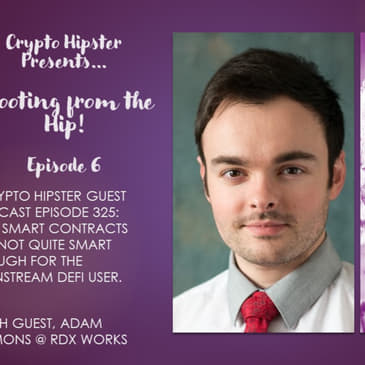

Adam Simmons is Chief Strategy Officer at RDX Works, a key contributor to the Radix public ledger. He has over 13 years of experience in building & growing businesses in a range of industries including online video, blockchain & digital marketing. With experience in both senior leadership & hands-on roles, he has repeatedly recruited, managed, and trained highly successful teams within marketing, customer success and operations functions. Adam is also a previous member of the UK Paralympic Sprint Kayaking Team and has competed in multiple World and European Championships.
[00:00:00] Hello everybody and welcome to the Crypto Hipster podcast. This is your host Jamil Hasan the Crypto Hipster
[00:00:07] Where I bring you founders entrepreneurs executives thought leaders artists
[00:00:11] You name it in the world of crypto and blockchain
[00:00:13] Around the world and today I have an amazing guest
[00:00:17] Actually, I'm looking forward to this interview because I've seen a lot about this company and its platform in recent weeks
[00:00:24] Online and I'm excited about it and my guest today
[00:00:27] His name is Adam Simmons. He is the chief marketing officer at RDX works adam welcome
[00:00:35] Brilliant and thank you very much for having me on looking forward to it
[00:00:38] And I'm very glad to hear you've been seeing a lot about us online
[00:00:41] I will go and tell my team that they are doing a good job
[00:00:44] Awesome. Awesome. So I'm looking forward to learning more today. Um, so maybe I'll ask you first
[00:00:49] What is your background and is it a logical background for what you're doing now?
[00:00:54] So is it a logical background? Um, I'll leave that up to the listeners to decide
[00:00:59] I think it's somewhat is but as I think most people in crypto
[00:01:03] Very few people if you go back a few years in an emerging industry were like, hey when I was a little boy
[00:01:07] I wanted to grow up and work in cryptocurrency
[00:01:10] Because it's so new. Um, so I I actually kind of ended up here
[00:01:15] From always working in startups. So originally many many moons ago
[00:01:19] I was involved in the early days of esports and like online streaming
[00:01:24] First as a in front of camera
[00:01:26] Kind of influencer there where I was relatively successful then worked kind of behind camera organizing events
[00:01:32] I then joined a precede startup in the online video world
[00:01:36] Grew that in four years from just seed funding to 35 million monthly active users
[00:01:42] During that one of our seed investors had a big part in like crypto mining
[00:01:47] And was always going to us like hey, you should really look at this crypto stuff
[00:01:50] Obviously being in kind of like the video game space and online video space
[00:01:53] We all knew about cryptocurrency, but we're like we've got this rapidly growing successful company
[00:01:58] Don't see an exact fit here
[00:02:00] And so it wasn't until the kind of 2017 period that I co-founded a
[00:02:05] Another crypto project that I'm pleased to say is still running very successfully today
[00:02:08] Um, and then joined radix where I am currently back about four years ago and took that through kind of pre-launch
[00:02:16] All the way through to where we are now at about a 50 million dollar tvl with our full stack all live
[00:02:24] sounds good, so
[00:02:27] rdx works right you just um, I think you just accomplished first year of your
[00:02:33] ceo's three-year vision
[00:02:35] So what is rdx works all about what is the vision and where are you at in this next phase?
[00:02:42] So rdx works with we're the one of the core developers behind the radix network
[00:02:47] so as with um, as with many kind of layer one networks in existence
[00:02:51] There's kind of the foundation and there's also a development company and so we have a similar structure there
[00:02:55] So radix the public network has actually been being worked on since back in 2013
[00:03:00] So our founder really got bitten by the bitcoin bug back then and
[00:03:05] Completely saw the vision of decentralized money and rebuilding finance
[00:03:09] But being a tech entrepreneur himself started playing around and hacking around with it and suddenly realized
[00:03:14] Hey, if we're going to onboard 8 billion people and 400 trillion dollars of assets into the system
[00:03:19] Um, it's going to need to scale a bit more than it does
[00:03:22] And that took him down about seven years of work along with the team of really looking at how do you solve scalability in distributed ledger technology?
[00:03:29] without compromising on any of the core principles of security decentralization
[00:03:34] And also one which is less talked about which is atomic composability
[00:03:38] Which basically means the ability for any asset or application on the network to interact with any other instantaneously
[00:03:45] We have what we believe the only design to be able to do that from a consensus standpoint and in about 2018
[00:03:51] We actually set the world record with a previous version of the consensus for the fastest throughput
[00:03:56] This has been recording on a public network with 1.4 million transactions per second
[00:04:01] And we were then looking at okay, how do we go to market with this?
[00:04:04] And one of the things being a product focused company
[00:04:07] We did was good product research and go we went out and said hey, what what is the biggest barrier to making web 3
[00:04:14] DeFi crypto whatever you want to call it
[00:04:16] Really go mainstream
[00:04:18] And while scalability was important what we found was actually it was the developer experience
[00:04:24] Was a massive blocker anyone who kind of follows defi especially will know that in the last week
[00:04:29] Billions of dollars have been lost through hacks and exploits
[00:04:34] Predominantly because people are building some really cool things with tooling that is just not designed for that
[00:04:40] And as a result
[00:04:42] Even something even the incredibly talented developers and the steep learning curve to be able to make production code and say like
[00:04:47] Solidity on ethereum
[00:04:49] um
[00:04:49] You still see these hacks and it's the equivalent of like moving into a really cool new neighborhood
[00:04:54] And having a wallet stolen once a week
[00:04:57] Like yeah, it's a nice place to live
[00:04:58] But you probably don't want your wallet stolen every week and as a result
[00:05:01] We've got a lack of developers coming into the space because they want to be able to sleep at night
[00:05:06] They don't want to lose their customers funds
[00:05:08] You've got a lack of businesses coming into the space because they're cyber security teams
[00:05:12] And like sec ops teams come and have a look at the infrastructure and go
[00:05:16] No way we're launching a product there
[00:05:18] And so we then spent we then said hey, we're going to have to
[00:05:22] Re-look at how like the virtual machines
[00:05:24] Work in dlt's how they're programmed and we built radix engine and scripto
[00:05:29] And so radix engine is the execution environment on radix
[00:05:34] And scripto is our programming language, which is based on rust
[00:05:37] And we can come on to those more later
[00:05:39] But the the easy way to think about them is it's the same sort of revolution
[00:05:43] The video game development had where originally you had to build the physics engine rendering engine shadows
[00:05:49] Everything first before you start building your game. What radix engine does is it's like a game engine for defy and web 3
[00:05:56] It's completely flexible
[00:05:57] You can do anything with it
[00:05:58] But some of the fundamental things like gravity or lighting and stuff like that are built in and editable
[00:06:04] Rather than having to be built from scratch each time and that makes it far more secure and far more intuitive to build with
[00:06:11] Then the the final bit of this is that
[00:06:14] We got that out
[00:06:15] We got great feedback from developers over the last couple of years for this building very powerful things very very intuitively
[00:06:21] And then again as a product company went back to the start
[00:06:24] What is the challenge now that's stopping this being mainstream?
[00:06:28] And the big answer was the user experience ultimately today if you look at something like metamask
[00:06:35] Or even things on salaner etc
[00:06:38] It is not an experience that our friends our families and our colleagues can confidently use
[00:06:43] blind signing seed phrases
[00:06:46] wallet drain attacks all of these sort of things are great if you're a crypto native
[00:06:50] and
[00:06:51] Terrible if you're a normal person most people don't want to have that responsibility and that risk which means if they can't be confident
[00:06:58] interacting with these networks, they're not going to
[00:07:01] And because of the work we've done of kind of building this full stack of technology from the consensus to the execution
[00:07:06] And now the ux layer
[00:07:08] We were able to do things that are just impossible to build on other networks
[00:07:12] And which takes us to where we are now with all of those things live and six months in from smart contracts being live on the platform
[00:07:18] And we've got a thriving ecosystem that's growing every single day
[00:07:24] I have
[00:07:25] Two follow-ups on what you just said
[00:07:27] um
[00:07:29] The first one is
[00:07:31] A positive thing
[00:07:33] It could be positive too, but the first one. I never heard of this. I heard I've heard atomic swaps
[00:07:39] I've never heard of atomic
[00:07:41] Composability
[00:07:42] What what's that? What's the difference?
[00:07:46] so atomic composability one of the so one of the things when you look at consensus design of
[00:07:51] blockchains or distributed ledger technology in general
[00:07:54] Is that any one chain?
[00:07:57] So to speak is always going to have a bottleneck on how much throughput it can have
[00:08:01] Just in the same way as if you imagine it as like a water pipe or something like that
[00:08:04] No matter how big you make it there's only so much water that can go through a pipe at the end of the day
[00:08:09] So what is one solution to that is
[00:08:14] Things like l2s or sharding and things like that where you parallelize those
[00:08:18] So you've got multiple different pipes that information can travel down
[00:08:21] Now conceptually that works quite well because you're like, okay
[00:08:24] Well things that are unrelated can be parallelized and processed on different areas. So you don't have to do it all at once
[00:08:31] The problem with that is that one of the superpowers of like a global distributed ledger technology for assets
[00:08:39] And like crypto is that anything could interact with anything else?
[00:08:43] So if you shard that information and you go you might go well
[00:08:46] We're going to put all defi on one shard and all nfts on another shard because nfts are one thing and defi is another thing
[00:08:54] Well, the problem with that is then what happens if I want to use my nft as collateral
[00:08:59] For alone to do a swap to do arbitrage on the defi shard those two shards have to communicate now
[00:09:04] There's a bunch of really really smart solutions
[00:09:07] In the market to have that work
[00:09:10] But they have a delay in them and that delay could be tiny
[00:09:13] But there is some kind of delay where shard one has to say lock up the funds until it's executed on shard two
[00:09:19] Or it executes it, but if it doesn't work right it rolls it back
[00:09:22] But on something like a dex if they're a decentralized exchange
[00:09:26] How do you roll back something if it's already been done and other people that are also traded in that same block or whatever
[00:09:31] So what atomic composability means is the ability for
[00:09:34] Anything on any of the different shards to interact in a single transaction and either be successful or unsuccessful in one moment
[00:09:43] And the reason this may sound
[00:09:45] Unnecessary to some people is going well. Why does it matter if there's a second or two delay?
[00:09:50] If you think of something like financial markets
[00:09:53] A second or something to delay on an arbitrage opportunity introduces risk
[00:09:57] Whereas if you one of the super one of the things that most consumers won't even think about but like flash loans are a massive innovation
[00:10:04] Of defy where you borrow some money to do a trade to make a profit and pay back the loan
[00:10:09] All at the same time effectively that is basically a zero risk opportunity
[00:10:14] To do an arbitrage as soon as you add any delay in that risk is
[00:10:18] Involved which means people are less likely to do it because they've got to hedge their risk
[00:10:22] Of doing that swap and therefore the market becomes less efficient
[00:10:25] and it may be orders of magnitude better than what we have today
[00:10:29] But
[00:10:30] It's not as good as what defy and web 3 could be if you do have atomic composability
[00:10:35] So something like ethereum on a single shard already has atomic composability
[00:10:39] It's not something people realize is a problem because we have it there
[00:10:43] But what's coming with things like sharding everywhere other than radix breaks that fundamental and radix has a unique solution
[00:10:50] Called grading where basically if things aren't required to work together. They're separate shards, but if information on different shards
[00:10:57] Need to come together in the same transaction. They're braided together
[00:11:00] So you can conceptually you can think of it in a simple way of I say simple anyone who's seen
[00:11:06] I've forgotten what the film is but where they explain a wormhole with a pencil through a piece of paper
[00:11:10] Basically the same thing if you've got the two bits of paper, they're separate
[00:11:14] If i'm sending money to my mum and you're sending money to your wife
[00:11:18] Those two transactions can happen independently neither of them are dependent
[00:11:21] And they could be on different shards, but if I need to send money to you
[00:11:25] Those two bits of paper could fold together and become one bit of paper
[00:11:28] And a single shard just for that transaction and then fold apart again
[00:11:32] Now the way you then scale that is by having essentially an infinite number of shards
[00:11:37] So serborus our consensus mechanism in its end state has two to the power of 256 shards
[00:11:44] um
[00:11:45] Which for anyone who isn't good with orders of magnitude is more than there are atoms on earth
[00:11:50] It's actually close to the number of atoms in the universe
[00:11:52] So what you do then is each shard isn't thinking about oh, I'll put a dex on a shard or I'll even put a wallet on a shard
[00:11:59] Every single fraction of every single token of everything could be on its own shard and be processed independently
[00:12:04] And it then folds together or braids together when there's two related transactions
[00:12:09] Then your problem is just getting enough nodes to
[00:12:13] Power all of those different things in process and basically as you get more nodes
[00:12:16] They cover less and less of those parallel tracks and only braid together when they need to
[00:12:21] And so things can be paralyzed but behave as a single shard when they need to be atomic
[00:12:28] And that was a very quick super speed view of what atomic composability is and why it matters and how radic solves it
[00:12:34] I love the concept of braiding. Um, it's unique invention in this space, you know
[00:12:39] Um, very cool. So, um, that was that yeah, I like that answer the other thing you said earlier
[00:12:47] You know back in 2017. I remember seeing I remember seeing a commercial right is by Accenture
[00:12:54] And they said they came out with an editable blockchain
[00:12:58] And you just said a little bit earlier you have an editable blockchain
[00:13:02] That's concerning maybe um, what is that why editable and was that all about and
[00:13:08] Get of that
[00:13:10] Yeah, so um, just to be clear the so when I'm talking about editable. I'm talking about the
[00:13:16] The concept of the radix engine which is the virtual machine
[00:13:20] As a game engine. So radix at its core consensus layer the it's not actually a blockchain
[00:13:25] It's uh, it's its own unique type of dl t but
[00:13:28] Splitting hairs you can think of it the same as any other blockchain
[00:13:32] That is a immutable
[00:13:34] permissionless open public ledger
[00:13:37] So what is what is there cannot be changed?
[00:13:40] That is the entire purpose of a consensus layer to have this single ledger that everyone can agree is true and is authorized or
[00:13:46] Is authenticated by decentralized nodes. That's got to be there
[00:13:50] How you make that programmable is with a virtual machine
[00:13:53] Now radix engine one of the things we realized if you look at something like ethereum
[00:13:58] So ethereum has the ethereum virtual machine which is programmed with solidity
[00:14:02] Now that is a touring complete
[00:14:05] Language so for computer science terms touring complete means you can basically do anything with it. You can program it to do whatever you want
[00:14:12] The problem with that is that
[00:14:15] It can do anything you want now when you're thinking about
[00:14:18] Especially assets and by assets, I mean not only tokens and nfts but also things like identity and stuff like that
[00:14:24] You actually don't necessarily want them to be able to do anything
[00:14:28] You want them to do predictable things and so what radix engine does is
[00:14:33] It it has a our core concept is this idea of native assets or asset oriented programming
[00:14:39] so
[00:14:40] radix engine and scripto are touring complete
[00:14:43] But the way assets are handled be that tokens nfts identity badges and some other things
[00:14:49] Are hard you can kind of think of is like hard coded into the engine
[00:14:53] Of going these can only do behaviors
[00:14:56] That the engine and network enforce rather than the programmer having to make each individual application
[00:15:02] Agree on how that's done and the end result of that is that
[00:15:07] assets on radix
[00:15:09] Conceptually behave just the same as like physical money
[00:15:13] So add an and like the physics of how that works is enforced by the engine rather than by the application
[00:15:20] so if you think of this in
[00:15:22] the ethereum way
[00:15:24] You don't actually own any assets on ethereum. There is a smart contract for say like usdc
[00:15:30] And that is a ledger that says how much different different accounts own of it
[00:15:35] And if I want to send you some money, I don't actually send you usdc
[00:15:39] I send a message to the e rc usdc smart contract and say
[00:15:45] Minus 10 usdc from me add 10 to your usdc balance
[00:15:50] And then your wallet sends a message there and goes hey, how much usdc do I have and it says you have this much
[00:15:56] On radix it actually behaves more like me handing you a $10 bill
[00:16:00] Now if I've got the $10 bill
[00:16:02] I'm in possession of it. If I try and give it to you and you don't take it
[00:16:06] I'm still in possession of it
[00:16:08] If I let go of it in the middle of the air. It doesn't just float there
[00:16:11] It goes this is an error state someone has to own this $10 bill
[00:16:14] It's either mine or yours those the only two states as soon as you take it
[00:16:18] You now have it. I don't have it and essentially everyone else on the net or the validator network looking can go
[00:16:23] Who owns that $10 bill?
[00:16:25] Now the reason this matters other than making it far more intuitive to code
[00:16:31] is things like
[00:16:32] Common exploits like re-entrancy attacks can occur
[00:16:35] So a re-entry and see attack for those who don't know is basically when I send that message to update the balance of usdc
[00:16:40] in the smart contract
[00:16:42] And you go and check it there can be an ordering problem
[00:16:45] Where maybe the follow on from that is you check if the money's there before you send me an nft
[00:16:51] If that check isn't if that check is done before it's actually confirmed
[00:16:54] And I managed to roll back updating that balance in usdc. But after you've already sent me the nft
[00:17:00] I could get the nft for free and have scammed you out the money on radix. That's impossible because
[00:17:07] Either i've got the $10 note
[00:17:09] Or you've got the $10 note and if you've got any you give me the nft
[00:17:12] I've got the nft not you there's no way that that can be ordered or have a confusion going through there
[00:17:17] The other big benefit of this is that this asset oriented approach essentially means that you don't have to keep
[00:17:24] Developers don't have to keep redefining what things like assets are so things like the erc20 standard
[00:17:30] Are just basically people going we all need to agree what an asset is coded like so that all our different applications
[00:17:36] understand what an asset is
[00:17:39] Now this cause is really interesting problems. So anyone on
[00:17:43] say
[00:17:44] Ethereum have heard of people who have sent say a token to a smart contract
[00:17:49] By mistake and they go how do I get it back and you're like tough luck? You can't it's gone forever
[00:17:54] And the way I like to envision it because i'm not a developer myself
[00:17:57] I'm I'm just a simple dgen at the end of the day the way I imagine it is it's kind of like a vending machine
[00:18:04] so on ethereum
[00:18:05] It's just an open slot
[00:18:07] And if I if I come to america from the uk and I put a pound in a vending machine
[00:18:11] That's just an open slot it goes in goes
[00:18:14] I don't know what that is and I try and get some stuff out and
[00:18:18] I get nothing out because it doesn't know what my pound coin was rather than a quarter
[00:18:22] It can't give it back to me because it has no idea what a pound coin is. It's just gone into the void forever
[00:18:27] on radix that vending machine has
[00:18:31] When you create it you have to specify what can go in that slot
[00:18:35] So rather than on an ethereum you say you can only put a diamond
[00:18:39] You cannot and you'd have to specify you cannot put a pound in or a euro in or a yen in
[00:18:43] And have to specify all those things that you can't put in but then someone comes along and tries to put a hamster in
[00:18:49] Unless the unless the developer said you can't put a hamster in here
[00:18:53] It goes hamster came in. I don't know what a hamster is but
[00:18:56] Here now
[00:18:57] And you go can you send the hamster back and the code goes well?
[00:19:00] I don't know how to send a hamster back
[00:19:01] So no on radix it's like you can put a dollar in and if you try and put anything else in the hole
[00:19:05] It just doesn't fit
[00:19:07] So the transaction is invalid and that's invalid at the network level not at the application
[00:19:11] So all these sort of things are no longer jobs for the developer to go and think of all of these edge cases
[00:19:17] The developers say what is allowed and anything that isn't one of those things
[00:19:22] Is a failed transaction at the network layer rather than the application having to say that can't happen
[00:19:28] And so this makes things a lot more intuitive all the way through and it's very similar to like game engines
[00:19:34] So the reason I use that analogy is back before game engines like unreal or unity existed
[00:19:39] You'd have to start by going i need to program gravity
[00:19:42] I need to program what's solid or like how bullets drop over distances and stuff like that
[00:19:48] And you could do it
[00:19:49] It was just really hard maths and step one was basically in game development
[00:19:52] Hire a physicist to help you do all that really hard math
[00:19:55] As a result 80 percent of the time of building a game was building these low level fundamental things to make the game behave
[00:20:01] even though 99 percent of games were like
[00:20:04] Gravity is going to behave like gravity does on earth my person runs around and jumps around there
[00:20:08] And they were redoing it every time and that's why you got weird bugs like people falling through the world or clipping through walls or whatever
[00:20:14] Because there was a weird edge case for it now in a game. That's annoying in defy if I put
[00:20:20] Say a million dollars on a table
[00:20:23] And someone coded the table wrong and it falls through the world gone forever
[00:20:26] I'm a bit more unhappy than if it was in a video game
[00:20:29] In radic what game engines did basically was saying well, hang on everyone wants gravity
[00:20:34] So we'll just heart will create an engine that understands what gravity is
[00:20:38] And everyone can then use that and spend more time building their game
[00:20:41] Now the difference between this thing and where some people get it wrong is they go
[00:20:44] Oh, so it's like a drag-and-drop website builder
[00:20:47] And it's not because that is very constraining a game engine says you've got this thing called gravity
[00:20:52] Most people we know are building a game and gravity probably in their head as they're imagining it behaves like on earth
[00:20:58] But if someone comes along and goes actually my game's in space. I don't want any gravity
[00:21:03] They just go into the game engine and set gravity to zero
[00:21:06] All the other parts of the game engine still exist and the engine hasn't stopped them doing something
[00:21:11] It's just given them the tools so they don't have to keep building those things from scratch
[00:21:14] So they can spend more of their time building the features and functionality
[00:21:17] Their users want rather than the things they need for it to be able to function
[00:21:21] And that's what I mean by editable of
[00:21:24] What the engine does is specifically built around asset behavior authorization and identity
[00:21:29] Or management
[00:21:32] Great awesome. Thank you for explaining
[00:21:37] Yeah, a really interesting conversation you guys have built and
[00:21:41] I want to talk about you mentioned earlier mentioned smart contracts. You mentioned developers
[00:21:46] Um, several developers. I think maybe even you
[00:21:49] Uh in the web three community believe that smart contracts
[00:21:53] Are not smart enough for the mainstream, right?
[00:21:58] So why is making d5 more user friendly crucial for the widespread adoption of web three globally?
[00:22:05] So for me it all comes down to confidence basically so web three if we get really abstract for a moment
[00:22:16] The internet
[00:22:17] Is essentially a data layer for the world. You can send any data anywhere in a permissionless way to anyone at any time
[00:22:25] For me blockchain crypto web three whatever you want to call it
[00:22:29] Its end goal is basically being an asset layer. It's to transfer assets of value
[00:22:34] Anywhere in the world with anyone autonomously
[00:22:37] now
[00:22:38] Obviously if you think of how much security and thought goes into the internet and sending data around
[00:22:45] Assets are worth even more. They have a value to people. So this needs to be created in a way where it is
[00:22:51] Very intuitive for people. They feel very confident during it
[00:22:54] And you've only got to look in like tradfi how resistant many people were to like mobile banking originally
[00:22:59] Because they didn't feel confident in it
[00:23:01] Now web three today
[00:23:04] Doesn't make you confident in what you're doing
[00:23:06] So smart contracts like I've just described you hear problems of like, oh, I accidentally sent this to
[00:23:11] I sent my usdc to the usd smart contract rather than to the person I was meaning to send it to what do I do?
[00:23:16] And the response today is tough luck. You've lost your money
[00:23:20] now
[00:23:21] That isn't a good solution
[00:23:23] Another problem is things called things like blind signing when you go and sign a transaction in metamask
[00:23:27] You just see a transaction hash
[00:23:30] Yes, people go well you could go and look on the smart contract code and work out exactly what it's going to do and stuff like that
[00:23:36] But realistically is that something your friends your family?
[00:23:39] Grandmother or whoever is really ever going to do no
[00:23:43] simultaneously
[00:23:45] Every couple of days you hear about people having their wallet strained because they signed a transaction that was malicious
[00:23:52] Until we sold things like that people aren't going to confidently use web three
[00:23:56] It'd be like having a imagine every time you send some money with your bank
[00:24:00] It's like well, you've got this new system where sending money with your back to someone else via your bank is now 10 times cheaper
[00:24:08] But every time you hit the button. There's a 1% chance you lose all the money in your account
[00:24:13] Not very many people are going to do that
[00:24:15] What's more is it's not there's a chance you'll do it. It's like you have no idea
[00:24:19] there'll be a random string of letters and numbers and
[00:24:22] That might be the one that drains all your money, but you've got to say okay anyway
[00:24:26] Now with radix we because of the radix engine
[00:24:29] And this asset oriented approach we can actually create a user interface layer that is far more
[00:24:35] intuitive so
[00:24:37] Because of the way assets move and the network understands what assets are
[00:24:41] We have something called the transaction manifest. So whenever you
[00:24:44] construct a transaction on radix you are
[00:24:48] Even the raw transaction manifest is basically human readable and it describes what asset movements are going to be
[00:24:55] So say I was swapping 10 dollars for
[00:24:59] 10 pounds with you
[00:25:01] Conceptually that should be quite simple. What would you expect? I give you
[00:25:04] 10 10 pounds you give me 10 dollars and unless you get my 10 pounds. I don't get your 10 dollars
[00:25:10] in metamask and basically every network
[00:25:14] Because there isn't this concept of assets
[00:25:17] It's basically just saying all these smart contracts are called. I don't understand what they are
[00:25:22] And this hashes to this code is going to be executed. Are you okay with that adam?
[00:25:27] I basically have to say yes and hope that whatever frontend
[00:25:30] I've interacted with is doing the good thing and it's not a phishing attack or something like that
[00:25:34] On radix with a transaction manifest you can very easily pass that
[00:25:39] And actually say well what this transaction is doing because I understand what assets are is
[00:25:44] 10 pounds are going to be removed from adam's account and are going to be deposited to your account
[00:25:49] And 10 dollars are going to be
[00:25:52] withdrawn from your account and deposited to adam's account
[00:25:55] I can also in that transaction manifest set a guarantee
[00:25:58] So I can say at the network layer if I don't get at least nine dollars 99 back from you
[00:26:03] I'm not doing this swap
[00:26:06] If you try and short change me the network goes hang on
[00:26:09] It's not at least he's only giving you nine dollars back
[00:26:11] Not happening not going to happen and all of this is presented in a very clear human readable way in the wallet
[00:26:18] As if it was doing a simple transaction with actual physical money or coins or tokens
[00:26:23] And that is only possible because of these different layers of the stack
[00:26:26] So to answer your question when people say smart contracts aren't smart enough
[00:26:32] They are smart enough in the sense that they can do anything
[00:26:35] But they do not have they do not surface the right information to the user interface layer
[00:26:40] Or to the developers to enable them to intuitively and confidently use and build these tools
[00:26:45] Which means there's a lot of room for things to go wrong and go wrong unexpectedly
[00:26:50] And as with any kind of movement of things of value
[00:26:54] You don't want unexpected things to happen
[00:26:56] You want to know clearly what's going to happen and be confident that what you say is going to happen
[00:27:01] Does get done and that's what radix exactly does with things like the transaction manifest and guarantees at the network level
[00:27:08] So to put in an exact example of like a wallet drain attack
[00:27:13] Say someone built a malicious
[00:27:15] fake decks on radix where it says you're going to swap
[00:27:19] One one btc for $70,000
[00:27:22] And you click transaction
[00:27:24] If it was malicious and is instead going to drain all the money from my account
[00:27:28] On my radix wallet. I would see
[00:27:31] nasty swap
[00:27:33] Decks or whatever it's called is going to
[00:27:36] withdraw from your account
[00:27:39] All of your assets and it lists them all out
[00:27:40] All of these are going to get taken out and nothing's going to come back
[00:27:43] Are you okay with that?
[00:27:45] And of course anyone if you see it that way is going to go. No, I'm not okay with that
[00:27:49] Don't sign that transaction. This is malicious. That's not what's expected to happen
[00:27:53] On metamask and basically every other network what you'd see when you went to sign that transaction
[00:27:58] You think it's going to do that swap and it just says transaction hash
[00:28:03] zero x a b 74 1315 whatever
[00:28:07] Sign question mark and you have to go. Yeah
[00:28:10] And people sign it because they think it's something that they want to site
[00:28:14] They think they've used before but if it's been hacked or if it's a malicious phishing site
[00:28:18] They have no idea whereas on radix you would clearly see
[00:28:21] It's going to withdraw all of these things from my account
[00:28:24] and
[00:28:25] Or it's going to do the swap and the network will make sure that whatever is seen in that transaction manifest
[00:28:30] Is the only thing that can happen. I need to switch to your radix
[00:28:36] so
[00:28:37] um
[00:28:38] That's a good I like that because so it's not that smart contracts there aren't smart
[00:28:42] It's the mainstream that's not smart enough because they're not intuitive
[00:28:46] Without being directed by subtle prompts like I don't call
[00:28:50] The warning you're going to lose all your money a subtle prompt, but it's a prompt that educates people
[00:28:55] So I think that's a good idea. I think
[00:28:57] What basically the the key principle of our ux on radix is
[00:29:01] what you see is what you get
[00:29:03] And the you don't even need to trust the application or the ui or anything like that on the dApp
[00:29:08] Because the network itself
[00:29:11] Is able to tell you what is going to happen and enforce that what you sign is the thing that actually happens
[00:29:18] Got it
[00:29:20] Interesting. I like it. I like it
[00:29:22] um
[00:29:23] so
[00:29:25] Where we're at I'm looking at where we're at the defi
[00:29:28] Stage and we're kind of still early, you know
[00:29:32] unbelievably early
[00:29:33] unbelievably early and the first defi summer was three summers ago
[00:29:39] um
[00:29:40] 2021 I think
[00:29:42] um
[00:29:43] And um, we haven't had one since right that was when obvi- link went up and you know, this there's companies still building, right?
[00:29:51] so
[00:29:52] When is the next defi wave coming will it ever come and what are some of the trends we need to watch out for?
[00:30:01] um
[00:30:01] In the market that'll lead us up to the defi trend kind of signal us. Hey, hey defi summer's coming again
[00:30:09] so
[00:30:09] First and foremost, I cannot stress how early we are even in defi summer. So at the peak of defi summer
[00:30:17] We were still less than 0.1 percent of the entire global financial system
[00:30:22] There's about not including derivatives, which is just a crazy number, but hard assets. There's about 400 trillion dollars in the tradfi system
[00:30:31] Defi summer didn't even come to a rounding error of that
[00:30:33] So we are on a standard like adoption curve of innovators early adopters early majority and stuff
[00:30:39] We're barely into the innovator stage in the grand scheme of things
[00:30:43] However, it was getting that hockey stick growth during defi summer
[00:30:46] And the only reason in my opinion that
[00:30:50] We didn't see it get a lot bigger at that stage was because of scalability problems on a theory
[00:30:54] It's basically people going hey these decks is a great. I can swap tokens easy. It's way easier than an exchange
[00:30:59] I understand how this works. It's really quick and easy
[00:31:02] But suddenly it was costing one two three hundred dollars
[00:31:06] To do a simple swap
[00:31:07] Didn't make sense. So it stuck the brakes on it
[00:31:11] The next piece was the user interface layer obviously, um, but for a bunch of reasons we hear crypto winter
[00:31:16] And so general interest in in crypto died down the concept was kind of proven there
[00:31:21] But it also created a whole bunch of new problems. So the next wave of defi
[00:31:26] I actually like I firmly believe defi is inevitable not from any, um
[00:31:32] Ideological reason, I mean ideologically. I like the idea of defi
[00:31:34] I think it's going to be good for society as a whole
[00:31:37] But from a purely pragmatic standpoint
[00:31:40] It makes a more efficient market and ultimately the global financial system has one job
[00:31:45] To efficiently allocate liquidity based on a balance of opportunity and risk
[00:31:50] And a single global asset layer
[00:31:54] Of defi does that
[00:31:57] unbelievably more efficiently than the current ratify system
[00:32:00] So there is economic incentive and efficiency incentive for defi to just be better
[00:32:05] Just in the same way that an open internet
[00:32:07] Is the standard now rather than a whole bunch of different siloed intra webs at different companies
[00:32:13] Because having that one network that everyone could agree was truth and could interact as long as you had the right permissions and security and stuff around it
[00:32:20] Was a better solution
[00:32:22] So what's it going to take to make the next kind of defi summer? Well, I don't actually think it's one thing
[00:32:27] I think it's multiple things. So first and foremost
[00:32:30] crypto needs to get sexy again
[00:32:33] We're we're already seeing that like let's face it is as the crypto overall crypto market cap goes up
[00:32:39] People start seeing it. They start getting involved. They start playing
[00:32:42] We saw that in the 2017 era with ico's and people going
[00:32:45] Hang on this is a really cool way to get involved in things that were inaccessible to the average show beforehand
[00:32:50] In 2021 we saw it with defi summer and going. Hey, there's a really much better way to interact with financial products than before
[00:32:57] We saw it a bit with the nft trend
[00:32:59] And these kind of things come along and prove a concept at a very early level and then hit some kind of stumbling block to make it bigger
[00:33:07] So the first piece is just getting that attention back to a new kind of crypto bull market
[00:33:12] We'll see all the press people will come flooding in looking for the cool stuff being built
[00:33:15] And the great thing about crypto is that during the bear market is
[00:33:19] The saying bear markets are for builders. That's when people actually go and build cool stuff
[00:33:24] I like to think like radix. We've gone. We've spent the last couple of bear markets building some really cool stuff
[00:33:30] When you get that attention people come and play with it and go, okay, what can I build here?
[00:33:33] What can I build? What can I use? What can I get involved with?
[00:33:35] So that's one once you get that I think we've got a really good groundswell of
[00:33:41] What I call these kind of next generation layer ones like radix like swing like actos
[00:33:46] That have really built on a lot of the core principles that ethereum and even things like salana near and stuff
[00:33:54] Have innovated in the last cycle and have solved many of these developer and user experiences
[00:34:00] That actually mean that they aren't going to put the brakes on it and
[00:34:03] That is probably the most important thing is that innovation doesn't have a break put on it and
[00:34:08] The the crude analogy I use for this is
[00:34:12] Kind of like building an airplane
[00:34:14] If you if you think of ethereum, it's like the right brothers, um kitty hawk
[00:34:19] It was the first thing to fly absolutely incredible achievement
[00:34:23] Revolutionized the entire way the world thought about transport that now humans can fly
[00:34:27] That's what ethereum was for the like smart contracts and dltspace
[00:34:31] Equally if you came to visit me in london, um and the plane that you were boarding look like the kitty hawk
[00:34:37] I don't think you get on board it
[00:34:39] The modern jet still flies
[00:34:41] But it's been innovated in a thousand different ways to make it viable for mass passenger transport
[00:34:47] And that's basically the innovation that we've seen is that whereas you could say
[00:34:51] um
[00:34:52] Like ethereum was the kitty hawk things like salana were the invention of like the turboprop and like better airframes
[00:35:00] It was okay. It was way better as faster, but still wasn't suitable
[00:35:03] It's only with these new layers
[00:35:05] Ones like radix likes we like aptos where all of these different things the jet engine the cabin safety the oxygen systems
[00:35:12] The entertainment system all of those things have come together and reached the point
[00:35:16] Whereas the least as good as what came before in tradfi and is radically better in a bunch of other ways
[00:35:22] So that's the second piece
[00:35:24] You need to have these cool things
[00:35:26] The third piece for deceptive summer is always from the builders who are building on these networks
[00:35:31] And so the really big thing here
[00:35:33] Is and why I say devx is so important for the user is
[00:35:38] If you think of smartphones
[00:35:40] Smartphones were great, but many people forget that the original iphone didn't have an app store
[00:35:47] Now when the app store came out that
[00:35:49] Revolutionized smartphones because suddenly there was so much competition for building cool apps that are useful
[00:35:55] And there's kind of two categories of application if you think on a smartphone
[00:36:00] There's the few apps that if you sampled 100 people randomly on a city street
[00:36:06] Probably 95 out of 100 of them will have the same group of apps
[00:36:10] They'll have like a banking app or they'll have instagram or whatever and they're kind of mass market ones
[00:36:15] They found really good product market fit and everyone needs them
[00:36:18] But there'll also be apps on each of those hundred people that you none of the other people have
[00:36:23] They're very specific apps for their very specific thing
[00:36:26] And that is only made possible because the fact building an app on a smartphone. Thanks the app stores
[00:36:32] Became something that loads of people could build
[00:36:34] So then you start getting competition innovation
[00:36:37] And you build on that spark of other ideas to create either great mass market products or great specialist products
[00:36:43] And that is
[00:36:44] What I think we're going to see in the next era of defi summer where things like uniswap for example in the last defi summer
[00:36:50] innovated automated market makers
[00:36:52] It was so complex to build that that innovations on top of that were really slow and development was really slow
[00:36:58] Whereas the ability to build say on radix. Thanks to radix engine and scripto
[00:37:03] One of our dex's for example, osse swap bear in mind smart contracts only went live six months ago
[00:37:08] They have already implemented
[00:37:10] Uniswap v4 on radix
[00:37:14] And that is before uniswap has implemented it on ethereum
[00:37:17] And this is a small team not one of the biggest projects in defi
[00:37:21] And they've been able to do that because the tooling for developers on radix is so much better
[00:37:25] So that means there's more innovation more creativity more specialist products that as an end user
[00:37:30] You're going to find something you want to use and the user experience is going to be good enough that you feel confident
[00:37:35] Using it and recommending it to other people which creates that growth to get us out of innovators into like the early
[00:37:41] adopters and also into the early majority
[00:37:44] So that's the third thing having great competition of dance the fourth and final thing
[00:37:49] Which may not necessarily be required for the next wave of defi summer, but definitely for kind of mass adoption
[00:37:56] Is ultimately nothing to do with technology. It's all to do with regulation
[00:38:01] um and how
[00:38:03] governments interact with this technology and very topical like obviously uniswap has a lawsuit from the sec at the moment
[00:38:10] and
[00:38:11] There's kind of two ways of thinking of this. So
[00:38:14] radix as a whole
[00:38:16] Is of the opinion that it is not our job to decide what regulation should be and what should be possible
[00:38:23] Our job is to have a network that is able to facilitate whatever functionality
[00:38:29] Society themes is necessary
[00:38:31] The only red line is that the core network the base layer
[00:38:35] Is always completely permissionless
[00:38:38] Decentralized and open
[00:38:40] Just in the same way as the core internet is completely permissionless
[00:38:44] Now the internet on the whole transmits data, but the internet protocols
[00:38:48] Don't care what that data is to them data's data. It's designed to move that around and it moves any data that it's told to
[00:38:54] Now some of that data could be terrorist activity
[00:38:59] Now you don't try and stop that
[00:39:01] At the protocol level you stop that at the application layer
[00:39:05] And that's where we think this is all about authentication
[00:39:08] And so like one of the things the radix engine has is a concept of badges
[00:39:11] So we actually built in as well as tokens and nfts
[00:39:14] um
[00:39:15] Authorization and permissions as a core function and we call them badges
[00:39:19] Now badges conceptually is super simple if you've ever worked in an office
[00:39:22] You've probably got given a badge to get in the front door
[00:39:25] You swipe it the door opens for you if you don't have a badge you don't get in now
[00:39:29] Your badge might let you in the front door, but not into the server room
[00:39:32] One of the tech team may have a badge that lets them in the server room as well
[00:39:35] Now that badge is in your possession, but you don't own it the company owns it
[00:39:40] And they can issue it to you they can call all right back
[00:39:42] They can change what permissions you're able to do with those badges
[00:39:45] And that is exactly how badges work on radix
[00:39:48] They're in your account and you can show them as part of a transaction
[00:39:51] To show that you have authorization
[00:39:53] But they can be recalled from you or can be edited based on the permissions that the issuer wants you to have
[00:39:59] Now this creates technical solution to lots of the things around what
[00:40:03] Um regulators may wish to do in terms of interacting with dfi and different apps and the things you need
[00:40:08] All the way through to social things like actually maybe you need a badge to prove your over 18 to access adult content
[00:40:15] Again, this can be done without you having to give your id document to the adult site
[00:40:20] Instead you get a badge issued by some trusted entity that goes yep. I've verified this person's 18
[00:40:26] You flashed that badge in the transaction and you're able to access it
[00:40:29] Again hypothetical
[00:40:30] But this is about creating the technical solutions are there with things like radix and other kind of next-gen layer ones
[00:40:37] It is now about regulators and governments
[00:40:40] Really looking at how do we meet the needs of what society wants us to bring in in terms of safety nets and regulation
[00:40:48] With the technology we have available
[00:40:50] Rather than what they seem to currently be doing in most places
[00:40:53] Which is trying to apply the regulations and frameworks from tradfi and just force it onto
[00:41:00] dfi and web 3 and not only does it not work
[00:41:03] It's taking a blunt approach to something that you could have a scalpel
[00:41:07] So one of my favorite analogies for this is
[00:41:11] Something like in the u.s. The accredited investor laws
[00:41:14] so in the u.s
[00:41:16] There is
[00:41:18] For certain investment opportunities or financial opportunities. You have to be an accredited investor and have I
[00:41:23] Can't remember exactly what it is. It's like a million dollars net worth or 250 thousand dollars a year income
[00:41:27] That has to be certified and then you can be an accredited investor
[00:41:31] Now on the one hand that is incredibly unfair because why is someone with 999 thousand 999 dollars
[00:41:38] Too dumb to be able to interact with a complex financial product, but if they earn one dollar more, they're suddenly smart enough to
[00:41:45] Kind of stupid however
[00:41:46] There had to be that arbitrary system put in place because in the tradfi world
[00:41:50] there was no way to make that more granular
[00:41:52] or
[00:41:53] Achieve the result of trying to protect people from high-risk financial products and not basically wreck their financial futures
[00:41:59] inadvertently
[00:42:00] But equally the person with a million dollars could still wreck their financial life
[00:42:04] It doesn't protect them either if they don't know what they're doing and someone with
[00:42:07] $100,000 who's actually a financial genius and understands this can't access it which means there's less liquidity in market
[00:42:13] With d5 because of this global asset layer you can actually have some really cool solutions there
[00:42:18] So you could say actually this product you're only able to put in
[00:42:23] 2% of your net worth into high-risk products
[00:42:26] Doesn't matter if you've got ten dollars or ten million dollars. That's the rule
[00:42:30] And again, this is not necessarily a good solution
[00:42:32] I'm just saying you can do that
[00:42:33] Programmatically and the network can enforce that or the applications can enforce that based on things like badges or stuff like that
[00:42:39] On radix and regulators now have these tools to meet these goals in different ways in things like kyc and aml
[00:42:46] We already have this in tradfi if i send you money from my bank to your bank
[00:42:50] My bank doesn't need to get a copy of your passport and proof of address and all your details to know that
[00:42:55] I'm not sending money to a terrorist assuming you've got a good bank. They can go hey
[00:43:00] My bank knows your bank. They've ordered them. They know your bank's regulated and they've done a check on you
[00:43:06] And so therefore they're happy sending money to you
[00:43:09] Now what they're trying to bring in in defy at the moment is like everyone has to check everyone's details
[00:43:14] Well, that is hugely unscalable
[00:43:16] It stifles any innovation because small startups can't afford the compliance cost and everything else like that
[00:43:21] And actually it's not what happens in tradfi today
[00:43:24] But if you think of something again like badges on radix
[00:43:27] If you had an entity say like coinbase or the irs or something could issue a badge saying i've checked out adam simmons
[00:43:34] I verify that he is a legitimate person. He's allowed to do defy things
[00:43:38] That badge doesn't have any personal information about me on chain. So i'm still private
[00:43:44] But a defy product could go as long as you've got one of these badges
[00:43:47] That's valid that the irs or hmrc in the uk has verified you as
[00:43:53] Being a safe person to transact with you're allowed to use my application
[00:43:57] They then don't need this massive team and the technology enables a much more granular and surgical approach to meeting these
[00:44:03] Demands of not funding terrorism or whatever
[00:44:05] Without taking a blanket rule that stifles innovation and startup and competition and ultimately a more efficient market
[00:44:11] And so that's kind of the final bit that I think
[00:44:13] The crypto industry has to lobby for but ultimately can't solve because it's not a technology problem
[00:44:19] it's a societal problem and
[00:44:21] I think that my personal opinion on this is that the
[00:44:26] We won't have a world and i'm not actually sure we should have a world where
[00:44:29] There's no regulation in defy because ultimately consumer protections if you take them at face value are there to protect people
[00:44:37] Now just because they're there to protect people doesn't mean they need to be implemented in a certain way
[00:44:42] But actually you can look at how can we really?
[00:44:46] Implement them in a way where it serves their purpose without restricting personal liberties personal choices
[00:44:53] Um while also protecting society and if you take that to kind of the base level
[00:44:57] I'm pretty sure that if you ask most people say
[00:45:00] In the us or in london or something like that
[00:45:03] Hey, do you think there should be safeguards in place so people can't send money to terrorists?
[00:45:08] They're probably going to go
[00:45:09] Yeah, that sounds like something the government should probably make sure doesn't happen
[00:45:12] If you say hey, do you think there should be something that means that if I want to withdraw 100 bucks from my bank account
[00:45:18] That I get 20 questions about what i'm doing with it who i'm paying and everything else
[00:45:21] They're probably going to go. Hmm. No, I don't think that's what I should do
[00:45:25] And so the technology of web 3 and defy
[00:45:29] Really means that a lot of these things can be implemented in a far more granular way
[00:45:32] That maybe serves the needs of what the of what society wants without creating over restrictions or
[00:45:39] Stifling what we can do with our money
[00:45:42] And create a better way a better way forward there not only from a efficiency of market standpoint
[00:45:47] But also from a individual freedom and control standpoint
[00:45:54] I love that answer. I I am going to disagree with something you said earlier
[00:45:59] You said I quote you i'm just a simple dj n. I think you're more than
[00:46:04] Dj n, you know
[00:46:07] And uh, I appreciate the time um, and I enjoy speaking with you and I learned a lot today
[00:46:12] So I want to thank you very much for coming on
[00:46:14] Um
[00:46:15] And I have one I have one last question. Um, really it's it's a simple one
[00:46:19] How can people find it more information about you the rdx works about radix protocol?
[00:46:24] How can they do that? How can we use it how can they become clients?
[00:46:28] any of that
[00:46:29] So starting with uh radix
[00:46:31] So if you literally just go to radix dlt.com or just search for like radix crypto on google it will come up
[00:46:38] Um getting started is super easy because radix is an open permissionous network
[00:46:43] So I encourage everyone to go and download our mobile wallets. Um try out a couple of daps
[00:46:48] There's some amazing stuff in the ecosystem already
[00:46:51] And just have a play and see what's available there. Um join our community on like telegram twitter, etc
[00:46:56] All the usuals. Um if you want to hear some more from me, uh, you can find my twitter account is usually where I'm most active
[00:47:02] Um, and that is just adam underscore xrd
[00:47:08] Awesome. Thank you very much for your time today. Thank you very much for having me and thank you for everyone who tuned in
[00:47:13] It's been a pleasure