
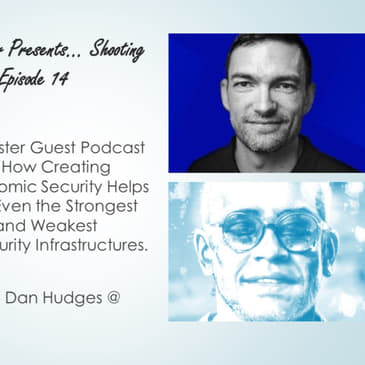

Dan Hughes is the Founder of Radix DLT, which he has been building for over 11 years. He started his career as a games developer on entertainment titles for PC's and consoles. Games are commonly pushing the boundaries of the hardware that they are running on, and as such developers of titles need to be able to think astutely and "out of the box". This has proved to be his most valuable skill and allowed him to consistently deliver a number of "firsts" within a large number of fields, from mobile services, telecoms, financial systems to distributed ledger technologies. He was one of the first to develop applications for NFC technology and contactless payment services such as mobile wallets. Dan has worked closely with a number of mobile OEM's and operators such as Nokia, Sony Ericsson, T-Mobile, Samsung and others via my successful start-up, KDB Technology where he held positions of CEO/CTO and Chief Architect. After exiting KDB, he discovered Bitcoin and the digital currency movement. Bitcoin is great first step, but is not without flaws. After a period of investigation he decided to attempt to develop a more complete solution, thus starting Radix.
[00:00:01] Hello everybody and welcome to the Crypto Hipster Podcast. This is your host, Jamil Hasan, the Crypto Hipster, where I interview founders, entrepreneurs, executives, thought leaders, artists, everybody really in the world of crypto and blockchain all around the world.
[00:00:16] And today I have an amazing guest. He is the founder of Radix DLT, his name is Dan Huggis. Dan welcome to the show. Hi, thanks. Thanks for having me. Good to be you very welcome. Thank you for joining me today. So okay, call first.
[00:00:37] I did interview Radix a few weeks ago. Adam, yeah, what really well had a lot of listeners. So really looking forward to this. So let me ask you first, you know what your background is and it's an logical background for what you're doing now.
[00:00:56] Yeah, so we're I got into computers and programming all that kind of fun stuff from a really young age. I had five or six years old, me and my father had all the spectrums and stuff and we were tinkering around with those making games and programs and stuff.
[00:01:14] And just kind of got the book for that. I liked to build things and take things apart as quite an inquisitive child. Sometimes my stories didn't go back together in the way they were intended. So that was always fun.
[00:01:29] And then just kind of kept up with that hobby, you know, over the course of my young age and teenage years. I wanted to be a game developer. I was just obsessed with, I want to be a game developer for what's my biggest games.
[00:01:43] And kind of somewhat forced my way into that industry, you know, and I didn't leave all the game companies that were fairly local to me alone with demos and kept pasting them, you know, kind of have a job, give me a job.
[00:01:55] And with all these cool things I can do. So that's kind of where I started in game development and kind of transition into, you know, 3D engines and doing a lot kind of stuff for a number of years.
[00:02:08] And then transition from there into mobile gaming and then mobile application development worked on some very early mobile payment systems using early iterations of the NFC chips, which obviously now are all the content of this payment stuff.
[00:02:26] And just kind of went quite heavy into mobile mobile payments. And then after that was when I discovered Bitcoin, you know, over a decade ago now.
[00:02:36] So hey, this is really cool, you know, if somebody solves this very difficult computer science problem has been around for decades, let me get into this stuff.
[00:02:47] And so initially it was kind of a made computer science consensus distributed systems point to view, but then very quickly also became.
[00:02:56] Kind of you know, appreciated the disruptiveness that the economic side of things could could bring as well, you know, a lot of self-sufferinity information listeners and all those things.
[00:03:07] And you know, interestingly, in reply to your question all of the things that I've done in the past have an estranged way kind of led up to this point, but you start to gain and 3D engines very much heavy.
[00:03:20] And then you know, mobile payment systems, obviously relevant right payment systems in general, how they integrate with the world with the hardware leaks live payment, emails and all those things.
[00:03:31] And then, you know, kind of mobile application development on large, on large distributed systems, you know, with large scale carry networks such as you know, team mobile or the distributed side and the experience of a lap was from there.
[00:03:47] But all just kind of comes to a, you know, a convergence on all the things that I've done and it's all very relevant to what I'm doing these things. Excellent, that sounds very relevant.
[00:03:59] You know, great. So really an XD LT, you know, what is that all about what separates you from the industry peers.
[00:04:07] I think the best way to describe the radics and the journey that I've been on from those early days was, you know, as I just mentioned, I got quite deep into a bit point from a comp science point of view.
[00:04:21] And spent some time playing around with Bitcoin and understanding how it did, how it achieved what it achieves. But I always have been a kind of engineer. I'm always looking for the inefficiencies, right? Or the pinch points.
[00:04:37] And it dawned on me after a while that, you know, if this thing really takes traction over the next couple of decades and you have billions of people making payments and connected devices and all these things in a web three as it networks is the scale going to be enough as it is, is it going to be responsive enough as it's going to.
[00:04:59] You mean, decentralize enough and all those kind of, you know, fundamentals take a look at how are they going to evolve over time.
[00:05:07] And so despite really wanting to build something on Bitcoin and the early days, that came to the conclusion that this is an amazing first step for, you know, tech progression episodes, right?
[00:05:19] So maybe I can, I can take a loop group some of these problems and see if there's any solutions. And from that point, you know, the other holders kept getting deeper and deeper. And here we are, you know, 10 years later with with with with addicts which.
[00:05:35] It seems to solve a lot of those original bullet points on the list. I guess plus a batch more, you know, as the industry has progressed and the use of experience is still quite bad and the developer experience is still quite difficult.
[00:05:52] Additional things have kind of landed into that path because as we progressed on the fundamental tech, because I actually we could do this and we can we can add this piece which makes things a bit better.
[00:06:02] So really the goal for addicts is you know to provide a efficient streamlined ecosystem from both the fundamentals all the way up to the user and the developer experience that can scale to 10s of billions of, of, of, and interactions and devices.
[00:06:21] So it's very long playing. She's unusual in this space and I think you know, it is unusual. And there is I like to focus on scale and security and there is there is art some predictor blotchians out there that are very short like right as opposed to your long flight and I think we should talk about one of them.
[00:06:46] Recently, you called out the Lana Labs co-founder, Toli and a Toli, Yakovenko for his limited any of blockchain security. Why will Solana someday be in that work with compromise security if it's not there already.
[00:07:05] Yeah, that was an interesting conversation. So me and Toli have busched heads a few times on Twitter or X whatever you prefer to call it these days.
[00:07:17] But that one got particularly kind of deep and then on the back of that I wrote an article which I'm assuming you've seen. And it was the whole conversation really started around what's known as an honest majority assumption.
[00:07:34] And some of the claims that Toli was making that sharding networks introduced honest majority assumption where Solana doesn't.
[00:07:44] And you know, you can extend that from his argument to other monolithic blockchain. So essentially if you shard then you get what's known as a majority assumption and what that means for your non-super techy listeners is the whole premise of these distributed systems is
[00:08:06] the security is predicated on an assumption that you have to make that the majority's network are honest, right? So the people who are running nodes and validators and making transactions and all these things that the majority of them are acting honestly.
[00:08:24] And by honestly, well that really means is they are following the rules of the protocol, right? So they're not trying to do a spend and they're not trying to subvert the protocol in any way.
[00:08:39] They're not trying to cheat or do any of these kind of things that go against the well-being of the protocol, that's it. There were some nuanced cases where you might have actors who are faulty. So their validators are working correctly for some reason.
[00:08:59] That doesn't mean that they're dishonest, but they still kind of fall into the same camp of they're not following protocol, like because in that particular case they can't. You know something's wrong with a machine or they're into that connection or you know something.
[00:09:14] And these these rules around how many honest partners can you need to have to guard against these dishonest activities from a minority. So they're well-defined, they're strict and they're immutable, right? So depending on what your protocol is and how that protocol operates in the consensus protocol.
[00:09:42] You may have what is known as a 20% Byzantine tolerance or a 30% Byzantine tolerance, right? And what about as seen is that so long as 66% of the network is honest and 33% or less of the network is.
[00:10:06] It can guard against 33% of the network being dishonest, right? So if you have 100 actors in the network and 34 of them are dishonest then you could potentially win into issues.
[00:10:19] And you may not even necessarily have any evidence or knowledge that 34 of those are 100 actors are dishonest until the point where things start to go wrong and then it's likely too late, right?
[00:10:32] So really the argument that we were having that then kind of wandered off into all these other sub-topics which you know changing goal posts, et cetera, et cetera, it seems to be a fun thing that happens in cryptodebates.
[00:10:47] And it was there is my point is that there's honest majority of assumptions everywhere, right? Because even the fundamental operation of a blockchain relies on an honest majority for the network to function and to do secure.
[00:11:05] So it doesn't matter how many layers you go up if you try and move some of those assumptions down to the next layer to solve some problems here
[00:11:15] and then take it down to the layer down the stack and then in the layer down to another layer, eventually you just bump into that fundamental honest majority of assumptions on the pins or all of that stuff.
[00:11:26] And the argument was that these honest majority of assumptions are everywhere. So it's kind of moved to argue that the shoddy networks have honest majority of assumptions when unshoddy networks do too and tell these argument was that
[00:11:44] there are different honest majority assumptions but ultimately it doesn't matter because there's a grandfather on his majority assumption that sits on the knees everything that eventually just bump into lining.
[00:11:55] So that's kind of the crux of the argument and then you know, there's all these different examples that we went into and double-standing and circle and how they would just ignore what the network is doing but then there's consequences for them doing that and all these other things and it just kind of really suffice me.
[00:12:13] That's the way the conversation went when you know, it's like a $100,000 plus cryptocurrency and this concept of theirs and honest majority of assumptions everywhere seem to fall on defies. So interesting, you know, I run a pretty good ship here at Prompto Hester Podcast.
[00:12:46] I don't do things like I saw a few years ago where I think goes to the bankless podcast or something where you know that head of Mr. Leader of Missouri came on when they're interviewing you know, Sergan Azaroff and Chainlink and he's not playing a ukulele.
[00:13:03] I don't do that. I just go straight to the straight to the punch with ethics, you know, you know, you explain the.
[00:13:15] I saw for the past year a lot of shillers on social media about Solana and you know, I'm thinking maybe there's maybe it is 50 50 or it's beyond it's it's lead to but need to 66% threshold.
[00:13:36] I don't know, I do know that there were a lot of downtime occurages of Solana and I don't think it had security to begin with right. How was the compromise already and what can you think they can do to improve that.
[00:13:53] I wouldn't say that the downtime is because of security or maybe lack of it right.
[00:14:02] From my understanding most of the Solana down, downtime issues have been you know, books in the code or things wrong in the implementation which can always happen, right, you know, you can have you can have perfect theory.
[00:14:15] Open to you know, to the limits of of the theoretical but then you know you only need one developer to be out of Red Bull and pizza to a clock in the morning and make a mistake and that can potentially cause you know some downtime in the networks and where.
[00:14:32] So I wouldn't say that all of the downtime has been security related I would say more likely implementation books and things but. If the theory itself is lacking in areas and even you can have the best implementation possible and your security can still be weak right.
[00:14:55] Now I'm not close enough to the Solana ecosystem and I'm not in the needs enough into Solana theory to be able to say to you yes, one has got security because of this right.
[00:15:08] You know, if I spent a lot of time looking over the fence and to where into the neighbors gardens then my own garden and that's pretty quick right so.
[00:15:18] I just tend to you know, take more kind of higher level approach and and and review these technologies that be in built. And because of my experience there's some fairly obvious things that you've looked for first, right, doesn't move it doesn't do that.
[00:15:31] And if it doesn't do some of those things adequately then you can maybe say hmm, there's potentially some security issues here right.
[00:15:39] But it's going to deeper and to look at the real nuance of security that takes time and unfortunately in this line of work most found as a time poor so.
[00:15:49] But when you when you have conversations like the one that I've had with with with Tali and you get into that kind of security theory those conversations can also raise concerns, which is what I have after those conversations with God to Solana right if that if that's where.
[00:16:08] If that's where if that's the train of thought from you know, it quotes those in charge. Then do they really understand the security at all was the shift in a goal post and conflation of topics just means to win the argument like because it could also be that.
[00:16:27] So I don't know I keep a if an overmind but yeah, the certain things that made me raise a med flag.
[00:16:36] So I want to find that like say for example, you know, um, it doesn't just have to be so on it could be a theory and it could be Bitcoin it could be anybody right.
[00:16:46] If if the majority validators in network are not honest, how can they miss Lee full nose into accepting an incorrect state. So you've got kind of two kinds of other tack lectures there right number one is depending on how those four nodes are verifying the state. Then.
[00:17:11] There may not be a double spend the such in the in the traditional sense, but they can be fooled into accepting a state transition that might have been wrong right now that depends a lot on the implementation of the security right there's a book there then they may not verify that state transition correctly right.
[00:17:33] That's probably less likely to happen because state machines and the execution models that are usually systems are deterministic in nature right you put the same inputs in you let the same happens out.
[00:17:47] And so that kind of forms a foundation for how state transitions you know tokens they do from token to token aid in from in a bot to cattle for example, like the deterministic in nature.
[00:18:01] So if you are going to verify a state transition then you want to have the inputs that we use if you want to have the outputs that we use right now.
[00:18:11] If if the network has compromised then you may ask for those inputs and outputs and you will be sent right because by sending them to you that might expose either a bad state transition or may expose the intent of some you know attack that may be mounted in the future right so you're adversary will try to cover their tracks from certain individuals.
[00:18:39] And I think you remember here is that when you're thinking about security you always ultimately have to think about what's known as a strong guy the set right and a strong guy the set.
[00:18:48] And so the set that has a very complicated way of the network we can see everything that's going on is able to isolate people and then at work validators and nodes and clients isolate them from other parties in the network you know so.
[00:19:04] Those parties who have been isolated can be fed one set of information and then other parties who have been isolated can be fed another set of information and obviously you know what those two isolated groups are to talk to each other right.
[00:19:18] Strong adversary's are they essentially have you know godlike powers forward to the better work right it can see everything. So if you're dealing with it that adversary of that kind of strength then you can create multiple proofs that may.
[00:19:36] And you know execution proofs like in the case of all tools and stuff yeah and you can you can create for copies of them you can you can create those signatures with whatever information you would like to have in them because ultimately you control an effort right.
[00:19:53] And you can isolate parties from which other certain they can't see these two conflicting things until it's too late. And the same with with a double spent right if the network is compromised then the adversary's can create two completely different versions of history.
[00:20:08] And give those two different versions of history to different people who depend on what their attack is doing. And the case of a double spend right they give one version to use tell us example they give one version to circle.
[00:20:23] Because they're strong adversary they know which of all the nodes in the network are circles so they isolate them from circles point of view everything is fine because I can see transactions and receiving blocks or the block check out all signatures check out all the proofs check out.
[00:20:37] Everybody else is not circle and the network is getting a different version and they're also all happy because okay the blocks check out the signatures check out proofs get out. Check out we've all good and then whatever the attack is you know it happens.
[00:20:52] The adversary's leave everybody can see each other again and it's like a oh shoot. We've got a problem here circle of about one version we've got a lot of version how to reconcile it and that's been as a safety break and then generally devastating. Okay.
[00:21:14] I'm thinking about strong there is one of the. If you if you were strong adversary. Different different types of adversary potentially different amounts of control in that work right so if I'm a if I'm a week or medium strength adversary and I have.
[00:21:33] 34% of say hash power or or speak in the network then depending on the consensus mechanism that's used I can cause what's called live and issues right so I can essentially call the network yeah I can't do safety breaks easily but I can hold the network.
[00:21:50] Which you know isn't great in the first place like with people to try to make transactions and not all the way through the time in our hotel whatever and nothing gets processed.
[00:22:00] But if I'm a if I want to cause safety breaks but I'm a week or medium strength adversary I generally need 67% of.
[00:22:09] You know stay call whatever the influence metric is in the network and I can also then of course pause live as breaks as well right so if I have 67% I can vote on what I want I could not repeat different versions of things.
[00:22:22] I can send those around I can I could double spend that could all this stuff right if I'm a strong adversary and in the worst case I only need 34% for that as well because I can isolate the remaining 66% of state let's say yep I can isolate them from each other 32% on each side.
[00:22:44] In order for consensus in state transitions to happen require a super majority of 67% and vote power right I've got 34 there's a isolated group over here with 33 I'd done together that 67 and there's another isolated group over here with 33 I've got 34 without double vote because I can.
[00:23:07] And I'll get away with it because I also have another 67% right so. If you are strong adversary with 34% or more you could do those kind of things because double spends and safety breaks and all this stuff so.
[00:23:19] So it very much depends on how much information you have how strong you are and I wasn't out of the series what tools that you haven't your disposal is an adversary if you're able to isolate and eclipse different groups.
[00:23:32] So it's kind of a sliding scale or obviously security when you're thinking about security in the purely sense you always want to think about who was my strongest adversary that we're going to forget. God it so when I think of adversaries I think of the SEC.
[00:23:50] Liz with Warren the Chicago hedge funds who shorted paratera Luna you know stuff like that we're talking about on chain that with series right so. Yeah, it's kind of like you know academic known claustrophil for consensus mechanisms and stuff yeah district.
[00:24:08] Yeah so I'm thinking how can like there's been rug pools has been hacked has been pretty attached has been everything you can name.
[00:24:16] I had a camera reach out to me yesterday he was failing miserably then he then he resorted to begging and I was like no I'm not going to just scam me you know.
[00:24:26] How how can people who aren't coders or technically savvy begin to discern where there are security issues. Yeah the the phone security issues is that they live all over the place right so you know.
[00:24:42] Those kind of security issues that we've been discussing so far they're very much low level at the protocol right so the blockchain itself.
[00:24:51] The mechanism is by which the blockchain secures itself or the or the distributors of the ledger all you know whenever district assistants distributed system you might use the necessarily have to be blockchain. But then you have different security domains that sit on top of those things right so.
[00:25:07] So in the case of a theory for example you've got the Ethereum proof of stake blockchain right so all the stuff that we've just been talking about lives there yeah and the protocol is protocol.
[00:25:19] But then on top of that you've got the EVM right EVM sits atop so there are a bunch of different security domains and and there right to do with the language. How you know we entrance see.
[00:25:33] Logan of state right in a state execution there's a log of security stuff that happens there right which doesn't necessarily have any issues.
[00:25:44] And the same way that the protocol level does right then on top of Ethereum virtual machine you then have the individual smart contracts which also then potentially have their own set of potential security issues right the developer didn't understand exactly.
[00:26:03] What they were building or how to build it or they didn't understand enough about the Ethereum virtual machine to the major mistakes right.
[00:26:11] Or they didn't understand the security that was required from that application they were building and how that security related to the system and stuff so you have these multiple layers of various security surfaces that.
[00:26:26] Can have different kinds of issues but ultimately from a user pointed you the the the result is. You know, I lost funds right and these kind of systems or I got worked right like getting robbed isn't a problem in the Ethereum protocol it's not a problem.
[00:26:41] And the Ethereum virtual machine per se it maybe not even a problem in a smart contract it's just the person who build that smart contract as all the keys right and then they can just withdraw the liquid isn't.
[00:26:53] And that's not anything to do with the stack at all yeah that's just a dishonest person has built this smart contract with the intention to. You're okay everybody that uses it so you've got to be.
[00:27:05] You just going to be diligent if you're a non technical user you know don't click on anything they you know officially mail or. Send this transaction to give us access to this token in your wallet well.
[00:27:18] Is it really just getting access to that token in my wallet or is it just a general purpose authorization that has access to everything in my wallet and then when I wake up tomorrow morning having my coffee all of my funds have been because right.
[00:27:31] There's so many different areas where you have to be diligent. And that's difficult for you normal user right which is part of the reason why our mandate at Lodix is to improve that experience as well user experience the security for the user and all these things so.
[00:27:47] You know we can't stop. But we can make sure that the user is more informed and a human readable way about what's going on within transactions that they may.
[00:27:59] And maybe if they see something oh well hold on that's not what I want to do like cancel I'm not doing that. And if you just being you know a half carry or some hexadecimal and nobody knows what the how it means that they're just.
[00:28:12] Yeah, well I want to dig in into their so click anyway. So yeah, just be aware that there are many many different layers of security and things that they want. And that all the time on Twitter with people de-gen into things without understanding anything and yeah.
[00:28:29] Yeah, so we're going to make a lot of money and most of them lose all their money. That's up.
[00:28:34] And maybe if things as the user experience was a little bit more informative and a bit more human maybe that would be less right because it's in your face then yeah inside don't do this on the screen.
[00:28:46] All you show you want to do this action is oh, well let me think about this decision a second. Which you know small things can make a big difference. Yeah, so let's talk about small things making a big difference.
[00:28:59] We talked about so far about security right I want to talk about this concept of economic security right. It's different then cybersecurity and what your what you read at radics are building to help people with their economic improvement. So economic security. Again, it's like a network wide.
[00:29:23] Surface right and it complements your your your protocol security because. You think about economic security proof of stake is a really good example to use right so we'll go proof of stake.
[00:29:39] I want to have a validator and I want to contribute that that validators compute resources to the network. Then I will have some stake on that validator which allows that validator to vote for things right there's a block of transactions and those transactions come in.
[00:29:56] The validator very far is them in all the transactions and that block of good that validator will vote with its state to say. So that's the biggest test to this block where everything looks good as far as I can say we can accept the network.
[00:30:09] Then all the validators will all of their state do the same thing and they vote and if you get a super majority of six to seven percent or more for the quorum of.
[00:30:19] Stake voting for that particular barter it's all good we're not be committed to transactions will process and everybody's happy. So that's your kind of your your raw protocol security part right I have some tokens and that gives me a portion of vote power which is.
[00:30:42] All the validators in the network so if all the validators have say a hundred million tokens and I've got three then my votes I have three percent of implement up the vote.
[00:30:52] If I have 10 percent then I have 10 percent of implement up the vote and if I have 54 million of those 100 million then I could live in the straight so no essentially horrible things right.
[00:31:05] So whether economic security comes into play is more around the value of those tokens right not so much how many a particular validator may have under its control right so.
[00:31:14] If there are a hundred million tokens what they will work you know a million to the cent then the amount of token value securing the network is maybe only a few hundred bucks right.
[00:31:25] But if the value of each of those tokens is say a dollar and you've got a hundred million dollars securing the network and where that then becomes important.
[00:31:35] Is it if I am an adversary and I think okay I want to attack this network I think with this really good plan on how I can do spend nobody will see it and I think I'm all smart and I figured out all the security details and I found like a little path through.
[00:31:51] I need thirty three four percent of implement that means I've worked on spend thirty four million dollars right to to buy. Thirty four million tokens yeah.
[00:32:03] Well an actual fact I would actually need to buy more in this case because my thirty four million will be added to the hundred million so I actually need to buy about fifty million to.
[00:32:12] Because I over then adding those tokens to the state and so you know I need to have more than thirty four. But then they're just the mere act of me going and buy fifty million dollars worth of tokens. Essentially push it to price.
[00:32:29] Especially if I do quick yeah I need I want to do this attack tomorrow you know I know all these tokens are going to be there next Wednesday.
[00:32:36] And I figured out a way that I can kind of steal them or double spend them or whatever I need to buy fifty million dollars of this token over the next seven days price is going to go up.
[00:32:45] So then I don't need fifty million and maybe seventy five million or maybe even hundred million yeah because I've moved the price up. So that then becomes potential problem because I need to acquire these tokens.
[00:33:00] And I think I could go and try and call you with some of the other validators but if if they are all strictly honest, then you know they're not going to potentially succumb to my charms of pay.
[00:33:10] If you let me vote with some of your tokens and we'll split this nice paid aid at the end. If they're honest or they're risk-averse or the risk seems too high to them then I say no right.
[00:33:20] I'm not going to let you vote with my tokens because if it goes long I want to lose on my tokens if it's slashing or some other penance or something. And so that component of economic security is really.
[00:33:36] It's the it's the cost required to mount an attack right and the bigger the network. Then the more it would cost so if the network is worth a hundred billion.
[00:33:47] And you know 10% of all the tokens are staked which is a sound like a lot but then when you look at the value of those tokens right 10% of a hundred billion is 10 million.
[00:33:58] Then in a taco will attack through a quarter three and a half billion dollars of tokens in order to demand any kind of a tap whatsoever right.
[00:34:06] So the economic security it becomes a disincentive in in many ways and it also it also filters who was able to even consider mountain attack right like Joe on the street couldn't think about you know coming in with three million dollars and making an attack by doesn't have three billion dollars.
[00:34:27] So the pool of people have been even mountain attack reduces significantly to you know large corporations or very wealthy individuals or governments potentially right but the pool is them very small. And then you get socio economic security which is because that pool is very small.
[00:34:45] What would the consequences be from a society's point of view right if I'm a wealthy individual and I'm making a taco and network. Then if I get found what the consequences of that from a legal point of view from a social point of view right.
[00:35:01] Like all of my business associates going to know, you know, you're going to talk to any more right you try to mount this billion dollar attack on this thing right it becomes a social risk as well right when I lose my standing in society if I get exposed.
[00:35:17] And in the worst case I might even pull it off and get exposed right I might burn through if you build the end and I get taken to court. I'm on my friends and business associates when I talk to me so it just becomes.
[00:35:31] It just becomes irrational to do those attacks right and so the rationality of it in the cost of it really becomes a detachment instead is opposed to a prohibitive cost.
[00:35:43] That makes all the sense in the world to make something in here I'm thinking could black rock, micro strategy and other big players get together and do a attack on Bitcoin.
[00:35:57] And possibly if the mass checks out they could have over 50% but they wouldn't because that would destroy their companies because of the bad because of the badwill. It's good right because it's like okay it's before this 50% of the sense of time.
[00:36:12] It's not a big coin. He wasn't of money right he wasn't of resources to do that okay that leaves 100 people from home okay where are these 100 people do not to the past six months right you know and these are all fairly public figures in the space right or this company accounts and all these things.
[00:36:30] Why is company x, y, z suddenly buying up a hundred million Bitcoin markets right.
[00:36:37] I was the reason for that and then Bitcoin just had an attack and it's a 51% of that you can join the dots quite easily right because you only have a small pool of people that put it up so you're able to eliminate very quickly and get to the bottom of.
[00:36:52] Who was likely to have done this and then get the the social legal consequences your expectations dead right you just you just dead and it's it's more profitable to be honest. Yeah, it's more profit and we are so I think that goes in every way of life.
[00:37:12] Yeah, you know you get a quick win sometimes by you know committing a crime and you know occasionally people get away with it right you know well I think yeah the mantra is be honest be happy be profitable.
[00:37:28] Yeah, great. Well I want to thank you very much for your time today. I really enjoyed speaking with you and this is a great conversation.
[00:37:35] I have one last question and it's how can people find a more information about you about right XELT how can they you know who can they look forward to I'm going to do that. Yeah, so you can you can follow me and write it on Twitter.
[00:37:52] My my hand belongs to it is at fuselage FUS ER I'll eat you are and then by X is right XDLT or ADIX DLT and you can join our website.
[00:38:05] I'm talking about telegram communities we've already saw credit as well that you can join with all the usual suspects of how to get into it and read upon us.
[00:38:14] We've got quite an exciting year this year with a breakout 24 we had project admission earlier in the year which was a huge success way you could lock up various token types including that BTC and that to see them for rewards.
[00:38:34] I bought liquidity into into our ecosystem people can you know trade or all the token types of their use used to right. We've got bridges coming soon as well so we've put more liquidity in from the rest of the ecosystem.
[00:38:51] To contract went live a couple of weeks ago which is like a fun kind of quest stroke educational initiatives that we did in order to get into the vanic ecosystem start using what we're doing it gets me towards which price that you.
[00:39:06] You complete super stake in is just gone up today which is if you lock up your liquidity pool receipts then you get bonuses and incentives to do that over a period of time as well.
[00:39:18] And then over the next month or so we have a very interesting very large gaming project that will be going live which I can't say more time because it's all their post-fossion secrets.
[00:39:32] But you know and then we also have all of our kind of public facing scale of an a testing that we're doing which is going really well. That's the bit that I generally had or was it's you know arm in the test nets and stuff.
[00:39:46] And recently on an latest test we hit 200,000 swaps a certain amount of work not transactions swap smart contract swaps and there's nothing else that let's even close even close to that it's an order to make it more than anything else.
[00:40:03] And still very so it's not your stuff coming down the path. Awesome. It sounds awesome to me. Thank you very much for your time today. Thank you for having me. Thank you.