
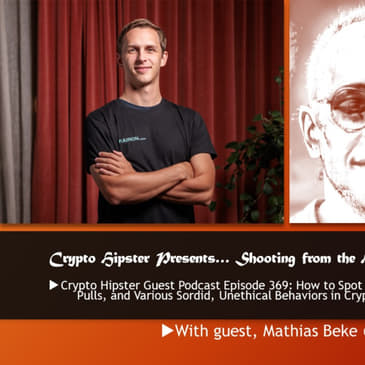

Mathias Beke is the co-founder and Chief Technology Officer (CTO) of Kairon Labs, formerly working from a prominent Belgian Bank, he is now responsible for overseeing the trading and technology teams in developing cutting-edge algorithmic trading software that Kairon Labs utilize to offer upscale market-making services for digital asset issuers and and over 500+ token projects.
Kairon Labs’ proprietary trading technology is fully integrated into about 100+ decentralized and centralized exchanges giving you extensive market analysis and round-the-clock global market coverage.
[00:00:00] Hello everybody and welcome to the Crypto Hipster podcast. This is your host, Jamil Hasan, the Crypto Hipster, where I interview founders on to Benoors, executives, thought leaders, technologists, artists, you name it all over the world of Crypto and blockchain, and I have today. You guessed that I have another amazing guest.
[00:00:20] I'm not guesting pretty incredible lately, so I'm really lucky that way. Today I have the co-founder of Kairon Labs, Mathias Beke, coming to us. Mathias, welcome. Thank you so much for inviting me. Nice to meet you. Nice to meet you too. Thanks for the warm welcome to.
[00:00:40] The more I learn, the more people I talk to and the more that I learn, that I'm not the smartest guy anywhere in this industry. Everybody else is so this is great. So much moving parts, that's crazy. So many interesting things. Yes, so many moving parts.
[00:00:59] Yeah, we're going to talk about one of those moving parts today. Let me first ask you, what is your background? Is it a logical background for what you're doing now? Yeah, so yeah, background time in engineer. I'm currently 32. So I studied engineer and then worked at a bank.
[00:01:24] Very quickly, he was involved in matching all the pieces of the different technology pieces of the bank. And so very quickly I was involved in obviously creating systems and how we can connect them, how we speed up and you know, quans and etc. It's a draw.
[00:01:43] And so then in 2017 I went full-time in crypto. And in 2018 we started Kairon Labs and looking at my background, the experience I gained there is tremendous right? So there are so many moving pieces, as you mentioned in crypto for us as a market maker or liquidity provider.
[00:02:08] It's exactly the same right? There's so many moving pieces. So many exchange, so many blockchains, decentralized, which allows us to make sure that our architecture is properly set up and we're really able to scale for it wrong.
[00:02:24] So I must say, yeah, my background does help me a lot in the data-date business that we do at Kairon Labs. Yeah, 2017. Yeah, there's been an evolution of market in since then.
[00:02:42] I would have done two after I asked you about Kairon Labs, what you guys do, what you're great at, you know, what you're area especially. So, you know, Kairon Labs is just $10,000,000, $8,000,000 I mentioned. So we've been on a market for a while, right?
[00:03:02] When I started stablecoins, we're barely used, right? There were so many inefficiencies and that's how we actually started picking up. So we've been quite early, not the earliest, but we've been quite early with everything. So Kairon Labs is focused on market-making liquidity provision, mainly for altcoins.
[00:03:24] We do market-make on our own BTC and Ethereum on specific exchanges, but our niche and our focus has always been altcoins. Very broad range, top-hundred coins to live in further. Our expertise, I must say, has always been launching coins.
[00:03:44] So we're very knowledgeable with FDVs, understanding market, understanding sentiment of the market, understanding exchanges and their requirements. That's always been a very strong point for Kairon Labs and has been a very strong focus for the last two years for us.
[00:04:04] I must say we're a small shop, right? We're not anymore. Actually, we're almost 50 people right now. So we're a little bit still like a boutique shop, let's say, you know, we're very hands-on. We're still very approachable, fans are still very approachable.
[00:04:22] Still helping cause with clients once in a while or with exchanges to explain our business, to support. So that's a very strong point on Kairon Labs.
[00:04:34] And on our side, we try to be as transparent as we can be about market-making because, as you mentioned in the introduction, like market-making is for a lot of people with black box, right? What are they doing? What exactly has that intel market making?
[00:04:52] And so we try to educate people like we're doing here on this call to make sure market-making is not an angry, black box of a piece, you know?
[00:05:04] Really trying to support as good as we can or what market-making is and doing our other most best to be as transparent as we can be in the business that we're in. So that's for sure our strength as a liquidity provider for market-maker.
[00:05:22] Okay, let me I got into this industry in 2017 too. Okay, I started as an ICO advisor so I'm going to walk you through a little eye understanding of how market-making is and you can fill on the rest for me please. Yeah.
[00:05:40] And other places to get liquid and make no desk and stuff like that. Then after the crypto winner happened in 2018, by the answer merged and they had these popular things called scamwicks. So that made the market right the scamwicks. Yeah, it's crazy.
[00:06:00] After that, FTX came on board and became the market-maker and then they, you know, the implosion happened there and then everything became bot related. That's my understanding of how the evolution was in 2017. What what actually happened and then in this post-FTS world, what's going on now?
[00:06:23] Yeah, I think free FTX maybe is also an interesting food of trout. It's on a media which was let's say the funds, the market-makers, whatever they were, investment firm, they were everything. They really absorbed a lot of the market as a market-maker, especially for these lounges.
[00:06:54] They were able to pull a lot of new token projects but also older token projects into the Alameda firm and actually launching them on FTX and lounging perpetuals and making it super sexy for these projects to go with.
[00:07:14] Alameda because it was like a stamp, right? It's like approval. Alameda is in the game and we were a bit wary about how is this even possible?
[00:07:28] What exactly are they doing and so we started analyzing what they were doing and they were not doing that much for these token projects. The only thing it was launched in FTX and playing around with what was happening on the price.
[00:07:44] So that was quite concerning for us to be very honest and we were pretty wary about what was happening on FTX, what we were trading on FTX. The explosion happened there and now post FTX you see again more of a consolidation of the liquidity providers and market-makers,
[00:08:07] the typical no market-makers and then you have these more shady market-makers going into the post FTX that is picking up again. So you see these distinguished two parts but you see more like a consolidation, you also see more traditional market-makers coming into play,
[00:08:29] like float traders. They've been in the market already for a while. They've been, you know, been more solid on on the market as a flate and I think that's good thing for sure.
[00:08:42] There's I think the FTX event was a good thing in adapting, bad thing was it gave such a bad light into what our space represents and what can still be done in say a regulated market as today although regulation in crypto is not yet rolled out properly.
[00:09:07] But you know, and then the good thing is actually now regulation is looking into what we're doing right and looking at the Mika in Europe trying to finally create a framework where we can operate in, right?
[00:09:23] Making sure we're not going outside of the framework and making sure there's a framework and so that for sure helps us a lot.
[00:09:32] Yeah, so that's a bit the the post FTX side of things on our end. I think from a market-making perspective the the situation still remains right it's all about making sure these launches are properly handled.
[00:09:47] The the traders have very direct access to liquidity, low-spreads, high liquidity making sure they can properly trade on these coins without big price gaps and so on.
[00:10:03] Right, so that utility remains that hasn't really changed. I think the business of market-making a lot of projects and little traders have a image of market-makers as in their pump and dumpers and price manipulation and so on and so on but.
[00:10:24] There is there is some truth in that that there are market-makers that do this but these are not market-makers right these are these are actually non-legitimate non-ethical trading firms right. What they do we are not market-making market-making is providing liquidity and at such a high frequency that.
[00:10:47] We do make profit but we don't make profit out of price right that's not what we do that's not our goal.
[00:10:54] So that's a big distinction between the two of them and I feel that that's still is not super clear for a lot of people there's a big difference in those two. Wait, let's say yeah. So let me explore that utility first. You said pump and dump.
[00:11:16] You know, at popular phrase in crypto has been a popular phrase all the time and you have these mean coins that are being their fresh mean coins being pumped out to the market now but you have.
[00:11:29] Companies that are projects that have fully launched all their cryptos that are no longer you know held by the team or Helen Eskrow that throw out there right and those have been impacted by the market-stown turn right.
[00:11:47] And their building utility on it but some of those projects need fresh infusion of being able to you know or do they we just let them all die right that's a that's the area that you know I think is under dressed right.
[00:12:02] So how can it be addressed and how can we put infusion into some of these fully you know distributed token projects.
[00:12:14] In the end if it's fully distributed it's it's all about what is the utility and and then because of their actual utility there's no utility and actually it's gambling right that's that's the honest like you take an assumption.
[00:12:31] Was likely something will hopefully will happen with with the with a mean coin and to be clear some mean coins actually have utility and have really a builders community and you know there's actually something happening right which which which I support it's it's mainly about you know what happened in Solana.
[00:12:51] Yeah just records right which is just. Yeah just criminal right it's just scam and and.
[00:13:00] And to answer your question I think it for me it's all about utility if you're fully diluted and it in you have utility then eventually if the builders keep on building then actually the coin is actually words something because there's actually something happening on it.
[00:13:17] Right so so that is for me always the simple answer there needs to be a utility in order to have a drive.
[00:13:26] I think when it's not fully diluted you always have a bit of speculation right it's it's part of what we are in very financial business is it's not much different than stocks right it there's always a certain.
[00:13:40] But the situation aspect into play and and also there in the end you're speculating that the price is going to go up but what is the what is the price driver is utility right it's actually somebody's using it right there is a substance behind it and and that is that is what matters.
[00:13:59] And that again a lot of token projects are missing the ball completely right they look at the price and that's all they look at but in the underlying unique.
[00:14:09] Actually to build something and have utility and have a developers community and so on and so on and so on and so on and and that is for me.
[00:14:19] The only solution right and you will see more consolidation of it right that is I do think it's something that's going to happen more and more of these liquidity but also builders they will just consolidate more heavily into into specific name coins and so on yeah.
[00:14:39] I wasn't specifically talking about mean points like but you make a point make a point if it's a utility project and it's not getting it's kind of like you're trying to look at the comparison stocks like companies can read issue more shares of stocks of making a issue that.
[00:14:56] You're saying that companies with utility prices with utility they can always consolidate together the development.
[00:15:04] Yeah, yeah, I strongly believe in that right because that's that's Indian that is also how we look at the market consolidation will happen more and more right and there will always be competitors obviously but.
[00:15:23] It's also something that you're seeing on exchanges right there new players in the exchange business it's extremely hard right because it's already saturated by this distributed.
[00:15:36] Now getting a piece of the pie is much more difficult so then it's about consolidation right and and that is something I see also projects right.
[00:15:47] Of course it's different technologies on like layer one's layer two or even trees and that's more different yeah so that that's also how we look at these these things for sure yeah. Yeah. Interesting. Interesting. Thank you. So I want to talk about.
[00:16:09] Something called ethics you know you are an ethical market maker you know or definition of blockchain ethics. For me being ethical is being truthful me right so, you know like we've like I mentioned.
[00:16:29] We recently did a post on coin telegraph about for example wastrening right or wastrening means that you're creating more volume than there actually is right so. So you're not showing the truth in theory right you're you're faking something you're faking volume.
[00:16:52] Which in our opinion is not ethical right so so that's like a very good example of of what I define as being ethical is having a proper set of rules.
[00:17:04] Today that framework is gradually being rolled out with the crypto but having within our own company and and with our own clients very clear set of rules or. These are things that we do and these are things we don't right like for example.
[00:17:20] Introduction finance go on the equity is market. Wastrening is not allowed right there's very heavy checks on whether you're self trading years or no and you know I know that even on these high frequencies it can still occur right and then you're still finger pointed by.
[00:17:42] The institution that's that's controlling this thing so also self regulating our self as a as a as a trading firm making sure that if we if we take our company and we would put our company into traditional finance.
[00:17:59] That's the rules would be still compliant years or no right and that is for us being ethical right and and obviously we're those rules are now being build out for crypto and and once likely they will.
[00:18:14] The match with what's currently being done in trend traditional finance and so we're that's what for us is means ethical right so I think blockchain ethics goes even further right so that that that I'm mainly focused on on trading business on our side.
[00:18:31] The ethics goes even further right it's you have these defying hacks you have so you know I've seen projects also sadly.
[00:18:40] They're developers they made in the smart contracts certain you know back doors that they could mint extra tokens and these kind of things or taking contracts are hacked and that's of course that's more like on chain ethics right.
[00:18:57] The thing is that as a it's open space right it's a transparent space of that means that. There will always be a bad guy always right there's no way around it so even if we are ethical that doesn't mean somebody else is going to be ethical and so.
[00:19:17] That obviously makes it hard to say okay what are blockchain at least for us it's not much different than anything else in the world but.
[00:19:26] You're still fighting against the bad guys right that are finding these weaknesses or implementing weaknesses that they can use on later on right so that's really hard to like.
[00:19:41] Yeah let's say I protect or make a silo out of it but yeah that that makes it more difficult right because on blockchain literally everything can happen and then you have the debate of. Well is it like the the mango attack that happened.
[00:20:00] I don't know if it's already a year and a half ago or so years ago. Well yeah is that ethical years or no in my opinion it's not ethical and then the good but the question is was it within the rules.
[00:20:11] Yes or no was it a weakness or was it let's say a fault in the system or was it an attack right and that these are the things that are very hard to define.
[00:20:23] For sure and and that's why again like I mentioned previously I think that's where regulation can allow to create a framework right so yeah that's like a very broad answer to. Being ethical as a market maker and what blockchain ethics could be or should be.
[00:20:47] Yeah I wouldn't you talk of it when you say that I just thought of the Slaught guy you know one man shot man to do the right thing did everything properly except made an error in the code and lost everybody's.
[00:21:04] Yeah exactly right that's the that's a hard truth in and and what we do it's it's all like one small mistake in.
[00:21:16] You're gone in in a snap right so it's super hard super frustrating and it creates a little pressure on the shoulders of anybody that's working on blockchain right so. Being diligent is crucial in what we do.
[00:21:32] Yeah I agree so you said truth standards rules and getting rid of wash training and you know that's that's an area that people still don't can't figure out if it's a wash trade or if it's a bot.
[00:21:52] What are some rules of thumb that you yeah you get the people when you look when they should be looking at you know when they start to look at a new token to invest like yeah it's real volume or not.
[00:22:02] Yeah I know not it's a very good question and and actually I'm happy that I can I can explain because it's really something that.
[00:22:12] I'm pretty frustrated about so you have two concepts if you're going into a market right if you want to invest or you want to trade there's one liquidity so liquidity means that you can buy an asset without buying it up to 10% so you want to buy just think something.
[00:22:29] $100 worth of uncertainty coin you don't want to buy it with a 10% price difference right you want to buy it at this price. So that's like liquidity that's a bit more difficult to fake right so that's pretty crucial for.
[00:22:45] Or it can be fake but let to keep it simple that's a bit more difficult and.
[00:22:50] That's crucial for traders to look at right and now the other side is volume now volume indicates whether there are other people actually trading this right so okay it's good to know that if I can buy an asset I don't buy it with like a huge slippage.
[00:23:06] But I also interested if there are other people are trading right if there's enough people trading this asset so it's also showing that is more distributed and so that's pretty crucial and so to go into your question on was trading actually.
[00:23:22] They're different forms of questioning so if you look into a chart you open whatever exchange. The volume bars are pretty in giving a pretty good indication if you go and looking to the timeframes of like five minute timeframes.
[00:23:41] Actually the volume there is there's volume but it's stable there's no change it's just.
[00:23:48] So there's constantly the same volume which is not normal right you have Asian sessions you have European sessions you have US sessions you know these these volumes they they fluctuate right a change right and and that's one thing that I always look at is like how flat.
[00:24:07] Even if there's a lot of volume how stable is the volume the more stable it is. The more significant you could say like this this could be what's traded. That's one and then two is actually a.
[00:24:23] A wash trade if we look at the market what's actually happens within the spread so spread is like best bit best ask and so.
[00:24:34] Somebody places them right could be a market maker could be somebody else and so those orders are there and a wash trade is in a lot of cases.
[00:24:42] And so you can actually see if you open order book and you see the last trade price and it's always trading within those two orders. Then something's off because that's actually not.
[00:24:58] It's not visible it's not trading with something that is actually in order book and so these are like two very clear indications of washing. That makes any sense because I'm pretty deep into this. And it managing the volume and then managing the spread.
[00:25:18] Is it with no outliers is wash trading a sign of sign. Well so yeah it could be a sign because in theory you could say you know market maker like us we create a good spread right good bit with this.
[00:25:36] That that's us okay we managed that but if no if there's nobody trading with us we also just still right so the moment that somebody.
[00:25:46] Takes an order so then maker take her you take it then you have a change right and the order book shifts is on the pricing but what a volume.
[00:25:57] But is doing is trading within these two constantly and that that last part is actually pretty crucial because you're not actually trading with a counterparty. You're trading with yourself.
[00:26:12] That's the that's the show of like of washing and still it in very high frequency you cannot even see this right like it's so fast we're talking about milliseconds here.
[00:26:24] I'm not sure if you can see that there's a lot of things that are going on in the market. And then it's more difficult but in these lower liquid markets this is a pretty clear indication yeah. Interesting I'm going to look for that going forward thank you.
[00:26:41] I recommend you do and make sure you also look at the liquidity because that's super crucial. Yeah, so. Awesome so what I'm going to do is I'm going to move on to the next question. This is a good then. It's making me think so.
[00:26:57] I want to talk about things that happen in 2024 like institutions like Black Rock. You have Black Rock. The quality you have these large, you know US based global institutions that are now getting embedded.
[00:27:16] I mean, of course, are going to get embedded in the big quantity theorem so far maybe Solana may have some others. As they get more deeply embedded in the crypto ecosystem what will be the role of you guys of you independent market makers going forward. Yeah, good question.
[00:27:35] You know I think these large institutions they currently many focus on like. Bitcoin to you Solana. Maybe ripple and and that that's most likely where it stops right they need organic liquidity to make sure that that even when they position themselves that everything is substantial.
[00:28:01] So that's how I look at these very big big guys like a black rock right today when they come in and they buy a billion dollars worth of a certain asset it needs to be.
[00:28:14] And they're able there needs to be a lot of liquidity there needs to be a lot of counterparties involved otherwise that market can you know it's going to be too volatile for these types of institutions to come in.
[00:28:25] So that's that's a at least our vision out of it.
[00:28:31] Where we come into place these institutions they are they're not very crypto native right like I think Garalab's is a very crypto native company and and we really understand the in the out of all the components within crypto.
[00:28:51] And and that's what we see in these larger institutions that they missed this right they they really miss the aspect of crypto itself being you know the tokenomics how it works the launches the different exchanges that are also differently set up and and you know they need to integrate with that and you know it it's quite extensive for them to.
[00:29:17] To to work on that right so so that is something that we we feel that an independent market maker is is giving a lot of advantages.
[00:29:27] For these big players because those insights can be given to them obviously they have the cash to hire these types of persons to. Which is also why I talked about consolidation I do feel that certain.
[00:29:41] And firms within crypto will would be absorbed by these larger players coming from traditional finance just because they want to absorb that knowledge in.
[00:29:54] In a snap right they don't want to have that learning curve that we've gone through for years in years out they just want to absorb it as soon as they can they want to take a big part of.
[00:30:05] And so that that is how we also see us as being an independent player. You know working on that education for the others and being open for discussions on joint ventures and so on and so on so that's how I feel these.
[00:30:21] Independent market makers going forward cradle of value. On the other hand also these big big shops they all need to comply with extreme regulation within their own business right and so. That's where these independent market makers you know they like us we're currently based in Europe.
[00:30:45] We're going to we're investing a lot of time and resources into the Mika recognition right and we're even looking into how we can support the.
[00:30:55] The entity that is following up here in Belgium to also see how we can educate and support in order to enroll that right so and that is also super interesting for these for these big shops to see like.
[00:31:09] They don't need to invest into this themselves and and they can just absorb it very quickly. So that is a bit how we will look at it obviously that means a market is going to be extreme competitive right these big shops they know the ins and outs of.
[00:31:29] Industrialization of code and speed of code and these kind of things which are super crucial. So that's there that's that's they're they're strength right plus the connections plus the volume.
[00:31:45] And so these are the big shots that eventually will be competing with or we're going to work with them right so it's it's those two things that that we see happening in the market yeah. Interesting yeah they have the resources.
[00:32:04] I've been looking at some of their their heads of crypto and then it's in there. Some of them have like just like a high school diploma right and I'm like.
[00:32:15] I don't think the series about putting somebody in there who's really skilled and talented they could easily ask or so you know.
[00:32:23] Exactly exactly and and exactly what you're point and that's what we're seeing is that these these bigger shops they're actually really seeing like maybe it's better to absorb like a smaller shop.
[00:32:37] Then just hire people that we need to find that are you know when it tree because they've been in crypto since they were in school and you know.
[00:32:48] Because they like they can find these types of guys right and that's that's super challenging I can only imagine for sure. Yeah. Very interesting so our industry unfortunately is still fraught with you know scams rug pulls.
[00:33:09] Reggie tax not too much gambling anymore but how do we probably wants to know for all. Yeah to be honest. I don't think you'll ever.
[00:33:25] It for once and for all right like I mentioned there will always be somebody who will find some weakness in something and try to exploit it. In the interest in humans and we develop stuff and there we have weaknesses or greediness or whatever.
[00:33:46] And so there will always be something right now the question is then how can we make sure like for example these records. And can we actually be tackled by it because in a decentralized economy literally anybody can launch whatever they want and.
[00:34:09] Created some marketing and say we are the biggest project ever and we're going to replace Ethereum blah blah blah blah. And just pull the plug right so. That's an issue and so that's what you're also seeing is that very gradually people are looking.
[00:34:26] You know regulators are looking at unis what hey you know or you guys allowing here right. What framework are you guys creating to avoid these records and so that is that the you know regulation. Everybody looks pretty.
[00:34:48] Found upon the regulation with in crypto but you know it's a given take right regulation does help in protecting also for example like a ripple right or scans.
[00:35:06] Certain bridge attacks you could say it's a bit more difficult but like these very obvious things that's very relation really can help right. The downside of regulation is that there's so much extra overhead created that it slows down your business significantly and let's say every time you.
[00:35:26] You blink with your eye you need to explain why you blink with your eye right and so. That is a balance that hopefully your regulators can work on life understanding that this space is moving so fast at the moment you pass a law.
[00:35:41] Or bill you know you're already the six months or even a year behind because it already changed in the snap right but on the other hand these records and every scams. We do need support we do need people to actually be.
[00:35:58] But to do this right now I can imagine these guys are not really scared to do it right they're going. Yeah we'll just go through tornado casual whatever mix or and and it's all good and you know and so.
[00:36:14] Delicious like chain analysis are great to to to help on these kind of things and that is I feel that very tight balance that needs to to be taken up on like regulation needs to be there to protect.
[00:36:30] A lot of players in the space probably all but then making sure that it's not over regulated because taking up full right it's so freaking fast what we're doing. It's changing every day right as you know and so that balance needs to be found.
[00:36:49] But in my opinion for example these bridge attacks or certain defy attacks. It will always be there in the end it's humans that are developing these things and we can say will be there and eventually will be found. Yeah I I envision I mean. I'm I'm pro regulation.
[00:37:13] But if certain regulators I'm not pro for you know exactly and yeah I'm not going to name names. No but it's true right it's exactly that but it's it's and that's the that's that balance that hopefully we don't eventually will be found right so that.
[00:37:37] We're really and happy to start working with whatever regulator is is responsible for for a certain entity yeah. Yeah my my my vision is some day companies like in analysis aren't needed because of transparency right exactly.
[00:37:55] Exactly why should transparency be the future finance looking at looking at finance today. It's super inefficient that's be honest right there's so many party so many all margins. The given for whatever reasons so cases also for regulation because it's necessary. In efficiency.
[00:38:25] Times a hundred million right it's a reality if you look at Europe and America when we're these institutions created while back right when we're day in digitalized well that's already also while back right is the systems are.
[00:38:44] Sometimes 50 years old or even more and certain banks are still building on it right it's it's super inefficient on the technical side in it's super inefficient on the operational side of things and.
[00:38:59] To to point out regulation of course like I mentioned crazy a lot of overhead right that's normal. But the efficiency is is gone right and. Define in in my opinion is it did the the future or a future for finance for sure.
[00:39:22] You know looking at how these you know it enough for example is this you know on chaint bills that are being worked on these these are things that are super super interesting because.
[00:39:35] There's no middle man anymore right and and me if I obviously pass through the certain key by C rules and email rules. I can immediately do this on chain right which is amazing right I have my own control.
[00:39:53] And there are many many other solutions on chain that really do help with efficiency and transparency on what is actually happening and so.
[00:40:06] I think that's that's for sure the the ethos of crypto in my opinion right it's in interior you everything started with BTC maximalists and and and you know. Guys that really wanted to step away from from what we know as fiat currencies and and.
[00:40:30] Now you're seeing these these large institutions like we just discussed are moving into this space and so then it's about. How are they going to use blockchain as a technology and and defy as an application to also improve their own systems and and their own operations and so.
[00:40:54] And to have let's say less friction in the way their clients or customers are interfacing with them right on chain which is extremely transparent and so that is for sure something I I really see as as a big benefit for for or big.
[00:41:16] It's a yeah no it's actually the the ethos of what we're working with in blockchain and so that that these are the fundamentals for us and so that's that's needs to be supported that does need to be regulated and that that's where we need to build on right.
[00:41:34] And you know I think. Eventually that's that's also where we are going through as a society and as a whole and and it. It does need to be become it needs to become much, much, much more efficient all the different aspects of finance yeah.
[00:41:57] I worked in Wall Street for 20 years I completely agree with you. Yeah, so I want to thank you very much for your time today learned a lot. Yeah, that was great so I have one last question and this one the easiest one I've asked you.
[00:42:19] I think people find a more information about you about car and labs how can they use your services how can they do that.
[00:42:26] Sure, yeah just typing our labs in Google and you'll hit immediately our spot and you know we work on on certain blog posts to educate our customers but also just.
[00:42:40] You know regular investors and traders that want to get into the space so carolabst.com is is the space to to be.
[00:42:49] We also regularly every week we we make some on x we we do some spaces between with some clients of ours or market or partners on our side where we you know discuss multiple aspects within the blockchain ecosystem.
[00:43:06] So also there carolabst on Twitter or ex you can find us there to get more educated on what we work on yeah. Awesome thank you very much for your time today. Like I said thank you for for your time and keep in touch for sure.