
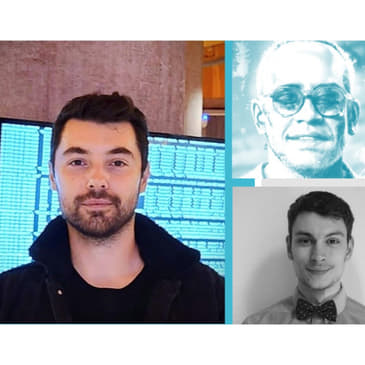

[00:00:01] Hello everybody and welcome to the Crypto Hipster podcast. This is your host Jamil Hasan the Crypto Hipster where I bring you
[00:00:08] founders, entrepreneurs, executives, thought leaders,
[00:00:12] artists, you name it across the world of crypto and blockchain and I have an amazing, actually I have two amazing guests for this podcast interview today
[00:00:22] And you know, I should have asked them how do I pronounce our last names, but I'm going to give it my best shot
[00:00:28] You know the first guest I have is Dennis
[00:00:32] Kallisely Aglu
[00:00:34] Who's the co-founder and CTO of soar chain and I apologize for butchering your name?
[00:00:40] And then I also have Marco
[00:00:42] Barathevich who is the product lead of cosmos SDK at the binary builders gentlemen. Welcome to the show
[00:00:52] Thanks for having us. Thanks for having us
[00:00:55] You're welcome. You're welcome and you let me know Dennis how badly I did your name. Um, no, it's fine
[00:01:02] Um, thank you for joining me. So let's kick things off. I ask you both, you know
[00:01:07] What is your background? What are your backgrounds and are the logical backgrounds for what you're doing now?
[00:01:14] You want to kick it off Dennis and then I'll follow you
[00:01:17] Yeah, sure. Um, I mean, uh, I'm coming from an electrical and electronic engineering background originally
[00:01:24] I've been working in the automotive industry for more than 10 years
[00:01:28] I worked at and like assisted companies such as Toyota for tzuki
[00:01:34] Bosch to achieve different levels of autonomy in their current and future product
[00:01:39] Um, I've been actively involved with the development of compute and connectivity system
[00:01:44] including both the hardware and the software to enable safer and more autonomous driving for
[00:01:50] Different automotive companies in terms of crypto. I've been in crypto since 2013 if you count bitcoin mining back then
[00:01:58] Um, got em all in a couple of like if you're in base project in 2017
[00:02:02] um, but so I've been in the ecosystem for about a decade
[00:02:07] um
[00:02:08] But yeah, like
[00:02:11] I believe that
[00:02:12] the
[00:02:13] blockchain itself should be
[00:02:16] Used for solving real life problems that already exist in people's lives rather than like creating problems at all
[00:02:24] um, so
[00:02:25] 4 chain is my first project project that utilizes blockchain which we started
[00:02:31] roughly in
[00:02:32] 2022
[00:02:33] So I guess that makes me a good candidate for
[00:02:38] um doing like an
[00:02:40] Automotive mobility related blockchain project
[00:02:45] Awesome awesome. Um, Marco
[00:02:48] My background is a bit mixed. Um, so I grew up in business went to business school and then once I left business school
[00:02:55] I asked myself if I wanted to stay in europe and the answer was yes
[00:02:59] And was the easiest way to stay in europe without having to learn
[00:03:03] The german language because I was in germany and the answer was learn how to code
[00:03:07] And so I started learning how to code. Um, I think that was
[00:03:12] seven eight years ago
[00:03:14] I've coded done dev rails to protocol engineering on tender mint, which is a consensus
[00:03:20] algorithm
[00:03:21] On cosmos sdk
[00:03:23] And now I lead the cosmos sdk on product. Um still do some coding still able to fit that in so definitely enjoy it
[00:03:32] Yeah, that's kind of like a short synopsis of myself
[00:03:36] I've been in cosmos for five years five six years. So it was the first crypto project I joined and haven't left
[00:03:46] I like your solution if you want to if you love its location and you want to stay there and learn how to code and you can
[00:03:53] I like that thing
[00:03:55] Thank you. Um
[00:03:58] So I want to ask first, you know
[00:04:00] sore chain what is sore chain and baron and binary builders all about
[00:04:05] And um, how are you shaping the decentralized future of mobility and deep in?
[00:04:11] uh using the cosmos sdk
[00:04:14] Uh, yeah, so I'll I'll just like info and give the word to marco. Uh, so we provide a completely decentralized platform with a built-in
[00:04:23] scaling layer which enables massive amounts of car data
[00:04:27] uh to get verified for its authenticity integrity and most importantly plausibility and shared in a
[00:04:35] privacy preserving and anonymous way
[00:04:38] And users are incentivized
[00:04:40] To pay up and running
[00:04:43] With their devices and vehicles
[00:04:45] To get network rewards, uh, which ultimately creates a trust score for each vehicle and each device
[00:04:52] um, and most importantly it enables
[00:04:55] Uh these users to share whatever data they want whenever they want and with whoever they want
[00:05:02] And ultimately by doing so we provide a verified data to the data costumers
[00:05:08] Who could be these car companies tier one suppliers third party service providers such as insurance companies maintenance companies
[00:05:15] Service companies, etc. So that they can have access to the data that they need for their application in a completely
[00:05:22] um explicit content
[00:05:25] explicitly content
[00:05:26] this way
[00:05:27] um, and of course the role of the intergames tag is huge in this and
[00:05:34] Maybe like i'll give like the word to marco and add anything on top of that
[00:05:38] I relate to that
[00:05:42] Awesome. Yeah, so sort turn is kind of like uh, is definitely leading it
[00:05:46] We're trying to support them in the best way possible by building the software that they use so the cosmos SDK
[00:05:53] alongside other other colleagues from iBC
[00:05:57] on the bft
[00:05:58] Fossumism with all these parts of this inner chain stack
[00:06:01] And so we focus primarily on cosmos ssk and the cosmos ssk users and what we really try and
[00:06:08] Dive into there is providing secure efficient
[00:06:13] performant chain that allows people to
[00:06:16] Really build whatever they want there the limitation of using the software is up to their imagination is our goal
[00:06:25] To also like provide a small backstory. I hope we won't exceed the time but like initially when we started back in like
[00:06:33] early 2021
[00:06:35] We already have had like a network of cars mostly
[00:06:40] We were working b2b and we were
[00:06:44] We wanted to build this
[00:06:46] Blockchain where the nodes would also have different roles like uh, such as verifying each other
[00:06:52] so we thought that it would
[00:06:55] be
[00:06:56] Very essential to have a different consensus mechanism where the nodes themselves would actually participate in the consensus rather than
[00:07:03] Like having separate validators, etc. So we architected something we started working on it
[00:07:08] We based it loosely off of
[00:07:11] another
[00:07:12] Deepin for the first one of the deep in projects the ileum consensus layer and then
[00:07:18] We needed to design a networking layer. We need to design all these
[00:07:23] functionalities ourselves and the development
[00:07:26] Uh, just got out of hand. Uh, we need like 20 people 30 people just to
[00:07:31] Make maintain what we've developed. Uh, I'm not even mentioning to make it production ready. So we somehow
[00:07:39] Um came across tenorments back then it's common BfD right now
[00:07:45] Um, and what we were able to do in like six months
[00:07:49] time
[00:07:49] We were able to do
[00:07:51] In about two months time with just the tandem and core and then we saw the cosmos SDK and
[00:07:58] Those like two months actually
[00:08:02] Became two weeks. Of course, this is like the very first implementation of the logic
[00:08:07] um, so
[00:08:09] We thought that okay, we can use this thing and as we
[00:08:12] Continued using it we it it's been instrumental in bootstrapping the store chain network and the modular architecture made very made
[00:08:21] It's uh, very easy to develop custom modules. I think that's uh, the best part about it
[00:08:28] Like we have this proof of availability module data provision request module
[00:08:32] all need to be
[00:08:34] deployed
[00:08:35] Um as on-chain logic
[00:08:37] We cannot have any off-chain logic to support that because of the architecture
[00:08:43] and
[00:08:44] um, we have by the way experimented with a lot of
[00:08:48] um EVM based chains like l1 l2
[00:08:52] um
[00:08:53] Doing this trying to implement this logic with like smart contract. But ultimately
[00:09:00] Only cosmos SDK
[00:09:02] was capable of
[00:09:05] Allowing us to implement what we needed. So that also we have the cosmos and the ibc
[00:09:11] aspect as well, uh, which I might also
[00:09:15] Touch up later
[00:09:20] I'm going to ask about those you mentioned if you thought I've both you mentioned a few times was uh interchain, right?
[00:09:26] so
[00:09:26] You know right now you're working on solving industry problems with regarding security safeguards
[00:09:33] And direct data that's collected by cars and connected devices, right?
[00:09:37] You're using the interchange stack to help
[00:09:40] Create a more robust and secure network. How do you do that?
[00:09:44] How do you solve those problems and use the interchange?
[00:09:48] I yeah, I mean uh to start from the like automotive industry
[00:09:53] Um, it is the worst when it comes to privacy preservation
[00:09:58] Even like a few months ago mozilla
[00:10:01] Published a report where like almost all top 25 car companies
[00:10:06] were
[00:10:07] Pretty we're being criticized for using processing and selling their users data without their explicit content
[00:10:14] Consent um or not even consent, but even them not knowing it
[00:10:19] So to be able to address this problem. You cannot obviously go on
[00:10:25] On an all out war with these companies
[00:10:28] But you would need to provide solutions that benefit both these companies and their end users
[00:10:33] So it needs to be like a balanced solution
[00:10:35] We need to consider the b2b side of things as well as the b2c side of things
[00:10:40] So ultimately we do this by providing the
[00:10:43] decentralized network with its own governance data verification data streaming and most importantly
[00:10:49] An open development environment which will lead to the biggest app store we've seen so far
[00:10:56] And we have this system called proof of availability
[00:11:00] And it is the way that the storage and network keeps crack of which vehicles and devices can prove at any given time
[00:11:08] The availability of the data that they're generating not the data itself, but a proof of it
[00:11:13] So this enables a healthy and active ecosystem of data generating nodes while giving the option
[00:11:20] Of sharing the data
[00:11:22] itself to the users themselves rather than these car
[00:11:26] companies or other companies tap into their data without them knowing
[00:11:32] um, of course for this again
[00:11:34] Um, like the interchange I will also give the word to Marco, but you need full sovereignty
[00:11:40] Uh on your chain, it doesn't
[00:11:43] It shouldn't be dependent on an underlying l1 and under another chain
[00:11:48] It should be very flexible in terms of what you can implement
[00:11:51] I also discussed this in the previous point, but like you need to
[00:11:55] Be able to implement very specific
[00:11:58] logic
[00:11:59] In the underlying vm
[00:12:02] It should be very modularized and also it should be very interoperable because
[00:12:07] uh
[00:12:08] Although you are like a single chain. You cannot do everything yourself. So you need to be able to
[00:12:14] transfer assets with other interoperable interoperable chains
[00:12:18] Use their functionalities at times needed through i this is of course like referring to ibc
[00:12:24] Uh, but yeah, maybe marco could give a lot better insight on this one
[00:12:28] Especially for the sovereignty and the interoperability parts
[00:12:31] Yeah with the with the interchange stack the the biggest difference between web 2 and web 3 I would say that
[00:12:37] Is that in web 3
[00:12:39] Everyone has been on the train of we need to rebuild the wheel every time come up with a new idea
[00:12:45] We need to rebuild this stack. We need to build another vm
[00:12:49] And that just takes away the time from people to actually develop a useful product like sorgain
[00:12:54] And so in our case the the idea with the interchange stack is like
[00:12:58] Like uh, then it's mentioned like hey like take it use it build what you want with it
[00:13:02] Don't worry about low level protocol p2p systems all those all that fancy stuff all that fancy complex stuff
[00:13:10] Just worry about building a product. Um, and then everything else kind of comes to it later on like in cosmos sovereignty is the biggest
[00:13:19] Selling point that it has a stack, but also you can really build on your own. You're not limited by the
[00:13:26] Um people around you by the chains around you. It's really
[00:13:30] Just as fast as you can go yourself
[00:13:32] Um having your own security, but also having the option to share security with the likes of maybe you're using ethereum and celestia
[00:13:40] You may be using the cosmos hub
[00:13:42] And I'm with their shared security
[00:13:44] So there's definitely a lot of options for people what to build
[00:13:48] But at the root it's how do you actually how are you able to actually focus on your product instead of having to build
[00:13:53] This stack to be able to build your product
[00:13:59] Makes sense. I see a lot of people recreated the wheel
[00:14:03] you know, um
[00:14:05] That might be I might be considered an industry problem
[00:14:07] But um in in your industry that you're in right now regarding the regarding the vehicles and regarding the data there
[00:14:14] You know, uh, you mentioned data privacy is one issue
[00:14:18] There are other industry problems right such as fragmentation and verification
[00:14:23] You know, uh, what role does the proof of availability having it in solving those two problems as well?
[00:14:30] Yeah, um
[00:14:32] So one thing again about like the automotive industry, uh, it is very fragmented and this means that like there are
[00:14:40] Thousands of companies many many market forces at play and due to the nature of the industry everything happens
[00:14:47] In a very close fashion. So there is no open development. No sharing
[00:14:50] Technologies, no whatever
[00:14:52] but ultimately
[00:14:55] A vehicle is manufactured and they go on the same road regardless of what the brand is
[00:15:01] Uh, when something needs to be developed the company would want to develop
[00:15:05] That on its own or at least within its own ecosystem in a very close fashion
[00:15:10] this ultimately calls
[00:15:13] uh
[00:15:13] them to
[00:15:15] not collaborate
[00:15:16] And thus slow down the advancement of the technology that could have been developed way earlier
[00:15:21] So there could have been an app store for cars 10 years ago. There could have been
[00:15:29] more much
[00:15:32] higher level autonomy vehicles
[00:15:34] 10 years ago
[00:15:35] and of course these close close systems ultimately mean black boxes that the users have no control over
[00:15:41] What's happening inside of it? So
[00:15:43] um to enable them to collaborate with each other
[00:15:46] Without of course disregarding the end users
[00:15:49] um
[00:15:51] We saw the best way to do this is through a detentualized network where these companies can develop and deploy their
[00:15:59] Like own applications that have access to the user data while giving back the user to power to choose
[00:16:05] What they want to share and how much they want to share and the proof of availability part
[00:16:10] It basically enables people to again move
[00:16:15] their vehicles availability without sharing the data itself and ultimately we also have this data provision request, which is
[00:16:23] uh a special type of
[00:16:26] Transaction that the data consumers
[00:16:28] And by data consumers we can mean like oem car manufacturers tier ones
[00:16:33] insurance companies anyone who would want to have access to this data
[00:16:36] either for using them in their apps to serve the people back again or
[00:16:42] um, just do some analytics on them and advance their technology
[00:16:47] Um, they basically send this transaction to torching which contains
[00:16:53] A lot of information it it asked for let's say they want to use a tire pressure data from cars that are manufactured after
[00:17:00] 2017 uh within the germany region and
[00:17:04] um
[00:17:08] That are cars that are I don't know sedan or something. It's like a very uh extensive list
[00:17:13] You can filter a lot of things and once this goes on chain the vehicles that are eligible
[00:17:19] Are get notified and you as the user let's say your vehicle is eligible you get asked
[00:17:24] Do you want to join this dpr? And if you
[00:17:28] opt in to join then you start um,
[00:17:32] You basically get paid by the company for using their data
[00:17:36] And while all all of this is happening
[00:17:38] This uh, you are completely anonymous and nothing actually goes
[00:17:43] on chain in an unencrypted way or in a way that it would
[00:17:48] Uh expose your data
[00:17:51] So it's basically uh as poor chain. Um, we are not the
[00:17:56] data aggregator or the company or the middleman that
[00:18:01] piloted the data
[00:18:03] Categorize that catalogs it and uh choose
[00:18:07] whomever who to whom to sell
[00:18:11] Uh, but rather just facilitate this exchange between the parties
[00:18:15] Through the decentralized and self-maintaining infrastructure
[00:18:20] um
[00:18:21] So yeah, this is uh how we address these issues
[00:18:29] You said something there that's that that I had forgotten that I did in my life. Um
[00:18:34] You said auto insurance and
[00:18:38] I used to be a financial
[00:18:40] This is a while ago financial manager aig and one of the jobs that I had at that company was I was a financial planning and analysis manager
[00:18:46] for the auto for the international auto insurance and property insurance and
[00:18:51] personal lines, right?
[00:18:53] um, one of the one of the big challenges in the insurance industry
[00:18:59] Is this concept of i b n r which is incurred?
[00:19:03] But not reported right? That's uh because insurance is a spread business and so that's a big that's a big like blind spot
[00:19:12] but you guys have this vision of you know
[00:19:15] transforming vehicles into global data hubs, right?
[00:19:20] And i'm thinking you know how
[00:19:23] I think that it's a really untapped
[00:19:25] untapped landscape
[00:19:27] So
[00:19:28] How can you achieve that? How can you achieve that global data hub ecosystems?
[00:19:34] Using your your company your platform. How can you do that?
[00:19:38] yeah, I mean to
[00:19:41] be able to have like a
[00:19:43] Even like a claim to become a global data hub
[00:19:46] You would of course need the infrastructure to support that
[00:19:50] uh and by infrastructure I both mean the
[00:19:53] decentralized network side as well as the data verification pipeline
[00:19:58] parts which are basically interconnected
[00:20:02] Currently when you look at a vehicle it is said that the data that a single vehicle generates
[00:20:07] um
[00:20:08] Is valued at around 500 dollars per year and it goes up as the vehicle gets
[00:20:13] um higher end
[00:20:15] Um, so by the way, this is the only this is only the value
[00:20:19] Of the raw data that many different parties are willing to pay per vehicle. It's not it doesn't take into account
[00:20:25] the value that would
[00:20:27] Could have been derived from utilizing this data to improve the mobility experience of people or
[00:20:33] lower the lifetime cost associated with their vehicle
[00:20:37] And it is said that the in-car app market will be a trillion dollar industry
[00:20:41] Um, and will be multiple times larger than the smartphone app market that it is right now
[00:20:47] um, that is how the untapped
[00:20:50] landscape look like nowadays and we believe that the best way to uncover this is of course
[00:20:56] um, it's a hidden market potential and um
[00:21:00] It it it is to basically create an incentive structure that benefits everyone in the ecosystem
[00:21:06] While not depending on a single operating company or a centralized consortium
[00:21:11] Uh, which was the go-to solution mostly within the automotive industry, which never worked
[00:21:18] Um, and ultimately the applications touch as
[00:21:22] predictive analytics pay how you drive insurance ride sharing logistic infotainment autonomy applications assisted driving applications will be enabled by
[00:21:31] 4 chain will be deployed on 4 chain
[00:21:33] uh due to
[00:21:35] this incentive structure and
[00:21:37] the open ecosystem that
[00:21:40] Many companies could actually get them all so
[00:21:43] Uh, the mobility is very close. We I always give this example like
[00:21:48] As a developer let's say you're like a 20 year develop 20 year old developer
[00:21:52] You want to go to into an industry? You can go to biotech. You can go to space tech. You can uh, go to ai
[00:21:59] But you cannot go to mobility. You cannot develop something for mobility because
[00:22:04] It is very close. It is it is an extremely closed ecosystem and you just cannot develop applications
[00:22:09] but if we have this, um
[00:22:12] V-sensualized app store for mobility
[00:22:15] You would now have competing
[00:22:17] Apps that would have the same function which would ultimately drive the quality
[00:22:23] up and
[00:22:25] The prices down and you would be able to pick as a user
[00:22:29] Which app to um, let's say like right now the insurance companies
[00:22:35] You gave gave that example so they are trying to get into your car. You plug a module inside your car
[00:22:40] but imagine
[00:22:42] Only sending data to a single company
[00:22:45] You don't know what
[00:22:48] Um, what they're doing with their with your data
[00:22:51] Um instead of that you can again plug a device into your vehicle which gives you access to countless applications within the ecosystem and you can take
[00:23:00] um
[00:23:02] The insurance company out of 10 insurance companies
[00:23:06] Maybe you will pick one because they gave you better premium or they have
[00:23:10] um, this
[00:23:12] I don't know
[00:23:14] discount for you because
[00:23:16] Uh, you are a better driver. Maybe you don't you drive once a week
[00:23:21] So it's all about the ability to pick and to create this competition so that
[00:23:26] Um, we would be using better services
[00:23:32] Got it
[00:23:33] Parker what are your thoughts?
[00:23:36] And I think it's an industry that
[00:23:38] um
[00:23:40] Has been going on for a lot of years now. So my my first crypto job was before cosmos was an enterprise
[00:23:46] uh blockchain and so
[00:23:48] went to a bunch of
[00:23:49] more conferences and stuff like this around mobility
[00:23:54] And mobility as a service
[00:23:56] And it was interesting back then but it was just way too early
[00:24:00] Like I think many of the things in the blockchain space
[00:24:04] In 2017 2018 2019
[00:24:07] Were it was in the right direction. It was just way way too early. And so in that sense
[00:24:12] Um, this is one of those things that back then it was way too early. The tech was too
[00:24:17] Random, I remember um what jumped in and started helping a team and they're writing a whole blockchain in java
[00:24:23] and I was like
[00:24:24] Like this is going to be 10 times amount of work if you guys have to like maintain your own maintain your own stack
[00:24:30] And that was that was before I knew about the cosmos SDK as well
[00:24:33] Um, and so the combination interchange stack what sort chain is doing
[00:24:39] Being where we are in today's market with the technology technological advances in the last six seven years
[00:24:45] It does seem like the perfect time to really start pressing on this industry in order to really adapt it for
[00:24:52] The upcoming evolution of technology be it with blockchain or without
[00:24:59] Yeah
[00:25:01] You know, I remember 2017 I remember the very first crypto commercial that I saw back in the ice city
[00:25:06] He's was this
[00:25:08] Giant monorail in the sky. I think it was the china vc company or something like that. I was like, this is pretty cool
[00:25:15] you know, um
[00:25:17] But I agree with both of you and the fact that for the mobility market
[00:25:22] We are nowhere near where we should be, you know, I constantly hear people saying to me
[00:25:27] You know, why don't we have flying cars yet? They promised us flying cars. We don't have any you don't have that like
[00:25:33] But what's like there's tremendous potential
[00:25:36] in the mobility market
[00:25:38] Um, how are we going to get there? When are we going to get there and what's realistic and achievable versus what's a
[00:25:44] VC funded monorail
[00:25:46] commercial
[00:25:48] Yeah, that's a good question actually that's that's like the question that keeps me at night
[00:25:53] Basically and like initially I mentioned that like I was working on autonomous vehicles. So it is
[00:26:00] fairly
[00:26:02] easy to
[00:26:04] like
[00:26:05] produce
[00:26:06] An autonomous vehicle let's say level three level 3.5 maybe four in a controlled environment for a single vehicle
[00:26:13] But when you when you put
[00:26:15] Hundreds of these vehicles at the same place
[00:26:18] They just cannot operate because this is this is where I like refer to the lack of a connectivity layer
[00:26:25] So that's why we actually
[00:26:27] Went out to create this connectivity layer
[00:26:29] so we saw all of this as the connectivity layer to connect the vehicles to each other to the cloud to the infrastructure and also to the people
[00:26:37] um to the road users to generalize
[00:26:41] and um, I mean
[00:26:43] The mobility market itself is already like it's almost like a trillion dollar industry
[00:26:48] Maybe more it depends on what you include in it
[00:26:51] But the problem is that
[00:26:53] From this trillion dollar industry the benefit that the end user gets is fairly low
[00:27:00] And this is mostly due to again all the reasons that I've kind of like the closed ecosystem the
[00:27:06] uh competing and like these car companies or like all of these companies could be collaborating and
[00:27:13] They would actually be
[00:27:15] Um, everyone would be earning more including the end users
[00:27:21] So it's not a zero sum game like if they were to collaborate the technology would be advanced
[00:27:26] would be um
[00:27:28] would advance pastor and
[00:27:31] Uh, ultimately we would have the autonomous cars
[00:27:35] I'm not so bullish on the flying cars yet
[00:27:39] Uh, and I'm not so sure about its function to be honest
[00:27:43] But ultimately the mobility would be um evolved into something
[00:27:49] um
[00:27:52] Of a very shared nature where instead of like having your
[00:27:57] Own vehicle, maybe you would be subscribed to a service where you could get
[00:28:02] I mean basically like a decentralized uber like application which could encapsulate all your need
[00:28:08] including
[00:28:10] So you wouldn't as an end user you wouldn't have to deal with all the services taxes
[00:28:16] insurance, etc. You would probably just be paying
[00:28:20] something one one
[00:28:22] um
[00:28:23] subscription fee and you would get um
[00:28:27] a seamless mobility experience so that's um
[00:28:31] How I envision the mobility mobility
[00:28:35] Would be and uh to be honest that would be the realistic path instead of
[00:28:40] Every single one of us having a flying car
[00:28:44] Um, and flying within the cities. Yeah, that that would also be cool, but I'm more for
[00:28:51] um a shared ecosystem
[00:28:59] You're not even what the can you remind me what the question was?
[00:29:03] Yeah, it's the the world the true potential of the mobility market and how do we get there
[00:29:10] So
[00:29:11] Okay, so I'm gonna I'm gonna keep it short because I have this like one theory of like the whole mobility market
[00:29:16] But it's it's not entirely focused on the mobility as a service market. No, I think it's like
[00:29:22] It's right now. We're in this place where
[00:29:25] for the last
[00:29:26] Almost 100 years the last 80 years the last 60 years we've kind of been doing the same thing
[00:29:32] and
[00:29:33] It's working to a certain extent
[00:29:36] There's still a lot of overhead with managing everything and things aren't seamlessly integrated. There's inefficiencies
[00:29:43] In this information retrieval from cars you need to plug something in you need to go to the dmv and you need to do this stuff
[00:29:50] um
[00:29:51] It it is like
[00:29:53] It works, but like in an advancing world and a lot faster moving world
[00:29:58] We do need to like push the push the bounds of what's possible
[00:30:01] And it's like having seamless integration continuous information feeds into cars into mobility
[00:30:09] um vehicles that
[00:30:11] Allow people to a lot more efficiently do different things
[00:30:14] But also a lot more efficiently do
[00:30:17] insurances like
[00:30:19] Get around cities all there's like the list can really go on as far as you can think but
[00:30:25] And this is really where the whole mobility space is kind of going it's it's getting there slow and steady slower than
[00:30:33] We would like of course like
[00:30:34] I mean Dennis and I are working the blockchain space
[00:30:37] You've been in the blockchain space yourself like the last two years
[00:30:41] I think there's been like 10 years of innovation
[00:30:44] And then when we take when we step outside of our bubble and go to these normal work and go to the like this
[00:30:49] Normal web 2 like mobility and stuff those are that for them 10 years is
[00:30:55] Drop in the bucket and and so that's the hardest part
[00:30:58] I think for a lot of crypto people to be able to see that future 10 years out
[00:31:02] When we are working on time scales that are fractions of those because the partnerships the distribution
[00:31:09] Of devices the distribution of the network effect is the hardest thing and the thing that takes decades
[00:31:15] And we're trying to accelerate that we have the means to accelerate it
[00:31:19] But it's more so the world needs to catch up
[00:31:23] The people who aren't as technologically savvy
[00:31:26] Need to have something that makes it easier for them to adopt it so we can move forward at a faster rate
[00:31:33] I agree. I agree every I've been in prepped. Oh since 2017. I feel like i'm 100 already
[00:31:40] So, um
[00:31:42] We both said something interesting and you talked about cities you talked about
[00:31:46] Um
[00:31:47] Say this connect connectivity layer doesn't
[00:31:51] Fully exist. Yes. Say it say it does
[00:31:53] And say there's no silos and there are sharing
[00:31:57] You know
[00:31:58] This way we can create intelligence transportation systems, right?
[00:32:02] Um, and then one of the things that that sort of thing does is help to work to transform smart cities
[00:32:08] Right or is an area focus. Um, how do you transform smart cities through the creation of intelligent transportation systems?
[00:32:17] The that's also like of course, um
[00:32:20] Oh
[00:32:21] Looks like a future vision, but even could be implemented today and it is being implemented today. So vehicles
[00:32:28] Uh really play a crucial role as data hubs because they're not only generating data that like
[00:32:35] Um internal data like engine temperature, etc. But they are becoming
[00:32:40] data hubs that can actually
[00:32:43] um
[00:32:44] Capture data from the environment. So this is especially very important when you look at the smart cities
[00:32:51] Um, we were always told that look, okay
[00:32:53] We'll have iot devices and we would be having data from all these sensors
[00:32:59] And we would have a smart city
[00:33:00] But it it is much more dynamic than that because cities are always changing and to
[00:33:06] Keep track of this change you would have
[00:33:09] to keep track of
[00:33:12] The um
[00:33:14] The changing environment and I think the vehicle than any kind of like transportation
[00:33:20] um
[00:33:21] device
[00:33:22] Would be the best
[00:33:25] Fit for this job the real-time data from these vehicles could be used to manage. Of course like traffic flow
[00:33:31] Optimize the public transport
[00:33:33] Even plan the urban infrastructure
[00:33:36] Uh, and ultimately
[00:33:38] um
[00:33:39] To enhance
[00:33:41] emergency response systems
[00:33:44] And of course this integration wouldn't not only improve the urban mobility
[00:33:49] But it would also contribute to the overall efficiency and the sustainability of the
[00:33:54] um
[00:33:55] City the management of the city
[00:33:57] uh, of course, um all of this these like having this platform like
[00:34:03] um server on wheels with
[00:34:06] Uh sensors on it
[00:34:08] It it really allows everyone to create new business models new revenue streams
[00:34:13] Many different innovative applications and services
[00:34:17] So ultimately that would be the path to a smart city rather than
[00:34:22] um having millions of
[00:34:25] um static
[00:34:26] sensors that send some data once every hour or so
[00:34:34] We don't live in utopia and it's like I think every everyone imagines a smart city being is like a form of a utopia
[00:34:42] Like we have these images in our heads
[00:34:44] um, and I do think that
[00:34:46] What was before like in the 90s early 2000s and what the 2020s will be like
[00:34:52] I think in some things we are there. It's just like
[00:34:55] The architecture of the buildings and the art and maybe the design of the cars didn't change in the way that they were shown in the movies
[00:35:02] um, and so I do think that like
[00:35:06] Uh, the whole mass system that there are devices
[00:35:09] um
[00:35:10] Throughout the city like what denis was saying like a lot more adaptable
[00:35:14] people cities can adapt faster like cities are
[00:35:17] um constantly moving like denis said they are
[00:35:21] theoretically like they are living organisms like
[00:35:24] People people leave people come the city's clean the city's dirty. There's crime. There's no crime and these are all
[00:35:30] um
[00:35:31] This is all statistics that is based on what's going on in the city and what kind of information is being fed into the
[00:35:37] overall um, department of the city to like help manage things and so
[00:35:42] with
[00:35:43] Like this is the utopia that we
[00:35:46] Have seen and this is the utopia that like allows us to really build a more efficient city
[00:35:52] I I live in berlin germany, um
[00:35:55] For everyone who knows germany the the myth of efficiency is not true
[00:35:59] And everything is a lot of paperwork. It was funny. Um in a few
[00:36:04] Videos it's like when you move to germany versus when you move to another country in europe the amount of paperwork you need and in
[00:36:10] Some other countries. It's all on a usb stick in germany
[00:36:14] It's about a hundred pieces of paper you need to buy a printer and everything like this
[00:36:19] It's like these things are inefficient
[00:36:21] And the cities themselves while they are
[00:36:24] Somewhere cleaned or managed
[00:36:27] Everything can be better and it's like in doing so having this real-time information allows the allows the
[00:36:33] Um
[00:36:34] allows the city to adapt and grow in a more meaningful way instead of like being instead of lagging
[00:36:41] Um five to ten years. I mean when we do look at humans ourselves like
[00:36:46] We are living organisms as well
[00:36:48] And we do wear
[00:36:50] fitness trackers like around the clock we wear like i have a whoop on right now
[00:36:55] Um
[00:36:56] People wear garments people do all this stuff and it's in order to optimize their health to optimize their longevity
[00:37:02] and so if we think about it like this
[00:37:05] mobility as a service industry could be
[00:37:09] The health monitor of a city like then as we're saying it's it could make it more efficient. It could make it
[00:37:14] more seamless
[00:37:18] I'm just thinking
[00:37:20] kind of like
[00:37:23] What what kind of role could have had like last last week last thursday?
[00:37:28] There was a major like i'm on root. I'm a little ways away from root 95
[00:37:32] um
[00:37:33] and there was a major highway going from new york to boston
[00:37:37] And there was a
[00:37:39] fuel tanker
[00:37:40] That exploded on the highway
[00:37:42] It burned down it burned out a bridge had a massive accident and the traffic was messed up for five days
[00:37:48] It would take me an hour or two hours to go. You know what usually takes me 10 minutes, you know
[00:37:54] Um if they finally got all the traffic, you know redistributed but
[00:37:58] If we had you know an operable device where
[00:38:01] You know platform where everybody was sharing and the silos were gone or it would blow away
[00:38:05] Could there have been an automatic or quicker or more efficient
[00:38:10] redistribution of the traffic patterns around that fuel tracker being exploded and exploding so
[00:38:16] you know in a practical way
[00:38:19] How how could the sword chain to help make that have had
[00:38:23] Possible with the integration or creation of a of the traffic pattern correction in the moment
[00:38:30] Yeah, so this is actually
[00:38:32] something we've worked on previously with um,
[00:38:36] Suzuki actually Suzuki and murphy
[00:38:39] They developed
[00:38:41] Their own application specifically for safety. They were very focused on safety application
[00:38:47] Especially vehicle to vehicle communication
[00:38:50] So it was exactly this case the scenario where it was called the hazardous location alert
[00:38:57] and there was like a supposed
[00:39:03] Hazard
[00:39:04] Like an explosion that it had
[00:39:08] 500
[00:39:10] meter radius in the demo they already piloted this by the way
[00:39:14] A year ago
[00:39:15] and
[00:39:17] This information would be
[00:39:20] initially
[00:39:22] Broadcasted by the first responder
[00:39:25] And this broadcast would be received by the first receiver and then it would be related to the second
[00:39:33] Generational cars third generation
[00:39:35] fourth fifth, etc
[00:39:36] And it would actually cover the whole radius and all the cars within that radius would be notified with by this
[00:39:44] incident and
[00:39:45] The this would be this is called the relevance area
[00:39:48] And the ones that are not within the relevance area would not be notified and they also added the feature where if
[00:39:56] you like you had this
[00:39:58] Root in your navigation with these waypoints
[00:40:01] And if any of your waypoints was also within this relevance area area
[00:40:07] If you were even outside the relevance area, you would get notified because it would know that
[00:40:13] um
[00:40:14] You've actually initially notified that you were going to go there
[00:40:18] so it's all about like back and forth communication and how interconnected the system is and um, I think
[00:40:25] Um these types of applications
[00:40:29] Will like many countless applications will be enabled by sourcing which we see an example already
[00:40:37] Awesome, i'm looking forward to it. Um, i'm gonna follow you guys more closely now. Thank you very much for your time
[00:40:44] Today's not one last question and it's this. Um, how can people find out more information about you about sourcing about binary builders about
[00:40:52] The cosmos stk. How can you how can they you know find out more?
[00:40:56] values
[00:40:59] yeah, I mean
[00:41:01] They can just go to the sourcing.com and
[00:41:04] Through there, they can go to our link tree. It's got all these discord twitter telegram
[00:41:10] We've got all the socials. They can go to documentation
[00:41:13] Read our white paper participate in our test net and how um soon to be main net
[00:41:21] So yeah, and we're also like very bullish on
[00:41:26] Puzzles i think and interchange tag in general. So yeah, I'll give the word to Marco there
[00:41:32] Yeah, uh, there's a bunch of twitters. Um to go follow
[00:41:36] We need to work on our meme game
[00:41:38] But to start just at cosmos and then the cosmos stk one is at cosmos underscore stk
[00:41:45] So those are the best places to stay up to date with what's happening in cosmos
[00:41:49] But also what's happening with the software the cosmos stk
[00:41:53] Beyond that like
[00:41:56] There's a website, of course binary dot builders
[00:41:58] But there isn't as much interesting stuff going on there
[00:42:01] If you want to get into the weeds get into the
[00:42:06] Dirt then check out the the github repo
[00:42:09] If you're not a developer and looking to become a developer still there's the still
[00:42:14] There's still some good issues for you to pick up for you to learn
[00:42:17] And we're happy to hold your hand and have you learn alongside with us as well
[00:42:23] Awesome. Thank you very much for your time today
[00:42:27] Like us for having us