
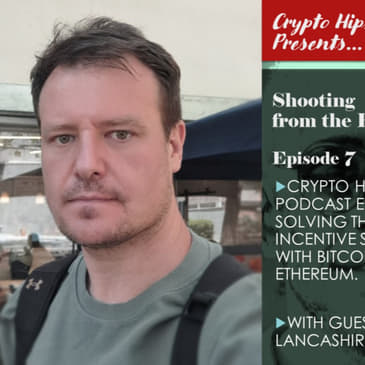

David Lancashire is a tech entrepreneur who has worked in China for over a decade. During that time he has founded three companies, and been an involved member of the Bitcoin and early crypto community.
He has since co-founded and continues to work on Saito - a new class of blockchain whose innovations are largely informed by David's economic expertise. David has presented on blockchain theory to the Tsinghua University, Deconomy in Seoul, the Asia Blockchain Summit in Taipei, and dozens of online interviews.
Saito is an open blockchain network built to deliver global access to the Web3. Saito tackles the economic issues present in blockchain which lead to subpar incentive structures.
These economic advances allow Saito to publicly fund necessary network infrastructure, including applications, for itself and other chains - all while remaining maximally open.
Saito also uniquely solves "impossible" blockchain security problems: it is Sybil-Proof, 51%-Proof, and open even under centralization pressure.
outreach@saito.tech
david@saito.tech
X/Twitter: @ SaitoOfficial; @dlancashi
Website: saito.io
Wiki: wiki.saito.io/
Telegram: t.me/SaitoIO
[00:00:00] Hello everybody and welcome to the Crypto Hipster podcast. This is your host, Jamil Hasan, the Crypto Hipster, where I bring you founders, entrepreneurs, executives, thought leaders, artists, you name it all over the world in crypto and blockchain. And when I say all over the world, today my guest is coming across the world from Thailand. He's in Thailand. His name he's a co-founder of Saito. His name is David Blankeshire.
[00:00:30] David, welcome.
[00:00:31] Thanks a lot. Good morning. Here, good morning. You know, so yeah, thanks for having me on the show. It's a pleasure to be here.
[00:00:40] You're very welcome. You're very welcome. I've been to Koso Wi before I've never been to the other side of the island so but everything is beautiful. So let's kick it off. First, actually the first question is what is your background? And is it a logical background for what you're doing now?
[00:00:58] Yeah, it's a I'd say it's an odd background. My undergrad was at the University of Toronto did grad school at California Berkeley. The combination of Chinese language, computer science, economics, international relations, social sciences that it's logical for Saito when we talk about what it is how it
[00:01:20] diagnoses the problems. You know, after grad school moved to China, and that's where founded Saito and got into Bitcoin through the block size wars all of that. And I think if it makes sense certainly if you look at it as a story because Saito tends to see the problems in Bitcoin and blockchain scaling as economic
[00:01:43] problems, not technical problems. So a lot of the trade offs that people are playing are trade offs is kind of games they're forced to play because they can't solve this real underlying problem. And that forces them to do things like put on a block size cap or you know, okay, we're
[00:02:01] going to give the responsibility for running this database API to a company outside the network. So yeah, I think it makes sense although it's odd in the space because most people in crypto they come from a very libertarian background. And I don't think they've really they you know, they don't really understand economics in the academic side. Or they don't have that background. So we're going to find out does it make sense on this show? Can I explain it? But yeah,
[00:02:31] if you want to talk about the economic side, we're happy to do that too. Economics or tech? Whatever, whatever approach makes sense for people.
[00:02:42] Got it.
[00:02:44] Okay, that makes first
[00:02:46] I think I think it does your background makes sense. I think the answer is yes, Jamil. But I think maybe it'll make more sense after the show when people understand.
[00:02:56] You know, you need the comp side to understand the problem and to understand the problem space. But you also need the economics to understand the problem the problem space.
[00:03:08] I agree. So start with economics because a lot of people don't get it right. So what are the economic issues and problems with Bitcoin?
[00:03:18] Fundamentally on the incentive layer, in economics, we call them collective action problems. And what it is, is it's there are two of them. One is the tragedy of the commons and one is something called a free rider problem.
[00:03:31] And these are issues that happen in kind of emergent systems, where there's this thing and if everybody did this thing, we'd all be better off. But our own incentive is to not do that thing regardless of what someone else does.
[00:03:50] And if we all do what's in our best interest, we end up with a failed market. And I'll give you two examples. The first example, again, it's like, you can approach this as a technical problem or an economic problem. We can talk about blockchain bloat.
[00:04:05] This is the big one of the big block size war issues going back to like 2014, where miners, they make money putting data onto the blockchain. And what that does is it means they get the cash right away, because you get paid the fee right up front. So you want to put as much data on the blockchain as you possibly can, because you're a profit maximizer.
[00:04:25] However, what you're really doing is you're passing costs into the future. So you are privatizing gain and you're socializing loss. And if everyone does this, the blockchain turns into it turns into a wasteland. It's it's literally the tragedy of the commons. The tragedy of the commons is that the money is being spent on the blockchain.
[00:04:45] And so we get different kinds of solutions in economics. The there's a book from 1965 called the logic of collective action. And it's about the
[00:04:52] It's literally the tragedy of the commons. The tragedy of the commons has this incentive structure. It's like, I'm going to do this, I'm going to put way too much data on the blockchain, because I get the benefits today. And the costs are socialized into the future. And so we get different kinds of solutions in economics, the there's a book from 1965 called the logic of collective action by a guy called manker Olson, he started public choice theory.
[00:05:19] And it explains in these kind of problems, what are the solutions? And the solutions are well tragedy, the commons you can privatize you can privatize the commons. And this is well blockchain that's not an option. Because you can't have a single company running things, you can't have a single company controlling who has access to the network, because the entire point is we don't want a single company controlling this. We want it to be kind of an open blockchain, a permissionless blockchain, anyone can come in and do it.
[00:05:49] And so if there's a whole bunch of people who are trying to get into this argument, another solution is it's called hegemonic, hegemonic player. It's like if there's a really big player, who's got a lot of clout and a lot of money at stake, they'll kind of permit other people to cheat and they'll pay the cost of maintenance you know, like a really big farmer who's fertilizing the fields and it doesn't really matter if a couple of tiny people cheat and put their their sheep on the pasture. So that's one example.
[00:06:18] And the other problem we see this in places like in chains like Ethereum that grow bigger. And this goes right back to the scalability trilemma where Vitalik is looking at Ethereum.
[00:06:30] And the other example for the P2P network in Ethereum is volunteer run back then, 2016, 2017. He's coming to the beginnings of this scalability trilemma. And what he's trying to do is he's trying to figure out how can we make this network more decentralized?
[00:06:47] Things like getting light block support for light clients, right? Like I want to run an Ethereum node in my bedroom. What is it that we can do to the network to encourage that? And well, the biggest thing you can do to encourage that is pay the people who are supporting the light nodes in the network, right?
[00:07:04] So that if I want to run a light node, there's someone who's willing and able to offer me support. And even today Ethereum is terrible at that. Like the miners never ran that. The P2P network nodes, it's too expensive to do things like take the big blocks and crunch them down into these smaller light blocks that can go to these light nodes.
[00:07:24] It's expensive to run that tech. And Vitalik is looking at it, he's like, well, the people in the network are doing the stuff that it's most profitable for them to do. And they're not doing the stuff that it's not profitable for them to do.
[00:07:39] So, you know, it's like miners, what do miners do? Well, miners mine. Miners do not run these massive databases and data focused nodes that we actually need if we're a user or people in Bitcoin even they don't sync the whole blockchain and then feed it to other people.
[00:08:01] It's actually challenging to get your hands on the whole Ethereum blockchain. Because a lot of nodes just don't want to give it to you, because it's a huge amount of bandwidth. You know, if you're the guy that people go to, to get the whole blockchain, you know, it's terabytes of data a month.
[00:08:16] And so people don't want those costs. And the cost get worse, the more you scale. And so it's another example of an economic problem. And that problem, collective action problem is the free rider problem, because we have the same problem, we have the socialization of loss.
[00:08:31] But people are happy to do it because they privatize the gains. Like, I'm the miner, I'm the staker, I'm doing my job, I want to get paid, I want to maximize my income. But I'm not going to do this unpaid work that's expensive. And the result of this in other chains has been a reliance on VC.
[00:08:50] Because we're going to lean into these VC companies, they're going to run it, we're going to scale by having private sector invest in someone else's responsibility. I just want to get paid for staking today. And with infrastructure to companies like Infura, where it's okay, the network can't pay for this.
[00:09:10] And so we're going to have a company outside the network, take care of it. And then people are like, is this decentralization? You know, they're censoring Caracas. Is this what we meant? And you know, I think as the OGs know, it's not open, it's not permissionless. And no, it's not really what was intended.
[00:09:32] So you got you asked a tough question, because you asked right into the economic side of it. And the answer really is, I think it's going to it's a bit unexpected for people. Because we've got a technical problem. Right? Tragedy to commons, the problems how big can we let this blockchain get? And the free rider problem is like there are these things that we need in the network that people aren't happy to provide if they're maximizing profit.
[00:09:59] And the real question is, okay, well, how do we get the free market to do this? And that's what SIDO does. It goes into the blockchain and it says, well, this stuff is broken on the lowest level, the incentives are wrong. If you're a miner, you're or you're making blocks, you're getting paid to put too much data on the chain.
[00:10:18] And so SIDO fixes that. If you put too much data on the chain, you're actually less profitable than if you put just the right amount. And that's a really hard problem. Because the question then is like, well, what's the right amount? How the hell do we even know the right amount? And most devs are like, 10 megabytes feels good. 15 megabytes feels better. 50 megabytes too much, you know, like it's, it's, it's like Soviet planning, they're sticking their finger up in the air, they're calling themselves technocratic experts. And they're thinking they know how an economy works.
[00:10:48] And it's the same on the free rider problem. People say, well, okay, I'm the technical expert. So what trade offs can we make to make it really to make it a lot cheaper to support light blocks? Or what can we do so that more volunteers will do this and we either get these volunteers that get hidden into the system, right? Like let's have economic nodes or Bitcoin, they call them. What are they called? They don't call them writing nodes. It's the full node. You know, people, you know, they're like, oh, I'm going to write a node.
[00:11:16] And that's the full node. You know, people will come up with an adjective and they'll stick it in front of the word node as if naming this thing is going to incentivize it into existence. And SIDO fixes that too. We say actually no, the solution is we can't just pay for these activities that pull money out of the economy.
[00:11:35] That, you know, that's kind of like it's kind of like being a company and you have you expect people to sell your products for free. It's like you've got to pay commission. And so SIDO the work function is not burning money, or it's not mining and stake. It's not just pulling money away. The fix fundamentally is SIDO turns the collection of money into the work function.
[00:12:00] So it's you get paid if you bring other people's money into the system. And the real technical challenge with this is, okay, sure genius. If we are paying people to collect money, why can't you spend your own money and cheat? And that's the really hard problem SIDO fixes. It's very different than proof of work and proof of stake because we end up with the same system. But we end up with a system that you can't attack with money, which is really interesting.
[00:12:27] And I'm like, I'm thinking of like, what you're saying regarding the economic challenges and I'm thinking of technical challenges. And I think of two things. One is you have VCs backing other blockchains and they have no, no tech shops, right? They never worked in technology, right? And then you have people who are creating these chains saying, like you said, arbitrarily come up with a number who are not actually getting the user specifications and what the user needs and wants as far as data. And they're building something in their own silo, right?
[00:12:56] Those are two technical challenges. So you take the economics challenges and you lead down the road to the technology challenges. What technology challenges are you focused on? Are you seeing and then focused on fixing as well?
[00:13:11] Well, one of the fun things is if you fix the underlying incentive, these two problems. There are certain things technically you have to do. For instance, you have to, SIDO uses something called routing work. So that means that when you send a transaction to someone in the network, you need to add a cryptographic signature.
[00:13:37] And we tell those people and they're like, well, it's a lot of work. It's like, look, okay, your wallet is automatically adding a signature. It's automatically signing. There's nothing new about it. You know, it's like a Bitcoin wallet.
[00:13:50] It's just when it makes this transaction, if you're my node and you're servicing me, when I make a transaction on the network, I say, okay, well this copy of the transactions to Jamil. And then you get it. And if you can use it to make a block, you're going to get a certain amount of routing work from the transaction I sent.
[00:14:10] And when you forward it to someone else, you're going to say, okay, I'm sending this to someone else as well. And the way SIDO works is when that block is produced, if my transactions in it and your signature is on my transaction, you've got a chance of winning the block reward.
[00:14:29] So people are getting paid who aren't just the block producer. And there are two things that start happening here. One, why am I giving you my transaction? I'm giving you my transaction because you're the equivalent of Infura. You're running the software. You're giving me the data that I need.
[00:14:49] So all of the things, or maybe you're giving me a copy of the blockchain. Or there could be a thousand and one reasons why I'm choosing to use you because you're getting paid if I send you that transaction.
[00:15:05] And so the transaction fee that used to be entirely burned, now a statistical amount of it is going to the nodes that are facing the users. So the economic activity that like, okay, we're going to get the VCs to do it with Infura.
[00:15:20] We're going to get JP Morgan to subsidize this company. Oh, it's still going to be decentralized. They use the word decentralized because they don't actually know what properties they need.
[00:15:31] And VC funded companies do not have that property. It's not excludability. It's the property of a public good. And that's again, when we say like the economic side, we're trying to make the private sector build this network that has the property of a public good, non-excludable.
[00:15:48] So like the nature of the problem, they don't understand that. They think it's this tech building. Your question. So one, we've got the routing SIGs. I think there's a, and there's technical challenges there.
[00:16:00] But a lot of what people consider the technical problems, they kind of get solved by this approach because one of the things that's happening is well, how are we preventing these cash only attacks?
[00:16:12] If you really, really dig down to the fundamental level of SIDO, it's because if you use your own money, maybe I'll give you an example. I don't want to pull you too far off the question, but could we change?
[00:16:26] Because maybe I can give you a really high level analogy for how this works. Because people learn like, but how is that possible?
[00:16:35] Let's go back to Bitcoin. And in Bitcoin, the attacks that we're concerned about concern somebody pushing someone else's blocks off the chain.
[00:16:50] Most people don't conceptualize it this way. Right? They're like, oh, there's the double spend attack or oh, there's the 51% attack or oh you're censoring something.
[00:17:01] It's like the attacks that we're concerned with are the same ones that Satoshi was concerned with. If you are double spending in order for you to do that, if I'm producing blocks, you've got to push them off the chain.
[00:17:18] Like what else if you're censoring transactions, like I'm Julian Assange and I want to publish collateral murder on the blockchain because it needs to be it needs the protection of the network.
[00:17:32] And somebody, so someone puts it in a block they put on the blockchain someone else says I don't want that transaction on the blockchain they orphan the block.
[00:17:41] The attacks were concerned with our or the attacker taking that block and moving it off the network. And the fundamental problem with proof of work and proof of safe why they can't solve this is that their voting systems with hash and stake.
[00:17:54] And as soon as you get 51%.
[00:17:57] You can push other people's blocks off the chain for free.
[00:18:06] So, I'm waiting to see if you have any objections or you know any comments but if not, you know, keep going, because a lot of people they don't think about blockchain this way right like they approach it as a series of really narrow technical problems.
[00:18:20] And then they jump in and they're like okay we fix this one technical problem. Hooray and they create more technical problems. And then they say you pointed out to them and they're like oh but blockchain has trade offs and we're the experts trust us to make the trade off
[00:18:33] it's like no, I do not trust you to make the trade offs because you don't understand the problem, you know.
[00:18:38] What's happening here with site is what happens with Bitcoin before the 50% point in that before the 50% point people don't think about Bitcoin this way they don't think about proof of work this way but it's what's happening.
[00:18:51] So Toshi is taxing you if you were or from a block.
[00:18:57] Because in order to orphan a block. If you don't have 51% you don't have more than 50%.
[00:19:04] It's going to your your, your expected profitability from or from a block is lower than your expected income, because the honest network they got to produce one block, you've got to produce two.
[00:19:20] What that means is just statistically.
[00:19:23] If you put your money into trying to reorder the chain.
[00:19:29] You're going to produce blocks that cost you money to make but that don't make you money back because they're not accepted in longest chain. So it's this property it's this tax, it's a tax on the behavior we don't want.
[00:19:42] And that tax collapses at the 51% point.
[00:19:47] Because as soon as you have a majority.
[00:19:50] It doesn't matter.
[00:19:52] You decide what goes on the longest chain.
[00:19:55] One of the, it's a really powerful way of conceptualizing what did Satoshi event because he says look if you get the incentives right. We're going to get consensus because knowing what other people want to do is how and making that the most profitable thing to do is how we get
[00:20:13] emerging consensus. That's actually it's weirdly.
[00:20:17] Weirdly that's actually the Keynesian beauty contest right so like bitcoins this wonderful company, wonderful combination of teens and Milton Friedman right like it's brilliant what Satoshi did like the Keynesian beauty contest says if you know we're going to give the prize to whoever's
[00:20:34] votes reflect the votes of everyone else.
[00:20:38] And so, the most profitable thing to do is to vote on the thing that you think other people are voting on and Satoshi is doing the same in blockchain. If you add your block to what you think is the chain that everyone's supporting you're going to get paid for that because if
[00:20:53] everyone does that, then it works, but it falls apart at 50%.
[00:20:58] You follow me I don't know if I'm, you know, I can get into plastic.
[00:21:03] I follow you, and I'm, I have to be open minded about everybody's opinions towards Bitcoin because I've had people on here who believe that Bitcoin cash and Bitcoin Satoshi vision are the actual Bitcoin, and not BTC.
[00:21:24] So, you know,
[00:21:28] I'm wondering about that right what are your, what are your thoughts has the BTC core been bastardized and are these other chains.
[00:21:37] You know, possibly the real Bitcoin.
[00:21:41] I, you know, the tribal tribal Bitcoin wars here's what I think is happening.
[00:21:47] They're all right, and they're all wrong.
[00:21:49] The only thing that Bitcoin core BTC people totally get that nobody gives them enough credit for is, they see these problems and they say if you scale these up the private sector is going to eat you alive.
[00:22:03] Miners are going to blow the blockchain to hell we don't have a solution for that.
[00:22:08] And the blockchain is going to become so expensive to operate that the peer to peer nodes will leave.
[00:22:15] So understanding the collective action problems one of the solutions is you get volunteers to do things, because the problem comes when you hand things to people who are for profit.
[00:22:25] So one of the lessons is that a decentralized network that is provided by volunteers is very different than a decentralized network that's run by companies.
[00:22:35] So, I actually really like the BTC people I think they've got a. They've got a sense of the problem but they don't have a solution.
[00:22:45] So they can't scale Bitcoin, because they have to rely on volunteer provision and if you rely on volunteer provision you can't have scale.
[00:22:53] You get the BCH people. They're very well intentioned.
[00:22:58] They're very right that the blockchain could have scaled, but they're also wrong about some fundamentals you know if you go back to the block size wars they'll say things like in public.
[00:23:09] Don't worry about scaling because miners will pay for the peer to peer network.
[00:23:14] Stakers will pay for the peer to peer network.
[00:23:17] And the problem is that this isn't based in reality it's actually not true, they say it and they think it's true and if you ask them about it, they'll say things like, well of course they'll do it because if you're going to scale
[00:23:28] if they don't do it nobody gets paid.
[00:23:32] And they just don't understand that they're dealing with a collective action like in the collective action problem. If other people are paying you don't pay, and if other people don't pay.
[00:23:42] You also don't pay.
[00:23:45] What they don't understand is they don't understand that the incentive failures that they've got make non provision, more attractive than provision, even if nobody is providing us.
[00:23:58] So, you know, they look at BTC and they see the economic problems. We need fee throughput for security, technically this technically that, but on the economics they're wrong and we can actually see this with BSV.
[00:24:14] You know, because BSV forked off, and what it's shown is the scaling approach has led to extreme centralization in the hands of one company.
[00:24:24] And that's exactly what Mancure Olson, and it's what economics predicts right you've got this free riding system and hegemonic provision with closure they close access to things like their mempools so nobody shares transactions, why.
[00:24:38] And that's cool because if you're spending the money to run these data services, you don't want to give away all of the transactions, because if you put them in a block it's money to you.
[00:24:49] And a lot of them you know like they don't read the white paper, section five tells you exactly what nodes have to do to run Bitcoin and in BSV.
[00:24:57] Nobody does the first thing on that list, which is you share the unconfirmed transactions you've got so the data circulates and everyone has access to it.
[00:25:07] Does that make sense? I mean it's a tough question because you're kind of asking me to, for my opinion on pretty much every variant of Bitcoin, you know.
[00:25:18] Yeah, no it does because I want to ask you how you fix them.
[00:25:22] Sure, well I mean let's go back we're fixing the incentive. The problem with, well the problem with BCH like we said is you, you know you're not paid to do the things you need to do to run the network.
[00:25:36] And if you go back to the routing SIG example, you're not, you are now being paid. You're not making blocks but you're taking transactions from me and you're getting them to other people.
[00:25:45] You're doing section 5.1, you're doing the first requirement. The data is propagating throughout the network so we get rid of these ordering problems.
[00:25:56] You're getting paid for it so we're getting rid of the miners won't do this, stakers won't do this. You are now doing the stuff that we need you to do and in fact the people that do it most efficiently are paid the most.
[00:26:11] So companies like Infura, they can offer these services, we get these rich data layers but they can't shut down competition.
[00:26:23] We don't get the privatized mempool problem that we get in BTC and BCH and BSV especially. Problem that gets worse scale. So yeah like one of the solutions is you fix it by paying for it.
[00:26:37] And the idea I push at people is if you want to fix, if you want to fix an economic problem, if you fix the incentives, you end up fixing the way the network works.
[00:26:49] And for instance by paying for fee collection, one of the things you're doing is you're paying for scale. If you need to upgrade your computer, you upgrade your server to process more data, well you're going to do that because it makes you more money.
[00:27:01] If you, like if hosting smart contracts is going to, you make more money also if I pay more fees, because you're going to be collecting your chance of winning the lottery is proportional to the value of the transactions that you bring in.
[00:27:17] So maybe setting up an Ethereum note and you make the Ethereum data available on the SIDO network. If that's going to get you more lucrative transactions, you've got an incentive to do this.
[00:27:29] So it's not just a technical problem like SIDO is it's intuiting what is actually a value on the network by saying if we pay people to go out and collect money.
[00:27:42] People are going to do whatever is highest value in getting this money into the network.
[00:27:49] And it's just a fundamental change, as opposed to the BCH where it's like well you know we know that people don't really like running P2P nodes but we're going to force them to do it because if they don't they won't get paid, which is a leap of faith on like that's not even how the free market works.
[00:28:05] You know, like the free market is based on people not doing things that are personally costly to them.
[00:28:16] Like if producers in a market, producers colluding. It's kind of like saying producers will collude and they won't produce too much stuff because if they did it would be bad for the profits of the producers in the market like that's just not how free markets work.
[00:28:32] You got to fix the incentives.
[00:28:36] Anyway, I don't know if this is really answering your question but where I push people on is I think when once people see the nature of the solution they should understand that the attack on it is well if this is a money wins problem why can't I just spend my own money and spend 51% of it and win.
[00:28:59] And the answer to that is that the way the payouts work you can't do that because if you put like if someone puts a transaction that you wrote into their block, you're eligible for payout and the way the lottery works your chance of winning that payout is actually it's more than them.
[00:29:15] And so there's a costly lottery insider that makes sure if you're putting money that belongs to other people into your block.
[00:29:23] You're going to lose more money than you're going to make doing that, if you're not the most efficient producer of the next block. But this is getting a bit abstract.
[00:29:33] Well, you actually answered the question really well because you do you solution it through your hash power lottery, which you just described.
[00:29:44] And so I want to talk about, you know, so we went down the Bitcoin path here.
[00:29:50] I want to talk about the Ethereum path. Right.
[00:29:53] And he talked about the free rider problem. I see a different problem in the Ethereum network and maybe you do maybe you don't.
[00:30:03] I see extract. I see extraction. Right.
[00:30:08] I see extraction by Ethereum maximalist of other valuable blockchains, you know, trying to, you know, maybe I would say corner the market to a degree against some other competitors, you know, I'm not going to name the competitors.
[00:30:28] You know, why do you offer better alternatives than Ethereum?
[00:30:34] You know, how do you do it?
[00:30:37] Let's let's go. You know what I love about that question.
[00:30:42] One, I'm not entirely sure what you mean.
[00:30:45] But I also am not sure you're not right over ground zero in terms of the problem.
[00:30:54] And what I mean by that is collective action problems.
[00:30:58] The entire class of economic problems we're talking about are problems of value extraction.
[00:31:05] The tragedy of the commons is value extraction.
[00:31:09] Value extraction is privatization of gain and socialization of loss.
[00:31:14] Right. The miner dumps the data on the chain, they get paid and then when it gets expensive, they go away.
[00:31:20] Or the free rider problem. Right.
[00:31:22] Like if I'm a miner or staker in Ethereum, go back to when they were POW.
[00:31:30] Or I guess even today, right.
[00:31:32] Like like in Fura, everyone is extracting value from in Fura and people are extracting value from the VCs.
[00:31:40] And in so many of these chains, the VCs are extracting value from the volunteers that are running the network.
[00:31:47] Right. They buy the tokens, they stake them for profit.
[00:31:51] And well, who runs the hardware?
[00:31:53] Well, the volunteers will do that. The network users, the community.
[00:31:57] It's a value extraction game.
[00:31:59] It's the game people are playing and they're dressing it up in fancy technical worms in words.
[00:32:05] But the goal is to get the money out of the system.
[00:32:12] That's the problem that SIDO fixes.
[00:32:15] And it's why fundamentally the form of work that routing work uses, collecting money, it's because it's un-gameable.
[00:32:23] Right. Because like there are two ways of doing it.
[00:32:26] You either where do you get the money?
[00:32:28] You either get it from your own pocket or you get it from some someone else.
[00:32:35] Honest nodes will get it from some someone else.
[00:32:38] Attackers will get it from themself.
[00:32:40] And so the solution that SIDO adds, the solution is we use the routing SIGs on the money that's collected and we make the payout biased.
[00:32:52] So that if you're spending your own money, you're losing money.
[00:32:56] And so we're doing what Satoshi was doing.
[00:32:59] When Satoshi says if you're pushing blocks off the chain, we're going to make it more expensive.
[00:33:04] But the fact that we can conceptualize and then solve the problem this way means our security doesn't stop at 50 percent.
[00:33:13] Because if you're spending your own money, statistically, you're always going to lose it or you're always going to lose a percentage of it.
[00:33:21] The only way to make money is to like statistically the only way that you have an unproblematic business model that is profitable for you.
[00:33:30] Is if you behave like an honest node and you go and you do something that induces people to give you their transactions to put on the network.
[00:33:40] And if they do that, you like the Keynesian beauty contest, you know, or like in Bitcoin, the miners like you've got an incentive to work with the other people who are doing the same thing.
[00:33:53] So it's a really abstract way of approaching the problem.
[00:33:57] But I think value extraction is one of these.
[00:34:00] It's one of the things people don't really think about.
[00:34:02] So I love that you went there and I just point you again at like the problem is it's like, why can't you do non-excludability?
[00:34:10] Why can't non-excludability is decentralization?
[00:34:13] We're not we don't really care if the network is running on two thousand machines or 100 machines.
[00:34:18] What we care about is that if I set up a machine and I try to join, nobody has the power to stop me.
[00:34:25] Nobody can exclude me from participating and no one can exclude me from provisioning network machines myself.
[00:34:32] So we're concerned about people excluding us for profit.
[00:34:37] And that's the problem we saw.
[00:34:41] So I want to shift gears totally.
[00:34:46] But, you know, because of all these issues that, you know, and that you're included in solving,
[00:34:55] there's been a rising popularity of meme points.
[00:35:00] Right. There's been an explosion.
[00:35:03] People think they're a joke. Right.
[00:35:05] A lot of people think they're a joke, but other people think you're actually solving problems and you're capturing
[00:35:10] you're solving the problems through capturing the value of social capital.
[00:35:15] Right. Does social capital override in the long run these technical and economic issues on these blockchains?
[00:35:25] What are your thoughts if that is a viable replacement or if it's going to if the meme coins are continued to be a joke?
[00:35:36] You know, it's it's kind of I view meme coins.
[00:35:41] It's like it's cheap ways of speculation.
[00:35:43] And so I'm reading your question as are there cheap forms of speculation?
[00:35:50] Does that replace our need for layer ones that offer security guarantees?
[00:35:57] I don't know. Is that the question or is the question like economic guarantees?
[00:36:02] Economic guarantees, but security guarantees will count too.
[00:36:08] Well, I mean, meme coins, most of them are it's just like a smart contract, you know, and they're running on a layer one.
[00:36:13] So you got to have a working layer one to have meme coins.
[00:36:17] You know, I'm not biased against meme coins.
[00:36:19] There are tons of people speculate and OK, you know, I don't really view them as relevant because I don't think they solve.
[00:36:30] I mean, they're running on layer one networks and we're talking about building and we're talking about how to build and scale those layer one networks.
[00:36:37] I don't see them as a threat or a challenge.
[00:36:40] I think that the meme coins themselves.
[00:36:44] Rely on a kind of bait and switch that's built into the concept of the token.
[00:36:51] You know, like if you're a number that's running on the Ethereum blockchain, they want people to conceptually value them in the same way that the underlying blockchain has a ticker that's associated with utility on that network.
[00:37:08] So I think there's a little bit of a bait and switch. But, you know, that's if people want to do that, that's fine.
[00:37:16] I think the big wake up call is the percentage of the space that is.
[00:37:22] Not interested at all in fundamentals because all they want to do is play extractive games around social capital.
[00:37:29] And I think maybe going back to your Bitcoin BCH issue, it's one of the things I've noticed, especially around 2017.
[00:37:37] All of those communities, because they couldn't solve the problem, they kind of stopped growing and they turned towards monetizing their user base through these kind of speculative games.
[00:37:47] We saw it on BCH with things like Spice Token, you know, like they forked and then they're like now we've got the BCH community.
[00:37:54] Let's do a bunch of shit coining around Spice Token and this other thing.
[00:37:58] We're seeing it on Bitcoin now with ordinals and roots.
[00:38:01] So I think people do need to be careful about that.
[00:38:03] And I think people can be gaslit into treating numbers that are running on these blockchains as if they have the value of the underlying networks and the value of the underlying network really is that it's supposed to solve these problems and permit kinds of social coordination that aren't possible otherwise.
[00:38:24] But, you know, I don't want to come in and attack people if they want to buy and sell meme coins like good luck.
[00:38:34] Yeah, I'm thinking that at the end of the day, the value gets pushed back down to the L1 anyway.
[00:38:44] Yeah, I mean suppose in fees it's kind of like we've got a we've got a non-excludable market.
[00:38:49] We're building non-excludable tech.
[00:38:52] We shouldn't be surprised if we get non-excludable use cases.
[00:38:55] Some of them are going to be distasteful.
[00:38:57] You know, like meme coins don't even seem particularly distasteful use.
[00:39:01] Maybe there's some really, really great, you know, it's a it's a colored coin, a ticketing system.
[00:39:06] If you have the meme coin, you get access to community events, you know.
[00:39:11] The fact that 90 percent of them, 99 percent of them are just, you know, useless trash.
[00:39:19] It doesn't mean that it's bad tech.
[00:39:21] And these are early days, right?
[00:39:23] I don't I don't hold any meme coins.
[00:39:26] But yeah, it doesn't bother me that people do that.
[00:39:31] Okay, good.
[00:39:33] So because I want to transition now into the next question is that like so there's there's games and then there's games.
[00:39:40] You guys offer right. You have a you know, how's that?
[00:39:47] How does that work? How's it going about, you know, and what status of the gaming sector today?
[00:39:56] The the the apps that run on site, because we're not afraid of scale, we let you do things that you can't do in Bitcoin.
[00:40:04] So if you make a transaction, you can put data inside that transaction.
[00:40:08] You can do this in Bitcoin, too. But it's it's really crippled.
[00:40:11] You can't put in very much being able to do this.
[00:40:16] There's a lot of stuff that becomes possible that in other approaches, people don't do or they they steer away from.
[00:40:23] For instance, you can put text into a transaction and you can say, look, anything that comes from my address is a tweet.
[00:40:30] And so you can have a social media client.
[00:40:32] And we've got a social media client running on site called Red Square.
[00:40:38] It's a you know, it's a version of Twitter. People will chat and post photos.
[00:40:41] You can do whatever the games site.
[00:40:44] Oh, SAITO.io forward slash arcade.
[00:40:49] We've got games running there, too. And there's some really interesting things about this.
[00:40:53] A lot of people, they think games and it's the same thing.
[00:40:56] And they'll be like, look, there's a casino and I can use Bitcoin.
[00:41:00] And it's not the same because what those are are those are companies and they've got a wallet and you send them Bitcoin.
[00:41:08] And if you win, they'll send you back Bitcoin.
[00:41:11] It's a trusted third party. But you've got this server that is running the game and you're connecting to the server as a client.
[00:41:18] It's server client with the games that are on site.
[00:41:21] Oh, they're actually new because they're totally peer to peer.
[00:41:24] What this means, for instance, is let's say you're playing a game of poker.
[00:41:28] If we're going to deal cards, we're actually doing it using cryptography.
[00:41:34] But it's your browser and my browser that are dealing the cards.
[00:41:39] There's no server in the middle that is holding the cash or that is running a random number generator and participating in the deal.
[00:41:49] A lot of people, interestingly, they don't think it's possible.
[00:41:52] They're like, I don't see how you can shuffle the deck of cards using cryptography.
[00:41:55] It is the game engine that is running on site.
[00:42:00] Oh, it's actually we got a Web3 Foundation grant for it.
[00:42:05] And one of the reasons we went to them and we sell, you know, you can do this.
[00:42:08] And they said, oh, that's just not possible.
[00:42:10] And we said, actually, it is. And we showed them exactly how it's possible.
[00:42:14] So you can do these kind of things.
[00:42:17] We've got games. You've got social media as well.
[00:42:19] Any kind of application where you want the two people or the five thousand people using it to be identified by their public key.
[00:42:29] And so the games that you see on the site of Arcade are games that work this way.
[00:42:34] And there's a game engine that's open source.
[00:42:37] We've got, in addition to poker and some card games, we've got some wonderful board games.
[00:42:42] Twilight Struggle is one of the best board games out there.
[00:42:45] We've got a kind of a Red Imperium, which is a clone of a popular multiplayer space strategy game.
[00:42:54] One of the new games coming out is here I stand at six player simulation of the Reformation.
[00:43:01] But yeah, you know, you can do this kind of stuff with cryptography.
[00:43:04] And so you're dealing cards or two people are doing something strategic at the same time.
[00:43:10] And you want to find out what that is when both of them have done it.
[00:43:13] Well, we can use cryptography for that.
[00:43:15] And so the games in the game engine are built from the foundation of basically Bitcoin wallets exchanging data.
[00:43:23] But the data this time is relevant to the game.
[00:43:27] We've got Zoom calls, too, by the way. I don't know if you know that.
[00:43:30] You can go to Red Square, CITO.io Red Square, click on the hamburger menu and there's a video call option.
[00:43:38] And so you could, you know, we could record this podcast on CITO.
[00:43:42] Where actually what's coming next on this is a peer to peer streaming so that let's say we are recording the show.
[00:43:51] Someone could connect to my machine or they could connect to your machine and they could get a copy of the video stream.
[00:43:59] And then if they have a copy of the video streams, someone could connect to their machine and they can feed it out to five other people.
[00:44:06] And suddenly we've got a decentralized video distribution platform that it can't be taken down because you can't take down YouTube.
[00:44:14] Like there's no central server there.
[00:44:17] And the models that we have for this are all a central server somewhere is going to take care of this expensive work for us.
[00:44:24] And they're going to wrap it in their business model on the blockchain that goes away.
[00:44:28] It's just computers connecting to each other.
[00:44:30] I mean, you know this. So I'm kind of going on.
[00:44:34] But did that answer your question?
[00:44:36] Trying to generalize it, you know, because they're the games and they're wonderful.
[00:44:39] But it's really opening up the world of peer to peer.
[00:44:43] Like on Twitter, you know, if you're getting tweets, you're getting them from twitter.com.
[00:44:48] And so many of these political issues are people fighting over what twitter.com should moderate and should censor.
[00:44:55] But on a peer to peer version, well, you know, you can get tweets from our server.
[00:45:02] But if you add a friend on Red Square, when you connect to the network, if they're online, you go to them and you say, hey, man, do you have any tweets too?
[00:45:11] And you're loading tweets from like three places or four places.
[00:45:15] So, you know, you can get these micro communities there.
[00:45:19] And it just works. You know, it kind of feels like Twitter, but it's below.
[00:45:24] It's not because it's just computers connecting to computers and any one of them can be a server.
[00:45:33] Interesting. I did. I didn't think of that.
[00:45:37] Like as far as created the distributed, you know, YouTube version, I didn't think that was part of those.
[00:45:42] But. Yeah, the analogy I like.
[00:45:46] I mean, it's not positive for us. The analogy I like is the Ark of the Covenant from Raiders of the Lost Ark.
[00:45:51] You remember that at the end when they opened the Covenant, like the lightning kills the Nazis.
[00:45:56] And then for every Nazi it kills, there's like lightning forks out of them and kills three more.
[00:46:01] You know, I can't tell if it's a good thing or a bad thing that that's our model for video distribution.
[00:46:07] But, you know, if you don't want YouTube in charge of it and you don't want like for video game streaming like Twitch or something,
[00:46:15] if you don't want that company sitting in the middle monetizing, sticking in ads, we got to do a peer to peer.
[00:46:22] And so that's how we can do it. I like that.
[00:46:27] It's kind of one of the reasons I haven't been on YouTube. I don't like YouTube. I don't like Google monetize work.
[00:46:33] Well, it's ridiculous. I mean, YouTube also like one of the things we've tried to do to explain CITO to people is put together videos that actually use popular analogies.
[00:46:43] So we've got a great analogy for inception. We've got one for the prestige and it's interesting.
[00:46:47] You don't need to do much for them to freak out about copyright holders.
[00:46:52] And it's crazy because it's all fair use. But it doesn't matter that it's fair use because these bureaucratic institutions don't care.
[00:47:00] And it's these choke points of political pressure that come down on them that ultimately it's in the banking system with, you know, KYC AML total garbage.
[00:47:09] Totally pointless. You know, the same thing with censorship on YouTube.
[00:47:14] It's just it's eroding people's rights and, you know, fundamentally going back to the BTC things.
[00:47:20] It's one of the it's why this stuff fundamentally matters because we have to have pushback and the way we get pushback is by building systems where there's no choke point of control for bureaucracies to force this stuff down our throats.
[00:47:34] I agree. Yeah, I agree. I know you do.
[00:47:39] I want to thank you very much for a wonderful conversation.
[00:47:49] And I really enjoyed speaking with you and we got to do this again sometime in the future.
[00:47:56] Yeah, and thank you. Thank you for your patience listening.
[00:47:59] And and yeah, I appreciate your starting with the economics and pushing to non-excludability.
[00:48:05] Most people don't do that. They don't even think that way, you know.
[00:48:09] So I have one last question.
[00:48:13] It's not a hard one.
[00:48:15] How can people find out more information about you and SIDO?
[00:48:20] Go to SAITO.io forward slash red square, R E D S Q U A R E.
[00:48:30] Or you can look for a group on Telegram or you can find us on Twitter.
[00:48:35] We got a we got a big community so people there are tons of people who would love to answer questions if you've got them.
[00:48:43] Awesome. Thank you very much for your time today.
[00:48:46] Thank you.