
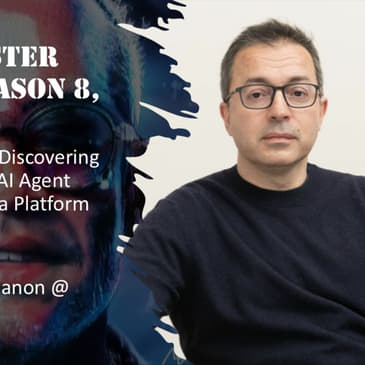

Justin Banon is a technology, market, and thought leader in Web3, focused on the tokenization of physical real world assets.
Justin has contributed op-eds to Coindesk, Blockworks, and The Defiant, and has been featured in Tatler, The Drum, and Cointelegraph. He’s appeared on CNBC and is an active speaker and panellist at tier one events such as DEVCON, Davos, NFT NYC and EthCC.
Justin founded Boson Protocol - Web3’s decentralized commerce layer. In 2021, Boson raised $36 million and was later named a World Economic Forum Technology Pioneer. In 2024, he announced the launch of a second protocol, Fermion, for the verified tokenization and fractionalization of high-value assets. Together, Boson and Fermion serve as the de facto decentralized infrastructure for tokenizing any physical asset.
Boson has partnered with brands such as Tommy Hilfiger and Hogan, as well as technology platforms like WooCommerce, the world’s largest e-commerce platform. As a partner at Outlier Ventures, a leading Web3 accelerator, he mentors startups and helps shape the future of Web3.
Justin holds a bachelor’s degree in physics and two master’s degrees in Digital Innovation and Crypto Technology. He is actively involved in research, focusing on the Web3 computable economy, and has co-authored several papers on the subject, including with blockchain economist Professor Jason Potts.
Justin’s mission is to enable a new computable economy—unlocking exponential wealth and driving a step change in human progress—by building the general-purpose decentralized infrastructure for tokenizing physical assets.
[00:00:02] Hello, everybody, and welcome to the Crypto Hipster Podcast. This is your host, Jamil Hasan, the Crypto Hipster, where I interview founders, entrepreneurs, executives, thought leaders, amazing people all over the world of crypto and blockchain. And today I have a repeat guest. This man is an amazing guest. I know I interviewed him before. It was a great conversation. You should check out that episode if you haven't heard it already.
[00:00:28] My guest today is the founder of Boson Protocol. His name is Justin Banon. Justin, welcome back to the show. Thanks, Jamil. Pleasure to be here. You're very welcome. I'm happy to have you back. So for the people who haven't listened the first time, my first question to everybody is, you know, what is your background and is it a logical background for what you're doing now?
[00:00:54] Yeah, I think I think it is. I mean, my background was I started out, I did a physics degree and then I ended up working for a company that were sort of selling like airport lounge visits, a company called Priority Pass.
[00:01:12] And I ended up doing a master's in digital really early and did this whole digital transformation of them where instead of them issuing like paper and plastic vouchers for these passes, we created digital passes. And then we did like digital passes for lots of other things in the travel experience. And so this was like digitizing, you know, products and services in the real world, but in a digital form.
[00:01:39] And then I sort of carried on and ended up doing a second master's, which was in crypto. And I thought, OK, what happens if you take physical things and you represent them as paper and then you take them, then you represent them as digital? What would happen if you represented them as in a blockchain sort of context? And I think the answer to that was that, well, it had to mean more than just having a digital pass.
[00:02:02] Right. I mean, with a digital pass, if the if the issuer decides that they don't want to honor it, then you're kind of, you know, there's not much you can do. But with blockchain, we have this thing called strong commitment. So if you've got a Bitcoin in your wallet or whatever, the issuer can't remove it. And so you had to have a strong commitment that either you get the item or your money back. And it ended up that was quite a hard problem that hadn't been solved previously.
[00:02:26] And so, yeah, I developed it with my co-founder who was teaching that sort of technical some of the technical courses on this this master's. And we kind of came up with a solution, wrote a white paper, raised some money, built a team and ended up building Boson Protocol.
[00:02:47] So I guess the kind of golden thread there is representing physical things in a sort of an abstracted way from paper to digital to to to blockchain. Awesome. And the first time we spoke, we spoke mainly on blockchain. We're going to talk about other things today. So as a founder of Boson Protocol, how did your vision for connecting physical luxury assets with blockchain and AI evolve?
[00:03:16] And what led to the groundbreaking Dulce? Maybe this pronunciation correct. Dulce Lorien. Yeah, that's that's a good that's a good pronunciation. Well, so the way we kind of the Dulce Lorien came about, I mean, primarily it was driven by the evolution of our technology and also the evolution of the market.
[00:03:41] So having built I mean, firstly, we built Boson Protocol as a solution to enabling sort of, I guess, everyday commerce without the need for someone like Amazon. So the reason that Amazon exists is because if a buyer and a seller that don't know or trust each other want to do business, there's a kind of trust problem. I'm not going to send you my money and you're not going to send me your goods. Of course, I would you, Jamal, but generally.
[00:04:10] And so in order because we can't trust each other, we put this trusted intermediary in the middle. But the challenge with that trusted intermediary is they have a very strong market power and it's in their interest to abuse it. So invariably, they abuse that market power and start basically taking these outsized profits. Right. So, you know, blockchains can solve that by putting a technology in the middle that instead of saying, you know, don't be evil,
[00:04:38] actually can't be evil because we build a system and then I throw away the keys and basically the system will operate exactly as it was designed to. Unless there's some kind of overriding kind of, you know, governance vote or a community vote that would change the rules for the next version, let's say.
[00:05:00] And so, you know, when you. So that was that that was the first concept was Boson everyday commerce, but you don't use commerce for every. The standard commerce process is not something you would use for every transaction.
[00:05:18] So, for example, if you were going to go and buy an expensive painting or, you know, you know, pretty expensive secondhand watch that could be fake and needed needed verifying or you were going to buy, you know, a gold bar or real estate or commodity.
[00:05:35] Look, there are lots of things that this kind of sending something through the post and handling disputes after, although that's a really efficient method that you'd need a more robust, you know, more secure method for certain types of transactions. And I'd done quite a bit of research and published a couple of articles and stuff with a guy called Professor Jason Potts, who's a blockchain economist and stuff. And so, you know, we sort of realized that to cover all of these sort of physical or all of these off chain assets you needed.
[00:06:05] You needed alongside Boson a more robust, secure method. But of course, that secure method would also be more expensive. So it wouldn't actually be you couldn't use, you know, this more verified method with, you know, for your lower cost items because, you know, it would be. And so the notion of these two complementary protocols, first one was Boson, the second one, which we launched is Fermion.
[00:06:31] And when you put them together, you've got the everyday commerce covered and then this kind of more verified high end, high values commerce covered. So that was the first sort of expansion to cover all off chain assets with these two complementary protocols. But what we're also seeing is the economy changing in terms of the advent of AI agents.
[00:06:56] And, you know, there's a real kind of sort of synergy between AI and crypto in the area. Well, in many areas, but particularly in commerce. And one of the problems we've seen with the adoption of with with with kind of crypto and blockchain technologies is that the user experience is complex. And that everybody recognizes that that is a barrier to adoption. Right. That's that's the first thing.
[00:07:26] But then, you know, AI agents are a kind of alternative to platforms. So what Amazon does for you and for me is it goes and aggregates all of these different suppliers. It kind of manages all the different terms. It does all. It does a lot of work in order to just present you with would you like to buy this? Yes. Click. Right. And so AI agents can do that work for you as well.
[00:07:52] The difference is that, you know, you could have an AI agent that goes and checks 200 websites. Before presenting you with three options to book a holiday. Right. And it can do that. But the difference with an AI agent is it can work directly for you, not for Jeff Bezos maximizing value for him. Right. So so AI agents have got this opportunity to displace platforms.
[00:08:18] Right. With with with with with with a technology that does the same as a platform, but it works for you. It eliminates this thing we call this principal agent problem where, you know, they work for someone else. So but if you're going to be delegating loads of your commerce activities to an AI agent, you're going to need some pretty robust guarantees that when you give that agent some money, it's not going to get scammed. Right. And that's and that's exactly what our technology does.
[00:08:46] So so so, you know, the way we kind of phrase this is that, you know, within our area, crypto needs AI because instead of talking to a complex crypto application, you can talk to AI natural language and then AI can talk machine code. And then it can do it, you know, AI speaks both machine code and human language. Right. That's kind of what it does. So we can get over this complex user experience problem.
[00:09:12] But then also AI needs crypto because the sort of technology that we've built with both Boson and Fermion enables AI to execute even high value or, you know, execute these transactions with these robust guarantees that either they're going to get the item or their money back.
[00:09:30] They're not going to get scammed. And so, you know, we saw both an opportunity in the AI would need our technology to transact, but also removing a challenge, which is that, you know, it's difficult for humans to interact directly with blockchain applications.
[00:09:49] And when you put the two together, you know, that's that. So what we what we have done is, is basically upgraded Boson from a protocol that handles commerce to a technology that enables the sort of exchange of any physical or off chain asset between any agent, whether it's human or AI.
[00:10:15] So we've turned it into what we call Boson metasystem, which is basically just a layer of this new, you know, this new economy. And within this new economy, I think most people recognize they're going to be far more agents operating than there are going to be humans. Right. Of course, it's always going to be humans, but it's going to be lots and lots of agents. And so it enables this exchange of off chain value between any agent, human or human or AI.
[00:10:44] All that makes sense to me. But does it make sense to me? Maybe I should have asked this first is what exactly is a Dolce Lorien? And then, you know, what happens when you when luxury fashion collides with the AI? Well, everything I've sort of said to you probably makes sense to you because you're in crypto. But it there's not that many people that it makes sense to.
[00:11:09] And and so the big question and the big challenge for crypto companies is you've got to have this quite deep, sophisticated tech and be able to talk to your audience about it and make sense and do all of that. But then. That's going to confuse most people. So, you know, our strategy is is to kind of show people something that's all and powerful and game changing and engaging using our technology.
[00:11:39] And it's I guess it's a bit like, you know, if you were selling computer graphics cards, you could talk about all the technology inside. Or you could just sit that someone down in front of it with a great computer game and just blow their minds with like, you know, play the game actual gameplay. And that's that's what the Dolce Lorien is.
[00:11:59] So the Dolce Lorien, I mean, the Dolce Lorien is an AI agent that weaves together all of this technology into this kind of compelling narrative. So it's that then this narrative is spans 12 chapters with about two weeks between each chapter. So about six months. And basically the narrative is it goes a bit like this.
[00:12:29] So with Fermi on protocol. Well, let me start back back in the last bull run. Boson Protocol purchased for about a million dollars. There's a piece of fashion history called the glass suit, which is a Dolce and Gabbana masterpiece, which is a physical suit still housed in their sort of palace in Milan, which I was invited to go over and do some photo shoots and stuff last year.
[00:12:57] Yeah. So that so they they kind of custody it for us and display and stuff like that. But essentially this glass suit we took and we we fractionalize that on Fermion protocol. So that means what we did is we, you know, we took the ownership of that suit and minted 100000 sort of ERC 20 fractions.
[00:13:24] And so if you own, you know, a proportion of you own some of these fractions, you'll own a proportion of the suit. And so so what we're doing over this 12 part series is having this basically like a like a game that people can play, which weaves in our narrative together with different activities for the audience.
[00:13:50] So, for example, the first chapter was the glass suit and we have a sort of like a sci fi video that gets published every two weeks. So the glass suit is in the Dolce Gabbana kind of atelier, which is like this palace in in Milan. And it's sort of just it's just like the normal suits sat there. And then at the end of that, it kind of fractionalizes.
[00:14:15] And during that period, there were there were a whole load of quests where people could, you know, and some of these fractional tokens. And then for chapter two, where we sort of launched the agent, what we you know, what we said was that during that fractionalization process, reality dysfunction occurred and there was some glitch. And from that glitch was formed. An AI agent demigod. So this agent is now exists on X.
[00:14:44] It has its own X account, the Dolce Lorien. And so people can go and tweet and engage with this agent. And at the moment for the first couple of chapters, it's kind of a little bit, you know, it's been a little bit confused because it's just gone through quite a lot having a reality dysfunction, you know, people. But it's been engaging with people. And then we had, you know, for chapter two, we had a retrospective airdrop to the whole community. So if you'd been a community member, you can go and claim this retrospective airdrop.
[00:15:13] Plus, also, if people were to retweet. I mean, we had like five million views of the video, which is like, I don't know, 50, 100 times more than any any tweet that we've ever done. I mean, like five million views and thousands and thousands of people retweeting and claim it's just kind of massively spiked. And then for chapter three, you know, these basically this Dolce Lorien battles with centralized platforms like Amazon and eBay.
[00:15:43] And he talks about this raising this kind of platform rebellion against value vampires and stuff like this. And so each each week you've got this sort of sci fi video that comes out and then either there's some way of claiming some parts of the fractions or coming out this week. We have, you know, stake for the rebellion. So you can go and stake those on tokens and earn fractions of these of the suit.
[00:16:08] And so this sort of thing unfolds and this agent is going to be going to battle against these sort of centralized extractionary platforms. And also, again, some of the, you know, there are a number of pretty centralized kind of what we call pseudo protocols.
[00:16:27] So, you know, protocols enabling payment and stuff for it in this agentic economy that are still using that old kind of Amazon PayPal model, although they're using crypto rails. And so this agent is going to be going to battle with those.
[00:16:43] And rather than I mean, we just had an essay published by one of the kind of Web3 marketing gurus just talking, saying that, you know, rather than engaging the community, it's sort of recruiting a community and using all of these different game mechanics, etc. So. So, yeah, it's pretty cool. And it's kind of gone viral, which which is amazing. It sounds amazing to me.
[00:17:13] I like the I like the I like the the glass suit battling everybody. You know, fascinating. I want to find out a couple of things. Number one, using a retweet to earn model. Right. How how does why did you choose to go with the the community approach instead of a traditional approach like Amazon? And then how is this AI agent approach?
[00:17:41] You know, that represents a luxury item. You know, how how how how is that going to be a game changer for how we might deal with, you know, high value assets going forward? OK, so what the first question was, remind me. The retreat to earn model and the community approach. Why was that important? Well, I mean, we're a decentralized kind of network. So.
[00:18:12] Having our community, having a strong, vibrant community behind it is, you know, they will be the beneficiaries of all of this. So we don't have, you know, with a normal company like Amazon, all the money that they make extracting from you and me and sellers. You know, their job is to extract as much money as they can from the participants in the network and send that up to Jeff and all the other shareholders.
[00:18:41] But with a decentralized network, you know, our job is to create value and equitably distribute that amongst participants and token holders. So they are our kind of, you know, so so, you know, it's in our DNA to generate value and distribute it. But also, you know, it's it's helped us really grow and spread the word.
[00:19:06] I mean, as we mentioned earlier, what we're doing is really quite sophisticated technology. And the way to spread the word of that is, I think, is much more powerful to show its potential, you know, with actions rather than trying to describe complex technology in words.
[00:19:28] And so it's been, you know, very successful in that regard and spreading the word and showing the potential because, you know, the difference between our technology and, you know, platforms and stuff is we're building it all on this programmable. You know, sort of substrate, if you like.
[00:19:46] So you can do all of this, you know, you can program in all of this kind of gameplay and, you know, kind of gamification mechanics and all of these things that you just can't do with standard sort of platform technology. Yeah.
[00:20:02] So what I see here is, you know, it sounds, you know, if you're successful and you have been so far, this is not just a one, like a one stop shop, like one thing. Like, I think it can apply to the whole entire high luxury market, not just fashion, not just one part of fashion, but the fractional ownership can apply.
[00:20:31] You're really revolutionizing, you know, high luxury markets altogether. You know, how do you see that playing out? Well, I mean, so, I mean, there's a number of different angles here.
[00:20:47] One is that fractionalization opens up new markets for ownership for assets that previously could only be owned by a very small group of people and creates sort of, you know, much bigger, more liquid markets for people that might want to own a piece of that. But it also turns commerce, you know, what we're doing is kind of like commerce and loyalty combined.
[00:21:15] So, you know, you're buying things, but it's not just a straight transaction. You're buying, you know, or, you know, you can either buy parts of this asset or you can do things to earn parts of the asset and buying and earning and all of these things are all kind of combined into some sort of gamified experience.
[00:21:35] And that's what we sort of see is the future of commerce is becoming less transactional and more about this kind of programmable loyalty commerce. So more of a more of an experience that people will kind of get into and have these deeper, more engaging experiences with brands and and these sort of luxury items behind them.
[00:22:06] So, yeah, I mean, we're already working with a number of other brands on different but similar concepts because, you know, basically the technology that we've built is a toolkit. I mean, the Dolce Lorraine is one, I think, quite powerful example of what you can do. But it's a toolkit.
[00:22:23] You could build many, many different things combining, you know, crypto, loyalty, commerce, ownership, AI, and all of these different different things together. Yeah. Got it. So I saw some stuff in this. So I had some stuff. So I've had interviews in the past with fashion creators, fashion designers, artists, especially during the NFT dates.
[00:22:51] You know, and they some of them built luxury brands, luxury items, and they had successful NFTs. But with the AI agents added on top of the NFTs, how will that be a revolution, a forward looking revolution to Web3 and be the next the next step up for the adoption of this industry? Yeah.
[00:23:15] Well, I mean, if you think, I mean, as this agent evolves, what you have here is a personality, a character that, you know, brands previously had talked about brand personality. But what you have here is an actual engaging personality.
[00:23:38] You have, you know, you have assets, you have an engaging personality, you have commerce, you have loyalty, you have all of these. It's bringing these things alive. If you think about sort of the evolution of the relationship between a consumer and these luxury brands and you rewind like maybe 20 years ago, it was all very much the brand communicating to their customers. And then the customers would buy this fixed thing.
[00:24:06] But we've seen over the last certainly 10 years more of a brand recognition of the need for community where things are more interactive and but still quite static, right? Still quite interactive, but scripted. But moving forward, these things can be dynamic.
[00:24:27] And, you know, so if you've got this AI agent that's the embodiment of a brand or an embodiment of a class of product or whatever and is able to make decisions on, OK, you know, yeah, you're, for example, in later chapters. And we're going to be slowly layering this sort of complexity.
[00:24:47] But in later chapters, the agent itself is going to be able to reward people that support it in its mission by giving tokens of itself that have real, real value, because at the end of all of this, we're going to have this auction of the asset. And of course, you know, the value of these assets is often linked to their sort of provenance and history. And so it's creating its own hype, if you like.
[00:25:16] So but, you know, so in future chapters, people that join and sort of, you know, help support the mission will be given dynamically there and then on X will be given, you know, fractions of this of this agent.
[00:25:33] So, you know, what we're seeing is this whole toolkit now that is replacing pretty static one way communication with brands and really kind of create a toolkit where brands can engage with their communities. And one of the big things that luxury brands, you know, aim to do is to have more frequent contact and engagement with their customers.
[00:26:02] I mean, often like luxury brands because maybe they're high ticket, you know, high price items that the time between sales, it can be quite long for these brands. So having this kind of constant engagement is a real sort of advantage for these brands as well. I'm intrigued about the later chapters.
[00:26:28] I'm also intrigued about, you know, the toolkit concept with the toolkit. Say everything's working the way you see the toolkit working. And like, I want to know what like commerce is going to be completely different then. So I want to see what your utopia or your vision, you know, is for the future of commerce. Yeah. Well, I mean.
[00:26:53] Many sort of years ago when I was doing this kind of first masters, I wrote an essay where I sort of described the future of commerce as I saw it was kind of programmable. Gamified. Gamified. And it was kind of like loyalty and commerce. Let me explain what I mean. I mean, at the moment, well, you've got these three different domains, right? You've got gaming where you kind of play stuff and I don't know, you pick up weapons.
[00:27:23] And so it's all very kind of like abstract value. And then you have commerce where you go and you send money that way and you get goods come back. Right. And then you've got kind of like loyalty. I mean, I used to travel a lot on business. So I'd play that whole loyalty, you know, airline loyalty where I'd, you know, travel on this airline to get these miles and then be able to kind of go on, you know, upgrade when I go on holiday with my wife and stuff.
[00:27:49] And I think you're with programmable technologies like crypto, I think you're just going to see the merging of all three of these so that and also with technology becoming ubiquitous. I mean, there's a whole next generation of these kind of augmented reality glasses.
[00:28:10] So, you know, wherever you go, whatever you're doing, instead of this kind of very, very obvious transactional, like, let me advertise my product to you and you buy it, that there are going to be these kind of like these games being played, overlaid with reality, where it's not all going to be give me your money. Here's a product.
[00:28:32] There are going to be like just parts of the game where you can pay for play for free other parts where, you know, you might do do do something of value to the brand and then you'll get something more for free and then other parts that you can kind of buy in. And all of this combined into these quite sophisticated kind of gaming experiences is the way we're, you know, we're traveling, which is just it's more engaging. It's more fun.
[00:29:00] It gives the opportunity for the brand to really develop relationships and have a very distinct personality. And, you know, that's the sort of direction I think that commerce is traveling. Interesting. So you have this meta system, you're using it for high quality items, you're using it for everyday usages, you know, commerce.
[00:29:30] You're going to have the way that we, you and I interact with AI agents is going to change too. Right. So beyond this campaign, how do you see that change between how we interact with agents?
[00:29:48] Well, I think the main thing is that at the moment, I mean, I've been using, you know, AI agents and stuff quite a bit. But at the moment where you have to sort of go to the agent, you have to go to chat GPT or something like that typically. And you're typing in your prompt and there's quite a big learning curve of how do I get what I want out of this agent, etc.
[00:30:17] But I think that gap is going to close and it's not going to be us that close it because, you know, the agents are the ones that are good at learning. Right. So I think it's just going to get to the stage where you're just going to be talking to your agent like you would, you know, talk to Siri or Alexa. But, you know, and you'll be able to say, OK, just conversationally, you know, I'm looking to go on a holiday.
[00:30:45] I know. Next Easter, I'd like to go somewhere warm, you know, what are the options? And then it will come back and construct, you know, for you a whole set of options and you go, OK, I like that one. Tell me more about this, you know, and so the agents will be the primary interface for you in the digital world instead of screens.
[00:31:12] And I think, you know, kind of like augmented reality, you know, immersive glasses instead of screens and tapping. I mean, I'm I'm a terrible typist even now. Years of typing. And I think we'll, you know, the keyboard will be in the museum of technology alongside the telex, the fax, the typewriter. I mean, it just and it and the same with screens. Right. And you'll just have, you know, this again with the mobile phone.
[00:31:42] I, you know, I think it's a clunky device. I think that these these, you know, these these these glasses and then being able to speak natural language to AI is going to be the way it's going to go with AI. And, you know, crypto is the natural way for machines to exchange value.
[00:32:05] I mean, it's just we don't need credit cards and MasterCard and, you know, all of these other sort of legacy payment systems. I mean, crypto is machine payments. Right. It's it's it's it's the exchange of value natively for machines. And so, you know, and that's fine when the value is on chain.
[00:32:27] You can get really robust guarantees if you and I know if I were to buy an NFT from you, we could very easily use a smart contract to do an atomic swap. Right. And we could we could guarantee that I get the NFT, you get the money.
[00:32:40] And, you know, but if we if we want to sell a car or a painting or this, that's a more difficult problem because you have, you know, these kind of couple of challenges, which is like one is, you know, what we call this physical asset oracle problem, which is if I tokenize my car, you buy the token. How do you know you're going to get the car? Right. OK, that's one of the problems that both boson and fermion solve.
[00:33:10] And then the other one is, you know, how do we ensure fair exchange? So, you know, when you've got these kind of nuances, oh, well, you know, you it was supposed to be this and you but but it wasn't, you know, how do you how do you ensure and arbitrate this kind of fair exchange? And so, you know, these are these are these two problems are what boson and fermion solves.
[00:33:36] So if you're going to have an agent that's going to kind of do these transactions from you, it's really nice to have the agent be able to rely on cryptographic guarantees of fairness and exchange. It's nice to have those kind of rails because I also think that. You know, these agents, their smartness is going to be used for, you know, kind of like scam agents and stuff like that.
[00:34:02] I mean, you imagine can you imagine now in the wrong hands programming these agents to go and target e-commerce systems and whatever where if you could just call up. So I didn't get my delivery or I didn't or all of these things that are now and they go, OK, we'll send you another one that are now hackable. It's just that people people aren't going to take the time to keep to do all of these phone calls and stuff like that.
[00:34:29] But if you've got a bank, you know, if you've got an agent doing that, then, you know, and so having robust, secure settlement rails for off chain assets in an agentic economy is an absolute essential thing. Yeah. Yeah. I agree. I said, I'm a crypto, so it makes sense to me coming crypto.
[00:34:55] But, you know, I can see the benefits of fractionalizing, you know, like the suit you mentioned, like the suit we didn't talk about, Dolce Lorien. I like that concept. I don't know if I can fractionalize my Volvo. You know, right to the story. No, no. But then, you know, also another great. Sort of use case for fractionalization is.
[00:35:23] You might want to just invest in some sort of an like an index fund of certain class of assets and not be exposed to any one individual asset. But, you know, you've got a piece of. A hundred of this particular watch or a hundred of these particular vintage cars or, you know, and so, you know, you can get that sort of that you can get that sort of exposure.
[00:35:50] I mean, a lot of people see the benefits of fractionalization. I think the strongest economic argument for what we're doing with the likes of Thermion is, which is for the high value assets, is this whole concept of. In economics, we have this law of one price, which is, you know, similar assets in a perfect market should have the same price.
[00:36:16] OK, but when you look at all of these like luxury assets that are on these different like, you know, it might be like Rolex is in the shop window of jewelers in New York. And then there's another one in Hong Kong, another one in, you know, Paris and these types of assets. Or then there's, you know, another 10 that are on this website somewhere because these types of assets are in these different like silos.
[00:36:46] They're not nicely connected on a single market. They have quite big price discrepancies. And so we've seen through history that when technologies come along that connect fragmented markets, you have like a period where there's a big wave of just like arbitrage because, you know, you've got these.
[00:37:12] And what we'll be using on Boson and Fermi on AI agents that will go find out price discrepancies and then list these items on our connection rails. And of course, our connection rails are cryptographic guarantees of, you know, that either get the item or your money back. And we'll be able to make those kind of what are called transient profits.
[00:37:40] So, you know, during this period when the arbitrage happens and then, you know, our token model will then be to recycle those profits into incentivizing further, you know, arbitrage by agents on the network. So that is, I mean, that is a huge economic opportunity.
[00:38:04] And we've seen it, you know, a number of times when the introduction of electronic trading, for example, you just, you know, you see this kind of like big spread sort of come down and massive arbitrage opportunity. So that's, you know, probably the primary economic opportunity that we're going to exploit with crypto agents and real world assets. Sounds exciting to me.
[00:38:34] So really interesting. So I want to thank you very much for your time today. I enjoyed speaking with you and I learned a lot. Yeah, so it's great. So I have one last question. It's easy. How can people find out more information about you, about the Dolce Lorien? How can they become, you know, investors in the suit? Any of that, how can they find out more information about you? Well, so the website is a good place to start.
[00:39:02] So the Dolce Lorien.com, Boson Protocol.io, Fermion Protocol.io. All the information they need comes from there. And, yeah, I mean, also our Twitter accounts, Boson Protocol, Fermion Protocol and the Dolce Lorien. Awesome. Thank you very much for your time today. Thanks, Jamal.