
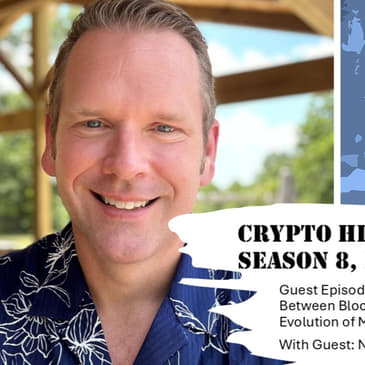

Neil Twa is the CEO and Co-Founder of Voltage Holdings, acompany specializing in launching, consulting, selling, and acquiring brands, with a focus on e-commerce channels such as Amazon FBA and multi-channel. Over fifteen years of experience selling private label products on Amazon and in his company.
For over 17 years, Mr. Twa has been constructing businessesboth online and offline after departing his senior IBM role. Since 2012, he has launched over five personal brands, generated tens of millions in revenue as an eight-figure seller, and assisted in the growth of over 1,000 others throughconsulting, coaching, and mentoring alongside partner Reed and their Voltage team.
Neil, together with Reed Larsen, published a new book titled"Almost-Automated Income with FBA: Build a Profitable Lifestyle-Driven Amazon Business. Exit for Millions. Even with no E-commerce Experience". The book is a groundbreaking guide that has swiftly claimed the #1 spot amongnew release books. This manual is the key to building a lucrative lifestyle-driven Amazon business expertly guided by Twa and Larsen through the intricacies of Amazon FBA, offering invaluable insights and strategies to pave the way for a profitable venture.
The Crypto Hipster audience can claim free copies of hisbook by going to this link:
https://www.voltagedm.com/freebook
Enter the discount code CRYPTOHIPSTER there and obtain yourfree copy.
[00:00:03] Hello everybody and welcome to the Crypto Hipster Podcast. This is your host, Jamil Hasan, the Crypto Hipster, where I interview founders, entrepreneurs, executives, amazing people all over the world of crypto and blockchain. And today I have another amazing guest. He is the CEO of Voltage. His name is Neil Twa. Neil, welcome to the show. Hey Jamil, great to be here. I appreciate it. Looking forward to the conversation. Me too, me too. Awesome. So let's kick things off.
[00:00:32] I'll ask you first, you know, what is your background and is it a logical background for what you're doing now? Yeah, well, I mean, I started on the internet when it was dial-up. I want to date myself, right? And the Commodore 64 days and then we went to AOL dial-up and then, you know, in college the internet came online and I was like, hey, I want to do something with this. And since academia wasn't really caught up with that and the world was just getting moving, I jumped out into the corporate world or the business world just to get the experience on the job, you know, necessary to be a part of that.
[00:01:02] I wanted to do anything possible. In fact, I almost jokingly moved to, you know, Amazon's headquarters to just park outside of and be part of their enterprise. Life would be probably pretty different if I actually pulled that off. But yeah, I got into the business and then, you know, just rode the corporate wave for a little bit startups. I was in the first mobile startup for Sprint in the PCS division and launched their first communication device, first mobile phone. That was crazy to watch as that came on and just exploded.
[00:01:28] Got picked up by IBM, went to work for them for four or five years building the internet's latent semantic search engines. We were in the knowledge management and latent semantic engine place and building all the, you know, what can now the framework literally 23 years later that powers so much of the internet from search and other things. And then just, you know, decided to fire the man in 2007 and they were like, hey, we're fine with that.
[00:01:51] Take early retirement and, you know, started my own business adventure in 2007, which has pivoted a bunch of times since then through highs and lows and goods and bads and bankruptcies and successes. Bankruptcy, I should say, not C's, I assume it's more than one. And then pivoted into the e-commerce world and digital marketing. And, you know, I'm in the crypto space to some degree personally. I don't do it professionally, I guess. I get a professional at failing at it. We can talk about that if you want.
[00:02:21] But I've had some fun with a couple of cryptos and would love to talk about all that too as we talk about physical products, which is what I'm really into. Brands and private label physical product. Building up those brands and getting them to an exit. Awesome. If you think that urban crypto is a first time winner, you're mistaken. No, I'm bullish on a couple of cryptos and you believe it or not, it's not Bitcoin. I believe it. Let's talk about, you know, that later.
[00:02:49] But we'll get into products and we'll get into voltage holdings. So, you know, what's voltage holdings all about, including your mandate, your investment strategy, products. What do you guys do? Great. Great. We're going to be able to do multiple channels. We help aspiring entrepreneurs build their brands and become great operators by which we partner with them. We grow with them. We invest with them.
[00:03:16] And we acquire and exit these companies as well. As we exit them, you know, our goal is to build the business with the end in mind. So everything is goal oriented towards a four or five year growth cycle of exiting that business for great profits. That's our goal. And then acquiring companies that are already in the five to 15 plus million dollar in revenue range and then building them up in operation status.
[00:03:38] Partnering with veterans in the military community as a part of Patriot Growth Capital to bring in operations and families that can be supported by that, even grow and even acquire those companies away from us after five years as part of that mission statement. So we're really building and growing businesses to exit and acquisition is really what Voltage Holdings is all about. Awesome. So how do you do that? What do you focus on? Like when you buy those small companies, you build them up. Correct. You're building up operations. You're building up finance. You're building up everything.
[00:04:08] How do you do it? All of that. Yeah. So when we start a brand, it's one thing. And obviously, when we take a brand that's running and move it somewhere else, there's that's a different thing. So two aspects. First, the one is really determining what the customer needs are in the marketplace for certain types of products. We don't invent. I did that once upon a time. That's super fun. Great way to go broke.
[00:04:26] So we innovate products, which are where 90% and 99% of the market goes, which is to innovate different products, like taking a crock pot and making an Instapot and selling a billion dollars worth of that and then turning it into an air fryer and selling a billion dollars worth of that. Those are just innovations. And so we follow a very similar innovation process through our physical product world. And we'll find the customer and needs. We start on Amazon FBA because we incubate it there on the 49% of all e-commerce sales channel online, you know, surpassed revenues from Walmart now.
[00:04:55] So it is a huge juggernaut. So when we want to find out if somebody wants a product, we give it to the 200 million dollar, you know, 200 million prime members and say, hey, do you want this one or do you want that one? Or do you want this one? And since we don't marry our products, we steal somebody else's girlfriend, as we like to joke around here. There's millions of product opportunities to go get. So we just keep offering to market different ones in our brands until we discover the ones they most want from us at the best profitability. And then we market the snot out of them and 10x the inventory.
[00:05:23] For the existing, you know, brands, that's different. You know, finding a market and filling a customer need is different than an existing business who found their customer market and needs to grow. Typically, what you find is the owners there at businesses 5 to 10 million in range or even a million to 5 million in range. There's a couple of things that happen. Typically, a million to 5 million in range of business is going to be a process by which they've discovered enough about their market to become successful.
[00:05:51] They reached a certain level, but they are incapable of growing it through personal expansion, network expansion or capital expansion. OK, at which point one of those factors is holding them back. We just kind of help them discover which of those factors are holding them back and they can break through the 5 to 10 million dollar mark. In the 5 to 10 million dollar mark, what usually happens at the individual level is they simply don't have the risk to reward ratio capacity to take on the next level of risk required to make that business hit its next mark.
[00:06:19] It isn't that the business isn't capable. It isn't that they don't have a going concern. They are just having to risk more to get more. And that risk to reward ratio can be very different for certain people who have never done it or are afraid of what could happen or it's just more risky. And so that typically holds them back. Those who don't have that problem can go past that 10 million mark very fast when they're not as concerned about what type of risks they have. When they see the data and they see what's going for it, they're going to go for it.
[00:06:48] And that's where most businesses are going to hold up in those marks, especially on the existing side. So they've gone as far as they can go knowledge wise or capital wise. And then when they're acquired, we expand their network. We expand their capacity. We expand their marketing. We expand their capitalization. We expand the factors that have been holding them back. And we give that opportunity to let that business go for, you know, give it a runway to run on. Awesome.
[00:07:15] So you're really focusing on the small, on the lower middle market. Yeah, smaller SMBs and turning them into a full SMB, 30, 50 million or more, and then selling them. Awesome. And how about, like, not coaching, but like thought leadership practices as well? Yeah, we do. We do that. That's where I get my operators from. So once upon a time, I had employees. And I had 12 of them. And at first, I had 10 of them in a management consulting firm.
[00:07:41] And I ended up letting them all go because I was making more money with digital marketing than I was in staffing. And it was much less, you know, complex. There was more profit. And so I ended up letting go of those 10 employees. Later on, I made the mistake of getting 12 more in a warehouse in Utah and ended up, after a couple of years, removing that whole situation in the, you know, I'll call it a crime of opportunity. And so after that, I swore no more employees.
[00:08:05] I want everybody who works around Voltage or my business to be in a mercenary-style contractual. You are the expert here. This is your vertical. Here is your SOP. Here is your objective. Here are your key results. You know, this is what you're being paid to do. Go hunt and kill. And I found the best way to end up doing that was to train them to become good operators, to actually teach them and spend at least 12 months with them one-on-one, learning how to become a good operator, giving them the opportunity to become a great CEO operator. Because e-com companies really just need a CEO operator.
[00:08:35] When there are so many resources of automation now, when there are so many people who really understand the web and all the social media and complexities of all this stuff, you don't have to be an expert in all these areas. What you need to really figure out is what you know enough about it to be dangerous, enough to hire the right person or get the right person involved so that they can be the 100% knowledge of that. And then you don't have to be the smartest person in the room anymore. Things get a lot more fun. So I raised up the CEO operators to become successful in their businesses.
[00:09:03] And then we work with them either on a contract or a profit split to operate other verticals of business for us. So basically, I'm just partnering with other operators that I helped raise into their business. And they became successful at running the business because I taught them. And now they're helping me run other companies. So with that, I don't have to have employee mindsets. I have operator mindsets. I have entrepreneurial and business ownership mindsets. And that is worth its weight in gold. Yeah, I agree.
[00:09:32] Very few of the executives I used to work with at AIG when I was there had an entrepreneurial mindset. So that's what makes it a great leader is somebody with both the management skills and the entrepreneurial view. Well, and seeing where the resources are and how to deploy them. Because as we have now over 20 years of experience in this and another decade of corporate experience, I've learned the highs and lows of managerial roles.
[00:09:58] And when I realized I'm going to find these individuals and train them or look specifically and test the ones I know can be successful in the areas of focus within e-commerce. And then into the physical product world of e-commerce because I started in the digital world of e-commerce and then moved into the physical component, which is actually inventory-based business model. What I needed to do was really find the people who are very good at those different verticals that support that model.
[00:10:23] And over 12 years now, I've kind of found the bad ones and I found the good ones and I've incentivized the good ones to become better ones and turn B players into A players who are now dedicated to voltage because of the success they've had without forcing them like an employee or whatever through a paycheck. They're simply motivated to be a part of the brand because it helped them become successful. And so now they're pushing it out in their own way, in their own referrals, in their own business. And now we have a resource section of people who we are very trusting in every segment of our business.
[00:10:52] And we have an operations leader who actually oversees each of those verticals for us. And as it turns out, he is my – what was my son's 15-year-old – my partner's 15-year-old son who is now 26 and married with three children but runs our entire operations. We've trained him since he was 15 and he now oversees all the operations for us. Very cool. Awesome.
[00:11:14] Awesome. So I want to ask, you know, you see some parallels between blockchain innovation and advancements and the evolution of multi-channel e-commerce. So what are those parallels? Well, the digital system that is underlying at this point with crypto and currencies and utility coins like, you know, XRP, Solana, et cetera, are becoming more of the financial backbone.
[00:11:41] And I'm seeing the adoption rate of those in financial institutions going faster and faster, it seems, every week, every month. Certain issues are coming off the chain. The SEC is letting go of XRP and all this stuff. You're seeing utilities move forward. You're seeing, you know, cryptos becoming a little more, you know, wider in terms of their adoption. Even though you and I might talk about it like it's yesterday's news, the rest of America still has no idea what it is. And if you were to go talk to the average Joe on the street, they'd have no idea what it is.
[00:12:11] And if they did know what Bitcoin is, they wouldn't have any idea how to get it. So we still don't have an adoption yet that requires that mass adoption. But I believe that is coming very quickly. And behind that, of course, any commerce transaction, digital or physical or otherwise, is going to end up in that. Some way, some shape, some form, even if it's your bank allowing XRP and its ledger to balance transactions across all banking institutions, you're not going to see that directly, but it's going to be something your bank uses as a utility. So you're going to be in it even if you aren't in it directly.
[00:12:42] And it may not look like it even changes to you, but it has changed fundamentally on the backside. So I see that adoption changing the way, you know, physical products are purchased. Amazon and other places and Shopify and merchant centers, they're all going to end up in a either capacity to use a cryptocurrency for an exchange or monetary exchange or the utility by which that vehicle rides on. So I don't see us ever in moving past and I see us actually adopting that extremely fast.
[00:13:08] There are obviously, you know, in everybody's opinions, I'm sure in my opinion, there are pros and cons to seeing that occur. There are pros by which the speed and translation of that data can happen now in three to five seconds. And of course, there's a digital transaction for honesty and integrity that comes behind it. However, it's all tracked. So there are cons to both aspects of this that I don't necessarily like. But again, I don't have any control.
[00:13:36] I just have the ability to use and move and, you know, navigate what I can navigate through. And since we ride on large platforms and have merchant accounts off Amazon and that kind of stuff, we're going to be working with them as they change these systems and adopt them. Even Bezos is coming back to Amazon to launch a very huge AI system initiative.
[00:13:53] And as they set up these systems and automations to do this digital currency and to make this translation to happen and these bank reconciliations to go faster and everything, it's simply going to speed up the ability by which people can buy products, which for my business model is good. That makes sense to me. So you mentioned XRP, you mentioned Solana, you know. Yep. Ada, other utility coins, I mean, are sort of leading.
[00:14:21] You've seen some of this being adopted very fast by the government. And you see their cryptocurrencies kicking off and blockchains and other things are becoming an important part of most likely regulatory oversight for all the issues they're finding with money. If you put it on the blockchain, it's a lot harder to, you know, it's a lot harder to steal it to some degree if you put it on certain blockchains, as you and I both know. And then if you put it in certain situations, it is going to create a governance of control.
[00:14:48] And then if you stick AI over that and say, here, here's all your boundaries of control, it will be faster and stronger and easier to keep the rest of the humans in check. So now we're talking about machine to machine security, which I think most people don't even have a clue what that looks like. We were talking about that in the days of R-Monk and Watson supercomputing when I was working with IBM up there and doing a lot of that stuff. So I don't think anybody sees really below the tip of the iceberg right now on most of that stuff.
[00:15:16] And I think we're seeing this sling. And personally, this year, I'm very bullish. We're going deep into eight different product lines this year, doubling up on capital, doubling up on inventory and products, because I really personally feel like there is a rubber band being pulled back. I know that I read a report about four years ago that said from Bank of America, Forrester Research and the Department of Commerce that about $21 trillion in transactions were going to come online. Right.
[00:15:42] And I didn't quite understand what that was about five years ago until a certain event hit the entire world. And we had a cataclysmic change in the way we did our lives. And in the first quarter of 2020, we saw 10 years of growth. Right. Talk about a mass adoption event online like, wow, 20, you know, 10 years of growth in three months. That created a snowball effect that I've seen make more of a mass awakening, a mass adopting of these technologies.
[00:16:10] And five years later, I see us hitting the accelerator. And with that, I believe that by the end of this year, there are going to be a lot of businesses and transition of businesses online, even more so than I realized it would happen five years ago. And I see that wealth transfer happening in like the next two years. And I'm extremely bullish about getting involved in e-commerce deeper and deeper in the products and brands. And I think there's a lot of opportunity for people to do the same thing, because I believe we're going to watch one of the largest wealth transfers we've ever seen in the history of the United States.
[00:16:41] I agree. I agree. That makes sense. So there's a term out there called, well, I'd look to your site. It says almost automated. Right. What is almost automated income? You know, and why is it? Yeah, I don't want to get. Okay. So I don't want to get caught using the word passive. Right.
[00:17:02] Because everybody suddenly goes off into this idea of all their hopes and dreams and their Lambros and Lamdos and their condos and all this stuff becoming a super reality because, well, some passive event occurred and they no longer have to work because they're getting all this income. And quite frankly, it always takes someone somewhere to do something to allow someone else to make money while they're sleeping. Right. And so I call it almost automated income. And I started with FBA. And of course, it moves into other channels of e-commerce.
[00:17:30] Amazon is just one channel of a channelized e-commerce company that can go multi-channel or omni-channel. That would be your own website, retail, Walmart, some other platform, some other mechanism of moving your physical brand. But with the almost automated income, the systems by which this has grown enormously since Amazon, fulfilled by Amazon or FBA, bought a logistics company and rebranded it to FBA, even though it's its own company.
[00:17:56] It's its sixth largest logistics company in the world now with all its own planes, trains, automobiles and ships. And with that, they have the ability to reach the last mile, the customer at the end of their order and do it faster and easier than even UPS and other and definitely the United States Postal Service. So with that opportunity, products are moving to the customers in an automated fashion. When I put my inventory into Amazon's system, into its warehouses, it delivers that product to the customer. It handles a return.
[00:18:25] It handles a whole lot of automated fulfillment efforts and packaging and shipping and everything I don't have to do at all. So I don't have to have a huge warehouse to do this. So I can operate from my 50 acres in the country with my family and run all these brands across distributed systems on the Internet with, you know, AI driven tools and marketing tools and just in time shipping and coordination with all that effort and can move, you know, millions and millions of dollars worth of product without ever touching it. Right.
[00:18:53] And so that entire system then sets up this large automation. And with the growth of social media and tech talk and all this demand creation, Amazon's platform and system, and this was 15 plus billion dollars of infrastructure they created, has become an automated system of product movement. With it becoming a demand capture platform then, with all the social media humming around it, and it's now capturing that demand a lot, it is a great place to incubate a brand that you can take out to mass market.
[00:19:19] And then you don't have to move that and ship that product and that means the economies of scale are going to be greater and faster than you can personally fund it. Right. If I'm going to move a product that has the opportunity to do seven figures in the first two years, in a old world scenario, I had to hire all the people, get the warehouse, get all the product in the warehouse and do all these physical things to get that product down to the customer and have this, all these contracts with the different suppliers that were necessary to move that product last mile to the customer, et cetera, et cetera.
[00:19:48] Now I skip all that. So when I say almost automated income with FEA, it means I can make money while all that operational system is working and do it while I'm sleeping. So that means what does my job actually become? What am I actually doing then if I'm not picking and packing boxes? Well, I am selling data to AI engines. I'm selling data in the form of a listing of copywriting graphics and images to an AI engine whose job is to move the product to the customer.
[00:20:14] So when I sell physical products, I'm actually selling data to an engine. The product that I ship to Amazon is just to fulfill the commitment, the monetary exchange of them giving the money to get the physical product. That's just completing the monetary exchange. And of course, I want a good review and I want to have people enjoy the product so they buy more and tell more people and go on and go on. So I create a great product, but that's actually my number two concern, not my number one concern.
[00:20:41] So as I mentioned, innovating products, it's the data that we're selling to these large language AI models. On Amazon, it's Cosmo and Rufus. And on Facebook, it's the meta engine. And on TikTok, it's the TikTok engine and such and such. We're selling data to that engine. And its job is to find that customer so it can deliver the product to that customer after they purchase it.
[00:21:04] But that is interesting that that really, you know, I never thought of my business that way ever. Yeah, nobody really thinks about it like that, which is I don't know why, but this has been the way I've thought about it for a long time. And it just gets down to probably because I have a background in it. And I know that we were doing data and engines and we were watching people respond to the data in engine. And now I see the large language models going very fast and all this. You know, every week is like seven new AI systems and businesses are coming online.
[00:21:32] So the real challenge is just to stay in a vertical, do what Jim Collins and Good to Great said and become a hedgehog in your vertical and only use tools and services that continue to allow you to hedgehog in that vertical and just kind of shut off the rest of this stuff. Right. And with that, we are now deploying AI into physical product research. We're deploying it into supply chain. We're deploying it into marketing. We're deploying it in, you know, from agents into our support systems and our customer support systems internally to voltage holdings with our operators.
[00:22:02] We watch the outside, you know, platforms like Amazon and stuff deploying it very fast into supporting their customers. And so we're doing our best to stay up with that by turning our systems and technologies that we developed internally in our dashboards and green light systems ability to do and find product and manage product and create really great data sets that the engine wants to buy from us. OK, which means that our data set is better than the one currently setting in there.
[00:22:28] And so it's like it wants to sell products through our listing greater than the other one that was already in there because we're doing a better job of it. And we've convinced the engine that we're the better product in the system so that it will ship more and give more to our customers. And with that, you know, it is all about data brokering to AI engines. And if you don't understand that concept at this point, I hope you really grasp it from today's call, because if you're going to sell in a physical product label, you know, private label business, you're not actually selling the products.
[00:22:55] You're selling the intent, the reaction and the solution that that product gives to an AI engine. So let me bring this back to crypto and blockchain then. A lot of founders in crypto and blockchain all talk about scaling. Sure. Always a fun word. Which to me is a horizontal approach across every vertical. It's a horizontal, you know. Sure. You're focused on verticals.
[00:23:24] So how can these blockchain founders who are so interested in scaling, you know, maybe peel it back a little bit and focus on just a key vertical? How do we apply that to the blockchain founders? So as I vertical into a brand, for example, and this could be applied to real estate or crypto or any kind of market you're currently setting in.
[00:23:48] When I vertical into a brand, I'm looking for that specific customer segment who's most interested in what I have to offer and only service that vertical. For a lot of people, that may not sound like mass marketing adoption. But in actuality, it is getting a greater percentage of the market that's available. Okay. So if I'm going to sell an X widget and I know that it has 10 million people every year searching for X widget, then I want to get the greatest percentage of 10 million that I can get every year.
[00:24:16] I'm not concerned about the 100 million over here going that way or the 50 going that way. I'm concerned of getting 10, 20, 30, 40% of that 10 million because that could turn into a lot. Those are really large numbers. And a lot of people fantasize about the big numbers and all this really cool stuff and the economies of scale in some ways and shapes and forms can work for that. And sometimes it can't unless you have a lot of capital. Right. And if you are more capital limited, what you want to do is focus on that vertical and say, I can get as much of that 10 million market share I can.
[00:24:45] And then what I want to do is I do want to go horizontal across the bottom half of my brand. And I want to launch more products and variations that fit that customer segment and simply give them more options to buy more from me in different packaging. So if I, for example, if I'm Apple, if I sell the iWatch, I sell the iPad and then I sell the iPro and I sell the iMac. And then I get your wife or husband or significant other to buy one too. And then I get all your kids to buy one too. And you see, we go horizontal across that bottom. Right. Right.
[00:25:13] So if you're going to go, for example, in the crypto world, for me, I decided to go into the utility side and then just go down in utilities and then stay within those utilities and only invest in the utility side. I felt personally, the cryptocurrencies were more risky. The utilities have a greater upside potential to serve a need or a customer segment, even if they only take over a percentage of it. And I said, well, for me, then I'm going to just keep going across those particular ones and hedgehog into those utilities and then ride them out and see which one became the best utility.
[00:25:42] So it's a law of averages. The same way I don't invest everything in one particular product, I will go into multiple products, five by five by five. And then I'll just let the data tell me which of those products is making 80% of my revenue. Now I focus all my marketing and energy intention just on the ones that are giving me the most profit and the most upside potential and then double down on that. Right. So is that answering your question to some degree? It does. Yeah. It does. Because what happens is I think people think, well, there's some FOMO, right?
[00:26:13] In their emotional, logical, analytical brains, they always end up with safety and FOMO somewhere. Safety on the product side, FOMO on the business side. And with that, they constantly wonder, am I missing out on this great opportunity? Could I have bought that coin at five cents? Is it going to go to 100? Should I have bought XRP when it was 60? Is it going to go to 10,000? You know, all these rumors, right? And there's all this hope and all this FOMO that actually keeps you from focusing on what's happening right now. What's going to happen maybe next month? And even if I'm thinking short or long term, could I make it on the upside?
[00:26:42] Could I make it on the downside? And, you know, these are risks of the volatility I've just personally learned in my own experience on the cryptocurrency world and on the physical e-commerce world. And so much of it is now becoming tied together that I think, as I mentioned, in the next few years, we're not going to see them separated by much. When you see companies that are taking over industries or you see companies that are being forced to fail from private equity groups like Joann's and other companies that are now failing under the weight of private equity greed, those are going to collapse.
[00:27:11] So who is actually going to be the winner when those collapse? And how do I avoid that situation? And how do I take opportunities from it? Well, if you're a Joann's employee, that sucks, right? If you're a Joann's stockholder, you're losing. If you're the pension company from the private equity firm that bought Joann's and the other companies that are going bankrupt, that's going to suck for you too. Okay? Because that pension is going to go under. So where is the opportunity then? The opportunity is where is all that money going to end up?
[00:27:36] And this is where we go back to that research that was done years ago, almost as if some crystal ball was opened or some magical plan was being put in place to allow this to occur in the next couple of years. And that is that physical products and online are going to get the consolidation of that business that is going from retail that is collapsing and will continue to collapse online. Makes sense too.
[00:28:01] Which is going to force the adoption of currencies, crypto and utility otherwise, to make up the systems of growth and opportunity that are now coming in mass as mass adoption is occurring. And we haven't seen all the leaders come out of that, but I think it's coming extremely fast. If, for example, XRP is able to get 5% of SWIFT transactions, which is estimated between 5 trillion and 15 trillion a day. I've seen wide variation of numbers.
[00:28:28] I'm not even sure anybody knows exactly how much SWIFT processing every day, but it's a lot. And if they could just get 5, 10% of that transaction to push through XRP because they've been proclaiming they want to shoot for 11,000 banks, then that will be an insane amount of growth for XRP. As it's a utility, it only grows in value as its volatility grows, as its usage grows.
[00:28:53] So, I'm holding on to my 60 cent a share XRP because I'm happy with where it was early at 249. I think it was this morning. And, you know, that's been a good little bit because I've lost so much in other sides of crypto. Like, for example, I had $600 bitcoins and I sold them. Doesn't everybody have one of those stories? Yeah. Yeah. You said FOMO. I use the vault. So, I have a 48-hour unlock period.
[00:29:23] So, by the time everybody FOMOed in, I'm out. You're already on the vault. I'm already not able to even invest because I have it locked up. Yeah. So, I'm like, I never FOMO FOMO. And now I'm just like, oh, you know, it's FOMO. Well, it is. At the end of the day, honestly, we just call it different levels of risk. Right? As we talk about in my business, there's risk to reward ratio for a business that becomes a going e-commerce concern. And honestly, there's two points of failure. It's not starting at all, which is a point of failure.
[00:29:52] And then there is not capitalizing the inventory and growth of the business once it says it's time to go because your risk or to reward ratio has suddenly been met with a major decision. You now have to go with the business and get the inventory, get the product, get the capital in, or you're going to miss out the opportunity that you were wanting. It's like a wave and you miss it. So, don't miss it. That's your second biggest risk is capitalizing that inventory. And I see that kind of happening right now with some of these markers on the crypto market.
[00:30:20] There are some things where I'm personally hedging about a year bet. I'm not just riding in and riding out. I know I have a few friends that play that game. I'm like, this is my risk capital. I've stuck it in these coins. And now I'm just going to let it set. But, and when the winner comes to the top, I would expect it will do better than the ones I didn't do well on or the ones that had losses. And, you know, as a business owner, you write off the losses and you take the wins.
[00:30:44] So, it's more, I hope, as a practical, you know, strategy to let it ride itself out over the long term and see what happens. And I'm sort of playing the same game in e-commerce as we build and grow and exit these companies. I keep building and growing more brands knowing that some of them are going to take off and do like, you know, five times what the other brands are doing. The others aren't going to do bad. They're just not going to do great. And there's going to be a percentage of them that fail. They just fail because we couldn't meet the end of the market. We couldn't figure out how to get it sold. And, you know, we don't marry them.
[00:31:13] So, we'll let them move on. So, I had a few more questions, but I want to ask, I want to touch on your book. You have a new book. So, I want to ask, you know, why should people read your book? Why is that a must read? What do they learn from it? If you're looking for the strategy for e-com, if you really want to understand how does somebody actually make money in an e-commerce or physical products-based business model, that's the guide. It's a strategy guide. It's not a tactical guide.
[00:31:41] It isn't going to say, you know, page three, go in and open your seller account and push these buttons. There are other guides out there and there's a lot of information. That's not really the most important information because you can teach that to a 19-year-old high school dropout. The real opportunity is the strategy. How do I deploy the time, energy, attention, and money into a team effort? That is me plus the individuals I hire or those I consult with or those that I work with to get my business into a going concern, sell my physical products and brand, and build it to a saleable asset, say, in four or five years.
[00:32:11] What I talk about in there is the 8%. Those are the people who, in years four through five, become a going concern that exceeds the 92% of failures in business that happen in years four and five. So I want you to become the 8%. And so there's 15 chapters in there talking about the strategy and output. While I interviewed people from my podcast, I specifically put the 15 individuals in there that talked about these things. Not only did they talk about it, they extol it. They're working it in their business.
[00:32:37] And it ties back to the Voltage product launch process and our playbook and exactly how we do the business along with case studies and resources to support it. The foreword was written by a good friend of mine, Kevin Harrington. He was the original shark from As Seen on TV and Shark Tank and all those cool things. And we talk about our As Seen on TV strategy, which was the first product brand I launched that I discovered one morning at 4 a.m.
[00:33:02] feeding my third daughter a bottle and saw this product on the television and realized I could probably sell one of those. And so I developed a brand that went to our first seven figures after that episode. So we call it As Seen on TV. And I discovered how the system of, you know, all this online channel, commerce, television, radio, and all this stuff was kind of working around a storm that was Amazon at that point and hadn't really developed and matured yet.
[00:33:28] And now it has come great, great fold as they've taken over revenue online and obviously now have 40%, more than 40%, 49% at last check of all the e-commerce sales online in the United States. So it's become a huge juggernaut. So the book goes through those things, talks about resources and shares that strategy and the economics of it, the finances of it, the business, the marketing, et cetera. And really gives you an understanding of the playbook and what it takes to build a seven figure e-commerce in a physical private business. Awesome. Awesome.
[00:33:57] I think people should get that book, me included. Awesome. I'll get you a copy. Thank you. I want to thank you very much for speaking with me today. I enjoyed this conversation. And yeah, and I have one last question. How can people find out more information about you, about voltage holdings? How can they start to use your playbook? How can they do any of that? Yeah, absolutely. I mean, grab a copy of that.
[00:34:21] It's a digital copies, 499 on the website at voltagedm.com forward slash book, or you can go to Amazon and grab it if you're more comfortable there. On there, there's training and resources. There's a presentation of myself and Kevin Give about our Ascine on TV strategy and how we develop these products and brands and what it takes to do it. There's free workshop trainings and other things. And part of our tool set there that you guys can check out if you're interested in developing a business in the physical products world. Or you have one that you just want to maybe omni-channel and grow.
[00:34:49] Understanding that what we do is build these companies to an exit. And my operators work with us over 12 months to help do that. To get you into a place that makes it a saleable asset. I even put some skin in the line of game to make sure that it gets done the right way. And anybody who's maybe interested and serious about building a multi-channel e-commerce company can check it out. Awesome. Thank you very much for your time today. Thanks, Jamil. I appreciate you, brother. Thank you, brother.