
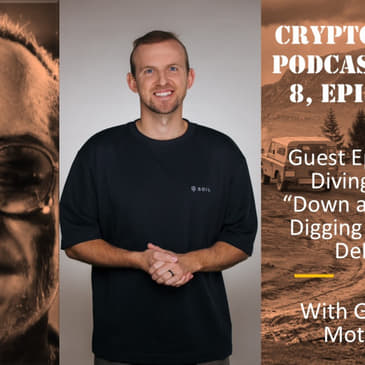

Nick Motz (CIO, Forbes 30 under 30) is an experienced investment professional and entrepreneur. Nick has over ten years of investment experience in the credit sector. As CIO of Soil, Nick is in charge of all investment activities and managing the performance of the protocol’s loan pools. Prior to Soil, Nick was the youngest founder of Mount TFI, a licensed asset management company in Poland focused on Private Debt investments. Mount TFI has become one of the leading private debt funds in Southern Eastern Europe. Prior to Mount TFI, Nick gained experience working at Aabar Investment, Abu Dhabi as well as real estate investment managers Capital Park Group and Patron Capital London. Nick strongly believes in democratizing access to private credit and believes that blockchain technology, with specific focus on DeFi can lead this revolution.
[00:00:03] Hello, everybody, and welcome to the Crypto Hipster Podcast. This is your host, Jamil Hasan, the Crypto Hipster, where I interview founders, entrepreneurs, executives, thought leaders, amazing people all around the world of crypto and blockchain. And I have another amazing guest for you today. He is one of the co-founders and the CIO of Soil. His name is Nick Motz. Nick, welcome to the show.
[00:00:29] Pleasure to be here. Thank you so much for having me. And as we're talking about the globe, hopefully I'll represent a little of the Europeans in the crypto space. We love the Europeans on Crypto Hipster. So thanks for joining me. So I'll kick things off and ask you first, ask everybody the same question. And my answers I get are absolutely amazing. What is your background and is it a logical background for what you're doing now?
[00:00:55] Yeah. Okay, so let's, yeah, let's get off to the mark. So, um, yeah, my background is actually so born and raised early in New York, actually. So hence my accent. I'm not too European accent, but I'm Polish. So moved from New York to Poland when I was in my teen years. Parents are Polish.
[00:01:15] Did the American dream in the US after communism. So really entrepreneurial background. And I live in Poland, studied in London, started working actually in private equity funds in London and Abu Dhabi, and then made myself way back to Poland, where I founded an asset management business at the age of 27.
[00:01:34] So this is kind of the background story to everything. So I went into asset management, founded a company with let's say a million dollars. Today we have over $300 million under management and is spanning between strategies, primarily private credit, public real estate, which is let's say REITs, public Polish equities, and recently in digital assets.
[00:01:56] So my background was really heavily in traditional finance, let's say private credit is kind of the main, main aspect. And, you know, way, let's say three, four years back, I was like, okay, asset management is kind of an old industry. How can tech or let's say digitalization affect the business. And let's start seeing what's out there, right? And then blockchain came around kind of been growing up for the last couple, let's say years really quickly, and it can have a fundamental impact on the fund management industry.
[00:02:24] But not only to say the back end operations, but another thing is, okay, it can pretty much provide access to capital from let's say the crypto markets, if you're looking at traditional asset management. So then I was like, okay, so we have this aspect that you have, let's say, like asset managers trying to tap into the liquidity of the crypto market. And that's kind of people don't say it out loud, but that's what the Black Rocks are doing is what the Apollos are doing.
[00:02:47] Everybody wants access into, let's say, a new stream of capital. So me and my two co-founders founded Soil. Soil is a DeFi protocol that provides yield on stable coins. And really what we wanted to do is, again, focusing on the background, provide value to the asset management industry. So let's say allow access to capital from, let's say, the crypto market.
[00:03:09] But then for crypto investors, after everything that's been going on for like the last couple of years, provide actually a real world asset kind of yield back product that, you know, you can have consistent yields, you know where it's coming from, it's transparent, and it works. So really, that was the idea behind Soil. We've been operating since, let's say, January of last year. And yeah, trying to bridge those two worlds. And I think understanding crypto and understanding, let's say, the traditional space is super important for RWA. So yeah, here we are.
[00:03:39] Awesome. So my college experience, when I got my bachelor's degree, I had triple concentration, communications, business, and geology. So somebody said, you can never bring geology into crypto, but you created Soil. So that's what I thought immediately. I was like, Soil, I was like, where do you bring in geology, if at all? And what's the down and dirty about what Soil is all about?
[00:04:05] Yeah, yeah, yeah. So Soil, I guess, kind of like the seas of the business. So pretty much a down and dirty and geology around it is that we really wanted to provide kind of like, let's say, to provide yield on stable coins.
[00:04:27] And okay, to really, you know, down and get deep, but the main kind of you're trying to always pitch in one sentence. So we provide yield on stable coins. And so that's it. And so the idea is, okay, so if I'm an investor, let's say, a crypto investor, I have, let's say, capital on my MetaMask wallet, it's not making any, let's say, yield, and I want to start earning some yield on it, then A, I can wait for the next bull market, but it's making no money on my portfolio.
[00:04:54] Hey, there's this thing called Soil. You go onto the platform, go on Soil.co. So you open up the app, and you do a, let's say, quick KYC. And all you do is, let's say, connect your wallet, and then you say, okay, deposit.
[00:05:05] And you start earning passive yield, and the passive yield, I'll get, you know, into it, you get, let's say, around 7% with liquidity of two days, right? So it's something that is, I think, super attracted to the market. And then the yield aspect, that's where you probably have to get down and dirty, like, how do we produce the yield? That's a beautiful question in crypto.
[00:05:24] So the yield that we produce actually has been actually changing through throughout kind of the life of, let's say, Soil. So at the beginning, we started saying, okay, we have private credit experience, we're Tradify guys, how do we bring that on chain? So the idea was like, okay, and I think this is where crypto landscape evolving. At the beginning, we had products that were, let's say, for the lockup, the money that you had to deposit was for like six months, or a year, a year and a half.
[00:05:54] And then in my from my background, I'm like, okay, private credit is providing loans in the real world, they pay interest. So you can have liquidity on, you know, a quicker level than let's say quarterly or monthly, I mean, quarterly or six months or a year. And then so those were the first loan pools that we did. And so to be honest, like in, you know, looking two years back, where, you know, the bull market's coming, and everybody's getting excited, you have to provide some liquidity. So we're like, okay, DGent world, so the crypto native investors, they want liquidity, because, you know, another bull market's coming.
[00:06:23] So we decided to provide a liquidity component to the portfolio, which today, if you log into, let's say soil, you can have, let's say 7% paid in USDC, and you have two day liquidity. And so how do I do that? I had to start constructing a portfolio of yielding assets that also provided liquidity. So private credit was the backbone. But then I started providing liquidity through, let's say the biddle product.
[00:06:47] So obviously, focus on US treasuries. And so that has daily liquidity. So I started taking the yield down maybe, but then providing liquidity for the investors. And in my opinion, that was definitely, that was definitely actually more attractive to the crypto market. And that's kind of where kind of soil went.
[00:07:06] And today, we have deposits from, I think, over 20 countries from around the world, which is super exciting. We have over 4000 wallets that are interacting with the protocol daily, we have few million TVL. So it works for the individual investors. And I think that's, that's where it is. And then I think we're evolving a different landscape. But yeah, maybe not to rush away. I'll get back to that a bit later.
[00:07:30] I do. I do want to dive into the yield on stable coins. I do want to do that. But first, I want to talk about some recent news. You know, it seems to me to be pretty big news. You recently joined the Plume Network, right? How did the collaboration come about? And how will it benefit both your organizations?
[00:07:50] Yeah, I think exactly. So I think, yeah, great. I listened to the podcast a year ago with Chris Ian from Plume, which is super exciting that we also get a chance to be here. So I think that's kind of the idea for soil. So we're these like, let's say, smaller guys from Europe, with protocols working, where let's say kicking ass trying to, you know, expand globally. And we don't have any huge VC background, you know, VC backwards by us. So it's really more difficult to get out there, right?
[00:08:17] And I think, you know, we're providing yield on stable coins. We're working. I think our model is super unique. And we're going to be integrating with other chains. But our idea is to be chain agnostic. Listen, like we're a product here. We want to work with a lot of different chains. We're on Ethereum. We're live on BNB. We're live on Avalanche. And then Plume was just a natural step to find another network that we can provide value to their ecosystem.
[00:08:40] ecosystem. And so the Plume guys are really, you know, great, great team. And they're really focused on RWA. So providing, you know, another protocol for their ecosystem that provides, you know, yield on stable coins.
[00:08:53] And then guys that actually understand, you know, credit, understand the chat fi. I think it's a huge, I think, win both ways. For them, they have another product for the ecosystem. And for us, I think it's super, you know, great to be to be known in such a great group of, you know, let's say RWA products. And it's just getting the word out there. Hey, we're here. Products delivering. So come and use us. And I think it's a great collaboration with Plume.
[00:09:20] Awesome. So there are people who are new to crypto or listening to this podcast. I happen to be around for a while. So remember the early time when I was getting stable, I was getting yield. I was getting yield on Terra Luna. I was getting yield on, you know, different things, but I was getting yield through Celsius, you know, and that crashed completely. Right. Right. And along with a lot of other things crashing. Right. So it's a little bit safer now. Right. That evolution.
[00:09:44] And that's a great, that's exactly a great point. So to jump in. Exactly. So that's kind of why we're chain agnostic. So like, honestly, we believe in all the founders and all the work, but like, there's so many things, you know, like, again, for our users, we want to provide the product on, on, on, on different chains. So exactly when something happens on one chain, listen, like the product, the product is available on different chains. We're hedging that risk. At the end of the day, it's all tech. And we understand like, you know, there are risks associated with the system.
[00:10:09] So exactly kind of like Luna. Okay. We could build there, but let's say it's not the only product that we wanted to build. So even though we're working with new chains, it's just Plume. We'll get to probably ripple. So it's important as us, you know, to be able to provide, you know, the product to a further ecosystem and not focus on one, let's say chain. So you're diversifying the risk away of the tech risk and the, and the other market risks, but too, but got it.
[00:10:34] So you are able to, to provide a safer product with stabilized yields. So how are you able to, you know, I said, well, I found out how you're able to do that now, you know, pretty self-explanatory or not, you know, how do you generate the yield exactly on this table course? And what are the long, what are the long-term benefits, you know, to your approach? Yeah. So this is, yeah, the million dollar question in crypto. Where's the, where's the yield coming from?
[00:11:02] And I think, and it's, it's simple. And I think we're probably going to like kind of, you know, sneak peek, kind of rebrand, let's say, not rebrand, but kind of show three different, let's say, pools and make it super transparent. Because I think what I told you about, like, you know, our product being available for everyone, I think crypto is really moving into institutional money a lot more like now since a couple of years ago. And so we're kind of seeing it, you know, with the user base and that's kind of what we're, you know, working with Plume.
[00:11:29] We're going to be working with Ripple because in my opinion, everybody is, is, is, is transparent. And then real, real world assets have their, have their characteristics, right? If it's, if it's yield or if it's liquidity. And I think it's very important to show this transparency. And I think the crypto market is really understanding that and it's, it's, it's, it's going that way. So that said, there, the yield that we provide, there's going to be three different, let's say, products. So first product is, let's say, a kind of, let's say, a liquid product.
[00:11:58] So we will provide, let's say, let's say five, 6% on our, let's say unstable coins with three-day liquidity. And so if you're looking at the, and what is, what is the backend of that yield? It's super simple. We have U.S. treasuries. So obviously it's what the market's doing, all the libittals and handles and stuff like that. But we also provide crypto loans to hedge funds. So pretty much we provide loans to crypto hedge funds in the space. So it's NAV lending.
[00:12:27] Obviously we're credit guys. So we have very strong confidence and let's say drawdowns, LTV on the portfolio. So this is something that I can probably get, let's say, get higher digits, but then I can also have, you know, two, three-day liquidity on this portfolio. So I'm able to provide a liquid product with a two, three downtime, but it has higher yield than let's say the U.S. treasury product. So this is something that's number one. And so liquid, higher than U.S. treasuries, you would say five, 6%.
[00:12:56] Number two is kind of a native yield. So we founded actually a couple of months ago, a proprietary funds of funds investing in crypto hedge funds. And this is super important. It took over two, three years of, let's say, getting my own money, you know, treasury to kind of testing out a lot of funds. So we really focus on market neutral, quant directional crypto hedge funds. We don't focus on fundamentals.
[00:13:22] So anything, you know, to do with token appreciation or long-term investment, that's not for us. We don't like the volatility. So it took us over two years to find the best managers in the space. Interesting enough, there's, let's say, one guy, one manager out of 10 that's actually U.S.-based. So Europe and Asia actually kicking ass in this side. And so it's a portfolio of, let's say, 10 funds that are, you know, 70% of the portfolio is probably market neutral, 30% is quant directional.
[00:13:48] And these guys are providing, let's say, high teen returns with very low volatility. So on this yield product, unfortunately, you don't have the liquidity of three days. You have monthly liquidity, but I can provide you of a return of 70%. So here, 7%, 8% annually, but you have monthly liquidity. So again, going up the stream of, let's say, risk, but you have a little bit less liquidity. And then the third pool, which is kind of our, like, backbone, is a credit pool that provides us an A-plus return annually.
[00:14:18] But it's really focused only on private credit funds. And the private credit funds here are, again, the big boys, the Black Rocks. You have, let's say, the HPL, HPSRE. Then you have, let's say, the Apollo. You have Hamilton Lane. So we know the funds. We're invested in them. But this is, besides the funds that everybody shows, we also focus on European private debt funds. One of the funds is one of the funds I actually founded prior to Soil.
[00:14:45] Seven-year track record investing in SME loans. And it's very important. These private credit funds are non-sponsored deals. So you're financing family-led companies, SMEs that are building, really, the economy. And you're giving them debt financing to grow their business. Whereas a lot of the big players in the market, the Apollos and stuff, they do sponsored deals. So they do private equity-backed deals. But they're great, too. But at the end of the day, it's a little bit different of a risk-return profile than non-sponsored private debt.
[00:15:15] So this pool of money, let's say you get A-plus return. You have quarterly liquidity. So again, you're giving up a little bit of liquidity again. But again, you can't get private credit returns if you want full liquidity. Because at the end of the day, the backbone is loans in real world to companies. So this fund is fully focused on the people that want to make their money from RWA. Don't want the risk of, let's say, the crypto ecosystem of making returns in the crypto space. Because at the end of the day, the yield is buried in the real world.
[00:15:44] But it's, let's say, all on-chain at the moment. So that's kind of like the three spectrums. So again, U.S. Treasuries, crypto loans, crypto hedge funds, and private credit. That's what we know. We don't do anything else. We don't do any private equity VC. This is what we know. And this is kind of the yield where we kind of bring on-chain for our users. I like it. It's smart.
[00:16:10] I have, I mean, you don't hear much about people basing their yield off of fiat, which is exactly what U.S. Treasuries are. It's fiat, right? Yeah. It's either crypto or it's fiat. And they're buttheads. And they shouldn't be, they shouldn't be married. It shouldn't be combined. But you're basing the crypto returns on the, on the treasuries. And the treasuries are risk-free, right? Yeah. So what are the benefits of that that people need to know?
[00:16:40] Because right now they don't, they're not realizing that that's a positive.
[00:17:12] Yeah. I think long-term, long-term, you know, to think of it like, let's say U.S. Treasury is okay. The yield is going to be, let's say, is going up and down depending on, let's say, the interest rates. But private credit in my, again, looking at our products, private credit for the long-term, it's debt products. So like all the, all the loans through the credit funds are collateralized.
[00:17:37] They're collateralized, let's say, in many ways from, let's say, mortgage to personal guarantees to, and all the funds are diversified geographically as well as sector. So really you're getting a diversified yield on debt products, which is a lot less risky than, let's say, equity products. So long-term, okay, sometimes the fund will be, you know, can produce 8%, 7%, 6%. But at the end of the day, it's long-term yield based on, you know, great portfolios.
[00:18:06] So for the user, you're getting, let's say, maybe not safe, but let's say safer yields, proven yields from, you know, top-notch private credit players, which normally wouldn't be kind of, let's say, accessible to the average Joe, I would say. So I think this is something that crypto provides, like, so if we're going back longer-term values, you're getting great funds, accessible on-chain. But at the end of the day, they're proven, long-track record, successful guys.
[00:18:34] So it's a sustainable yield. Oh, maybe that's the best way to say it. Great. I'm going to say a name that I haven't said since, I think, March 2021 on my podcast. And that name is Ray Dalio. And he, I think he created this model, or Buffett did, of 60-40, 60% equity, 40% debt is the optimal. You know, and people have said over the years that that is no longer optimal now that we have crypto.
[00:19:03] You know, what do you think is the optimal portfolio allocation of that, you know, at this time? Yeah, good idea. Yeah, good question. That's, yeah, that from, you know, from with my asset management kind of hat, that's exactly kind of what we're talking about. And then crypto is becoming, crypto is becoming super interesting because I think, A, it's not correlated with the market, which is super important for investors and family offices we see globally.
[00:19:31] So you're adding an element to the portfolio, which is uncorrelated with the market. So if S&P falls, F&P grows, crypto does its own thing. Obviously, you can look at BTC, but like overall, it's uncorrelated with the market. So adding it to the portfolio, I think a lot of, you know, banks are talking about, you know, adding 5%, you know, crypto to the portfolio. So when you're talking about the 60-40, hey, make room for 5%, you know, percent for crypto, because in a great market, it can provide you huge outperformance and the whole portfolio benefits from it.
[00:19:59] But let's say if it fluctuates, 5% shouldn't hit you in the downturns that the portfolio makes, you know, a big, let's say, a big deterioration by the crypto element. So in my opinion, it's family offices and I'm raising a lot of, let's say, money for soil and kind of like the funds of funds and stuff.
[00:20:20] And it really is interesting to see that, you know, everybody with crypto knows it's here, knows it's staying, especially politics and Trump and the Mika regulation in Europe. So everybody wants a piece of it, but they want to piece it in a smart way. And I think that's the main thing. So and going back to the 60-40, 60-40, I agree, but then there's alternative investments. So I would say 60-40, OK, let's move, let's say, the park.
[00:20:48] Let's make 50 equity, let's say 20% debt and then make 20%, let's say, alternative investments. And alternative investments, in my opinion, the main factor should be private credit and crypto. So like, you know, PEVC should also be found there, obviously, but private debt, I think looking historically has proven the risk return is amazing. And crypto, in my opinion, is also super important.
[00:21:12] And for my opinion, again, the pool that we provide is super, I think, so we're one of the first, let's say, protocols that has its own propriety funds of funds. And I think the funds of funds is super unique because it provides exposure for investors or people that deposit stablecoins to make money in the crypto space, but without the fluctuations of the crypto market.
[00:21:37] So obviously, all of us, if you believe in the market, you have BTC, right, or ETH or Solana. And like, hold it, don't trade it. You believe in the market, the market's not going to be here, stay long. But if you want to make money, let's say, from the market, in my opinion, the best way to do it is through hedge funds. Hedge funds that have tech, hedge funds that have an edge, hedge funds that are quick, can trade, you know, a lot bigger than people. They don't, a lot of them use quantitative strategies, so they take away the human, let's say, behavior out of it.
[00:22:04] And in my opinion, you're able to make, you know, double digit returns consistently in a crypto, you know, hedge fund world. So I think, you know, move, going back again, 60-40, make it 60, you know, 20-20. And I think that's the optimal portfolio today. Got it. Thank you. And then you said one more thing. I want to get into the next area, but you said one more thing. You said that the audience is moving towards institutions, right? Right?
[00:22:34] My theory is that, you know, institutions, corporate America, sets it in May and it walks away, comes back in September. Right? So I said this on social media. I said we're at a dip in prices. Retail, like, blew up at me. Like, they're like, you know, you're wrong, you're wrong. Like, I think, that's what happened last year. So how are you bracing for the next two quarters of the year for your products and, you know, pushing them to institutions and what are you looking for? What are you looking for them to do? Yeah.
[00:23:03] Yeah. I think the main difference, you know, so we travel quite a bit and, you know, we met with one of the sovereign, you know, wealth funds in actually Abu Dhabi. And like, you're getting all these green lights from huge institutions that are starting to move into crypto, right? And I think the first way is a natural way. The least risky way is probably if you were an ETF. So you can go through the BlackRock ETF and then you get exposure for BTC or any of the other products.
[00:23:30] So the difference is that, okay, it's a huge asset class. Let's say, you know, crypto is $100 billion volume daily. BTC is probably one third of that. But now instead of getting a lot of late, you're having institutions which are a lot less speculation and a lot longer term holders. So in my opinion, the fluctuations in the market as the market matures are going to be less volatile than it used to be because the institutions are coming in.
[00:23:58] And you can really see the inflows into the ETFs and stuff like that. And for us, in my opinion, you know, we're going to definitely want to talk about, you know, so Plume we talked about. I think, you know, jumping in probably is Ripple. I think, you know, I wanted to talk to you a little bit about Ripple.
[00:24:16] But so with Ripple, we to jump into that, we've been actually chosen as one of, let's say, the four products in the world globally to kind of integrate with XRPL and to provide kind of our product to their user base. And we there, as we know, Ripple has introduced the RLUSD. So we have a stable coin on, let's say, native on their platform. And so we are working hard on soil.
[00:24:45] Today, you can deposit like USDC. We're working hard to be able to deposit RLUSD and to be able to actually actually be available on their blockchain. So that's exactly something that we're trying to do. And then why? It's because, again, it's institutional. They work with a lot of institutional partners. So banks and like and big players. And again, these players are like, OK, we have a lot of, let's say, stable coins. We have a lot. We don't have a lot of, you know, treasury management.
[00:25:14] So how about you guys come in? We can deposit, let's say, you know, a million, a hundred thousand, whatever, a few thousand into your protocol and then have, let's say, long term capital with these players. So I don't know. Hopefully that answers your question. But we're looking kind of, let's say, we're stable TVL. And then at the end of the day, the yield is there and we're providing it. So now we're just looking for institutional partners. And I think that's going to flatten out, let's say, the fluctuations also in the market.
[00:25:43] My next question was going to be about the Ripple Accelerator Program that you just mentioned, you know. So the benefits of that are going to be more institutional adoption, more private credit. And what else? Yeah. And it's going to be so for us at Soil, you know, we can, again, go to the ecosystem of Ripple and be like, hey, guys, listen, our protocol works. You don't have to, let's say, go to a different, let's say, EVM chain. You can stay, let's say, on Ripple.
[00:26:11] And then if you have your LUSD, it's going to be available for the users. And we're actually working to be the first institutional grade yield provided for LUSD. So there's none today. So this is super exciting. And we've been working hard with the team and amazing folks at Ripple. And so for us, it's kind of like, again, it works both ways, kind of like with Plume. Hey, you have a product. If your money is sitting there, you don't want to, you know, move to a different chain. You can use our product and earn passive yield.
[00:26:41] And then for us, great. You know, we have a new customers. We can provide them value. And then in a transparent way, provide three options of yield. And it just works for both ways. And I think that's super exciting. And then we're working to go live in the next few months. Awesome. Awesome. So in addition to private credit, in addition to money market, fiat, I call it fiat.
[00:27:05] But in addition to that, you know, what other real world assets that have not been even considered yet or thought about, you know, from the Tradfire world can be brought on chain to create newer products? What else is there? Yeah. So we always focus on, I remember, you know, your podcast with, you know, with Plume. There's a lot of, you know, different products, you know, that are, you know, literally products, you know, such as cards or, you know, different products that, you know, is RWA.
[00:27:35] We really focus on financial products. So we kind of kind of, we're kind of like an asset management on chain. So we focus on, so private credit, hedge funds, treasuries. And I think what's super important, in my opinion, is liquidity. And I think this is, I can't emphasize this enough. I think in the new world of, you know, investors and crypto, especially everybody's used to, you know, high liquidity and for, you know, family office we work for, we need to have liquidity.
[00:28:04] And I think, so for me, long-term funds such as venture capital or private equity, it really kind of is difficult to kind of, in my opinion, match the liquidity from crypto. At the moment, at least, depending with institutions coming in, we'll see. But I think a big play, which is kind of what we're looking at, is real estate. And I know it's like a big, you know, boom word. And I think it's a boom word because it's the biggest asset class in the world and everybody's talking about let's tokenize it.
[00:28:31] But real estate has been having a little bit of a tough time going on chain. And I think it's mainly between the regulations and everything actually starts from demand. So if there's a demand for the product, okay, everything, the regulations will find a way. But today, the problems, you know, in the world of regulations is that a token doesn't represent the ownership of a real estate, let's say, product or mortgage. Or let's say, and everybody's going around it. They're doing a feeder fund.
[00:29:00] The SPV, which is kind of the fund, is tokenized. And then you have shares that are tokenized, but it's not really at the end of the day. It's not really the real estate. And so we were actually just in Dubai, which was actually also done with, we were with XRP. And then we were there with DIFC. DIFC is, let's say, the hub in Dubai to bring in, let's say, crypto, let's say, native companies. Amazing support from them. And we were actually talking about tokenizing real estate.
[00:29:27] And Dubai is actually one of the first countries in the world that's actually coming out to be, let's say, the pioneer first regulation to actually do tokenized real estate. And then Ripple is actually going to provide them the infrastructure, the blockchain that's going to be used for all the tokenized real estate. So super exciting. But then again, why I'm saying that is that A, because the regulations are going to allow for it. So they have someone that, you know, from the top is saying, OK, listen, we want this to work.
[00:29:54] So from a legal perspective, the token is actually going to show ownership in the real estate. So that's number check number one, where the world didn't get to it. Dubai is going to be first. Right. And number two, I think it's super difficult with liquidity and like a great that, you know, we're giving, you know, fractional ownership to real estate. You want to own a part of the empire state building. Great. Buy a token. OK, sounds fun. And depends on if the income is there, if the income is not there. But then where's the liquidity?
[00:30:19] What I always come back to, you know, crypto has a hundred billion dollars volume daily, but that's tokens. A lot of them are speculation. Here you have real estate, which is, let's say, not liquid. How do you make it liquid? Is it going to be available on the on the finances and the coin bases and stuff like that? Or is there going to be a secondary market?
[00:30:37] And until we have the answer where there's a secondary market, when there's demand for tokenized real estate and it actually is traded as well as the crypto market currently, then I think it's going to be, you know, a long curve to get that, you know, on chain and working. And going back, why it interests me again, I invest, let's say, the money for our deposit holders.
[00:31:01] So if I have real estate products that is commercial residential and it's income generating and I can diversify this portfolio across the world and have a great income stream and also have an aspect of a capital appreciation with having liquidity that I need to provide my stable coin holders, then great. You know, let's why not? Let's add it. So we're going back to the Buffett and Ray Dalio 6040, say, hey, let's make, you know, a little bit of room for real estate there. Why not?
[00:31:26] If it's stable and it's providing us income, let's put in a portfolio and let's diversify it even more. So that's something that I think we are looking close to. We're working, you know, we want to go actually as soil and expand to the UAE because we see a huge potential to kind of work with local institutions there. And yeah, and real estate is, I think, going to be the main new product that's going to be coming to the market besides the credit and the treasuries, etc. Interesting. Interesting.
[00:31:53] So we need eventually to get that secondary liquid market for these hard assets. That makes sense. Exactly. A hundred percent. Yeah. Very cool. So I want to thank you very much for your time today. I enjoyed this conversation a lot. So thank you. And I have one last question. It's how can people find out more information about you, about soil? How can they start to generate yield using you guys? How can they do that? Yeah. So yeah, great.
[00:32:18] You know, I wanted to actually add a little thing at the end, you know, because I actually had this morning, you know, coming into this, like all the, you know, let's say tokenized, you know, private credit funds and all these guys. Again, we're falling to this trap of the biggest guys in the market. Look what's going on. We're tokenizing BlackRock. We're tokenizing Hamilton Lane, Apollo. Where are the other funds? Where are the European, the Asian funds? Where are the middle market funds? Again, it kind of feels like, you know, it's this all over again where we're democratizing access to funds.
[00:32:48] We're providing liquidity for funds. But then again, we're focusing on the biggest guys. So it's kind of like a preach out there to people, you know, for the listeners, like, let's get the smaller guys in. Let's democratize it and not provide, you know, liquidity to the same chat fight guys that have been, you know, controlling the sector. For the last generation. So sorry, I had to add that because I, you know, I was waking up coming here for the podcast. I really wanted to, you know, give a shout out to people to actually take a notice on that. And then to find out about more about us.
[00:33:19] Yeah, all the social media. So look into our app, soil.co. See how it works. Honestly, I think you can, you know, deposit stable coin. It's super transparent. You can earn passive yield. Listen, you're waiting for the next market or you just want passive yield. You can absolutely use us. You can check us on X or Twitter, you know, on Soil Farm. My name is Nicholas Motts. You can find me on LinkedIn, on also on X.
[00:33:45] So just reach out to us and yeah, excited to kind of really at the end of the day, it's all about adoption. And I think you're doing a great job, you know, doing these podcasts. And we're trying to do our best to kind of put us on the grid and then just get the mass adoption of crypto. So happy to talk with anyone. I love the shout out. Thank you very much for your time today. Absolutely. Thanks so much, man. Thank you.