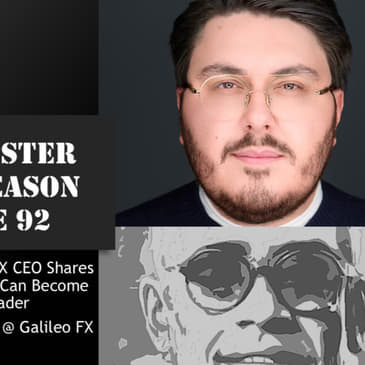

David Materazzi is CEO & Founder of Galileo FX and Orion Software Development Srl. headquartered in Italy with offices in New York and Tokyo. Since 2020, his firm has specialized in developing automated trading software that eliminates the need for constant manual monitoring. The company’s flagship product, Galileo FX, uses advancedalgorithms and customizable strategies to enhance efficiency, reduce errors, and operates 24/7, providing a significant advantage over traditional manual trading. With over 15 years of executive experience in the equity and currency markets, he previously handled Partner Acquisition at an investment fund in Canada. David uses his forward-thinking approach to create innovative software solutionsthat make trading simpler, transforming complexity into clarity, challenges into opportunities, and traders into confident investors. He is a recognized thought leader and frequent contributor to Forbes, Yahoo! Finance, Reuters,MSN.com, Benzinga, USA Today, NASDAQ, The Epoch Times, The Street, US News & World Report, and other business media. Connect with him on LinkedIn at https://www.linkedin.com/in/davidmaterazzi/
[00:00:03] Hello everybody and welcome to the Crypto Hipster Podcast. This is your host, Jamil Hasan, the Crypto Hipster, where I interview founders, entrepreneurs, executives, thought leaders, amazing people all over the world of crypto and blockchain. And today I have another amazing guest. And I love the, I'm going to try to pronounce his last name. I love the sounding of it. He does it. I'm not trying to butcher it. He is the CEO of Galileo FX. His name is David Materazzi.
[00:00:33] David, welcome to the show. Thank you so much. It's a pleasure to be on the podcast. Thank you for joining me today. I look forward to speaking with you and you have some insights for me and my audience that we're really looking forward to. So let's kick things off though. I ask everybody the same question to start off with. It is, you know, it is this. What is your background and is it a logical background for what you're doing now?
[00:00:57] Well, it is logical, but it's not like common, right? So I was born in Tuscany, in Italy, in the, you know, in the place of Renaissance, you know, Leonardo da Vinci, the great wines, but not really famous for tech. And since I really loved computers, since I was like nine years old, I, you know, I wanted to move out of Italy as soon as I could. So, but I started in Italy.
[00:01:19] I graduated in economics and then I moved to Canada, actually to Toronto. And that's where I started when I started working in the financial industry, right? Because I started, I accepted a job offer of an investment fund and they were among like the inventors of proprietary trading in the late nineties. I started a little later, but you know, that's where I started in trading and in finance. So I started from, you know, the heart of it, you know, the Darwinian system.
[00:01:48] So I stayed there and I, you know, I did my corporate career for eight years, you know, promotions and, you know, you get promoted, blah, blah, blah, blah, blah. But then I said, you know, I really want to do something, you know, that I can create myself, you know, and, and I want to be responsible for my own life.
[00:02:09] So I resigned and that was a huge, you know, step. And I resigned, uh, you know, uh, of a manager position when I was like 30 to start this business and to start, you know, an algorithmic trading company, basically, you know, even if it wasn't like the original idea when I resigned, but I knew I wanted to do something.
[00:02:28] You know, by myself, how did I, why did I choose algorithmic trading? So it was like, I was really lucky because I was in the, you know, I was talking and every day in the office, we had like 20 traders, like professional traders. So I was talking to them. I was like doing small talk where you have a coffee, you know, or whatever you see them, you see how they actually do trading in at a professional level.
[00:02:53] Okay. These guys, they were trading equities and the company, it was a global company. It still is a global company. And they had like, they were trading like 3 billions a day on the New York stock exchange. They had like a seat on the CME in Chicago. So there were like a huge operation. So institutional brokers, high level trading, and they were funding traders. So you could only work at this company if you were like a good trader, right? Because the bad traders were kicked out like after, you know, a few months.
[00:03:23] Or if you do like two consecutive days of, you know, more than, I don't know, $50 of losses, like really tight limits, you're out for six months. You have to study, do an exam, and then you come back. So that's, you know, the environment that I was really lucky to be part in on the inside, not from the outside. From the outside, it looks like, you know, some kind of really, you know, mysterious or like black magic thing because it looks really complex.
[00:03:48] But when you're inside of it, you meet these people, you talk to them. They're not coming from the sky. They're not special. They're not smarter than me and you, right? But they actually have a system. They do things in a certain way, and they approach trading in a certain way. So those were all manual traders, okay? They had some systems to do, you know, trade matching with algorithms, but the actual trading was being done manually.
[00:04:12] At the same time, I saw like in other fields, in IT, you know, automation growing, growing and growing. I was like new products, new startups coming out everywhere in North America. It was like 10 years ago, right? So I said, wow, these guys, they're so good, but they do everything manually. They're doing like 200, 300 trades a day manually, stroking on keyboards.
[00:04:35] I said, how come, you know, the market is not moving towards that direction? And I was starting to hear, but a little bit, you know, from the market, is there any kind of automation? And that's what I, you know, decided, okay, maybe this is, you know, the new direction. It just made sense to me at the time because I knew that people, they want a shortcut.
[00:04:58] You know, if you can do something quicker and more efficiently, why would you do it the old way, right? Why? It's not, it's not just like based on traditions, right? It's not really based on, you know, logic, you know? So that's, you know, that's really, you know, my background. The company now, Galileo FX has been growing really fast. You know, we really have a great product over 11,000 clients and more. Now I stopped counting, mostly in the US, right?
[00:05:23] So we're really proud of the product. People are loving it. We really listened to the market and developed the product over the years. Now it's been around for four years, right? And we're working on a new algorithm right now that I'm really excited about, but that's the background, right? That's where I'm coming from. So a lot of observation, real life, real people who pay their bills, who live out of trading, they do it as a job, right? They don't do it like as a hobby. So once you see those people, you talk to them, you really understand the essence of it.
[00:05:53] In many, many, throughout many, many years, then you can, you know, I think create a product like we did, right? If you don't have that background, it's going to be based on a bunch of theory that you don't even know if it works or not, right? But our product is not based on theory. It's based on observation and practice, you know, real life and practical, you know, tactics. Awesome. So I want to get a little bit, I want to get into that, you know, what's Galileo FX all about?
[00:06:20] What's your product all about? How does it work? And then what's your mandate and vision for the future? So the idea is that we don't have the technology yet. Nobody has the technology yet to automate 100% of trading. You still need some kind of, you know, human overseeing this software, okay? It doesn't exist. Even Renaissance technologies who are like, you know, huge hedge fund on Wall Street for many, many years.
[00:06:47] They made billions for their clients. They were like pioneers of algorithmic trading. But still they had like a bunch of mathematicians, statisticians, you know, economists looking at this algorithm and checking the markets and guiding the algorithm, okay? So that's the general idea how you should automate like 70% of your trading, 80% of your trading, so that you don't waste time doing this manual work, watching charts that a software can do, right?
[00:07:17] For you. Your time, you take all of your time and you allocate it wisely, right? Because time is limited, right? Money actually is not limited because if you can print it, you can say, you know, it's not, it's unlimited. But time, you cannot print time, right? So time is limited. Your time, you should use it. What I've noticed from these people, they use their time, these traders, they don't work like 16 hours a day. They work eight, maybe nine hours, but they use their time wisely. You know, they wake up early. Why?
[00:07:45] Because they have to look at the pre-market, you know, what's moving before the market open, you know, they trade equities. So that's what I observed. So use your time wisely. You spend your time 20% of the time, instead of 20% of the time thinking, you allocate 90% of the time thinking. And you let the robot do the manual work, right? Which is the most time consuming part of trading, right? The actual watching charts, looking at patterns and trying to find the best spot to buy and sell, you know, at the right time.
[00:08:14] So I said, we can create a software that can automate the trade. Now, the problem, what's the problem? That there are laws in finance that say that every single trading strategy is going to become obsolete after a certain time it's used in the market, right? You can't keep using the same trading strategy if many, many, many more people use it. You know, the same people use it, the same strategy. It's called the alpha something.
[00:08:44] I don't remember. You can look it up. There are many studies about it, right? So, and different people have different styles. You know, you buy today, maybe you want to sell in 20 years. Or you buy today, maybe you want to sell tomorrow. So you have different time horizons, right? And you have different risk tolerance. Some people are comfortable, you know, jumping off a plane. And some people can't even board the plane, you know, to go like to the next city, right? So different people have different risk styles.
[00:09:13] So how do you match all of these? We created like a software that you can direct and you can choose your own style and your own strategy. And we have like 350 strategies already that our analysts, we have analysts, you know, and financial engineers working with the software every day from morning to, you know, every day, full-time jobs. We have different strategies, stressing the software, finding profitable strategies that then you can use so that you don't waste time like trying to find the best strategy.
[00:09:42] But you have like, you can just pick the strategy that's best for you. Let's say you want to trade. We are in a crypto podcast, right? So we have like 70 strategies are for crypto. Some of the strategies we have, you won't believe it, but it's like crazy, crazy returns, like 1800%. Can you imagine? Oh, that's bullshit. I don't believe it. Well, you can test it. You know, you can see all the trades that the software made, all the data. Of course, that comes with the risk. Okay. But why do you make more money? Because you're making more trades, right?
[00:10:12] You make like 100 trades, you make 200 trades. You just don't buy and hold and hope the price goes up and you sell at the top. That's a very like basic method of trading. Like it's really like the 101 of trading. There are more sophisticated methods of taking advantage of price fluctuations in the market. Prices go up and down all the time. And sometimes there's no reason. Sometimes there's a big reason. Sometimes the market overreact. You never know.
[00:10:41] Like it's the short term. It's a lot of psychology. It's mostly psychology, right? Short term price movements in the markets. They're psychology. In the long term, it tends to align to, you know, the performance of the business or other factors. Like there are more grounded. And the short term is psychology. So you, but you can take advantage of these, you know, price fluctuation of when it goes up and down and you buy the right time and then you sell quickly. Right? So it's a style of very quick trading sometimes. But we have strategies for long term investing.
[00:11:11] Of course, never expect those kind of huge returns when you're doing long term investing. Okay? Long term investing, it has other benefits. So lower risk generally compared to, you know, day trading. And then you have stability. So you go to sleep and you are, you know, calm. When you do day trading, it's stressful. I tell you, you know, most professional traders, they don't last, you know, seven, eight years straight. They have to take a break of a couple of years, you know. Usually they make a lot of money, you know.
[00:11:40] And they say, okay, now for five years, I'm going to travel the world or I'm going to do this. I'm going to do that. I don't need to worry about money. But it's stressful. You can't keep doing it like for 10, 20 years. Some people, they can do it, but it's really hard. Right? Trading in general. So everything comes with a cost. That's the idea. We don't promise like, you know, the same results for everyone. That's like fantasy world. I told you like we come from the real world. Okay? So unfortunately, you cannot remove risk from the market.
[00:12:09] You can't remove risk from the market because it's no software. It's no investment strategy that you can. There's no risk. Okay? It's always some kind of risk. Sometimes you can see risk. Sometimes you don't even know that it's some kind of risk. Right? Think about COVID. You know, things can happen that nobody can predict. Right? So you always have risk, any kind of risk. But you can manage risk. So you should accept that risk exists. You shouldn't ignore it. If you ignore it, it's not going to, you know, it's not going to play out well for you. Right?
[00:12:39] It's not like a prophecy that fulfills itself. No. Just look at things how they are. There is risk. Okay. But people are still making money. Even if trading is risky, even if the market is risky, what outcome you have all these people making money and being profitable? It means that there are ways that you can manage this risk. Right? You can manage the risk and you can adjust your trading based on your risk tolerance.
[00:13:05] We have people coming to us that they're very comfortable with extremely aggressive strategies that I wouldn't even, you know, advise anyone to use. I mean, I'm not an advisor, but at least we warn them. We say, hey, are you really sure you want to use this strategy so aggressive? Say, yes, I'm comfortable. Okay. It's your money, your choice. Right? Other people, they want to start slower. They're more like moderate risk. We're going to talk about it later with the stats or like really low risk. But we see all kinds of, you know, different personalities.
[00:13:35] So we built a product that's going to last for many, many, many years because it's flexible and people can adapt it. But at the same time, you use like a foundation that it's a profitable strategy. Those are not random traits taken by the software. Right? We're going to come out with a study where we show that we have like a breakthrough in this algorithmic trading field. Right? Where we have, we did like studies with hundreds of thousands of trades and the algorithm we're
[00:14:02] working on right now, it's making money one time out of three. If you are a manuator, you make money one time out of 20. If you use complete randomized trades, it's less than 1%. Our algorithm just the base, the foundation is 33%. So you start like from, you know, a better place. Right? You have an advantage. You know, use this kind of tools like the ones that we have. You have an advantage over all the other people that, you know, are trying to, you know,
[00:14:30] place random trades or they're just trying to follow some indicator. I mean, do people really think that you can just follow an indicator and make money? It's much more complex than a single indicator. Right? Okay. Now, if you start combining, let's say two or three different indicators, then you will have a strategy. Okay? That's a strategy. When you start combining like five, six at the same time, you know, and that, but that you can only do with the computer, with the software. That's why we built, you know, Galileo because you cannot like physically, you know, mentally,
[00:15:00] you don't have the mental energy to look at this six, you know, indicators, you know, 24 seven. I mean, who can do it? It's like you fry your brain. Right? So that's, that's really, you know, the vision behind the product and people are loving it. People are understanding it. Right? That's the beauty of it. People don't come to us saying, oh, I expected guaranteed, you know, returns. So I expect these or that they understand this.
[00:15:27] So we have like an education responsibility, educational responsibility as well. It's part of our ethics. Even if we don't have to, I don't want people to use the product and then blame us. Oh, I lost money. You know, it's your fault. No, it's your responsibility, right? As if you make money, it's your merit. If you lose money, it's also your responsibility. Nothing wrong about it. Everybody loses money in trading. It's part of, you know, it's part of life of trading. That's how it is.
[00:15:54] But you shouldn't blame other people, you know, trying to, you know, conspiracy. So, but we are really happy with our clients and in general, how we communicate the product. It's very well accepted in the trading community. Excellent. Excellent. Yeah. Sounds really good to me. So I want to get into your statistics. I want to get into that. Looking at some of your proprietary statistics, right? What are the trading trends you've noticed most recently?
[00:16:22] So over the years, we've been collecting data from customers, right? And with the proper, you know, authorization from them, we can share it. Of course, we're not going to make names. But we have collected thousands and thousands of answers. And I collected some of the most interesting statistics. And one, you know, the first one is that 56% of people prioritize quick and short-term gains, which is nothing wrong about it, right? You know, there's some people in the investment world that want to make you feel bad because,
[00:16:52] you know, you're looking at short. What's wrong with it? There's nothing wrong with it. As long as you're making money, who cares? You're making money long-term, good for you. You're making money after a minute, good for you, right? It's what's wrong about it. It's not, you know, to each his own. So we see that, you know, but 45% of the people, they're looking for longer-term gains. So you see like a huge division here, right? You have the people looking for a quick, you know, extra, quick extra income and the people
[00:17:21] who like take it slower. It doesn't mean that you're right or wrong, right? Each of the two can be right and wrong. It depends on how they actually then apply, you know, the strategies, right? And how they trade. Second stat that's interesting is 60%. They report moderate risk tolerance, okay? So some people, they, you know, why does this stat conflict with the first one?
[00:17:48] You would say, oh, but the first one was a 55%, 56%, and they wanted quick gains. And the second one, you're telling me 60%, they want moderate risk tolerance. Well, some people, they want quick gains. They don't realize that, you know, quick gains, they come with a high risk all the time, every time, you know, every time. That's like a law of physics in mother nature. It's the same, it's the same thing. So that's, you know, an ignorance-based difference in the statistic, but 60% moderate risk tolerance.
[00:18:16] So it means that they understand there is some kind of risk in trading, you know, but they accept it. They're okay with it. Maybe they have some extra money that they want to be a little bit more bolder with, right? They don't want to invest it in the usual, you know, indexes or whatever. So that's an interesting stat. Another one, 58% only have some kind of experience. So you see like a huge growth in trading.
[00:18:44] Like when I started in this industry, trading was like something really small. It was like a small, I remember looking, you know, at the Google searches per month. It was like 33,000. After, you know, the huge tech bubble and after the 2020, you know, the great financial crisis, the 2008, you know, market crash. Trading was like, it disappeared from everywhere for many, many, many years. Nothing was happening in the market.
[00:19:13] You know, daily volumes went down. Nothing was like the most boring thing in the world to be a trader. Now it's exciting. Why? Because things are happening every day. The markets are moving like crazy. You have all these new crypto. So it's exciting, right? There is a lot of opportunities. You know, there's way more opportunities right now than before, right? But in the short term. So I think, you know, that's interesting. That's what's bringing, you know, beginners, you know, to trading and to this world.
[00:19:42] 48% can dedicate a few hours weekly. So you see, this is, I was right with automation, right? When I was thinking, you know, people didn't really want to sit and watch these charts all day. That's, if you, for very few people, that's a dream life, right? Waking up and watching your computer like for 10 hours. Yeah. For some people, that's a dream life. Maybe engineers, nerds, you know, these people. But for normal people, they just want to make some extra money, enjoy life, right? That's also our message.
[00:20:11] We want you to enjoy life, you know, more. So why not use automation? Like if it can help you, right? What's wrong with it, right? There's nothing wrong about it. So that's also, you know, a huge point for our product because people who are selling like strategies that takes hours a day and you have to watch charts and, you know, you can't even sleep because you have to keep watching these charts. It's a disappearing market, right? So it's a disappearing product category.
[00:20:40] It's being replaced by this new AI and automation tools like ours. So that's a huge trend. And investment like for 50% of the people is between $1,000 and $10,000. So we're not talking like huge, you know, investment sums that you have to risk, right? I would never advise anyone to use your retirement funds or your savings and use them for trading unless you really, really know what you're doing.
[00:21:09] You've been trading for many, many years. But if you're that good, you don't need to use your own capital. Trust me. You're going to find capital. You know, I know of so many firms that they contact us. Oh, do you have any good trader? We're hiring traders. We give them this percentage. We give them the capital, blah, blah, blah, blah, blah. You look for prop trading. It's like a thousand firms now offering capital, right? So if you have the talent, you will find the capital, okay? This we're talking about trading.
[00:21:36] So you are supposed to grow this capital like, you know, constantly, right? They don't just give it to you and, oh, see you in 20 years. They're going to say, oh, see you at the end of the day and you show me, you know, what trades you have done. So that's the kind of trading we're talking about if you have the talent. Last, you know, statistic that's interesting. 51% say that having control over the robot settings, it's somewhat important. So we go back to what I was saying before. People, they want some kind of control, but it has to be easy.
[00:22:06] They don't want to read like 100-page manual. They don't want to become engineers. They don't want to become software developers. You look at these trading platforms. They look like a spaceship software, right? It's complex even for us. Even for us, you know, it takes time to understand everything because different apps have different namings for different functions, for the same functions, right? They place it sometimes at the top, sometimes on the left. Sometimes you have to click here, click there.
[00:22:31] So it's just like a very steep learning curve. And that's why, you know, I focus so much to make it as simple as possible for people to have control over the settings of the robot. So, you know, you're looking for quick gains, use a certain set of settings. You're looking for longer term, lower risk, use other settings. And you have like thousands of combinations, right? So you can have fun with it, right?
[00:23:00] So these are the statistics. So you understand it's a very interesting time, I would say. It's a lot of, you know, activity. It's a lot of activity. Why? Because it's a lot of opportunities. Yeah. It sounds exciting. It sounds interesting to me. I want to find out. I want to dive a little bit deeper into those numbers and say, okay, what recently have been the trading habits in crypto specifically? Because I saw one statistic this morning.
[00:23:28] It said the Solana meme coin trading was down 90%. You know, it makes sense to me. That makes sense. Trading volume. Yeah. But what have you seen? So the crypto world is definitely growing in numbers. Even if it doesn't look like it, it's not reflected on some prices. But we see that it's really growing. Like the actual number of people investing in crypto is growing. You know, the absolute number. So as it grows, you see that different groups form, right?
[00:23:57] It's not just one single group. Like with the beginning of Bitcoin, where you had this group of, you know, passionate, you know, crypto, cryptography, hackers, you know, community that really hit them. That was like the core community, right? It was like one single ideology in a sense, you know, a set of ideas and values. Now it's starting to split. And you have the hardcore libertarians, the original group, it's getting smaller and smaller. I think we've seen that, right?
[00:24:25] Especially after, you know, you start hearing, you know, involvement of governments with Bitcoin. It goes, it like clashes, like completely with the original, you know, philosophy of Bitcoin, right? It crashes because it was supposed to be like, you know, completely independent from, you know, it was against the government, big government, against, you know, this kind of thing. So that group is getting smaller. But they were never really traders, right?
[00:24:54] They were more like enthusiasts. And the holders, I think they're still strong. I see that they're still strong. You still have a lot of people holding. Maybe they don't really talk about it as much as before. But I think that's pretty strong community. You see the price, right? Why is the price $82,000 on Bitcoin? Because you have this community of people that they want to hold. They believe in Bitcoin. They cannot get scared by 10%, 15%, 20% drops, even 30%.
[00:25:24] They don't get scared. So that's a huge community. So that's, you know, that's growing, right? That's emerging. Over time, if it keeps growing, price is going to be, you know, higher and more stable for Bitcoin. That's for sure. Because it's just a result of just more people holding. So the casual investors, I think that connects to what you were saying about Solana, the volume going down. The casual investors right now, they are scared. I tell you. I mean, you just look at the headlines.
[00:25:53] You look at the markets. You look at pretty much every asset class. Everything is going down. Why? You know, you have uncertainty. You know, new president. This tariff threats. That's, you know, the market doesn't like these tariff threats. Now you can argue whatever you want about the economy of it. You know, how much it makes sense. Yeah, we're going to do that. We're going to pay the debt. We did, you know, interest on the debt. We're going to do this. We're going to do that. It's the right choice. But the market doesn't like it.
[00:26:21] You know, even if it could be the right choice for the country. But it doesn't mean that it's the right choice for investments or for the market. So you see that every time you have an headline about tariffs, boom, market tanks. And you see, tomorrow we have the big announcement, you know, April 2 should be like supposedly the liberation day. That's how Trump called it. We don't know, but the market is not liking it. You know, I watched the open today and it was red, red, red. Market doesn't like this uncertainty.
[00:26:50] And casual investors, they tend to buy and invest and get excited when they see headlines that the market is growing, you know, Bitcoin is hitting a new record and this, this and that, like it's hitting a new high. That's where you get the casual investors. When you see these headlines, the casual investors, it is appear, but they're going to come back, you know, as soon as, as soon as things, you know, turn around, they're going to come back and they're going to come back to crypto. They're going to come back to, you know, stocks, meme stocks, whatever, tech stocks.
[00:27:21] So it's just, you know, a cycle. It's, you know, market has cycles. This is a cycle where, you know, a lot of uncertainty, but uncertainty brings opportunity. Right. So a lot of people who are bolder, they can make a lot of money right now. Yeah. I do. I do. Actually, I do the opposite. When I see everybody selling, I buy. So I know someday. That's, that's a much better strategy than buy when, you know, when everybody's buy. That's a much better.
[00:27:50] Now you, you also, you also, yes, that's a very good strategy. I made a lot of, I made a lot of money based on that strategy. And actually, let me tell you a secret, even for our audience. Okay. Even if it's not really a secret, but Galileo FX is based on these principles. It's actually a contrarian strategy. So it's actually a strategy that buys after a certain number of consecutive bearish signals, it buys. When it's, you know, after a certain amount of bullish, bullish signals, it sells.
[00:28:19] That's, so it goes, because that's, that's like a much better strategy than buying at the high and selling, you know, buying at the top and selling at the bottom. That's for sure. But at the same time, you need to understand, you know, why is the price dropping? Yeah. I'm going to buy when it drops, but why, why is the price dropping? You know, because if it's a big reason that it's going to take many, many, many years to recover, then, you know, I don't know. It depends on your time horizon, right? If you have a long time horizon, you should buy when it drops. Yes.
[00:28:48] But it, it, it really depends. You should look at the reason why, you know, what's behind this drop. Right. By thinking crypto, definitely. I, I made a lot of money buying when it was low, you know, when crypto crashes, I buy. I don't care. You know, even if I don't, maybe I don't believe in it. I don't have like a specific opinion on it or like, uh, you know, a special, you know, attachment to it. I just, you know, trade it like very coldly. Right. Brutally. Like I see when, when it really crashes, I'm going to buy some Bitcoin. And I keep it there.
[00:29:17] And then we goes up. Yeah. I'm going to sell it. Yeah. I'm not, I'm never able to sell at the top. Nobody ever sells at the top. Okay. So you shouldn't beat yourself. Oh, you know, I'm not good because I could have made more money, blah, blah, blah. No, you, you made a profit. That's, that's what matters. Okay. Yeah. Yeah. You could have lost more, but you could have also lost. Right. So you were right. You know, be good, be good with yourself, but in crypto, you can make a lot of money. Yes. When it goes down by guys. Yeah. If you, if you believe, right.
[00:29:46] I'm not going to advise, I'm not going to offer any investment advice. Okay. But in general, I've seen that it works and I've used this strategy. Yeah. I, I, I gotta say, I, I bought avalanche two Octobers ago when it was $8 and 91 cents. It was the low. It was the local low. It was very low. But why did I do that? And I wasn't watching economics, which I usually do. Exactly. I was watching, I was watching all the VCs talking about Solana and I was like, screw those guys. I'm buying avalanche instead.
[00:30:14] So it was, it was pure luck, you know? So. That's very smart. That's smart because it's, that's, that's really what matters. So that people want to overcomplicate things. They want to, I know we can talk about the, I could talk about theory all day. Okay. I know all that stuff, but at the end of the day, what really matters is when you buy and when you sell. It doesn't matter, you know, who you are, you know, how old are you? What color is your skin? If you're male or if female, it doesn't matter what, you know, if you're a young kid,
[00:30:44] if you have money, if you don't have money, it doesn't really matter. What matters is when you buy and when you sell. That's trading. If you can, if you have 160 IQ or if you have 80 IQ, it doesn't matter. What matters? When you buy and when you sell and the difference. If it's a profit, good. If it's a loss, bad. It's extremely simple, right? So you did the right thing. It doesn't matter, you know, why you did it. You did the right thing. So that's what matters. Yeah.
[00:31:10] So I want to talk about this concept, though, that you talk about, you know, the risk tolerance danger zone. You know, it reminds me of the Kenny Loggins song, the highway to the danger zone. But, you know, what do you consider that risk tolerance danger zone? And how can people assess to see if they're in it? Extremely good question. But, okay. So I'm going to talk about our software in general, but you can get, you know, because that's what I know for sure. Okay.
[00:31:39] So we have different settings. Okay. And we guide you. We tell you, you know, these settings, like 99% of the time in the last 10 years, and we tested like a million, millions of trades. They are very aggressive. They're very high risk, but also highly worth. Right. So we already know in general what setting, which settings are extremely high risk. And they are going to be high risk forever because that's really like the, you know,
[00:32:07] the engine, you know, how the engine is created. That's how things are. And when things are a little less risk. Okay. In general, I would say the biggest risk as what we let's, you know, quote Warren Buffett as many people do, but I'm going to quote him as well because he has the best phrases. So the risk comes from not knowing what you're doing. So when people ask me, should I buy this coin? Should I invest? Do you believe in Bitcoin? Should I buy Bitcoin?
[00:32:36] You know, I ask them, do you know what you're doing? Do you have research to back it up? Do you have some kind of data and facts? You are right because your facts are correct. Not because you are special or because you have a special intuition or some special instinct. Your facts, your data has to be right in order to you to make money and to be right. But otherwise, you know, the more you trade, the more you're going to lose because it's just basically random what you're doing.
[00:33:05] If it's based on data, it's not going to be random. Okay. So if you know what you're doing, if you know what you're trading, you can make money, right? You're going to make money. It doesn't matter the asset. If it's like a meme coin, if it's a shit coin, I don't care. Who cares? I mean, guys, at the end of the day, we create all these categories in our minds. At the end of the day, what we all want, we want to make extra money to spend it or to invest in something else or to pay something that we want to pay. That's the end of the day. Okay. So that's the goal.
[00:33:33] Who cares if you make it with a shit coin or if you make it with Warren Buffett, you know, system. Doesn't matter as long as you're making money, right? Who cares? Nobody cares. We just, but we get, you know, divided into these categories and this is good. This is bad. That's not how it is. What matters is if you know what you're doing, I know people making a lot of money with shit coins. I know people making a lot of money with value investing, which is like the opposite, the opposite, really like the most opposite things you can think of. They still make it money.
[00:34:04] So who cares? But they know what you do, what they're doing. They start it, right? The value investor doesn't try to be the other guy. And the, you know, the second guy doesn't try to be the value investor. The day trader, the aggressive day trader doesn't try to be, you know, you have to know what you're doing and stick to it. So that's risk, right? That's really risk where it comes from. Because if you really study and your data is good, you can manage. Now there are more sophisticated ways to use risk. Okay.
[00:34:31] You can buy the opposite, you know, position, 80% of it and you can, you know, but then also your profits, they get really like squeezed. Even more sophisticated, you have options, but that's becomes too much like hedge fund, you know, style. So I wouldn't recommend it here, but in general, know what you're doing. Back it up with data, real data. Don't try, don't make the decision first and then try to find proof for it. Okay. That's a bias. That's the biggest mistake you can make.
[00:35:02] Be neutral, right? This is the data. What should I do? Should I buy or should I sell? That's it, right? Sometimes I'm going to buy Bitcoin. Sometimes I'm going to sell it. It doesn't matter, right? It doesn't really matter if I believe in it, if I don't believe in it. It's not a matter of belief. It's a matter of data. You know what the market is doing. That's what matters. Yeah. Yeah. So I agree.
[00:35:30] I get questioned all the time by people who know that I'm crypto. They said, what should I buy? And I'm like, you're being very presumptuous because I have no idea what your risk tolerance is. I don't know what you understand as far as technology. I don't understand. Like, I can't actually answer that question. Exactly. Exactly. They think, oh, there is one special thing that I have to buy out of 20,000 and I just need to find it. No, that's the wrong approach just because it's too large. It's too big.
[00:36:00] And there are many way, way more opportunities. There's one out of 20,000, right? Way more opportunities. You just need to study. You need to know better than the average trader, average person trading the same things. So some people, they go into this shitcoin because competition is really low. If you think about it, you have all this kind of, sometimes you have investors that don't really know what they're doing and you trade against them. You make more money. It's the same techniques of poker, right? Some people, they go play poker with amateurs, with beginners, because if you know what you're
[00:36:29] doing, you have much higher probability than playing with a professional poker champion where your probability, even if you're good, it goes to zero. Why would you go trade stocks against Wall Street? Why would you go trade stocks against these people? Some people can do it, okay? Some people are able to make deals to be right and maybe God's success is on the other side of the transaction, they're wrong. But what's the chance that like a regular guy, it's right and Goldman Sachs is wrong? Guys, I mean, come on.
[00:36:58] It's just a joke, okay? So find something that you really understand. You know everything about it. Some of the best traders that I've, you know, one of the best traders is a market wizard. It's in a book, original book, Market Wizard. It's a book about trading. They interviewed the best traders in the world, huge success in the end of the 80s. And you can still apply a lot of the advice. It's really like worth it. These people made millions. You have this guy, he made like a fortune, like we're talking 100 million, starting from 30,000.
[00:37:29] He only traded one asset, but he knew everything. Coffee bills. Can you believe it? Coffee futures. He knew everything about coffee. He didn't know anything about the stock market. He didn't know anything about whatever, like IBM, Apple, tech, nothing. He didn't know anything about that. But he knew everything about the coffee business. This is the 80s, okay? So that's a different time. So he went and he visited the plantations in South America.
[00:37:56] He was talking to people, entrepreneurs in the business, people at the market, people, you know, dealing, suppliers, distributors, whatever. So you understand what really well, deep, you know, one thing, you're going to make more money than understanding superficially a thousand things. So deep depth, it wasn't money. Then if it's Trump coin or if it's Doge coin or whatever it is, Bitcoin or, you know, a stock
[00:38:22] or gold or whatever it is, if you understand it, you're going to make more money. Trust me. That's, you know, we go back to the, that's really it. You don't need to know everything. You cannot know everything. Even Chachapiti doesn't know everything about the market, right? Otherwise, open AI, they would use it to make money in trading instead of selling these subscriptions, you know, at 20 bucks and they're desperate to sell them, right? So it means that even that AI, even the most sophisticated AI in the world, they can't, they can't use it for the market, for trading.
[00:38:51] Otherwise, they would keep it secret and just trade it in the market. Think about it, right? So stop looking for these shortcuts. Become an expert on one thing or choose one. And it has to be specific. I tell you, it cannot be like crypto. Crypto is still like too big. You have like a thousand different crypto, you know, kinds of types of investing strategies and assets and whatever. So that's too vague. You need something really specific. Like, I don't know, Shiba coin, Shiba Inu or Dogecoin, whatever it is.
[00:39:21] One, and you become one of the most knowledgeable people in the world about that. I guarantee you're going to make money. I guarantee you're going to know when the market is selling because of panic and you should buy and when you should sell. You're going to know. You just, you just, because you live, you live in it. You live in it. You breathe it. You understand it, right? So you are not reacting. You understand what's, you know, how the prices are moving.
[00:39:48] And that strategy applies even in the worst conditions like socioeconomic and political environments. Of course. Yes. It's only, guys, it's, you can always make money. It doesn't matter. It's not that you can only make money when markets goes up, you know, when the market goes up or when your asset goes up, you can see him make a ton, tons of money, you know, in all kinds of market conditions. There are people who made money after World War II.
[00:40:17] You know, the U.S. was in an economy of war. You know, Dow Jones was like worth, like was almost nothing. There are people who bought at that time. Like when, you know, John Templeton, one of the legends of Wall Street, he bought after the announcement of World War II. He bought like Dow Jones, all the companies listed in the stock. So every company in the U.S., like he bought it, he bought a stock. He made like billions, like a fortune, one of the biggest trades in the history.
[00:40:44] So, and it was like after, just the day after, you know, the announcement of World War II. So you shouldn't be scared. You shouldn't be scared. Actually, it's opportunity. I know it's cynical to look at it this way, but we are in the business of making money. We're not in the business of making Bora judgment or political judgment. This is right. This is wrong. Who cares? You know, here we're talking about making money, you know, for yourself and being smart with your money, right? Not losing money.
[00:41:12] So you shouldn't take it, you know, let it affect your trading, right? If something bad happening in the world, try to find the best way to, you know, for yourself to take advantage of it. There's nothing wrong about it. There's nothing wrong. You're not doing anything illegal, right? It's not illegal. Awesome. Awesome. Awesome. I love it. So I want to thank you very much for your time today. I enjoyed speaking with you and the conversation flew by. It was fun, exciting. It was amazing. Thank you so much. I really appreciate it.
[00:41:42] So we're going to share this and it was a great conversation. I have one last question. Sorry? I have one last question. How can people find out more information about you, about Galileo FX? How can they start to use your algorithms, your platform? How can they do that? Oh, nice. Yeah. So GalileoFX.com, that's, you know, the official website. We have a chat 24-7 with experts.
[00:42:08] They can answer any question about the software, about even technical stuff. If they don't know it, we escalate it to somebody who knows the answer. But yeah, GalileoFX.com, that's where you see all the strategies. Even before buying, you can see all the returns, all the different trades made by the software. And then after you buy the software, you can download these strategies and just load them on the software and see what happens in demo, right? So you have no financial risk.
[00:42:36] And if you, let's say, test 10, 20 different strategies, maybe you find a couple or three that are really good, that are consistent, that you like, that you're comfortable with. And so after familiarizing with them, you can go live with real money and you start actually using these strategies in a real market. And the software is going to follow basically these trading strategies for you by itself, right? Opening and closing trades by itself. And, you know, all the trades, they go through your brokerage account. So we don't touch your money.
[00:43:05] You don't need to give the money to us or whatever. We are not like an investment firm or anything like that. So we sell the software and the support and everything else, education and these strategies. But, you know, yeah, that's about me. You can follow me on X. I'm not really like, you know, I don't really like being a public figure in a sense. But I like sharing, you know, things that I learn day to day about trading, about the markets. So no BS, no advertising.
[00:43:34] We don't need to do any advertising on my profile page. You can follow me, David Materazzi, David Materazzi. Or you can go to GalileoFX.com. You're going to find the link. I have around 10,000 people already following me. So it means that the advice is, you know, it's appreciated. And I'm basically tweeting about, you know, the markets. Why X? Because that's where, you know, finance is really on social media, Facebook. I don't know. Instagram, you know. I don't know.
[00:44:03] I don't want to put photos with Lamborghinis and stuff like that. So I said, okay, X looks like the best, you know, channel. LinkedIn, it's more like for professionals. So more corporate. We're not really like that world. So that's X. So no political affiliation, of course, you know. Awesome. Awesome. Thank you very much for your time today. Thank you so much. I really appreciate it. Have a great rest of the day.