
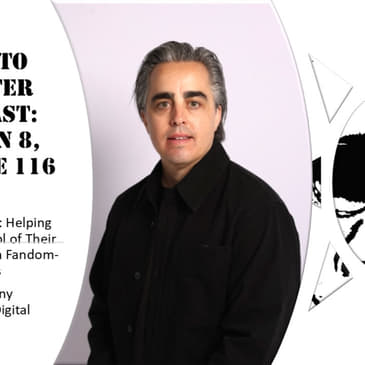

Anthony Rodriguez, Founder of Lineage
Anthony Rodriguez is the founder and CEO of Lineage, a pioneering agency and creative studio built on the belief that the future belongs to brands that inspire fandom. Since launching Lineage in 2002, Rodriguez has spent over two decades helping athletes, artists, and brands take control of their narratives, build communities, and monetize influence at scale.
Today, Rodriguez is channeling that same vision into a new venture: The Digital Spenders Club, a fandom-driven business rooted in crypto values like ownership, privacy, and equity.
[00:00:03] Hello, everybody, and welcome to the Crypto Hipster Podcast. This is your host, Jamil Hasan, the Crypto Hipster, where I interview founders, entrepreneurs, executives, thought leaders, amazing people all around the world of crypto and blockchain. And today I have another amazing guest. He is the founder and CEO of Lineage, and he has also created a new venture, which we're going to dive into today, called the Digital Spenders Club.
[00:00:31] Welcome, Anthony Rodriguez. Anthony, welcome to the show. Thank you. Thanks for having me. Excited to be here. You're very welcome. Very welcome. So let me ask you first, to kick things off, what is your background and is it a logical background for what you're doing now? Yeah, we'll see if it's logical or not, right? That only proves that in the end. But I've been building a company called Lineage for about 20 years. Started as a management company for artists, athletes, entertainers, comedians.
[00:00:57] And it grew into an Emmy Award-winning production company. We did feature films. We did a lot of stuff in sports and music and a creative agency. So we work with some of the biggest brands in the world. So everything from making the Vince Carter documentary to an Emmy Award-winning hockey show with Henrik Lundqvist on the sports side to, you know, helping like Lowe's Home Improvement, take a $700 million brand and build it into a $1.4 billion in-sales brand.
[00:01:23] So, you know, my background primarily has been on that side of the business. And our focus has been fandom. So I wrote a marketing strategy, a marketing framework, they call it, just about fandom marketing. And I think that's helped me a lot. I mean, it's, you know, thank God I was very successful in my first business. And I'm doing this one as a passion play and I love it. And I think a lot of the skill sets do transfer over very well because, you know,
[00:01:50] what we're here to do is the Digital Spenders Club is celebrate legitimate, awesome crypto projects and the future of blockchain. So I'm using all the skill sets from my previous life in this one and it's going pretty well so far. I think, I hope it translates, but the reason I'm doing it is because I think a lot of those skills translate. Awesome. And you have, we talked about this before the, before we started, you have quite the collection of street art on your wall there. What are some of your favorites and why?
[00:02:19] Oh, interesting. Well, I like LA, like LA has got a couple of people, but really my favorite people come out of Miami and Puerto Rico. There was a, there was a crew that was big in Wynwood for a while called La Pandilla and Alex, Alex liked doing like these, you know, half elephant, half octopus type of characters. I like that one. I mean, I like so many of these other guy out of Netherlands called Phlegm.
[00:02:45] Make sure if you Google it, you say Phlegm the artist or else you get a lot of, you know, pictures of Phlegm, but he makes these characters that like this one up here on the wall that I think could be like an entire cities, like an entire series. I should say like, I grew up loving where the wild things are as a kid and it has very much the same feel, but he created his own universe. So the reason I like street art so much is that it's up and then it's down, right? Jeff Soto, I have some of his work.
[00:03:13] Crayola, I love Greg Simpkins. He's out here in LA and he makes a lot of surreal art, but any of these guys that kind of like go to a wall, create a world for us. And then it's only there for a year. It's only there for six months. I mean, most of the stuff in this room now has been completely painted over. So I just, I just always love the space for that. And as someone who traveled a lot, art in every city was like an anchoring, like a reset moment for me. You know, I travel for two, three weeks at a time.
[00:03:41] I spend my Sunday with a coffee in my hand, walk around looking at art and I feel kind of recentered again because every city's got its own swag. So it's a, it's an easy way to celebrate. Awesome. Awesome. So I interviewed who I, I interviewed Graffiti Kings like three and a half years ago, Graffiti Art out of the UK. That was really interesting. It was a great conversation. So yeah. So, all right. So let's talk about the Digital Spenders Club.
[00:04:10] You know, I want to find out what it is and what's all about. And then how do you help highlight legitimate builders in crypto? For sure. Sure. So, you know, we're part of a foundation called the Akronym Foundation. And the Akronym Foundation is founded by a really smart entrepreneur that's been, you know, successful in the crypto world for a while now. He built Flexa. He just launched Anvil, which is a letter to the credit protocol. And I've been working with him for about seven years.
[00:04:40] And there's a lot of noise in crypto, right? There's a lot of, there's a lot of different projects going on. And I think we can all agree there's a range from people who are building technologies they think will have a legitimate future and will change people's lives or change industries or how transactions or, you know, various things are going to work. And then there's, you know, more rug, more pump and rug, more, you know, I don't want to use the word fraud because I think there's a world where meme coins and all those things have a place.
[00:05:09] You know, there's a world of collectibles. There's a world of community. There's a value in that to some extent. So it's really a more in-depth convo. But what we want to do is we want to focus on the builders that think the future is in blockchain and really highlight the virtues of it. You know, there's, as kind of like a historian of how these cycles work, like, you know, personal computing, the internet. Personal computing, I think, had some virtue, but not a ton.
[00:05:36] The internet had, you know, was very propelled by the fact that the information age was going to democratize information. I thought that was really special. And now with crypto, like we have this world where there's a lot of values being injected into why we're doing this. It's anonymity, ownership, you know, the way that a fraud proof or at least a fraud resistant, a highly fraud resistant system could change kind of how the economics and the socioeconomics of the consumer side work.
[00:06:04] There's all these amazing virtues out there. And, you know, I've been in this space for about seven years and meeting these founders. And they really are inspirational people. Like when you meet the devs, when you meet the people that are thinking about how to use crypto in a legitimate way to change the way, you know, the banking system work or change the way provenance and art works or change the way, you know, we handle CPG and connect it to a blockchain in some way. They really are passionate people.
[00:06:33] They really are genuine about what they're trying to change. And I just find that inspiring. And what I wanted to do was make a club for everyone who believes in that and for really for us to just platform those people and celebrate them and do cool things with them. So that's what the Digital Spenders Club is about. It's about celebrating this culture of kind of a virtuous future improved by this technology that we're in the middle of building from scratch here. Awesome.
[00:07:01] I wasn't planning on asking, but it's important. It's virtues. You know, it seems like the last few years, virtues have been under attack. And now retail is at the point where they're least interested in crypto, you know, because of the attacks on the virtues. How do you how do you get them back to be interested and say and start promoting the virtues? Well, I think I would believe that the technology itself is going to prove itself out. It's going to change the world for better and it's going to help a lot of things.
[00:07:30] And I think the retail market will benefit from those improvements. That being said, I'm not sure if it's a I do believe I do agree with you that there's been like a loss of spirit and a loss of momentum. But I I'd argue that that's driven more by economics than by anything else. You know, I think in our last kind of like when NFTs were big a few years back, like there was a lot of stimmy in the marketplace. There was a lot of liquidity in the marketplace.
[00:07:58] I think just generally in the globe, you know, whether it's I look back at like all all the folks that were in the advertising business I was in or the production business I was in. And everyone's kind of holding their breath at once. So my hope is that retail is just in the same kind of dormancy and pause, probably for the same reason. I don't know that retail is gone or the passion for it's gone. I just think, you know, when you're having a hard time making ends meet, you can be less experimental with how you spend your time and your money.
[00:08:28] So we're just at that point in the cycle where it's a little bit of a hold your breath moment. But but I'm very confident that if the if the tech works, which it does, and if it delivers the value it says it's going to deliver, it's going to change the world. So I'm bullish on it, even though, you know, as you know, the cycles go up and down and we're probably lower on the sentiment graph than we want to be.
[00:08:57] Yeah, I'm going to get I'm going to come back to the cycle towards later. I want to find out, you know, I didn't go. I went to consensus last year when I was in Austin. I didn't go to Toronto. It's construction season, right? But how do you how do you like you had a successful activation at consensus this year? So I want to find out how your overall experience was and what your key important takeaways were. For sure.
[00:09:25] Well, you know, consensus has been bopping around everywhere. I mean, I remember consensus in New York and then Austin and now in Toronto. So other than giving us a few heart attacks with all the tariff stuff going on and having to ship the things for the booth from, you know, L.A. to Toronto, it went off really well. So Toronto is a good example of kind of what we what our formula is for platforming technology. So we went to this payments platform called Flexa, the largest crypto payments platform in the world.
[00:09:53] They got the most retailers onboarded, the most coins that work on it. And then we went to like an on chain wallet company, these two geniuses that invented essentially the burner wallet, which we think is awesome. It's a credit card form factor, but it's got a halo chip in it and essentially functions as a single address EVM wallet. Right. Like any other EVM wallet. We said, hey, we know you guys are smart, like make something cool so we could talk about it and we can create an experience around it and we can maybe throw a party for it.
[00:10:21] And maybe even we'll do a, you know, an apparel drop, but we'll celebrate this technology. Right. So kind of taking the concept that comes from a lifestyle culture brand that creates that gets fashion designers together or get someone famous in the fashion designer together. We're experimenting with, well, what if we get technologists together and then use the same storytelling that we're so used to doing in our business? So they invented Tap2Pay. So crypto Tap2Pay for the first time.
[00:10:50] They made a custom EVM hardware wallet for the Digital Spenders Club, which now has become something we're going to do for every single activation. And what we wanted to do at ConsenSys was we wanted people to experience how easy Tap2Pay was. Right. And kind of for the first time ever, you know, you have a lot of people have cards. I feel like cards are like in vogue right now. Everybody's got a card. Everyone announced the card. There were some big announcements this week with big cards.
[00:11:14] You know, I won't mention anybody, but, you know, they're like planets that pay money and big credit card companies are getting together. And that's great. And we love that. But this is the first time that a, you know, USDC, so a stable coin, went from the consumer's wallet directly to the retailer's wallet using the Tap2Pay device. Right. And if you really think about how that changes the paradigm of the consumer retail relationship, I mean, there's a whole lot of people in the way of that transaction most of the time.
[00:11:43] And all those people in the way and the expense of fraud, the expense of insuring at the expense of, you know, that we've built up over time as a, whether it's a small business or a big business, those all instantly disappeared. And what we did was build an immersive experience. So a 90s strip mall, you know, we're I'm from L.A. So it's one of the few things we invented that no one can argue with has done something for society.
[00:12:10] So we have a strip mall and we start thinking about like, hey, that's where we grew up shopping. How do we tap to pay there? And so we put four stores in the strip mall. You know, we went back to our nostalgia hits, a one hour photo. We can come get portraits and tap to pay for those. We did a nail salon because, you know, who doesn't want to manicure? And believe it or not, that was the biggest hit. There was a line around the door. We the Digital Spenders Club itself has designed a full apparel line.
[00:12:37] So we had a pop up shop for our streetwear and then probably the anchor tenant or the big show was this thing called blockchain video where we recreated a blockbuster video. And the idea was to celebrate crypto as much as we could. And we rewrote six blockbuster movies that you would recognize. So if you go to the blockchain video dot com, you can actually see we fully built it out digitally so you could see the whole experience.
[00:13:05] And we made an A.I. trailer for one of them. And essentially we rewrote the plots for these six movies and Easter egg them with, in some cases, heroes, in some cases, you know, you know, characters on the side or supporting acts. Right. In some cases, villains and recreated those plots in what we call blockchain video. And it was really fun. People came in and they tapped to pay for posters.
[00:13:34] They rented, you know, blockchain video and it was all very wink, wink to blockbuster. So I think the nostalgia bit helped. And and just the smart writing. You know, we had a really good group. We had a really smart writers room of comedians sit in with a bunch of actual crypto developers and our founder. And they wrote some pretty funny stuff. So if you get a chance, check out the blockchain videos. It turned out really good and worked in person.
[00:14:00] So I I love the experience and I think it showed me that there really is a crypto culture and there really are people who love this stuff the same way a fan would love almost any other subject matter. So that's the story behind the video store. And how what's your plan for that for the future? Well, our plan is to do more of this. Right. So, like, I got to find my next Flexa and my next burner wallet and get them together and do something dynamic.
[00:14:30] So right now we're talking to a gaming company. We're talking to an art gallery that wants to do something with us. There's a few media outlets that I think are doing an awesome job, like educating people on crypto. So we're we are now doing these partnerships across the entire spectrum, not just in payments and hoping to do unique experiences. You know, when we did the beta test in at East Denver in February, we actually threw a rave, too.
[00:14:57] So we're doing everything we can to kind of shine a light on the right platforms, but bring people together to talk about it. Awesome. Awesome. So. It's interesting you talked about creating a mini mall. One of the first conversations I had regarding the metaverse, which is a word we haven't heard in a while. Right. Was somebody who's creating a metaverse mall. Right. You've created a merch line. Right.
[00:15:23] What can what can retail shoppers look forward to from both a product and an experiential perspective with that mall and maybe metaverse? For sure. That's a great question. And I'm a big fan of metaverses. I think there's there's some really cool ones out there. You know, what I was early in the wilder world and I, you know, some of the design and the and the immersion that these younger companies are doing are are amazing because they're even surpassing what's going on here in Hollywood in the biggest studio.
[00:15:52] So I I love that space. I'm hoping it comes back with a with a with a fury, just like I'm hoping that for NFTs, too. But, you know, for us, we were in the space. We're hanging out all these events. We're going to these conventions and there's so much merch. Right. There's so many logos slapped on hats and T-shirts and no shade to that. I appreciate people's like love for the space and wanting to like wrap their favorite token or their favorite project or even just show that they're in the crypto by repping it.
[00:16:21] But what I saw missing in this space, you know, although there's a couple of lifestyle brands, there's not real apparel. So all of our stuff is cut, sewn and dyed here in L.A. It's all super high end. It's the kind of stuff you'd find at a high, you know, high end luxury store. The French Terry is really thick, like amazing French Terry. And again, it's all hand cut, dyed, sewn here in L.A. So we're taking like a very high end apparel approach just because we have that background and we know the space here in L.A. and we're able to tap into it.
[00:16:50] So when you walked into the digital spenders pop up in in Toronto, when you touched and felt the clothes, you know, everyone's reaction was like, what's this? Like, I want some of this. Can I can I buy this? How do I get it? Because it just wasn't merch. I think I think you could tap to pay for a dad hat and for socks. And we made a hell of a dad hat and socks. But the hoodie, the crew neck, some of the tech wear that we're making, that's all stuff that we're really just making this show love.
[00:17:19] And I want people to wear it and feel like it's a gift. I want people to wear it and feel like they get to be proud of loving this space and loving crypto. So that's why we did it. I wear mostly hoodies for my shows. So if you're making hoodies, I want one. All right. You got it. We'll hook you up with a hoodie. That sounds good. Maybe we'll maybe even get you a we'll get you a collared tech shirt with a crew neck.
[00:17:45] So if you have a formal, you know, maybe if you interview somebody more important than me, you get a little step up in the in the swag on that end. Thank you. Oh, you said a few things. You said you'd like to see NFTs come back with a fury. Yes. So would I. How are we going to make it happen? That's a good question. I wish I could solve all these things. Again, I think liquidity in the market makes that a big thing.
[00:18:15] I think going through a couple rounds of this space getting going up and going down has taught us a lot. You know, I think last time around, most of the legitimate art galleries that I go in and like look at art and buy art from, they were just getting going. I was really impressed with how many of them got up to speed and were using NFTs as part of in conjunction with their physical art exhibits. I think a lot of the tech has been built up in a way where it's a lot easier to use now.
[00:18:43] So everyone's going to be able to use it a lot better. But I hate I hate giving the same answer twice. But it feels just like a liquidity thing. I don't see the future. You know, I see artists. We have a we have a Damien Hirst that we're about to hang on the wall up here that I thought was one of the coolest things I saw done during the NFT period, which was, you know, Damien Hirst, very popular artist, very great artist. My wife loves him.
[00:19:09] So his NFT went on sale and my wife bought the NFT and she had a two year, you know, like a term or an option, maybe 16 months. Don't hold me on the time period. But by that time, she had to decide I either want the physical piece or I want the NFT. And I think people were surprised because they didn't really go one way or the other. I mean, when you chose the NFT, he would shred the picture, the actual physical art.
[00:19:37] And then when you chose the art, it meant you had minted in your NFT, but it was minted into oblivion. You don't get to hold it anymore. So we chose the physical art, but a whole lot of people chose the digital art. And I think that's going to come down to kind of how people live and where they go. You go to Toronto and I don't know how many times I ask people, you know, before we got before we hit record on the call, I say, hey, where are you based? That's kind of my my first question, because I travel a lot and I like sharing about, you know, where people live.
[00:20:04] I think a lot of people in Toronto, they live in their suitcase. They travel all over the world. If you're on that crypto circuit, man, you are you're a digital nomad kind of on steroids. So for those people, NFTs are going to be important. They're going to want to own things that they can enjoy as they as they go around. They don't just leave back at a house back home that they never get to see. So I don't know. I think I think the liquidity comes back to the market. It comes it comes raging back.
[00:20:31] But I think most artists I talk to now now have NFTs like firmly in their toolkit, whereas before they didn't. So they know how to use it better. They know when they want to use it. They know if they want to use it, that educational cycles priceless in terms of adoption. Yeah, I got about a thousand NFTs. So there's no there's no money placed on them. But like they're sitting in some wallets and I've lost a few important ones. But, you know, that's part of the part of the business.
[00:21:00] Right. Part of the, you know, investing in the industry. You got to take the risk. Right. We got to have an art like an art exhibit here for you. They're like, we should put you up on all the screens we have around headquarters here and and show your whole collection. I mean, that's beautiful, too. Right. You could you could display them all and then you could put them back in your pocket and keep going. Yeah. Yeah. Sounds good. So you you said important things. You said that you talk about fashion. I want to touch on fashion. Right. And branding.
[00:21:29] You think it's important to to continuously involve the brand and consumer relationship and for consumers to understand, you know, the space, what's important for them. Right. Why is that important? And then why what role does blockchain have to play that they might not know about at all? Well, I think in general, the advertising business has been broken a long time. Right.
[00:21:52] You've had a you had the rise of the of Silicon Valley and social media and one Silicon Valley and social media needed to get an efficient return on investment from the ad agency world. You had Silicon Valley kind of clash with Madison Avenue. Right. And the result of that was programmatic ad platforms and pretty much an all out assault on figuring out how to datafy and numberfy. Those are both made up words. The ad space. Right.
[00:22:20] The resonance and sentiment to a great extent has to have taken a step back. The Don Draper Mad Men days where you go in and you kind of meet the Sherpa of your brand who's going to give you the, you know, the magic, you know, it's toasted. Right. Lucky strike tagline. And that's going to change your life. That's evolved tremendously. And in that evolution, that process, which I lived through, the relationship between most customers and brands is one of a stalker and the stalked. Right.
[00:22:50] You use data to get in front of them. You bug them as much as you can. They make some rules. They change it. Now you got to stalk a little differently. You can't use a telescope. You got to use a, you know, you got to use binoculars, whatever it might be. But it's this constant. It's not a very, the relationship isn't in a flow state. There's a constant rub. Right. And even today where you go on any brand's website and you have to hit Excel to reject and you're signing a contract to get in there.
[00:23:17] These are all ways that we've created a hard, rough relationship between customers and brands. But there's no doubt in my mind that customers today want to be fans of the things they consume. They want to have a value driven connection. They want to love those things the same way as I love the L.A. Lakers or, you know, I don't know if you're a Yankees fan in Connecticut, but, you know, you love your favorite team. You love your favorite artist, your musician, your street artist. It's the same thing that's happening now.
[00:23:47] It's the consumer expectation today between them and their favorite brands. It'll be like a fan brand. So my hope and what we're doing at Digital Spenders Club is we're issuing digital spenders cards, which are these EVM single address wallets made by Berner. And we're putting those in the hands of every single member. And we're using our platform to experiment and to change the way a member club relationship or a consumer brand relationship could work.
[00:24:16] I think the wallet is something that's amazing. You know, I'm a I'm a member of a memberships club. I won't say who it is so I can stay a member of them. But usually that membership only gives me the privilege of paying dues at the end of the next year for the following year for the privilege of going in and having bad service and eating bad food. Right. I've been a member for over nine years and there's no retained asset value in that membership.
[00:24:41] You know, if I don't want to be a member, if I move to Timbuktu and I can't go to my local club anymore and you move to my town, I can't say, hey, I want to sell you my membership. And guess what goes with that membership? Nine years of investment, nine years of relationship, nine years of consumption, all of that time I invested there. It's a non-transferable ownership for the most part, that relationship between brand and consumer. Well, we could change that with a wallet. We could change that with a transparent ledger.
[00:25:08] And we can also say, hey, you can tell me what you want me to know, what you don't want me to know about you, because what I'm going to do is I'm going to provide benefits and I'm going to provide brand value to the wallet based on what you're doing and based on your activity directly rather than, you know, having this stalker relationship. So I think Web3, crypto, blockchain, whatever you want to call it, is going to massively change the way that relationship works.
[00:25:38] And that's really one of the things that Digital Spenders Club were super focused on is like what, how can we use Web3 to change that relationship, but also make it a better relationship for both consumer and brand? And I'll throw out an example for you, like if you got two more seconds, like, you know, what's your favorite brand? What's your favorite, you know, what's your favorite car brand? Let's say. My favorite car brand is Volvo. I've driven them since like 2008.
[00:26:08] I only get them. Okay. So you've got hardcore Volvo drivers, right? Just like you have hardcore Porsche drivers, just like you have hardcore Ford drivers. There's no reason why Web3 can't change the nature of your relation with Volvo and give you a card and give you a card that gives you the rights to, let's say, if your favorite number is 345, every time the next Volvo model that you drive comes off the line, you have a right to that. And it's a right given to this address and this wallet, maybe.
[00:26:38] Maybe you get an NFT and they show you the new design first and you have a right to share that design. Or maybe the way you order your next Volvo is because you can put it into an NFT creator and you can customize the entire thing and lock it in and send it. But now you own that model, you own that design, and you're the creator of that design. There's a lot of ways that blockchain can apply and completely evolve it.
[00:27:04] And then for the brand, the benefit is for the super fans, for people who love Volvo, that have always driven Volvo, you can create almost a secondary economy right over the top of the Volvo brand, right? Like someone will pay you someday for that 345th wallet for the privilege of being the guy that can sign that Volvo that's number 345 off the line. So there's just a lot of, there's a lot of, and that's only one example of something that we're experimenting with.
[00:27:32] We're talking to a car company about doing that because I just think it's a, it's a, the tech enables the ability to do things that haven't been done before. And, and, and I think it starts with the way that the nature of the relationship and the fact that ownership could be so, could be a growing asset. Or if I go over the 45,000 miles on my lease, I'm allotted in three years, then that mileage instead of it being an expense,
[00:28:02] I could somehow have that be part of my relationship with them as an asset or an investment into the next lease. Wouldn't that be awesome? And, and it's all tracked for you and it's all on there. And maybe you don't want a Volvo next, or maybe you, you know, you hit it big and one of those thousand NFTs retired you and you move somewhere where you don't need a Volvo anymore. But someone wants to buy that, that wallet from you because you have credit on it, because you have some sort of benefit that you've earned as a, as a customer of that 345th Volvo that comes off the line every year.
[00:28:32] There's a, there's a whole world of that, you know, and then you go, you know, imagine applying that to like a Lamborghini or applying that to a, to a Ferrari or a Porsche. You know, you got guys like Seinfeld that buy two Ferraris. I mean, two Porsches of every kind, every single year. What would Seinfeld pay if he had a right to buy every seventh 911 GT3 RS, which is his favorite car every single year? Now you have this secondary economy, except, you know, it's becomes the Seinfeld Porsche.
[00:29:01] And, and you've got, you know, 50 other people all over the world that want to compete to buy that from them or to buy that number or to buy that membership. It just, it becomes this really interesting relationship that's just never existed before. Yeah, I can see that. It sounds, it, it sounds exciting. So, very cool. So, I want to, I want to, you mentioned earlier, we're talking about the Flexa wallet, mentioned stable coins.
[00:29:28] And we just, I don't want to make this political, right? You just pass this bill. What a great Senate hearing. Did you see that? It exemplified the health of our, of our state, right? It was such, such great communication. Just deep conjecture. Yeah. Yeah. I don't, pass this genius act thing, right?
[00:29:56] It's, it's going to revolutionize how stable, how stable coins are, you know, treated and how stable coins are treated by companies and brands in the market for their relationships. What role do you see stable coins playing and how do you think that'll grow the crypto and digital economy? I think a ton. I think it's the easiest thing to understand. I think it's the easiest thing to securitize so that people understand how safe it is or how safe it isn't.
[00:30:25] I think it can be transparently treated depending on how you, you know, issue the coin and how it's set up. But the, to me, it's a, it's a great first step. We took a meandering, sorry, I had there was a fly in here. We took a meandering approach to, you know, a lot of testing of a lot of different areas of crypto over the last few cycles. And I think stable coin is this place where we've landed where it's like, it feels like a good foundational step in the right direction. I also just think we need rules. You know, I don't even care what the rules are.
[00:30:55] I just think you can't arbitrarily apply them and expect an economy to grow. So however they decide to rule on it or make the rules, I think it's great. Because then we all know what the game is and how to play it and how to grow this business together, regardless of what they pass, you know. But you got to pass something because no one's going to, you, I think we've exhausted the market.
[00:31:21] And I'm really grateful and appreciative of the devs and the builders who have done it with no regulation. Because they've kind of said, hey, this is going to be great. And I'll bet my time, my money, my life on this for X amount of time until it does become regulated. But I think now we got to move to the less risky who want, hey, I want some stability and I want to invest in this because I believe it can help something. But you got to give me some sort of, you got to give me some guidelines.
[00:31:49] So it's not willy nilly out there in terms of how these things are treated. But I don't know. What do you think? You think they're going to get this thing through sooner rather than later? Or do you think it's going to keep going? I think if it goes through, then I think you're going to have companies like Google and Amazon and Facebook. Like everybody issues stable coins for their, for their, for their platforms. You know, I see going through because of that. And I don't see the benefits just so great. Right.
[00:32:20] It'll be interesting though. Right. Because what a, what a shockwave it's going to send through. I don't know. Like maybe, maybe six months from now, we're all crying in our soup because it went, it went a different way. But I think, I don't see why, you know, I, I don't see why it wouldn't be adopted. It's just, there's so many benefits to it, which are great. I think so. I think so. So right now, like we're, we're waiting to see what the benefits are. Right.
[00:32:48] And we're at a point now, like I've been investing in crypto since 2017. I mean, I've made money. I've lost money. I've done a few round trips. Right. But right now is the first time in all that time that I don't know what to do as far as investing. You said, you said we all have to hold our, hold our breath because we're at the point where the cycle, I'm at the cycle where I have no idea what to buy right now. You know, for the first time. So, you know, how do you see the rest of this year playing out?
[00:33:17] How do you see, you know, the direction going? I think we're in a lull. That's just, it feels like it to me. What do you, what do you see? Unfortunately, I think, again, we're not, we're not, crypto is not isolated. It's part of a larger macro environment. There's, there's enough investment. There's so much money in it now that it doesn't function on its own independently. So I see it moving just as fast as the market moves.
[00:33:44] You know, maybe we just saw the markets kind of flatten out from a pretty rocky last eight weeks. You know, a lot of like, we're all on the boat. The boat's going up and down. We're all seasick. We don't know what the hell's going on. And now it seems to be stabilizing. So if it keeps going in that direction, if you get the thing passed, I think, I think it moves quick. I think there's a lot of pent up. There's a lot of guys like you and me that have been in it for a while. There's a lot of guys that have a ton of liquidity that'll plow it into the market.
[00:34:13] So I don't think it's going to take a long time to move. I just think certain things need to happen. You know, certain, the regs need to fall into place and the economy needs to start, you know, the money's got to start flowing. And the money starts flowing. Why wouldn't it flow here? It's one of the most biggest growth sectors and they'll be the most productive place to put it, in my opinion. So it's just that. It's that hold your breath, which, you know, no one likes that. That's no fun for anybody. Yeah.
[00:34:42] Well, I can hold it for a little while. I can stand on my head for a year or so. But yeah. So I want to thank you very much. I want to thank you. Yeah. Cool. So I want to thank you very much for your time today. It's been a wonderful conversation. I enjoyed speaking with you. I have one last question. How can people find out more information about you, about Digital Spenders Club? How can they join you for the next round of immersive experiences, consensus, any of that? How can they do that? For sure.
[00:35:10] Well, if you missed consensus, go to theblockchainvideo.com, theblockchainvideo.com, and check out our digital version of the immersive experience we did at Consensus. And if you want to learn more about us, you know, follow Spenders Club on Twitter. It's Spenders underscore club. And we'd love to see you apply. You know, if you love crypto, if you love blockchain, apply to become a member at spenders.club. And we'll send you one of these awesome EVM wallets.
[00:35:38] And you'll be invited to our experiences. You'll have access to our apparel and even our content. So excited to have more people follow us and do more cool stuff like we did at Consensus. Awesome. Thank you very much for your time today. Thank you so much. Really, really happy to be on. And we'll talk soon. Thank you.