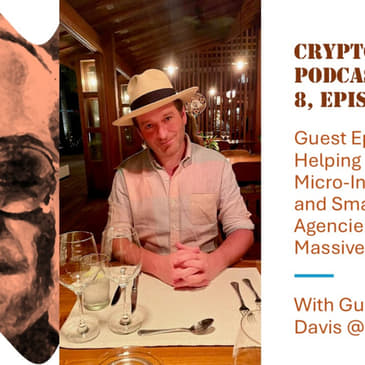

Ryan Davis is a digital pioneer and award-winning strategist at the intersection of politics, technology, and culture. Born on Maryland’s Eastern Shore in 1982, he’s been online since the dial-up era—launching a teen e-zine, organizing gaming nights, and volunteering for John McCain—all before finishing high school.
He moved to NYC in 2000 to study theatre and political communications, working in both off-Broadway theatre and grassroots politics. In 2003, he joined Howard Dean’s groundbreaking digital team, producing for Blog for America and organizing in 36 states.
Since then, Ryan has led digital strategy for campaigns (Mark Green, Norman Siegel), advocacy groups, and startups. At Blue State Digital, he helped shape strategy for Obama 2012, Microsoft, and the marriage equality movement, co-founding the award-winning campaign The Four 2012.
He co-founded Bushwick Digital in 2014, partnering with Alicia Keys on criminal justice reform, and in 2019, launched People First, the first influencer marketing firm in Democratic politics. The agency has since won top Reed and Pollie Awards and led major campaigns in the 2020 election and COVID vaccine rollout.
Outside of work, Ryan co-hosts Out of Office: A Travel Podcast and the Influencer Impact podcast. He publishes The Month in Digital newsletter and splits his time between Latin America and Europe. He serves as Board Chair of MJV and advises ag-tech startup Calyx, bringing his strategic mind and love of storytelling to every project.
[00:00:03] Hello, everybody, and welcome to the Crypto Hipster Podcast. This is your host, Jamil Hasan, the Crypto Hipster, where I interview founders, entrepreneurs, executives, thought leaders, amazing people all throughout the world of crypto and blockchain. And today, I have another amazing guest. He is co-founder at People First. His name is Ryan Davis. Ryan, welcome to the show. Hey, thanks for having me.
[00:00:28] You're very welcome. Very welcome. So let's kick things off, and I'll start first with the first question I ask everybody, but I get amazing answers from everybody, so I keep asking it. What is your background, and is it a logical background for what you're doing now?
[00:00:44] Yeah, I really like this as a first question. My background originally was in theater, and I studied theater direction, and then I got involved in politics, and then I got involved in marketing technology. So it wasn't really a straightforward path, but there are logical things that happen throughout each part of it that kind of make it make sense ultimately.
[00:01:13] So, yeah. So how does somebody go from theater to crypto? So I go into, you know, I'm in New York. It's 2003, and I'm in theater, and the Warner Rock is happening, and it really pisses me off. And so I decide to go work for this guy, Howard Dean, who's running for president, and I know a lot about the internet.
[00:01:36] So I show up, and they put me on the organizing team, and all of a sudden, I'm, you know, I'm on MySpace, and I'm on meetup.com, and I'm going around the country, and I'm organizing. And so I learned this whole skill set of sort of political marketing that then I could, I brought back into my career and started making more money doing that than theater. Yeah, that makes sense. Howard Dean, I remember him when he ran for office. Yeah. Yeah.
[00:02:04] Very cool. So I'll find out, you know, what People First is all about, including your vision and your mission. Yeah, so People First, we started about five years ago, we noticed that there wasn't a company that was focused on influencers in politics. And, you know, to us, it was really a no brainer. The influencers were doing, you know, amazing stuff in all sorts of other spaces, you know, including in the Web3 space.
[00:02:29] And there wasn't anybody doing something in politics. So we started doing this in 2019. And, you know, we got to work in the 2020 campaign. And then all of a sudden, you know, the COVID pandemic happened. So we realized that, you know, the same strategies that we brought to the political communications of getting creators to be authentic and open and, you know, casting people who can really speak for specific communities would be really effective in public health.
[00:02:58] And so we started that work. And now five years in, we, you know, we've done everything from, you know, sell hamburgers for for White Castle to talk about the importance of crypto around the election cycle. There seems to me this year, this past year to have been a lot of influencers in politics. So how did that come about? Yeah, you're absolutely right. I mean, this was this was the year of influencer in politics.
[00:03:26] You know, I think a lot of credit goes to this young man named Barron Trump, who went to his dad and said, you know, this guy, Theo Vaughn, you know, these these guys in the in the bro sphere. And, you know, Trump didn't really know the story. And and Barron got him deeply engaged in the in the in that world. And I think, you know, the Democrats had a really sophisticated creator system as well.
[00:03:52] But Trump is a unique personality and I think was able to make use of creators and their platforms in a really effective way that now now Democrats are playing catch up. Yeah, it really transformed this past cycle. So I am interested in that. I'm also interested in you on your website. You have this this diagram. It's pretty cool looking, you know, but I want to walk through it.
[00:04:18] It's called the social media quadrant system. The social media quadrant. What is that all about? How does it all work? How do the quadrants work and come together? Yeah, well, I'm so glad you asked, because what I what we've been seeing is a real shift in social media. So for a long time, people were really focused on on broadcast. Right. People were you know, they were following their friends. They were building they were building large followings. But the real goal was how do I get a really big following?
[00:04:47] And then like what we've seen happen, though, over the last couple of years is two different types of social media networks that are really percolating. And these are broadcast versus community. So you think of something like X, right? That's that's a that's a broadcast platform. You can go in, you can go broad. You can talk to everybody. But you think of something like next door. You know, that's a very community focused thing. You're only talking to people in your neighborhood.
[00:05:14] You know, something like Snapchat, Snapchat. It's it's it's niche in the sense that it is very specifically for people in their like late teens and early 20s. So, you know, we're starting to see these these social media platforms really decentralized in an interesting way across across this quadrant, which I see as, you know, community and broadcast broad audience and niche audience. What are the what are the what are the benefits of each of each quarter?
[00:05:42] Like based on what you're trying to do, what's the benefit of being in each one? And how does people combine the strategies together? I mean, that's yeah, that's and that's like that's the exact question is it's like, so who is my audience? Like, who am I trying to reach if I'm trying to reach young men that I'm going to like, you know, look at this chart and say, OK, what are the social media platforms where, you know, men are having these having conversations?
[00:06:06] OK, they're on things like Discord, they're on things like Twitch, but they're also on this other side of the spectrum on the more traditional platforms like the YouTubes and the TikTok. So, you know, when you're building a strategy, you're understanding who your audience is, you're thinking about where that audience lives and you're going to play on those platforms. And you're going to have to play on a lot of platforms now. It's not just, you know, put up your Instagram and your and your Facebook and YouTube and call it a day. There's there's a whole world out there of these more niche platforms.
[00:06:37] Got it. So across these platforms, there's sentiment. Right. So how why does this and from what I've seen and experienced, a lot of the sentiment tends toward negativity. Right. So why is sentiment across social media channels tend toward negativity and how can we correct that?
[00:07:01] Yeah. Yeah. So, you know, there have been numerous studies that show that the emotions that tend to travel on social media, social networks, you know, with the most virality are things like anger. And, you know, most of these social platforms are built to reward engagement. And so when you get engagement, how do you get engagement?
[00:07:25] You either post something that that is angry and get people to go like, you know, F that or you get your post something sexy or, you know, but you do something that kind of like caters to people's sort of more base instincts. And I think, you know, anger is such an easy emotion to express. It doesn't you just doesn't need to be an articulate kind of anger. It can be more of just sort of like a rage. And and and and, you know, as long as social media platforms sort of reward that kind of content with,
[00:07:54] you know, a lot of engagement, a lot of shares, as long as people interact with it, it becomes a sort of a doom loop, right, where the algorithm is going to continue to defeat us that. So, you know, to answer your question, I mean, I always tell people that the solution is not like leaving, you know, if you don't like if you think Twitter is toxic, you know, leaving it is going to only make it more toxic, maybe stay and try to contribute something positive around whatever whatever issues you care about. All right. So that anger, I want to stay on, I want to stay, I want to stay on anger.
[00:08:24] Yeah. You know, that seeps into, you know, responsible decision making, like things like investing, you know, you know, how, how can, like, how can we prevent that anger from, you know, from invest, from our making our investment decisions? Because when I see the anger, a lot of people FOMO into investments or whatever, and they, you know,
[00:08:50] they miss out or they make the wrong decisions or quick decisions that cost them a lot of money. So how do we, how do we, you know, fuel out that, tune out that anger? Yeah, gosh. I mean, you know, that's a, that's a good question. I think, you know, people should try not to make decisions in emotional states. And, you know, the internet exists to put you in an emotional state to make you angry, to make you feel something.
[00:09:14] And so, you know, it's probably not the best, you know, it's probably not good to kind of be on social media, engaging with topics that really kind of, kind of get you going when you're trying to make, you know, big financial decisions.
[00:09:27] So like, you know, if you're, if you're a crypto trader, you know, maybe you should take your, your, have separate dashboards for, you know, your, your sort of your crypto and your, and your focus there that doesn't interfere with, you know, have the news and other things that are going to be, that are going to be triggering while you're trying to kind of just focus on the, the raw analysis.
[00:09:48] You know, I find this in my work too. Like I'll get distracted by a New York times article. I'll be pissed off for 15 minutes. And I find it like really hard to go back then to like my email, you know? Yeah. So that's one area. Another area that the anger is really rampant and it's a lot, it's a lot, I think it's a lot fiercer than crypto is politics. Yeah. You know, I, I believe we, how do we make a collaborative society and not one where everybody's fighting with each other?
[00:10:19] You know, I, I would, I would love to see a more collaborative society, you know, back in the day when, in the early era of social media, you know, in the early 2000s, mid 2000s, there was this idea that us all interacting and seeing each other and, and, and sort of, we would become humanized and, and we would start to see each, see how similar we all were.
[00:10:40] And, and, you know, that happened to some extent, but I think that because of some of the things we're talking about here, because of how the algorithms tend to reward anger and tend to reward negative sentiment that even if, even if we are trying to rise to our best natures online and in, in politics and in life you know, there are, there are forces out there that are, that are pushing these, these, this negative sentiment and, and, you know, are bad actors.
[00:11:05] And those bad actors are domestic, you know, like bad people and, and, and bad actors here, but also like, obviously like foreign actors who are with bots and other things that are kind of, you know, the whole goal is to kind of drive the American people apart and polarize us. You said, you said, you said a key word there and it's three letter word. It's bot. So yeah. AI agents.
[00:11:29] What's the, what, what do you see as an AI agents role of keeping us each individually in check as far as not being angry, as far as being Zen or as far as making smart, you know, rational decisions? What do you think the role of AI agents are going forward in these platforms? I think that AI agents can actually play a really positive role and in, in, in content moderation and, and, and, and kind of cooling down, you know, some of these platforms.
[00:11:55] But, you know, I don't think see that is the direction that these platforms are going right now. Right. Like, you know, instead what we are seeing for better or for worse is a move to the more community moderated policy, which I think is interesting. I'm not like somebody who thinks that the community notes are a total failure on X. I think they're interesting.
[00:12:14] Um, uh, I think they should be supplemented by like, uh, you know, professional fact checkers, but it, it, uh, it does seem to me though, that these networks are moving away from, from this sort of, the sort of things that would bring the temperature down. Got it. So the major networks are moving away. Yeah. And that doesn't necessarily have to impact the small creative agencies.
[00:12:38] So I want to find out what would be the secret or the art for successful, uh, for running a successful small creative agencies and how these agencies can best monetize their works. If it's not in, inclusive of this negative sentiment. Yeah. So, um, you know, I've started, I've, I've worked at, uh, agencies for a long time. I worked at, at blue state, a big agency that's part of the WPP family.
[00:13:05] I started an agency called, um, blue state digital with my friend, uh, chase. And it's a fantastic website and branding agency. I moved on from there to start people first. And, you know, we've grown from, um, you know, $0 in revenue. We did over 7 million last year. So, you know, it's been a, it's been a real growth, um, trajectory. And I think if you're looking to start your own agency, the first thing I would do is try to find a space that's a little bit open, um, and a niche that's available. So, you know, go specific.
[00:13:34] Uh, I think, you know, what we looked at with people first was, you know, we started really in that, in the politics that gave us like a really specific, um, you know, uh, uh, target, uh, customer that we were able to focus on. It was doable. It was, it was a market we could address with just, you know, my co-founder and I to kind of like begin to kind of build out that, that sales practice.
[00:13:55] And then we expanded from, we expanded from there, but, you know, the agencies that I see, the smaller agencies that I see doing well are focused on like a certain type of niche, like a type of business or a certain like type of creative, like, you know, TikTok series, or, you know, we're experts at experiential, uh, audio stuff. So it's like, you know, that's why we decided we're going to be the micro influencer folks. We're going to be the best at micro influence.
[00:14:22] So, you know, there's a lot of influencer agencies, but we're the best at getting you the precision, the folks that you're looking for, for your, for your campaigns. All right. That's a good, that's a good, um, term that I'm not too familiar. I mean, I've heard it, right? Micro influencing. What's the, what is it all about? What's the key to it? Yeah. So, so, you know, I like to think of influence as, as sort of a pyramid.
[00:14:48] So at the top, you've got, you know, the, the Joe Rogans and the, the Beyonce's, you know, the folks who have massive, massive followings. And then you've, below that, you've got sort of the thought leadership folks, like the, the Ben Shapiro on the right, or the, um, you know, the, the, the podcaster with a few million followers. These folks are, are definitely big, but they're not, you know, celebrities. Um, and then you've got sort of the mid-tier creators and these can be people with a couple hundred thousand followers.
[00:15:16] And they might be, you know, they might, uh, be experts at, uh, um, interior decorating, or they might be experts at car repair, right? They have like a specialty that people follow for that, that particular thing. And then you go down the list and you get to these micro creators and they have between two and 20,000 followers. And they might be teachers, nurses, firefighters, your neighbor. These are just regular folks.
[00:15:42] And we find their content to be the most powerful when we get, you know, when we get a, a single mom to talk about, you know, how a product has helped make her run her, uh, household, uh, more effectively. It made her life easier. And she's authentically telling that story. That's a, that's a much more powerful ad than if Britney Spears is like, this product really worked for me. It's like, you know, people look at Britney maybe aspirationally, but the people who are their peers, who look like they could be, uh, their brother or their sister, their community member.
[00:16:11] You know, those are the people we really take advice from. And that's, that's our whole model. And how do you, like, and how do you amplify their voices? So we amplify their voices through, through paid media. So what will happen is, you know, um, I'm at Ryan New York on Instagram. I post, um, we then take that content and we boost it directly to other 40 year old agency owners. So I can talk about, you know, whatever that product is.
[00:16:37] So we take that exact piece of content and we put it up against the exact audience. It's going to resonate with it. So, you know, single moms are seeing other single moms and, you know, um, uh, you know, we've done, we've done campaigns where we've shown, uh, content specifically to healthcare, uh, executives, uh, and, and, you know, about things they should be doing. So like, you know, really getting specific about who's seeing the content.
[00:17:03] God, it's, you're bringing those people from the bottom up to not the top tier, but like the middle, the middle tier. Right. It's like, let's not, let's not overly focus on how many followers they have organically. Let's focus on how powerful their content is, how, and how well they're going to connect with your, with your audience. Got it. So those people are able, you're able to, to take the voices of the change makers, harness them.
[00:17:32] And you're able to do things like, you know, monetize them of course, but what else is possible, um, because of that. So if, if we can get creators to, to, you know, do all sorts of actions, tell people to vote, to volunteer, um, to fundraise, to buy products, we can get them to go to events. We can, we can get them to appear on, uh, you know, we have a creator last night who was on television talking about, uh, something.
[00:17:57] So we see creators as ground up sort of, um, you know, ground up, uh, creative department and you can kind of put them everywhere. And the more modern the startup is, the more effective they're going to be at, at taking that creator content and decentralizing it and, and using it as sort of, uh, the foundation of their, um, their marketing efforts. Got it. So advocacy plays a greater role now in the web three area era than it ever did in web two. Oh, absolutely. Absolutely.
[00:18:27] I mean, the web three era is all about connectivity and, and, and, uh, you know, I think there's a lot of really interesting things in the creator community happening around web three. Some I think are, are interesting. So I think might not, might not work, but I think what, I think actually there's still a real growth opportunity in, in web three around creators. And, uh, I think you're going to see, you know, people experimenting with new things, uh, sort of, you know, in the, in the, in the years ahead. Got it.
[00:18:54] And so that's not, that's not just politics, but it's crypto, but it's, so in, in those areas of crypto, what do you, what do you see coming down? What do you see growing, you know, growing and coming down a pipe for the next year or so, or two years, or, you know, um, maybe five years because you started five years ago. Yeah. So I'm like, you know, a more casual crypto observer. So I can speak, I can speak as somebody who's bought some crypto who's, who's, you know, done advocacy work around crypto.
[00:19:20] Um, I think what's most interesting to me is, is the embrace of crypto by the establishment. So, you know, we, we, we now have the political situation and in major countries is very different. 10 years ago, uh, crypto was, was not something people really understood. And, and, you know, now here it is. And my mom has bought Bitcoin, you know, so we, we've really, we've really come up, we've come a long way.
[00:19:43] So I think like if the crypto industry should continue to figure out ways to, to make crypto more actionable and to, and to make it appear like, make it, uh, uh, more tactile and usable for folks, you know, like, like, like for more regular folks. And I think that's how you're going to see a lot more growth into, into the crypto community because it's grown quite a bit. I think the government coming in and beginning to sort of like accept it is definitely going
[00:20:12] to help, but to get more normies in, you're going to have to demonstrate more like sort of just kind of like value, you know, simple value. Got it. So that's something that has been politicized, right? Before when I entered the space of 2017, 2018, it wasn't politicized. It was us against the banks. And now it's, it's, you know, they're different. Like if I watch, if I watch ABC in the morning, they're saying, oh, Trump did this because of
[00:20:40] cryptocurrency, but we want to do this with cryptocurrency. I'm like under, under Biden again. So you didn't want to do anything with cryptocurrency. You know, how do you see the narrative? How do you see the narrative shifting? Why is it shifting? So all of a sudden, you know? Well, I mean, I think that has a lot to do with, you know, Donald Trump's personal crypto projects. Right. Like, I think, I think there are two, there are two different categories. There's like, what is the government going to do with crypto regulation?
[00:21:08] And I think like most people like Democrats, Republicans, independents think there should be common sense. Like, you know, I believe in the crypto industry. I'm a Democrat. I want it to grow. I want it to make sense and to add value to people's lives and to make people money. But I think what Donald Trump is doing on the personal side with, with his coin projects are, you know, seen as open corruption by, by many. And, you know, and I, I'm pretty sympathetic to that argument. So that's what I think people are talking about on, on that side of things.
[00:21:37] So, you know, I know why Donald Trump likes crypto. I know why crypto people like Donald Trump. And those two things are not the same. I, I, I actually agree with you there. I didn't get it. I didn't get into the Trump coin in the first five minutes. So I didn't make, I'm not a billionaire because of it, but you know, there, there, there are opportunities. You didn't get invited to Mar-a-Lago? I didn't get invited to Mar-a-Lago. I didn't get invited to the dinner. I didn't get invited to anything.
[00:22:05] So, but I'm one of those micro influencers. So, you know, and, and keyword is micro. You're, you're most definitely an influencer. And, and, and, you know, I, I encourage people to think about influencers beyond social media, podcast, streaming, sub stack, you know, influence is who has an audience that listens to them, that trusts them. And, you know, that's a person who can unlock potential for your, your client or for your, your organization. So then I have a follow-up there.
[00:22:35] What's the best way to gain trust with your, with your audience and people who want to have be your audience? What do you, what's the, is there a recipe for gaining trust? Is there a recipe for gaining trust? That is a, that is a great question because, you know, you look, you look at the people who are trusted and they've done it in different ways. Some people have done it a more kind of old fashioned way where, you know, everything's very buttoned up, where everything's very sourced, where they're, you know, overly explaining
[00:23:03] everything maybe, but you, you know, the, the data is there and the sourcing is there and that's how they're getting their credibility. And then you've got on the other side, Joe Rogan, who is just so authentic that, you know, even if he's not saying something like, even if, even if aliens didn't build the pyramids and I think they probably didn't, you know, he's saying it in a way that is like authentic and, and, and believable. And I believe that he believes it. And so he's built trust with his audience that way.
[00:23:31] So, you know, I think the way we build trust with our audiences is, is to be honest and to be transparent and try to be, try to be who we are and, and, and to not come across as, you know, uh, big hypocrites. And, and, uh, I think that works kind of on both sides of the, of the, of the spectrum. So authenticity is key. Absolutely. Yeah. Yeah. Awesome. So, um, I want to thank you. Actually, do I want to do that? Yeah.
[00:24:01] Um, is there anything, is there anything I'm trying to think? Um, the only other thing I'd like to plug is my newsletter. I could. Yeah. Let's, let's talk about your newsletter. What's it all about? How does it work? Sure. So you mentioned the, um, the chart of the social media that's from my newsletter, the month and digital. And I published that on the first business day of every month. And it's basically everything that's happened in digital marketing over the last month across
[00:24:28] social that you need to know if you're a marketing director or a digital director. So it's free. I encourage folks to sign up and I hope you, uh, throw a link in the show notes. And what, and what some of the topics that you cover in that and how people enjoyed that? Oh, it's, you know, I go, I go in like, you know, if there's been changes to the TikTok algorithm, if there's new things you need to know about Instagram, if there was a study that came out that showed what email subject lines are getting open the most, uh, if there
[00:24:56] are a new study out that shows, you know, the, the optimal podcast length for downloads, you know? So I'm kind of like just trying to find all the, all the best practices and data so I can keep my team informed. And I've decided to sort of let everybody else stay informed too. So that, that I like that I really like cause you outrun the algorithms. Exactly. You got to keep up on the algorithms there. They nonstop. Awesome. So I want to thank you very much for your time today. This has been a wonderful conversation. I have one last question.
[00:25:24] It's how can people find out more information about you, about people first? How can they sign up for your newsletter? How can they become customers clients? How can they follow you? Anything like that? Yeah, definitely. So people first, you can find us at people first.cc. We work with a wide variety of startups and organizations doing influencer marketing. And you can find me on LinkedIn and the month in digital on Substack and I'll send you all the links. Awesome. Thank you very much for your time today. Yeah.
[00:25:54] Thanks so much for having me. It was a lot of fun. Thank you.