
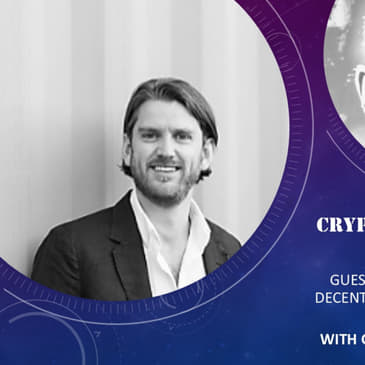

Brendan Playford is the co-founder of Masa, a leading innovator in decentralized AI and blockchain technology. With a dynamic background in the tech industry, Brendan has founded multiple successful ventures, including Constellation Labs, where he served as CEO, and Pngme, where he was the co-founder and CEO. He also held significant roles at The Bureau, a blockchain incubator, and DroneDeploy, where he led demand generation. Brendan’s journey into web3 began with a personal exploration of Bitcoin mining in 2013, which led him to recognize the transformative potential of decentralized technologies. He utilized his self-taught computer science skills and a Physics education from Berkeley to build a credit score platform for Africa, demonstrating his commitment to using technology for social good. At Masa, Brendan focuses on creating a decentralized data network that empowers users by compensating them for their data contributions while providing developers with private-by-default user data to build innovative applications. Masa's vision of an open and Fair AI ecosystem is making AI applications accessible and equitable to everyone.
About Masa
Masa is building the largest zero-knowledge user data network in the world. Masa is architecting the “decentralized Google'' for the AI era: A scalable, secure, and resilient global data marketplace, where billions of users get compensated by their data contribution, and millions of developers build innovative applications using private-by-default user data. Masa has amassed more than 1 million user wallets through exponential growth since launch in August 2022. It was incubated by Coinlist’s Seed Program and Binance’s Most-Valuable-Builder Accelerator.
Profile Links:
- Twitter: https://x.com/BrendanPlayford- LinkedIn: https://www.linkedin.com/in/brendanplayford/
[00:00:00] Hello everybody and welcome to the Crypto Hipster Podcast. This is your host, Jamil Hasan, the Crypto Hipster, where I interview founders, entrepreneurs, executives, thought leaders, amazing people all over the world of crypto and blockchain globally. And I have another amazing guest for you today. He is a technical co-founder at Masa. His name is Brendan Playford. Brendan, welcome to the show.
[00:00:28] Hey Jamil, great to see you today. Excited to talk to you about what we're doing and all things AI.
[00:00:35] I'm excited about it. I'm excited about the crypto and AI and what you guys are up to. And I want to kick things off and ask you the first question. And it's the same question I ask everybody, but I get amazing answers. What is your background and is it a logical background for what you're doing now?
[00:00:53] Yeah, I think it is. I think it's a circuitous pathway to where I am. Not very traditional, but I think that's also part of what gives a unique perspective.
[00:01:05] To give you a background, I class myself as a failed physicist. I studied physics at university, did maths and physics in London.
[00:01:14] Wanted to be a rocket scientist and here I am building distributed technology. And like, how do you go from that to here? I think it's kind of interesting.
[00:01:21] I discovered Bitcoin and other altcoins in 2013 when I was lurking in some IRC chats. I was a white hat hacker when I was younger.
[00:01:34] That's sort of how I got into computing, self-taught, then kind of did some coding like Visual Basic, Python and other things as part of my degree studying physics.
[00:01:44] But really, it was IRC chat in 2013 that really got me pulled into the space. I just saw a lot of excitement as Bitcoin was going from $50 to $1,100 at the time.
[00:01:59] I grew up in a very, very, very underserved part of the UK, a village of 50 people, low income. Nobody went to university.
[00:02:08] I went to university later in life. I went to university when I was in my mid-20s just because I couldn't afford to go initially.
[00:02:13] And it was the first time that I could see with an internet connection, a GPU or multiple GPUs and a computer that somebody from where I was from could access the scale of the world when it comes to a connected economy.
[00:02:32] And that connected economy was through Bitcoin. And from there start to build wealth without gates, without barriers.
[00:02:37] You know, like banking was gated. Stocks was gated. There was no Robin Hood. There was no easy on ramps to buying any of these assets.
[00:02:46] And simply if you grew up where I grew up or where billions of other people grew up in the world in many underserved countries that are far worse off than the UK, access to financial services just wasn't there.
[00:02:58] So I got my mining rig, started mining all coins, found that mining Bitcoin was out of reach. Mining Litecoin was bad.
[00:03:05] And I started mining a bunch of all coins and shit coins, one of which was was Doge.
[00:03:09] And I managed to mine some of the early blocks of Doge and made more income in those early blocks than I'd ever make in, you know, five, 10 years of income in my local area.
[00:03:20] And it just blew my mind enough to convince me that this was the future.
[00:03:26] And with my kind of, I think, naive understanding of finances and global economics, I could just see how this was going to level the playing field.
[00:03:35] I could see how it was going to give access to many people.
[00:03:38] And I decided there and then that I'd focus all of my time, energy and effort in building and growing myself in the space and contributing to the space as well.
[00:03:46] Led me to emigrate to the US in 2015, moved to San Francisco, Silicon Valley, and really build a career around tech.
[00:03:58] And through that career in tech, I've always focused on solving big problems that affect a lot of people, using data and extracting data from hard to reach sources.
[00:04:09] So as the data can be used by developers to build better machine learning models.
[00:04:14] Maybe that's a machine learning model that predicts the likelihood of default.
[00:04:18] If you're a individual in sub-Saharan Africa that can't access credit, maybe it's a bank that wants to understand the profile of their customers so they can offer better lending products.
[00:04:28] Maybe it's prediction algorithms so you can understand what assets are going to do what in certain markets.
[00:04:35] Maybe that's the crypto market.
[00:04:36] And that sort of led me to, over the last nine years in the space, really focus on building decentralized distributed systems that can scale to handle massive data sets.
[00:04:47] And that really brings you to today, which after all that, the logical thing that grows out of the last 10 years of work in data, work in machine learning is obviously AI.
[00:04:57] And we now live in a world where for every AI application, data for training foundation models is essentially composed of everything on the internet, scraped, structured, put together by a company called Scale AI that owns 80% of the market.
[00:05:13] And then sold to Meta, Anthropic, Open AI, the government, the list goes on.
[00:05:20] And it's all becoming very centralized.
[00:05:22] So, you know, three years ago, kind of took a look at the space and thought, well, in order for the world to not repeat the same mistakes it has with money, which is concentrating all of our money and power with banks and centralized financial institutions, centralized government banks like the Fed,
[00:05:41] we need to have another option, which is open source and accessible to everyone where we get to define the own parameters in which we interact with these systems that are truly going to change the world and redefine the way that humans interact in the world and the way that humans create value.
[00:06:01] And for me, the only thing that matters for the next 10 years is AI.
[00:06:07] And the only thing that matters for the next 10 years is making sure that AI is fair and is fairly accessible for everyone and is not concentrated in the hands of a small amount of powerful people.
[00:06:18] When you think about the fact that Open AI, sorry, when you think about the fact that Scale.ai provides 80% of the data for the biggest AI companies globally, including the government, that's a crazy monopoly.
[00:06:33] And I think a world where anyone has that much control is not a good one.
[00:06:39] I think I've talked to Scale.ai.
[00:06:42] I have to go back through my episodes.
[00:06:45] I think I did.
[00:06:47] They're huge.
[00:06:48] I mean, it's an amazing story, really, if you think about it, where they come from and where they are now.
[00:06:52] It's phenomenal.
[00:06:53] But 80% is a nice big target to take some market share.
[00:06:57] Oh, yeah.
[00:06:58] Yeah, I think you can.
[00:07:01] So you did say something really interesting because this company called Canary just filed for a Litecoin ETF today.
[00:07:11] But you said...
[00:07:11] Oh, wow.
[00:07:12] Yeah, you said you didn't mind a mine Litecoin because it was...
[00:07:15] I did, yeah.
[00:07:16] It was dirty, but you mined Doge and Doge and Litecoin are merged mined.
[00:07:21] They are now, yeah.
[00:07:23] At the time, they weren't.
[00:07:24] Yeah, they started off being script-mined individually.
[00:07:27] You had to pick one or the other.
[00:07:28] And then it reached a point in, I think, 2015 where capitulation was happening.
[00:07:35] And Doge, the Doge dev team or those maintaining the Doge, decided to merge mine with Litecoin to get the collective hash rate of Litecoin with Doge.
[00:07:45] But initially, you could mine it independently of Litecoin.
[00:07:49] Okay.
[00:07:50] All right.
[00:07:50] Got it.
[00:07:51] Yeah.
[00:07:52] Awesome.
[00:07:52] Yeah.
[00:07:53] I want to talk about Masa.
[00:07:56] What's it all about?
[00:07:57] How do you support AI developers as well?
[00:08:01] Yeah.
[00:08:02] So Masa is going to be decentralized scale AI.
[00:08:07] Focusing on like two areas.
[00:08:09] When you think of scale, you think of data labeling annotation.
[00:08:13] And you kind of forget there's a big data aggregation piece.
[00:08:17] We've worked really hard to create decentralized data aggregation.
[00:08:20] So what does that mean?
[00:08:22] It means that over the last two years, we've listened to hundreds of small, medium size, and tens of large enterprise.
[00:08:33] Like, I mean, really big enterprises as to what data are they looking for for building AI applications.
[00:08:42] Not talking about AI models here, just talking generally AI applications of which models are part of that.
[00:08:47] Agents are part of that.
[00:08:48] AI enabled experiences and apps are part of that.
[00:08:52] What data do they need to provide the best value to their end users?
[00:08:56] And we discover that it comes in a couple of categories.
[00:08:59] Social data, public web data, conversational data.
[00:09:04] This might be the chats that we're having in Discord, in Telegram, in forums, and then speech to text.
[00:09:11] The kind of content that we're producing right now.
[00:09:14] Like we've been on this call or this podcast for 13 minutes so far in our kind of time.
[00:09:19] And none of the information that we're discussing here is in any AI model right now.
[00:09:24] You can't go to Claude and say, what did we talk about today?
[00:09:27] What did Brendan and Jamil talk about today, right?
[00:09:30] In order to get this information into an agent today, you have to be able to acquire this data, transform this data,
[00:09:39] and put it into this thing called RAG, which is retrieval augmented generation.
[00:09:45] It's an overly complex way of saying the agent's memory.
[00:09:48] So in most AI applications, we're creating a memory bank or a library, as I like to call it,
[00:09:54] where we're essentially filing documents that are easily retrievable by the agent or by the model or by the application.
[00:10:03] So in the same way that we revise for an exam or we pull out a book to get context or we go to Google to understand the answer to our question,
[00:10:11] when we're talking to an agent, the agent can go off and do that from a fancy database, a vector database, essentially.
[00:10:19] And what we do and what we specialize in is the aggregation of data so it can be inserted into that memory as step one.
[00:10:28] That's what we've seen at Master is like our biggest, most valuable, as we call it, data product market fit,
[00:10:36] which is allowing any developer, regardless of technical skill, from an advanced data engineer to a front-end engineer who's hacking on his weekends
[00:10:47] or an engineer in sub-Saharan Africa that's building an app to kind of educate communities on healthcare and maths and science.
[00:10:56] We make the data that powers those apps available at very low cost through a decentralized network.
[00:11:04] And that decentralized network incentivizes individuals to run software nodes that facilitates the delivery of data in those dimensions,
[00:11:14] whether it's social, web, conversational, or speech-to-text like YouTube content, podcast content, so on and so forth.
[00:11:23] So the products these people are building have the best memory, have the highest knowledge, and can provide the best value to users.
[00:11:31] And that's where we're starting.
[00:11:32] There's more after that, but that's where we're starting.
[00:11:37] Sounds good.
[00:11:38] Yeah.
[00:11:38] What'll happen after you and I speak is someday, it won't be tomorrow, it'll go into Otter AI,
[00:11:47] and that'll generate the transcript of what we spoke about, right?
[00:11:51] Exactly.
[00:11:52] And then I will download what it transcribes from the visual, and I'll put that into Microsoft Word and edit it so it's readable.
[00:12:00] And then I'll create a book.
[00:12:03] It's what I've done.
[00:12:03] All of my episodes, I'm way behind in my first three seasons, but I've done almost season eight now.
[00:12:09] So I'm probably about five, ten years away.
[00:12:12] But, you know...
[00:12:13] Well, imagine this.
[00:12:15] Imagine that you can give all of those transcripts to an agent that is tasked with compiling them into the book for you.
[00:12:23] So you've almost got a ghostwritten or an author first draft that you can then skip the word bit and go straight to editing the book.
[00:12:32] Like, we're going to be there really soon.
[00:12:37] Awesome.
[00:12:37] Awesome.
[00:12:38] I look forward to that day.
[00:12:39] Let's go.
[00:12:42] So you said that you grew up in an underserved area of the UK.
[00:12:47] Yeah.
[00:12:48] Now, there are underserved...
[00:12:50] Of course, there are underserved areas all around the world, and some of those companies are looking forward to a central bank digital currency to help them be served, you know?
[00:13:01] Uh-huh.
[00:13:01] Some are not, obviously.
[00:13:02] In the U.S., they don't want CBDC, or some people don't.
[00:13:06] But the role of AI...
[00:13:08] The role of AI, you know, you said to create equitable and transparent systems.
[00:13:14] What is that?
[00:13:15] We're comparing it to Bitcoin.
[00:13:17] We're comparing it to CBDCs.
[00:13:18] What's the role of AI in creating those transparent and equitable?
[00:13:21] Yeah.
[00:13:23] Yeah.
[00:13:24] Yeah.
[00:13:24] Yeah.
[00:13:25] If we think about the way...
[00:13:27] And I'll give some examples.
[00:13:28] If we think about the way in which AI is way bigger than the Industrial Revolution was for humankind, if we see this as, like, the biggest uplift in productivity, both for human augmentation in terms of the way that we work and the way that the world operates, of our lifetime, if not our entire history,
[00:13:53] then there are two things that come out of that.
[00:13:55] One is you have a group of early adopters that now are moving so fast with their ability to execute and do things because they're being augmented by AI.
[00:14:07] Like, this can be really seen in using software solutions.
[00:14:11] Like, there's a product called Cursor, which you can use for doing development.
[00:14:17] I would say that two years ago, you could go from, as an engineer, an idea to proof of concept in a couple of days, let's say.
[00:14:27] Like, it depends on the complexity, but like a medium complexity idea, like a mobile app, in a few days, you can have these, like, two-day hackathons and get to something that you can test with users.
[00:14:37] That's now two hours with this kind of software solution.
[00:14:42] It's not perfect.
[00:14:43] There'll be people out there that say that, you know, they hallucinate.
[00:14:45] Yes, they do.
[00:14:46] There'll be people that say, you know, that you need to be a good engineer still to ship products.
[00:14:50] Yes, you do.
[00:14:51] You still need to be good.
[00:14:51] But what has fundamentally changed is that there are so many things that we as human beings have done and taken for granted over the last, you know, God knows how many years, especially in technology,
[00:15:03] that would take us a long time to execute on it.
[00:15:06] Even the act of typing, the bandwidth that we have going from thought to typing is very low.
[00:15:12] With AI, you can write something and then have AI expand what you've written from like 100 words into 300 words.
[00:15:19] That can happen in less time than it takes you to write a sentence.
[00:15:23] And you can then just focus on editing what's right.
[00:15:26] And you can remove the hallucinations.
[00:15:27] You can tune it.
[00:15:28] So we're in this world that's like got this incredible technology that makes not life just more easy, but it increases productivity exponentially.
[00:15:39] Now, if you have a group of people like living in a bubble in Silicon Valley, working in the crypto space like we are, working in AI, using this technology,
[00:15:49] you lose sight of the fact that there are other communities and other segments of the global population that don't have access to this.
[00:15:57] They're still doing the it takes two days to build a thing, not two hours.
[00:16:02] Now, immediately you've got like a complete misalignment in advantage.
[00:16:08] Those that are using it have a massive advantage.
[00:16:10] Those that aren't using it have a massive disadvantage.
[00:16:12] That's the same as me not having access to stocks and shares in 2013 and only having access to a basic savings account in the UK that was offering really crap interest because everything was destroyed post-financial crisis.
[00:16:27] And somebody could enter the stock market and ride a 10-year bull market.
[00:16:31] We're in the same place now is that the potential for massive inequality creation and the increase in wealth gap, because ultimately productivity equals wealth equals GDP.
[00:16:45] That's just the way it works.
[00:16:46] The more we can do, the more output we have, the more value we create, the higher value we put into society, the more value we get back.
[00:16:52] Like, if we're not careful, we're going to end up creating like a similar system here, which is why there is a massive opportunity for open source and decentralized AI to fundamentally offer this technology to people that otherwise are going to potentially be last in line.
[00:17:11] And we're already seeing this disparity kind of happen in those that do have access and those that don't.
[00:17:18] Same thing with the internet.
[00:17:19] People that have the internet had a massive advantage or have the internet in the late 90s.
[00:17:22] It's a massive advantage to people that suddenly got it in the 2000s.
[00:17:26] You're way ahead of the curve.
[00:17:27] And that's what we've got to really focus on, making sure that that doesn't happen here.
[00:17:36] I now have to bring up what I saw last night.
[00:17:40] I'm going to say, and I'm not going to name names, but there was a political candidate who was interested in saying, you know, to have blockchain opportunity, crypto opportunities for black men.
[00:17:52] Some people commented that that was a racist thing to say.
[00:17:56] But traditionally, some communities have been underserved.
[00:18:01] How does democratizing the data enhance global inclusivity, especially for those groups that have been underserved?
[00:18:13] Great question.
[00:18:15] So the top model today or top models are, you know, let's just say Anthropic and OpenAI.
[00:18:21] So ChapGPT4 and Anthropics Claude.
[00:18:24] Both of those cost 20 bucks a month.
[00:18:25] Now, that may not seem like a lot of money to us, but that's still a substantial amount of money.
[00:18:29] Any other models have limits and or are, once again, a disadvantage to those that you're using those more advanced models.
[00:18:36] Like the advanced models are significantly more advanced than the other set.
[00:18:41] And what I don't understand today is like we have like Meta's doing a pretty good job, although they have their own agenda at shipping open source models with open weights that have a really good accuracy that are as good as like these ones that we pay for.
[00:18:58] So today we live in a world where can you imagine getting a license for every kid in school at $20 a month?
[00:19:05] That just would never happen.
[00:19:07] So what I don't understand is why on the agenda of a lot of people today that are in the political sphere, there isn't this push to get some base level of AI access into every single school, for example.
[00:19:22] And like how can we extend that to every single school globally?
[00:19:25] So as every child, like most kids have phones at an early age now.
[00:19:29] Like, yes, there are safety concerns about what they can ask, but that's the same thing with Google.
[00:19:33] We've created methods of like understanding how we make education safe for kids and students.
[00:19:40] And it was the same thing for me.
[00:19:41] Like when I was young on the internet, when I was like 14, 15, 16 in the 90s, like I was looking up crap that I probably shouldn't look up.
[00:19:49] But I still had a huge amount of value that I got because I was brought up in a responsible household and I knew what being responsible was.
[00:19:58] So yeah, I think that there is this need for ensuring that every child gets access to this technology in the same way that like I learned so much from YouTube.
[00:20:08] Like a lot of my skills that I have today came from watching tutorials and videos on YouTube.
[00:20:15] I think that there is a lot of learning that I learned so much from YouTube.
[00:20:35] So I'm happy there's no social media back there.
[00:20:39] You know?
[00:20:40] Yeah.
[00:20:41] Yeah.
[00:20:42] So when we talk about AI, we want to talk about ethics and fairness, right?
[00:20:50] I don't know if fair AI means.
[00:20:52] I'm hoping you could tell me.
[00:20:54] But how does fair AI challenge the current data sharing landscape and what benefits will come from it?
[00:20:59] Yeah.
[00:21:00] So you asked a really good question, right?
[00:21:01] You asked a question before as well, which ties into this, which is how does data level this playing field and make access?
[00:21:07] Now, if we consider that a monopoly has access to the data that is training most of the models today, we can safely assume that's mispriced.
[00:21:17] How do we know that?
[00:21:18] Because when there's one provider selling the only product on the market, there is no competition to make that pricing effective.
[00:21:26] So if you've got 80% market share and you've got a monopoly, we're going to assume that because you're a corporation, that you're pricing it to your advantage.
[00:21:35] So we need competition.
[00:21:38] And by introducing competition with fair access to data, making it more available, making it less gated, in certain cases, giving it away for free and using token economic incentive models to facilitate the growth of these networks, we're introducing a second competitor.
[00:21:58] Now, what that does, it results in better price discovery in the market and a better pricing of goods.
[00:22:06] That's why it's important.
[00:22:11] Better pricing of goods.
[00:22:13] So you're changing the global macroeconomic landscape.
[00:22:18] I believe so.
[00:22:19] And why is that important?
[00:22:20] Every single model is trained on this data set.
[00:22:23] Every single model relies on these organizations to train their model.
[00:22:27] Now, that means that mauler, boutique, early stage startups, it's unlikely they're going to get access because the amount it's going to cost for them to kind of onboard these systems is going to be high.
[00:22:42] It's just the way the world works.
[00:22:44] Like we've seen it so many times in the way that new cycles start, the new technology comes.
[00:22:49] Starts off really expensive.
[00:22:50] Over time gets cheaper.
[00:22:51] This is a playing out and a rehashing of like the same process to bring a lowering of the what is the most fundamental.
[00:22:59] Like there are fundamental building blocks of AI.
[00:23:01] Data, compute.
[00:23:03] Compute is getting really well commoditized.
[00:23:04] Like we're getting to the point where compute is like becoming fairly priced because there's plenty of competitors.
[00:23:13] There isn't just one compute provider.
[00:23:15] We have GCP, we have AWS, we have IBM, we have Hertzner, we have all of these other smaller cloud providers that also compete.
[00:23:24] And then we have all the decentralized cloud.
[00:23:26] We have Akash, Render, all of these other ones that are bringing the same disruption.
[00:23:33] Currently, there isn't that in the data space.
[00:23:35] It is really controlled by a small number of large organizations.
[00:23:41] And in order to make the overall cost of our AI cheaper, we have to lower the cost of certain things.
[00:23:47] We have to lower the cost of GPU.
[00:23:49] We have to lower the cost of data center infrastructure.
[00:23:52] We have to lower the cost of data.
[00:23:55] And we have to lower the cost of energy.
[00:23:57] Those are the key ingredients to lowering.
[00:24:00] GPU is getting commoditized.
[00:24:01] Data centers coming like Broadwell or the other organizations that are doing infrastructure.
[00:24:05] But it's still probably 10 years away of getting a real reduction in like GPU or sorry, AI data center costs.
[00:24:13] Data, we're coming in and disrupting that.
[00:24:16] And there'll be more people that do it as well.
[00:24:17] The price of data is going to come down.
[00:24:20] And then energy, like that's, you know, we need to have an effective government to redefine energy policy to get energy costs down.
[00:24:27] And that's going to be the major bottleneck for AI over the next 20 years is energy, not anything else.
[00:24:34] So that's a good point.
[00:24:36] I didn't think about that.
[00:24:38] How to shift the energy policy.
[00:24:40] I know it's got to be done through Congress, but how do you get proponents on your side to want to transform energy policy in the U.S.
[00:24:49] and around the world?
[00:24:51] Wow, that's a crazy.
[00:24:53] I mean, that's a I was talking to a friend of mine who works a lot in sort of infrastructure, private equity investment.
[00:24:59] And he brought up this point and I'll give him credit for it.
[00:25:02] You know, the unfortunate fact is that the U.S. moves very slowly at infrastructure.
[00:25:12] And I don't have a good answer to that.
[00:25:15] It needs to have someone that's very motivated and able and willing to put their neck on the line for a really big investment for a change that's still going to take time.
[00:25:23] And they've got to be very forward thinking like you've got to be thinking 10 to 20 years, not four years.
[00:25:28] And the problem with politics today is, you know, people are thinking four years.
[00:25:31] They're not thinking 20 years, which is what they used to think.
[00:25:34] They used to think this is for the good of like the entire population, not for the good of myself.
[00:25:39] And that's the problem today.
[00:25:42] I think it's a human thing, not like a one thing.
[00:25:45] I think it's a yeah.
[00:25:46] Anyways, anyways.
[00:25:48] Yeah.
[00:25:49] Answer, Ali.
[00:25:50] It's true.
[00:25:50] You're getting my unfiltered view here.
[00:25:52] Yeah.
[00:25:53] True.
[00:25:54] You know, it's so true.
[00:25:55] Like, it's so true.
[00:25:57] So, yeah, like I think there are, you know, what could we see?
[00:26:00] Like, I mean, I used to think in the 2018 cycle that decentralized energy systems were the answer to this.
[00:26:07] Like, I really did believe that having micro grid power for these systems, you know, and where the world was going was smart.
[00:26:16] Like, an extension of what you see in solar.
[00:26:20] But it's very complicated.
[00:26:22] And that's even more slow moving than government, unfortunately, I think.
[00:26:26] And we'll see some decentralized micro grid stuff come up in like the deep in sector.
[00:26:32] But I think we've got to be mindful of, like, the complexity and the promise that that's like showing.
[00:26:37] But yeah.
[00:26:38] But yeah.
[00:26:38] Back to our question about what is fair AI.
[00:26:40] It is creating not just a fair product, but a fair economy on which an entire segment of the population can exist.
[00:26:48] I think I used to think that Bitcoin was just going to take over the world.
[00:26:51] Ethereum, new societies, new government organizations, new governance was going to be built on it.
[00:26:56] I understand now that that takes longer and is more slow moving.
[00:26:59] But there is a kind of like an out button for us today.
[00:27:02] Like, we can choose to use different infrastructure to do our financial savings, store of value.
[00:27:11] DeFi is like an amazing thing.
[00:27:13] We're going to have the same thing with AI where for a segment of the population, they can choose to use open source and they can choose to use Web3 AI,
[00:27:22] which in this case, I can guarantee you is going to be cheaper and more open and more available, more transparent, less censored, more open, more understood.
[00:27:33] All of these things, which we currently do not have and will not have as someone like OpenAI transitions from being a foundation to a corporation,
[00:27:43] which is what they're on the pathway to be doing, which is extremely problematic.
[00:27:50] Yeah.
[00:27:51] You know, you just made me think about something.
[00:27:54] I was at Litecoin Summit in July and I interviewed a couple of mining companies.
[00:28:00] One was Bitmain.
[00:28:01] One was, yeah, one was there in Spain.
[00:28:04] I forget the name of the company, but what they do is with their chips, with the mining chips, is they use, once they're done mining Litecoin and mining Bitcoin,
[00:28:15] they use the chips for AI down the line.
[00:28:18] And you mentioned that we need to transform GPU.
[00:28:21] We need to transform these, you know, these data centers, right?
[00:28:26] Like, how can the transformation in these chips help you accomplish that?
[00:28:34] Yeah, it's a good question.
[00:28:35] I think there's two ways.
[00:28:37] And like, we can look at the way in which mining power over the last, you know, 10 years has evolved.
[00:28:42] It started off as a home hobbyist pursuit.
[00:28:45] And if you go onto Reddit, onto, I think it's local llama Reddit, it will actually blow your mind.
[00:28:51] Like, there is an entire universe of people running open source GPU powered models in their home.
[00:29:01] Like, these are people that have invested, in some cases, like tens of thousands of dollars just to have their own, like, GPU model.
[00:29:07] In the same way that people were investing in GPU hardware like I was 2013-14, right the way through until Ethereum ultimately transitioned to proof of stake.
[00:29:17] Like, I think there's a lot of lessons that we can learn from this journey that we've observed in Web3 decentralized systems where a lot of the infrastructure that is used for building mining data centers, like in Texas, for example, or in the north of the US where hydroelectric is pretty, like, prevalent, or in countries that have low-cost nuclear, for example.
[00:29:44] There's a lot of, like, you know, co-location with power that is going to be the footprint of AI data centers.
[00:29:54] And when you think about the AI stack that I described, GPU compute, infrastructure, data, and then power, the sort of infrastructure, compute, and power come together hand in hand with the mining industry.
[00:30:14] So I do think with networks like Akash, with Render, and others, we're starting off by saying, okay, anyone can sort of make use of their available hardware.
[00:30:24] Like, a GPU that I have, I can contribute to the network.
[00:30:26] I can run in, like, a cloud compute environment and contribute to this network.
[00:30:33] But over time, as those networks build up users, which they inevitably are going to, they're going to attract users, they're going to compete more with, like, centralized providers.
[00:30:44] We're going to see the professional miners come in and probably transition to providing services for AI.
[00:30:50] We're already seeing this.
[00:30:53] Foundry, which is one of the biggest, like, organizations owned by DCG that has done Bitcoin mining for years, is now setting up H100s, A100s, and provisioning those to ecosystems like BitTensor, to mine on BitTensor subnets.
[00:31:14] And you've got, like, like, 19 run by Mog, who allow for inference that's run across 256 all-competing miners that are running models to provide a, right now, free open AI GPT-4-like service on BitTensor.
[00:31:36] The players that are running those miners are becoming really professionalized.
[00:31:42] They are, you know, thinking long-term about how they augment their existing data center infrastructure with this new paradigm that's coming through.
[00:31:56] I find it all fascinating.
[00:31:57] It is.
[00:31:59] You know, I want to, I want to not shift gears, but I want to ask a one, I guess if I have a couple follow-up questions.
[00:32:09] One is this, one of the things that I do is, I'm not a good trader.
[00:32:14] You know, if I was a good trader, I'd make millions off meme coins.
[00:32:17] I'm not that, you know, but how can people, you know, use MASA to revolutionize crypto trading and then inferencing and modeling?
[00:32:25] Yeah, it's a great question.
[00:32:27] So I think that one of the most interesting use cases that we've seen voracious early adoption on from our customers and our users has been tapping into sentiment and a trend at or before its inflection point.
[00:32:50] So what do I mean there?
[00:32:52] And the irony of building these systems is the inflection point actually comes sooner.
[00:32:56] So like, this is a very interesting like problem and a very interesting outcome.
[00:33:01] There is always a period of accumulation of an asset before it marks up in price.
[00:33:07] That is when the pre-hype phase happens and those that see the potential buy into the asset.
[00:33:15] A really good example of this consolidation or period is the beginning of every chart that you see of any asset that lists the ghost anywhere.
[00:33:25] Being able to pick up signal in that phase from social posts, social indicators from people that are typically picked up on these things in the past.
[00:33:36] So what AI is very good at and what MASA is very good at is taking a huge amount of information, like all of the tweets, all of the information that's on Twitter.
[00:33:46] Like when you go onto Twitter or X, you're just overwhelmed by the amount of information.
[00:33:52] So how do you sort and pass that and bring clarity to that information?
[00:33:58] Well, you pull and you scrape in and you aggregate all that data through MASA as a developer engineer.
[00:34:05] You filter and sort it and then you do some machine learning and or feed it into a model.
[00:34:11] So as the model is able to be an extension of your cognitive ability, take the information you're feeding into it, distill it down and then repeat it back to you in a way that's easy to consume, easy to digest.
[00:34:30] And that's where in the context of, I think for traders or DGENs or people even like in the VC or macro market space, in order for you to be able to absorb a large amount of volume,
[00:34:48] there is nothing like machine learning and AI to firstly determine and isolate the data that has a high signal to outcome ratio and exclude the signal to noise.
[00:35:03] Like the noise from the actual kind of signal can be done quite effectively.
[00:35:08] I'll give you an example.
[00:35:09] Like there's plenty of agent projects or agents on the MASA protocol that are consuming data from various sources, maybe social sentiment from Twitter, price data from CoinMarketCap using our kind of scraper infrastructure,
[00:35:31] conversational interactions from DGEN channels and Discord, and then podcast trends, for example, from speech to text, bringing together all of that data and then creating a signal from that.
[00:35:47] And then isolating and highlighting some of the indicators that happen very early in these trends before the acceleration happens of adoption.
[00:35:56] So really kind of where an analyst or a very sophisticated investor would sift through all the information.
[00:36:05] Imagine having that as your AI agent where all of that sifting and sorting is being done for you.
[00:36:12] And you can then make an informed decision based on this sort of concise, consolidated stream of clarity that is coming from the model.
[00:36:22] And that's where I think it's has huge impact.
[00:36:24] And if you think about this, not just applying to trading, but any field where in today's age, there's like a lot of data flow.
[00:36:34] There is a rub to this, which is how do you trust the data and how do you ensure the data is true?
[00:36:39] And that's another big problem entirely from like a misinformation perspective.
[00:36:47] Interesting.
[00:36:48] Interesting.
[00:36:51] I could see where that would help.
[00:36:53] I could definitely see where last year.
[00:36:56] And you can see what's going to happen here is to get more competitive.
[00:36:58] As these systems get built and shipped, you're going to have more competition.
[00:37:02] So you can see why AI forces everything to move faster because this is going to force that phase of discovery of an asset before it maybe gets marked up or adopted to shorten because people are going to have access to the information earlier.
[00:37:21] It's really fascinating.
[00:37:22] Like the, the acceleration effects of AI on everything is just going to be crazy.
[00:37:26] We're all going to feel it a lot over the next like five, 10 years.
[00:37:29] We should be feeling it now.
[00:37:31] Probably I'll feel it.
[00:37:31] I'm feeling it now.
[00:37:34] I'm starting to feel it now.
[00:37:36] Yeah.
[00:37:37] Yeah.
[00:37:38] Yeah.
[00:37:38] It's fascinating.
[00:37:40] So awesome.
[00:37:41] Yeah.
[00:37:42] So this has been great.
[00:37:44] I love talking to you.
[00:37:45] This is wonderful.
[00:37:46] I thank you very much for your time today.
[00:37:48] I have one final question.
[00:37:50] Probably easiest one.
[00:37:53] How can people find out more information about Masa, about you?
[00:37:56] How can they, you know, research you guys, do more, learn more?
[00:38:00] How can you do that?
[00:38:01] Yeah.
[00:38:02] Trust me.
[00:38:02] Beyond this, people probably aren't that interested in finding out more about me.
[00:38:08] But what we're building is what's really important.
[00:38:10] So easiest ways to get involved is jump into our Discord.
[00:38:13] So come onto our website, jump into Discord.
[00:38:16] There are many, many ways you can get involved.
[00:38:19] You know, you can run software.
[00:38:21] You can build applications.
[00:38:22] You can contribute.
[00:38:24] This should be a place where anyone can offer their opinion and view.
[00:38:27] Like we're trying to create a very open, collaborative environment where we have these like improvement proposals, like Ethereum has done for a while, where if you have an idea or you think that there's something of value that can be brought into this world, you can come and contribute those ideas.
[00:38:43] So don't feel like there's a barrier.
[00:38:45] Just your thoughts and ideas and innovation.
[00:38:48] And I'm going to say constructive criticism is really important.
[00:38:53] It's what makes products like ours better is when we hear feedback from the end users.
[00:38:59] And then developers.
[00:39:00] You can jump straight into our dev docs.
[00:39:02] There's a whole load of resources.
[00:39:04] Constantly getting updated.
[00:39:05] We're shipping really quickly.
[00:39:07] And you can find out more on our dev docs on our website.
[00:39:09] So they're the best places.
[00:39:10] And you can probably talk to me and Discord and other members of the team.
[00:39:13] Very active there right now.
[00:39:14] Or you can go to our Twitter at GetMassify.
[00:39:18] And you can follow us there.
[00:39:19] We have a lot of information always coming out there.
[00:39:21] But Discord is where we really engage and speak to each other, speak to people directly.
[00:39:26] And you'll be able to get hold of us directly.
[00:39:29] Awesome.
[00:39:29] Thank you very much for your time today.
[00:39:32] Awesome.
[00:39:32] Thank you so much.