
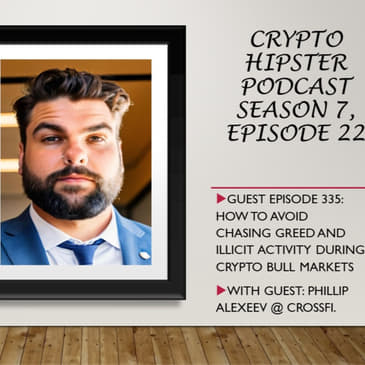

Phillip Alexeev, is Chief Growth Officer at CrossFi. Phillip is a seasoned growth marketer and investor with over a decade of experience in the startup world, with successful exits in emerging industries like 3D printing and virtual reality. Prior to his current role, he served as the Head of Growth at Binance, focusing on special DeFi projects. Phillip's strategic acumen has significantly contributed to the growth of notable Web3 projects such as Coinlist and Decentraland.
[00:00:00] Hello everybody and welcome to the Crypto Hipster podcast. This is your host Jamil Hasan the crypto hipster
[00:00:06] Where I bring you entrepreneurs founders executives co-founders thought leaders you name it
[00:00:12] All over the world of crypto and blockchain and today I have another amazing guest
[00:00:19] And he is I'm excited about this interview
[00:00:22] He is in growth in the growth area of CrossFi his name is Philip Alexi
[00:00:29] Philip welcome to the show
[00:00:31] Thanks for having me really excited to be here. You're very welcome. Very welcome
[00:00:37] So let's kick things off and ask you first
[00:00:39] What is your background and is it a logical background for what you're doing now?
[00:00:44] Yeah, for sure. So I guess throughout my whole career
[00:00:48] I really you know when people ask me what I do I tell them I do growth for emerging industries
[00:00:54] Right. And so my whole career has really been focused on
[00:00:59] What are the new technologies?
[00:01:02] How are they impacting folks and what can I do to really help those?
[00:01:06] You know proliferate into society and become game changers
[00:01:10] And so right out of college basically started a digital marketing agency right around the time that that Twitter was actually launched
[00:01:17] And so, you know very early to that game
[00:01:20] Scaled the company up to about 30 people worldwide. So I was doing the whole distributed work before before it became cool
[00:01:28] And then basically ever since then I've kind of been you know, looking at what are the trends that are emerging?
[00:01:36] You know and and how can I sort of align myself with companies that are that are changing the game?
[00:01:40] so, you know, I've run the gamut from everything from 3d printing to augmented reality virtual reality to
[00:01:48] Crypto and and sort of so on and so forth. And so basically, you know where I got my start in crypto is actually working
[00:01:56] with a company called sketch fab which is in the AR VR space and they got acquired by Epic Games, so
[00:02:04] There's really great opportunity to kind of from zero to a thousand
[00:02:09] So to speak kind of watch the growth of of that whole industry and how it evolved and sort of all the key players
[00:02:15] In it, you know sort of aligning to to create an industry that I would say is is pretty commonplace today
[00:02:22] And you know, everybody's got a VR headset laying around somewhere whether they're using it or not using it
[00:02:27] But but I watched that industry evolve from you know from the Google Cardboard right the first
[00:02:32] Most people might not even know what I'm talking about
[00:02:35] But it was literally a cardboard headset that you would stick your phone into and it let you kind of like have the first
[00:02:41] VR experience
[00:02:43] And so when I was working at sketch fab
[00:02:46] Got just really interested and you know started hearing a lot about
[00:02:50] Ethereum Bitcoin and and you know, just kind of like that whole ecosystem. So
[00:02:55] Started doing a lot of research and figuring out what is this stuff all about?
[00:02:59] You know, how is it actually impacting the world? You know, how is it? How is it gonna be a game changer?
[00:03:05] I would that's the first thing I ask myself when I hear about new tech is is this gonna be a game changer?
[00:03:10] And how is this gonna be a game changer? So
[00:03:13] You know, I sort of caught the bug right early investor in Ethereum and Bitcoin kind of immersed myself in the ecosystem
[00:03:20] which actually led me to
[00:03:22] To work on a couple of really cool things. So
[00:03:25] worked very early consulting a company called the central and which some folks might have heard of and
[00:03:32] And that was really interesting to immerse myself really in kind of like the
[00:03:37] Intersection between AR VR and crypto and then from there I went on to work with a company called coin list
[00:03:44] Which basically led me down a series of projects to ultimately becoming
[00:03:49] The head of growth for special projects at a company called Binance
[00:03:53] which I'm sure some folks are are pretty familiar with and so, you know, I spent some time at Binance and
[00:04:01] You know, I think it was just a really interesting journey watching kind of DeFi as a whole evolve and you know being a major part
[00:04:08] And and sort of watching the growth of that industry and then after I left Binance
[00:04:14] You know, I was kind of thinking about well
[00:04:17] What is something that I can work on that?
[00:04:20] Aligns with my current ethos of you know, leaving the world a better place than when I entered it
[00:04:25] You know and I feel like a lot of people say that but I try to put my money where my mouth is and sort of
[00:04:31] Try to you know work on technologies that do actually enable that ethos
[00:04:35] And so I was actually one of the founding members of a company called SAS mining which does eco-friendly
[00:04:42] Bitcoin hosted mining and so effectively using renewable energy sources to mine Bitcoin for folks that
[00:04:50] Don't have the infrastructure to mine at home. Don't have the technical capacity to mine
[00:04:54] so, you know basically hosting Bitcoin miners for folks and so, you know that was really I would say my first foray into
[00:05:04] technologies that impact the
[00:05:07] civilization in a way that you know really improves the world so to speak and so, you know
[00:05:12] SAS mining is a carbon neutral mining technology when you talk about Bitcoin mining people always say
[00:05:18] Hey, you know it sucks for the environment and you know, I say okay cool
[00:05:22] But there are companies out there that are sort of changing that narrative
[00:05:26] And so yeah SAS mining is carbon neutral hoping to become carbon negative at a certain point
[00:05:32] but so worked with SAS mining for quite some time to launch some facilities and really build
[00:05:38] Build the business from the ground up, you know before there was ever any facilities and before we ever had any miners running
[00:05:44] It was really just a wait list of folks that were interested to to launch some miners in an eco-friendly way
[00:05:51] And we've managed to build that up to a facility in Wisconsin
[00:05:56] Running on hydropower as well as a facility in Paraguay. That's also running on hydropower
[00:06:01] And we were covered in you know, all kinds of big
[00:06:04] publications decrypts Forbes business insiders so on and so forth and
[00:06:09] So kind of moving from SAS mining, you know having felt like I had
[00:06:14] Completed my mission to really helping them establish a very solid
[00:06:17] Foundation and a customer acquisition engine and sort of how the rest of the business is gonna grow
[00:06:23] Started looking out for you know from my next project. What is what is the next thing that I'm going to be working on which
[00:06:29] ultimately now
[00:06:31] landed me at CrossFi and so aligned forces with CrossFi and started running growth here and
[00:06:38] really excited about the technology that they're working on and ultimately how it's gonna impact the world and you know hoping to
[00:06:45] Hoping to make it a part of my mission to make the world a better place through tech
[00:06:51] Sounds really cool. I
[00:06:54] Have to have a follow-up on that before I get into CrossFi
[00:06:57] Sure, because you work in finance and then finances the news this week
[00:07:05] Cz
[00:07:06] Former founder of finance got four four months. They're in print
[00:07:12] You know, what are your what are your thoughts on that? There's a lot of people who are upset
[00:07:16] You only got four months. I think it's too much, you know, I think you shouldn't have got anything, you know
[00:07:21] What are your like how are your thoughts and how that should have played out or will play out?
[00:07:27] Yeah for sure. I mean, you know, I think on many fronts
[00:07:32] It's a relatively complicated question, especially given my background especially given sort of me being privy to
[00:07:39] The world of crypto for you know
[00:07:41] The last six or so years and and you know, I think my personal opinion is that I
[00:07:47] Also agree. I don't think that anybody should have gotten jail time necessarily
[00:07:53] Especially somebody that's I wouldn't classify CZ as a criminal so to speak
[00:07:58] I it doesn't feel like it's it feels very symbolic, right? It feels like they needed to really
[00:08:06] Put a statement out there to really show the world that
[00:08:10] nobody's untouchable to show them that even the most powerful people in the world that
[00:08:15] Align with world leaders and sort of create, you know game-changing businesses are still subject to regulation
[00:08:21] And so I think you know with that sentencing they've definitely proven their point
[00:08:26] and I think people are definitely gonna think twice before they
[00:08:29] Yeah, kind of mess around with with government policies and regulations
[00:08:35] But I think ultimately
[00:08:36] You know where where I truly think it's unfair is that regulations were so unclear and it was all such a gray area
[00:08:45] You know up until even now right like I think there's a lot more clarity around regulations
[00:08:49] but I think it was such a gray area that anybody operating in the space was
[00:08:55] Sort of trying their best to build businesses that you know had a had a sustainable impact and and
[00:09:02] Sometimes yes, you know, like there were things that were done that were somewhat questionable
[00:09:07] But you know anybody building a business does things that are somewhat questionable the biggest businesses in the world
[00:09:12] You know Facebook Google Twitter like there
[00:09:15] There's a myriad of lawsuits and tales of crazy things that have gone on behind the scenes to help build the companies
[00:09:22] Into what they are today which are you know the darlings of the entire tech industry and so
[00:09:28] You know taking taking a businessman who?
[00:09:32] Just on all accounts seems like a like a decent guy and and you know from personal experience is a pretty decent guy and
[00:09:40] putting him behind bars I just
[00:09:42] It's definitely a way to send a message
[00:09:45] But I'm not sure if that was necessarily what was the appropriate course of action
[00:09:49] I think you know a heavy fine. I think setting some some regulatory standards
[00:09:55] I think setting a precedent of you know
[00:09:57] The fact that people will ultimately still pay the price for for kind of operating in a gray area
[00:10:03] But but putting somebody like that behind bars doesn't actually I think have any meaningful impact on
[00:10:10] Improving the world improving the crypto industry improving the finance industry
[00:10:15] I think you know and as compared to
[00:10:18] And I will take it there as compared to some of the things that have gone on and Tradfied and Wall Street man
[00:10:23] Like some of those people totally deserve to be in jail if they're putting somebody like CZ behind bars
[00:10:28] So you know I just I don't I don't necessarily agree with the sentence
[00:10:35] But I do see how it's basically a stepping stone to
[00:10:39] Clear regulations to more clarity around what is and isn't sort of legit
[00:10:45] And kosher in the world of crypto, and I think stemming out of this
[00:10:50] We as a whole as an industry are gonna get ultimately a lot more clarity around
[00:10:56] How we can operate and where we can operate and what we can and what we can't do so yeah
[00:11:01] Definitely definitely a complicated topic
[00:11:03] But you know I like you like many other people was super surprised to see somebody actually get jail time for
[00:11:11] For something like that
[00:11:13] Yeah, I would love to see you know cleaner regulations. That'd be great
[00:11:20] We know we're moving into so thank you
[00:11:24] Crossfire I want to talk about Crossfire. You know what is it all about and what makes you know?
[00:11:30] You a game-changing player with eliminating financial isolation globally
[00:11:36] Yeah for sure well
[00:11:38] I guess to start Crossfire is it's an ecosystem, and it's got multiple pillars
[00:11:44] I think you know foundationally. It's a layer one blockchain
[00:11:48] That was built to support scalable payment solutions
[00:11:52] aside from the blockchain obviously there's a whole suite of kind of your
[00:11:57] Standard DeFi apps you know that are that are very familiar to folks that are in the crypto space allowing you to kind of operate
[00:12:04] You know within the crypto ecosystem in an efficient way, but I think the most
[00:12:09] interesting and probably for me the most important
[00:12:12] Aspect of Crossfire is our flagship app which is basically an app that allows folks to
[00:12:20] non custodially
[00:12:22] Noncustodially transact with crypto through either physical or virtual cards at any point of sales terminal
[00:12:29] Throughout the entire world and so basically you know you can think of it as you have crypto in your metamask wallet
[00:12:36] You connect your metamask wallet to the Crossfire app you you know tell the Crossfire app
[00:12:41] This is how much of my crypto that you can access and then through Crossfire
[00:12:45] You generate either a virtual card or order a physical card that allows you to then directly spend your crypto
[00:12:52] anywhere that you can spend with a visa or a MasterCard or an Amex I
[00:13:00] Like it. You know I go to these
[00:13:03] My sons in Regatta's now racing and they have all kinds of merchandise there
[00:13:07] And I see I asked the guys if I could buy merchandise and they say oh, I take everything except Bitcoin
[00:13:11] I'm like you should
[00:13:14] So this sounds like a operative seems like a you know a way that they could do that so
[00:13:19] Absolutely, and and I think you know there's there are some solutions which are
[00:13:25] Which claim to be similar?
[00:13:26] But I think the the big differentiator between Crossfire and some of those other competitive solutions are
[00:13:32] Pretty much the entirety of the competition is custodial
[00:13:36] So you actually have to transfer your crypto over to somewhere almost like in an escrow account
[00:13:42] So you're no longer
[00:13:44] Responsible for your keys. You're no longer holding your crypto
[00:13:47] You're leaving it subject to whatever vulnerabilities these you know these platforms have then the other part of it is a
[00:13:55] lot of these competitors are basically using
[00:13:58] third party banking partners and so
[00:14:01] companies that have
[00:14:02] Relationships with banks that basically enable them to go through them to you know kind of facilitate transactions
[00:14:08] Whereas Crossfire actually has direct relationships with the banking industry. I think most importantly
[00:14:15] Crossfire works on the blockchain
[00:14:18] Everything is on the blockchain all payments all transactions everything is actually operating through smart contracts on the blockchain
[00:14:25] Which is another huge differentiator from from some of these other, you know potential competitors
[00:14:30] So I would say cross Crossfire is really, you know
[00:14:34] The main mission of it is bridging the gap between web 3 and traditional finance and becoming an alternative to
[00:14:42] basically traditional banking, right I
[00:14:45] Like it
[00:14:48] The other week I went to last weekend office past weekend and begun before I went to
[00:14:53] New York to buy a
[00:14:55] Present for my wife for her birthday and my crypto was in PayPal
[00:14:59] But PayPal on that on that day was not working
[00:15:03] You know surprise
[00:15:05] Eyes, but I had to pay with a credit card and then I took limit with PayPal was working
[00:15:10] Then I took the money put it in my bank and then paid the credit card, right?
[00:15:13] If I could remove all those steps and just pay directly that would be a huge benefit, you know
[00:15:20] Absolutely. It saves you time. It saves you fees. It saves you operational inefficiencies
[00:15:25] I mean
[00:15:25] There's so many steps that you need to take to be able to spend your crypto in the real world
[00:15:30] And you know, that's for us lucky enough to be in first world countries where you know
[00:15:35] We even have the convenience of having a bank account and then when you think about the majority of the world's population
[00:15:41] That's on bank like
[00:15:42] crypto truly serves as a banking solution for a lot of folks and the way that they
[00:15:48] Transact in their daily lives are through crypto wallets. And so being able to enable
[00:15:53] Some of those folks to truly be able to transact the way that we can transact in first world countries is you know
[00:16:00] I think a huge game changer for the industry and I think ultimately
[00:16:04] You know, there's there's a lot of demand for something like that
[00:16:09] Awesome. So
[00:16:12] I want to talk about your role is growth actually overall growth. I would talk about growth marketing all the overall
[00:16:18] You know what I hear that term a lot, right?
[00:16:22] What is it all about and how has it been effective in helping blockchain protocols?
[00:16:27] Yeah, absolutely so
[00:16:30] I'd like to you know kind of like
[00:16:33] I'll give an in a nutshell definition and then zoom a little bit deeper and then we can kind of go more granular. So
[00:16:39] So growth marketing ultimately is about taking companies and making them easier to do business with
[00:16:46] And so what does that truly mean?
[00:16:49] So, you know when you look at a company any company to me at least, you know
[00:16:54] In my mind I've given my decade plus of experience in growth marketing a company to me is a funnel
[00:16:59] It is the moment that somebody finds out about a technology
[00:17:03] To the point that somebody uses the technology to the point that somebody actually starts telling their friends about the technology
[00:17:10] And how it's been a game changer in their lives and why their friends should start using it
[00:17:14] And so, you know the way that I look at
[00:17:17] The funnel is just a series of touch points
[00:17:20] From you know, basically awareness all the way down to referral ultimately where a customer interacts with a company and
[00:17:26] tries to figure out a way to make a technology that sounds like it could work for them work for them and so
[00:17:34] You know what I do as a growth marketer is you know, I work with companies to
[00:17:38] First and foremost determine what are those touch points?
[00:17:42] And so what I do is I look at the funnel and I look at the business model
[00:17:48] And foremost determine what are those touch points?
[00:17:51] How are you spreading the word about your company?
[00:17:54] How are you interacting and presenting yourself to first time users?
[00:17:58] How are you onboarding users into your product?
[00:18:02] How are you enabling them to get a benefit out of your product?
[00:18:05] And then ultimately users that have gotten the benefit out of your product
[00:18:09] How are you then enabling them to then go out and spread the word and sort of create this recurring loop?
[00:18:15] And to you know, kind of how do you make that loop as efficient as possible and
[00:18:19] In growth marketing we have this term it's called the aha moment
[00:18:23] So it's the moment that a user realizes that they've gotten value out of a product
[00:18:29] And so as a growth marketer, you know one of my main jobs I would say is
[00:18:34] How do I get an unaware user to the aha moment as quickly and efficiently as possible
[00:18:40] While curating the best possible experience for them such that you know
[00:18:45] They basically derive pleasure out of it
[00:18:47] And so I would compare this almost to you know you're throwing a house party
[00:18:53] You go out into the street
[00:18:55] You're telling people hey giving out flyers
[00:18:57] I'm throwing a house party
[00:18:58] I'm throwing a house party
[00:19:00] You know people come to the house party
[00:19:03] They arrive at your door
[00:19:04] You open the door
[00:19:05] What does the room look like?
[00:19:07] Is it set up for a party?
[00:19:08] Are there disco balls?
[00:19:10] Are there lights?
[00:19:11] Is there music?
[00:19:12] Is there a DJ?
[00:19:12] Are there drinks?
[00:19:13] Or is it just an empty room that you know looks very you know gets people very skeptical
[00:19:20] And then you're basically taking folks by the hand and walking them through
[00:19:24] Giving them the tour of the house
[00:19:26] Showing them where all the things that they need are
[00:19:28] So they can be as comfortable as possible at this party
[00:19:31] Such that ultimately at the end of the night they say wow
[00:19:34] That was one of the best nights of my life
[00:19:36] I had such a great time
[00:19:38] Next time you're throwing a party I'm bringing all of my friends
[00:19:41] And so that you know kind of in a nutshell is growth marketing
[00:19:45] And ultimately you know growth marketing is an umbrella
[00:19:48] Truly works for any industry right
[00:19:50] Like I said I've operated in 3D printing
[00:19:53] I've operated in AR, VR and you know ultimately in the crypto space
[00:19:57] It's the same exact thing
[00:19:59] How do you make sure people are aware of the solution?
[00:20:01] How do you make sure people derive value from that solution as quickly as possible?
[00:20:06] And how do you enable people to then go out and spread the word about that solution
[00:20:09] And then get more folks into that growth loop?
[00:20:11] I like the party analogy I understand it now
[00:20:17] Thank you
[00:20:17] Yeah totally
[00:20:20] So I have a question about you know
[00:20:22] And I don't understand you
[00:20:23] I'm gonna ask you more you said you said we're gonna get into more granularity
[00:20:27] My next question is this
[00:20:28] Why should growth marketers avoid the low feeding fruit right?
[00:20:33] Of tapping into user greed during bull markets
[00:20:36] So what is the whole what is low feeding fruit?
[00:20:39] And why should you avoid using greed as a way to market?
[00:20:46] Yeah absolutely
[00:20:47] Well I guess the best way to answer that
[00:20:51] Is to sort of separate the crypto industry into two buckets right
[00:20:56] So I segment the crypto industry by
[00:20:58] Here's a company that is saying that they're building a solution for something
[00:21:04] But ultimately is just a it's just a cash grab
[00:21:07] How do you get people enticed to pump the price of a token
[00:21:10] And you know sort of get a quick win
[00:21:12] And then ultimately the technology never gets built
[00:21:14] Or it gets built in a half-assed way
[00:21:16] And ultimately doesn't deliver value
[00:21:19] Then you kind of have the other side of the coin
[00:21:21] Which is companies that are building real scalable technologies
[00:21:26] That are solving real problems
[00:21:28] That have applications in the real world
[00:21:31] That also then kind of you know they do have their native tokens
[00:21:34] That reflect the value of what those companies are bringing into the real world
[00:21:38] And so you know I would say first and foremost
[00:21:41] The you know the former kind of companies
[00:21:45] They're all low feeding fruit right
[00:21:47] Anybody that's building a company just to pump the price of a token
[00:21:51] And sort of you know walk away with investor dollars is you know
[00:21:56] I would say that's just not it's not a world that I'm just into operating in
[00:22:01] And you know I don't ever judge people for doing what they do
[00:22:04] And doing what they think is right
[00:22:06] But I think ultimately that's just like one way to operate
[00:22:09] And now the other way to operate is you know even some companies
[00:22:14] That are building legitimate products
[00:22:17] That are going to potentially revolutionize the way that things are done in the real world
[00:22:22] I think it's very easy especially in financial markets
[00:22:25] To capitalize on greed I think you know everybody wants to make a quick buck
[00:22:30] Everybody wants some sort of monetary reward you know companies
[00:22:34] Companies are trying to compete with decreasing attention spans
[00:22:38] By offering incentives for people to sign up
[00:22:41] And you know complete actions on their platform
[00:22:44] And sort of like stimulate engagement
[00:22:47] But ultimately and I've seen this play out
[00:22:49] In every industry I've ever been in over the last decade
[00:22:52] Operating from a place of stimulating and incentivizing greed
[00:22:58] Is never a sustainable business model
[00:23:01] The types of users and the types of customers that you bring onto your platforms
[00:23:05] By rewarding sort of greedy instincts are not the types of customers
[00:23:10] That are actually interested in your product
[00:23:12] They're not the types of customers that are going to stay around
[00:23:15] They're not the types of people that are going to bring value to an ecosystem
[00:23:19] They're really looking to serve themselves in the short term
[00:23:22] And ultimately are just not you know again there's it's one thing to pump your numbers
[00:23:29] And show exponential rocket ship growth
[00:23:32] And you know all of those things are great in the short term
[00:23:34] But I think if you are building a long-term sustainable business
[00:23:37] And trying to have real impact that's just not the type of community
[00:23:41] That's going to stick around in the product
[00:23:44] And so you know everything from as basic as just like massively incentivized referral engines
[00:23:52] To you know trying to give away tons of tokens for folks to come onto a platform
[00:23:59] To you know any of those types of tactics
[00:24:02] Like I would say you know they're applicable to some extent
[00:24:05] But really that's not the growth trajectory
[00:24:09] That a real long-term sustainable business is going to operate on
[00:24:13] And so you know there's been I think referral programs were just such a hot topic
[00:24:18] Like Dropbox and PayPal
[00:24:20] And like a lot of these companies grew through referrals
[00:24:23] But there's been a lot of research done ultimately on you know companies
[00:24:27] That have built a foundation on that
[00:24:29] And the types of users that are brought in through those channels
[00:24:32] Versus other channels
[00:24:33] And those are the users that tend to have the lowest lifetime values
[00:24:37] That don't tend to stick around for long periods of time
[00:24:40] And just ultimately aren't good contributors to the ecosystem
[00:24:43] They don't even really use the products ultimately
[00:24:45] They just come in get what they wanted and leave
[00:24:47] And so as a growth marketer
[00:24:49] Especially somebody who tries to think long-term
[00:24:52] And tries to think sustainable
[00:24:54] It's just not the approach that I usually tend to take
[00:24:57] And I think you know things like giveaways and air drops
[00:25:01] And incentivized referrals
[00:25:03] They all have their place as part of a you know sort of diversified marketing mix
[00:25:08] You know everything that's working is worth testing
[00:25:12] But I think ultimately relying on things like that
[00:25:15] Is the downfall of many businesses
[00:25:17] And ultimately unless there's another scalable predictable acquisition channel
[00:25:24] That you know powers a business
[00:25:26] It's just hard to build something long-term on that
[00:25:29] So that's why you know I personally tend to avoid leaning too heavily on things like that
[00:25:35] And I think companies that tend to follow that same philosophy
[00:25:38] Just tend to stick around a little bit longer and do better in the long run
[00:25:44] I agree with you 100%
[00:25:47] Yeah I used to work at AIG
[00:25:51] My first job there was I would partner with a database guy
[00:25:54] And built the reporting department
[00:25:57] And I would partner with the RFP team
[00:25:58] And we do RFP packages for clients to build sustainability
[00:26:02] So I get it
[00:26:05] So you know along with those first batch that you mentioned
[00:26:09] And I'm going to use the word meme
[00:26:12] Because some of them are you know
[00:26:15] There are additional negative associations
[00:26:18] Congress of crypto enabling illicit activity
[00:26:23] Senator Warren
[00:26:25] You know I would say that they've engaged in illicit activity
[00:26:28] By misleading the public
[00:26:29] But you know what's your definition of illicit activity?
[00:26:34] Yeah illicit activity it's you know again it's another gray area topic
[00:26:39] I feel like everybody's got a little bit of a different barometer
[00:26:42] Everything from being straight up illegal
[00:26:45] All the way down to something being slightly misleading
[00:26:49] You know and sort of either tricking or confusing folks
[00:26:52] But you know I look at illicit activity as something that I would stay away from
[00:26:58] And I think it's the same for everybody right?
[00:27:00] Like when you think about the word illicit
[00:27:03] Even people that are doing illegal things might not consider what they're doing illicit
[00:27:07] Maybe they sort of justify it to themselves and say hey you know
[00:27:11] This is what I need to do to get by and survive
[00:27:13] But you know the way that I think about illicit is
[00:27:17] Well first of all is it legal or illegal?
[00:27:19] If it's you know explicitly illegal definitely falls into the bucket of illicit
[00:27:24] But for me personally like is it misleading?
[00:27:27] Is it taking advantage of people?
[00:27:28] Is it tricking people into doing things?
[00:27:30] Is it you know consciously taking an action that might be looked down on by some folks
[00:27:39] To ultimately generate profit?
[00:27:41] And so you know there's a lot of conversation about crypto is enabling illegal activity
[00:27:50] And money laundering and just all of these horrible things
[00:27:54] But like if you really think about it
[00:27:57] Some of the biggest banks in the world have been flat out caught enabling money laundering
[00:28:04] Have been flat out caught enabling folks that are doing terrible things
[00:28:09] To put their money in these banks and sort of help them generate profits
[00:28:14] And move their money around in a way that sort of flies under the radar
[00:28:17] And so when somebody tells me crypto enables illicit activity
[00:28:23] You must not have done a lot of research on some of these big banks that you sort of blindly trust
[00:28:30] Then the other side is I mean look at cash
[00:28:33] Like cash has been used for such a long time for a multitude of reasons
[00:28:40] But you know some of the most illicit activity in the world is still operating on cash
[00:28:47] And so you know before you take a revolutionary technology
[00:28:51] That could really be a game changer and can be used for good
[00:28:54] And try to bucket it in with people that are doing bad things
[00:28:58] People will always do bad things with every technology that's available
[00:29:01] You know if you look at just the emergence of AI
[00:29:04] Look at what some folks are doing with AI these days
[00:29:07] And everybody's mind immediately goes to the doomsday scenario of
[00:29:11] Well this is going to be used for illicit activity
[00:29:13] Everything's going to be used for illicit activity
[00:29:16] Let's try to find a way to make the world a better place
[00:29:19] And make sure that there's good coming out of these technologies
[00:29:22] And actually creating good applications for them
[00:29:25] That's the way I feel
[00:29:28] I agree
[00:29:30] And I used to have a show called The X Factor
[00:29:34] It was a weekly show where it updated everybody on the news
[00:29:37] And there were so many politicians saying you know like illicit activity comments
[00:29:43] And I got mad I was like I have to stop this show
[00:29:46] Because I'm just coming out as an angry guy
[00:29:51] Absolutely
[00:29:52] And I'm like how many times has Bitcoin been
[00:29:56] Like they have the Bitcoin I haven't checked it in a year
[00:29:59] The Bitcoin death you know comments in the media
[00:30:02] A year ago I don't know how many is now
[00:30:04] You know but it's not dead
[00:30:09] Absolutely
[00:30:09] And I think you know anything sensational will get attention
[00:30:13] And people love attention
[00:30:15] So you know the more crazy sensationalist shit that people say
[00:30:19] The more people get stirred up and respond to it
[00:30:22] And all of a sudden now you've got engagement built up around that
[00:30:25] I look at that as illicit activity you know
[00:30:29] Anybody that's trying to stir up controversy
[00:30:31] By saying things that they know will get other people mad
[00:30:33] Like I stay away from that stuff
[00:30:36] Yeah no I do too now
[00:30:38] Yeah so we should stay away from that
[00:30:41] But we shouldn't stay away from you know embracing regulations right
[00:30:49] You know how should we partner with you know
[00:30:55] Some organizations to create regulations
[00:30:59] Or help guide them through regulations
[00:31:01] Or you know get on the right path for the creation of you know things
[00:31:08] Rules that work
[00:31:10] Yeah absolutely I mean again I think for me
[00:31:15] You can see now my patterns of thought
[00:31:17] Like I try to split things into buckets right
[00:31:20] So for me there's again two buckets of people
[00:31:23] Three buckets considering there's some people that are just so ignorant they don't care
[00:31:27] But then you have one bucket of folks that
[00:31:30] Are so against regulations and they're anarchists
[00:31:33] And they're gonna run into the fire with a spear
[00:31:36] And they hate governments and they cool you know I feel you
[00:31:40] But ultimately like that's a hard way to live life
[00:31:44] And ultimately I think like you know trying to
[00:31:47] Trying to go down that path is a path of most resistance
[00:31:52] With probably very little fruitfulness coming out of it
[00:31:57] Then there's the other camp that you know
[00:31:59] Will not touch something unless it has 100% clarity and certainty
[00:32:05] And they feel safe and they know that you know they're doing the right thing
[00:32:10] And you know just look at the cannabis industry
[00:32:13] There's people that as soon as it became legalized
[00:32:16] They spent their entire lives 55 years hating it
[00:32:19] It's the devil's drug
[00:32:21] And now all of a sudden they're like wow this is really helpful for my arthritis
[00:32:24] And I can sleep at night and oh my god I can't believe I've never had this in my life before
[00:32:29] And so you have those two camps of people
[00:32:32] That you know on one side people hate regulations and
[00:32:36] Ultimately what they end up with is
[00:32:39] They are not able to participate in creating those regulations
[00:32:44] Because regulations are coming down the pike regardless
[00:32:47] It doesn't matter how much you want to you know set everything on fire
[00:32:50] There's always gonna be governments
[00:32:53] There's always gonna be regulations
[00:32:55] And this is just the world of finance
[00:32:57] Wherever there's money there's attention
[00:32:58] And whenever there's attention there needs to be clarity around it
[00:33:02] And so by being so anti-regulatory
[00:33:05] You're basically eliminating yourself from the conversations
[00:33:09] When people are talking about well what should we do
[00:33:11] What's the right thing to do help me understand
[00:33:14] Help me immerse myself in this world
[00:33:16] So that I can actually take that back to the drawing board and say
[00:33:20] Well okay these regulations make sense
[00:33:22] And this might be a little bit too harsh
[00:33:24] And this is how we create a world in which everybody wins
[00:33:27] Crypto companies operate and then they pay taxes
[00:33:30] And then they stimulate the economy
[00:33:31] And then it's like a win-win situation
[00:33:35] And then there's the folks that are sort of like
[00:33:37] Crypto illicit activity illegal activity regulate everything
[00:33:41] Kill bitcoin it's dangerous for the world
[00:33:43] And it's like well you know that to me is also an unfruitful scenario
[00:33:48] Because you're creating a world in which you're not
[00:33:50] You're not gonna have progress
[00:33:52] You're really not evolving as a society
[00:33:54] And I think the goal of every human being and every civilization should be evolution
[00:34:00] Like how can we do something differently
[00:34:02] How can we do something better
[00:34:04] And unless you're playing the game
[00:34:07] And unless you're participating
[00:34:08] You're just gonna miss so many opportunities to improve lives
[00:34:11] And so again I think there's a beautiful middle ground in which
[00:34:16] You don't just roll over and just take what you're given
[00:34:20] From a regulatory perspective and expect governments and institutions
[00:34:25] To make the right decisions without your input
[00:34:27] But at the same time you're not just like fighting it every step of the way
[00:34:30] Because if you do like it's gonna come anyway
[00:34:33] And then it's gonna look way worse
[00:34:35] Because you had no chance to have your inputs on it
[00:34:38] And that's why I think like you know the crypto industry
[00:34:41] Really needs to align itself with the fact that regulations are coming
[00:34:45] You know things will change
[00:34:47] They're as part of a scaling and formalization process
[00:34:51] Of bringing crypto technology to society at scale
[00:34:54] We're gonna need some sort of guardrails
[00:34:56] We're gonna need some sort of restrictions right
[00:34:59] You can't just operate in a free-for-all world
[00:35:01] We all want to go dancing naked around a fire
[00:35:04] But it's just not the reality that we live in
[00:35:06] And so you know I think embracing regulations as part of something
[00:35:11] That helps adoption and helps scale is the way that I look at it
[00:35:15] And you know anytime there's some new proposed regulations
[00:35:20] I don't think oh shit here we go
[00:35:22] Here's the government trying to ruin the good thing
[00:35:24] I think you know there are people who might not
[00:35:28] Understand the technology as well as they should
[00:35:31] And I look at it as my job to help them understand
[00:35:34] To enable them to think better and think more clearly
[00:35:38] And potentially you know create a scenario where ultimately it's just better for everyone
[00:35:46] We're almost there you know
[00:35:48] We're almost back in
[00:35:49] Oh yeah but surely
[00:35:51] I want to say August 2021 where they had those senate hearings
[00:35:57] And we were this close like to a law or like
[00:36:02] It was held up by one Alabama senator right
[00:36:08] It's coming right
[00:36:10] So how do you how can we all achieve an inclusive mindset going forward?
[00:36:16] Exactly absolutely
[00:36:20] Yeah I hope so
[00:36:23] Fingers crossed all day every day
[00:36:26] Thank you I want to thank you very much for speaking with me today
[00:36:32] I have one last question
[00:36:34] It's probably the easiest one I'm going to ask you is this
[00:36:37] Is how can people find out more information about you about CrossFi?
[00:36:41] How can they start to use your products and services?
[00:36:43] How can they do that?
[00:36:45] Yeah absolutely so the website is CrossFi.org
[00:36:49] We've got links to all of our socials all of our products
[00:36:53] You can follow us on all of the you know social networks
[00:36:57] And join our telegram group and our discord group
[00:37:00] And you know really stay up to date with all the awesome things
[00:37:04] That we plan on launching throughout the rest of the year
[00:37:08] And you know you could find me as well on socials
[00:37:13] You know self-admittedly been pretty heads down sort of building
[00:37:17] And just trying to make things happen
[00:37:19] But yeah you can find me my moniker is billionaire
[00:37:23] You can find me all over the place under billionaire
[00:37:27] And yeah I think you know there's so much interesting stuff
[00:37:33] That is coming in the next few months years
[00:37:37] You know over the next decade
[00:37:39] I mean the world is going to be a completely different place
[00:37:41] And just excited to be a part of it
[00:37:43] And excited to help facilitate that
[00:37:48] Awesome thank you very much for your time today
[00:37:51] Absolutely thank you so much Jamil really appreciate that