
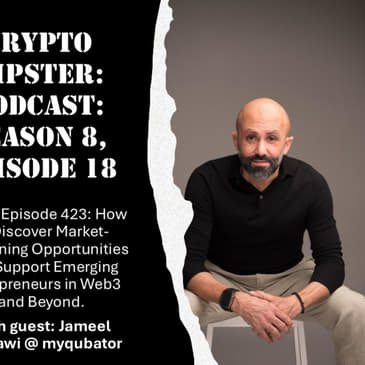

Jameel Qeblawi is Founder & Chief Architect at myqubator. Jameel is a visionary leader in the startup ecosystem with a proven track record of founding, scaling, and successfully exiting multiple businesses across diverse sectors. As the Founder and Chief
Architect of myqubator, Jameel specializes in nurturing early-stage ventures by providing strategic guidance, refining go-to-market strategies, and delivering market value. His extensive experience in ideation, development, and execution ensures that the startups he works with not only survive but thrive in competitive markets. Throughout his career, Jameel has built and led teams, developed
innovative solutions, and forged impactful partnerships that have redefined market boundaries. His entrepreneurial journey includes holding key positions such as CEO, Chairman, and Director across various
high-growth companies. Jameel consistently demonstrates an ability to balance data-driven insights with people-focused leadership, believing that while metrics and KPIs are essential, it is ultimately the
people—teams, stakeholders, and partners—who drive exceptional business results.
At myqubator, Jameel fosters an environment that encourages innovation, challenges the status quo, and champions honest dialogue. His emotionally intelligent leadership style, combined with a strong commitment to ethical business practices, creates the foundation for
unlocking the full potential of any business endeavor. His strength lies in combining visionary thinking with execution, blending market realities with innovative strategies, and empowering talented teams to deliver game-changing results. With a passion for identifying market-redefining opportunities and supporting emerging entrepreneurs, Jameel continues to invest in and
mentor promising startups, helping them navigate complex challenges and unlock their full potential. His ultimate goal is to make a meaningful impact on the lives of those he works with and, in turn, create lasting value in the global marketplace.
[00:00:02] [SPEAKER_01]: Hello everybody and welcome to the Crypto Hipster podcast. This is your host, Jamil Hasan, the Crypto Hipster, where I interview founders, entrepreneurs, executives, amazing people all throughout the world.
[00:00:15] [SPEAKER_01]: And today I have an amazing guest and I actually have for the first time somebody with my same first name spelled a little differently.
[00:00:22] [SPEAKER_01]: But yeah, I'm looking forward to this interview. I have the founder of my Qbator. His name is also Jamil. Jamil Qeblawi.
[00:00:32] [SPEAKER_01]: Hopefully I didn't butcher the last name, but he'll let me know. Jamil, welcome to the show.
[00:00:39] [SPEAKER_00]: Hi, Jamil. Thanks so much for having me on your podcast. I've actually been looking forward to this and a big shout out to listeners tuning in.
[00:00:48] [SPEAKER_00]: Whether you guys are here for the crypto or the startups or just to hear me try not to trip over my words, you're in for a fun and hopefully an informative ride.
[00:01:01] [SPEAKER_00]: So thank you very much for the introduction. Qeblawi is perfectly spelled or read out so please go ahead Jamil.
[00:01:10] [SPEAKER_01]: Thank you for joining me. It's an honor pleasure, have you here. So thank you.
[00:01:15] [SPEAKER_01]: So let's kick things off. I'll ask you the same question I asked everybody which is 420 some guests so far in County, you know, what is your background and is it a logical background for what you're doing now?
[00:01:31] [SPEAKER_00]: Well, let's put it this way for as long as I can remember Jamil, I've been an entrepreneur. I've launched a number of startups. I've spent most of my life here in the UAE.
[00:01:42] [SPEAKER_00]: I'm based in Dubai so I was born and I grew up here. But 25 years of my career has been in setting up startups.
[00:01:52] [SPEAKER_00]: I've worked across different industries advertising publishing facility management real estate and pharmaceutical somehow I ended up there.
[00:02:01] [SPEAKER_00]: Although there's no tie between them. I've found myself always intrigued by the tech related industry.
[00:02:16] [SPEAKER_00]: So I've always had a deep interest in technology. In a way you could say I've been around the block and through those experiences I've learned how significant the challenges are for any startup at early stage.
[00:02:30] [SPEAKER_00]: Whether it is trying to move from an idea to a realized market position or it's trying to grow from a point of market placement if you want.
[00:02:50] [SPEAKER_00]: And it's even more challenging in this part of the world. And the reason for it is because there's very limited support from both the ecosystem and the investor mindset that we live here.
[00:03:04] [SPEAKER_00]: So being a startup founder myself on so many occasions, I think gives me that clear advantage.
[00:03:10] [SPEAKER_00]: I know firsthand the struggles and the triumphs of what it takes. So when we built my cubator, I started developing the my cubator model.
[00:03:20] [SPEAKER_00]: I did a very extensive research. I looked at various models and approaches from US all the way to Sweden.
[00:03:28] [SPEAKER_00]: My goal was to improve the current models we have in our region.
[00:03:36] [SPEAKER_00]: I believe this is one of the advantages of my background. I don't come from the VC background. I don't come from the financial market background.
[00:03:46] [SPEAKER_00]: So the fact that I am a startup or I've been a startup on many occasions, it helps me identify and build an ecosystem that actually works for any startup.
[00:04:05] [SPEAKER_00]: So my cubator isn't just about providing capital or real estate space. It's about offering strategic guidance at critical stages and we leverage the right resources at the right time.
[00:04:21] [SPEAKER_00]: Having a hands on approach and if you want building on my personal experiences, we have built a very well crafted and curated team.
[00:04:37] [SPEAKER_00]: And with their background, with their expertise in the startup space, I think we'll build a very cohesive roadmap for all our startups going forward through my cubator.
[00:04:53] [SPEAKER_00]: So I hope this answers you.
[00:04:56] [SPEAKER_01]: It does. You have been a serial entrepreneur for a quarter century.
[00:05:01] [SPEAKER_01]: Right. So you have unique background in entrepreneurship and how has that shaped your unique approach to fostering startup success for your startups?
[00:05:14] [SPEAKER_00]: It's the hands on approach. It's really about how and what the startups do need in order for them to succeed.
[00:05:24] [SPEAKER_00]: And my cubator is all about that. We don't approach the startups from a one size fits all model.
[00:05:35] [SPEAKER_00]: And we have an objective to partner with our startups. So we become a founder in these businesses.
[00:05:47] [SPEAKER_00]: So their interests are our interests. And this alignment is very important, I think, in what we offer and what we give to the startups that you're working with.
[00:05:58] [SPEAKER_01]: Makes sense.
[00:06:00] [SPEAKER_01]: So I want to find so in order to be to be really unique and really driven, you have to have certain core principles that help others.
[00:06:11] [SPEAKER_01]: So I want to find out what core principles drive my cubator and how these differentiate you from other incubators in terms of both methodology and outcome.
[00:06:22] [SPEAKER_00]: Well, as I just said, it's my cubator is is in at the heart of my cubator. The idea that success isn't one size fits all.
[00:06:34] [SPEAKER_00]: So our approach is built on personalization and adaptability.
[00:06:40] [SPEAKER_00]: I think what sets us apart is how deeply we engage with the startups. We're not just offering them a program or a cohort or it's a, it's a timed frame, frame timing for the next stage of their of their existence.
[00:06:57] [SPEAKER_00]: We're designing with every startup right from day one, a bespoke solution, which is based on the startups unique needs.
[00:07:07] [SPEAKER_00]: The industry, their go to market strategy and the growth potential of this startup within that space that they're operating in.
[00:07:17] [SPEAKER_00]: So in a way it's about being hyper aware of where the startup is in its life cycle and tailoring our support according to that.
[00:07:27] [SPEAKER_00]: So we focus on fostering long term relationships so we don't just help startups survive their early years, we're helping them thrive and scale throughout their existence.
[00:07:39] [SPEAKER_00]: And this is a big part of my cubators dynamics and this is this is also part of the vision of my cubator. So after 18 months, a lot of people ask me also you exit in 18 months and the answer to that is not necessarily because it all depends on the startup
[00:07:58] [SPEAKER_00]: depends on where that startup is in its scale or it's in its journey. We might end up partnering or continuing our partnership with the startup for the next four or five years.
[00:08:12] [SPEAKER_00]: So it depends where the startup is and what it requires. We fit with them. So we don't have a checklist. We don't follow a checklist that a startup fits into our checklist.
[00:08:25] [SPEAKER_00]: It's how do we fit into the startups cycle.
[00:08:32] [SPEAKER_01]: Got it. So that's good. That's good. I like what I hear so far.
[00:08:37] [SPEAKER_01]: Good.
[00:08:38] [SPEAKER_01]: You have a promise out there or a target promise that 90% of your startup she bring will succeed.
[00:08:46] [SPEAKER_01]: And he also said that you don't have a cookie cutter approach and a lot if you see a lot of incubators they promote your cookie cutter approach where everybody you're not doing that.
[00:08:55] [SPEAKER_01]: You know what to find out how your tailored support system helps ensure that 95% or the 92% whatever the number is success rate for startups and what metrics or frameworks guide your process.
[00:09:11] [SPEAKER_00]: Well, thank you for asking that and I just want to clarify a small matter here.
[00:09:18] [SPEAKER_00]: We do claim that we have a 95% success rate and I emphasize the word claim because we're still proving our mother.
[00:09:26] [SPEAKER_00]: Okay, so we don't have enough track record or we don't have the track record to actually support this claim but
[00:09:35] [SPEAKER_00]: we say this with confidence and this confidence comes down to two key components in our mother.
[00:09:40] [SPEAKER_00]: Okay, we have an application filtration that we have designed and structured in a way that is
[00:09:52] [SPEAKER_00]: flexible but yet it's very systematic.
[00:09:57] [SPEAKER_00]: Okay, so our frustration system is built on a 100% unbiased model and we've integrated that into our ERP system which we've developed with partners from the Netherlands.
[00:10:11] [SPEAKER_00]: This filter is built in a way that a grading model already signifies the startups potential.
[00:10:21] [SPEAKER_00]: So as you go through this filter which is a fourth year filter system, you are graded as a startup again in a very specific approach and very structured approach
[00:10:37] [SPEAKER_00]: but it gives us a very good inclination or an understanding of what the true potential for the startup is on the long run.
[00:10:49] [SPEAKER_00]: So the startups we onboard must secure a passing threshold of 95% which means they're already strong candidates.
[00:10:58] [SPEAKER_00]: I like to say that everything that we offer through our network be it the mentorship, the networks, corporate structure, the go-to-market strategy, financial backing, whatever you can think of that we can offer to the startup contributes to the remaining 5%.
[00:11:17] [SPEAKER_00]: So what I'm trying to say is the startup standing alone as an idea, as a team, as the potential within the market has to have very high potential on its own.
[00:11:36] [SPEAKER_00]: Now our operating methodology tracks progress with clear measurable milestones at every stage.
[00:11:42] [SPEAKER_00]: So as we partner, as we bring in the startup, the startup has to work from our incubator within our ecosystem within our environment.
[00:11:50] [SPEAKER_00]: We are working with them at every stage.
[00:11:53] [SPEAKER_00]: So whether it's product development, it's market validation or the fundraising, we're part of that journey.
[00:12:00] [SPEAKER_00]: The key is to continuously monitor and pivot as necessary.
[00:12:04] [SPEAKER_00]: I think this is the best way to do it, is we're always proactive rather than reactive.
[00:12:12] [SPEAKER_00]: We have hands-on with the entrepreneurs.
[00:12:14] [SPEAKER_00]: So our ethos is to overcome challenges before they become roadblocks.
[00:12:19] [SPEAKER_00]: So we're monitoring these developments and these developments, and we address them as and when they happen.
[00:12:28] [SPEAKER_00]: In our ecosystem, if you want, there's two components to our partnership with every startup.
[00:12:39] [SPEAKER_00]: One is myCubator offering all the services that a startup requires at a very early stage.
[00:12:48] [SPEAKER_00]: The other is an LP, which is the fund that we are establishing in Abu Dhabi,
[00:12:56] [SPEAKER_00]: allowing us to draw down capital for investment in the startup.
[00:13:01] [SPEAKER_00]: Now what this does is we do have the capital captive and we do have the support captive.
[00:13:09] [SPEAKER_00]: Therefore our interest here is to ensure that the startup is getting what it needs to succeed.
[00:13:15] [SPEAKER_00]: But what we're also confirming is that we are offering our investors the monitoring of the process to ensure that these startups do not stray off
[00:13:29] [SPEAKER_00]: and ensure that they stay on track to reach the goals that we have set out to do.
[00:13:35] [SPEAKER_00]: Again, protecting the interests of our investors and basically the funds that we're managing through ADGM fund.
[00:13:47] [SPEAKER_01]: Okay. I like it.
[00:13:51] [SPEAKER_01]: I like how you have the startups grow, you grow, they tap into your network.
[00:13:59] [SPEAKER_01]: You go through a filtration system to see if it's an industry outside of your expertise or outside of your network.
[00:14:09] [SPEAKER_01]: If they would fail your filtering in the first place or if you try to take them on, how you would grow in an area that you're not comfortable growing
[00:14:20] [SPEAKER_01]: and then what your specialties are as well.
[00:14:25] [SPEAKER_00]: Very good question, Jamil.
[00:14:27] [SPEAKER_00]: And I would like to address that very quickly.
[00:14:31] [SPEAKER_00]: In our ERP system that we've designed and built, the big component of that is our mentorship program.
[00:14:44] [SPEAKER_00]: Through our network if we have an application for a certain industry where we don't have the expertise,
[00:14:53] [SPEAKER_00]: we will actually tap into industry specialists across the globe.
[00:14:58] [SPEAKER_00]: And what we do is our filtration model is built on a four tier platform.
[00:15:07] [SPEAKER_00]: One of which, which is the very early one, it's a very unbiased approach.
[00:15:13] [SPEAKER_00]: So every application that comes in is stripped down so that we get a sanitized document
[00:15:22] [SPEAKER_00]: which explains the challenges that they are trying to address,
[00:15:29] [SPEAKER_00]: the solution that they're providing, the competition that there is in the market and so on and so forth.
[00:15:35] [SPEAKER_00]: So there's about five, six criteria that we need to see from that document.
[00:15:39] [SPEAKER_00]: But it doesn't show who's behind it, the applicant, nothing that will relate to a persona or the founders behind the application.
[00:15:48] [SPEAKER_00]: Making it totally sanitized, meaning that whoever is looking at it will look at it from an idea perspective.
[00:15:55] [SPEAKER_00]: And we have a panel of five members.
[00:15:58] [SPEAKER_00]: And if we need to expand that panel to 10 members, then we do because what we do then is we invite specialists to that panel to also gauge that application.
[00:16:09] [SPEAKER_00]: So we're very aware that we don't have all the answers.
[00:16:15] [SPEAKER_00]: We know that.
[00:16:16] [SPEAKER_00]: And that's why we are tapping into resources that are beyond our frame in order to ensure that when we have industry specific applicants,
[00:16:28] [SPEAKER_00]: that they are given a fair trial if you want or a fair assessment of their application.
[00:16:39] [SPEAKER_01]: That sounds good.
[00:16:40] [SPEAKER_01]: That sounds good.
[00:16:41] [SPEAKER_01]: So that addresses that have another follow up is as you mentioned, you mentioned 18 months, right?
[00:16:49] [SPEAKER_01]: Yes.
[00:16:50] [SPEAKER_01]: What makes 18 months an optimal timeline for scaling and mature startups?
[00:16:56] [SPEAKER_01]: And how does your program equip companies in that 18 months and then also beyond for sustained growth?
[00:17:05] [SPEAKER_00]: I'm not quite sure whether it's the right word is optimal.
[00:17:08] [SPEAKER_00]: I like to use the word sweet point.
[00:17:10] [SPEAKER_00]: It's our sweet point, our sweet spot if you want the 18 months.
[00:17:15] [SPEAKER_00]: And this gives the startups enough time to develop a solid foundation.
[00:17:21] [SPEAKER_00]: But it's also short enough to maintain a sense of urgency for the startups to achieve what they've come here to do.
[00:17:29] [SPEAKER_00]: So we focus on rapid validation in the first six months.
[00:17:33] [SPEAKER_00]: We're testing the ideas.
[00:17:35] [SPEAKER_00]: We're iterating quickly where we need to.
[00:17:38] [SPEAKER_00]: We're building a solid product market fit during the first six months.
[00:17:43] [SPEAKER_00]: So the MVP is the core of those six months, which you can complete in four months.
[00:17:50] [SPEAKER_00]: You could complete in three months, but we allow for a six months period to complete it.
[00:17:54] [SPEAKER_00]: Okay.
[00:17:55] [SPEAKER_00]: Now the next 12 months are dedicated to generating the first balance sheet.
[00:18:00] [SPEAKER_00]: So to us, we are after startups that are going to become real businesses.
[00:18:10] [SPEAKER_00]: They are going to disrupt industries.
[00:18:13] [SPEAKER_00]: They are going to service other industries or support other industries.
[00:18:18] [SPEAKER_00]: So to us it's very important that this company has a standalone balance sheet that shows that there is a market fit for it.
[00:18:26] [SPEAKER_00]: That shows that there's the scaling is very clear and we understand the financials for the future.
[00:18:33] [SPEAKER_00]: Now, we're not just looking to get startups to the market.
[00:18:39] [SPEAKER_00]: We want them to leave this program with a clear path to a very sustainable growth.
[00:18:49] [SPEAKER_00]: During the program, we provide strategic partnerships and access to key industry players,
[00:18:56] [SPEAKER_00]: which will help them ensure long-term success after the 18 months print.
[00:19:01] [SPEAKER_00]: However, our model is, although our model is very flexible, we focus on early stage startups.
[00:19:09] [SPEAKER_00]: We can take a startup at, we do take startups and that's what we like.
[00:19:15] [SPEAKER_00]: If you want, that's our sweet point again is idea stage startups.
[00:19:22] [SPEAKER_00]: Nevertheless, because it's an 18 months program, we also know that we could take startups at different stages,
[00:19:30] [SPEAKER_00]: meaning that the startup that comes in and says my MVP is ready.
[00:19:36] [SPEAKER_00]: And you know, I can prove that this is a working operation.
[00:19:44] [SPEAKER_00]: However, they need the financial support to get the business to scale.
[00:19:53] [SPEAKER_00]: So we will invest in the 12 months that is required and we support it through that 12 months.
[00:19:59] [SPEAKER_00]: It could be that they've even started their go-to-market strategy,
[00:20:04] [SPEAKER_00]: but they're short of a last mile investment to get them across the border.
[00:20:09] [SPEAKER_00]: And that is where we will invest in these companies.
[00:20:12] [SPEAKER_00]: So what I'm trying to say is our model is truly, and I said that in the beginning and I say it again.
[00:20:19] [SPEAKER_00]: We don't follow a checklist.
[00:20:21] [SPEAKER_00]: We don't follow a program that fits everybody because no program can fit every startup as unique as every startup is.
[00:20:34] [SPEAKER_00]: It's just like every human.
[00:20:35] [SPEAKER_00]: We are unique people.
[00:20:36] [SPEAKER_00]: Every one of us has a thumbprint that's unique to them.
[00:20:41] [SPEAKER_00]: Every startup has its own unique components and you need to fit around the startup, not the other way around.
[00:20:48] [SPEAKER_00]: And that's fundamentally one of our biggest differences, I think.
[00:20:54] [SPEAKER_01]: Sounds good to me.
[00:20:57] [SPEAKER_01]: Thank you.
[00:21:00] [SPEAKER_01]: You're welcome.
[00:21:01] [SPEAKER_01]: You're welcome.
[00:21:01] [SPEAKER_01]: So something you mentioned a little bit earlier too.
[00:21:05] [SPEAKER_01]: You mentioned Abu Dhabi Fund.
[00:21:08] [SPEAKER_01]: I think you said fund.
[00:21:09] [SPEAKER_01]: So what the current fund launch environment is in Abu Dhabi and the broader region, of course,
[00:21:18] [SPEAKER_01]: and has aligned with your strategy and what opportunities does this create for you?
[00:21:26] [SPEAKER_00]: Okay.
[00:21:26] [SPEAKER_00]: Abu Dhabi ADGM, the objective is to set up a private equity fund there.
[00:21:31] [SPEAKER_00]: It's not a big fund.
[00:21:32] [SPEAKER_00]: It's a small fund.
[00:21:34] [SPEAKER_00]: $10 million is what we are aiming to raise.
[00:21:36] [SPEAKER_00]: And we already have a number of partners from around Europe who are very interested in partnering with us in this fund.
[00:21:47] [SPEAKER_00]: Just before answering your questions, I'll add one more component to this.
[00:21:51] [SPEAKER_00]: We've also had discussions with a number of funds that are existing in Abu Dhabi, foreign funds existing in Abu Dhabi.
[00:22:00] [SPEAKER_00]: Most of these funds, when they get the support from the local market and investments from the local market,
[00:22:10] [SPEAKER_00]: they are given mandates to invest part of that fund in locally homegrown startups.
[00:22:22] [SPEAKER_00]: Which I think is fair.
[00:22:24] [SPEAKER_00]: So if let's say a fund that has 100 million would be told, you know, we're happy to invest with you, but 80% can go internationally.
[00:22:33] [SPEAKER_00]: But we want 20% to be invested in the UAE startup ecosystem.
[00:22:39] [SPEAKER_00]: One of the biggest challenges that is being faced is identifying strong startups homegrown in the UAE for that 20% investment.
[00:22:51] [SPEAKER_00]: So that is the environment, if you want.
[00:22:55] [SPEAKER_00]: Or that is kind of a small component of this environment.
[00:23:02] [SPEAKER_00]: Abu Dhabi today and the GCC is evolving enormously in the funding environment.
[00:23:11] [SPEAKER_00]: They're rapidly growing.
[00:23:12] [SPEAKER_00]: There's a strong push from both public and private sectors to support innovation and technology.
[00:23:20] [SPEAKER_00]: We as my cubator, align closely with this momentum and we want to work with international and regional funds and regional funds and investors who are eager to back the new opportunities,
[00:23:36] [SPEAKER_00]: particularly in deep tech, fintech, healthcare, clean tech that are coming out of the UAE.
[00:23:43] [SPEAKER_00]: So we can provide the industry or the investment space in the Middle East, actual opportunities that are being grown from here.
[00:24:07] [SPEAKER_00]: So this environment gives our startups a huge advantage I think.
[00:24:13] [SPEAKER_00]: So if we have strong candidates, we have strong startups.
[00:24:17] [SPEAKER_00]: I think our capability of connecting them with the financial backers and with investors who will in many ways become strategic partners.
[00:24:29] [SPEAKER_00]: I think we'll be contributing to the startups that we have and to the ecosystem as a whole.
[00:24:35] [SPEAKER_00]: So this is why ADGM is very important to us.
[00:24:39] [SPEAKER_00]: The framework that they have, the legal structure that they have I think is amongst the top if not a leading player in this region.
[00:24:52] [SPEAKER_01]: Great.
[00:24:53] [SPEAKER_01]: So I want to shift a little bit, not really shift, but you know, I came in, this is the crypto hipster podcast.
[00:25:02] [SPEAKER_01]: I got to talk about crypto.
[00:25:03] [SPEAKER_01]: I got to talk about DeFi, blockchain, Web3, right?
[00:25:05] [SPEAKER_01]: I came into crypto in 2017 as an ICO advisor.
[00:25:11] [SPEAKER_01]: So in that very early seed stage, and I got my butt handed to me.
[00:25:16] [SPEAKER_01]: You know, yeah.
[00:25:18] [SPEAKER_01]: But you know, so really interested to see how you help startups leverage emerging opportunities in blockchain and DeFi and Web3.
[00:25:29] [SPEAKER_01]: You know, how these roles and these technologies play a future in entrepreneurship.
[00:25:39] [SPEAKER_00]: You know, it's the fact is blockchain, DeFi, Web3 are right at the forefront of the next wave of innovation.
[00:25:51] [SPEAKER_00]: And we recognize that at MyCubator.
[00:25:56] [SPEAKER_00]: We recognize the transformative potential of how these technologies are placed and what they will do.
[00:26:06] [SPEAKER_00]: So part of our team, part of our C level team that we have at MyCubator that works with the startups is we have a technology transformation director
[00:26:22] [SPEAKER_00]: that works with the startups right from day zero.
[00:26:28] [SPEAKER_00]: And we help the startups integrate blockchain and DeFi into their business models where appropriate, of course.
[00:26:36] [SPEAKER_00]: It's not something that we need to, that we will be pressing in, but it's if it's appropriate, whether it's exploding decentralized finance for fundraising or using blockchain for secure transparent data management, it will all apply.
[00:26:51] [SPEAKER_00]: We are doing that. We are actually looking ourselves as the potential of using decentralized finance for fundraising.
[00:27:03] [SPEAKER_00]: This is something MyCubator itself is doing.
[00:27:05] [SPEAKER_00]: So you know, this is something that we can say that we have as part of our plan.
[00:27:11] [SPEAKER_00]: When it comes to Web3, I don't know if you agree with me because I think the whole world is just scratching the surface.
[00:27:23] [SPEAKER_00]: But we prepare our startups.
[00:27:26] [SPEAKER_00]: So we work with them.
[00:27:28] [SPEAKER_00]: We try to support them in the right technologies and what works best for what they're trying to build.
[00:27:36] [SPEAKER_00]: So let's put it this way.
[00:27:40] [SPEAKER_00]: We strongly believe that these technologies will allow the startups to rethink traditional models and moreover, it's a way for them to access the global markets in new and very exciting ways.
[00:28:01] [SPEAKER_01]: I do agree with you.
[00:28:04] [SPEAKER_01]: I agree with you with that statement and I agree with you in the we are only scratching the surface right now.
[00:28:09] [SPEAKER_00]: You know, I believe so.
[00:28:13] [SPEAKER_01]: Hopefully it doesn't take another 20 or 30 or 40 years. I won't be around in 40 years.
[00:28:17] [SPEAKER_00]: I don't think so.
[00:28:20] [SPEAKER_01]: Maybe.
[00:28:20] [SPEAKER_01]: I don't know.
[00:28:22] [SPEAKER_01]: So I want to ask you then, you know, are there are there any upcoming initiatives or partnerships that Machu Bader is excited about that align with the future trends in innovation and technology?
[00:28:39] [SPEAKER_00]: Yeah, absolutely.
[00:28:42] [SPEAKER_00]: My cubator, I'll get into my cubators model a little bit.
[00:28:47] [SPEAKER_00]: A little bit further in my answer.
[00:28:51] [SPEAKER_00]: Best right now we're in discussions with several industry leaders and venture funds, by the way, from from different parts of the world to expand on our reach in sectors like AI blockchain sustainable technology.
[00:29:10] [SPEAKER_00]: One one of those initiatives we're particularly excited about and forgive me if I if I'm going to be very illusive in my answer because we don't have a confirmation or we don't have a final agreement to actually announce it.
[00:29:25] [SPEAKER_00]: One of the initiatives is is a partnership with the UAE based initiative that's focused on building a very specific industry sector and they want to have an incubation vertical there.
[00:29:42] [SPEAKER_00]: And our discussion is how can we be the incubator for their for their initiative.
[00:29:48] [SPEAKER_00]: So that discussion is on the table and that's very industry specific.
[00:29:53] [SPEAKER_00]: Unfortunately, we're not there yet and I cannot really announce it.
[00:29:59] [SPEAKER_00]: But but that's one of them.
[00:30:02] [SPEAKER_00]: But other partnerships that we're also aiming to have my cubator as as you questioned what if there is a vertical out there is an application that we don't understand the space.
[00:30:15] [SPEAKER_00]: Our model is to once once we've crossed the 24 months milestone that we've set for ourselves where we can prove the my cubator model.
[00:30:28] [SPEAKER_00]: We want to divest into specific sectors.
[00:30:33] [SPEAKER_00]: So we want to have my cubator health tech my cubator insure tech and in these cases etc etc.
[00:30:43] [SPEAKER_00]: And in these cases what happens is every component will have or every vertical will have specialized team management that works with the startups with that specific knowledge or that industry expertise.
[00:31:00] [SPEAKER_00]: And that's a big part of our future plan.
[00:31:03] [SPEAKER_00]: So we're that's that's the my cubator vertical.
[00:31:09] [SPEAKER_00]: On another hand, something that we're doing right now, which we're doing with different countries, we're building a scouting program to connect startups from these regions with my cubator.
[00:31:23] [SPEAKER_00]: So we're we're looking at where we're talking about Brazil, we're talking about Denmark, we're talking about Sweden, we're talking about Lithuania.
[00:31:33] [SPEAKER_00]: So Latvia, we have few countries that we've already initiated discussions with Germany is one of them where we hope to attract our scout for applications from very specific universities.
[00:31:52] [SPEAKER_00]: Hubs, etc.
[00:31:54] [SPEAKER_00]: That that we can attract to the UAE.
[00:31:58] [SPEAKER_00]: So we truly believe the future lies in these collaborations and that's what they what we need to bring to the UAE as part of the my cubator uniqueness is is that quality of startups these quality of founders that are not yet coming to the UAE because the ecosystem here has not been.
[00:32:21] [SPEAKER_00]: Has not reached that level of maturity yet, if I may say that.
[00:32:26] [SPEAKER_00]: I think it needs work.
[00:32:29] [SPEAKER_00]: We're still very much driven by real estate components when it comes to the incubators here.
[00:32:37] [SPEAKER_00]: And that's that's that doesn't work for for a lot of these founders.
[00:32:42] [SPEAKER_00]: So we're this is where my cubator is about supporting startups from day zero to their entire scaling journey and beyond.
[00:32:57] [SPEAKER_01]: It sounds good to me.
[00:32:59] [SPEAKER_01]: I mean, you don't want to be in a market that's over saturated with that's not good like the US is not good for some founders that she people left the US to go to Dubai and Europe and the rest of the world so you know.
[00:33:11] [SPEAKER_01]: I think it's a good position.
[00:33:14] [SPEAKER_00]: You know, I hope so we sit in a very good place geographically within a good place we're right in the center.
[00:33:21] [SPEAKER_00]: So we're accessible from the East from the West.
[00:33:24] [SPEAKER_00]: You know I always say Dubai Dubai as a market the UAE is a sandbox.
[00:33:28] [SPEAKER_00]: It's a it's a it's an opportunity for anybody to come here, build their idea, test it out, get the field of market reach.
[00:33:43] [SPEAKER_00]: We have 200 nationalities in the UAE.
[00:33:45] [SPEAKER_00]: I don't know if you know that but we have 200 different nationalities in the UAE.
[00:33:49] [SPEAKER_00]: So once you've once you've once you've achieved the level of success that we have targeted in our plan for the 12 months that you are going to market, then our objective after that is to scale wherever you want to go in the world.
[00:34:09] [SPEAKER_00]: Whether you want to go back to Europe whether you want to go back to the US to China to whatever that's that's on the table and that's.
[00:34:19] [SPEAKER_00]: That should be the plan.
[00:34:21] [SPEAKER_00]: Your plan should not be just on how am I going to grow my position in the UAE market.
[00:34:27] [SPEAKER_00]: We are a small market at the end of the day.
[00:34:29] [SPEAKER_00]: So we need to build it here and then grow it from here to the world.
[00:34:34] [SPEAKER_01]: Yeah, that makes sense.
[00:34:36] [SPEAKER_01]: That's what makes a lot of sense.
[00:34:37] [SPEAKER_01]: Sounds good.
[00:34:39] [SPEAKER_01]: So I want to thank you very much.
[00:34:42] [SPEAKER_01]: You said earlier that this is your first podcast did really well.
[00:34:48] [SPEAKER_01]: There was really enjoy speaking with you.
[00:34:50] [SPEAKER_01]: Thank you.
[00:34:51] [SPEAKER_01]: Yeah, you're welcome.
[00:34:52] [SPEAKER_00]: I have one last question.
[00:34:57] [SPEAKER_01]: Please.
[00:34:59] [SPEAKER_01]: And so how it's easy.
[00:35:00] [SPEAKER_01]: How can people find more information about you about my cubator?
[00:35:04] [SPEAKER_01]: How can they become, you know, a founder startup that works under your umbrella?
[00:35:10] [SPEAKER_01]: You know, how can they seek you out?
[00:35:12] [SPEAKER_01]: How can you do that?
[00:35:16] [SPEAKER_00]: Www.mycubator.com.
[00:35:19] [SPEAKER_00]: My Cubator is spelt M-Y-Q-U-B-A-T-O-R.
[00:35:25] [SPEAKER_00]: Our applications are there, whether you're an investor, whether you are an applicant,
[00:35:31] [SPEAKER_00]: you can use our platform to start your application process.
[00:35:35] [SPEAKER_00]: And as I said, all applications are then they go through a very transparent evaluation and assessment for this, for stage one, stage two.
[00:35:53] [SPEAKER_00]: We do look at who are the people behind it?
[00:35:57] [SPEAKER_00]: We look at the full pitch deck.
[00:35:58] [SPEAKER_00]: We look at all the details.
[00:36:02] [SPEAKER_00]: Stage three, we actually meet with the startup founders.
[00:36:05] [SPEAKER_00]: We talk to them in person.
[00:36:07] [SPEAKER_00]: We have an open discussion.
[00:36:09] [SPEAKER_00]: And stage four, we invite them to come and work with us in what we call My Studio, which is an eight week cohort.
[00:36:21] [SPEAKER_00]: During those eight weeks, there's no commitments from either party.
[00:36:26] [SPEAKER_00]: What we're doing is we're looking at the business plan together.
[00:36:31] [SPEAKER_00]: We're assessing the business plan.
[00:36:33] [SPEAKER_00]: We're addressing valuation matters because that is always a point of contention and we don't want it to be for us.
[00:36:43] [SPEAKER_00]: So we work, we have a very clear and very clean model for company valuations.
[00:36:52] [SPEAKER_00]: And that's a whole different discussion.
[00:36:54] [SPEAKER_00]: But I think we have a very easy model for our startups.
[00:36:59] [SPEAKER_00]: We give them a big advantage there as long as they reach the targets that they have set out to achieve.
[00:37:07] [SPEAKER_00]: We also help in building the corporate structure.
[00:37:12] [SPEAKER_00]: We address the financial requirements, the financial drawdown.
[00:37:17] [SPEAKER_00]: We don't give cash upfront.
[00:37:19] [SPEAKER_00]: You draw down based on milestones.
[00:37:22] [SPEAKER_00]: So our valuation system and our milestone system are built in a way that will allow our investors to have visibility over what's going on.
[00:37:32] [SPEAKER_00]: Startups will have clarity on what they have achieved and what's the next stage and how much money they would require for that stage.
[00:37:40] [SPEAKER_00]: So we keep everything very clear for all parties involved.
[00:37:47] [SPEAKER_00]: Governance is at the highest level of our need and requirement in building my Cubator.
[00:38:01] [SPEAKER_00]: It was always at the core is how do we ensure full transparency and 100% governance on both sides of the spectrum and on ourselves in what we've achieved, what we've set out to achieve.
[00:38:16] [SPEAKER_00]: So, yeah.
[00:38:19] [SPEAKER_01]: Awesome.
[00:38:20] [SPEAKER_01]: Awesome.
[00:38:21] [SPEAKER_01]: Thank you.
[00:38:21] [SPEAKER_01]: This has been wonderful.
[00:38:22] [SPEAKER_01]: Thank you very much for your time today.
[00:38:25] [SPEAKER_00]: Jamil, thank you.
[00:38:25] [SPEAKER_00]: I appreciate it.
[00:38:26] [SPEAKER_00]: Thank you for the invitation.
[00:38:28] [SPEAKER_00]: And I look forward to talk to you again once we have something more to tell you.