
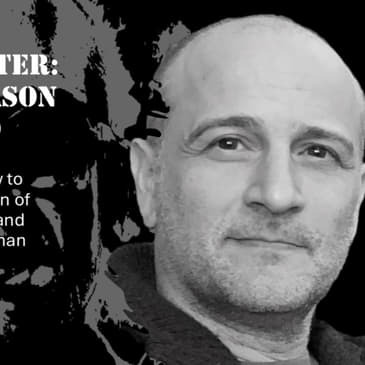

William Herkelrath is the CEO, and co-founder of K3 Labs, a drag and drop platform for automating common Web3 tasks. With more than 20 years in both product and sales roles in the FinTech industry, William has been an early executive at 3 separate start-ups that were acquired by Fortune 500 firms. Since 2017, William has been exclusively focused on helping blockchain firms recognize and capitalize on mainstream uses-cases for the technology. He was the Chief Revenue Officer for Curv, which was acquired by PayPal in early 2021, and the Head of Business Development for Chainlink.Wm
[00:00:03] Hello, everybody, and welcome to the Crypto Hipster Podcast. This is your host, Jamil Hasan, the Crypto Hipster, where I interview founders, entrepreneurs, executives, thought leaders, amazing people all around the world of crypto and blockchain. And today I have, you guessed it, another amazing guest. I have the co-founder and CEO of K3 Labs. First name is William. His last name is Herkelrath. Yes. William Herkelrath. Welcome.
[00:00:33] Thank you. Thank you. Thanks for having me. That's a good pronunciation. Not everyone gets it the first time. Well done. Thank you. I have lots of experience with really difficult last names. So let's kick things off. I'll ask you first, what's your background and is it a logical background for what you're doing now? Yeah, I think like a lot of people in this space, I come from finance, come from fintech. Most of my career until about six, seven years ago was entirely in fintech, basically.
[00:01:07] Building multiple solutions for the large banks. I live in New York City, so I've had the opportunity to work with, you know, the large institutions throughout most of my career, helping them with a variety of different tasks. I've worked at multiple startups that were acquired by the Thomson Reuters of the world, the merger markets, the larger companies. So I've had some really great exits in the fintech space. Got into blockchain about six, seven years ago, which I think that is the logical step because that's where all the real technological advances were happening, right?
[00:01:35] At the time, we were kind of getting dried up, to be honest, in traditional fintech. And then was really proud and happy to be part of a company called Curve, which was acquired in 2021 by PayPal. So that was the fourth acquisition that I was a part of as a startup exec, but the largest and the most interesting one and one that I'm really proud of on that side.
[00:01:59] But yeah, then I've worked at Chainlink for a couple of years, getting kind of earning my stripes at a blue chip company here in the crypto space. And we've been working on this for the last two years or so as well. So it's been a great journey and it's really a lot of fun. I've really been enjoying it. Wow. Awesome. So you got in just seven years, 2018, it was during the first crypto winter.
[00:02:29] Yes. Yes. First of all, I want to make it very clear. I don't nearly have enough money for someone who's been in crypto for six or seven years. And that's the saddest part of the story because you figure, oh, you've been in crypto for six years. You're sitting on a beach, you're having, you know, but no, you know, I've learned some amazing things in this industry, but there's both ups and downs with what we do, as you know. But yeah, I got in the first crypto winter. That's when I started really learning.
[00:02:53] Interesting. We raised money for this company in the winter that we had in 21 or 22. So I find the winters to be the more, in a lot of ways, the most interesting times. I think that's when it is nice to get kind of cut through a lot of the pump stuff and just really focus on what we need. And so I don't mind the winters to be perfectly frank. Obviously, I try not to sell during the winters, but I don't mind them.
[00:03:22] I think that there's a healthiness to it that helps us refurbish and rethink through what it is we want to be doing. Yeah. I built the most times. Most times I built were during the winters. Yeah. So, you know, perfect time for that. So you're building right now, you're building in a bull market. Well, some people say bull market. It wasn't bull market on Sunday, but K3 Labs, you know, what's it all about? What's your vision or your mission? And what are the great things you're up to?
[00:03:53] So my co-founder and I basically started K3 Labs because in a part we were pretty frustrated, to be honest, with a lot of, you know, there is a lot of fluff in our industry. That's things that don't necessarily always make sense to me. I get a little confused as to why people are getting excited and involved in different things that I don't see what the long term value is. And that's not to say that there's not fun. I have no problem with people having fun.
[00:04:19] I get it. There's a lot of fun things to do in crypto and make a little bit of money. And that casino mentality is fun, too. And I appreciate that that's a part of it. People are enjoying it and I'm not here to tell them not to enjoy themselves. But I'm with the fintech background, I'm genuinely curious about what we can build for the long term. You know, what really is going to make sense in the long term. And there is just a huge lack of tools in our space that resemble the kind of tools you have in other industries.
[00:04:46] Right. So so I I wrote a piece recently that that went out on Coindesk and it was, you know, within three or four or five years of the Internet taking off. There were 20 drag and drop easy to use tools for people to get themselves doing cool things on the Internet. I mean, it was just it was, you know, you you and I are probably both old enough to remember that, you know, it didn't take long for Amazon Marketplace to come up.
[00:05:13] People, anybody could have their own store within about a year after the Internet came out. Right. And then, you know, you had Wix was people making their own Web pages. They had their, you know, MySpace and Facebook. Like it just wasn't difficult very quickly for people to participate. And nothing like that exists. Nothing like that exists really in our space. So K3 Labs is a drag and drop, easy to reference workflow builders, similar to Zapier, similar to Adio.
[00:05:41] Anybody can interact with Web3 smart contracts just by without needing to know much about how blockchain works, without having to write code, without having to to live that to live that soldier life, to live that dev life. You can you can feel a little degen without actually having to be fully degen. But even even hardcore developers are finding it fun and interesting as something that they can use to automate some of the more boring parts of their day, to be honest.
[00:06:08] You can feel a little degen without being degen. Well, I don't know. I just I just there's so many people who are amazing coders. I used to be a decent coder 20 something years ago, but I certainly am not now. And I don't have the patience for it, but I still want to do you know, I want to do things. You know what I mean? I want to look at all these DeFi pools and you're thinking, well, there's one yield over here and there's another yield over here.
[00:06:36] And how do I like connect them together? Well, that's that's an example of something you could build pretty quickly on on K3 Labs. You can you can monitor multiple yields just by putting in the smart contract addresses. You could find the best yield and then you can automate trades between the pools without having to write any code. And that that's just that's that's happened to be a trading use case, which might be very specific. But the whole world is open in what we're building in a drag and drop manner.
[00:07:04] I was a sequel. I couldn't write sequel from scratch, but I could modify, edit, test all that stuff. I came into crypto and said those sequel skills ain't going to get you very far in crypto. No, no. And I don't trust myself either. This it's such high profile stuff. There's it's it's nerve wracking. Yeah, I was I was I was very good for what I was doing back then. I can't imagine my code is good enough to really test muster today.
[00:07:33] These guys are really sharp, the folks who work in the space. So but nonetheless, you need to be able to get basic things done. You shouldn't have to be a rock star to do basic reporting, monitoring, moving basic funds around. One of the most popular drag and drop templates we have is simply getting a wallet balance every night sent to you and to your CFO and to your CEO or whomever else, to your wife, your spouse, your partner, whatever terms you're supposed to be using.
[00:08:00] They just like here's I've got 10 wallets, throw them all into my into this workflow, have it run through every night, pull up all the prices and just give me a where am I? You know, state of the world today. Simple things like that should be simple. And there really isn't much out there, you know, that that makes it easy for people to use.
[00:08:20] So whether you're a hardcore programmer or whether you're just a, you know, an enthusiast, there's use in simple reporting, monitoring on chain activity, sending alerts based on the on chain activity. And then, yeah, maybe going that extra step and actually automating trades based on that activity is also certainly doable in the system. And we have some people doing it. Great. So I think.
[00:08:45] Well, you added a question for me now because I wanted to talk about founders and entrepreneurs, but I'm going to stop. I'm going to I'm going to pivot first and say, I would think your tool sound to me like helping to get institutions more comfortable to be in the space. So that's 100 percent is when if you talk to me 18 months ago, the day we got the first money in the door. All right.
[00:09:07] That that is what I thought that was going to be my absolute target audience, because I spent my entire life building projects for institutions. Again, back to my FinTech story. Curve was an institutional product. You know, we sold it to PayPal, which is a large institution. Right. You know, so like that is that was the background. And I felt that there was a massive gap that we needed to be. And I and I talked to all those institutions about all of the different heart, you know, hardcore permissionless protocols that I was representing.
[00:09:36] And there was a there was a gap that they couldn't fill. And this is definitely filling that gap. And they are absolutely excited about it. One of our first we just onboarded a major European telco conglomerate, which is now using it for actually doing trades in addition to doing monitoring. So we know we're on to something. So there's really excited about that. And absolutely. That's who we were originally building for. What surprised me is how much excitement we're seeing in the crypto native community as well.
[00:10:05] So what surprises me is that even people who can code and even people who could build all these little things themselves are asking themselves, why bother? Right. One of what we have is a really cool use case study with a prop trader who basically builds all this stuff on chain. They're they're reading data on chain and they're doing, you know, our opportunities and all kinds of stuff. And they're trying to get into new blockchains and new protocols. And there's there's there's unlimited number of things that they have to keep learning.
[00:10:34] They have to keep integrating to new change to find the data from this pool and then work on this L1. And it's just overwhelming. And, you know, they they've come to us and they've said, can we actually use this instead of building all those integrations? Can we use this to basically pull all the triggers for us, send us all the data? We still want to do our proprietary algo stuff. Of course, it's a trading algo. They I don't know anything about that. That's their thing.
[00:11:00] But when it comes to executing on L1s where we don't have a presence, we can can we do that with you? Yes. Oh, can we read signals from those L1s with you? Yes. Can we read signals from these other places that we haven't integrated? Yes. And so very quickly in just the first couple of months that we're working with them, they are they seem to be outsourcing more and more of the basic blockchain stuff to us. And they're focusing on their algo. And that's how everyone should be. You shouldn't have to code everything from scratch. Right. You shouldn't have to code your own triggers.
[00:11:30] You shouldn't have to code your own basic read write, you know, interface with every single L1 that comes down and L2 that comes down the pipe. It's completely impractical. So. So, yes, originally this was for institutions. And I'm sorry to make this such a long answer, but I'm finding more and more enthusiasm from crypto natives as we go. That's great. That's great. So what I find with entrepreneurs is a lot of them, you know, and founders is they like to be on the stage at conferences. Right.
[00:11:59] They like to do the flashy, flashy things. Right. They don't like to focus on the day to day operations because it's boring. Right. Why should why is it important for them to focus on the operations and not just strategy? And how will you help them to to understand the operations a little better than they do the strategy? Well, I'm still jealous of them if they can get up on stage. And I'm not as good at that as I wish I were. I'm I'm still jealous of of the slick back.
[00:12:27] Look, there's some there's some guys who really have that the whole package. Ben and women, of course, who have the whole package and do a great job. So I'm not trying to take them off stage, but I do think that they will be surprised at how much they just time and energy you can save if you partner up with some with with a good tool set. I guess, you know, just from my experience, again, I've been building software and been in the software industry for quite a for quite a long time. And people do overlook.
[00:12:57] The importance of having an efficient operation and they and when the money's fast and thick in the beginning, they don't care about those things and they just want to go a million miles an hour. But there's definitely going to be a day when when making sure that you're not you don't need if you don't need 25 developers, if you can do the same thing with 10 developers instead of 25, you're better off doing it. Use having 10 like, you know, it's just those days will come.
[00:13:23] And and you in being efficient and making sure that you're making the best choices and partnering with the best people is an important. I just from my own experience, having just done it as many times as I have, I just know that that's critical. And that's that's the hole that I really wanted to to to to patch. I just could not see everyone. Every time you go to these conferences, everyone's like, oh, crypto, we're taking over everything in the world. The whole world's coming to us and blah, blah, blah. And I'm like, well, I'd like to believe that. But if that but are we really going to turn everyone into a solidity developer?
[00:13:53] And, you know, because that's just not that doesn't seem right to me. I don't think I don't think everyone is going to really is every single coder that comes out of school going to be a solidity developer. It's it's just not it's just not practical to say it's just that to really take advantage of our industry. You have to understand it to that level. It's just not realistic. So I I do want us to take over. But to do that, we have to start building a lot better tools.
[00:14:20] And we have to start being a lot more focused on user experience and what and what that journey looks like. Let's talk about those tools then. How would you describe the current you've been describing? It's not we have a matter of potential. Right. But what's the current state of the Web3 building tools themselves? Where are we at? Where do we need to go? Like where we need to be? Not everybody's going to be a solidity developer. They have to learn something.
[00:14:49] How are they going to be able to utilize those tools and what is needed for them to be able to use those tools? Well, I mean, you know, very candidly, I think they aren't very good. You know, I mean, and it's not because that people are trying. There's some amazing work, but most of what we do is for developers.
[00:15:12] And and there's nothing wrong with that. But how many websites do you go to in our space where it's, you know, by developers for developers? And that's it's a it's a it's a statement of pride. Right. And I get it. I get I get why that's a statement of pride and I get why it's great to do great things for developers. And again, like I said, I'm really pleased with the with the reaction that developers are having to K3 laps. Like I was actually surprised to see how much they're enjoying getting getting started. So I'm really glad that we're hitting that market.
[00:15:40] But that I just strongly believe that that can't be the only market. There's a lot of tool sets out there that have their smart contract templates. You can get started with this. You can call my call my API. You can call my SDK. Everything is you know, you can plug into this. You can plug into that. It's all permission. Like we've got a lot of templatized work for developers that we've got, which is great. And so developers have almost too much to choose from, to be honest.
[00:16:10] But what we but we still don't have anybody who's really putting it in the context of real day to day use cases. The very first use case we built was not that trading use case I talked about. It was not some of the fancy stuff, you know, liquid pool, like monitoring and management, all that kind of stuff that I see people doing on the platform today. It was a very simple me coming back from a meeting with a couple of big banks here in New York. And they said the most simplest thing I've ever heard. I just want to write some data to a blockchain.
[00:16:37] Like I've got data that's coming out of my internal system and the world wants me to put it on chain because that's cool. And also it's just in the transparency. And, you know, they're talking about moving carbon data on chain. This is basic stuff. I can't write to a blockchain. I can't run a node. I can't hold. I'm, you know, a New York institution. I can't hold crypto and pay gas fees and whatever. Like I like I just want to write data to a block. How hard could it be to write data to a blockchain?
[00:17:05] And that's the one of the very, very first use cases that we modeled. And it takes, you know, it's about 30 seconds to set that up in a platform today. You can connect any single API you want to from your internal system or anywhere else in the world. And you can write it to any blockchain you want to. And you can have that run at whatever frequency you want to. And it takes you about 10 seconds to set that up in the tool. So it doesn't, it didn't start as rocket scientists. It's really, really basic things. And then we, you know, we grew it from there.
[00:17:33] But like there wasn't even a single tool out there to do something like that. And if we don't even have it, if we didn't have a tool to do that, then what, then I'm just, you know, it's a little, we're missing the mark. So we're thrilled that I'm sure there'll be some competitors. I'm sure there's other people wanting to do what we do. This will probably be a crowded space in a couple of years. And that's good for all of us, right?
[00:17:53] It's good for all of us that we get in there and we all start building things that work for people who don't have the ability to, you know, get in there and build everything from scratch as if they're the biggest pros in the world. Yeah, I saw, I talked about this on a different podcast. I forget which one. But I saw something a week and a half ago, which was deeply concerning. It's right after DeepSeek came out. And it was a whole bunch of accounts, anonymous accounts.
[00:18:22] We said, oh, you can make millions, billions using DeepSeek to trade. And all, you know, it takes no skill whatsoever. Oh, but you have to do this. You have to, you have to code the A, you have to code the AI. I'm like, well, that takes skill. You know, how do you, how do you do that? Like, how do you, like, what's practical? What's able to do? And what's just an attempt to, for money grab? Because I know if I try to code something and play with money, I'd lose it.
[00:18:52] You know? So how do you, how do you tell people, hey, you know, this is what's really going on? Yeah. Yeah. No, look, I, I, I, I hear you. It's too hard. You really have to spend a huge amount of time and energy to figure out how all this works. And I, I'm jealous of the people who do have the coding skills that I don't have, who can, who can figure this all out and can build all that stuff. But I will say that the majority of people in our industry are not technical enough to do all that.
[00:19:22] You know, we, a lot of us work in and around it. We are, maybe it's on the biz dev side of where we, but yet we all want to be able to, to do some basic things. And again, I don't think you can't, I'm not suggesting that simple tools can take away the, the hard 40 or 50 or 60% of what happens in blockchain. And it can't, there's no way that those people and that work is very hard, but there are a lot of low hanging fruit things that should be automated.
[00:19:49] There's just no reason to man, to spend high, uh, high cost labor to top up your wallets, right? It's just the simplest thing in the world. It's like, okay, every time my, my Ethereum balance on my wallet gets below two, or I've got, I've got a hundred wallets, you know, cause a lot of these people have 50, a hundred more, every time when you, one of these wallets gets below a value where we won't be able to do a gas charge, just top it up. Right. That's an automation. You know, that's, that's what, that's what the, the European telco that I talked about
[00:20:19] is, is doing. They've got, they running multiple wallets across multiple chains. They're spending like one engineer, you know, probably five, four or five hours a week, just maintaining simple stuff. They were able to get that automated on K3 in just, in just a few minutes. Like there's just some basic stuff that we just shouldn't be having to do. And you don't have to do that in the web two world. There's always tools that'll connect in your basic stuff for you so that you don't have to do that manual labor.
[00:20:47] So yeah, look, it's not going to change you. I'm going to change everything, but boy, it's going to make some of that day-to-day stuff a lot easier. That's our goal. Yeah. So another thing I saw this morning was there was a, I've been looking at some of the influencer accounts to see just how, how off they are. Right. And a lot of people was doom and gloom on Sunday. Everybody was like, because the market tanked a bit, it really was doom and gloom and instilling fear.
[00:21:12] And there's one who had a list of like cryptos by categories and showing you're down 90% or 89% or whatever, but didn't have the start date that it was, they were looking at. Like, was that from all time highs? Was that from last week? Like you don't know. So there's a lot of, and people rely on that data. How can we get them to stop relying on these influencers who are instilling fear and start
[00:21:39] getting them to use the tools to say, okay, I want to see what, how much is the crypto is down from the, from the all time high or from last week or whatever, you know, how do, how do, how do we educate them to start using tools like you guys are building? That's a, that's a great question. I wish I knew the exact answer to that. I would just go execute on that and we'd be perfect. I, you know, look, I think that both in our, not just in business, but in, in the realities and our politics and everything else, there's just a lot of noise.
[00:22:09] And, and I don't think I'm, I'm shocked at how much noise there is and how much bad information there is on all, in all walks of life. Even my sports teams, there's, there's bad transfer rumors that are totally made up on my, they favorite sports teams every day just to get me to click on something like it's, it's kind of a mess. I, I, I don't think you're going to replace it. The reason why I think people are watching those KOL accounts, regardless of whether the data there is good, is because they do think that that's going to move the market and they just want to have a tiny little edge.
[00:22:37] I think that I kind of think they're kidding themselves by the time it's hit that account, it's probably already too late. You know, it's like the, it's like the old time trader by the time somebody lets you know that a trade is on it's, you've already missed it kind of thing. Like no one's going to let you know the trade is on unless they've already got their position in place. That's, that's good. That's kind of an old wall street, uh, uh, you know, um, moniker. I don't know to what extent that's still true in crypto because I haven't been trading crypto. It's tough.
[00:23:03] Like I, I do think what we can do though, is we can at least give them tools so they can build their own alerts at the very least. I mean, why, so you don't have to, we, we integrate with Slack, we integrate with telegram, we integrate with email. So if you use any of those three protocols and we're, I think we're going to probably add more as we go, but, um, you can build your own alerts and your own everything. And then you don't have to, you could just come straight to your phone. You don't have to listen to anybody, uh, telling you anything. If you, there's specific on-chain events that you want to measure or price thresholds
[00:23:32] that you want to, that you want to be monitoring or whatever else you can just have that, you know, sent to your telegram and chat. So at the very least you can at least try to get them some better information. Um, but as far as telling them they shouldn't be listening to everybody under the sun, uh, the reality is I'm sure some of those accounts are amazing. Right. So I, I, but I wouldn't know which ones to pick the good ones from the bad ones. It's not something I would, I would even know where to start. Yeah. So let's, let's talk about, you said, um, having a couple hundred wallets, right.
[00:23:59] And, and, and, and a couple of ETH in each, like why do, does multi-wallet, wallet monitoring matter and how could people possibly use that as a strategy, um, for, you know, and not just trading, but like investing and, and, you know, um, building business actually. Yeah. That's a good question. Look, I don't know, um, if there's a trading edge there.
[00:24:23] I will say that it's just the reality, uh, is what as people are, as, as I guess institutions, right. So let's, let's go back to, we mentioned earlier, this is kind of what's the institutional use case. Well, one of the institutional use cases is running, is running nodes. And usually it's running a lot of nodes. A lot of the big players that are getting into this space are actually, uh, validating Ethereum transactions. This isn't, but people might not know this, but there are actually really big companies that are, that are making money validating, uh, Ethereum transactions.
[00:24:51] The, all of the world's telcos have huge data centers, uh, capacity that's, that is untapped. And a lot of them are using them. Uh, some of them are even Bitcoin mining, to be perfectly honest. That's not something they'd like to talk about public, but it is happening. So like there, there are, uh, and in those cases, if you're doing anything with nodes, you're going to have dozens of wallets. You're just, it's not, if not hundreds of wallets, more and more people are having specialty wallets, a wallet that just does this.
[00:25:19] And then a wallet of just this also in this cross chain world, you have a, maybe a wallet on one L1 and a wallet on another L2. Like, I mean, you just might have, you just might have a bunch of different wallets doing different things on different protocols for different reasons. So we're just seeing the reality is, is that even mid-level institutions or mid-level crypto companies find themselves having dozens of wallets. So it's, it's just kind of the way things seem to be going. And as you, the more you have, the more you have to monitor them, the more you have to
[00:25:48] figure out what's going on with them, the more you, the more maintenance you're asking, you're, you're, you're causing. So again, if you have better tools around all of these things, you can be less scared of that future, you can be, it's, it is much better probably to have wallets don't have all of, you know, if you're particularly if they're hot wallets, you don't want them to have that many funds in them. You don't want them to be, you know, compromisable. You want them to do very specific, you know, functions on very specific things. That becomes very overwhelming if you don't have a tool set to manage all of them. So that, that's, that's, I think the point more than anything else is that's where
[00:26:18] things are going and that's, it's expensive to do that unless you have better tools to help you do that. And time consuming. Yeah. Yeah. Imagine that stress. I mean, I'm like, I'm, you know, we, we don't have that issue because I specifically would lose sleep at night if I thought we had, you know, 50 wallets running around and all this kind of stuff that we're, we're, we're, we very much are opposed to overnight risk and all that kind of security issues.
[00:26:45] And so that's just not the way I think, but there are definitely people out there who have hundreds of wallets running with real money in them online at all times. And, you know, I'm, I'm sure that they have a really hard time sleeping. And I, I, you know, you've got, you have to, you have to have a really good tools. You can't, you can't, it can't all be down to some random person that you hired that you hope has got the code right to send you the alert at four o'clock in the morning. That's just not good enough. Yeah, I agree. I agree.
[00:27:15] So before we started this podcast, you said to my try and asked me if I'm trying to show my book. Um, I, I'm not trying, I mean, I would love that people would buy my books. Um, they don't, but I love them too. But this, this next, the title behind you, you know, uh, ties into my next question. It's a clear, vibrant skies or, uh, muddy, blurry, muddy puddles. And when I think of blurry, muddy puddles, I think about restaking, you know, um, why is
[00:27:43] it like, why is it important to have like real competition in the restaking space? You know, right now this is like a blurry mess. You know, what does that look like going forward? Once you have clarity. First of all, I definitely am looking forward to reading vibrant skies. So I will help you pitch the book, uh, since, uh, since, uh, since you were so kind to have me on, um, I will say, look, I, I'm a huge fan of restaking, uh, and not a lot of people
[00:28:11] are, and I, I get that this is a controversial conversation and we don't have the time to go into the depths of it here, but I will say that the, the one thing that I've learned in the six, seven years that I've been doing this is that the, there is absolutely no way that all of these networks can run at a profit when dedicated hardware. And it's a, it's a, it's a controversial statement. I know, I know enough of these, uh, networks. I know enough of these protocols. I know the CEOs.
[00:28:41] I spent a lot of time at them. I've worked at some of these companies. I've been an advisor for some of these companies. I know the volume numbers, the volume in order for these networks to run positive on dedicated hardware and dedicated staking. Um, they would have to, I mean, we're talking six orders of magnitude or something insane more in order to generate enough volume to pay the node operators a reasonable amount
[00:29:08] of money to compensate them for the efforts they would have to make to keep these networks running. Like the numbers are outrageous and no one raises their hand and says all this. So forget the electricity consumption, forget the jurisdictions who are trying to chime in and say, this isn't a good use of power, blah, blah, blah, blah. Just the actual math of the actual networks. They, they have a really hard time paying for themselves. So what restaking is, uh, it allows, is it allows for multiple protocols to run on the
[00:29:36] same hardware so that, um, and have used the same funds that were, that are, that are supporting Ethereum, you know, and this is the most common can also be used to support other projects. So I just think this is, this is genius. This is desperately what I almost actually got out of crypto, to be honest, because I was just, the math's not here. It's not going to work. These L1s will eventually just go away because there's just not enough volume to justify the cost of running the hardware.
[00:30:03] Um, but I think with restaking, I think everything changes and you see it happening. It's not in the Ethereum world. There's now multiple competitors. I was early in on Eigenlayer because I was a real believer on, on what they're doing. And, uh, and I'm not saying they're flawless. Of course they're not. Everyone has their issues. And, and, um, I'm sure that they, there's some things they, they themselves want to get better. Uh, and there's more people coming into the space there, but you're seeing it on Solana. You're seeing it on Stellar. You're seeing that, that people saying, oh, this is a good idea.
[00:30:32] Pooling our assets, pooling our hardware, working together. This starts to become, the math starts to get a lot better. If you're running a machine now and a data center, and you're running 10 different instances or 15 different instances for 15 different projects. Now you, uh, can take the sum volume for all 15 of those. And that, uh, factors into whether or not that's, it's profitable for you to run that note or not.
[00:30:57] Now you're starting to talk about a much, much better proposition because some of these L1s or some of these early networks, they're paying their validators millions of dollars out of their own treasury budgets just to keep the thing running. This is not sustainable. This is, that's not a sustainable business by any stretch. So I'm a huge fan of the space. I think we're going to get a lot more competition, really excited about what that brings. And I think that really does change what crypto can be.
[00:31:25] Um, so I'm really hoping that I'm right about that because if it's, if we're wrong about that, then I, then my crypto thesis is going to be a little sour, I have to say. I went to consensus last year and I remember watching, seeing the Eigenlayer team or the members of the team on stage talking about Eigenlayer. And I was like, it seems impressive to me. I don't fully understand it at that time. I don't fully understand it. I use it. I don't fully, but I got, I get the idea. I get the idea. Right.
[00:31:54] And, and, um, yeah, yeah, it's impressive. Now I can see, I can see the instances from different chains, um, in data centers. Is there any way like, and I can see it in Ethereum. I could see, you know, proof of, of, uh, stake. Is there a way to combine on that? It hasn't been so far Bitcoin and Ethereum and Litecoin and proof of work and proof of state together in the same instances, or is that always going to be separate? I have to agree.
[00:32:24] I'm not an expert on this. I know Babylon. Uh, I have met the founder of Babylon a couple of times, uh, David Seward or something like that. I can make an introduction to you offline if you want. He, uh, so I, I, I check with him. He is building, I think he's got a restaking layer that's, that is Bitcoin based and, and there's others trying to do it as well. So I don't know what's going to come out of that, but there are absolutely trying to solve people, trying to solve that problem and trying to figure out how you can effectively create staking yields in a, in a Bitcoin environment.
[00:32:53] Um, it it's over my pay grade. I have to say it's not my specialty, but I know there's people working on that because it's a good idea, right? It's, it's, it's a good idea. It's, it's, um, to make, uh, you know, Ethereum is exciting and Solana is looking, I'm going to do this as well. I'm not, I'm not just saying Ethereum is the only game in town, but there's this, these are good ideas, making, creating more markets, creating more competition.
[00:33:19] Um, and again, sharing resources, sharing, staking resources and sharing hardware is, is, it's just realistically, it's the only way any of this is going to work in my mind. Makes sense to me. Well, yeah. Thank you. I want to thank you very much for speaking with me today. I enjoyed speaking with you and enjoyed our conversation and it was, it's good. So, um, I have one last question. It's really simple. Uh, how can people find out more information about you, about K3 labs? How can they use your tools?
[00:33:49] You know, how can, how can they become customers? How can they do that? Yeah, it's totally dark. We're just, we're invisible. They're that, we're, that's it. This is all that, this is all they're going to get. Um, no, so look, we're, we're K3, uh, hyphen labs.com. Uh, the app is app.k3labs.com and it's available, of course, just through k3labs.com. FinTech. It's, uh, I, myself am FinTech William and all the, on all the major, uh, platforms and, and we're K3 labs on X, but, uh, we get a lot of hits every day.
[00:34:18] People log in, they start playing around, uh, people were getting some really nice ideas. We were very, uh, uh, we reply to DMs more than you'd think we would. So please reach out, uh, let us know if you're struggling with the, with the, uh, platform in any way. Uh, you might even be stuck with me. I might even be the one who responds and tries to help you through something because I like to get my hands dirty from time to time as well, but we were pretty receptive. We're out there in the world. Um, we've only been live for about six months.
[00:34:44] So it's not like, uh, we're, we're old hats at this, but we've already got some pretty great users, some pretty big, um, institutional users as well. Um, some really cool use cases and, uh, looking forward to maybe coming back on this podcast in six months time. We're, we're, we're working on a incentive program, which I think is really going to be fun as well, but I, it's a little too early to give all the details. So we'll, maybe we'll, we'll break the story here and talk about that next time through. That sounds wonderful. That was great. Thank you very much for your time today. Yeah, you as well. Mm-hmm. Mm-hmm.