
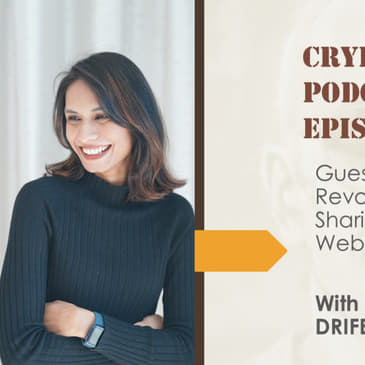

Firdosh Sheikh is Founder and CEO of DRIFE, an industry-disrupting decentralized ride-hailing platform built on the principles of Web3 technology. Firdosh believes it has been an incredible journey leading the charge in the DePin space, shaping DRIFE into a game-changer with an engaged user base of over 300,000 riders and a network of more than 30,000 drivers using the innovative DRIFE application.
Being at the helm of the first decentralized ride-hailing company has been both an honor and a challenge for her. But it's this pioneering spirit that drives Firdosh to constantly redefine the norms of the mobility industry. By integrating blockchain technology into its platform, DRIFE has created a system that champions fairness, transparency, and user autonomy, setting a new standard for the entire industry.
DRIFE isn't just a ride-hailing app; it's a testament to the potential of Web3 and a testament to the power of a community-driven vision. Firdosh is proud to have spearheaded this endeavor and to continue shaping the future of decentralized transportation.
Website: drife.io
[00:00:01] [SPEAKER_00]: Hello everybody and welcome to the Crypto Hipster podcast. This is your host Jamil Hasan, the Crypto Hipster, where I interview founders, entrepreneurs, executives, thought leaders, amazing people all around the world of crypto and blockchain.
[00:00:15] [SPEAKER_00]: And today I have another amazing guest. She is, actually I didn't ask her for a title. I believe she's a CEO of DRIFE. Her name is Firdosh Sheikh. Firdosh, welcome to the show.
[00:00:29] [SPEAKER_00]: Hey, hi Jamil. Thank you so much. I did get that right. CEO, right? Yes, it is CEO. Okay, great. Thank you for joining me. So wonderful. So I want to kick things off and I'll ask you first, you know, what is your background and is it a logical background for what you're doing now?
[00:00:48] [SPEAKER_01]: It is not a logical background for what I'm doing now. So I come from core of finance background. I've worked with companies like Microsoft and a hedge fund before I started my journey of building drives. I come from core of a finance background.
[00:01:02] [SPEAKER_01]: And, you know, in my last job I was also like trading. But then I started a tech company. So it is very different from where I come from.
[00:01:14] [SPEAKER_00]: Okay. So those those experiences and hedge fund and how did they prepare you to lead DRIFE?
[00:01:24] [SPEAKER_01]: See, I just get back to my experience at Microsoft. Microsoft was my first job and it was also like a dream company I wanted to work for.
[00:01:34] [SPEAKER_01]: And when I was working in the finance department, I could like see how different departments work, although it did not prepare me like technically because all things that I have to learn to build drive technically was something that was not taught to me.
[00:01:48] [SPEAKER_01]: But like a spirit of leading people and how to build culture and run company is something that I learned while I was at Microsoft that you know how to get work done how to work around people.
[00:02:00] [SPEAKER_01]: That's something that I learned and I was able to then when I decided that I wanted to do something on my own. I had this experience which helped me so much that how actually you can work around people and work along with people.
[00:02:16] [SPEAKER_00]: Great. Great. I didn't get that. I didn't get that in my days at AIG. It was cutthroat a lot, but I'm so glad you're in an environment that was collaborative. Awesome.
[00:02:27] [SPEAKER_00]: So, DRIVE. What is DRIVE all about including your vision and your mission for the company?
[00:02:33] [SPEAKER_01]: Sure. So, DRIVE is a very basic concept. We all are aware of Uber, Lefkareem and different ride hailing company that exists across the globe. If you look at all the ride hailing company made Uber being a global company and then we have local players in different part of the world.
[00:02:49] [SPEAKER_01]: That's what DRIVE is about. It is about connecting driver and rider with each other without the existence of a middleman. Now, why I started building DRIVE when there was companies like Uber in the world is because if you look at ride hailing company they are multi-billion dollar companies.
[00:03:07] [SPEAKER_01]: But if you look back at drivers, livelihood they're still struggling to make their livelihood and that makes me question that why is it happening? That why they don't have a very good life.
[00:03:19] [SPEAKER_01]: And the question lies in there's a huge gap between the demand and supply and how it is managed by ride hailing company. And it starts with very basic or high commission that exists in the ride hailing space.
[00:03:31] [SPEAKER_01]: And when I first hand experienced this as a rider where a driver asked me like cancel the trip. I'll take you to the airport pay me 100 bug less. That's when I got to know that driver was paying 45% ask a mission for that ride.
[00:03:47] [SPEAKER_01]: And for me someone who was coming from finance it was not making sense that buy would someone pay 45% or even like 30, 35, 40% ask a mission.
[00:03:56] [SPEAKER_01]: And that's where I decided that I wanted to build something which gives driver access to the income that they deserve. And that's what my mission is and my vision for building DRIVE was always that I want to give driver back what they truly deserve.
[00:04:10] [SPEAKER_01]: They work endless hours behind the wheel and they deserve to earn the money that they rightfully are earning. And that's what DRIVE is about connecting drivers and riders and giving back to the community.
[00:04:24] [SPEAKER_01]: I really believe that we want to make an impact on the livelihood of not just drivers but their families where it all starts with they earning what they deserve.
[00:04:35] [SPEAKER_00]: That makes sense. Earn what you deserve but I didn't know this. So say I get an Uber ride from my house to Manhattan which is $200.
[00:04:49] [SPEAKER_00]: How much goes to Uber? How much goes to the driver?
[00:04:52] [SPEAKER_01]: See the problem at this point is a transparency being a bigger issue. Different rides for different rides, different type of commission are being charged like for a shorter ride sometimes they charge like the base is like 20-25% but it can go high as 45% if it's a premium location or a higher valued ride.
[00:05:13] [SPEAKER_01]: The commission can increase up to 40% there are certain rides that drivers are doing but they end up paying like 40-45% as commission also.
[00:05:22] [SPEAKER_01]: But because there is no transparency between if you next time get into a ride and you see how much you paid and you compare your invoice with the driver earning, you'll see there's a drastic difference between how much you were charged, how much they are shown, how much they actually end up earning.
[00:05:37] [SPEAKER_01]: So transparency at this point is such a bigger issue in this space.
[00:05:44] [SPEAKER_00]: Got it. I didn't realize that their net was minimal.
[00:05:50] [SPEAKER_01]: Exactly. So there's this one video that recently went live on YouTube where like few drivers were called together and they tried to look at their earning and you found out that okay there's so much variation between how different drivers are earning different amount for the same kind of rides they are doing, same destinations they are doing.
[00:06:07] [SPEAKER_01]: It all is so laggy at this point where the motivation of the ride-hailing companies are to like maximize their own profit at the cost of drivers livelihood.
[00:06:21] [SPEAKER_00]: Got it. So you're offering a transparent mobility solution in addition to net income, why is it important to give riders, especially riders right,
[00:06:36] [SPEAKER_00]: and drivers too, a transparent mobility solution and how are you championing fairness, transparency and user autonomy?
[00:06:45] [SPEAKER_01]: Yeah. See if you look at like I'll give an example of a country like India where a lot of time you get into this vicious circle that driver keep cancelling on you when they get accepted for a ride and they'll call you and ask you details like where are you going, how much you're paying, how you're paying and then they cancel rides on you
[00:07:04] [SPEAKER_01]: because there's no transparency in place in terms of driver even knowing the details of the ride which at this point if you see a lot of irritation or friction that exists among driver is now being passed on to you as rider and your experience is getting worse day by day.
[00:07:23] [SPEAKER_01]: It's not just about like you know getting cancellation or rides or sometimes like driver won't show up or even if like you know situation like what happened with me where driver asked me to cancel the trip.
[00:07:34] [SPEAKER_01]: So adding to irritation to riders as well. So when you solve for issues for driver and they're happy, a happy driver leads to a happier ride experience is what we believe and that's what we're trying to build a drive where it is not just about you paying
[00:07:50] [SPEAKER_01]: for a ride using drive where driver get to earn what they deserve but you also have a better experience not just with like paying more to the driver directly but also making sure that your ride experience is better
[00:08:06] [SPEAKER_01]: and with driver also trying to decentralize the matchmaking process which means you as a user can not just decide with right where are you going but we are able to decide how much you're going to pay which driver you choose for yourself.
[00:08:19] [SPEAKER_01]: We're trying to decentralize the matchmaking process now all of this where we are trying to build transparency and fairness we use blockchain, we use smart contract to do fair calculation driver allocation which means there's no human intervention so your fears are not manipulated by any
[00:08:35] [SPEAKER_00]: but no two users or no two drivers are treated differently. Interesting. So a happy driver equates to a happy rider. Yes. I like that.
[00:08:53] [SPEAKER_00]: I like that. The worst thing about going on a ride and having a complaining driver right so yeah. So one of the things, I mean I was recently talking to a franchise before I decided to stay doing podcasting I was talking to a
[00:09:11] [SPEAKER_00]: franchise company and I was like the franchise model isn't really used too much in crypto and blockchain but you have a franchise model right. So how is the franchise model I think it's the first of its kind in the industry but how is it a game changer.
[00:09:30] [SPEAKER_01]: Okay. Now if you look around the globe everybody at one or the other point got very fascinated by the ride healing economy because of you know companies like Uber or local players coming in but if you see a lot of people might be very good at running the operations of a ride
[00:09:56] [SPEAKER_01]: and then we started to put in to build the technology around it. And when we started building drive we realized that if we have to launch right ourselves across the globe it's going to take a lot of years for us and then thought will stop us from controlling everything and becoming someone like Uber tomorrow
[00:10:12] [SPEAKER_01]: and that's where we said that decentralization is not just happening in the ride experience. We want to build decentralized operation as well and anyone like as small as an individual to as big as a government body can actually become drive operators to run drive.
[00:10:29] [SPEAKER_01]: It's a very similar concept to how we have nodes to run blockchain you know you have nodes who run the block and similarly we have local operators to run the operation this way you get to new cities faster because there's a lot of interest.
[00:10:42] [SPEAKER_01]: We have more than 100 plus applicants across the globe who wants to run drive operations and you know like there are people who is like okay we have 10,000 drivers we have a network of this many drivers do you guys want to come to our city so that makes us go faster into different ecosystem
[00:10:59] [SPEAKER_01]: but also allow local operator to make a business out of this for themselves without worrying about how to get the tech in place or you know running the tech but the world is full of people who are entrepreneur and can run taxi operation very efficiently and that helps us as well where we can like go to market faster.
[00:11:26] [SPEAKER_00]: Interesting so I think I saw that you're in Dubai and Singapore right what have been some of the early challenges in those markets and then as you know what do you see as some of the challenges around the globe.
[00:11:43] [SPEAKER_01]: Yeah so we are live in India and Dubai Singapore we recently did a POC for token 2049 where we went to Singapore and they're right we're not live in Singapore although we do have plan for coming years but currently we're live in India and Dubai so I'll speak about the challenges in Dubai Dubai we recently launched.
[00:12:02] [SPEAKER_01]: For us it was because Dubai is a very complicated very regulated place.
[00:12:07] [SPEAKER_01]: The first thing was obviously to crack the license and as I said like you know having the franchising model actually helped us to get the license in place because we got a local existing player who was like you know looking to expand their business into the right sharing space but they knew how to build the technology around that we told them like okay get the license will get the application ready for to launch in Dubai.
[00:12:30] [SPEAKER_01]: So a regulation by Dubai is very strict very strict about how things work here so licensing was difficult for us it's just very early for us to like comment on what all challenges we will face when we are like fully live in Dubai because it's very early like it's been like 15 days into operation in Dubai.
[00:12:48] [SPEAKER_01]: India I can speak about challenges because it's been like two years we're live in India.
[00:12:53] [SPEAKER_01]: Our bigger challenge is always competing against the existing players when they get into price world and always happen whenever you try to do something or run some campaigns you'll always see them dropping their price to like the lowest they can because they have that kind of money to put in and that's why it is very important for us that both driver and rider understand the narrative of why drive force built which was to give back to the driver and the rider can do it.
[00:13:18] [SPEAKER_01]: And we have a very strong community of drivers who believe in the fact that drivers build from a perspective of driver at first that when you meet drivers in India who drive for drive they'll tell you that you know please keep using drive because I make more money and that adds a lot to you as a user when you have to make that decision or shift from existing
[00:13:41] [SPEAKER_01]: platform to a new platform like why I am doing that because at the end of the day you're going to get a similar kind of a cab.
[00:13:48] [SPEAKER_01]: Similar driver might end up picking you up with Uber or drive what is making me to choose drive is the whole sentiment value that someone's going to make more money by make that vice choice it's more about like moving people to have a wiser choice they're still working around it with style try to do like new things to make that.
[00:14:07] [SPEAKER_01]: Something that is like about the narrative that we want to build.
[00:14:15] [SPEAKER_00]: Got it.
[00:14:16] [SPEAKER_00]: So, a pain like I'm trying to think I've been in blockchain for just 2017 and a lot of people in blockchain by things to be part of the be part of the community.
[00:14:29] [SPEAKER_00]: But that's not how the rest of the world works.
[00:14:32] [SPEAKER_00]: The rest of the world works is they buy something and pay for something to solve a pain point.
[00:14:38] [SPEAKER_00]: Right.
[00:14:39] [SPEAKER_00]: So, people have pain points with the ride handling industry right.
[00:14:45] [SPEAKER_00]: How can blockchain based apps restore confidence in the ride handling industry and remove some of those pain points people are facing.
[00:14:56] [SPEAKER_01]: The bigger challenge I spoke earlier also in the ride handling space is about transparency and fairness start with a very basic of a search price that you paid today.
[00:15:06] [SPEAKER_01]: You can never go to Uber and ask like why did I pay two X of the price?
[00:15:10] [SPEAKER_01]: Why how nobody can prove that there was a demand and supply difference and that's why the price increased when we use blockchain to do fair calculation.
[00:15:19] [SPEAKER_01]: That's a very basic that we do where we use blockchain to do fair calculation for you.
[00:15:24] [SPEAKER_01]: When there you as a company is not adding different multiplier depending upon different users and their purchasing capacity, that's a very beginning of how you can restore confidence among the both driver and rider about being a part of a ride handling experience.
[00:15:44] [SPEAKER_01]: That is decentralized starting with the matchmaking process.
[00:15:47] [SPEAKER_01]: We need blockchain implementation on the places where transparency is a bigger issue and it starts with the fair calculation and driver allocation.
[00:15:56] [SPEAKER_01]: And that's where we use blockchain also to make sure that every individual within the ecosystem is treated equally and see similar fair for the same distance and same time.
[00:16:08] [SPEAKER_01]: And we don't add multipliers from our side and you can always go and verify your right like why you paid for what you paid on chain and there's no human intervention there.
[00:16:18] [SPEAKER_01]: And that's the beginning of how decentralized applications can actually be a better version of existing web two application that exists today.
[00:16:31] [SPEAKER_00]: Got it.
[00:16:32] [SPEAKER_00]: So I'm just thinking, you know, you're right now, India's primary market and there's a lot of challenges in Indian not just in transportation but in identity.
[00:16:43] [SPEAKER_00]: And how do you how is your platform helping to solve some of the issues regarding identity security and you know, verifiability as a secondary result of your of the ride sharing platform.
[00:16:59] [SPEAKER_01]: When we talk about identity and security are not those are the those are the things that as but like if you look at ride handling ecosystems a major ecosystem it's not the same 10 years back when there was no regulations in place.
[00:17:14] [SPEAKER_01]: When you onboard a driver and when you're a compliant company where you have like licensed by the authorities there are certain checks that we need to take care of specifically when you onboard our drivers we do like your security check.
[00:17:27] [SPEAKER_01]: We make sure that every driver goes through a KYC process a Kim Reminal check before we onboard a driver there's no innovation as such we have done.
[00:17:37] [SPEAKER_01]: When we speak about identity and security there's certain things that where we actually want to build digital identity for drivers where the identity that you create for yourself with drive not just a driver can be actually used for different purposes but that's a long term vision that we have with how we can create digital identity for drivers which is very different
[00:18:01] [SPEAKER_01]: and very secure as compared to like otherwise what exists today but it's a you know road map it's in the road map that we have that we want to build and it's only going to happen like over time when we have like more and more data to work around and create that kind of stuff and otherwise like you know if we are still very immature in terms of having digital identity if you only want to do it for your platform and nobody else is interested in using that so it's very early at this point to build something like this.
[00:18:31] [SPEAKER_01]: But we do have that in our road map to build digital identity for drivers.
[00:18:36] [SPEAKER_00]: Got it.
[00:18:37] [SPEAKER_00]: Got it sounds good.
[00:18:39] [SPEAKER_00]: So,
[00:18:42] [SPEAKER_00]: all the all the mobility and transportation fees I've done the founders have had some kind of you United Nations sustainability goals in mind when building their platform by the company.
[00:18:55] [SPEAKER_00]: How how are you aligned with some of their goals and how are you redefining the goals of the mobility industry itself.
[00:19:03] [SPEAKER_01]: If we look at you know sustainability as a concept and the very basic that everybody thinks about like okay electric vehicles are the future.
[00:19:12] [SPEAKER_01]: And we should integrate more on building bringing in electric mobility and have a section and that's what everybody is doing like everybody today if you see they have like one section.
[00:19:22] [SPEAKER_01]: A segment of a ride that you can book which is a green as a concept.
[00:19:27] [SPEAKER_01]: I still feel that it is too early to nudge drivers if you look at if you look at this whole ecosystem.
[00:19:34] [SPEAKER_01]: Everybody who has mobility as a segment they actually own the fleet themselves at this point drivers have not seen what is in for them to move from the diesel or petrol car they are already driving to an electric vehicle and we are looking at ways where we can actually nudge drivers to make that shift instead of we actually creating our own fleet.
[00:19:59] [SPEAKER_01]: We do have a concept where because a lot of you know the carbon footprint that we generate is basically about people driving around where we can actually contribute towards a greener environment by planting trees on these are all concepts that we have we want to work on but I guess bigger thing that we want to work on is nudging drivers to make that shift for themselves because around the globe if you need the taxi drivers they're not very keen on moving to electric vehicle because of that in limitation.
[00:20:29] [SPEAKER_01]: You know how the infrastructure is currently how they were how how they have to like travel to get the car recharged and everything so infrastructure still remains a problem.
[00:20:40] [SPEAKER_01]: We're still working around how can we nudge drivers to make that shift for them.
[00:20:48] [SPEAKER_00]: Okay, now I have to ask a follow up on that because you said that with nudge.
[00:20:54] [SPEAKER_00]: You know apparently you know I mean apparently it is a it is a deal.
[00:20:59] [SPEAKER_00]: A big deal is the nudge economy right.
[00:21:03] [SPEAKER_00]: What what is your role what do you see as your overall vision and role in the nudge economy and how do we use a platform like yours like blockchain based platform to help promote and develop that nudge economy going forward.
[00:21:21] [SPEAKER_01]: I'll say this like you know it is always about choices that you know people want to make for themselves and at this point I guess it's specifically in the crypto and the blockchain space it's also all about incentivization.
[00:21:35] [SPEAKER_01]: What am I getting incentivized for to do a certain action if you look at everything that is in top crypto and blockchain space every application that became big was because of the incentivize economy that they had which will actually
[00:21:48] [SPEAKER_01]: help people or have like actually nudge people to do certain activities or you know certain action that they want to do and I guess incentivization through crypto economy something that needs to be taken to the next level beyond just trading.
[00:22:04] [SPEAKER_01]: Where people start earning different incentives basically like we had this plan in place where we wanted driver to like do different activities in the platform like do more right and they start earning rewards which they can then convert into like maybe like buy any before themselves.
[00:22:21] [SPEAKER_01]: So crypto incentive I believe is something that can help to create that for sure.
[00:22:30] [SPEAKER_00]: Yeah I agree. I agree. It sounds good.
[00:22:34] [SPEAKER_00]: Another area that you said I want to follow up on is and I didn't know this is is fleet management right.
[00:22:43] [SPEAKER_00]: So a long term goal in India in Dubai how do you this might be an area the question about the rest of the world but how do you move drivers into that fleet you know ecosystem and get them to embrace be.
[00:22:58] [SPEAKER_00]: So I think that's the key to getting fleet drivers and.
[00:23:00] [SPEAKER_01]: Okay.
[00:23:02] [SPEAKER_01]: Again it all starts with incentivizing them to come and become part of an ecosystem and new drivers who want to become part of right healing ecosystem like what will make them make that shift and make that choice that I don't want to buy a diesel car but an electric vehicle and it is it is bigger than who we are it is
[00:23:28] [SPEAKER_01]: bigger than what we want to achieve in countries like India where infrastructure still remains a bigger problem so it is bigger than what we want to achieve it has to like it is about like more and more government bodies contributing to that and building infrastructure
[00:23:42] [SPEAKER_01]: but what we are doing at this point is like working with banking infrastructure where they subsidizing the car purchases and everything and if a driver actually a new driver want to on board themselves we help them to get this fall
[00:23:56] [SPEAKER_01]: in a better fashion because you know blue collar job people in India still is a big thing for them to even get a loan in India so how do we make sure that we make that process smooth for them is something that we are working on currently
[00:24:09] [SPEAKER_01]: and allowing them not just to become a driver but a green driver so we're working with this one banking partner in India who if there's a driver who was looking to buy a new car we basically promote them to like how they can get an EV and get subsidies on that
[00:24:25] [SPEAKER_01]: as well and then connect them with the banking partner to do that.
[00:24:30] [SPEAKER_00]: Oh, okay sounds good.
[00:24:34] [SPEAKER_00]: Okay so I know you're looking to expand in the in the in the MENA region you know so what in addition to infrastructure right what are some of the challenges that you've encountered and how are you pushing through them.
[00:24:50] [SPEAKER_01]: See as I just went live in Dubai and the next place that we are looking at is Saudi, Saudi is a growing economy at this point everybody's in Saudi so it's something that we want to for sure look for 2025 that's a place we want to be and if you look at the whole vision 2030 that Saudi has which also speaks more about around the sustainability and the building infrastructure also around that green mobility as a concept that they are working on.
[00:25:18] [SPEAKER_01]: I guess for us getting regulations and getting regulated in the first place getting licensing in place because it is very different as compared to like 10 years before launching a ride healing company versus now where there are regulations in place you have to be properly licensed and have everything in place licensing still remains
[00:25:40] [SPEAKER_01]: something that we basically want to follow and be in compliance with any geography that we want to go through so we make sure that we follow everything when it comes to getting licensed and have proper permits in place to operate ourselves and that remains a challenge but we are also like willing to work around that get properly licensed before we launch in a city not do it like illegally.
[00:26:05] [SPEAKER_00]: Well you don't want to do it illegally.
[00:26:08] [SPEAKER_01]: We don't.
[00:26:10] [SPEAKER_01]: See a lot of people keep doing if you only want to be in a specific city and just like be like a small player and be there for like long time. Nobody notices you yeah you can do it without licenses but when you actually want to grow and you know want people to know about you as soon as you start growing the first thing like you know the regulators come after you like where is your license we don't want to get there like I'll go to a city six months later but I'll go there and grow there.
[00:26:35] [SPEAKER_00]: It's interesting.
[00:26:37] [SPEAKER_00]: Back in 04 I was in Cambodia and we took a there was no going to the tie border from from Simreep and it was a two hour truck ride but there were no roads there we had to take a pickup truck and sit in the back and got completely caked in dirt.
[00:26:56] [SPEAKER_00]: While you think you know there are some of these reasons you're looking to expand that believe there I mean I don't know the status of the roads but doesn't doesn't you're doing things legally aren't you reliant upon the governments of those countries to build the proper infrastructure and have that that has to happen first or how do you how do you plan on working in cooperation and conjunction with the regulators so that you are able to do everything legally.
[00:27:25] [SPEAKER_01]: See other two aspect to it okay like when we choose a geography where we want to go we first basically look at the friction that already exist among the driver community because if there's a higher friction when drivers are very unsatisfied with the services that they're already using it gets easier for us to get driver supply in place because they're already irritated with the higher commission that they're paying so at this point our focus is to look for friction and look for and then go around and work for them.
[00:27:55] [SPEAKER_01]: And then we start to work with the government bodies there's this one economy that we are working where already Uber and Karim are banned and we then we started speaking with government to understand what is the problem that is happening by drivers are unsatisfied why they had to ban other companies and what we can actually do to build something.
[00:28:11] [SPEAKER_01]: But even drivers are happy to become a part of a mobile based application because if you don't have a mobile based application in a geography and there are a lot of people you know not being able to use an application to book a ride your other economies also not growing so how do we actually make them move to using a mobile application without being feeling that they are being you know controlled by someone else.
[00:28:37] [SPEAKER_01]: So when we speak to a government body about why we want to introduce right we also tell them the value proposition of how it will help them in terms of the transport economy to grow so there's a country we are already working on where there's a lot of friction.
[00:28:52] [SPEAKER_01]: There is no such infrastructure in place to track a lot of aspects of you know the right journey. We gave them example of how Dubai has RTA and all the rights can get tracked and you know all the information and if you allow us to come and license us will be able to bring all those know how also because we are not there just to like make
[00:29:12] [SPEAKER_01]: crazy money and exploit the economy but help the driver economy. So what we are learning from different economy where we are operating you also want to contribute that to different economy where we want to go so yeah it's mostly we want to work in congestion and help them with what they don't have and ask them for helping us to like come to their cities.
[00:29:34] [SPEAKER_00]: So it goes back to yeah okay so you're finding out their pain points first and then you're yes by talking to drivers and then you're going to say hey we got a solution here that works.
[00:29:47] [SPEAKER_01]: Exactly.
[00:29:49] [SPEAKER_00]: Great excellent I like it. I like it. I don't know what I'm going to be able to come and do Dubai but hopefully I get there sometime.
[00:29:58] [SPEAKER_00]: Awesome so I want to thank you very much for talking to me today. I enjoyed speaking with you and I have one last question.
[00:30:06] [SPEAKER_00]: And it's easiest one how can people find out more information about you about drive can they become a driver for you how can they become a user services how can they do that.
[00:30:18] [SPEAKER_01]: Yeah so the best way to find out is drive dot i or website where you'll find all different socials and you know information about where we are available how you can become a driver or join drive as a community.
[00:30:31] [SPEAKER_01]: We have a hundred thousand people crypto community that we also have where you can track with the drive ecosystem become part of the ecosystem.
[00:30:40] [SPEAKER_01]: Use the application even if it is not live in your country you can use it to like earn DRF for different activities that you can use be refer people share your data with us so you can still become part of the community.
[00:30:53] [SPEAKER_01]: But if you're someone from India or Dubai you can download the application and use the application as a rider if you're a driver you need to again download the application and you have to go through the whole onboarding process it's a complicated process to become a driver because it involves a lot of onboarding documents that you need to submit but drive dot i is your first step to find more about us.
[00:31:16] [SPEAKER_00]: Awesome awesome thank you very much for your time today.
[00:31:20] [SPEAKER_01]: Thank you so much Jimmy.