
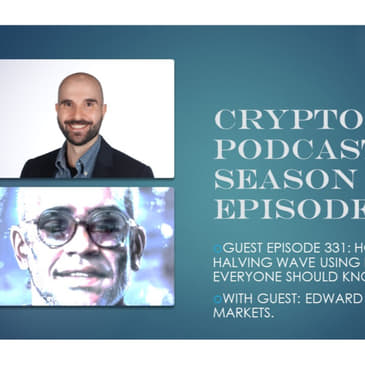

Edward Mehrez
Co-founder, Arrow Markets | Blockchain & Derivatives Expert
Edward is a co-founder of Arrow Markets, pioneering a new paradigm for options trading on the Avalanche blockchain. Arrow offers the efficiency of centralized exchanges with the transparency and security of on-chain settlements.
Prior to Arrow, Edward was a PhD candidate in Economics at Cornell University where he engaged in research at the intersection of financial economics, AI, and blockchain. He honed his expertise in quantitative finance as a consultant in the Global Macro space .
Edward's research interests lie in the dynamic interplay between market forces and financial instruments. His areas of research include:
Utilizing reinforcement learning in options market making in the presence of market frictions
Data-driven modeling of dynamical systems and control
Mathematical modeling of asset pricing bubbles
Modeling the impact of insider trading on asset prices and liquidity
Utilizing asset and derivative pricing to extract insights on market risk measures and premiums
A strong advocate for data-driven decision making, Edward champions a flexible approach to modeling that prioritizes economic intuition. He believes that continuous adaptation and improvement are crucial for models to remain relevant in ever-evolving market landscapes.
Avalanche - https://www.youtube.com/watch?v=atIZu0o50Mg
Dexalot - https://www.youtube.com/watch?v=D4vT4EFcBe4
Avalanche - https://www.youtube.com/watch?v=UJ5sBgaMtOg, https://www.youtube.com/watch?v=F6rPzbbPx0w
[00:00:00] This podcast today is for informational purposes only and is not legal, tax, investment, financial or other type of advice.
[00:00:11] Nothing contained in this podcast constitutes a solicitation, recommendation, endorsement or an offer to buy or sell securities, financial instruments or digital assets of any kind.
[00:00:26] This podcast contains information that is of a general nature and does not address the circumstances of any particular person.
[00:00:35] Readers, listeners, anybody assumes the sole responsibility of evaluating the merits and risks associated with the use of any information contained in this podcast before making any decisions based on such information.
[00:00:53] There are risks associated with every investment and any investment or investment strategy involves the risk of loss.
[00:01:03] Past performance of any asset, whether a traditional investment vehicle or otherwise, is not a guarantee or predictor of future investment performance.
[00:01:16] Hello everybody and welcome to the Crypto Hipster podcast.
[00:01:22] This is your host Jamil Hasan, the Crypto Hipster, where I bring you founders, executives, entrepreneurs, amazing guests, artists, thought leaders, everybody are all around the world of crypto and blockchain.
[00:01:34] And today I have another amazing guest.
[00:01:37] He is the CEO of Arrow Markets. His name is Edward Merez.
[00:01:42] Edward, welcome.
[00:01:45] Welcome. Thank you.
[00:01:46] Thank you. Yeah, I'm technically the co-founder, just a little correction, but totally fine in the crypto space, you know, since things are decentralized, especially since I'm doing a DeFi protocol and working on it.
[00:02:00] Just that there is some distinctions there.
[00:02:04] But yeah, definitely working on the technology, getting the product out.
[00:02:11] So happy to be working and happy to be here, Jamil, on your podcast and the Crypto Hipster podcast and the community that is so vibrant.
[00:02:22] So I'm really looking forward to discussing a few things with you all both about Arrow Markets and about the halving.
[00:02:29] I know we got a lot to talk about, so I'll let you get to it.
[00:02:32] I'm excited. Thank you for joining me today.
[00:02:35] Let me ask you first, you know, before the show started, I told you a little bit about my background.
[00:02:40] I want to know yours.
[00:02:41] What is your background and is it a logical background for what you're doing?
[00:02:47] Yeah, for sure.
[00:02:48] So my background is mostly coming from the academic world.
[00:02:53] I was doing my PhD at Cornell University in financial economics at the intersection of finance and AI.
[00:03:04] And that's really what I'm passionate about.
[00:03:07] And at Cornell, you had great departments and the CS, the section for both crypto.
[00:03:15] You had people like Iman Gunsir who were there.
[00:03:18] He was a tenured professor.
[00:03:20] He was working on an avalanche at the time.
[00:03:23] And then you also have great professors for AI.
[00:03:26] So I started to get more and more involved in the CS department, you know, just getting exposure through those classes, sharing what was out there.
[00:03:35] And I started to also do the different boot camps that were associated with Cornell.
[00:03:40] And that's really where the seed of the idea of Arrow Markets came from.
[00:03:44] We were myself and Patrick Kiefer, who at the time was doing his PhD at UCLA in financial economics.
[00:03:54] We both linked up together for one of those boot camps at the IC3 workshop and boot camp.
[00:04:01] And that is where we first started working on Arrow Markets.
[00:04:06] Very, very nascent stage when we're thinking about, OK, how do you do options contracts on chain?
[00:04:12] What are some of the benefits of doing it on chain versus what you find in traditional finance?
[00:04:17] And that is where the journey really began.
[00:04:21] And I'm really thankful for my time over there.
[00:04:24] And while I was there, my background in industry, I was doing consulting in global macro internships mostly on the side of macro effects in financial markets.
[00:04:36] And then once we saw the lack of opportunities in the lack of already existing solutions, I should say, for crypto options in DeFi,
[00:04:50] we thought that this would be great to try to bring in a decentralized fashion because there already existed centralized exchanges like Deribit.
[00:05:00] It would be great to bring it in a decentralized fashion and try to come up with that solution because I'm sure as some of your listeners and yourself know,
[00:05:08] options are just the bread and butter of many retail investors in the US and many other countries.
[00:05:17] It is not perps actually, even though perps exist in TradFi and futures exist in TradFi.
[00:05:23] People mostly like the non liquidatable long positions that they can both long and short positions that they can take with options with either calls or puts.
[00:05:35] So that's something that's super powerful, a way that you can express your views.
[00:05:40] We try to emphasize that in narrow markets with our UI UX.
[00:05:44] So basically, users can come to our platform even if they don't know much about what options are.
[00:05:51] They can play around with our light mode.
[00:05:54] They can do it in test mode, a lot of different things.
[00:05:57] But before I go on, I'm sure you want to ask more just about arrow markets.
[00:06:02] But since it is so integral to where I'm coming from, I wanted to bake it into my background as well.
[00:06:09] Yeah. So I want to know more about arrow markets.
[00:06:14] What is arrow markets? What's it all about?
[00:06:16] What makes it great?
[00:06:17] Yeah. So like I talked a little bit about before, it is an options, a decentralized options protocol.
[00:06:26] It's being built on avalanche and we are in a closed alpha right now.
[00:06:32] So it's gated. There's a whitelist for it.
[00:06:35] You can sign up, of course.
[00:06:37] There's certain restrictions, region restrictions like the United States is not allowed.
[00:06:42] But even if you can't get on the actual platform, you can come try out our paper trading experience,
[00:06:49] which is really wonderful to just get some hands-on experience before you delve in to using actual money on the platform.
[00:06:58] And just for those of you who don't know how options work, let me just explain some of the virtues of how they work and some of the basics.
[00:07:07] So there's two types of options, two main types of option contracts are called call options and put options.
[00:07:14] And call options give you long exposure to an underlier.
[00:07:18] So it could say, for example, that I want to get exposure anything above what the current price of ETH is.
[00:07:26] So let's say that it's $3,000.
[00:07:28] If it goes above that at the time of assessment or expiration, then you get anything that's above that.
[00:07:36] So there are two parameters that options have.
[00:07:40] There's that reference price and an expiration date when the thing is actually assessed and the payouts are given.
[00:07:48] So for call options, it's above that reference price that you get paid out.
[00:07:53] And for put options, it's the opposite.
[00:07:55] It's below that reference price that you get paid out.
[00:07:59] So you can get both long exposure and short exposure.
[00:08:03] And the cool thing is that you can just buy them outright and they have this thing called embedded leverage in them so they don't get liquidated.
[00:08:12] You buy them and you can sit on them.
[00:08:14] I like to say, set it and forget it like the old infomercials used to say, you can set it and forget it.
[00:08:21] Of course, in the meantime, if your bet goes against you.
[00:08:25] So let's say you buy a call option at $3,000.
[00:08:28] The asset starts going down to $2,800.
[00:08:30] The value of that option if you wanted to close it out is going to go down.
[00:08:34] But you can hold on to it until the expiration.
[00:08:37] Let's say you have an expiration date of a month out.
[00:08:39] You could be right by then the month.
[00:08:41] And so it can bounce back and you can recoup that.
[00:08:45] But if you were doing something like a perp, you'd have to be paying out all that leverage.
[00:08:50] So if you're like 10x leverage, that's nothing to sneeze at.
[00:08:53] You're laying down $2,000 there for that 200 decline in order to keep that position.
[00:08:59] So we really like to say, OK, well, it's this embedded leverage, non liquidatable risk that you can really leverage to use that to overload that term can really leverage options for the other great thing about options is that you can take place on volatility.
[00:09:17] And I know we're going to discuss this a little bit more, but just to give people a little flavor of it.
[00:09:22] You don't have to just get a call or put you can buy a portfolio of both of them and then benefit if the market swings enough in either direction, either down or up.
[00:09:33] So those are volatility plays their market swing plays.
[00:09:37] They're not there are market neutral.
[00:09:39] You're not taking a position on which direction it's going to go.
[00:09:41] You're taking more of a position on how much the thing is going to wiggle.
[00:09:45] So those are some really cool plays that you can make with options.
[00:09:51] And it's why we were super pumped about it at Arrow with the community that's also involved in helping us build the product.
[00:09:59] Sounds good. You're right.
[00:10:01] We're going to talk about volatility.
[00:10:02] So yeah, and I'm going to ask you more about puts and calls a little bit later.
[00:10:07] But let's talk about what happened on Friday night or Saturday, 419, which is Friday.
[00:10:16] Right. Yep.
[00:10:17] Friday. Yep.
[00:10:18] They're quite having have the end and the transaction fees went up.
[00:10:22] But you know, what are the factors driving the coins volatility based on past having this economic or macroeconomic conditions?
[00:10:30] Right.
[00:10:31] And market psychology.
[00:10:35] Yeah. Great questions.
[00:10:38] Bitcoin having it's an interesting phenomena, and we're seeing it play out.
[00:10:43] It's and it's not one of those things that just happens right at the having.
[00:10:47] So even though we're talking about it now, four days after five days after whatever, whenever the podcast is going to come out,
[00:10:54] it is something that plays out if you look at the last three instances of it,
[00:11:00] something that the narrative says, at least that it plays out over the span of a year or more.
[00:11:05] So these things in the past, the past three that have happened, and there's been three and there's been one in 2012, one in 2016, one in 2020.
[00:11:15] Those three were preceded by a super cycle that lasted about a year and three months on average.
[00:11:25] OK, so this thing in those super cycles that I didn't come up with that term, but in research they've they've come up with this term called super cycles.
[00:11:34] The thing really pumps Bitcoin, really pumps over that full time period.
[00:11:38] And because of that, you also get things like massive adoption, et cetera, et cetera.
[00:11:42] I would attribute that more to the price pumping than anything about the having.
[00:11:47] Now, why is it tricky?
[00:11:48] Why is the having really something that's that's hard to count on?
[00:11:52] Well, you know, I come from a quant background.
[00:11:54] And if you tell any quant, hey, I have three data points in the past.
[00:12:00] I want to create a trading strategy based on three data points.
[00:12:06] That's going to be a really hard sell for anyone in it.
[00:12:09] Now, I understand it creates a super cycle, right?
[00:12:11] So it's like a long duration of stuff.
[00:12:13] But really, the event there's only three of those events that have happened in the past.
[00:12:18] Not just that, but from a macro perspective, you know, really leveraging the data.
[00:12:23] Leveraging that, you know what I used to do my background in 2012 and 2020.
[00:12:29] We had massive trad fi liquidity injections from the Fed and from other countries in 2012.
[00:12:38] We're still in the midst of quantitative easing.
[00:12:41] And the EU was like pushing like crazy.
[00:12:43] They were going through their own problems and they were pushing in liquidity,
[00:12:46] pushing in funding, buying all debt.
[00:12:49] That was happening during 2012.
[00:12:51] In 2020, we then had COVID with all the massive stimulus that happened.
[00:12:57] Of course, there was an initial dip, but then that was quickly pretty much reversed in the traditional markets.
[00:13:03] And so two out of those three were you have these confounding factors,
[00:13:08] these things that are really pumping markets.
[00:13:11] You can't really attribute it to just having anymore there.
[00:13:16] So that's where it gets really subtle.
[00:13:19] And this time, you know, I know a lot of people are saying this too,
[00:13:22] but this time really feels different because of the six months just mega bull run that we had prior to the halving.
[00:13:32] So a lot of people, you know, everyone knows that the halving is going to come.
[00:13:35] Of course, they knew it in 2012 and 2016, 2020.
[00:13:40] Now even more people know about it, I would argue.
[00:13:43] So there is a big argument that this thing is already priced in.
[00:13:46] And we don't also have the best macro conditions from the liquidity perspective.
[00:13:51] You can say there's there's strong, you know, quote unquote strong fundamentals,
[00:13:55] things like others, higher productivity, higher job growth, et cetera, et cetera.
[00:14:01] Of course, there's still these recessionary vibes for basically mostly probably because of inflation and cost of living increases.
[00:14:09] That is not coming down so well.
[00:14:11] The Fed is having a very tough time.
[00:14:13] We just got print recently that is a three point five percent.
[00:14:16] What does the Fed like to do when that happens?
[00:14:18] Well, they like to raise interest rates, especially when they see that the economy is doing well in other aspects.
[00:14:24] They say, OK, we got to really tamp down the hot inflation.
[00:14:28] We've got to be more hawkish.
[00:14:30] And so when that happens, the markets get hammered.
[00:14:33] And it's really interesting because when you see these prints come out in the market like this,
[00:14:38] last week, we saw the the some more economic numbers on on things like job growth.
[00:14:43] The markets reacted very badly.
[00:14:46] And typically, like traditionally, when you saw numbers like that print, like, I don't know, maybe 10 years ago or so, that would be good for the market.
[00:14:53] You'd be like, oh, awesome.
[00:14:54] You know, like the market is doing well.
[00:14:57] We're getting more job growth, et cetera, et cetera.
[00:15:00] But since the market is doing well, the markets are doing well.
[00:15:04] We're getting more job growth, et cetera, et cetera.
[00:15:07] But since so much of the world has been conditioned on getting easy liquidity and we're really coming off of that drug, whenever people see this, they're like, oh, the dominant factor here is that they're less likely to cut interest rates or maybe now even raise interest rates because we have bad inflation.
[00:15:27] And so that that starts to really have an effect.
[00:15:30] And we've seen that play out in crypto as well.
[00:15:32] Crypto is what us quants call a high beta asset.
[00:15:36] That means that, let's say, if the S&P 500 goes up by a dollar, that Bitcoin might go up by three dollars or four dollars.
[00:15:44] So it's like a 3X kind of linear relationship.
[00:15:47] It's not always the case, but on average, that does occur.
[00:15:50] It acts very much like a tech stock, for example.
[00:15:53] So that's the TLDR there is that in the past, the halvings have coincided with really good economic conditions.
[00:16:04] This time not so much.
[00:16:06] And in the past, they didn't have these like Super Bowl run ups.
[00:16:09] So I'd say to people, look, be really cautious when you're going into this one.
[00:16:15] You should not be betting that this time is going to be like the last three.
[00:16:20] There's a lot of reasons to think that things could even go down from here.
[00:16:24] I had to challenge that mega bull run statement because I mean, maybe I'm looking at things different than everybody else.
[00:16:36] But like there was an infusion in Bitcoin after the ETF approval.
[00:16:40] There'll probably be an infusion if the S&P approves an Ethereum ETF.
[00:16:45] There was a massive run up in meme coins.
[00:16:48] But when you look at Avalanche, it was $8 and something in October, then went up to 60 and now it's down to 38.
[00:16:58] It's not the only crypto.
[00:16:59] It's the blue chip cryptos other than Bitcoin went up and they came crashing back down recently.
[00:17:07] So is it really a bull run or is it tricky, like you said?
[00:17:13] And what are the limitations of using historical data with this landscape?
[00:17:18] Yeah.
[00:17:21] So in the past, I mean, some of these you didn't have many crypto.
[00:17:24] I mean, 2012, for instance, you had no other points.
[00:17:27] There was pretty much just Bitcoin.
[00:17:30] And then in 2016, you started to get more.
[00:17:33] And then, of course, in 2020, there was an explosion of ICOs and stuff like that that happened in 2017, 2018.
[00:17:40] And you also that coincided with some of the DeFi summer stuff.
[00:17:44] So there was a lot of other coins.
[00:17:46] What I'm talking about mostly here is Bitcoin.
[00:17:50] The other fluctuates like, for example, Avalanche.
[00:17:54] Yeah, I think there's a ton of promise for a lot of the technological reasons that it has that it's actually nice programmable blockchain.
[00:18:02] It has great consensus mechanism.
[00:18:04] And I think you're going to see that some of these ones that have been lagging behind or even had these big drops from the peaks even recently, you could see those take off.
[00:18:14] Meme coins are just they're tough.
[00:18:19] They're one of the things that it's going to be really interesting to see what type of research comes out on that.
[00:18:25] But I don't have a good sense of the positions there.
[00:18:31] OK, but what I will say is that for Bitcoin, yeah, just from where it was six months ago to today, it's had massive growth and we've almost reached all times high highs there.
[00:18:44] We did reach all time highs relatively recently.
[00:18:47] We're not we're off that peak as of recently.
[00:18:51] So I could see it getting back to the all time highs.
[00:18:54] But people might want to also consider doing strategies that don't necessarily take a position here that might take a position on volatility.
[00:19:04] And that's really where options come in, even if like myself, you're not quite sure which direction it'll go.
[00:19:10] But you can see two scenarios.
[00:19:12] You could be like, OK, maybe that super cycle thing will play out again.
[00:19:15] Maybe we'll get a big pump because of the narrative that now it's more scarce.
[00:19:20] Maybe people will also see, hey, look, the whole world is going through this inflation.
[00:19:25] The central banks are trying to control things.
[00:19:27] Let me put my money in Bitcoin.
[00:19:29] Right. That's another possibility that could happen in that case.
[00:19:33] Boom. You'll get a huge run up.
[00:19:36] Right. And of course, that would be great if you had something like a call option or a perp that's leverage position on the upside.
[00:19:42] But if you're also thinking, well, another thing is, yeah, if Bitcoin stays to be pretty highly correlated with the market and we are going to be going through some pain with respect to high interest rates and these risky assets are going to tank because of that.
[00:19:58] Well, then you can get that put as well.
[00:20:01] And then you get into something like a volatility strategy.
[00:20:04] You can have both of those positions.
[00:20:06] You can let them ride.
[00:20:07] Of course, something like that is more expensive to get because you have to get both those different options as a portfolio where you're going long two different types of options.
[00:20:16] And it'll pay off if the swings are large enough.
[00:20:19] If you think it's going to be muted, if you think it's going to kind of just pitter out sort of how it's been going since the having its pitter out, then you can go with something where you short those.
[00:20:32] You actually sell those options, a call input option.
[00:20:36] So there are ways to play that in either way.
[00:20:39] But my perspective, and this is not investment advice, like I really just want to emphasize that.
[00:20:46] Of course, we have to be very, very careful here.
[00:20:49] And nobody really knows anyone that tells you that like, yeah, I know for sure that this is going to happen.
[00:20:54] Those people are freaking lying 100 percent.
[00:20:57] So it is really hard with these macro plays.
[00:21:01] Really, really difficult to get them right.
[00:21:03] And any time you listen to anyone on CNBC or Bloomberg or whatever your favorite is, you're always going to hear people being wrong who come on as so-called experts.
[00:21:13] So I want to just caution that you really have to take your homework.
[00:21:17] Do you get your own perspective?
[00:21:18] And oftentimes you're going to be wrong.
[00:21:20] So be very, very careful with sizing.
[00:21:22] Extremely, extremely cautious.
[00:21:24] There will be other opportunities.
[00:21:25] Don't feel the FOMO too much.
[00:21:27] There's going to be tons of opportunities.
[00:21:29] Spread it out.
[00:21:30] Do your homework and just get better and better.
[00:21:33] Most people can't be right 100 percent of the time.
[00:21:35] No one is.
[00:21:37] But hey, look, if you're right 60 percent of the time and you size things right, hey, you're doing well by the house odds perspective.
[00:21:48] I like the house odds comment perspective.
[00:21:54] I like that.
[00:21:55] However, I believe I have to believe this and I might be wrong, but I have a basic assumption about the crypto market.
[00:22:01] And that is it is an efficient market.
[00:22:05] You know, and I believe in the efficient market hypothesis that the market has no memory.
[00:22:12] Right.
[00:22:13] I have a master's degree in finance, but it was a long time ago and I don't remember some of these strategies I want to ask you about now.
[00:22:22] But I want to find out your perspective in this market, how these will work.
[00:22:27] And they are called and this is the first one new to me, long iron condors and then long straddles and long strangles.
[00:22:36] What are they?
[00:22:37] How can we use them in this market and with Bitcoin?
[00:22:41] Yeah, so there's a few different ones.
[00:22:48] Long iron condors, long straddles.
[00:22:50] You talked about long strangles.
[00:22:52] They all have their relative merits.
[00:22:57] However, I think for most retail, something like a long iron condor is probably best.
[00:23:02] And let me just explain what each of them are.
[00:23:06] So two of them are very similar with a long straddle and a long strangle.
[00:23:10] Those are both just you're going along a put in a call.
[00:23:15] The only difference between them is that one, you choose that same reference price for what you're basing it off of choosing the same reference price, same experts.
[00:23:24] That's for a long straddle.
[00:23:27] But for a strangle, you choose different strikes, but same expiration there.
[00:23:32] And all that that does with respect to the payouts, it makes and people should go and look at the visualizations of this.
[00:23:40] I really it's difficult to talk about it fully on a podcast.
[00:23:44] So I'd say just go afterwards, look at what some of the payoff diagrams look like.
[00:23:49] But essentially, one of them, they have the same.
[00:23:54] They have very similar payoff profiles where if you have to put in a lot of capital most of the time to start them up and that way the market has to swing big enough in order to get profits.
[00:24:07] But you're not capped on the outside on the upside.
[00:24:10] So the more the market swings, the more you'll make iron condors.
[00:24:15] The more the market swings, the more you'll make iron condors on the other hand, cap the upside and are cheaper.
[00:24:24] So you'll still be able to profit, but you're just going to have a cap profit at what the max is going to be if the market swings.
[00:24:31] So you could kind of kick yourself with some of the FOMO that happens there.
[00:24:34] But most of the time, things like iron condors, long iron condors, if you want to take a long volatility perspective, they're probably going to be the way to go for you.
[00:24:44] Because you're not going to put that much on the line and you're at least guarded against losing a lot because the flip side of these strategies is, hey, if the market doesn't swing or if it pitters out, if it just kind of wiggle, wiggle, wiggle before your expiry up until your expiration, then you're going to lose out.
[00:25:02] You're just going to lose that investment however much you paid for those options at the expiration time.
[00:25:08] They won't pay out and the asset will be gone.
[00:25:11] That's one of the cons about options.
[00:25:13] One of the pros and cons, one of the cons about options is that they do have an expiration date.
[00:25:20] It's not something that you can just hold indefinitely.
[00:25:23] Now you could choose to roll things if you wanted to like buy the next longer dated option and roll your position.
[00:25:31] But then you have to just buy another option when that occurs.
[00:25:34] Relative to something like Bitcoin, where Bitcoin you can just hold or Ethereum you can just hold, these derivatives do have that expiration.
[00:25:44] But what's one of the big pros with this is that each of those derivatives is much cheaper than holding the actual underlying, the actual BTC or ETH.
[00:25:55] Getting back to this example, each of the call input option, for example, if you have a two week expiration or so, it might be 10%.
[00:26:05] Each one might be around 10% of the price of the underlying.
[00:26:10] Even if you buy both of them, you're only putting up 20% of the underlying price of the Bitcoin or ETH.
[00:26:20] And you still get exposure on either the up or downside to anything that's past the current price right now.
[00:26:29] And so that's pretty great.
[00:26:30] That means that, okay, you might just have to surpass something like this 20% move in whatever the expiration time is.
[00:26:37] Let's say I gave two weeks, it's a little too short, maybe like a month.
[00:26:42] And that's not nothing to sneeze at, of course.
[00:26:45] Like a 10, 20% move is still a very big move.
[00:26:49] And it's still a lot of capital to put on the line, especially if you're talking about Bitcoin, right?
[00:26:54] If you put 20% of Bitcoin on the line, that's like $6,000, $7,000.
[00:26:59] So at the end of the day, yes, Condors will bring that price down even more and you can bet on both sides.
[00:27:08] But a lot of the time when people are thinking about options, they're thinking, okay, how can I do this in a capital efficient way?
[00:27:14] I understand that there's risks involved with the thing of expiring worthless.
[00:27:18] And they are a very strong toolkit to take these different types of positions, longs, short positions, volatility plays.
[00:27:29] But I would suggest to everyone that they get experience first, practice first on the test net before they really delve into it.
[00:27:37] Because they have this embedded leverage thing, people if they just scale up too quickly, they can be pretty dangerous.
[00:27:45] So again, do your homework, make sure that you're practicing first and take it from there.
[00:27:56] You know, I told you what I thought. I thought it was a mission. I didn't ask you what you think.
[00:28:00] You know, is the I mean, you look at the last cycle, you look at there a couple of times where we had 70% drawback in a couple days, a couple days of the last cycle.
[00:28:10] Right? Do you think the crypto market is efficient now that more institutions are here and less of the CPI players and how things have shifted?
[00:28:22] What are your thoughts?
[00:28:23] That's a good question. I like to think so. Yes, I do.
[00:28:29] I like to think that now that we have the real big players who have a ton of experience and, you know, understand some of the risks that are out there,
[00:28:39] as well as folks who are injecting liquidity into the market, that things are getting more efficient.
[00:28:46] Of course, what you will also see from the ETF flows is bigger volatility, which is interesting.
[00:28:55] You know, they're pretty sensitive. A lot of retail in CPI or in TradFi, I should say, to big price movements.
[00:29:03] So you could get amplified volatility just because of that.
[00:29:08] But overall, as people get used to the asset class and as more pros come in, it's just going to get more and more efficient.
[00:29:17] Now, if you're asking about other coins, like again, going back to like the meme coins, who that's I find it difficult to really make an efficient market hypothesis argument for those.
[00:29:33] But I could be convinced otherwise.
[00:29:36] So I'll leave it at that for the meme coins. I'm not going to smash into it.
[00:29:42] I wasn't going to ask you about meme points.
[00:29:45] I was going to ask you about this concept of a super cycle where Avalanche, for example, could go from 38 to 380, you know, in the next year and a half or chain link from 15 to 150.
[00:29:58] You know, some of these coins could 10x.
[00:30:01] Are we ever going to see that again now that these now these established players have?
[00:30:06] Gotcha. Well, I think they're not.
[00:30:11] They're still not getting too involved.
[00:30:13] And that's a great question.
[00:30:15] I got to say, they're still not getting super involved in those.
[00:30:20] Let me put this in quotes.
[00:30:21] Altcoins.
[00:30:22] The flows are going to be mostly towards Ethan BTC for probably a while until at least the super cycle is done.
[00:30:31] But like, let's say a year or a year and a half or something like that.
[00:30:34] So the only way that I really see shouldn't say the only way, but the main way I see that those coins could still have that run up.
[00:30:45] Is that if there is some price action in Ethan BTC, because let's say for Ethan, especially if there's a new ETF that's going to be approved most likely will be approved.
[00:30:55] Then what we're going to see is there's going to be a high beta with that.
[00:30:59] So the other tokens, once that occurs, they're going to get pumped, but not by those retail flows explicitly, not by the flows from TradFi.
[00:31:09] Because remember, TradFi has to go through a ton of hoops in order to start scaling up their investment.
[00:31:17] Like think about, OK, if they really wanted to get involved, they have to get retirement accounts on this.
[00:31:22] A lot of them are restricted to just futures markets there.
[00:31:25] There is a ton of restrictions.
[00:31:26] I'm not saying that JPM won't open up its own internal hedge fund that they might throw, I don't know, a billion dollars at and then they can go take the risks there.
[00:31:37] But the big flows that would come about through different retirement funds and stuff like that, professionally managed retirement funds, those are going to take a while longer to get to crypto.
[00:31:52] So the altcoins rather not to Ethan BTC.
[00:31:55] That's going to happen relatively soon.
[00:31:57] So if we see that run up that's occurring from the ETFs, then yeah, I totally believe that a Vox could go up.
[00:32:04] But it's really going to be in my opinion, it'll be more driven by the native crypto users rather than the institutional flows.
[00:32:15] It'll just be correlated.
[00:32:16] People will get excited that, hey, look, ETH is back up to four or five thousand, six thousand.
[00:32:23] Let's pump these other ones because, hey, they're lagging and they're not even at the all time highs that now ETH is achieving.
[00:32:31] Right.
[00:32:32] So that's the narrative I can see playing out there, but not for another couple of years where it's natively coming in the direct flows.
[00:32:42] It's more of a correlated effect right now.
[00:32:46] I was looking at three to five.
[00:32:51] Yeah.
[00:32:56] But, you know, there you make a good point.
[00:33:01] There is a there's a chasm or a big canyon between the native, you know, with three users and these institutions.
[00:33:11] What's it going to take for these institutions to be able to do what we can do in the crypto market?
[00:33:19] And that's by the by the tokens, not just Bitcoin and Ethereum, but everything.
[00:33:23] You know, what's what's going to be that catalyst that brings them into the fold?
[00:33:30] Yeah, I think a lot of the uncapped potential is gated, for lack of better words, by investment professionals.
[00:33:46] And it's not going to be until we see the investment professionals, investment managers pick up on these and figure out ways to manage risk with them.
[00:34:01] The other problem is that these are very volatile assets.
[00:34:06] So until they smooth out more, they're probably not going to feel comfortable suggesting that their retail folks, the people that they represent will invest there unless they have enough excess funds where they know that they can risk it.
[00:34:25] And they give them a ton of these, you know, provisios that say like, be careful, etc, etc.
[00:34:34] But I don't see it being the I don't see.
[00:34:42] At least with the products that exist now, I don't see those funds flowing in directly.
[00:34:47] What would be very cool, though, and I know that some people are developing this type of stuff are indexes that take go across a lot of the blue chip cryptos.
[00:34:58] And in that case, yeah, you might have several of the blue chips fail, but others keep it afloat.
[00:35:06] And then we can have rebalancing similar to how you have with the Nasdaq and the S&P companies fall out and other ones go in all the time.
[00:35:14] So you want these type of broad exposure indices to be created.
[00:35:20] I think that's a really good opportunity for big players, big regulated players like Fidelity, BlackRock to really lead the push on because you have to deal with a ton of regulations when you're doing stuff like that.
[00:35:36] But once we see that, once we see more of these indexes come in where people aren't necessarily exposed to the idiosyncratic risks of each of those cryptos, then you'll see a lot of flows.
[00:35:50] And it's a really interesting phenomenon in TradFi because there's a lot of these individual stocks that once they grow, they pitter out, they grow, they get to a certain point.
[00:36:02] And then it's announced that they're going to be in the S&P 500.
[00:36:06] And when they're included, there's this drift upward for them.
[00:36:12] It really is like, oh, the gates have opened up for them because a lot of investment professionals are restricted by regulations that say, OK, you can just get involved in ETFs and these broad based indexes.
[00:36:30] They have different requirements for how much concentration the fund can have.
[00:36:37] And these are people who aren't necessarily investing for individuals.
[00:36:41] There are people who are investing for big retirement funds, you know, for the different union funds for Teamsters, for Apple's pension fund or whatever like all of those folks.
[00:36:54] They have a ton of money, but they're also subject to a ton of restrictions on how much concentration they can put into these assets.
[00:37:03] So yeah, I would say the next step would be broad based ETFs.
[00:37:08] They invest across different altcoins.
[00:37:12] That would be great to see.
[00:37:14] I like it. I like it.
[00:37:18] I think I've seen something that a few years ago, it was out by Goldman.
[00:37:22] It was called the digitized something fund, but it's nothing digitized about it.
[00:37:28] Had had Morgan Stanley and JP Morgan and different stuff that had nothing to do with crypto.
[00:37:34] You know, Grayscale at the time had some kind of fun, had some kind of they're going there, some kind of large cap or something like that.
[00:37:41] I was like, hey, you know, more like around around those lines that the managers could feel comfortable with.
[00:37:49] Yeah, makes sense.
[00:37:51] Yeah, for sure. For sure.
[00:37:53] Yeah, I mean, to some extent, like it's complete.
[00:37:57] It's difficult.
[00:37:58] You find yourself between two different worlds, the revolutionary world and this kind of more.
[00:38:03] All right. The conservative world, the one where it's like a gradual change rather than the big burst.
[00:38:09] Right. And there's always, you know, for as long as history has been around, there's always been this kind of fight between what the pains of the world and the Berkman,
[00:38:18] Edmund Berks of the world, like just like, OK, what are we going to take the French Revolution approach or, you know, are we going to take more of like the UK approach and have have things kind of gradually change over time?
[00:38:30] And I also personally find myself on both sides.
[00:38:35] I find myself saying, yeah, hey, you know, just kind of smash that system.
[00:38:39] Let's rebuild it all and do this and that.
[00:38:41] And then the other side of me says, well, you know, a lot of the reason a lot of the things that have actually been built out there were for good reasons.
[00:38:49] Now they built them badly, but they always had their good reason.
[00:38:53] So how might we go back and kind of revise things, you know, and get every get these people still involved?
[00:39:00] I think it's most likely the that's probably the case.
[00:39:05] We can have the least flow of counter flow.
[00:39:09] We're not swimming against a current as much in that case.
[00:39:13] So the more that we can work with these people and the more that we can get the vision of still having open finance, having things be more decentralized, trying to also explain to regulators that hey, look, when you're dealing with something like open finance or defy,
[00:39:29] you can come out there as a regulator and you can say, hmm, what if I just fork the system and I run all of these stress tests on it and see what happens?
[00:39:37] See, you can have live diagnostics on the whole system to see how fragile it can get.
[00:39:43] What kind of systemic risk there is.
[00:39:45] You cannot do that on the traditional finance system.
[00:39:47] So, you know, I'm still very optimistic that there's a way to explain this well to trad fi folks and be like, this is the good way of doing it.
[00:39:56] We have to move more towards this way.
[00:39:58] That's very idealistic, though.
[00:40:00] It's extremely idealistic.
[00:40:02] So I'm hoping that's going to happen and it's nice to see that you are getting big players who are coming in.
[00:40:09] Of course, you also hear them doing some really shady things too, and that's that's bad.
[00:40:16] But yeah, the more that we can the more that we can bring folks on board, the better.
[00:40:22] And a lot of people won't even come to crypto otherwise.
[00:40:26] Unfortunately, it'll be really hard to get some people who imagine you have to explain to them and sell your metamask, go to this site, steak farm, do this and that.
[00:40:35] Like, it's really difficult for folks who have regular nine to five jobs or are near retirement or whatever.
[00:40:43] You know, it's just really tough.
[00:40:45] We have a lot of insider information, a lot of ways where oftentimes we downplay it.
[00:40:50] We downplay how much of this UX we've actually gotten used to, how much of this user experience we've had to accumulate over time.
[00:40:58] Most people will just give up if they're faced with stuff like that.
[00:41:01] So we need these intermediaries to some degree.
[00:41:06] It might be that new intermediaries come on, like new people who will get to the consumer and bring them on board in a really, really simple fashion.
[00:41:13] And that's great.
[00:41:14] But the people who have the most power right now are still the old guard.
[00:41:19] So we have to figure it out.
[00:41:22] This is that old school battle between the revolutionaries and the more conservatives.
[00:41:27] And we're going to see how it plays out.
[00:41:29] But yeah, I have one of my mandates really boring.
[00:41:35] But with any investing, boring is better.
[00:41:39] You know, it avoids the scams and the drama.
[00:41:44] You know, but yeah, so I want to thank you very much for your time today.
[00:41:49] I enjoyed talking to you.
[00:41:50] I have one last question.
[00:41:53] It's how can people find out more information about you about arrow markets?
[00:41:58] How can they do that?
[00:41:59] Yeah, great.
[00:42:00] So all you got to do is just go to arrow dot markets.
[00:42:05] That's our domain.
[00:42:06] So you can you can visit our website and find out more.
[00:42:10] Get involved in contests, check out our test net, sign up for our waitlist.
[00:42:16] And it will be great to see people also join our social.
[00:42:21] So we're on Telegram, we're on Twitter, we're on Discord.
[00:42:26] In terms of getting really involved, I think Discord is the best.
[00:42:31] You can also find ways to get involved in helping us build.
[00:42:35] So giving us feedback on what the UI UX is.
[00:42:39] We have different interviews with different users there.
[00:42:43] We take all sorts of feedback on what types of products people would like to see,
[00:42:48] what we can make.
[00:42:49] And we like to think about it as a group kind of activity.
[00:42:54] We want to think the community is helping us build this product.
[00:42:57] We want to listen.
[00:42:58] So find out ways that you can get involved.
[00:43:00] You don't have to be an expert options trader.
[00:43:02] In fact, that's most likely if you are an expert options trader,
[00:43:06] the product is going to be great for you.
[00:43:08] But we want people who are coming to the platform for the first time,
[00:43:12] trying to understand what options are.
[00:43:14] Because in crypto, it's really a small subset as of now,
[00:43:19] and it's going to grow.
[00:43:21] But we want to get the best user experience for you guys,
[00:43:25] the best types of products for you guys.
[00:43:27] So don't be shy.
[00:43:29] Come on, learn.
[00:43:31] Talk to us as you're doing so,
[00:43:33] and both of us will learn a bunch,
[00:43:35] both the Aero team as well as you as a user.
[00:43:39] And we are hoping to welcome you to the Aero family.
[00:43:42] So as trade as that might be,
[00:43:45] we do like to try to push that ethos.
[00:43:49] Awesome.
[00:43:50] Awesome.
[00:43:51] Thank you very much for your time today.
[00:43:53] Thanks so much.
[00:43:54] Have a good one.
[00:43:55] Bye.