
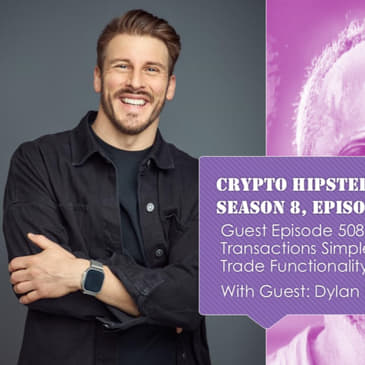

Dylan Dewdney
Kuvi.ai CEO and Co-Founder
Dylan Dewdney is a seasoned entrepreneur and crypto pioneer with over 14 years of experience in the blockchain space. He discovered Bitcoin in 2011 with high conviction, and was a participant in Ethereum's ICO. As an angel investor and advisor, he supported numerous foundational projects in the crypto ecosystem before 2017. From 2017 onward, Dylan has been instrumental as a multiple-exit founder, guiding and raising over $20 million across various influential projects, contributing to a combined market capitalization exceeding $10 billion. He has shared stages with industry luminaries such as Edward Snowden and Gavin Wood.Currently, Dylan serves as the Co-Founder and CEO of Kuvi.ai, an AI-driven crypto interface that is rapidly gaining traction. He leverages his expertise as an analyst, growth strategist, and independent researcher to identify innovative products and market opportunities that others may overlook. A steadfast believer in the transformative power of blockchain, Dylan is dedicated to harnessing its potential to positively impact the world.
[00:00:04] Hello, everybody, and welcome to the Crypto Hipster Podcast. This is your host, Jamil Hasan, the Crypto Hipster, where I interview founders, entrepreneurs, executives, thought leaders, amazing people all over the world of crypto and blockchain. And today I have another amazing guest. He is the founder of Kuva AI. His name is Dylan Dewdney. Dylan, welcome to the show.
[00:00:27] Yeah, thanks so much. Really happy to be here. And yeah, it's a beautiful day where I am in Toronto and we're getting ready for Canada Crypto Week. And I'm absolutely ecstatic to be picking this kind of off with you. Awesome. That's right. It is consensus this weekend. Consensus is no longer in Austin this year. It's in Toronto.
[00:00:49] Thankfully, in much cooler environments than Austin, Texas, which is, you know, feels like you're in literally like a cooking pan. It's a good state though. I went last year. So this year I'm not able to go, but yeah. So awesome. So thank you for joining me today and I'll kick things off. And the first question I ask everybody is this, is what is your background and is it a logical background for what you're doing now?
[00:01:17] Yes. So I actually think it's extremely logical. My background was in, so I did an undergrad and most of a master's in sociology.
[00:01:30] And you might think like, oh, that's not very tech oriented. But in fact, this is going way back to 2007 ish. And, and this is right before the economic crisis of 2008, the Great Recession, as it was called. And during that time, so in addition to be, I was just really, really interested in social movements, like how society changes, how technology is part of that change.
[00:02:00] And so I was like on this kind of like always on this hunt for like what's next due to my academic studies. And then the, yeah, the Great Recession came along and I think I just felt like, wow, geez, like something's kind of like wrong in a global level, on a global level and systemically with how everything kind of works financially.
[00:02:27] Right. And so that kind of primed me. And then I, and it was a few years later, I came across the Bitcoin white paper. It was late 2011. And I didn't, you know, just instantly discount it as, as, as something that was just totally wild and made no sense. And it was really weird and crazy, which was at the time, you know, we really take it for granted, like Bitcoin and crypto right now.
[00:02:53] Like, it seems like part of the fabric of our lives. But back then, I think people have to understand that it was absolutely wacko to, to most people. And so, and it was only wackos really who were kind of into it, if you will. And so anyway, that was, that was sort of my background at the very, very earliest kind of like point where I was exposed to crypto.
[00:03:18] Now, in all sincerity, I wasn't like, you know, dug in on, on Bitcoin and dug in on crypto from the very, very beginning. It took me about another year for it to kind of soak in. And, but by, but by 2012 and into 2013, I was jumping headlong into things. I was buying mining equipment and trying to, you know, and I was frequenting the BitcoinTalk.org boards, just like a historical bulletin board.
[00:03:48] I think it's still ongoing. And so, yeah, that's sort of my background. I think it's pretty logical. I was pissed off with how the world is working financially. I was into studies that had a little bit to do with that in my, in university. And then, and, and then I kind of came across it. And, and so I didn't discount it.
[00:04:09] Awesome. I'm glad you didn't, you know, that I, a lot of my friends and family did, they held calls with me to try to get me to get to leave it and leave it alone. And I'm like, no. Interventions. Interventions. Crypto interventions. Yeah. Those interventions don't happen anymore. No, they don't. No. Yeah. So, Kuba AI, right? KUV-E, actually. KUV-E, KUV-E. Yeah.
[00:04:39] AI. What's it all about and why should we all give a hoot? Oh, well, thank you for using our branding in the question. So, so yeah. So, so yeah, I think the complexity, like what's it all about? Like in a, in a sentence is we remove the, the complexity of crypto and DeFi in general. Right. So, so yeah. So yeah.
[00:05:05] So the, and there's really inherent complexities involved in the space that I think a lot of people don't appreciate if they aren't coming from outside the space. So you and I, and I'm sure many of the listeners really take it for granted that we know what an address is.
[00:05:24] We know, you know, we're willing to undertake the friction of self-custody or setting up a wallet or going on to a centralized exchange and undertaking, you know, KYC, et cetera, et cetera. The banking infrastructure and the way we interact with applications, both Web2-oriented financial applications and otherwise, it's sort of like we take it for granted how smooth that whole process is for the most part.
[00:05:54] And in crypto, we're kind of willing to deal with a lot of friction because most of us are early adopters. And as we move into sort of the early majority and late majority phase of the adoption cycle for crypto, the next billion or 2 billion people coming into crypto Web3 and DeFi and banking themselves, they're not going to be willing to put up, I think, with that level of friction.
[00:06:24] So how do we solve this? How do we solve the friction points? Up to now, we didn't really have a good way to solve it. Fortunately, enter AI agents, sophisticated LLMs that can understand what you want to do. And now we have this sort of optimal technology to help us solve some of these problems.
[00:06:45] So in essence, there's no more like dealing with wallets, understanding bridging solutions, going between different ecosystems. You simply just talk to Kuvi to text, like you text a trade is what we call it, or we say just hoot it because we want to sort of create a new verb like Google. So instead of, you know, trading, you're hooting, right? You're talking to Kuvi, you're saying, hey, I just want to spot, I want to spot trade my USDT and buy Bitcoin.
[00:07:15] Or, hey, I want to, or you can do something more sophisticated. Like if you, we basically solve anything downstream from what a user wants to do in crypto and Web3. Awesome. So you could do all your trading on Kuvi and say, hey, I want to trade this a certain, certain price point. Yeah, absolutely. Very cool. Very cool. So I want to find out then how technically the tech, the texting to trading works.
[00:07:42] And then what are the benefits for the new investors and traders? Yeah. So technically how I'll answer the first part. Sure. So technically how it works is we take the user's intent, say, we'll use the example of like, we'll just use your example. I think of, hey, Kuvi, I want to buy, what was it? Bitcoin. So, hey, Kuvi, I want to buy Bitcoin, right?
[00:08:09] The Kuvi has to understand that that's what you want to do. So we, under the hood, the LLM is interpreting that intent. And then we attach that intent to an action, right? So we say, when this intent comes in, essentially you have to understand with, you know, 99.9% accuracy that that's what they want to do. And then we are connected with, or the user's wallet is connected with our system.
[00:08:37] And then it undertakes the buy, right? Via whatever means that we have built out. In the case of Bitcoin, it would be, you know, within that ecosystem. We're first connected with Solana and EVM-based ecosystems. So Bitcoin is going to come down the road. But, yeah, that's essentially how it works. We understand the intent, and then we take action on their behalf. They're going to confirm that intent just to be extra safe.
[00:09:07] But Google will say, hey, this is what you want to do. Say, you just type yes, and then done. Like, done. It's really kind of cool. And then, sorry, what was the second part of your question? Why it's a real benefit for new investors and traders?
[00:09:27] Well, it's an incredible benefit for traders and new investors in the sense that... So, like, it's a great benefit if you're new to crypto, certainly, right? Because it removes all of these complexities. But if you're more sophisticated, right? What it allows you to do is basically have the same abilities and magic at your fingertips,
[00:09:57] potentially, as, like, a quant fund or somebody who can develop, like, bots, right? To undertake, you know, strategies on your behalf, right? You can do things like automating copy trading. You can do things like, hey, Goofy, every time Elon Musk tweets positively about Dogecoin, I want you to buy X amount of Dogecoin and when it's 10% higher, I want you to sell it back into stables. Pretty much anything...
[00:10:22] It basically democratizes anyone's ability to undertake sophisticated trigger-based trading strategies at the highest level, right? Or... So, basically, any alpha that you can interpret, you can literally just implement it. You can execute on it. So, like, for example, if you're, like, you're talking to a friend and you're, like, man, wouldn't it be great?
[00:10:50] Like, I think, like, if I could, like, you know, trade... Like, if I could buy every meme coin that comes out on Solana that a hundred of my top, you know, KLA influencers have mentioned it, like, in their feed when it comes out. And then I can just... I can, like, automate that buy of whatever that coin is, right? Whatever they mention it.
[00:11:15] And then sell it back when it's whatever, 2%, 5%, whatever your risk tolerance is level back. It's basically allowing people to have the same abilities of, like, a genius, like, developer or, like, a... Or a quant fund at the highest level. So, of course, there's risk involved, like there is with any trading strategy. But basically, it's, like, putting a trader in, like, an Iron Man suit, you know?
[00:11:45] It's, like, gives them that level of augmentation of their abilities, right? Because you can't really automate these things if you're just... It's almost like going from the Stone Age of trading to, like, you know, like, the Iron... Like, the information age. So, it's really quite potentially extremely impactful from that standpoint. So, that's something to be really excited about, I think.
[00:12:15] So, I'll give you an example, see how this could work. So, I want to buy the next Trump meme coin the minute it comes out and sell it and sell it. Be in the first five minutes and then sell it a half hour later for a 10,000% profit. I can do that using your platform. Absolutely. As long as there's a 10... As long as there's a trigger that makes...
[00:12:42] Like, as long as you have 10,000% profit, that's triggered. But if it's not, then no. So, I mean, there is, to some extent, you have to be... You know, and part of this process is letting people mess with things a little bit and understand how they work, right? Because a lot of people... Because one of the issues is, like, people don't necessarily know what's possible, right?
[00:13:11] So, knowing what's possible is part of the challenge as well. But yeah, absolutely. If you can think of it, if you can dream it, you can make it happen, right? Like, any alpha trading strategy you can dream up. It might not work, by the way. Like, you know, like, well, let's not imagine that every alpha trading strategy is going to work. But you can adjust your risk tolerances. You can even...
[00:13:36] You know, we actually are designing a bit of a testing type of situation as well, like a sandbox type of environment. So that, you know, you can just use, like, not your real money, if you will. Or just, like, undertake a strategy that doesn't, you know, use your... And you can kind of go through that and see if it works. You can tinker a bit. And maybe it's working. Then you start putting, you know, more and more of your assets into it.
[00:14:07] Awesome. I'm just thinking, like, traditional... In traditional finance, you have these worlds. You have, you know, like, straddles and strangles and all this crazy stuff with options and futures and forwards. You can really replicate that now in crypto with using your platform. Yeah, absolutely. So, I mean, copy trading is actually a big...
[00:14:32] Is a big kind of area that a lot of people are into where they're just like, hey, let me... Whatever this address does, let me just, you know, copy it. Like, whatever buys they do, we can definitely do things like that. Copy trading is pretty easy implementation. But, yeah, people are really limited only by their imaginations with how they utilize agents, the intersection of agents and DeFi.
[00:15:02] Got it. Okay. That sounds good so far to me. I want to find out why your technical infrastructure is an upgrade over the really complexity-based systems we have today in blockchain. And it sounds like you got to... You're going to be able to onboard the next billion people as we go into that different... As you go into that more mature phase of market participation. Yeah. So, I mean, it's definitely an upgrade.
[00:15:32] I think you can kind of... A decent and rough and ready analogy for this is like, how much better did using your phone become when we moved from BlackBerrys to iPhones, right?
[00:15:49] And, you know, how much more efficient, how much better that UX UI became, how much more engaged and drawn into that platform and product did the world become? I actually think you're going to see a very, very...
[00:16:06] Because the thing about Kuvi and about this intersection of DeFi and crypto and Web3 and AI agents is that it's actually a UX UI innovation, right? So, it's not a massive... It's both. It's a technology innovation, but it's also like a UX UI innovation mainly.
[00:16:27] It's getting people the ability to interact with like what is tantamount to like another human being almost in many ways, except there it's like a genius and it never sleeps. And it undertakes, you know, whatever. And it does whatever. And it's like a slave for you as well. So, it's like... Imagine that your filter and UX for any application...
[00:16:53] I think this is going to be true for in general for many applications, but it's especially true in crypto where things are more complex than they are in other... In other like Web2 kind of contexts, right? So, it's going to be absolutely going to be a huge improvement to people's abilities and what people are doing.
[00:17:18] Just their level of engagement, how much they're going to enjoy, you know, interacting with value. The white paper's name is a peer-to-peer... A platform for peer-to-peer value transfer, right? So, it's... Although we're centered in on crypto and DeFi and Web3 in our first phase, we actually want to be the nexus for how people interact with value in general.
[00:17:44] Whether that's traditional assets, RWAs, anything really. Awesome. Awesome. So, let's talk about next why AI agents can be a lifesaver for crypto. There's been some talk about, you know, some people, especially on the Ethereum side, especially, you know, talk about Solana and Ethereum.
[00:18:11] You know, people were concerned that Ethereum's price is not catching up with the utility. Or it's not, you know... So, how can AI agents be a lifesaver to help align the prices, the price discovery, along with the application of, you know, crypto and blockchain in adoption? Well, I mean, AI agents are really important.
[00:18:38] Again, going back to this issue of, like, how complex things are for the regular user, right? So... Or for somebody that's, like, absolutely new coming into this. So, if my mom is like, hey, I want to buy Bitcoin, what do I tell her? I'm telling her, okay, so what you got to do is you have to, like... Yeah, you could sign up for a centralized exchange, but I think that you should do self-custody. How do you sign up for a Bitcoin wallet? Where do you sign up?
[00:19:07] It's a totally different experience than, like, getting a bank account. It's completely alien to her. So, what an AI agent can do is guide you through that process. Almost like I would be guiding my mom. So, in terms of, like, how new users come into... Net new users come into crypto and DeFi, I think it's absolutely going to remove a lot of complexity and friction in that sense. Got it. So, you have less friction.
[00:19:35] And you still have, with DeFi, you still have this, you know, intersection. Not intersection, but distinction between retail users and institutional users, right? Like, it's a myth, maybe it's a myth, that only institutional users understand DeFi, right?
[00:19:55] So, how can you get the retail crowd up to speed and maybe be on par or even further along than your institutions who might be a little slower to move in this space? I think that every... I think it's a misconception that people don't understand DeFi. I mean, DeFi is just a word, like, it's a word that we made up for something called decentralized finance, right?
[00:20:25] What is decentralized finance? It's just not centralized finance. It's still finance. So, most people understand finance. You know, most people understand interest. Most people understand... Many people, maybe not most, understand things like amortization and understand that when... You know, understand the basics of trading and strategy, like sell high, like buy low.
[00:20:52] These are all pretty, like, assumable concepts and subjects for everyone. Of course, as you get into the deeper... As you get deeper into things like perpetuals and, you know, other advanced, like, aspects of staking and restaking and things like that.
[00:21:17] Like, they're typically, like, maybe not everyone knows them, but they don't necessarily need to know that, you know, what's going on in the background if I just want to optimize yield. So, in the scenario of, like, utilizing Kuvi, you're not saying, like... You're not talking to Kuvi as an advanced, like, genius of DeFi where you just know everything. You have a very sophisticated understanding.
[00:21:47] What instead you do is you just... You don't have to be smart. You just let Kuvi be smart. You say, Kuvi. I want the most optimized... Tell me a little bit about some of the most optimal strategies for maximizing yield, you know, or maximizing my crypto portfolio. You can ask a really, like, quote, unquote, dumb question to Kuvi.
[00:22:14] Like, hey, and this is actually really important for us in how we build our core prompt engineering. As we say, like, we wanted to have prompts or people say... And we have Kuvi know what to do when someone says, hey, Kuvi, I just don't want to lose money in crypto. What do I do? Or, hey, Kuvi. And we have to have an answer for that. And so Kuvi will say, okay, you know, that sounds good. So, like, here's some strategies and options for how, you know, you don't lose money in crypto, right?
[00:22:43] And this optimizes yield. This uses this. And it can break that down for you. And, you know, here's the strategy that, you know, that people are using, right? Would you like to undertake a similar strategy? Would you like to do this and that? Blah, blah, blah. Blah, blah, blah, blah. And so, in this sense, like, you don't really have to be sophisticated. You let Kuvi be sophisticated on your behalf. You just asked me to ask you the billion-dollar question.
[00:23:13] How do you not lose money in crypto? There's so many places where someone can lose money in crypto, right? So, what are the best ways? Yeah. So, I think, like, you know, crypto is an extremely volatile base. Like, it's getting less and less volatile as it becomes more and more mature. But the volatility is, in fact, what draws people to this space.
[00:23:43] And what I mean by that is that, well, if you just wanted to make, you know, 1%, 2%, 3%, 4% gain, right? Then you may as well just get into the traditional areas. Like, many people come into crypto because they see it as this sort of, like, avenue or way to get rich quick.
[00:24:08] And I think we should be very straightforward and honest about that, that there's a huge speculative impulse in crypto. And that's what drives a lot of adoption. And that's actually okay. There are large opportunities in crypto. But anytime you see – anytime where there's a space with large opportunities, well, there's also very much, you know, equally sized pitfalls.
[00:24:36] So, I think that it really depends on the level of risk that you want to associate with yourself and personally. And how much, you know, you're willing to lose. You should, you know, from my own crypto journey, like, I never put in more than I was ready to lose 100% of.
[00:25:03] And although Kube is not going to be some sort of perfect system and will always, you know, get you – it's ultimately drawing off the intents of the user, right? But it is going to be an augmentation of their abilities. So, it is going to be better than you yourself alone would be.
[00:25:24] It is going to understand and collate a bunch of data points better than you will be able to on your own by yourself. It will be able to execute on your ideas better than you could do on your own. You won't be able, for example, to deploy a bunch of bots to understand, like, this and that and undertake trades on your behalf or spend the time.
[00:25:53] You know, you alone would be consolidating your portfolio piece by piece, asset by asset. Kube can do that for you, right? So, it's – I guess it's like, you know, if you put glasses on, Kube is not going to help you, like, not see something bad. It's just going to help you see it more clearly. And vice versa, something good, you know, and help you see it more clearly. I like the analogy.
[00:26:25] One of the areas that is an unforeseen area that people lose money on is bridges, right? And there's lots of bridging in DeFi. Like, how can your platform and others that are in this space be – you know, next to trade – be able to help get rid of those bridge attacks and solve the bridge problem so that we lower risk for people who don't understand? Yeah.
[00:26:53] Well, one thing to speak about with respect to bridging and transaction fees in general is that both DEXs and SEXs don't really – like, we have very discreet, like, evidence of our transaction fees. Like, they only give it to us one at a time. It's in rather inscrutable terms. We don't know, for example, how much we're going to spend on transaction fees during a week or during a month or during a year. And there's a good reason for that.
[00:27:23] Like, DEXs and SEXs don't want you to know how much you're spending on transaction fees and bridging fees per se. That's why they're only giving it to you, like, once a piece, right? Right. So that's one thing that I think is really important to solve for consumers, which is, you know, Kuvi has the ability to report that for you. Say, hey, Kuvi, how much have I spent in total on transaction fees? You know, not Kuvi transaction fees, by the way. We charge very small transaction fees.
[00:27:53] We're also in the transaction fee game. Otherwise, we don't have a business model. But we're absolutely willing to report that back to you so that you know how much we're spending. When it comes to things like bridge attacks, that's a little bit like we can't necessarily prevent bridge attacks from happening to consumers or users.
[00:28:13] But what we can do is we can analyze, for example, we can say, you know, according to the data that you have on hand, Kuvi, like, what is the safest, like, bridging solution or the most optimized bridging solution that has the lowest level of transaction fees, the lowest level of reported attacks, like, for this, you know, route, right?
[00:28:37] Or tell me, you know, like, let me know the safety level of this, like, of this transaction on a scale of like one to 10. Do you have any metrics on that? We can start to report stuff like that. Got it. It sounds really good. It sounds really good. So people have insights and I think that every, it had insight to that. It's wonderful. You know, so I want to find out about your roadmap.
[00:29:02] How do things look like in the medium, short term, medium and long term for Kuvi? Yeah, so we finished our seed round not too long ago. We're in the middle of our strategic round where we're getting a little bit more fuel and firepower because we need to buy, we're going to start building our own model with our own hardware.
[00:29:25] So we have to buy a number of H200s and that's going to allow us to have really, really efficient costing for our prompting because all these prompts are coming through. Somebody's got to pay for them and we don't want to be paying, you know, DeepSeek or Grok or OpenAI. So we'll be building our own model, this capital infusion. That's one thing.
[00:29:50] We're coming out to market in about two months with our TG and listing in terms of our token. Our product will be invite only and beta level and it'll be, it's about three months away. The full product, public product is more like six to nine months away. And that's, yeah, how everything's looking at the moment. We're in the middle of this big marketing push. We're having a big presence here at Consensus Toronto. We were just at Token 2049 in Dubai.
[00:30:19] And yeah, that's pretty much everything. Awesome. Awesome. Sounds great. So I want to thank you very much for speaking with me today. I look forward to seeing what, you know, your full product when they come out and everything. And I have one last question. And it goes along with that. How can people find out more information about you, about Kuvi? But I'm going to become part of this opportunity for themselves and for investing in Corp. How can you do that?
[00:30:49] Yeah, absolutely. Come to our website, kuvi.ai. That's K-U-V-I dot A-I. And you can learn a bit more about us. Our more regular cadence of information is coming out on our Twitter. And we're at Kuvi Labs. And that's K-U-V-I-L-A-B-S. And you can also join our Telegram, too, which is at, I think, I have to check it, but I think it's also at Kuvi.
[00:31:20] What is it? It's Kuvi AI. K-U-V-I-A-I. Awesome. Thank you very much for your time today. Pleasure, man. Pleasure, brother. Thank you so much for having me.