
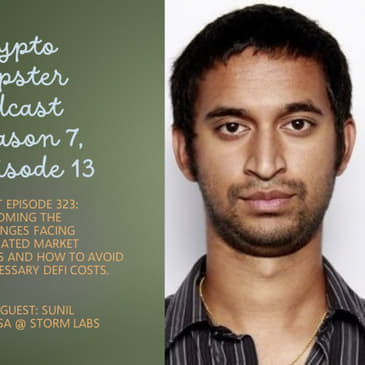

[00:00:00] Hello everybody and welcome to the Crypto Hipster podcast. This is your host Jamil Hasan the crypto hipster where I bring you founders entrepreneurs executives
[00:00:11] thought leaders artists you name it all over the world crypto and blockchain and
[00:00:16] Today I have
[00:00:18] to have an amazing guest
[00:00:21] He he is
[00:00:23] You know, I'm honored to have him as a guest who he is the founder of storm labs
[00:00:28] His name is Sunil Srivatsa
[00:00:32] Sunil welcome to the show
[00:00:34] Hi, thanks for having me excited to be here
[00:00:37] Very welcome. Very welcome. So
[00:00:41] Let's kick things off and I'll ask you first
[00:00:44] You know, what is your background and is it a logical background for what you're doing now?
[00:00:51] Yeah, that's that's a great question. I really feel like a lot of parts of my life and
[00:00:56] All combined to lead me into crypto
[00:00:59] I
[00:01:00] Actually studied computer science and finance in school and then for my first job out of college
[00:01:07] Ended up working at square which was like right at the intersection of kind of like payments finance and technology
[00:01:14] I
[00:01:15] had heard about Bitcoin
[00:01:18] Around I want to say 2011 or 2012
[00:01:20] But didn't do anything at the time
[00:01:22] but it was kind of all my radar and then around 2017
[00:01:26] First bought my first Ethereum and started participating in you know, some of the ecosystems
[00:01:32] And then in early 2020
[00:01:35] This was kind of like the pre precursor to
[00:01:38] DeFi summer
[00:01:40] Got really interested with the your ecosystem in particular
[00:01:44] This developer called Andre Kohn. Hey had basically created these kind of like interest bearing tokens
[00:01:50] Which I thought just made complete sense
[00:01:54] and at the time I was working at my job at uber where I was
[00:01:59] for about five years prior to jumping into the space full-time and
[00:02:04] You know at some point in time. I was just
[00:02:07] Couldn't resist
[00:02:09] Jumping in and working, you know in DeFi full-time
[00:02:15] Very cool very cool so
[00:02:18] What is what is storm labs all about and what makes you guys stand out in the ever-competing DeFi space?
[00:02:27] Yeah, totally
[00:02:29] So storm labs is really about building and sharing technology that enables economic empowerment for everyone
[00:02:37] I'd say one of the real unique things about us is we're a relatively small company only five folks
[00:02:44] And all of us are pretty avid users of DeFi and crypto in general
[00:02:50] So we are really plugged into the space and you know trying to build products and solutions
[00:02:57] That we hope, you know, we ourselves will find useful as well as other folks
[00:03:04] Great great so
[00:03:07] Let's get into let's get it. Let's get into DeFi right
[00:03:11] You're focused on DeFi and I want to know from your perspective
[00:03:15] You know what the current global DeFi landscape looks like right now
[00:03:23] Yeah, that's a that's a great question. I guess I would just preface all of this with
[00:03:28] DeFi is still relatively new right like this all only became a thing at the very beginning of last cycle
[00:03:36] So relative to you know crypto at large and the more traditional financial system
[00:03:41] DeFi is still really really early on in its life cycle. I think you can kind of view the space as
[00:03:49] You know
[00:03:50] Various segments obviously there's more traditional stuff like lending so that would be protocols like compound or Ave
[00:03:58] You have automated market makers the most well-known of which is like Uniswap
[00:04:03] You also have stuff like
[00:04:05] derivatives and perpetual trading
[00:04:07] That'll be changed like Dydx
[00:04:10] So you really have protocols that kind of span the entire
[00:04:14] Gamut of what you'll find in traditional finance as well as some new primitives and things that
[00:04:20] You know crypto and DeFi in particular enabled that aren't possible to do in traditional finance
[00:04:29] So I'm trying to think back to beginning of last cycle
[00:04:33] Right things look a little bit different now
[00:04:35] I had this token that was airdropped to me back in 2017 called East Lend that became Ave, right?
[00:04:43] I had initial storm
[00:04:46] Tokens which converted to a different one, but I missed the window to convert them
[00:04:51] so
[00:04:52] Had it back 800 or 1000 storm initial storm tokens right things
[00:04:57] moved on from the little
[00:05:00] The tokens just only a token to being able to to graduate to this better level of finance right out of that come about
[00:05:10] Yeah, I think if we had to pinpoint a specific event
[00:05:14] it would probably be when compound launched their governance token cop and
[00:05:20] started distributing it to users of the protocol and
[00:05:24] That was what really kicked off
[00:05:27] Kind of what we call farming and liquidity mining today, which was just a completely new concept right
[00:05:34] imagine if
[00:05:35] Like uber for example gave equity to drivers and riders from when the company was started
[00:05:44] That's kind of what the same sort of model that compound pioneered
[00:05:49] Where they were started to give away network equity to people who are actually using the protocol
[00:05:54] Which I think is something that's really powerful
[00:05:58] Got it so it's the creation of network equity to share with others and really launched it off
[00:06:05] Totally yeah at the end of the day
[00:06:08] You know a lot of these tokens come with voting power
[00:06:11] And the way that folks kind of value how about you like what a network is worth is
[00:06:17] By applying some of the more traditional financial models like discounted cash flow analysis and whatnot
[00:06:24] To kind of back out, you know, oh, hey, you know this protocol is doing a hundred million dollars in revenue
[00:06:28] I think it's P ratio is X and like here's what I think it's worth right and this is how people generally model how
[00:06:35] Some of these tokens are worth using fundamentals
[00:06:41] We'll get into that maybe later
[00:06:43] I
[00:06:44] Didn't yeah, I want to talk about DCF perhaps. I want to talk about however
[00:06:49] Top of my list things to discuss is going to be the hidden costs and defy
[00:06:55] You know people don't know what they are but there are hidden costs, right?
[00:06:59] So what are those hidden costs as we head into the rest of 2024?
[00:07:05] Totally I think there's a lot of like gotchas or things that you need to look out for
[00:07:10] Some of them are more obvious like gas fees and then you have stuff that is a little more complicated and
[00:07:18] difficult to
[00:07:19] You know quantify slash wrap your head around like loss versus rebalancing
[00:07:24] So let me start with kind of like the easier ones and then work my way down
[00:07:28] So say the most obvious one is gas fees
[00:07:31] You know particularly on something like Ethereum
[00:07:35] Especially when the network is really congested those can become really really expensive
[00:07:40] And if you're just going through Meta mask and just like confirming your transactions
[00:07:44] They're not really paying attention to how busy things are
[00:07:48] Those can end up costing you know
[00:07:50] 10s hundreds of dollars especially over the long run
[00:07:55] In the context of like trading or managing your portfolio
[00:07:59] There's a queue like you key terms I would say the first of which is slippage
[00:08:04] so that's basically like the difference between
[00:08:08] the
[00:08:10] price
[00:08:11] Like when you submit your trade and what it actually executes and so
[00:08:17] That is something you really need to be aware of because if you submit an order with a very very high slippage limit
[00:08:22] You know like 10 20 percent
[00:08:24] That can end up the price can end up moving against you pretty significantly and you're gonna end up with way less tokens than you were hoping for
[00:08:34] Another one to look out for is called price impact and so that's basically like
[00:08:39] How much your trade will
[00:08:43] change the market price and I would say for
[00:08:48] Dealing with this these sort of things it's really helpful to use something like a dex aggregator
[00:08:52] so some examples of that are like Lama swap one inch or matcha and
[00:08:58] They basically make it really easy for you to access liquidity
[00:09:02] That's in a bunch of different places to make sure that you're getting the best price
[00:09:08] In the context of providing liquidity to uniswap or other automated market makers
[00:09:13] You have to work out for what's called our watch out for what's called in permanent loss
[00:09:17] And so that's basically
[00:09:20] value that you would lose
[00:09:22] relative to holding
[00:09:24] those same assets just like in your wallet and
[00:09:28] Not putting them into an automated market maker
[00:09:34] Another
[00:09:35] Really important one is called maximal extractable value and so that is what
[00:09:41] Basically
[00:09:43] the people who are
[00:09:44] Constructing these blocks before they're included in the blockchain are able to order
[00:09:50] Transactions in a particular way to kind of like it basically extract value
[00:09:55] from unknowing participants
[00:09:57] And so for that the best way to protect yourself is to use a RPC provider
[00:10:04] That basically helps to protect you from that
[00:10:07] So I think one of the most popular ones would be like flash bots protect and there's also other solutions like M.E.V. blocker
[00:10:14] that can help with that and then finally one of the
[00:10:19] You know newer terms on the block and this is something that I'm personally really excited about in the context of Cove is this concept of
[00:10:26] loss versus rebalancing
[00:10:28] And that basically is trying to quantify
[00:10:33] If you provide liquidity to an automated market maker
[00:10:37] how much
[00:10:38] Like of a difference is there versus if you have just kept that position yourself and like manually rebalance your portfolio
[00:10:47] And so this kind of pops up in the context of these automated market makers
[00:10:53] Because for most liquidity providers, it's not actually profitable for them to keep their money
[00:10:59] You know in these things for for long periods of time
[00:11:03] basically the amount of fees that they make out is
[00:11:08] Dwarf by
[00:11:11] Losses right from some of these other you know factors that I just mentioned
[00:11:19] So I want to dive into some of these terms
[00:11:23] You know
[00:11:25] The landscape is very different now than it was even a couple years ago because a couple years ago your all your your market makers were the
[00:11:33] FTX's and the grayscales and the Celsius's and all those they're gone. Well grayscales not gone, of course, but
[00:11:41] You know a lot of these a lot of decentralized market makers are gone and they've been replaced by automated market makers, right?
[00:11:50] So
[00:11:51] How are these AMMs will come AMMs faring with this this loss versus rebalancing concept and what are some of the major challenges with their approaches?
[00:12:07] Yeah, honestly there aren't that many solutions out there
[00:12:12] To trying to help mitigate
[00:12:14] loss versus rebalancing
[00:12:16] it's it's relatively new and I think for most of the industry people have kind of
[00:12:21] Just accepted like this is how it's gonna be and that's one of the things that we're hoping to change that co
[00:12:28] I'd say the the closest
[00:12:32] Solution that's been announced right now is
[00:12:36] Cow Swap has put out a new type of automated market maker where it basically runs an auction
[00:12:44] To rebalance the pool
[00:12:47] And
[00:12:51] That is probably the best proposed solution that's out there right now
[00:13:01] So when we're talking about rebalancing losses, we're talking about rebalancing the pools of liquidity
[00:13:07] and not rebalancing like
[00:13:11] portfolios managed by the makers or like like what I'm
[00:13:15] Still trying to understand the concept
[00:13:20] Totally I think it would help if we zoom out for one second and just consider like how automated market makers work
[00:13:29] Okay, so you kind of think of them as like token vending machines
[00:13:33] right we could put let's say we have the machine we put in like ten Sunil tokens and
[00:13:40] Ten Hazan tokens right over time basically anybody can comment
[00:13:45] Put in one of the tokens and take out some amount of the other token right and there's some basically math equation that determines
[00:13:52] You know what that number is and then over time as more people are you know putting in one of the tokens and taking out
[00:13:59] Some one of the other that number which was like 10 and 10 initially is gonna go
[00:14:04] You know become a little bit out of whack right it could be there's now like 11 Sunil tokens and nine Hazan tokens
[00:14:10] And you know you just mentioned like market makers and more generally like arbitrageers
[00:14:16] This is when they kind of come into the picture right they see like oh this machine stock is out of whack
[00:14:21] Right I can go in and put in you know one of the tokens that there's less off
[00:14:26] And I'll make money because the you know machine stock is out of whack
[00:14:31] So
[00:14:33] That's kind of a you know
[00:14:35] That's a model for how you can kind of think about how these automated market makers work right the key difference is that
[00:14:41] That math equation that determines how much you got changes between
[00:14:47] You know different
[00:14:49] Market makers I
[00:14:53] Understand that yep good. Thank you
[00:14:58] So there so so that whole thing is new right and
[00:15:03] I guess you can make a lot of money being arbitrage or if you know if you have the right bot
[00:15:09] Totally yeah, but I think that's a space that's become really really competitive like if you just started to do this
[00:15:17] You know before me V became a popular term. I think there was a lot of free money that was
[00:15:24] Out there that if you had the skill set you could become a searcher and and compete for
[00:15:30] But I think nowadays the space has evolved
[00:15:34] You know quite a bit
[00:15:36] There's one very famous searcher that you might have heard of called Jared from Subway
[00:15:42] Yeah, and you know he's kind of just
[00:15:48] He's running the show
[00:15:52] Got it got it so
[00:15:54] You said another word there you said maximum extractable value and I think I've had four guests try to explain it to me
[00:16:01] I still don't get it
[00:16:03] You know, but what what is it and what are the problems with it and how do we mitigate those problems?
[00:16:11] Totally
[00:16:12] Yeah, you might have heard this term in a couple of different
[00:16:15] I guess phrases minor extractable value
[00:16:20] Was kind of the more specific term that popped up and then the generalized version is maximal extractable value
[00:16:28] They both have you know the
[00:16:31] term med for short and so that's probably the most popular
[00:16:36] way to refer to this
[00:16:38] And
[00:16:39] This is a it's a really difficult problem to solve
[00:16:42] There's a lot of smart people that are much more intelligent than I am that are working
[00:16:47] You know the frontier of how you can mitigate this
[00:16:51] For example flash bots is working on
[00:16:55] their swab
[00:16:56] chain
[00:16:57] Which enables some really cool use cases
[00:17:00] This is a problem that we are tackling at cove
[00:17:04] We basically came up with a new protocol
[00:17:09] that
[00:17:10] Is able to
[00:17:12] Represent any sort of like on-chain portfolio or position
[00:17:16] And manage it without loss versus rebalancing
[00:17:19] Effectively just earning more for liquidity providers
[00:17:23] And that's something that we're really excited to you know get out there. Hopefully later this year
[00:17:30] So what are they so so your focus there is what?
[00:17:35] Mitigating losses or or combat in the bots or
[00:17:39] being competitive
[00:17:41] I would say the the kind of singular goal is just making on-chain liquidity
[00:17:46] Sustainable right like it should make sense for me or you
[00:17:50] To want to put our money somewhere
[00:17:55] Like it has to make economic sense and I think that's
[00:17:59] One question right now that there isn't a resounding yes to yet
[00:18:05] Right
[00:18:06] But I do know this I do know that when I when I go to my when I go to like uniswap or
[00:18:11] While and I want to I want to get you know, I want to trade a theorem
[00:18:15] For an alt coins right?
[00:18:18] It says the estimated gas fees is 10 dollars
[00:18:22] And then the estimated gas and the gas fees ended up being ended up being 30 dollars right?
[00:18:27] Um, so that's the slippage is a big problem right?
[00:18:32] Um, what's the best way for the average person? You know to deal with slippage
[00:18:36] So
[00:18:40] What you just mentioned is are you talking about the gas fees changing?
[00:18:45] Uh
[00:18:47] You know, I didn't say I don't really like I used to be the gas fees changed but it's
[00:18:53] um
[00:18:54] And it is the fees right, but I don't know like what is driving that
[00:18:59] Um, and like why within a couple seconds that changes so fast and I'm thinking of slippage, but it might not be
[00:19:05] Yeah, I think when uh
[00:19:08] So I when I think of slippage it's I usually am thinking about that in terms of like making a
[00:19:13] Like yeah an actual property of the trade
[00:19:16] um versus
[00:19:18] Gas prices what you'd mentioned. Um, Ethereum recently introduced eip 1559
[00:19:25] Um, which kind of changed how?
[00:19:27] People specify these gas prices
[00:19:30] It used to be that you basically just like put in a fixed number like let's say 50
[00:19:34] and that was the like
[00:19:37] static price uh that your transaction would be at
[00:19:42] eip 1559 changed that up so you can kind of specify
[00:19:46] a
[00:19:48] Priority fee for your transaction to be included
[00:19:51] So instead of it the map just being straightforward like it's just, you know 50
[00:19:56] It could be like you say your priority fee is one
[00:19:59] And then whatever the base fee is can basically jump up
[00:20:03] Over time right so it could end up being like when you look at it the base fee is 50
[00:20:09] So you don't even be paying 51
[00:20:10] But then by the time you submit your transaction and it gets included that jumps up
[00:20:15] Right, it could be 100 after and then you'd end up paying 101 right which would end up in kind of a situation like what you just described
[00:20:23] Right, so that's what I was thinking of a slippage and you're you're you're think your slippage is what?
[00:20:28] I'm thinking of slippage
[00:20:30] Let's say I have one dollar of USDC and I am going to swap it for USDT, right if when I
[00:20:39] Place the trade I'm expected to get back 95 cents
[00:20:43] And then when the trade actually executes if I get 90 cents that
[00:20:48] 5 cents is slippage right at the difference between
[00:20:52] The price when I place the trade versus what it actually executed that
[00:20:58] Got it. So then with the high frequency traders, you know
[00:21:02] Them being subject to this
[00:21:04] How are they going to be how are they going to be profitable?
[00:21:07] How does how does that work and what are the what are the risks that high frequency traders face and how do we mitigate those?
[00:21:15] Totally, uh, I I would say that kind of the the problems facing
[00:21:20] High frequency traders are not things like most normal people like you or me really need to worry about
[00:21:26] um, they get into
[00:21:29] Like timing games and buying access to internet. That's like closer to
[00:21:37] You know exchanges and other things like that
[00:21:40] Um, and there are also less like you know quite sophisticated actors
[00:21:43] So for all of these things like price impact slippage me me
[00:21:47] Like I'm permanent lost one not uh, you know the the folks who are doing this well are absolutely taking all of those factors into account and like
[00:21:55] Have models and infrastructure that's built they handle and deal with all that
[00:22:01] Got it. So I'm not in that business
[00:22:06] It's always good for people to understand what they're going up against
[00:22:10] right
[00:22:15] So, uh, the best way to understand the different players now
[00:22:20] You know and their trade offices. How do we how do we like how do we do that?
[00:22:23] What's the what are the players? What are the tradeoffs and what are what are the average person competing against in the trading?
[00:22:31] Yeah, totally. That's a that's a great question. Um
[00:22:35] At least for me, I found what works the best is to just actually go and try to use all these different products and like play with them
[00:22:43] um
[00:22:44] For some sometimes they're only on ethereum mainnet which makes it a little bit difficult
[00:22:48] Especially if you know gas prices are higher
[00:22:51] Since you know, I could end up costing you 50 octored bucks to play with something
[00:22:56] But if they're available on layer twos like optimism or arbitram
[00:23:00] You can go and you know with a few dollars
[00:23:03] basically go get a good sense for how some of these protocols work by
[00:23:07] depositing some money placing a trade
[00:23:10] lending some money, you know withdrawing your capital
[00:23:13] um, and I think that experience
[00:23:16] Is the easiest way to get wrapped up on how different things work
[00:23:23] Arbitrum optimism and there's a new thing out there
[00:23:27] um, a new
[00:23:29] L3 I guess, you know, I don't know L3s are compared to L2s, but um l3 called base
[00:23:37] Right. Um, how does that how does that work and how do well? How are the L3s in comparison to L2s?
[00:23:43] And what's the role of diva?
[00:23:45] Yeah, um
[00:23:47] Well, so base is actually coin bases l2. So it's not an L3
[00:23:53] It's part of it's based on the optimism stack and this part of kind of like what they're calling the optimism super chain
[00:24:00] um
[00:24:01] An example of an L3 would be zai games
[00:24:05] Which my buddy sobie is a co-bounder of
[00:24:08] They recently they're a gaming focus chain
[00:24:11] on top of arbitrum
[00:24:13] And you know, they're kind of taking a unique approach to
[00:24:17] Enabling on chain games that wouldn't be possible
[00:24:21] on layer ones or layer 2s
[00:24:27] Got it. Okay. Um, so
[00:24:32] My question my next question for you is this is everybody everybody but like you want to know
[00:24:38] You know when this next defy summer is coming
[00:24:42] You know, what do you what's your outlook for the defy?
[00:24:46] Uh industry going forward and when is our next summer season?
[00:24:52] Yeah, great question
[00:24:53] I feel like the narratives in crypto, you know changed pretty rapidly right now
[00:24:59] What's currently really really hot? I'd say are like eigen layer and restaking
[00:25:05] As well as real world assets and some of these new layer 2s and layer 3s
[00:25:10] There's a tremendous amount of capital right now that's locked up in blast
[00:25:16] I think there's like over two billion dollars
[00:25:19] Or so as well as eigen layer
[00:25:22] And at some point those protocols are going to release their tokens and
[00:25:29] Some of that capital is going to look for other places to go
[00:25:31] And so I think that might be, you know, hopefully one of the next catalysts for
[00:25:36] Uh renewed interest in defy
[00:25:41] I I still think defy is going to eat well street
[00:25:45] I might be in the minority here
[00:25:47] But um
[00:25:49] In order in order to that tem to in order for defy to eat wall street
[00:25:54] You know, um, why how does this have to play out or will never?
[00:26:01] Yeah, I think it's a process that's going to take a lot of time
[00:26:05] like these older institutions are very entrenched and
[00:26:08] Uh, you know, they have a lot of money and political capital and
[00:26:15] Altering those
[00:26:17] Is going to be quite quite the effort
[00:26:19] Um, but I think we're starting to make really good progress right like it wasn't
[00:26:24] It was an early earlier this year that the btc etfs were first approved and I think that is a groundbreaking
[00:26:33] event for the space
[00:26:35] because it makes
[00:26:37] Buying bitcoin or just being exposed to crypto so much more accessible
[00:26:42] Right, it used to be you would have to go, you know sign up at coinbase
[00:26:46] Complete a kyc. Ideally you're buying like a hardware wallet and setting that up
[00:26:51] Before you buy bitcoin and then withdraw it right and that whole process can take anywhere from a few hours
[00:26:58] if not like days
[00:27:00] Versus most people have a brokerage account already right now you can
[00:27:05] Go there type in the ticker of one of these etfs click the buy button and
[00:27:12] There you go
[00:27:14] And so I think the inflows to these etfs really surpassed what
[00:27:20] People were expecting and a lot of these larger incumbents are going to start to take note of that because
[00:27:27] You know, there's more money here and that ends up being fees and profit for them
[00:27:35] Yeah, that makes sense
[00:27:37] That makes sense. I still don't think that people say that retail is here
[00:27:40] I still don't see it because whenever people that I that I grew up with or that I know asked me how to buy bitcoin
[00:27:47] I say, oh just go to coinbase and I like what's a coinbase?
[00:27:51] You know, so I said go to go to paypal then
[00:27:55] You know, um, they still they know what that is. So, um, it's still gonna take a while I think but um, yeah
[00:28:01] Yeah, I would definitely agree with that take. I don't think we've seen retail really come out in full force yet
[00:28:10] As you mentioned, I think the the coinbase app and the coinbase app ranking is
[00:28:15] One of the metrics that people will kind of look at as a proxy for how much
[00:28:20] Of retail is here yet and we're still a ways off from, you know, coinbase topping the app store
[00:28:27] Yeah, I agree. So very cool. So I want to thank you very much for taking your time today to speak to me
[00:28:34] I I enjoyed our conversation. I have one last question for you
[00:28:37] Um, and uh, it's a simple one is how can people find out more information about you about storm labs?
[00:28:44] Uh, how can they learn more information about d5 from your perspective? How can they do that?
[00:28:49] Yeah, totally. Um, you can find me on twitter. I'm at devops 199 fan
[00:28:55] You can learn more about storm labs at our company website storm dash labs dot xyz
[00:29:01] And the last thing that I would ask folks is please come join code become a part of our community
[00:29:07] And you can learn more about the code protocol at cove.finance
[00:29:11] The
[00:29:13] governance token was just launched earlier this week and we're kicking off liquidity mining on Friday
[00:29:18] So it's a really exciting time
[00:29:23] Awesome. Thank you very much for your time today. Thanks so much for having me