
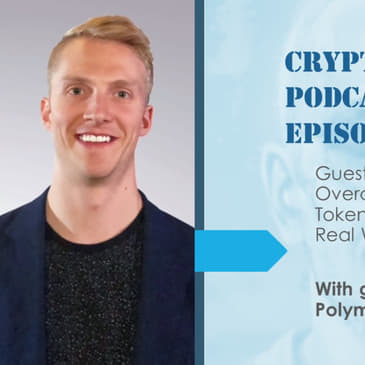

Graeme Moore is the Head of Tokenization at the Polymesh Association, a not-for-profit dedicated to the growth of the Polymesh blockchain ecosystem. He is also the author of B is for Bitcoin, the first ever ABC book about Bitcoin. Prior to Polymesh, Graeme was the first employee at Polymath; the creative director at Spartan Race; and an associate at Canada’s largest independent investment advisory firm.
[00:00:00] Hello everybody and welcome to the Crypto Hipster Podcast. This is your host, Jamil Hasan, the Crypto Hipster, where I interview founders, entrepreneurs, executives, thought leaders
[00:00:09] You name it across the world of blockchain and crypto all around the world and today I have another amazing guest for you
[00:00:17] Looking forward to this, his name is Graham Moore, he is in charge of tokenization, the Polymesh Association, Graham Welcome to the show
[00:00:27] Thank you very much.
[00:00:28] Good to be here.
[00:00:29] You're very welcome.
[00:00:30] So let's kick things off and I'll ask you the first question that asks everybody.
[00:00:34] What is your background and is it a logical background for what you're doing now?
[00:00:40] A logical, I don't know how many people have a logical background in crypto but maybe so we can talk about it
[00:00:47] So I graduated from university with an economics degree back in 2013.
[00:00:52] I wanted to get a finance eventually worked out a bond fund and then I worked out an investment advisory shop in Canada
[00:01:00] It was the largest outside of the big banks.
[00:01:03] And then kind of about this illusion with finance or at least felt like I didn't really want to do that for the rest of my life
[00:01:09] You know, I saw the investment advisors sitting around.
[00:01:12] I saw the support staff sitting around there just kind of sitting out of desk, walking away on keys, trying to earn
[00:01:17] Rich people 8% on their money instead of 7% and it just you know, I kind of lost the love that I thought I would have for the investment side of finance and quit my job.
[00:01:28] And an interesting thing happened when I quit my job is as I felt like warm buffet's cloud was no longer hanging over my head telling me Bitcoin was very bad.
[00:01:37] I'd obviously heard about Bitcoin but I completely dismissed it more and buff it was sort of my idol at the time and he said it was bad so I said yeah obviously it's bad.
[00:01:45] But I feel like you know quitting finance no longer having finance people telling me Bitcoin's bad. I just started to really dive deep into Bitcoin and start to learn everything I possibly could about it became totally incess.
[00:01:56] And then what happened in 2017 is so I've been completely obsessed at Bitcoin for two years and then I saw one of the co-founders of Polymath traveling around the world talking about this thing called Polymath they're building this technology for these new things called security tokens on blockchain.
[00:02:15] And I just again completely fell in love with that idea now.
[00:02:19] And so I think it did actually become pretty logical where you know I was obsessed with finance then I became obsessed with Bitcoin and that led me to building finance tools upon blockchains.
[00:02:31] And so Polymath is a layer one blockchain built specifically for financial securities and so yeah I feel like that was be logical the other the other thing that I think ties in a whole logically
[00:02:42] is I was very obsessed with mine as well. I don't know if you remember buying this the social media app.
[00:02:49] Six second videos and so I you know how to how to do some following there had 20,000 followers I think I had 20 million views on my videos
[00:02:59] And so when I approached the co-founders of Polymath originally I said hey you know I'm pretty good on social media I'm doing marketing stuff
[00:03:06] I also know it's kind of a bit coin and I have this finance background is that sound good and so I think it was a pretty easy self in that point. So yeah I guess there's that there's that's the job quote just a Steve Jobs quote you can ever connect the dots looking forward you can only connect the dots looking backwards and so yeah it does seem actually like this is actually exactly where I'm supposed to be.
[00:03:28] Awesome.
[00:03:28] Yes that time of the year for me we're look backward until my fantasy football put it's but they shouldn't have done.
[00:03:34] Yeah of course you know so five mesh what's it all about makes it unique in the blockchain space.
[00:03:42] Yeah, so I mentioned Polymath what was the first real crypto job I had and so what we were doing at Polymath is we were building tools on a Serium for security tokens
[00:03:53] Now we call them real world assets some people call them tokenized assets you know whatever you want to call them. I generally referred to them
[00:03:59] I was just financial securities that happened beyond blockchain reals and so we were building all these tools on a Serium and we started to notice we don't like Ethereum for this use case
[00:04:09] Our Ethereum is a great general purpose tool but there's a lot of works when you get down into the regulated asset capital markets space that banks custodians regulators that they do not like and so we said
[00:04:21] And so this spending all our time trying to do horn in a protocol to make securities work on a herium why don't we just build a better blockchain and so that was Polynesian.
[00:04:30] And so we really boil it down to five key pillars for the reason we wanted to leave Ethereum and build our own blockchain called Polymesh and those five people are governance identity, confidentiality compliance and settlement
[00:04:45] And so just to run through a couple of those governance on blockchain is quite strange, especially when you start talking to a bank or custodian or another regulated actor in the capital markets world and so let's say you have a hundred million dollar asset on Ethereum and then there's a contentious for explicit and just like we have with the eath eath classic fork and now there's eath one and eath too which chain has the real hundred million dollar asset on it. Well the answer is they kind of both you.
[00:05:15] But which which chain has the token on it that has the actual claim to the underlying assets. Well, you know we don't really know. So do you create some schema where you decide okay we're going to pause trading for all of our investors for six months while we sort this out.
[00:05:30] Are we going to wait for a metallic to tell us which chain is the real eath. Are we going to see which staking power is higher on which chain and so that's a huge question mark for banks and if you're trying to trade hundreds of billions of dollars of assets every single day, every second.
[00:05:46] It's really just a non-starter so you cannot have a chain where there's no canonical single version of the chain that is subject to potential change sports and so poly mesh always has one canonical version of the chain.
[00:05:58] Identities important for us on Ethereum we kept hearing from banks and custodians etc. If I pay five dollars for a transaction fee those five dollars might go to North Korea.
[00:06:08] They really do not like that. So I'm poly mesh all the node operators have some type of financial license and all of the users actually pass an identity check process so to onboard upon us you have to show your passport for example and say I'm a real person is where I look.
[00:06:23] Confidentiality's really important to us again, banks trading assets against each other nobody wants to reveal their positions nobody wants to know what they're about to trade so confidentialities are really important piece for us.
[00:06:36] Compliance a lot of what we were building on the theory on back at Polymath was tools for compliance on upon the theorem.
[00:06:45] And so we baked a lot of that compliance infrastructure and asset tokenization logic itself into the base layer of poly mesh.
[00:06:52] So you can create an asset you can manage an asset you can trade an asset send an asset on Polymath with no smart contracts requiring.
[00:07:00] So that's because the actual base layer of poly mesh understands that and so it's just a much more scalable system.
[00:07:06] That banks like using a lot more and then finally settlement is really important.
[00:07:10] The example I always use is if I find your address on a theorem I can send you anything I want and you cannot say no.
[00:07:18] That seems absolutely absurd to people in legacy finance and how legacy finance works is sender of firms the settlement constructions receiver of firms and settlement constructions and only then can a trade take place.
[00:07:31] And so that's how poly mesh works and so it was you know based on those five pillars just how do we build a blockchain specifically for capital markets.
[00:07:40] I think it's kind of ironic that your acronym is GIX you know and you know and you get to get to us.
[00:07:52] I don't ask you I was going to switch gears, you know I'm going to I'm going to ask you yeah I think we're going to I think I'm going to talk to you about real estate for some reason you know.
[00:08:05] And people wanted to real estate to embrace real estate and that's what the embrace real estate through tokenization why is that important more now than ever before.
[00:08:16] I think what's really interesting about real estate and so one thing that we actually announced very recently was the first ever tokenized church.
[00:08:24] So this is a church of Colorado where it's actually quite quite interesting where the church that's operating or you know the congregation that's operating in there there's a number of different ones and they don't actually own the real estate of the church.
[00:08:39] But actually rent space from someone else to use that church every Sunday or whenever they have meetings there and so one interesting thing that tokenization while as far as the fractionalization of real estate ownership across many different entities and so today.
[00:08:54] How could you buy real estate you know you could lever up you could go buy one has or you could you know maybe get a conglomer together and you could buy one apartment building or you could invest in something like a real estate investment trust which is listed on a public stock exchange.
[00:09:07] But tokenization provides us interesting sort of third rent where you can invest in pieces of individual assets and so I couldn't could invest 10,000 dollars into the church I couldn't invest 100,000 dollars into the church while someone else invest a million dollars into the church someone else invest 1,000 dollars into the church.
[00:09:28] And so this fractionalization of individual real estate assets provides us really cool third option for people to get invested into the real estate market without necessarily having to pay very high fees to the black stones or the starwoods of the world to have these huge reeds or taking on massive risk by buying one entire property one that maybe can't afford an entire property.
[00:09:52] That's why yeah, it was a church it wasn't just real estate but it was a church that you invested in recently how does that fit into your mandate G i CCS.
[00:10:02] Yeah, so for us what's exciting about it and how it fits is we want to tokenize every single asset in the whole time world.
[00:10:09] And so I'll be I'll make sure that I have the caveat there where we're pulling mesh itself is not quote tokenizing the real estate and not tokenizing any assets we provide the blockchain set other folks can do that and so for the church example.
[00:10:23] That was a one hope of Colorado church with Pastor Blake Bush and so they're working with a company called our e-tocans and to real estate tokens.
[00:10:33] And so they're the ones doing the tokenization they're advising on the real estate assets and one.
[00:10:37] And so for us it's really just this is one great real example that people can see in the real world where blockchain actually helps.
[00:10:46] You know, the thing that I'd really love saying is Bitcoin fixes this and then you know people often have trouble finding real world examples where okay well what is what is there happening in the rest of the blockchain world you know there's lots of dog tokens there's lots of trading there's lots of gambling lots of casino applications but here's an example where you can actually see.
[00:11:07] Blockchain through how efficient it can be through the automation of different aspects in capital markets through the transparency it actually makes sense to rationalize units of real estate and many other assets and have them as tokens on a blockchain rather than pieces of paper that's sitting the lawyer or transfer agents.
[00:11:25] That's a filing cabinet somewhere. Yeah, lots of big filing cabinets and companies.
[00:11:32] Yeah definitely and now and that's one of the craziest things and really you know we talked about kind of a logical progression for my career that was one of the first things that was sort of in a ha moment for me when I was thinking about securities on blockchains and so.
[00:11:47] One of my jobs is between third and fourth year university I worked at a bond fund and I worked in securities administration which you know that's filing cabinet central the world and so what I would do every single morning is I'd come in.
[00:12:00] I would print out a piece of paper from what we had an hour internal database for how much of a bond we thought we owned and I'd print out a piece of paper from a custodians.
[00:12:16] I would check those numbers and sometimes they would match and sometimes they wouldn't and if they didn't match I would get on the phone and I would call someone and say hey this number doesn't match let's figure out what the correct number is.
[00:12:32] That that just seems so insane to me that in the world of the internet of everything being completely global of being able to do anything digitally we were still printing out pieces of paper calling people to see what the state of the world is and so with blockchains the really cool thing is the token is the asset and the token is also programmable and the token can do certain things to ensure that everyone is on the same page.
[00:12:58] If I see a token on the plane that's blockchain and there's five tokens in a wallet no one can tell me that there should be five point five tokens in the long because we can all see there's five tokens in the long and so that that's.
[00:13:11] One of the really cool things about blockchain that I don't think a lot of people have grass just because they haven't worked in capital markets they haven't seen.
[00:13:19] You know the back offices that are going through spreadsheets after spreadsheets after spreadsheets printing out pieces of paper calling people on the phone to see what's going on reconciling reconciling trades you know sometimes weeks months later.
[00:13:32] In crypto the trade is the settlement the reconciliation doesn't even matter.
[00:13:37] And so that's some of the really cool stuff that I've been excited about working with all your national just more broadly with tokenization.
[00:13:47] I like it too, you know I do work back office from many years.
[00:13:52] So I get it you know and I do get also and I don't know what they would be or maybe you can help me understand them.
[00:14:01] We want to fractionalize real estate, we want to fractionalize assets there are challenges in addition to you know push back from traffic folks right with actually being able to do to do fractionalization in fraction how do you what are those challenges and how do you solve those challenges.
[00:14:18] Yeah I think there's a number of challenges just from you know technical point of view is you know where the first people in the world doing this right we now finally though we've seen some great stuff coming out of Franklin Templeton on the BlackRock Hamilton Lane we've seen a number of companies that are starting to be this for funds and tokenization of funds.
[00:14:38] I'm missing folks like are you tokens token as real estate but it's really just making sure that you get those pieces right at first from technical point of view.
[00:14:47] Because no one wants to be you know that massive asset manager who took this newfangled technology called blockchain and then you know something blows up in their face and so I think ensuring that you have the right guard rails and place from a tech point of view.
[00:15:01] And also from a regulatory point of view are very important and so one of the nice things from the regulatory side of things right and so yeah I'd say the two issues because tech and then regulatory and so the nice thing from the regulatory side of things.
[00:15:14] Is securities laws are pretty well worn you know it's a well worn path how to raise assets and then sell securities to people.
[00:15:23] And so that side of things actually doesn't really change much and that's one question that we always get is okay well you know the regulators are never going to allow this but they're already allowing it they've been allowing it really the only thing that changes in offering docs for example is that someone says these securities may be sold as tokens on a blockchain and here's the address of the tokens.
[00:15:44] And so the regulatory assets actually quite quite nice because it's already been used for many many years there's there are some things coming up now.
[00:15:55] Where we want to deviate from the existing world in the existing securities laws that have been implemented because we have better tools now in terms of blockchains.
[00:16:04] Like do we need a transfer agent for a private securities offering with a blockchain? Well, I mean the blockchain is kind of a transfer agent.
[00:16:11] I can click a button and I can send the dividend payment to 5,000 addresses anywhere around the world via stablecoin in five seconds.
[00:16:19] So do I need a transfer agent to log that information and reconcile and I'm sure that the SEC has a door they can go knock on.
[00:16:26] I don't know and so that central securities depositories do we really need those in the world where the blockchain is potentially the central securities depository where you can see all the assets and who the ownership belongs to.
[00:16:37] And so these are some of the questions that are pretty interesting and I think the next three to five years are going to be really interesting where we see some regulators around the world say, let's create a sandbox where you actually don't need owners regulations because the blockchain solves a lot of these issues with automation and transparency.
[00:16:53] But for now we still have to do things essentially the exact same way they were done in the old world and yes, they're a little bit more efficient.
[00:17:00] They're a little bit more automated a little bit more transparent but we still haven't even seen the full scope of how much blockchain is going to help the capital markets.
[00:17:10] That is make a sense to me. I interviewed a company a couple of years ago.
[00:17:13] I actually interviewed a founder three years ago that another person a couple of years ago we talked about how blockchain can transform transfer agency.
[00:17:23] Right, so that I'm thinking might be the future of RWA tokenization but how can we really decentralize Wall Street and help mainstream.
[00:17:40] Yeah, I think that's a huge task. That's going to take a very long time.
[00:17:44] One of the things that I am very passionate about and very excited about is self-custody.
[00:17:51] And so who holds their own securities today? I say almost nobody, you can request to get paper share printed out and you can hold it but no one wants to do that.
[00:18:00] Computer sure doesn't want to do that. Nobody wants to do that for me.
[00:18:03] And so one thing I wrote about as a piece I had in fortune a couple years ago when the game stopped Fiasco is going on.
[00:18:11] And Robin Hood just didn't let anyone click the buy button for sure is a game stop.
[00:18:18] And so that just seems so ridiculous to me that I could sell a certain asset but because of one broker's thoughts on the current days trading, I can't buy the asset.
[00:18:31] And so why could I not buy it? Well, because I'm stuck in the Robin Hood's silo database.
[00:18:38] I don't have access to another brokerage account. Maybe I do but most people don't most people use either Robin Hood or TD Ameritrade or Chase or whatever they use for the brokerage account to access thoughts.
[00:18:49] But what's really cool about self-custody is that they will start to develop these decentralized liquidity pools.
[00:18:56] And if I'm self-custiting my assets and then I have something like a two of three multi-sig with state street or the fidelity or with Robin Hood, I have two keys they only have one.
[00:19:07] I can move my assets instantaneously anywhere else that I want to.
[00:19:11] And so that's a future that's really exciting for me that's sort of I guess decentralized as well street, or at least limits the control that intermediaries have over what I can do with my own assets and with my own money.
[00:19:22] And so being able to click a button, go to a different platform, click a button, go to a decentralized infrastructure where I can trade my game stop stocks on Uniswall.
[00:19:32] I do think that's a possibility in the future.
[00:19:36] And so that's something that's really exciting to me is the self-custody aspect of securities.
[00:19:42] I mean, I can cuss the cash anytime along. I can walk around with a hundred bucks, I can walk around with thousands bucks.
[00:19:48] It's really hard to walk around with stocks. It's really hard to walk around with bonds with pieces of real estate.
[00:19:53] But I want to be able to do that because I don't want any intermediary in capital markets to have any type of undo influence over what I can do and what I want to do.
[00:20:06] My wife works in the securities industry so I haven't touched stocks in many years.
[00:20:12] But if I could, if you had privacy and you had these RWA stocks where they wouldn't know that you bought them.
[00:20:26] How would that be a problem with the SEC and with regulation and how do you get?
[00:20:31] How do you be able to work collaboratively to create the ability for people to have privacy and then also abide by these hundred year old regulations?
[00:20:41] Yeah, so that's like the golden gun that everyone's going after right now is how do you have it and so I would call it confidentiality.
[00:20:50] No, it's fairly privacy. I would say privacy is more like closed side of databases confidentiality is more happened.
[00:20:56] We obfuscate certain information where I don't want specific third parties to view it, but all allowed other third parties to be in.
[00:21:04] So that's something we're working on. I'm actually have a cryptographer on our team now who has more awards for this kind of stuff and we're working on figuring it out.
[00:21:12] You know, we talked to this is what we talked to all the big things about this.
[00:21:14] I come and get confidentiality on chain where I grant more can see all of my assets.
[00:21:19] The issue or whether it's Apple issuing Apple stock or you know a government issuing a bond. They can see that I'm grandma and I hold these specific tokens.
[00:21:27] I can share this information with the SEC whenever they request it, but I don't show J.K. Morgan my token balance.
[00:21:36] You know, because I don't I don't thank J.K. Morgan. They're not my broker.
[00:21:39] And so how do we allow certain parties who need to have access to information and access to it easily while preventing other parties from having access.
[00:21:49] I don't want to have access to it and who aren't required by law.
[00:21:52] So that's really like what everyone's clamoring after right now is how to do that.
[00:21:57] And so what we've done in the interim and that we think is a really important thing is we've actually created a private version of the Polytechnical auction.
[00:22:04] And so that's similar to some other private solutions that banks have been using in the past where a lot of banks still and a lot of asset managers,
[00:22:11] so do you know that they're still aren't comfortable putting $100 billion of assets onto a public blockchain.
[00:22:18] Just too many concerns for them. There's to me third parties there's to any potential issues with data leakage, et cetera, where they still want to use a private blockchain.
[00:22:27] And so what we've said is okay great. Here's this private version of Polynesh.
[00:22:31] Here's the private version of Polynesh right now while you're still figuring out your strategy for how to use public blockchains.
[00:22:36] And then when you're ready to use the public version of Polynesh six months a year to years down the line, you just change the end points and instead of pointing to the private version of Polynesh,
[00:22:46] you point to the public version of Polynesh.
[00:22:48] And so that eliminates the need to rebuild an entire banks capital to rebuild their tech stack essentially orchestodians tech stack.
[00:22:57] And so what they're doing today is they're building on some type of private solution and then they're thinking, you know, two years, three years from now they're going to move to the theory and they're going to rebuild everything.
[00:23:06] And so we're saying is don't rebuild everything, you know, to use the private version of Polynesh and then switch to the public version of Polynesh when you're ready.
[00:23:15] I have never interviewed somebody who who's building a private banking blockchain using the hyper ledger or the extensure editable blockchain.
[00:23:23] It's always been public.
[00:23:25] Oh, or trying to be a private version of what of public. So what's the benefit?
[00:23:33] The benefit in using a private blockchain.
[00:23:35] Yeah, what's the benefit in getting off the private blockchain going to public for these companies who aren't having listened yet?
[00:23:42] Yeah, I think the benefit in moving to a public blockchain is that is that's eventually where all the liquidity will be.
[00:23:48] And so I think part of what is exciting to banks and asset managers about the future of blockchain is this global liquidity pool with
[00:23:58] attestations and technology where anybody anywhere around the world can click a button and access liquidity for an, a given asset.
[00:24:06] You know, without necessarily having to go through on-riss onboarding requirements because they've already been onboarded by another party who is allowed to dictate access to specific assets or specific liquidity pools.
[00:24:17] And so I think they know and this has been really encouraging actually and things have changed a lot in 2024 compared to even last year or two years ago, where they finally realize public blockchains are the future.
[00:24:30] I think the Biddle Fund for Black Art Rock was huge for that energy from Franklin Telltale.
[00:24:33] And there's a few others as well that have really shown that they are committed.
[00:24:39] They just, the liquidity is just not there yet and so for for them to say, oh we're going to pour all of our resources into this thing because we think it's the way forward five years or now you know,
[00:24:50] they're just not into making those types of long-term bets until they see the the fruits of their labor there so to speak.
[00:24:58] And so I think it's going to come and it's really about global liquidity pools and permission to access to specific specific assets all around the world with jurisdictional compliance kind of built in.
[00:25:10] But yeah, it's just not quite there yet. So that's why we haven't seen it but it is going to come and the big players do understand finally that that is the way forward.
[00:25:19] Very cool. So with the tokenization you know,
[00:25:23] you have integrated recently with alpha point right. What's that all about with integration about and how they how does that help.
[00:25:34] Yeah, and so for alpha point, you know, there's similar in terms of platform infrastructure to the company are retopens right so are retopens tokenized.
[00:25:43] Real estate assets, off-the-point tokenized is anything.
[00:25:46] Effectively is what they're working on. And so alpha point if people don't know they're the back and infrastructure for a lot of exchanges.
[00:25:53] So they've worked at CME group alpha point is actually who helped El Salvador with the Chivo wallet.
[00:26:00] If you see people holding Bitcoin in El Salvador, so alpha point is that at the point I'm sure someone has used alpha point if they're the same as podcast they just didn't even know because they're the back end token infrastructure for a lot of different things.
[00:26:12] And so yeah, the cool thing there is just getting more assets on chain. We're really excited. Eventually, you know, I don't know when it will be but we're recording this September 9th.
[00:26:23] We're actually doing a webinar with alpha point today's from now or three days from now and then we'll likely be announcing some clients that are using alpha point in conjunction with Polynesh.
[00:26:32] And so more assets on chain is what we want. That's what everybody in crypto wants. We want to take that total value locked in blockchains from a billion to a trillion to a hundred trillion eventually.
[00:26:44] And I really do think every single asset in the whole entire world will live on a blockchain at some point.
[00:26:49] You know, maybe not every single person's pair of headphones are every bicycle but I mean it'll be as simple as clicking a button and putting your asset on chain. So I think almost every asset will live on chain.
[00:27:00] And so with alpha point, you have a really excited to announce eventually some clients that will be using them and I think one important thing I've talked about for why alpha point chose Polynesh is that Polynesh is API driven instead of smart contracture.
[00:27:16] And so we talked a bit about how the logic for assets organization and trading and settlement is baked in the base layer of the chain.
[00:27:23] If alpha point used Ethereum or Solana they would have to not only select that blockchain but then use someone else's standard that they built on that blockchain.
[00:27:31] So initially at Polynesh we both at ERC 1400 standard on Ethereum.
[00:27:35] So they might use the ERC 1400 standard created by Polynesh. I mean, changed now by random people and give up and then also select a different transferage and provider and then also select the Ethereum blockchain.
[00:27:47] So building a lot of smart contracts or leveraging someone else's smart contracts is not something that people like doing.
[00:27:52] I know developers and Ethereum love smart contracts and they think it's the greatest thing in the whole power world. Then take them. They really do not like them. There's a lot of risk using those things.
[00:28:03] There's also a lot of rules around banks and large financial marketing community areas using specific tech providers. And so or a bank to use use a blockchain and then say to to their regulator.
[00:28:16] Yeah, we're using the smart contracts standard by these three people on this GitHub who are faceless and nameless. No, they just will not do that. And so the nice thing about Polynesh is they can vet the Polynesh blockchain.
[00:28:29] And that's the only party that they need to vet. So alpha point that it's a Polynesh blockchain and they use the API of driven standards that are on the Polynesh blockchain rather than having to develop their own smart contracts or using third parties in our contracts.
[00:28:42] That makes a lot of sense to me.
[00:28:45] Very cool. So and I definitely heard him. She will.
[00:28:49] So I have, I want to change gears a little bit because you are an author and I want to ask you about your book. You wrote a book called Be is for Bitcoin.
[00:29:00] So why should people read that? And what are the key takeaways that they could get from it by reading your book?
[00:29:04] Yeah, these are Bitcoin is the first ever ABC book of Bitcoin. So I published this early 2018 and the idea there was my sister had just had a kid and I was thinking about getting her a book or two and you know reading to her and I was looking at I was looking at the books available and you know do I want to read to her A is for Apple B is for ball.
[00:29:26] You know, no people have been doing that for hundreds of years. It's not that exciting for me. I'm a Bitcoin guy. I'm a crypto guy. I wanted to read.
[00:29:34] I instead something more like the Azure Bitcoin which is A is for old coins, bus and booms. B is for Bitcoin when you know like that.
[00:29:41] That's the type of book that I want to read to my niece and so that was the genesis of the idea that I had back in 2015 and then came to fruition in 2018.
[00:29:49] Well, what take away is what someone get from reading the book? The learn their Bitcoin ABCs. And so you know I've heard a lot of great feedback from people where all they wanted to do was teach their kid ABCD FG.
[00:30:03] And then now they can do it with a Bitcoin twist. So yeah, it's been really cool to see all the people buying it, giving it to the friends and just getting that 50 back.
[00:30:15] Awesome sounds good. Sounds good. My kids are 15 and 11 now so but I still show it to them and then they could two of their kids.
[00:30:24] Yeah, yeah, the idea that I also had for it was you know, it's a coffee table book as well. You know, it's a big large colorful book. It looks great on a coffee table and then your guests come over and they go oh yeah, you're the I forgot you're the Bitcoin guy and then you go.
[00:30:37] Yeah, actually, can I talk to you about Bitcoin for next five hours.
[00:30:40] At least that's that's what I do to my guests on my come over. Awesome awesome so I want to thank you very much for speaking with me today.
[00:30:48] I enjoyed learning about poly mesh learning about your book learning about you, appreciate it. So I have I really have one last question and it's how can people find it more information about you about poly mesh how can they do that.
[00:31:02] I'm all over the interwebs. You can find me on LinkedIn, grandma or on x it's at more grams M O R E G R A M S and then for poly mesh on x we're poly mesh network join join our discord server as well.
[00:31:18] That's probably much that never such discord. Then the website is poly mesh dot network. So yeah, come and give me a show anytime always have to talk about anything crypto or anything good for an related awesome. Thank you very much for time today.
[00:31:32] Thanks. Yeah, it was great.