
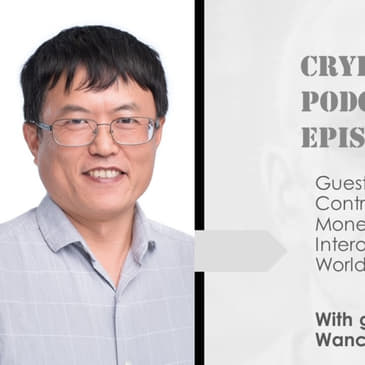

Dr. Weijia Zhang is the Regional Head of China at Enterprise Ethereum Alliance (EEA) and Vice President of Engineering at Wanchain. He has extensive engineering experience in Blockchain, as well as research and development (R&D), cognitive sciences, mental modeling, Computational Fluid Dynamics (CFD), software modeling, computer technologies and industrial standards. Weija has published over thirty research and technical papers, and is named as an inventor for over twenty patents (granted and pending) in computer and digital technology.
He also served as a technical committee voting member to publish the Solution Deployment Descriptor (SDD) by the Organization for the Advancement of Structured Information Standards (OASIS). Dr. Weijia Zhang is also teaching the Smart Contract Development course at the University of Texas as an adjunct faculty.
Dr. Weija Zhang has written and published a book called: Blockchain and Ethereum Smart Contract Solution Development: Dapp Programming with Solidity (2022).
[00:00:03] Hello everybody and welcome to the Crypto Hipster podcast. This is your host Jamil Hasan, the Crypto Hipster where I interview founders, entrepreneurs, executives, thought leaders.
[00:00:14] You name it across the world of crypto and blockchain. Today I have an amazing guest. He is the he's chairing the DLT interoperability workgroup at EEA Enterprise Ethereum Alliance.
[00:00:29] And he is the vice president of engineering at the Wanchain Foundation. Welcome my guest, Dr. Weijia Zhang. Dr. Zhang, welcome to the show.
[00:00:47] Thank you Jamil. Great to be in this podcast. I'm Weijia as you mentioned. I have a PhD in physics and yeah great to be here.
[00:00:59] Awesome. Thank you for joining me and let's kick things off. I'm looking forward to our conversation. First question, what is your background and is it a logical background for what you're doing now?
[00:01:12] Yeah, I just mentioned that I have a PhD in physics and that's my academia background. And also I work for Dell for 13 years.
[00:01:20] And that's another of my major background, which is in computer technology and have almost 20 patterns in digital technology.
[00:01:29] And these two backgrounds are very, very closely related to blockchain technology. And I can explain that first for physics, you know, blockchain and cryptography, people will normally think that they are related to two mathematics.
[00:01:43] But when you actually go to blockchain project, you can see that a lot of physics, thermo-moral knowledges over there. These include the ether, which is a very, very ancient physics term and then also cosmos, atom, plasma.
[00:02:00] So, terminology in blockchain is very, very similar to terminology in physics and also have 13 years working experience with computer industry and have been working on system management for a long time and gained a lot of in-depth knowledge on system platforms including system deployment, networking, remote management,
[00:02:25] monitoring, software update, etc. And these skillsets are very, very critical for today's decentralized blockchain systems. So I found my background in physics and computer engineering a perfect match for my blockchain work.
[00:02:53] And I'm working on.
[00:02:56] I think out of the 400 plus podcasts I've done, you're the first person who said that physics and blockchain are similar.
[00:03:06] You know what? Because they have been people coming to me asking me about some of the terminologies, physics terminologies in blockchain. And there are also projects coming to me asking me to give them a physics name.
[00:03:21] It's top-quark neutrino or they just want me to give them a fancy physics name for their project. So I think they're very, very relevant.
[00:03:35] Very cool. I haven't met a blockchain project yet named mitochondria, but we'll see. Maybe you will have the project called MiWang.
[00:03:47] Awesome. So I want to find out more about One Chain. What's it all about and what's your focus and purpose?
[00:03:54] Okay. One Chain is a core chain focused, interoperative focused project. You probably know that when blockchain were developed, all these new blockchain were very, very siloed.
[00:04:11] They are independent. They are isolated. They don't talk to each other at all. And then at that time there was a perception that only one will survive. The others will fade away.
[00:04:23] So that was the concept initially. They're not supposed to interconnect with each other.
[00:04:29] And today with all these changes, all these new revolution, we know, blockchains are going to coexist. You're going to have thousands of blockchain coexist.
[00:04:42] Now the challenge is how do you interconnect them? How do you let the asset message command go from one blockchain to another blockchain?
[00:04:51] And I think One Chain envisioned that a long time ago. We started that back in 2018 and then we connected with TM already that year, and then we connected with other blockchains.
[00:05:05] And the use case has been developing gradually. And today we see that interoperability blockchain is very, very important for the whole blockchain ecosystems.
[00:05:17] And that's what we have been working on.
[00:05:22] So interconnecting this interoperability. I want to find out from you what the best way to build products that encourage interoperability are while you also maintain security and focus on scalability?
[00:05:36] Yeah. First about interoperability, which is our main focus, right? In order to best build products that encourages interoperability, I believe you need to have three things.
[00:05:50] First thing is that you need to have standardization for blockchain interconnect.
[00:05:58] But it's just the internet. Without TCPIP, there's no way for PCs to be interconnected with each other. So you need to have standards.
[00:06:06] And today we do not have a standard kind of a government standard body for blockchain interconnect.
[00:06:14] So we have been working with industrial standard bodies such as EEA enterprise Ethereum to build the blockchain interconnectivity.
[00:06:25] We can also call it DLT interoperability.
[00:06:28] So we have been working with EEA enterprise Ethereum Alliance. We actually were releasing DLT interoperability specification this month.
[00:06:38] And we also build the implementations for that. So the first one is that you need to have standards, whether it's government standard or industrial standard to interconnect blockchain.
[00:06:49] First thing. Second thing is that we need to build frameworks for that. You need to build a messaging framework, bridging framework to connect different blockchains, whether it's IBM-based or heterogeneous blockchains.
[00:07:05] And third thing is that you need to have open sources reference implementation for plug and play components.
[00:07:12] If you have plug and play component, you can build once and then deploy to different blockchains. So that would save a lot of energy and make security much, much better.
[00:07:23] So that's about interoperability. And then for scalability and security. Security is more complex with blockchain and interoperability because for single-chain security, you just need to worry about the consensus.
[00:07:37] You need to worry about the raw back, the finality and smart contract security. But for interoperability, you need to worry about security of the short chain, the target chain, the relayer, the bridges, everything.
[00:07:51] So single point failure or even a single component failure can impact the whole interoperability. So that's very important. In fact, we have published blockchain security guideline and also blockchain decentralized guideline to describe some of these complexities.
[00:08:10] So security is very important. And also scalability you mentioned, right? And that's also challenging because you are not just improving the scalability for one-block chain with layer two or sidechain.
[00:08:24] You need to look at the whole thing. So we actually have solutions for that already. Not just bridging to layer one, we also bridge to layer two and sidechain, et cetera.
[00:08:36] And we're also considering the scalability of bridges as well. So these are the things that we have been working on to encourage interoperability while still maintaining scalability and security.
[00:08:50] Great. So guidelines. When I think of guidelines, I think of a manual. I think of a massive manual. I don't know. I haven't seen your guidelines.
[00:08:57] But what are best practices? What are some of the things that are the guidelines that should be adopted immediately in top few?
[00:09:08] Yeah, yeah. So the guideline we have is relatively it's not a big manual. It's not a 500 manual. I do have a book which is 450 pages. But the guideline is relatively easy.
[00:09:25] That's working with colleagues in EA. So basically describe what are the problems? What are the complexity? How do you deal with these complexity at the top level?
[00:09:37] And then when you go to detail, then you can reference to other publications. But to be aware of the complexity, that's a big thing already because you have seen that almost 1.8 billion asset having hacked
[00:09:54] with cauchy bridges. So some people just didn't know it could be so complex. And so once you know there is a big risk there, people will spend time to improve it, improve the security.
[00:10:06] So I think to bring awareness to people, that's a big thing already.
[00:10:12] Yeah. Yeah, I didn't lose money in a bridge attack, but I lost money recently because my Apple removed the app that I was using for as a wallet and then instead of going to a regular normal set, I went to a phishing site.
[00:10:29] So I didn't even get to the bridge phase.
[00:10:36] You know, when I think of interoperability, like you know with standards, I think of just me, I think of middleware. I think of things like you know, like a chain link or something that's agnostic that talks to every, you know, every blockchain is agnostic.
[00:10:57] Are you saying you're going to replace the need for a middleware? Or how's that going to work?
[00:11:02] Yeah, I you mentioned about changing. Chaining originally was a Oracle project is to bridge the legacy systems to blockchain systems.
[00:11:15] Right. And interoperability is to connect blockchain with blockchain. So they are quite different. Of course, changing is going to a route of interoperability for blockchain as well.
[00:11:24] So we'll see that how play how that's in play out. Yeah. But originally, chaining was an Oracle is no and intubated solution for blockchain.
[00:11:37] Got it. Okay. Thank you.
[00:11:41] So if it isn't that what is the industry need to do to achieve true interoperability?
[00:11:50] Yeah.
[00:11:52] I think that is a great question and it's also a sophisticated question.
[00:12:04] I think I would like to classify this true interoperability into two parts. The first part is the technical side of it. Right. The technical side of it I explained.
[00:12:16] It just means that you've got to have industrial standard. You need to have company project adopt these standards and you've got to need to have open source components so that people can use these components,
[00:12:29] complying to the standard build applications. They are kind of compatible consistent across all blockchain technically technical side of it.
[00:12:39] And then there's a long technical side of it because a blockchain solution.
[00:12:47] Maybe kind of okayed by some government may not be okayed by other governments. For example, if you may think that interoperability need to touch the connectivity of private blockchain with public blockchain.
[00:13:05] But the private blockchain normally have some compliances have have some regulation complies in that. But when you bridge that to a public blockchain and they is a form compliance system to non-compliance system process there already.
[00:13:23] So there should be some regulation good regulations for that meaning that they need to be definitions on who is liable for bridging private blockchain asset to a public blockchain to a public blockchain.
[00:13:37] Who is liable if something goes wrong. If there's a hack with a lot of arrival for that and there's a question about privacy as well when you bridge data from a private blockchain to a public blockchain everybody can see it.
[00:13:51] And what are the privacy requirement over there and there's some privacy laws regulations over there as well. So in order to make this interoperability solution really really practical and adopted by everyone.
[00:14:03] There should be good regulations for that and they should be development of good use cases for that as well.
[00:14:10] And you mentioned that in your guidelines.
[00:14:14] That one the regulation piece we did not because it's very very complex and we hopefully will be some lawyers to help us to work on that piece that we are technical people so we just bring awareness to the guideline but we cannot say this is what you are supposed to do we are not that qualified.
[00:14:33] Got it. Okay, so the magic word is government.
[00:14:39] Lawmakers.
[00:14:40] Lawmakers. Let's talk about lawmakers.
[00:14:44] I had a little bit of a rabbit hole here but.
[00:14:49] Central bank digital currencies you know digital IDs.
[00:14:55] Yeah, attempt to attempt to attain harmonization across different countries.
[00:15:01] What are the key challenges.
[00:15:04] Yeah, I think I would say CBDC central bank based digital currency will be the ultimate kind of solution for okay all project for.
[00:15:18] Get a bit of the ability and security. So it's the most complex one if you have a solution for CBDC, you almost have solved all the technical problems in blockchain already so CBDC need to be interoperable.
[00:15:33] It needs to be working with private blockchain and also with public blockchain and there's one thing challenges but that's a challenge already second thing performance today we have TPS transaction per second.
[00:15:46] If you have 2000 transaction per second you think that's very cool we can bring this to the market already but for CBDC because the central bank need to offset all those transactions for so many people.
[00:15:59] I would say that I think I'd rather paper some research papers sometime and I think that TPS has to be at the million one million transaction per second level in order to make it practical.
[00:16:12] So performance, get a bit of this another thing for CBDC and then security of course you have so many components with CBDC your commercial bank, you have retailer, you have so many entities over there some of these are government based that some of these are industrial based some of these are just normal users right and some of these maybe hackers involved in that as well.
[00:16:35] So security is one of the most important thing for CBDC as well and big challenges as well.
[00:16:42] We have it's interesting you know, you're looking at CBDCs and you're, you know, with the term in line lines you are in China, but then also you're looking at them in US right so what's worked for China with a digital you on.
[00:17:01] And what lessons can we learn in the US from China and then maybe Hong Kong and other areas of the world that have been successful in their CBDCs.
[00:17:12] Well, I, that's a I have to say that my opinion on this one is just a normal person I'm no expert in this field that I want to make this clear.
[00:17:21] And I think first the Chinese digital yen is no blockchain based is this centralized system.
[00:17:27] Right and and then and then they are certain things they are different from here as well.
[00:17:33] I think there's also a besides it will be the security and scalability there's also privacy requirements and how do you build a privacy into the CBDC system as different countries have different requirements for privacy.
[00:17:49] So that's another challenge right and and this will impact into ability because CBDC here which might be trackable if you want to pull to another country and then they are issues over there.
[00:18:03] So, so these are challenges but I know I'm not expert in this field I should just just I should stop here.
[00:18:12] Yeah, I'm not an expert either so I'll stop to move on to a different question.
[00:18:19] You know where an area I am an expert in not expert maybe maybe I'm you know, I wrote a book called regeneration X how we can have my generation generation X can use blockchain to restore ourselves into the economy right.
[00:18:36] How can we close the blockchain skills gap.
[00:18:42] You know, especially you know in industries like where recruiters and firms mandate that applicants be crypto native only when there are a whole heck of people out of people who understand going from analog to digital who were not only native but who have joined the crypto ranks in the last few years.
[00:18:59] Yeah, yeah that's a great question.
[00:19:03] I have the first this this crypto world is the blockchain world has been evolving at the light speed and I don't think there's anyone who claim up other than a few people can claim their crypto native a few in original inventors, but most of us are just coming from different kind of professions.
[00:19:25] Right and I have seen PhD music become a great the blockchain programmer.
[00:19:34] No background in programming at all no background in blockchain but become a proficient that blockchain programmer great guy.
[00:19:42] Okay and I have seen well you may not want some people may find this surprising I have seen my linking contact person with master in education became homeless for a while and become a blockchain VC person.
[00:20:01] Okay, so and these are these are not crypto native.
[00:20:04] So I think everybody has a chance even if they are kind of have passion and be persistent and there are many, many channels for that and and I think the crypto world is very collaborative.
[00:20:18] If you have a passion, you can always find meetups like workshops, hackathon participants in hackathon take some courses and join some of these beta test programs and also become a project manager can become very proficient blockchain expert.
[00:20:41] And I'm not saying I want to mention this that the colleges, universities and colleges.
[00:20:47] They have been many university colleges provide a blockchain courses already but I have not seen good blockchain major or crypto major get in colleges.
[00:20:58] So in that sense they are you don't have a formal degree in blockchain, but at least you have some courses that are focused on blockchain.
[00:21:06] Yeah, so these are all the channels that can be used by people who want to be in blockchain can start from small and then gradually become expert in this field.
[00:21:19] Blockchain major interesting.
[00:21:23] How would you how would you design a program that will be a blockchain major like what would that program can consist of.
[00:21:32] Okay, here's my thought on that one I can say talking depth on that one.
[00:21:37] A blockchain major if you're an undergraduate or a graduate degree if undergraduate degree you should learn the basic skills of programming just like that and then you can have one or two years be blockchain focused.
[00:21:54] Take some maybe three or four courses on blockchain right and this could be the blockchain technology itself on the architecture level or could be on cryptography and could be on the building the smart contract design the smart contract.
[00:22:11] Another thing a big focus I would think that that's important is the blockchain security.
[00:22:16] Because blockchain is interesting you can write 209 of code and have a greater depth but that 209 of code you can do one under code that's that's not right and all the answer in that smart contract will be could be stolen.
[00:22:31] So security is also important and I think formal education is to be to train people to have that engineering rigor mindset and to be able to build security with with engineering rigor to make sure that nothing breaks.
[00:22:44] Yeah.
[00:22:45] And that's for the undergraduate level and then graduate level they should they should deliver a portion based project.
[00:22:56] So they should be designed as a portion based project and by the ceases on that project.
[00:23:03] I like I like both.
[00:23:06] I like where else can it work.
[00:23:09] I'm thinking that a blockchain course could be useful in the area of humanities.
[00:23:16] Yeah.
[00:23:17] You know how would you see something being built in the area of humanities.
[00:23:21] Yeah I think that's a great question.
[00:23:24] I think there are two aspects of it.
[00:23:25] I think the first thing I want to say that the government always say that we want to protect the US citizens from kind of being stolen as a student in blockchain because there are so many hackers there and we want to protect US citizens so that they and then the way they protect is not allow you to do anything that's related to crypto or blockchain to block you.
[00:23:48] That's not right.
[00:23:49] I think what we need to do is to educate them to let them be aware of the risk and the opportunity.
[00:23:56] So and that that is a that's something good for these for these people already right just to teach them how to use blockchain how to leverage blockchain for assets and to build decentralization for that to just to educate them.
[00:24:11] And second thing is that we need to provide them opportunities for example right just just for common good.
[00:24:19] And then they will never cause for art majors and ask them how to tell them how to protect their creativity.
[00:24:26] Right because today if you create a music you send it out get copy this call right I using blockchain technology I should be able to protect my IP my creativity.
[00:24:38] I can sell my creativity to other people that ownership stay with me forever.
[00:24:43] I don't need to sell my creativity to someone and that's that that that someone probably is a big organization to get all the profit of my creativity.
[00:24:53] I still can maintain my creativity and that's for everybody and that is that is for common good.
[00:25:00] And that's why I don't have sponsors.
[00:25:05] I didn't know you don't have some bouncer so I can OK so OK that's good yeah yeah and there should be more people like you and then if everybody.
[00:25:15] Has the opportunity like you then this society can be much better that yeah.
[00:25:21] I'm not going to sell content to Google.
[00:25:23] So don't worry.
[00:25:27] Cool so in addition to you know writing books I have some books you wrote a book.
[00:25:34] Yeah.
[00:25:35] Blockchain and Ethereum smart contract solution development.
[00:25:39] Why what is it all about why should people read it.
[00:25:42] Yeah well this I know in the broadcast you're not going to show the video but this is this the book is 450 pages book.
[00:25:50] So my call so my friend the page and land and I were teaching a boxing class at University of Texas and we found that there was no good textbook for that.
[00:26:01] So this book was written to for graduate students to learn about blockchain and then so you have to use in the still still being used in UT Texas and also Universal Maryland.
[00:26:16] And then there are two parts for the book one is a business part because this book is for just for business and technology students.
[00:26:26] So first part is about the blockchain business.
[00:26:30] The history of money how to program money and then the blockchain architecture overview etc.
[00:26:37] And then second part is technology oriented it's about the ECM architecture ECM ecosystems and how to invite smart contract you also have end to end.
[00:26:49] The iteration of how to how to build a decentralization so great content and also there's a chapter for how to fund a startup project.
[00:26:59] So it's very comprehensive.
[00:27:03] I think that one's good to know you know yeah let's talk about the history of money a little bit.
[00:27:12] You wrote this book from an Ethereum perspective right there's going to be people out there who are going to argue with you saying only bitcoins money and not Ethereum.
[00:27:20] You know yeah what do you say to those people to the critics.
[00:27:26] Yeah I think I would like to say they are there are two circles okay I normally call it two circles this can for me probably there's a chain circle and there's a coin circle.
[00:27:38] Okay so the technology side is the chain circle means that we focus on chain technology and form chain circles point of view there's no difference between Bitcoin and Ethereum and Ether.
[00:27:51] If there is a difference it says better because he said it's programmable and then Bitcoin of course Bitcoin has high value of course and then for for coin circle people Bitcoin has high value because the original one and it has a fixed amount right while you see him.
[00:28:08] It has the amount can be changed right and then and also another thing is that the E3M is using POS pool of state that of course they save energy, they've invented the same energy but then Bitcoin has POW pool of work that consume a lot of energy.
[00:28:27] So from my point of view I think we need to have these one Bitcoin blockchain system one Bitcoin and that is a pool of work but it consumes so much energy right you probably should have only one and then you only have other other things right.
[00:28:46] So it'd be like Bitcoin would be like gold you never trade with gold but you retain your value right and then making that value represent is store your value but in order to do the trade you have to use something that's programmable and that's what Ether comes in.
[00:29:03] You can program Ether as said and you can you can do smart contract and so I do not believe Bitcoin can be used for daily commercial use but Ether can be or Ether layer too that can be used that way.
[00:29:18] So they both have values and they should be used in different ways they are going to coexist for a long long time.
[00:29:27] Yeah there's been a debate what should I agree with you if Bitcoin should be used as a store value and not daily transactions.
[00:29:34] There you know Ethereum has been you know but then you have Tether right yeah yeah so the Litecoin folks make a point of what you know for retail usage you know at the end of the day is there going to be one or there's going to be many who's going to win what's going to what's going to prevail.
[00:29:54] Yeah I think they are going to coexist and they told me as you see that they are stable coins and then you have you have a CBDC and all these coming in so I think that's why it's so important you are going to have different blockchain coexist.
[00:30:15] And then and then you can organizations can govern these tokens these assets and for example the real world asset you just need to mean the asset in one blockchain and that blockchain can what the asset can be represented in different
[00:30:30] blockchains but those will be copies that will be just one original asset in one original blockchain and that blockchain doesn't need to be in Bitcoin blockchain or Ethereum blockchain it could be in any blockchain and then you can interconnect these
[00:30:44] blockchain together to make sure that there's only one original copy and the others are images and they're all coherent and yeah and that's why I say there's a harmonic connectivity over there.
[00:30:58] I like the fact that you put your book in business schools.
[00:31:03] So, I have met disagreeing finance and they never taught us how to program versus back in, you know, half a century no quarter century ago.
[00:31:12] Yeah, yeah.
[00:31:14] You know they ever told us about prayer when we're money back then so I think it's a good I think it's a great idea to do that.
[00:31:18] Yeah, yeah I know it's a great idea and that they are challenges as well because these people, the people who come to MBA program they may not have a very strong stem in the stem of the science and during background they may not have
[00:31:32] that and I have to kind of teach them how to program with solidity which is relatively easy for engineers but it's quite challenging for busy people who have never touched code before.
[00:31:45] Yeah, yeah. Yeah, I agree.
[00:31:49] I'm gonna see I was a sequel guy in my corporate days so you know, okay so you're engineering person already you had that background already.
[00:31:57] Yeah, a little bit.
[00:32:02] So, I want to thank you very much for talking to me today I enjoyed speaking with you.
[00:32:08] I have one last question really.
[00:32:10] And that's how could people find out more information about you about Wanchain? How can they follow your work and get your book, you know, how can they do any of that?
[00:32:21] Yeah, yeah I think if you go first Google search in my name and then you type in smart contract you're gonna find the information and then Wanchain website is there and a lot of link,
[00:32:32] link in contact as well. You can always get a hold of us.
[00:32:37] Yeah, I think this yeah there's a lot of social media mentioned about us that as well so you can find more information from there as well.
[00:32:44] Yeah, and I want to thank you for this interview.
[00:32:48] Very glad talking to you and then from different perspective. Yeah.
[00:32:52] Yeah, thank you very much for your time today. I appreciate it and I really enjoy speaking with you. So thank you.
[00:32:57] Yeah, thank you. Thank you.