
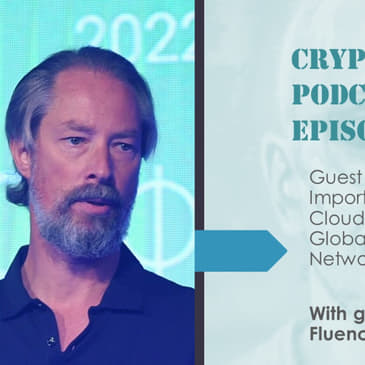

Tom Trowbridge is an accomplished business builder and web3 focused entrepreneur, and the Co-Founder & CEO of Fluence Labs which is building the Cloudless internet; a decentralized serverless computing network and protocol that offers low cost, resilient and verifiable compute. Before Fluence, Tom helped found Hedera Hashgraph (HBAR) where he was president from inception. He is a board member at Stronghold Digital Mining (NASDAQ: SDIG), and is an early investor in leading DePIN projects and funds. He also hosts the DePINed podcast which interviews leading DePIN founders, investors and providers.
[00:00:00] [SPEAKER_02]: Hello everybody and welcome to the crypto hipster podcast
[00:00:04] [SPEAKER_02]: This is your host Jamil Hasan the crypto hipster where I interview founders entrepreneurs executives
[00:00:10] [SPEAKER_02]: Thought leaders amazing guests all around the world of crypto and blockchain and today
[00:00:15] [SPEAKER_02]: I have you guessed it another amazing guest
[00:00:18] [SPEAKER_02]: I'm actually looking forward to this because I believe he has a podcast too
[00:00:22] [SPEAKER_02]: So let me let me introduce him. He's the found a co-founder CEO of Fluence Labs
[00:00:30] [SPEAKER_02]: Tom Trowbridge Tom. Welcome to the show. Hey, thanks so much for having me on thrilled to be here. You're very welcome
[00:00:37] [SPEAKER_02]: Thanks for joining me today
[00:00:38] [SPEAKER_02]: So let's kick things off and I'll ask you first, you know
[00:00:41] [SPEAKER_02]: What is your background and is a logical background for what you're doing now?
[00:00:47] [SPEAKER_01]: Well, it depends how far back you want to go. And so I guess the answer is that my most recent background before
[00:00:53] [SPEAKER_01]: Joining Fluence as a co-founder was helping found Hedera hashgraph. And so I joined
[00:00:59] [SPEAKER_01]: Mance in Lehman in
[00:01:02] [SPEAKER_01]: 2017 when it was just a swirls of white paper and we basically propelled that and into
[00:01:08] [SPEAKER_01]: Hedera the launched public ledger so
[00:01:12] [SPEAKER_01]: Founding and launching and that public ledger is about as good a background you could have for being a crypto founder
[00:01:17] [SPEAKER_01]: I could think of
[00:01:18] [SPEAKER_01]: So that you know was baptism by fire everything from
[00:01:22] [SPEAKER_01]: Hiring and recruiting to raising money to getting council members on to getting people to use the network absolutely everything
[00:01:29] [SPEAKER_01]: So that was that was terrific and going further back
[00:01:33] [SPEAKER_01]: Listen, I've always been interested in involved in technology one way or another either by usually on the financing or investing side
[00:01:40] [SPEAKER_01]: So what my career goes back pretty far? So I never was a actual developer but knew enough about
[00:01:46] [SPEAKER_01]: Telecom in particular and different parts of tech to be dangerous. So you're in telecom early you
[00:01:55] [SPEAKER_02]: Went we're at Hedera hashgraph. How'd you make the transition from track trad fire track?
[00:02:01] [SPEAKER_02]: You know crypto well
[00:02:04] [SPEAKER_01]: So to start it off, I mean go back to the beginning
[00:02:07] [SPEAKER_01]: I suppose to make it easier started off doing investment banking at Bear Stearns a long time ago the telecom and technology team
[00:02:14] [SPEAKER_01]: Then did investing
[00:02:16] [SPEAKER_01]: on in the telecom side for a number of years and
[00:02:20] [SPEAKER_01]: Then moved into more traditional asset management like Goldman Sachs and a variety of other companies
[00:02:26] [SPEAKER_01]: But had an interest in Bitcoin probably
[00:02:28] [SPEAKER_01]: dating from around
[00:02:30] [SPEAKER_01]: 2014 15 and
[00:02:34] [SPEAKER_01]: Basically was evaluating a bunch of projects just on a personal side and a friend introduced me to Hedera
[00:02:42] [SPEAKER_01]: Got to know the team and I left my traditional trad by
[00:02:48] [SPEAKER_01]: Job and join Manson Lehman
[00:02:51] [SPEAKER_01]: As at the time as president of swirls swirls was the only entity that existed and then we spun off Hedera
[00:02:58] [SPEAKER_01]: Which can I help kind of architect and launch from from the beginning?
[00:03:03] [SPEAKER_01]: so I basically saw Hedera as a
[00:03:06] [SPEAKER_01]: very viable alternative to aetherium and the unique thing about Hedera was that the founders were two
[00:03:14] [SPEAKER_01]: Academics with military experiences. They were definitely not crypto native neither was I at the time, but they also weren't
[00:03:21] [SPEAKER_01]: institutionally
[00:03:21] [SPEAKER_01]: Kind of deep in terms of relationships and I had a lot of institutional relationships
[00:03:25] [SPEAKER_01]: It was actually probably one of the perfect projects for someone who was not crypto native to join and
[00:03:32] [SPEAKER_01]: Basically help on a whole bunch of fronts where I could add value very specifically to that project
[00:03:37] [SPEAKER_01]: But that experience then became relevant across the whole industry
[00:03:41] [SPEAKER_01]: but because
[00:03:43] [SPEAKER_01]: of their very specific expertise
[00:03:46] [SPEAKER_01]: I could be very complementary to that to that team from the very beginning and
[00:03:52] [SPEAKER_01]: And that was a very additive
[00:03:55] [SPEAKER_01]: additive relationship
[00:03:58] [SPEAKER_02]: Makes sense to me sounds good
[00:04:00] [SPEAKER_02]: I remember when I was in trad files at AIG and not once
[00:04:05] [SPEAKER_02]: Left in 2017 not once when I was there, but she'll ask five years that I hear the word Bitcoin mention
[00:04:11] [SPEAKER_02]: You know, so
[00:04:14] [SPEAKER_02]: But I regress
[00:04:16] [SPEAKER_02]: What's influence ask you what flow in slabs is all about and what makes you guys a unique player in the cloud?
[00:04:24] [SPEAKER_01]: Computing space so fluence and there's a couple of different distinctions here
[00:04:30] [SPEAKER_01]: Fluence is the name of the network which is now governed by the fluids Dow
[00:04:34] [SPEAKER_01]: Which is a Swiss Association the company that I work for is called cloudless labs formerly fluent labs
[00:04:40] [SPEAKER_01]: So like many enterprise like many groups in this space
[00:04:43] [SPEAKER_01]: We've separated the development entity from the governance entity and from the actual protocol, but the project is fluent and
[00:04:52] [SPEAKER_01]: Fluence is building the cloudless internet basically a decentralized compute platform
[00:04:57] [SPEAKER_01]: and so we want to free people from being constrained and and
[00:05:02] [SPEAKER_01]: subject to the basic top three cloud oligopolous Google Amazon and Microsoft and
[00:05:09] [SPEAKER_01]: So what what fluence does is it has built a?
[00:05:13] [SPEAKER_01]: open
[00:05:15] [SPEAKER_01]: Architecture for doing compute if you take even a further step back in crypto
[00:05:19] [SPEAKER_01]: We've successfully decentralized payments with Bitcoin with the theorem you name it right and we've also
[00:05:26] [SPEAKER_01]: Pretty successfully decentralized storage with are we with file coin with a couple others, but you need to have compute
[00:05:33] [SPEAKER_01]: Decentralized or else you are still subject to every single
[00:05:39] [SPEAKER_01]: bottleneck and risk of a centralized system and so a whole lot of web 3 still runs in the traditional
[00:05:47] [SPEAKER_01]: Centralized cloud and it's not because
[00:05:50] [SPEAKER_01]: Enterprise not because these projects want to do is because there haven't been really all viable alternatives until until now and so
[00:05:58] [SPEAKER_01]: We are helping
[00:06:00] [SPEAKER_01]: decentralized first web 3 I hope but then far more than that and
[00:06:05] [SPEAKER_01]: decentralized
[00:06:07] [SPEAKER_01]: The overall kind of web to ecosystem and if you think about the evolution of computing it started off with
[00:06:16] [SPEAKER_01]: Mainframes that companies hosted on on prem and they built teams
[00:06:20] [SPEAKER_01]: They did and then they were dragged into the cloud and the cloud now is you know the area
[00:06:25] [SPEAKER_01]: You know by hosting and managing compute infrastructure is the core expertise of about zero companies, right?
[00:06:32] [SPEAKER_01]: That's the core expertise of Amazon of a couple big web companies
[00:06:36] [SPEAKER_01]: It's not your average company's expertise since a waste of resources
[00:06:40] [SPEAKER_01]: Management time an effort to manage that so quite logically they outsource that to Amazon Google Microsoft as any company
[00:06:48] [SPEAKER_01]: Reasonably would do however those companies are now
[00:06:53] [SPEAKER_01]: control
[00:06:54] [SPEAKER_01]: 70 percent I think of the cloud and by extension most of the internet and that's a dangerous place to be
[00:07:00] [SPEAKER_01]: It's bad because it both leads to closed ecosystems innovation is not great. It also that means pricing is high
[00:07:08] [SPEAKER_01]: It's very hard to leave. There's a whole number of elements that make that not ideal you there's an outage
[00:07:13] [SPEAKER_01]: There's there's homogeneous hardware. So you see cloud fair Microsoft outages happen in July you see
[00:07:19] [SPEAKER_01]: You know millions of consumers affected as airline reservation systems go down etc, etc, right?
[00:07:24] [SPEAKER_01]: That's because of a so many these guys the Microsoft and cloud fair are in so many
[00:07:30] [SPEAKER_01]: So many companies infrastructure, so they go down
[00:07:33] [SPEAKER_01]: And so and when you think about instead deploying this your your infrastructure computer structure on Fluence
[00:07:48] [SPEAKER_01]: You're doing at a far cheaper rate because there's a lot of excess CPUs that are not being used and because it's open infrastructure
[00:07:57] [SPEAKER_01]: Customers can change their provider whenever they want without
[00:08:02] [SPEAKER_01]: Without any kind of lock-in or cost or fee
[00:08:06] [SPEAKER_01]: Which leads you which leads to a lack of pricing power on the provider side which leads pricing to be low
[00:08:12] [SPEAKER_01]: But anyone raises prices or someone else lowers prices that compute moves and so that I think that
[00:08:19] [SPEAKER_01]: Our objective here is to be compelling
[00:08:23] [SPEAKER_01]: Not for just philosophical reasons, but to have a business case that saves enough money
[00:08:31] [SPEAKER_01]: For users that is compelling for traditional web to to move to this open infrastructure
[00:08:37] [SPEAKER_01]: And that is where and that we think we're about
[00:08:41] [SPEAKER_01]: 70 80 percent cheaper than the cloud for similar
[00:08:45] [SPEAKER_01]: Similar type of operations. And so we are gonna literally see
[00:08:51] [SPEAKER_01]: How real that pricing is in the next sort of month or so kind of end of September?
[00:08:57] [SPEAKER_01]: And so that that I think is is what makes us, you know
[00:09:01] [SPEAKER_01]: You also if you're on Fluence, you're obviously not subject to single points of failure. You've got heterogeneous hardware
[00:09:06] [SPEAKER_01]: You've got different geographies and locations, right? You're not subject to single points of censorship
[00:09:13] [SPEAKER_01]: There's a whole list of
[00:09:16] [SPEAKER_01]: benefits
[00:09:17] [SPEAKER_01]: but price is obviously a compelling one to start off with and I
[00:09:25] [SPEAKER_02]: Understand the competition I understand the price and I understand the benefits
[00:09:29] [SPEAKER_02]: What I don't understand is how a cloudless internet would work. All right, so what?
[00:09:36] [SPEAKER_01]: Yeah, so so the I guess I gotta be very clear with the terminology or cuz it's not obvious and so
[00:09:43] [SPEAKER_01]: What cloudless means is not using the closed?
[00:09:49] [SPEAKER_01]: proprietary cloud
[00:09:50] [SPEAKER_01]: ecosystems
[00:09:51] [SPEAKER_01]: So when you think of the cloud you're thinking I presuming here just the general network of
[00:10:00] [SPEAKER_01]: Computers around the world when I say cloud and I say cloudless. I'm thinking of Amazon Google Microsoft distinct
[00:10:06] [SPEAKER_01]: closed
[00:10:08] [SPEAKER_01]: particular
[00:10:10] [SPEAKER_01]: Ecosystems so cloudless means you still have this whole global network, but you're not relying on one of those three
[00:10:18] [SPEAKER_01]: oligopolists
[00:10:21] [SPEAKER_01]: Proprietary
[00:10:21] [SPEAKER_01]: software tool
[00:10:25] [SPEAKER_02]: That makes a lot of sense. So I remember using the BRD
[00:10:30] [SPEAKER_02]: I did no longer an app was a BRD app or back in 2017 18
[00:10:34] [SPEAKER_02]: And then I did a I did a download of my history and it was provided by Amazon
[00:10:39] [SPEAKER_02]: Web services and I was like I thought that I shouldn't wasn't supposed to be on Amazon
[00:10:43] [SPEAKER_02]: I thought it was like what you're saying cloudless not one of those three oligopolies
[00:10:47] [SPEAKER_02]: So and I was wondering why it was that so I guess we need to move on from there
[00:10:53] [SPEAKER_02]: So it makes sense what you're doing
[00:10:56] [SPEAKER_02]: So also when I hear cloud computing I think of deep in I
[00:11:01] [SPEAKER_02]: Think you know, how would you describe men? I'm currently of deep in in the crypto overall market
[00:11:08] [SPEAKER_02]: So I described the what of deep in the momentum. I
[00:11:16] [SPEAKER_01]: You referenced this earlier but um, you know, I think that
[00:11:21] [SPEAKER_01]: You know a lot of founders are head-down focus on their particular projects and that's certainly what I was at Adara
[00:11:27] [SPEAKER_01]: I am very bullish on the entire deep in sector decentralized physical infrastructure networks
[00:11:33] [SPEAKER_01]: And so started deep in podcast called deep into D IP
[00:11:38] [SPEAKER_01]: DPI NID ED dot XYZ to interview founders and kind of investors and key ecosystem
[00:11:46] [SPEAKER_01]: Participants in the deep and ecosystem and I did that because I think this ecosystem is primed to be the next
[00:11:54] [SPEAKER_01]: kind of
[00:11:56] [SPEAKER_01]: crypto onboarding
[00:12:00] [SPEAKER_01]: Next industry that will really drive crypto adoption and I think we it has some level of attention now
[00:12:09] but
[00:12:10] [SPEAKER_01]: Just minuscule compared to where I think it can be and so if you look at the top projects whether it's helium
[00:12:16] [SPEAKER_01]: Bow coin or render, you know, they look like they've got decent market caps and decent attention
[00:12:23] [SPEAKER_01]: but each one of these is
[00:12:26] [SPEAKER_01]: attacking literally trillion dollar industries that they have the potential to disrupt and
[00:12:31] [SPEAKER_01]: So I think overall this sector is going to be enormous in there
[00:12:35] [SPEAKER_01]: And I think that's one reason that it will drive the next wave of crypto adoption. But the other is that it's far
[00:12:42] [SPEAKER_01]: more
[00:12:43] [SPEAKER_01]: understandable to the average person
[00:12:45] [SPEAKER_01]: Than a defy
[00:12:47] [SPEAKER_01]: Protocol or than some of the more early stage kind of maybe L ones L two type
[00:12:55] [SPEAKER_01]: Networks and so if you people can understand that they put a device in their car and they start to earn because it's mapping
[00:13:01] [SPEAKER_01]: You know like hive mapper or demo
[00:13:04] [SPEAKER_01]: They're selling their data and getting new applications on their car that would demo does or you know spex II
[00:13:11] [SPEAKER_01]: You can put a put a put your put a draw launch a drone and you'd be paid for mapping things or
[00:13:17] [SPEAKER_01]: You know, you're you can buy a weather station
[00:13:20] [SPEAKER_01]: So weather data like weather XM or you can do no number of these different type of very
[00:13:28] [SPEAKER_01]: tangible
[00:13:30] [SPEAKER_01]: Activities that can earn money for you
[00:13:34] [SPEAKER_01]: I think that is much and the crypto enables and allows that I
[00:13:39] [SPEAKER_01]: Think that will is far easier to comprehend and I'd further say that the net the real kind of catalyst for this to happen
[00:13:47] [SPEAKER_01]: Because by the way, there's millions of people earning doing those things right now, but the catalyst is that
[00:13:54] [SPEAKER_01]: Real revenue comes into one or two or a number of these deep in networks
[00:13:59] [SPEAKER_01]: And I think there's several that have been working on large institutional clients for quite a while and
[00:14:07] [SPEAKER_01]: One or two or a number of those contracts are gonna drop at some point and then all of a sudden you're gonna see
[00:14:14] [SPEAKER_01]: Real revenue from real companies going into one or several these deep in projects
[00:14:18] [SPEAKER_01]: I think that is gonna really start to spark a
[00:14:23] [SPEAKER_01]: examination of this entire space and
[00:14:27] [SPEAKER_01]: What the possibilities are so, you know, I think and that and I think that
[00:14:33] [SPEAKER_01]: Some people think of deep in they think of compute and that's great and there's us on the CPUs and there's
[00:14:40] [SPEAKER_01]: Aether on the GPUs and io.net and a kosh and there's a number of people and there's a couple of the storage
[00:14:45] [SPEAKER_01]: But the deep in net be deep in offerings go so much beyond kind of cloud alternatives
[00:14:54] [SPEAKER_01]: into
[00:14:55] [SPEAKER_01]: Projects that that
[00:14:57] [SPEAKER_01]: involve everyday people in so many ways
[00:15:01] [SPEAKER_01]: In ways I also think traditional centralized companies are going a very difficult time
[00:15:06] [SPEAKER_02]: competing with and this those projects mentioned including something like RLC or some others like that, you know
[00:15:15] [SPEAKER_02]: They have they have countries to mention. They have contracts right? I mentioned every I see every one of them also
[00:15:22] [SPEAKER_02]: being involved in the AI sphere and
[00:15:26] [SPEAKER_02]: partnering or having announcements with
[00:15:28] [SPEAKER_02]: You know, what's what's with the video right so video yeah, so what what's the future of AI deep in
[00:15:38] [SPEAKER_01]: Well, I guess what I'd say there is
[00:15:44] [SPEAKER_01]: That I
[00:15:45] [SPEAKER_01]: Think you're referencing a fear that has an Nvidia kind of as part of it has an Nvidia
[00:15:50] [SPEAKER_01]: It's the only web 3 company. I believe that has it's part of the Nvidia kind of
[00:15:58] [SPEAKER_01]: Startup ecosystem or some element of that. So they have a very special relationship with Nvidia that no other
[00:16:06] [SPEAKER_01]: Decentralized
[00:16:07] [SPEAKER_01]: Infrastructure company has and that's that's great for them that they were they were able to accomplish that was a lot of hard work
[00:16:14] [SPEAKER_01]: I know
[00:16:15] [SPEAKER_01]: but I think that as
[00:16:18] [SPEAKER_01]: AI grows demand for AI grows then demand for computing continues to grow and I think the deep in networks
[00:16:26] [SPEAKER_01]: Serve a very important role in
[00:16:31] [SPEAKER_01]: Monetizing
[00:16:32] [SPEAKER_01]: unused GPU capacity
[00:16:34] [SPEAKER_01]: And so you what you can obviously say is well hold on if there's a shortage then how is their unused capacity?
[00:16:41] [SPEAKER_01]: And the answer is that companies are have to pre-order
[00:16:46] [SPEAKER_01]: Machines based on future demand. There's a real lag in terms of delivery and then use
[00:16:51] [SPEAKER_01]: So what is normal is the company will forecast out their demand for next couple of years order those machines and when the machines get delivered
[00:16:59] [SPEAKER_01]: They're still not at the planned capacity use because that they're gonna grow into that so a lot of
[00:17:07] [SPEAKER_01]: Businesses data centers, whoever it is will receive more machines than need that day
[00:17:13] [SPEAKER_01]: because they planned for
[00:17:16] [SPEAKER_01]: Growth in the future because if they don't they're gonna have to turn around the next day and do another order for them
[00:17:20] [SPEAKER_01]: Get that for the know a year etc, right? So you have to plan in advance so you end up with excess capacity
[00:17:27] [SPEAKER_01]: That you can monetize immediately
[00:17:31] [SPEAKER_01]: using some of these
[00:17:32] [SPEAKER_01]: Decentralized deep in or these deep in GPU network
[00:17:35] [SPEAKER_01]: So if you order twice as much as you need rather than just had it sit in your company or sit in a data center
[00:17:41] [SPEAKER_01]: You can then monetize those by putting them out in a decentralized platform and other people rent them use them
[00:17:47] [SPEAKER_01]: When you need them you just take them over those contracts and you take them over and you use them and so
[00:17:53] [SPEAKER_01]: that to me is going to be a
[00:17:56] [SPEAKER_01]: irregular and consistent use and need
[00:18:00] [SPEAKER_01]: the deep in projects can fulfill on the
[00:18:04] [SPEAKER_01]: on the
[00:18:06] [SPEAKER_01]: Sort of AI on the AI GPU front
[00:18:12] [SPEAKER_02]: interesting, you know
[00:18:14] [SPEAKER_02]: I've been watching the corporate America for the past decade and a half right and how
[00:18:18] [SPEAKER_02]: The model has changed from capital budgeting to reduce costs, you know
[00:18:24] [SPEAKER_02]: And do buybacks, but that's another part of it. But you know
[00:18:28] [SPEAKER_02]: This sounds to me like your company's adopted these these deep in, you know
[00:18:34] [SPEAKER_02]: Infrastructure that they will be able to reduce costs and improve their company performance
[00:18:41] [SPEAKER_01]: What are your thoughts? Well, yes, but there's a couple you got to be a little bit more
[00:18:46] [SPEAKER_01]: Specific as to which word where we're talking about here because
[00:18:51] [SPEAKER_01]: For sure
[00:18:52] [SPEAKER_01]: It would give you back switch back the example of fluence
[00:18:56] [SPEAKER_01]: You know if we're able to offer compute at a save just pick a number 70% discount
[00:19:01] [SPEAKER_01]: If a company spending a million bucks on the cloud and they could save 700 grand
[00:19:07] [SPEAKER_01]: That is nice to any company any there's a man
[00:19:10] [SPEAKER_01]: There's no manager that's not happy to save that amount of money, right?
[00:19:13] [SPEAKER_01]: Somebody in that organization as gets a win for saving that so I think you do see that for sure with
[00:19:20] [SPEAKER_01]: The type of CPU stuff the fluence has without a doubt for and that's very corporate savings oriented
[00:19:26] [SPEAKER_01]: I I think once we get a bit more advanced where we are right now on the on the AI side
[00:19:33] [SPEAKER_01]: There it's a little trickier because I think most companies were not are not gonna be building me back up
[00:19:39] [SPEAKER_01]: Many companies will train their own AI models, but they're not going to be
[00:19:44] [SPEAKER_01]: Building this infrastructure in house. So it's your point. They will use deep in
[00:19:49] [SPEAKER_01]: Infrastructure to train their models because I'm not sure how much access they would have to the top top top
[00:19:56] [SPEAKER_01]: Top kind of GPUs. The other piece though is that I think most companies will probably
[00:20:04] [SPEAKER_01]: just use
[00:20:05] [SPEAKER_01]: The
[00:20:06] [SPEAKER_01]: Leading off-the-shelf
[00:20:09] [SPEAKER_01]: Models AI models maybe tweak them somehow right and so I don't think every company is going to be
[00:20:17] [SPEAKER_01]: Investing heavily in their own AI they might be but I think there's sort of phases
[00:20:24] [SPEAKER_01]: There's the companies that are focused and specialized like
[00:20:27] [SPEAKER_01]: You know like opening eye on making the top best models ever and Microsoft etc
[00:20:32] [SPEAKER_01]: Then there's ones that are have a lot of their own data
[00:20:34] [SPEAKER_01]: They want to train it and they're gonna outsource they're gonna have models they outsource
[00:20:40] [SPEAKER_01]: the training to other deep in project because they don't want to have the infrastructure in house and then there's the
[00:20:45] [SPEAKER_01]: Like a pyramid right and then it goes down to the other layer of pyramid where you can have
[00:20:49] [SPEAKER_01]: companies are just happy to either use off-the-shelf AI models or
[00:20:54] [SPEAKER_01]: Maybe buy some extra services or some customization based on their workflows that are relevant and and I
[00:21:03] [SPEAKER_01]: Know the top of that pyramid that's you know a handful of companies
[00:21:06] [SPEAKER_01]: but the distinction between the second and third tier is going to be hard and and
[00:21:13] [SPEAKER_01]: Is going to depend a lot on the expertise and the data kind of importance of?
[00:21:18] [SPEAKER_01]: The composition of each of those tiers got it so
[00:21:25] [SPEAKER_02]: You mentioned a couple things one was that almost an Amazon outage in July
[00:21:29] [SPEAKER_02]: I was driving from Connecticut to Philadelphia Express on how to race a rowing regatta and
[00:21:34] [SPEAKER_02]: You know you had to go by us past New York, which is the airports here. Okay, I'm worried
[00:21:38] [SPEAKER_02]: He had to go past Newark and the whole thing was a was a you know mess right so
[00:21:45] [SPEAKER_02]: I'm thinking if you improve like based on what you said and
[00:21:50] [SPEAKER_02]: You know and then you said based on you know you have off-the-shelf solutions that Microsoft offers. How can you?
[00:21:58] [SPEAKER_02]: Really disrupt and D how can deep in really disrupt the massive markets and then happen as a result
[00:22:04] [SPEAKER_02]: What kind of improvements can we see and expect in the future?
[00:22:09] [SPEAKER_01]: big question, I think there is
[00:22:12] [SPEAKER_01]: deepened by itself will not
[00:22:15] [SPEAKER_01]: address whether or not there is a Microsoft or cloud fire outage and
[00:22:21] [SPEAKER_01]: No matter what and if you are using a deep in fast forward to a world where deep in is widely used and infrastructure
[00:22:27] [SPEAKER_01]: Is running on deep in networks?
[00:22:31] [SPEAKER_01]: You still could be subject to a cloud of flare outage or a Microsoft outage still potentially could the
[00:22:39] [SPEAKER_01]: distinction is that
[00:22:42] [SPEAKER_01]: you won't that just by the heterogeneous nature of deep in
[00:22:46] [SPEAKER_01]: hardware and software any outage will not be as severe as
[00:22:52] [SPEAKER_01]: as
[00:22:53] [SPEAKER_01]: They would be in a centralized cloud. And so you're protected in two ways
[00:22:59] [SPEAKER_01]: One if a piece of software or a piece of hardware fails
[00:23:04] [SPEAKER_01]: Just by the nature of deep in you're running different hardware in different locations and probably
[00:23:13] [SPEAKER_01]: Even different software and so you're not as subject to one
[00:23:19] [SPEAKER_01]: outage
[00:23:20] [SPEAKER_01]: Collapsing an industry that's that sort of point number one and point number two is that
[00:23:27] [SPEAKER_01]: You should be able to shift your data and move from one provider to another and so if a provider goes down
[00:23:35] [SPEAKER_01]: You can quite quickly
[00:23:38] [SPEAKER_01]: Move to a different provider
[00:23:40] [SPEAKER_01]: And so that is another that does obviously relevant where your data stored how you access the data
[00:23:47] [SPEAKER_01]: But your compute all this stuff if it's out there
[00:23:50] [SPEAKER_01]: You should be able to move it pretty quickly to another provider and be up and running as opposed to being
[00:23:57] [SPEAKER_01]: Microsoft's down so you're down because you can't access anything and that is that's that is obviously a
[00:24:06] [SPEAKER_01]: Dangerous situation, but but I also want to be clear about a couple things here
[00:24:12] [SPEAKER_01]: The cloud
[00:24:13] [SPEAKER_01]: Microsoft Amazon Google have spent billions of dollars over, you know two decades
[00:24:19] [SPEAKER_01]: Building and refining the services that companies use this is not an easy thing to disrupt
[00:24:26] [SPEAKER_01]: It's not an easy thing to replace
[00:24:29] [SPEAKER_01]: it takes a lot of work a lot of tooling a lot of
[00:24:33] [SPEAKER_01]: customization a lot of just engineering hours to offer a viable alternative to any one of the verticals that those companies
[00:24:43] [SPEAKER_01]: address and so what I think you will see is
[00:24:48] [SPEAKER_01]: tooling
[00:24:49] [SPEAKER_01]: Developed maybe industry by industry or use case by use case
[00:24:54] [SPEAKER_01]: That then becomes compelling for one sort of sliver and then that sliver serves as an example
[00:25:00] [SPEAKER_01]: And people build tooling for another sliver and that sliver advances, but you will not see a
[00:25:06] [SPEAKER_01]: Kind of wholesale
[00:25:09] [SPEAKER_01]: movement away from the cloud to decentralized systems just because the software kind of
[00:25:16] [SPEAKER_01]: capabilities
[00:25:17] [SPEAKER_01]: Aren't there and will take a will take a while to build. I
[00:25:23] [SPEAKER_02]: Agree, I agree. You can't I guess can't compete in the product
[00:25:27] [SPEAKER_02]: Or service level but I think
[00:25:30] [SPEAKER_02]: In order to get there in order to just the movement people have to understand that there are inherent dangers of
[00:25:37] [SPEAKER_02]: huge centralized company power, right Oh
[00:25:42] [SPEAKER_02]: Right, they have to understand that right?
[00:25:43] [SPEAKER_02]: How do we get them to understand that and then how do we have them understand how we could reduce the dangers I
[00:25:50] [SPEAKER_01]: Mean in that company power goes well beyond
[00:25:56] [SPEAKER_01]: The inconvenience of the airlines going down right that goes way beyond that it goes into
[00:26:04] [SPEAKER_01]: You know these incredibly large companies becoming quasi governmental
[00:26:11] [SPEAKER_01]: Agencies and
[00:26:12] [SPEAKER_01]: Kind of an operating with such symbiosis
[00:26:17] [SPEAKER_01]: to governments that
[00:26:20] [SPEAKER_01]: the the line gets a little bit blurred and that is a you know, and then there's there's you know,
[00:26:26] [SPEAKER_01]: there are cases there's a case I saw recently of a
[00:26:29] [SPEAKER_01]: person that Amazon went after for allegedly violating and not compete which he didn't and they were able to compel law
[00:26:36] [SPEAKER_01]: enforcement to freeze bank accounts and disrupt his whole life and his family and everything
[00:26:41] [SPEAKER_01]: Prior to any conviction prior to any kind of
[00:26:47] [SPEAKER_01]: Even even
[00:26:49] [SPEAKER_01]: Investigation as to what went wrong. He's ultimately exonerated at you know, multi years
[00:26:55] [SPEAKER_01]: multi-difficult family wrecking kind of
[00:26:59] [SPEAKER_01]: Episode that is just you know
[00:27:02] [SPEAKER_01]: Unfortunate just so, you know devastating to hear about but that's what that's what can happen
[00:27:07] [SPEAKER_01]: So that's just a very another sort of element of of the of company power so
[00:27:15] [SPEAKER_01]: Anyway, I guess I guess the point is that they're they're not they're not really benign and so
[00:27:22] [SPEAKER_01]: That is something that just needs to be recognized the other point though
[00:27:26] [SPEAKER_01]: I think to mention is very hard to compete head-on with these large companies
[00:27:31] [SPEAKER_01]: I think that any one company trying to do that would be
[00:27:35] [SPEAKER_01]: Challenged the benefit that
[00:27:37] [SPEAKER_01]: The fluence has and the web3 world has together is it when you're building an open ecosystem
[00:27:43] [SPEAKER_01]: Anyone in the world can contribute to that and so rather than raising money and hiring a team to go compete
[00:27:51] [SPEAKER_01]: Instead you're just providing incentives for the whole world to help build software that
[00:28:01] [SPEAKER_01]: Is most relevant and so while I don't think any one company or any one team could could challenge
[00:28:08] [SPEAKER_01]: Any of these largest companies in the world a global network of developers?
[00:28:12] [SPEAKER_01]: I think is pretty much unstoppable. And so an example of that obviously is Linux which
[00:28:18] [SPEAKER_01]: Started a decade after Microsoft and had none of the billions of dollars that Microsoft had in Windows
[00:28:25] [SPEAKER_01]: And yet Linux is now the leading operating system
[00:28:30] [SPEAKER_01]: and got that way by you know, the
[00:28:33] [SPEAKER_01]: I guess core the the sort of genius core original architecture the incredible dedication motivation of its founder
[00:28:40] [SPEAKER_01]: but also the you know crucially the
[00:28:45] [SPEAKER_01]: dedication of
[00:28:47] [SPEAKER_01]: thousands and thousands developers around the world that built code tested it ran it etc and
[00:28:53] [SPEAKER_01]: That is I think what we're trying to build and enable is that type of similar
[00:29:01] [SPEAKER_01]: Incentive struggle even actually more explicit incentive structure, but that similar type of community involvement
[00:29:07] [SPEAKER_01]: That is the only way that we build tools that can
[00:29:13] [SPEAKER_01]: Can can compete with at all the the large clouds?
[00:29:20] [SPEAKER_02]: the global
[00:29:21] [SPEAKER_02]: decentralized
[00:29:24] [SPEAKER_02]: Community
[00:29:25] [SPEAKER_02]: Network for everybody's actively participating and working together toward a sum and common solution is the way to strip away centralized power
[00:29:34] [SPEAKER_00]: It's the way to compete with it effectively. I and phrase differently. I don't think there's another way
[00:29:40] [SPEAKER_00]: Yeah, I agree. That sounds good. I
[00:29:44] [SPEAKER_00]: Look forward to that world
[00:29:47] [SPEAKER_00]: We're working we're working on enabling it that's for sure
[00:29:51] [SPEAKER_00]: Awesome
[00:29:53] [SPEAKER_02]: So I want to thank you very much for your time today for speaking with me. I enjoyed speaking with you. I
[00:30:00] [SPEAKER_02]: Have one last question and does how can people find it more information about you about fluence?
[00:30:07] [SPEAKER_02]: But what you know what you guys do?
[00:30:08] [SPEAKER_02]: How can they start to use your products and services when it's how can they do that?
[00:30:14] [SPEAKER_01]: Well, I guess the let's start with fluence dot network is our website
[00:30:19] [SPEAKER_01]: Fluence underscore project is us at Twitter
[00:30:24] [SPEAKER_01]: And you can find the the the podcast which is DEP in Ed D pin dot XYZ
[00:30:31] [SPEAKER_01]: Those are the obvious ways to find it. I am on Twitter
[00:30:36] [SPEAKER_01]: the Tom Trow and
[00:30:39] [SPEAKER_01]: on telegram
[00:30:40] [SPEAKER_01]: Our its fluence underscore project is our is our telegram
[00:30:47] [SPEAKER_01]: Handle as well so you can find us there and join that community
[00:30:50] [SPEAKER_01]: So those are those are the best ways and hope to connect with people on those on those platforms
[00:30:57] [SPEAKER_01]: Awesome. Thank you very much for your time today. Great. Thanks for having me. Appreciate it