
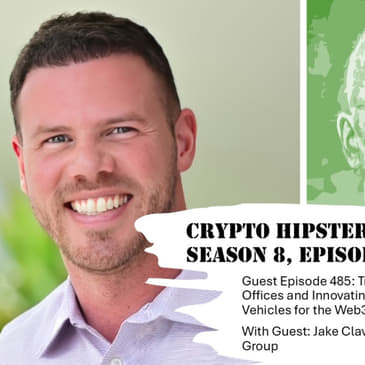

Jake Claver is a pioneering force in digital assets and family office innovation, serving as Managing Director of Digital Ascension Group, a multi-family office specializing in digital wealth strategies for clients. He is the co-author of "Wealth in Numbers: The Ultimate Dealmaker's Guide to SPVs, Syndication, and Private Investment" and founder of both Digital Wealth Partners and Syndicately, a Special Purpose Vehicle investment management platform. As a Qualified Family Office Professional and R3 Corda Certified Business Professional in tokenization, Jake combines traditional wealth management expertise with cutting-edge blockchain implementation. His work focuses on transforming family offices for the digital age, creating sustainable multi-generational legacies that are digitally savvy and anti-fragile. A respected thought leader, Jake has been featured in MarketWatch, Bloomberg, and Yahoo! Finance. He studied Finance at the University of North Texas and has developed world-class educational programs for family offices and digital asset professionals.
[00:00:03] Hello everybody and welcome to the Crypto Hipster Podcast. This is your host, Jamil Hasan, the Crypto Hipster, where I interview founders, entrepreneurs, executives, thought leaders, amazing people all around the world of crypto, blockchain, Web3, you name it. I have another amazing guest for us today. He is the Managing Director at the Ascension Group and syndicately. His name is Jake Claver. Jake, welcome to the show.
[00:00:31] Yeah, absolutely brother. Appreciate you having me on. You're very welcome. I'm looking forward to this conversation. And yeah, so let's kick things off and I'll ask you first, you know, what is your background and is it a logical background for what you're doing now?
[00:00:47] Quasi? So, I went to School for Finance at the University of North Texas. Didn't decide to pursue a career in that out the gate. Had a short internship at Northwestern Mutual. It really just turned me off to traditional finance.
[00:01:01] And so, I cut my teeth for about a decade in industrial sales, scaled multiple locations for a Fortune 500 company, stepped away from that after being acquired by another corporation to help them scale, doubled their sales within a year, and then started doing some consulting work. And that's when I made a bunch of money in crypto. And started seeking out professional services for myself and really couldn't find a ton of it out there because there was no regulation in the space.
[00:01:30] You know, when I went to go speak with CPAs or accountants or wealth managers, a lot of them, if they did have any background, dealt a little bit with Bitcoin and just really didn't understand much of what was going on. And so, after calling, you know, 100 plus firms across the U.S., I whittled it down to the 20 people I wanted to work with.
[00:01:49] And I started having conversations on social media around, you know, mitigating taxes and setting up your estate and what that would look like for digital assets and was met with the deer in the headlights look from most people. Didn't know that was possible type conversations. And so that's, you know, it's kind of what we do now. We provide a consulting service. We run a multifamily office specializing in digital assets.
[00:02:15] So a full scope of services for people that make $20, $50, $100 million in crypto. And we have an SEC-registered RIA, one of two in the U.S. that specialize in digital assets, provide institutional-grade custody for our clients, and provide other ways to be able to earn returns on your XRP, your Bitcoin, your ETH that are not DeFi native. Ways to do that with your assets insured and protected, and then lines of credit against them as well.
[00:02:46] Awesome. So, interesting. I worked at AIG for a dozen years, and then I became an ICO advisor for a year or so. Then I went to the Northwest Mutual training program. And, you know, they're like, okay, ready to join, but wait a second. What's this? And I was an advisor in a couple of projects. They're like, what is this? Get out of this. I'm like, no. Okay, get out of our building.
[00:03:11] So, you know, I think the advisory space in crypto has come a long way, and I wasn't going to plan on ask you about that, but I'll ask you later. Okay. You know, I want to find out, you know, the Ascension group a little bit more detail, you know, and syndicately, you know, what they're all about, and how have you built such an expansive network? Yeah. Yeah.
[00:03:31] So, really just getting in rooms that I didn't belong in necessarily, paying for entry to a lot of different groups, continue to network and put myself in positions to speak on stages and have conversations with high net worth individuals and people that are innovators in spaces. You know, what you're doing on this podcast, I'm sure you get to meet a lot of really intelligent, innovative people that are doing, actually doing things, which is rare in the world.
[00:04:01] But, yeah, just continue to build out my network. I had an initiative, and I've kept up with this pretty well over the last five years. One of my main goals is to meet somebody new every single day and have an intimate conversation with them. And if I do that, you know, sometimes it doesn't go anywhere. Sometimes I don't really like that person. Sometimes they become a business partner. Sometimes they make a strategic introduction. Sometimes they become a client.
[00:04:29] But the more people you're able to meet and have, you know, a genuine conversation with about where they want to be and their goals and how you can help them reach them, then, you know, you're able to provide value and get ahead. But, yeah, so Digital Ascension Group is the main idea there is to there's 10 different verticals that I think are going to progress over the next couple of decades here when it comes to specific types of technology.
[00:04:57] And the first one of those that we've, you know, really cut our teeth in is digital assets, smart contracts, Web3. We will progress across, you know, data centers, nanotechnology, AI is another progressive space. There's many other things that we would like to get into. But the wealth generation piece of that is going to be here at Digital Assets.
[00:05:22] And we feel like that's going to afford us the opportunity to make strategic investments in those other verticals on the other side of price appreciation for some specific digital assets. And then syndicately, it's kind of the technology that allows us to do that. It's a fund administration platform for SPVs here in the U.S.
[00:05:41] So if you run a reg D fund, basically, if you and your buddies want to pool some capital and invest in a piece of real estate or, you know, you want to go out and get a bigger tranche of private equity in a company that's private, that's not publicly traded, or maybe you want to take down an M&A transaction, you want to pool capital for that. We provide an end-to-end solution that's done online where you don't have to deal with all of the regulatory compliance and admin work that that would normally take.
[00:06:10] You just send your links out to your buddies and pool the capital and make the investment and know that everything else is done for you. Awesome. Awesome. So I could be completely mistaken. I don't think I am, but I might be. Yeah. Because I've been in the crypto industry, right? And I haven't been to other industries. But I think the crypto industry was not the only industry that Gary Gensner and the SEC was trying to choke out. I think he crushed the SPV market.
[00:06:40] I think so. Well, I wouldn't say he crushed it, but there's, and they haven't helped themselves. There's been a couple companies that have had some issues with special purpose vehicles. Assure in 2021 really put a black eye on the space. They were managing, you know, tens of thousands of SPVs and just kind of shut down one day mysteriously. I don't know if there was some mismanagement of capital or what actually happened. But they said, closing the doors, walking away.
[00:07:10] So a lot of, you know, these automated platforms have kind of got a bad rap because of that. And there's been a few people that have tried to fill that gap. But in 2020, the SEC kind of walked back some regulation that's allowed this specific way of raising capital to breathe a little bit more. And so it's become much popular over the last five years than it was previously.
[00:07:33] A lot of people are using a 504, but most people use a 506B or C, which are reg D funds in the way that you can raise capital here in the U.S. now. So anyway, we have an interesting way of going about that. We have a mastermind group that we put together, about 1,500 people. And depending on, you know, what the investment is, different people want to participate.
[00:07:58] And so we're able to involve with the 35 non-accredited investors on those deals because it's a closed group. We don't market publicly and we qualify those people as sophisticated because of the financial education and business resources we provide there in the group. So they understand the risks associated with the investment and are therefore able to participate, whereas they otherwise wouldn't be able to. So you see a bright outlook and future for the SPV market.
[00:08:27] Absolutely. Yeah, I think it's untapped. I think a lot of people just haven't really discovered the power of pooling capital and doing deals like that. And I think it's just an educational component. Most people don't realize they can. Interesting. So you have an innovative approach to deploying SPV management, right? What is that? What's the innovative approach and how are you transforming dealmaking for private companies? That's a great question.
[00:08:59] So we've streamlined that process. So most people, you know, if you were to go through this, you could read our book, you know, Wealth in Numbers. We put it out at the end of last year. It's, you know, 480 pages of how to run a private deal here in the U.S. So you're going to have to go through KYB, KYC, AML, you know, accreditation, OFAC, BIS for each of the investors. You know, make sure you have all that documentation.
[00:09:24] You're going to have to spin up a PPM subscription booklet and an operating agreement for the deal. You know, if you go to an attorney to do that, it's going to be somewhere between $15,000 and $30,000. It just depends on what the deal looks like. You've got to spin up the company and form that. You've got to get bank accounts to be able to pool the capital and then make the investment. You've got to be able to follow the Reg D forms and the CIK, get your CIK number. There's just an endless list.
[00:09:54] There's a list of things that you have to do in order to be able to do this in a regulated way. And most people skip steps or shortcut things or don't know that they need to be doing certain things because they haven't run enough deals or dealt with attorneys to be able to do it. And you've got K1s and follow-up and there's distributions and a bunch of other things on the backside of after you've raised the capital.
[00:10:20] And so we basically figured out a way to be able to automate that and streamline it so that, you know, somebody that's running a deal, you just go out and have the conversations and raise the capital. And you don't have to worry about all of the administrative and compliance components that are required to do it in a regulated way. So that's what Syndicate.ly is. So you capture all that.
[00:10:44] I would think that one of the promises of blockchain, and you don't hear about it too much, is identity for the unidentifiable. Yeah. Right? How do you think your platform and what you do can cause major breakthroughs in the areas of identity? So we work with providers that do the KYC and AML.
[00:11:04] But you have native to the XRPL, just recently they passed an amendment, which is digital identity, and they're going to pass credentials on the network, which would allow you to basically verify that you're accredited or hold some other credential. Right? Basically with the zero knowledge proof. So you would just share that hash with somebody else, maybe able to pull that information without you having to directly provide it every single time when you sign up with somebody new.
[00:11:31] So I think it'll streamline that process a lot for investors, especially as this stuff moves on chain over the next three to five years. So you see it all moving. Eventually everything's going to move on chain. Yeah, I agree. So you've also transformed the, I guess you just said there's a client onboarding process, right?
[00:11:55] So what other important challenges must be tackled to achieve the next leg up for blockchain and mass adoption, really? Like most people don't even want to know that they're using this. So it's, it's the user interface. I think you've seen banks already migrate to digital wallets. They've already rebranded their bank accounts, digital wallets, and most people just, okay, cool. You know, they've gone along with that.
[00:12:22] But I think, you know, the advent of stable coin regulation here in the U S is going to bring mass adoption to this technology in ways that most people just. It'll be another form of money in your bank account. You'll earn rewards or have interest bearing opportunities that you wouldn't have before on much more liquid assets. So instead of having to hold your money in a money market and wait 24 hours to be able to deploy that capital, if you need it out of there, you'll be able to spend it directly while earning interest on stuff.
[00:12:52] Um, I think that there's going to be a mass adoption of this without people really understanding that that's even happened. Uh, their payments will just settle real time and, um, you know, transactions will become easier. Uh, so imagine purchasing a home, you know, putting that money in escrow and the release and dealing with the title company and all of the back and forth.
[00:13:16] Um, getting a HELOC against your, your property, the underwriting on that and what all that takes. Uh, a lot of these things that take 30, 60, 90 days now to close a transaction, uh, will be expedited to, you know, 24 to 48 hours. Um, and that's going to be the main thing that people notice is just stuff gets done faster. Money moves faster. It settles faster. Um, and that'll be because of the stable coin regulation that they're about to roll out here in the U S. Okay.
[00:13:45] So I know president Trump said there would never be a central bank digital currency here in the U S. But then, you know, we're, we're, we're increasing the ability to do stable coins. So how do you think that's going to impact tether USDC is the, the, the, the two jogger nuts that are already here. How do you see the field playing out? I think USDC will probably be just fine.
[00:14:11] Uh, I think RL USD is a big player that most people haven't recognized in the space yet. That was a stable coin launch by ripple. Uh, they've met with the U S treasury on multiple occasions, um, and have worked on, on the genius act or the bill that's been put forth for stable coin. Uh, tether recently just moved offshore to El Salvador. Uh, seems like they're running. Um, and they, they have a portion of their balance sheet that is Bitcoin.
[00:14:38] They have divested a lot from Bitcoin over the last, you know, five, six years and purchased a bunch of U S treasuries for their backing. However, uh, they're currently in litigation with Celsius for a portion of the Bitcoin on their balance sheet of close to $1.3 billion, uh, that they won't be able to divest. When the stable coin regulation passes.
[00:14:58] Uh, and I think that that'll allow the U S government to sanction tether, uh, potentially freeze all the wallets that are still on exchanges, uh, and inhibit us exchanges from utilizing tether to be able to transact value. Uh, which would be a huge impact on the space and, and Bitcoin for liquidity. Um, but separate of that, I think it allows a lot of these other people that are going to be launching stable coins to step into the space in a meaningful way.
[00:15:24] Uh, so, you know, Google, Apple, Amazon, other people that are likely going to launch, you know, financial services, uh, including X, you know, they're getting all of their money transmitter licenses. Um, I think they'll be able to step into the market and take a large market share. If the U S government kind of handicaps tether in the short term, when they pass that stable coin regulation. And I think that's on purpose. Interesting. So I'm just thinking of, I'm just thinking from a trade, from a trader, crypto trader point.
[00:15:55] I'm now a hodler, right? I buy stuff and I, and it goes into the vault and I don't touch it ever, you know, but you know, tether has been used by all the Bitcoin traders and the, and it's a lot of traders to be able to preserve value. So how are you good? Like there has to be some kind of embedding with the new, with, with the new platforms and with like coin, the old platforms like Coinbase. And, you know, how do you, how do you see that occurring? The, the new players moving into the space and they're stable. Yeah. Kind of penetrating the market.
[00:16:24] Yeah. Um, yeah. I think there's going to be some acquisitions that are made by financial institutions and a lot of these exchanges. Um, I think that they're going to step in and instead of having to completely rebuild it on the inside of their own infrastructure, I think they'll just make acquisitions and buy a bunch of these exchanges and be able to list their stable coins on there. So Bank of America, BNY Mellon, Goldman City.
[00:16:49] Uh, I mean, you've got KuCoin, you've got, you know, BitMEX, you've got Bitstamp, you've got all of these exchanges. That have been around for five, 10 years, um, that have operated in this space and built, you know, a clientele. Uh, and I think, you know, large institutional banks will just step in and make those acquisitions and kind of roll those up and list their stable coins on there. Um, and then as far as Google and Amazon and Apple, I mean, you already have those wallets on your phone. Most people do.
[00:17:19] Um, and so, you know, if they said, Hey, uh, move money over here and we'll pay you 5% or 6% on your money that you're holding in, in your account and your checking account and it's available same day. I think people would move in waves away from traditional financial institutions and poor money there, uh, to be able to earn those type of returns on, on money that they could spend immediately.
[00:17:44] So, um, I think that that'll be a mass adoption and, and the way that the public, you know, promotes these stable coins. I think the paradigm that we live in now where we're stable coins are kind of the store of value in crypto, where you, you know, hold your cash that you're going to deploy into this market, um, will change pretty drastically as we see the mass adoption of stable coins. I don't think that that'll be the primary mechanism by which people acquire them or use them. Interesting.
[00:18:15] I'm looking forward to seeing what happens. I'm a, I'm a hodler, Alan's trade now because, you know, too much, too much drama. Oh yeah. Yeah. My, my, my point of view is, uh, good finance is boring. So I think Warren Buffett said that, but you know, um, so I don't want to know, you know, since banks are pouring into this space, you know, what's the, what's the future of the XRPL? You know, you do your, you built, you know, using XRPL and, you know, do you see that, you know, I don't know.
[00:18:44] What do you, what are your thoughts on the future of it? Um, so we've been to swell the last two years. Uh, speak with ripple on an infrequent basis. We're a shareholder in the company. Um, there's a lot of, there's other parties that are utilizing the XRPL for multiple things. Um, you know, talk to Graham at our checks. I think we're going to have him on our podcast here in a few weeks. Um, our three is another partner of ours.
[00:19:09] Um, so, um, speak with a lot of people that are utilizing that technology in some capacity, either to settle transactions or they're working on a side chain on the smart contracts for the EVM or the hook side chain to develop things. Um, I'm highly confident that it will be used at scale globally to settle back end large transactions between financial institutions and enterprises.
[00:19:34] Um, until they migrate hooks to the main net and you have light smart contract capability inherent to the main net. Um, I think it's going to stymie some adoption. Um, but you, you know, you've got other things like, um, Codeus and R3 Corda that just basically use XRP as the backend settlement that are standalone smart contract infrastructure for trusted parties. Uh, and that's what institutions want.
[00:20:02] They, they want to be able to transact with counterparties in a trusted environment through an agnostic bridge asset, uh, that they don't have to, they're not going to hold other counterparties, uh, stable points. You know, they're, they're going to issue their own and they want to be able to transact value. So you need an intermediate, um, neutral bridge that everybody can run a validator on and trust.
[00:20:27] So I think that's going to be the primary mechanism that, you know, the XRPL provides in the future is interoperability between large financial institutions and enterprises. Um, and I think the volume over the main net will be pretty substantial and, and the price of the token would appreciate pretty substantially. And, you know, uh, because of the use of that. So, um, you know, Sorban smart contracts on, on XLM and Hyperledger.
[00:20:57] I think that that, you know, fosters a lot of, uh, adoption there for, for peer to peer payments and merchant services. We've already seen some people develop things there. Uh, but I think as far as, you know, large value backend wholesale type transactions, I think that'll all throw, blow through XRP. That makes sense to me. Yeah. So we were, I want to go back to our conversation about Northwest mutuals. So not really.
[00:21:25] Um, but I want to talk about wealth advisory, you know, how is blockchain enabling generational wealth, uh, now and reshaping the entire investment landscape? So we're right on the forefront of that. We provide the only financial services that I'm aware of for people that are less than a quarter billion dollars, uh, in current net worth that, that are holding, you know, significant allocations to crypto.
[00:21:54] Uh, we're the fastest growing RIA in the world, uh, with, uh, 200 million under management in just six months after, you know, opening our accounts. Um, so people understand that this is a need. Um, they're the majority of our clients are somewhere between 40 and 70 years old and have a significant allocation for them to digital assets, uh, somewhere between half a million and 5 million.
[00:22:19] Um, and they believe that those are going to appreciate substantially, you know, through the adoption of these protocols. Uh, 90, 95% of what we manage is, is XRP. Um, and we're continuing to add to the breadth of whatever, what we're able to, um, custody and provide returns on. So XLM will be available here in the next 20 days, uh, through our partnership with Anchorage.
[00:22:43] And, um, I think, you know, people have used insurance as the mechanism for infinite banking in the past. Um, but the premise behind it is, you know, you're invested in an asset that continues to accumulate value tax-free, uh, and you're able to borrow down lines of credit against that. And then deploy that capital to fund your lifestyle or make investments or do other things with it.
[00:23:11] And as the asset continues to appreciate over time, you basically refinance it at a lower interest rate, um, against, you know, a larger amount of equity in the asset, whatever it is. And I think that that's going to be the main way that people utilize a lot of these assets over the next couple decades as they continue to accumulate value at a pretty rapid pace. Um, we can structure insurance policies, you know, in kind, we can fund them with the digital assets.
[00:23:39] Uh, but just in general, I think people will be able to, you know, right now we're in the mid to high teens on the interest rates against digital assets and the LTVs somewhere 50 to 60% in most circumstances. But I think those terms will continue to get better and better and better over the next decade. So let's say you borrowed, let's say you had $10 million in crypto today. You borrowed 5 million against it at 15%.
[00:24:04] You take a portion of that, you put it to work in an apartment complex or a business that's able to service the debt and you have the extra to live off of, um, all tax-free because debt is not taxable. Uh, and you didn't lose your allocation to the asset. So let's say the asset then, you know, it goes 10 X from where it was. Now you've got a hundred million, uh, you're able to refinance that debt and the interest rates come down. Now it's at, you know, 9%, you know, a year from now.
[00:24:31] And, um, you know, then you're able to pull down more, uh, stuff, uh, more, more of a line of credit, another 50 million. And you're able to buy a larger apartment complex that cash flows to be able to service the debt and you keep the rest of that to, uh, live your lifestyle off of. And you just continue to do that over time. Uh, if it's through the insurance policy, then you could buy reinsurance.
[00:24:54] And so, you know, whatever line of credit you drew down that reinsurance policy that you're paying the premiums on, uh, upon your passing would pay off the debt that you owed against the assets. And then the assets, uh, inside that policy would then flow to the trust that we've set up for our clients. So very similar to what the Rockefellers have done for their family office. Uh, but I think that that's going to be the main mechanism by which people are able to use these assets over their lifetime and generate significant wealth for them and their families.
[00:25:26] Um, you said that magic word that I haven't really seen in this industry yet. And that's reinsurance. I haven't seen, like, I've seen a few insurance startups in crypto, but I haven't seen like a mass, you know, spread roll out of that. And I haven't seen reinsurance at all. So how do you think those two things are going to shape up going forward?
[00:25:46] We've talked to Nexus, um, and there's a few other parties, Marsh and Woodrow Sawyer, um, that we have interactions with that, you know, are a broker and they go out and work with Lloyds of London and the insurers. And they're able to get the reinsurance on things. Um, like our accounts at, at, uh, Anchorage, we're working on the ability to provide species insurance, uh, against those. So they're insured up to a hundred million, but as assets appreciate beyond that, I'm sure people will want, um, extra insurance on their accounts.
[00:26:16] And so, uh, working with those counterparties to be able to provide, uh, those, you know, options for our clients. Um, but to your point, I think the space is still very early on. There's not a whole lot of demand for a lot of these products or the, or the creation of them. And so for us, we just want to stay at the forefront of that and continue to build out, you know, uh, relationships that allow us to create and then offer these products to our clients as they are needed. Interesting.
[00:26:44] You said, uh, what you said about going up 10% and servicing your debt makes perfect sense to me. So I'm just wondering about the flip side of that. Say it goes down 10% or 20% or what has done since December, 80%, you know, and that's, it's prolonged over time and you're not able to service your debt. Then what do you do? You would want to take responsible loan to value. Right.
[00:27:10] And so in most circumstances, we don't advise our clients to take more than 20 or 30% against their assets at any given time. Um, you know, if you're taking 50, 60, 70, 90% LTV, it better be at the bottom of the bear market. Uh, because if you do, you know, see some significant downside in those assets, you're going to have to top up that collateral. Um, and you know, we, we put some things in place with our providers, uh, where we have some time.
[00:27:39] It's not just like you get liquidated like you would through a DeFi protocol. Um, so you have some time to top up that collateral. And then if there is margin call, you have first right of refusal to purchase the assets back before they go out to market and liquidate them, um, to make themselves whole.
[00:27:53] So, you know, working with the traditional system, I know a lot of people want instant liquidity and, um, you know, DeFi provides a lot of benefits there, but there's also risks to losing your assets that, uh, you can mitigate a little bit if you're working with the right counterparties. And maybe the loan takes a little bit longer to underwrite, um, and get things done, but you also have some protections that you, you otherwise wouldn't have. Yeah. Yeah. That makes sense. I actually, I actually, it makes a lot of sense.
[00:28:23] Uh, I was a, I was a Celsius customer and I would take loans on my loans. You know, so, um, I didn't have any loans when the band went bankrupt, so that was good. Um, but a lot of, a lot of people, you know, in this space, they are chasing 500 X, you know, or a thousand X or want to make, you know, a million dollars tomorrow or 10,
[00:28:47] you know, you know, how do you, how do you bring in a hundred times more investment without a thousand times more risk? You know, um, and especially coming from the private sector. Yeah. You need some stability, right? And I think as these protocols get used at scale in different applications, I think that that'll move into the space that if you look at the liquidity in the S&P 500 or the NASDAQ or some of these larger indexes,
[00:29:16] it takes billions of dollars to move them 1%, you know, either direction. Um, so I think as you see more liquidity move into this space, you'll see a lot of the, the stabilization of, of these assets themselves. Um, you know, the stock market is $600 trillion. Uh, that'll all move on chain. Uh, this technology will eat the rest of these financial markets. Uh, and all of that liquidity will end up tokenized on these networks.
[00:29:44] And so at scale, um, these assets become much more stable over time, uh, as they are adopted. Um, and I, but the, you know, then you lose out on the returns too. Uh, so, you know, my saying is once grandma can do it, uh, there's all the money's been made. Um, so there's, there's a lot of people that are apprehensive to learn, you know, what's required for cold wallets or these exchanges or setting up accounts or which assets to purchase. And it is, it's overwhelming.
[00:30:14] Uh, but that's why there's opportunity also. And if you're able to cut through the noise and have conviction and, you know, do your due diligence and find the right projects there, there are opportunities for that 50, 100, 500, a thousand X return, uh, here in the next two or three years. Awesome. 500 X, 1,000 X over three years makes a lot more sense than, than 24 hours.
[00:30:41] So, um, so, but what's it going to take? I think, I mean, we're going to, we're, we have, you know, the announcement of tariffs and everything and, you know, the markets, stock market two has been tanking, you know, what's it going to take to bring that liquidity back into the market? A liquidity crisis. Um, so I, I put out a theory about a year ago, uh, called the domino theory and it, it leads to XRP being pretty significant in its value. Uh, are you familiar with the reverse carry trade?
[00:31:11] Heard of it. So the premise behind it is Japan has provided, you know, zero to negative interest rates for the past 20 years for people to be able to borrow, uh, money from them. So tens of trillions of dollars have been borrowed in yen over the last couple of decades. And people have taken that yen, swapped it for dollars and then put it to work in our U S stock market and treasuries and crypto and all over the place.
[00:31:36] Um, now that the bank of Japan is raising interest rates, a lot of those notes and the margins that those people are making are getting squeezed and those notes are becoming due. Uh, and so instead of refinancing them, if you're refinancing that debt now, you know, a hundred X, which you originally borrowed it, um, probably not good. And so you're, you started to see it unwind last year in August. We had the S and P drop 13% one day.
[00:32:02] Uh, and that was just a couple of trillion dollars of the reverse carry trade being unwound. Um, and so since then people have recapitalized their positions, uh, borrowing more. And we have tens of trillions of dollars that are outstanding, uh, from the bank of Japan. That'll be called here when they raise interest rates the next time, I think you're going to see a global credit call, uh, across markets, gold. It won't matter.
[00:32:28] All markets will be down significantly, uh, when people rush to repay that debt. Um, and in that moment, uh, you will need something to jumpstart the economy. You will need, uh, something to settle things real time for investment banks and other people to de-risk. Um, and you'll need something as a stimulus to, you know, jumpstart GDP.
[00:32:51] And I think that's when we're going to see the adoption of this technology, uh, for instant settlement to increase the velocity of money across the economy and, uh, pull us out of that, that hole that, uh, that's going to cause. I hope you're right. It sounds exciting. So, um, wow. Very cool. So, um, I want to thank you very much for speaking with me today. I enjoyed our conversation. And, uh, I have one last question. It's easy.
[00:33:18] It's how can people find out more information about you, about digital ascension group, about syndically become clients? How can they do that? Yeah, absolutely. Thank you again for having me on. So if you just want to go to jakeclaver.com, I've got a full link tree of all the businesses that we're associated with, including the mastermind group, uh, where we provide financial education and business resources, uh, digital family office.io, where we provide financial services or sorry, uh, professional services.
[00:33:41] If you make a bunch of money in crypto, the estate planning, taxes, uh, philanthropic focus, private security, anything else you might need. Uh, digital wealth partners, uh, which is the SEC register for RIA that does, uh, institutional grade custody and provides returns on your XRP, Bitcoin, ETH, or whatever other digital asset you might hold.
[00:34:00] Uh, if it's in the top 10, uh, and then, you know, if you are looking to run a reg D deal here in the U S and you want to pull capital to make an investment, uh, you should definitely go check out syndically.com. And, uh, we'd love to work with people in that capacity as well. Awesome. Thank you very much for your time today. Yes, sir. Appreciate you. Thank you.