
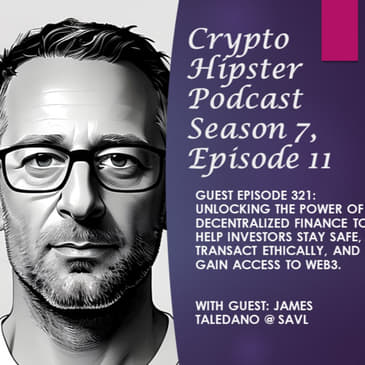

James Toledano is Chief Operating Officer at Savl. An established technophile and early Bitcoin investor, James began his career at major US publisher Ziff-Davis, before moving on to work at UK's first web development agency, Webmedia. He later contributed to the establishment of the new media division at Virgin Radio. A tech pioneer, in 1999, he launched the first legal music download platform, Brandnewmusic, in partnership with Apple — before Napster, thereby setting a standard for the digital music industry. He later spearheaded the sales and marketing effort at the UK arm of MP3.com, significantly contributing to the expansion of the brand. While at SafeNet (Thales), he developed advanced anti-piracy solutions for leading US music labels and broadcasters. In addition to digital music, James held the position of Vice President of Digital at Ford Models and founded a successful digital transformation agency in New York. Throughout his career, James has advocated the use of technological innovation to achieve success, an ethos he continues to apply in his stewardship at Savl.
[00:00:00] Hello everybody and welcome to the Crypto Hipster podcast. This is your host Jamil Hasan, the Crypto Hipster where I bring you founders, entrepreneurs, executives, thought leaders, artists, you name it all over the world of crypto and blockchain all around the world.
[00:00:17] Today I have an amazing guest. He's coming to us, honestly from across the pond. His name is James Teladono. He's the COO of Savile. James, welcome.
[00:00:32] Hi Jamil. Good to be here with you. Happy to be here. Thank you for inviting me on.
[00:00:37] You're very welcome. Happy to have you here. So let's kick things off and ask you first about your background. What is your background? And is it a lot of background for what you're doing now?
[00:00:49] So yeah, I've got quite a storied background with some kind of corollaries to where I'm at now. But I mean essentially I started out really in digital music. Well actually in the digital web space when it was first kind of getting off the ground in 96 and then I moved quickly into digital music.
[00:01:11] I wanted to set up like this legitimate music download service and I did that actually in partnership with Apple computers but pre-napped about I was just way too early. So, and as you know you don't really get anything for second prize.
[00:01:29] Second place rather but I then from now actually went into piracy and to anti-piracy and I was taken over to the US to help develop anti-piracy solutions for BitTorrent network which was decentralized peer to peer.
[00:01:45] So this was my first kind of foray into decentralized technologies and obviously fast forward now I'm back in the decentralized space but in a different vertical. So there's some corollary but it was purely accidental.
[00:02:03] It wasn't planned and then kind of in between I've worked in digital transformation space and setting up agencies that I've run and things like that. But I've been in the crypto space really since 2010.
[00:02:21] So someone once called me an OG which I thought was highly amusing but yeah, I've been in it for a while.
[00:02:28] Awesome, awesome. So I don't know if I'm an OG and I've been in here since 2017 so I'm getting there.
[00:02:38] I think like on crypto years like dog years in the real world.
[00:02:44] I was thinking decades, a decade is a year.
[00:02:47] Yeah, yeah, let's go with that.
[00:02:51] Cool.
[00:02:53] So, Savile right? What is it all about?
[00:02:54] Yeah.
[00:02:56] What gives you a competitive edge in the market? What's his verticals?
[00:03:00] Well, so we are a self custodial or non custodial wallet.
[00:03:07] I'm pretty sure your audience is savvy enough to know what that means but just in case what that does mean is that we have software wallet which is in the form of an application which you get through either Google Play Store
[00:03:24] or the Apple Store.
[00:03:28] And it means that anyone can store their crypto assets, they have full access to them all times and they own their security.
[00:03:40] So by comparison say if you're using a centralized exchange, that's a custodial service.
[00:03:46] And we know from say like things that happened with FTX recently in the past couple of years that if the proverbial hits the fan and you want to get your money out on a centralized exchange and they haven't got liquidity, you're kind of stuffed.
[00:04:03] But the whole idea with a non custodial wallet is that nobody can prevent you accessing your funds.
[00:04:11] So there's obviously quite a few non custodial wallets in the market.
[00:04:16] We're on the smaller side in terms of market share.
[00:04:19] But where we're different is that our ethos is really about creating a grandma proof technology or grandpa proof.
[00:04:29] And what I mean by that is if your grandparents want to buy crypto, they should be able to ultimately download the app and figure it out in a few taps.
[00:04:40] Before you know it, they've kind of bought some Bitcoin very easily and they're storing it in their wallet.
[00:04:46] So that's the idea and how we get there is by having a product that has just a really slick and easy to use interface.
[00:04:56] So you know the whole UX UI is just really well thought of and we're always iterating on that to make sure it's just helping people do what they need to do as quickly as possible.
[00:05:12] But ultimately non custodial wallets are about complete ownership and that feeds back into the whole origins of decentralized finance, right?
[00:05:21] Which came out of the financial crisis back in the States in 2008 when people couldn't get money out banks.
[00:05:31] And I think the whole Bitcoin idea came out of that and here we are.
[00:05:40] I'm not sure if I've fully answered your question.
[00:05:43] The second part of your question was what gives us the competitive edge?
[00:05:45] I think so. Yeah, it's the easy to use interface.
[00:05:49] But also we have our app is just packed with so many more features compared to say other non custodial wallets, right?
[00:05:58] So within our app you can on and off brand, which means buy and sell your crypto.
[00:06:05] You can buy crypto with a debit card, sell it back to debit card.
[00:06:07] You can stake your crypto, which means you can leverage it on certain networks to earn kind of passive rewards.
[00:06:16] You can buy about 4000 plus different products and services if you want to buy a, you know, pop up your phone if you want to buy a vacation through hotels.com.
[00:06:28] Those types of things you can or even get a Netflix subscription.
[00:06:32] You can use your crypto for that through our app.
[00:06:34] We have sub accounts so you can have multiple accounts within, within Savile Wallet.
[00:06:42] If you want to have like an investment account or a savings account or a, you know, day-to-day account or an account for different trading strategies.
[00:06:52] And then the other thing that we do that no one else does is something called KYT know your transaction where you can literally just paste any blockchain wallet.
[00:07:04] Address into the transaction bar, you know, whether you're, you know, before you're about to kind of buy or send and we will give you a full risk assessment on that address.
[00:07:15] And the reason why you would want to do that is because you don't want to infect your wallet with proceeds that may have come from illicit activities on the dark web or from someone who's trying to, you know, launder their money or, you know, evade sanctions.
[00:07:31] Because if you accept tainted crypto into your wallet and then you try on a centralized exchange to sell, you might get blacklisted.
[00:07:41] So we're, you know, we're trying to give people tools so they can trade safely and ethically.
[00:07:47] Yeah.
[00:07:50] Interesting.
[00:07:52] I never heard of know your transaction or what that meant but that's a good idea.
[00:07:57] Like I received a phone call from somebody I used to work with back in the financial crisis days at AIG.
[00:08:06] And he said, this guy, this works for me by one of my companies, but he wants his brother to do it as brothers in Turkey.
[00:08:14] And how do I know if that money's coming, you know, from an illicit transaction like to me, your platform would be able to snuff that out.
[00:08:27] So you're saying yeah, yeah, that's right.
[00:08:29] And I think obviously that's, that's because of the inherent nature of blockchain technologies, right?
[00:08:38] Where ledgers are online, they're transparent.
[00:08:41] You can actually see the origins of any transaction.
[00:08:45] So you know exactly where something has come from.
[00:08:47] And obviously people can, you know, there are kind of technological ways to get around some of this stuff but, you know, 90% of the time you can trace stuff back.
[00:08:58] And some people ethics, ethics matter to some people and it certainly matters to us and we want, we want DeFi to be really safe and reputable.
[00:09:08] In other words what you're saying is that the average user will be able to do the same thing that companies like chain house do.
[00:09:15] And that's exactly, exactly.
[00:09:18] Actually we work with two companies who are competitors to chain analysis.
[00:09:22] So we're not just using one company to provide the intelligence for our KYT servers.
[00:09:29] We're working with two so that we can ultimately provide two, two scores that are filtered into one score because each company has a different algorithm.
[00:09:40] They have a different risk threshold.
[00:09:43] So we wanted to just do it through more than one provider but yeah, exactly right.
[00:09:47] Exactly that.
[00:09:48] So that's one of your two competitive advantages.
[00:09:51] The other is what you said.
[00:09:54] Actually right now I think the only retail app I've been using to get discounts on stuff and buy products and services is Lolli, which they give you a little bit of Satoshi's for transactions.
[00:10:06] But you're saying you have a full platform where retail users can use it to do non-crypto and crypto transactions together in one platform.
[00:10:14] Well, yeah.
[00:10:16] What I'm saying is they can use their crypto to buy real world products and services right?
[00:10:22] And then actually you touched on something else that I missed out is we are going to be launching a loyalty program within the app which is woven into the fabric of the app which is going to reward users for transaction based activity
[00:10:36] and also social engagement activity with our own stable token because part of what the app does as well, we have a built in social network called community.
[00:10:49] So we have a lot packed in and the idea behind community is for people to kind of share ideas to discuss things, to learn things, to share strategies, post content.
[00:11:03] And we want to reward people for doing that. We want to keep people on the app and we're going to do that by giving them rewards which they can then either redeem or say KYT checks or they could exchange those tokens for say USDC and cash their chips out so to speak.
[00:11:21] But yeah, so that's where we're at and we think we're pretty unique in that space because nobody is doing as much as we are within one app.
[00:11:33] All right. So you said a word there. He said social.
[00:11:38] You know what I'm on social media? A lot of people I see are arguing and infighting across different communities, right?
[00:11:49] One of your is to socialize the blockchain and unite users which is the opposite of what I've been seeing.
[00:11:57] Right? How do you come especially when things seem to be a little bit more fragmented than they ever have been before?
[00:12:04] Yeah, so I mean I kind of agree with you. So obviously I spend time on Twitter or X whatever you want to call it unfortunately and you get the idea there that people just love to fight.
[00:12:17] They love to insult people and that's an issue across all social media.
[00:12:24] But what we found is when you have a highly focused community, the social aspect within Savile Wallet app, people are using Savile just for crypto.
[00:12:37] So it tends to, there's nothing political happening within our wallet.
[00:12:41] People aren't infighting about the state of American or British politics for example. They're not being nasty to each other.
[00:12:50] We have very strict rules of engagement where if people are kind of trading insults, we'll simply stop them from participating.
[00:13:00] And people are really well behaved but the idea really is also within the app.
[00:13:10] If you're transacting with another Savile user, we provide a messenger service, an end to end encrypted messenger service and maybe those two people might want to have a chat before they transact.
[00:13:22] Maybe they've got some ideas they want to share with each other.
[00:13:25] So when we say socialize the blockchain, it's really about exchanging ideas.
[00:13:32] And also if say one member has something bad has happened to them outside of Savile and they want to share this so they can warn other people.
[00:13:45] Maybe they got some kind of email scam or something.
[00:13:48] It's a good platform for sharing experiences and keeping people safe.
[00:13:54] But I mean, yeah, DeFi is very fragmented by definition and I think decentralized, anything decentralized is going to be fragmented.
[00:14:08] So it's our job really as technologists to make sure that we can bring a centralized field to a decentralized space.
[00:14:18] And that's what we're trying to do.
[00:14:20] We have to work with quite a lot of third parties to deliver features to our users.
[00:14:28] And those third parties are always improving their services.
[00:14:32] But where we want to get to is this feel of centralization within a decentralized platform.
[00:14:41] And I think so, yeah, I'm trying to think what else I can add to that.
[00:14:52] So let me ask you a question.
[00:14:54] So when you talk about fragmentation, you're talking about how people just seem to be at odds with each other all the time, right?
[00:15:03] Yeah.
[00:15:05] Yes, I'm talking about that and also how the technology is also fragmented, right?
[00:15:12] There's like two aspects there.
[00:15:14] But I think, you know, really people within who are using our app and ecosystem, they're there for a common purpose, which is, which is really to invest and share ideas.
[00:15:27] Yeah.
[00:15:29] Yeah.
[00:15:31] I see the fragmentation in the technology because a little different L1 chains do something a little bit different, a little bit better than others.
[00:15:36] If you take the best of it, then you got a really powerful, you got a really powerful chain, but I think the world's going to be multi chain.
[00:15:43] You know, yeah.
[00:15:46] I agree.
[00:15:48] But going back to that fragmentation, you know, you said the crypto shouldn't be cryptic, right?
[00:15:55] Yes.
[00:15:57] What does that mean and how do we solve it?
[00:15:59] Well, you know, so this is something I think about a lot with other ideas, you know, out there in the ether.
[00:16:06] So, you know, like when people talk about some of the concepts in physics, right?
[00:16:12] They just seem so hard to get your head around.
[00:16:15] And I think it's incumbent upon scientists in the same way that it's incumbent upon technologists to make things that seem really complicated, far simpler.
[00:16:26] And so really what I mean is, I think for a lot of newbies or people that haven't transacted within crypto, there's this huge amount of fear that prevents them from diving in, right?
[00:16:42] Because you know, like if you think about it, let's just take a stable coin like USDC, right?
[00:16:49] The USDC can come in many different flavors, right?
[00:16:54] You've got the Ethereum version, the optimism, the Solana, the AVACs and the base version of USDC.
[00:17:02] And if you don't know what you're doing and you want to send your USDC to someone else, but you're sending your USD Ethereum to a Solana USDC address, then you're going to lose your money.
[00:17:14] And people that don't haven't ever done any crypto transactions, they hear this stuff and it kind of really freaks them out.
[00:17:22] So again, what we try to do, and I think we do pretty well within our app is to educate people so that they have less fear going in and that there are more guardrails in the app to prevent them taking the wrong action.
[00:17:38] Because you know, I guess in the real financial world, if you make a mistake, you potentially have some recourse.
[00:17:47] Whereas in DeFi, you're punished really hard for a mistake, right?
[00:17:51] Like, you know, sometimes if I wanted to off-ramp, I want to sell some Bitcoin.
[00:17:57] Still to this day, even though I'm confident in what I'm doing, I will only send a tiny amount to where it needs to go just to make sure it gets there.
[00:18:07] And so I think what we want to do is just make it seem a lot less scary.
[00:18:15] And that goes back to the whole kind of grammar proof thing that feeds in to the need for a really simple user experience and user interface as well.
[00:18:27] So yeah, and hopefully all those things make it less cryptic.
[00:18:32] Yeah.
[00:18:34] I saw a comment yesterday and I'll talk about this.
[00:18:41] I saw a comment from Neil Kashkari who was one of the Fed heirs, you know, and he said that Bitcoin crypto too is completely unnecessary and not needed in an advanced democracy.
[00:19:00] Right?
[00:19:01] I saw that.
[00:19:03] Yeah, but then you peel it back, right?
[00:19:05] 35 countries have working democracies are Finland, Sweden, Belgium and all that.
[00:19:10] The US has efficient democracy and there are no countries with an advanced democracy.
[00:19:18] So, you know, that to me, that comment was very cryptic.
[00:19:23] You know, you have to read behind between the lines in order to figure out what they're, what he's saying.
[00:19:27] What he's saying is Bitcoin's needed because no country has an advanced democracy.
[00:19:33] Yeah.
[00:19:34] Didn't he also say that there was no, he couldn't see any valid use case for Bitcoin?
[00:19:39] In an advanced democracy.
[00:19:41] Yeah.
[00:19:42] Yeah.
[00:19:43] I thought it was.
[00:19:45] There are no advanced democracies.
[00:19:47] So when you're decrypting crypto, you not only decrypting the protocol, but you have to decrypt what you see and hear in the mainstream media.
[00:19:57] Right.
[00:19:59] Do you have any pointers for people to do that?
[00:20:05] It's a good question.
[00:20:09] You know, so the thing that's going around in my head right now is people like, you know, you see on Twitter, people like Jim Kramer, right?
[00:20:17] Who is just talking about, you know, Bitcoin and how it's just going to collapse the whole time.
[00:20:22] And then the whole Twitterverse or the Xverse are saying, you know, you have to reverse whatever Kramer says.
[00:20:29] Right.
[00:20:30] So, and, you know, it kind of, I don't want to, you know, be kind of immature about the whole thing.
[00:20:37] But a lot of me thinks that when you hear comments from that Fed guy or from Jim Kramer or from Jamie Dimon, like whatever they're saying, you almost need to reverse.
[00:20:51] And part of me wonders, you know, especially for someone like Jamie Dimon, if he's just secretly got this huge stash of Bitcoin, right?
[00:20:59] And the reality is that governments use and need Bitcoin because when they're dealing with, you know, extortion events where say local governments have been hacked.
[00:21:14] And the only way they can unhack themselves is by paying some rogue group in Bitcoin, right?
[00:21:20] So that guy, Kashkari, I mean, I think he did say that there was no use case for it.
[00:21:26] There's a ton of use cases for it.
[00:21:28] But to your question, you know, part of me feels like the traditional finance establishment or even the traditional establishment are very threatened by something like Bitcoin or DeFi because
[00:21:43] it's inherently out of their control.
[00:21:46] They can they can control it at the point when somebody needs to cash out their chips, right?
[00:21:51] When they need to off-ramp and they need to send money, they need to cash out their Bitcoin and put money in their bank account.
[00:21:57] They can obviously control that.
[00:21:59] But the other side, which is really not the tip of the iceberg.
[00:22:04] It's the it's the main part of the iceberg under the water.
[00:22:07] I think that scares them a lot because it's it's seemingly out of their out of their control.
[00:22:13] And whilst we are very, very pro-regulation, this just reeks of something else when people make these comments.
[00:22:21] So I would I would take these comments with a grain of salt, you know, and then also don't forget the other thing to not forget is that Bitcoin is actually regular is actually recognized as a digital company.
[00:22:37] It's a commodity by the Securities and Exchange Commission in the US.
[00:22:42] It's the only, you know, recognized digital asset.
[00:22:47] So they can say all they want about it, but people like, you know, Gary Gensler, for example, they've kind of endorsed it through the SEC.
[00:22:56] You know, it's it's it's been validated.
[00:23:00] Yeah, I would say that's commodity and like when according to the CFTC is a commodity to like coin.
[00:23:08] Yeah, the jury's out on it.
[00:23:10] So we'll see.
[00:23:13] But I'm but my ghost, this feeds into my my question is, you know, when you hear Jamie Diamond or somebody's and Jamie Diamond has a lot of things built on Ethereum inside of JP Morgan, by the way.
[00:23:26] You know, so he says things about Bitcoin because he's pro Ethereum.
[00:23:32] There are scams.
[00:23:33] There are crypto scams.
[00:23:35] There are we talked about bridges.
[00:23:37] There's hacks.
[00:23:38] There's a lot of things that happen in the well connection process and there's other types of scams.
[00:23:43] You know, how do we avoid them?
[00:23:45] What are they and how do we avoid them and how we fix them?
[00:23:49] Yeah.
[00:23:50] So I think it's the first to go into that.
[00:23:53] I think it's also important to note, right?
[00:23:55] If you I think I think the public perception is that crypto defy Web three, whatever you want to call it, it's like, you know, 95% of it is all scans, right?
[00:24:07] And it's actually not true.
[00:24:09] So if you I think if you look at and I haven't got a whole bunch of stats with me here, but I just know from from reading research and stuff.
[00:24:16] If you look at traditional finance, the amount of fraud that happens in real world finance just massively eclipses anything that happens within crypto.
[00:24:29] But that said within crypto because it's so heavily focused on technology and hype and speculation and people's desire to get rich quick, especially the, you know, the latter part where people want to get rich.
[00:24:46] Now, it leaves them wide open to a bunch of stuff.
[00:24:49] Right.
[00:24:50] So I think obviously we've got phishing scams which you know target users crypto currencies where bad actors are using malicious links to get access to people's credentials and their wallets right.
[00:25:07] There's the whole fake ICO thing where, you know, you can very easily take, you know, fake bios of a fake technical white peppers, white white papers copied from legitimate sites and really spoof an ICO and get a whole bunch of people to buy into this
[00:25:29] coin that you're never going to deliver to market.
[00:25:33] There's all the blackmail scams that happen where sat hackers have, you know, they might have gained access to your iCloud.
[00:25:42] And then they decide they somehow figure out that you're also a crypto person and therefore you must have some Bitcoin and then they try and blackmail you for your Bitcoin there's all the pump and dump schemes that have that have that have
[00:25:56] happened as well.
[00:25:59] So, you know, the Ponzi schemes ramps romance scams which obviously happen in real world finance as well.
[00:26:08] Fake exchanges I personally know someone who lost about $4 million to a fake crypto exchange.
[00:26:17] So people raise capital for a crypto project, and then suddenly remove all the liquidity and the project goes to zero right.
[00:26:27] But then, you know, most recently I think for me things like FTX where they have Super Bowl ads with Larry David or you have Tom Brady endorsing it.
[00:26:38] And people who look up, or idolize say Tom Brady they think well Tom's involved with FTX, I'm going to invest.
[00:26:46] And then, you know, we know what happened with FTX.
[00:26:50] So really I think, I think everything that applies in the real world to potential fraud and scams applies to crypto as well which is if it's too good to be true, it is people have to separate their desires from reality right.
[00:27:09] I might want to make a million dollars really quickly, but the reality is if anyone is promising me that's going to happen.
[00:27:17] You have to avoid it. It's just not it's just not true.
[00:27:22] And then the acronym that I use with people is ABD which is always be diligent to do your research.
[00:27:28] If you act in haste you will repent at leisure.
[00:27:33] So yeah, everything that applies in the real world applies in the online world too.
[00:27:37] And even more so and then you know if you if I think I think if you take artificial intelligence, the frequency, the veracity and the cleverness of scams going forward is just going to be on another level when you factor in AI and compute power right so you've got to be on guard all the time.
[00:28:01] And the good news is with a non custodial wallet. If you're smart about how you saw your 24 word recovery phrase, you know I you store it offline somewhere really safe then no one has any chance of accessing your wallet.
[00:28:22] I like he said, you know, people are to get rich quick. I guess I'm doing it wrong some my portfolio slowly grinding upwards over a number of years.
[00:28:33] You know, one of the things I do is and this prevents me from aping into something as I put everything into a vault where I have 48 hour lock up.
[00:28:45] So I want to get it out. I got to wait 48 hours, you know and that prevents me from doing DJ stuff, you know, but that's really funny.
[00:28:55] It's funny you mentioned that class saw.
[00:28:58] It actually relates to America with the whole legalization of the cannabis market someone invented this product for people who have this like, you know need to smoke their weed all day long and there was a they had like a safe where they could put their stash in the safe.
[00:29:15] And no matter what they did they couldn't open the safe for 48 hours right it was it's that it's that kind of that's a good idea.
[00:29:24] It's forced you to be diligent.
[00:29:29] So I want to I want to I want to move into the next build upon the scams and the frauds and all that stuff and part of fraud activity is piracy.
[00:29:39] You know, yeah, the background of piracy so I'm wanting to know, you know, what do you think the future of privacy is and how can we prevent it as an industry.
[00:29:49] So when you say piracy, are you talking about traditional piracy in the world that I used to be in.
[00:29:55] I'm talking about piracy and blockchain.
[00:29:59] Piracy and crypto.
[00:30:01] Well, what lessons did you, well, lessons.
[00:30:04] Did you do you taking from the world to be in as well?
[00:30:08] Well, I mean what I what I got from being in the anti piracy world is that there's there's always going to be piracy right you know nothing you can do to put it to zero nothing.
[00:30:22] Especially when you factor in, you know, countries say like China or Russia where they have no respect for piracy of Western countries, especially America where people, you know, there's a lot of industrial espionage and trade secrets are stolen.
[00:30:40] You know, on a wholesale basis every day.
[00:30:44] But what I we know what I learned in piracy in the in the creative industry in the movie and the music business, especially in the movie business is that if you try to control it's when you try to control too much is when piracy happens.
[00:30:58] So say, it's not really relevant to the blockchain but it's an example.
[00:31:02] In the movie business, if the studios, they released say June to you know that the sci fi movie, they just released it simultaneously all over the world on every platform and they let users decide how and where they want to see it.
[00:31:18] They would have piracy overnight.
[00:31:20] It's when you try to control too much that piracy thrives.
[00:31:25] And I'm probably not actually qualified to talk about kind of blockchain piracy because it's not an area I know too much about but I think.
[00:31:37] Yeah, I will say we have to watch out for the countries that don't respect our intellectual property the most.
[00:31:46] Okay, and that would be China that would North Korea that would be some other countries.
[00:31:50] Russia.
[00:31:51] Yeah.
[00:31:53] And I think that's a traditional kind of so bad actor states yeah.
[00:31:59] All right, so you said that you just said AI blockchain and not really, I would say they are.
[00:32:05] And I would ask you, you know, if we if if using the deep fakes right using a I do the people's copyrights right. Can blockchain be a way to combat that.
[00:32:21] So I think there's an interesting so where I think the blockchain could be really useful actually is validating people's identities right so.
[00:32:33] That's kind of one one place for example right now if you're using a decentralized app like ours and you want to, you know, buy or sell crypto you need to do something called KYC which is know your customer and that obviously means, you know, uploading photos giving
[00:32:53] you the proof of ID in form of passport driving license state ID whatever it is, and all this stuff could ultimately live on the blockchain and you could just do it, you know, in a in a in a single click.
[00:33:05] And I suspect, you know the same applies to to validating, you know software applications so that you know you're using authentic software or security apps.
[00:33:21] And I think it's really especially be true when it comes to things like wallet connect, which obviously we have an Arab as well, where you want to, you know, we wallet wallet connect allows people to connect to third party decentralized
[00:33:38] apps, known as DAPs, where they can ultimately plug in, say their Solana or their Ethereum to a third party app where they might want to take part in defy lending or borrowing or something else.
[00:33:53] One of one of the one of the areas where users are vulnerable in that situation is, is making sure that the publisher of the decentralized app matches, you know, who they think they're, they're connecting with.
[00:34:10] So the blockchain could serve a really good role in in in validating publishers of decentralized applications, for example, and identity of all forms and you know software signing.
[00:34:23] So yeah, I think, I think that's, that's one area but I think piracy on some level is always going to be it's always going to exist it has done, you know, from the beginning of commerce, you know, and it always will do and the question is how much can
[00:34:39] we can we combat it.
[00:34:42] You know, and in you know certainly when I was, when I was doing this in the in the content business, the most success we had was say 30% success at combating piracy and then it just got too big.
[00:34:59] Yeah.
[00:35:02] I hope it's for a brighter future.
[00:35:05] I want to, I want to thank you very much for your time today I really enjoy speaking with you and, and I have one, I have one last question.
[00:35:15] How can people find out more information about you about saddle. How can they become clients start using your platform. How can they do that.
[00:35:26] I appreciate you asking so you can go to the Google Play Store or the Apple Store and just search for SAVL Saval, and then you'll see several crypto Web three app and you can just download that and, you know, sign up really quickly.
[00:35:46] And we also have a website Saval.com SAVL.com and those are the best ways to really kind of find us.
[00:35:58] Excellent, excellent, excellent. Thank you very much for your time today.
[00:36:02] Thank you, Jim.