
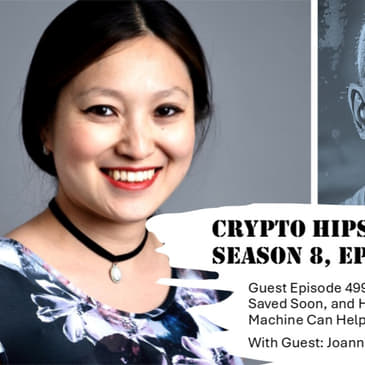

Joanna Zeng is the co-founder and CEO of SOON Network. Before establishing SOON, Joanna used to be a currency trader on Wall Street and has since held significant roles in business development and product management at Aleo, Optimism, and Coinbase. She also served as a founding board member of CryptoNYC and is an active angel investor.
[00:00:03] Hello, everybody, and welcome to the Crypto Hipster Podcast. This is your host, Jamil Hasan, the Crypto Hipster, where I interview founders, entrepreneurs, executives, thought leaders in crypto and blockchain all around the world. And today I have another amazing guest. She is the co-founder and CEO of the SOON Network. Her name is Joanna Zeng. Joanna, welcome to the show.
[00:00:27] Thank you, Jamil, for having me. Excited to share any insights on the topics. Awesome. Awesome. Thanks for joining me. And let's kick things off. I kick things off with the easiest question. Maybe the second easiest, but what is your background and is it a logical background for what you're doing now?
[00:00:49] Yeah, yeah. That's an interesting question. Yeah, the second part. I have to take a second to think about it. But yeah, it's definitely a winding road for me.
[00:01:00] So my background is previously to, you know, prior to crypto, I was, I was working in on Wall Street in currency trading for a decade. So I actually had a career prior to crypto. And, and I was, I was actually first introduced to crypto in 2012, 2013.
[00:01:26] So quite early as a, as a, as a career threat, right? So I was trading currency for exchange, especially in emerging market currencies. And, and one of my economists on the trading floor just mentioned that, oh, this new, you know, cryptocurrency might be replacing fiat. So that was my instinct as a trader, right? You had your career risk with your, with your investment, personal investment in Bitcoin at the time. That was the only currency cryptocurrency.
[00:01:55] So, so I, so I sadly put all the money into, you know, the one crypto exchange that got hacked and basically robbed, got robbed. So yeah, so, so that was a, that was my kind of like beginning of the end at the time.
[00:02:12] I, I just didn't really give another thing until time, you know, passed, move forward to 2017. That's when, when I started looking at the crypto as more than just an investment vehicle and more as a, more as a technical vehicle, right?
[00:02:31] So that's when, when Ethereum really got into this programmable, you know, smart contract capability and extending the crypto use case from just a peer to peer, you know, peer to peer payment network into more of a, yeah, basically a programmable like network that can do, you know, you can do anything on top of.
[00:02:53] So, so, so that was really interesting theory. And then I quickly realized my background did not, you know, equip me well to, to talk about like the white paper that was released these times at the time. So I took a coding lesson, learn about solidity and, and then I basically helped founded the first crypto community here in New York and called Crypto NYC.
[00:03:18] We actually got that OG name. And it was really, you know, kind of beginning of the end, right? Everyone just talking about this, the, the entrepreneurship, you know, journey that they started. And, and, and that got me really into my first full-time job with crypto.
[00:03:36] So that was at the Coinbase first on the, the, the, the listing team and then the institutions outside, basically, you know, still kind of talking to my old clients, but talking about this. Yeah. Basically using crypto as a new asset class. And then later on, basically talking specifically to protocols that are looking to get listed on, on Coinbase.
[00:04:02] So then that fast forward, I, you know, I was, I was part of this, like, you know, massive Coinbase layoff in 20, what is it? 2020. I'm trying to remember the exact year. When the last, you know, bear market hit, as I was a part of this, like NFT marketplace launch that was deprioritized by the company and by the industry.
[00:04:29] So, um, ever since then, I was, uh, I was actually in, uh, infra building Sage, right? So first worked at Optimism as a BD lead, actually working on the other side of the Coinbase and brought them in as a, as a, as a, um, uh, the first client of OP stack, building their own base chain. Um, and then later on moved to another, uh, protocol called in Leo. So TKI one chain.
[00:04:55] So yeah, basically took two projects to, you know, TGE time and all of this time still thinking, you know, we're, there's something missing, right? In the, in the space that we need to, we need to write in for a project that can bring like mass, mass adoption or, uh, user adoption. So, um, I had the idea back in, um, Denver, East Denver last year. I'm trying to remember. So that's more than a year ago.
[00:05:23] And, um, and then that, even at the time it was very clear that, you know, Solana was the, the one place that you have, um, a lot of these new narratives popping out and, uh, it's onboarding new, you know, retail cloud, right? Like a lot of new generation, like I'm talking to all these Gen Zers in New York here that got onboarded to crypto last season through the means, um, you know, through, through Solana. Right.
[00:05:49] So I think the, the main thing that I realized is, um, it's really important to have the right, um, builder culture and, uh, to have the, the right tech, right. To, um, differentiate the tech, to facilitate that. So every builder can, you know, build like the 99% of the use case out there. It's not being bottlenecked by, uh, the techs itself.
[00:06:14] And then really, um, really focus on delivering the best user experience at the end of the day. Right. So, yeah, that's the, that's the short end of it. Like why we decided to do, you know, soon stack, right. That's, um, basically bringing the top performance and the builder culture of Solana to every ecosystem starting from Ethereum. Awesome. So really, really, so it's perfect. It sounds perfectly logical to me. Yeah. Yeah.
[00:06:44] I guess so. Yeah. Logical in the, in the sense that if you're taking some calculated risk, right. And doesn't mind taking some pay cuts on the, on the way. Right. Right. Right. I have to pay cuts. So, uh, soon network, right. Um, what's it all about? And, uh, what's your vision, your mission? Where do you want to be? Where are you at now? What do you see your role is in the ecosystem?
[00:07:15] Mm-hmm. Yeah, for sure. I was kind of teasing that out. Um, the vision is really, we, we wanted to, um, make Solana virtual machine, right. Solana, uh, the execution environment as the gold standard that gets expanded beyond the existing Solana chain. Right. So why are we doing that? Because there is a existing user base that lives on, that's just using Ethereum as example, because that's just the one ecosystem that needs most saving.
[00:07:45] Let's face it. Um, I think it's a good day to say that when, yeah, this is trading at the way it is right now. Um, yeah, I mean, I think the, the main, main thing is like, when you look at all the, um, different Ethel 2s out there, they're, they're really not that different, right. At the end of the day, like they're actually cultivating this grand farmer culture and, um, yeah, just like the builders are just the same builders that help it from one ecosystem to another.
[00:08:13] Um, and, and that's why when you look at the Solana virtual machine, right, it's what it enables is, um, currently we are doing the, the most real time, you know, block live blockchain, right. That's, uh, available along all the, um, all the existing, um, L2s out there. We're Ethereum L2, right. So we settled onto Ethereum.
[00:08:37] We, you know, combining the best of the two worlds using Solana's virtual machine or execution environment and settles onto the Ethereum's, um, safety center, right. So the security center that's using, uh, Ethereum as the L1 to settle on top of. So, um, because what we were doing is bringing all the like, you know, 50 milliseconds block time, the high performance metrics, uh, 30 K TPS.
[00:09:02] That's actually about to be, uh, increased to 80 K TPS because our, uh, fire dancer integration. All of that is, um, bringing new use cases into Ethereum, into other ecosystem. And, um, and then we were starting to see these, you know, really, um, interesting, unique, right. User features that you just previously couldn't see on, on EVM end, uh, using example, right.
[00:09:30] So, um, I was very much of an ETH maxi, you know, as you can see from my background, I was coin base. I was optimism. And then I started, um, exploring these, you know, DEX aggregators on, on Solana, like Jupiter is example, right. They have DCA value average, you know, like all these like batch transaction, uh, processing capability that just really rivals, um, or, you know, beat the rest of the DEX aggregators out there.
[00:09:59] So, um, to me, like, it's again, really more about bringing the best user experience to every user. Right. So it doesn't matter if you're like in the Ethereum ecosystem or actually in our case, we also are selling on top of BNB. So that's another ecosystem that we were able to extend Solana to, right. It doesn't matter which ecosystem you were in, but you get that best user experience.
[00:10:24] And then from the user, I mean, sorry, from the developer perspective, it also makes sense because they just develop once and then they deploy everywhere. Right. Right. So this multi-settlement approach allows the Solana builders or people that previously wanted to build on Solana. So they're using Rust language to, um, to build their smart contract.
[00:10:45] Now they can deploy on, uh, you know, it can still deploy on Solana, but also onto, you know, um, Ethereum to get liquidity access as well as, as the, you know, the, the, the big, um, user base that, um, I think again, just to come back to the, like why starting with Ethereum is because there's so much idle assets that's sitting on ETH, right.
[00:11:10] Like the last six months or so, I mean, the biggest sort of a narrative on ETH is the restaking, right. Um, narrative and people just been parking their assets there. Uh, and that's not really capital efficient. So by bringing these high frequency, high trading, almost like microtransactions in a sense, um, it's bringing all these, uh, uh, assets, more liquidity, right.
[00:11:37] Letting it really flow within the ecosystem and that, you know, um, truly creates value for the, for the user. Awesome. Um, so I'm looking back to consensus last year, which was around this time of May and everybody's bullish on Ethereum, you know, and you just said, and something's happened over the past year. And you just said it, Ethereum needs saving, right? So there might be a couple of myths out there.
[00:12:05] I want to explore first is why does Ethereum need saving and at a crossroads? Um, and then second, you know, you mentioned memes, why have Solana's only or best success has been just for memes? Mm-hmm. Yeah. Yeah. Definitely myths on both sides. Um, I mean, I think the first one is going back to, it's going back to like what the infra enables, right.
[00:12:30] So essentially, um, the Ethereum, you know, the, the roadmap has been very heavily, uh, focused on the East L2, um, side. And then you have like, just on the OP stack alone, you have 200, like literally I just looking at this, it's like 200, about 200 East L2s out there. Right. Uh, without much differentiator, I don't think any person can like tell you even like the top 10 of them. Right.
[00:12:59] So, um, so the point is like, uh, for Ethereum users, right. The, um, the, the experience fragmented, the liquidity is fragmented, the, the overall, um, uh, the overall, like the builder culture is also fragmented. Right.
[00:13:18] So, so what this really is, um, essentially bringing back to the user adoption is like, you know, it just further, um, exacerbated the, the, the idea of like, you know, Ethereum is for boomer to be quite honest. Right. Like it's very much for this OG money who parked their assets. Like, as I was saying, right. Like this retaking protocols or, um, perhaps like people who got into crypto in the 20, what is it?
[00:13:47] 2020, 2019. Right. Like in the last cycle through the NFT phrase, um, um, and then that, you know, never really got liquidated. Right. So it's all kinds of like these inactive assets. So, um, so that's, that's what we were trying to bring, you know, these new, um, execution environment into Ethereum. So, so the users can finally make some use out of those assets, right.
[00:14:14] Can actually, um, start like trading, you know, perhaps like meme is only one example. It's maybe not the best example, but, um, you know, AI agent, right. Like all these new narratives, um, prediction markets, right. All the, all the new narratives that got, uh, first introduced by Solana, right. Because it's enabling people to, to trade in such a high frequency that we're just pretty much not available on the EVM stack. Right.
[00:14:40] So I think that's what's really powerful about, um, bringing these very differentiated tech stack into Ethereum. And it's actually saving Ethereum from the lack of user adoption. And you can look at this, like from a, from a user activity perspective, right. Like there's so much more user activity currently happening on Solana versus, um, like on the ETH, L2s, all the ETH, plus Ethereum mainnet.
[00:15:04] So, so yeah, so it's going back to, um, you know, people are voting with their own transaction. Um, but at the same time, you know, that there's still a lot of Solana builders that can benefit from getting access to this huge user base that are kind of like just idle, right. Sitting on their hands and not being able to do anything.
[00:15:27] Um, there's actually a good report on the electric capital report last year that talk about the rust builders, right. There's, uh, um, the fastest growth happening on, uh, the Solana side because the rust builders, they were able to, um, to get onboarded from the Web2 world. And I think the most bullish part is like, it's still really just scratching the surface when you look at the percentage of rust builders that's currently building in Web3 versus, you know, in, out there, right.
[00:15:57] Like outside this bubble. So, um, so I think, yeah, it's like essentially when we look at all the different virtual machines, we looked at actually, um, Solana and then, you know, move, fuel, a few others, next gen VMs. And, and it's just become really clear that SVM is going to be, what's going to save Ethereum from this, uh, current kind of lag. Right.
[00:16:21] Um, because the, the high performance itself, but more importantly is the, it's the maturity of the ecosystem, right. All the other ones that the other ones I mentioned, you know, they're only being around for like two years or less, um, you know, just by like number of years. Um, but also number of like, uh, developers in the ecosystem, the developer tooling, right.
[00:16:44] Like the entire experience, like how, how many people are building on top of that is, um, evidence why SVM is the end game. Yeah. So that's, that's answers to the first question. Sorry. That was a long answer, but I wanted to cover the grounds. And then the second one on the meme side, I think, I mean, Solana it's interesting, right. Cause it's trying to tackle, um, things very differently from, you know, Ethereum in a sense that it's very practical, right.
[00:17:12] It's looking at only like, um, things that have product market fit, or in other words, that has a lot of users, right. Let's go back to the user adoption, right. They're very commercial driven. I mean, all the, um, we have a, a lot of, uh, Solana builders, uh, or Solana, um, OGs on our, uh, backers list, right. Like Anatoly, a founder, Lily, uh, from the president of the foundation and, um, actually many others on the, you know, super team.
[00:17:42] That's their decentralized, um, uh, what do you call it? Like community, um, yeah, efforts and many other builders within the, within the Solana ecosystem. So when we talk to them, it's very clear that they're very commercially driven, right. And then they look at like the, the two sides of the barbell. So, um, on one end, you have these speculative, you know, PMF cases like means, right.
[00:18:06] Like, um, yeah, basically almost like a, a gambling type of, uh, uh, activities on, on blockchain that is PMF. Right. And then the other side, you have these like boring stuff like RWA, like stable coins, right. That's also PMF, right. It's starting to pick up the institutional adoption. So I think they're really smart in just only focusing on those two as opposed to Ethereum foundation, right.
[00:18:32] As a prime example of this and a few other protocols only focus on like research side. Right. So, um, very early on, like non-production ready. Um, yeah, you know, kind of like, uh, you know, future generation type of, uh, I'm not going to give examples because then, you know, who I'm talking about, uh, like that kind of endeavors. So, so yeah, I think it's, that's why, like, I was also very attracted to the, the builder culture on the Solana side. It's like all about shipping.
[00:19:02] Yeah. I remember when the price came down a couple of years ago to like $9 or whatever, you know, who didn't give up was this, were the Solana developers. They, they hung in there. So that, that, that was impressive. What the result of that, you know, I also noticed that there was, you know, I'm no, I like the fact that you're saying that Solana SPM is the cure to Ethereum because a lot of other people would say, um, a son is going to take out Ethereum. There's going to be no more Ethereum.
[00:19:30] So I like the approach, you know? Yeah. Yeah. It's, I mean, after everything I talked about Ethereum, Ethereum is not going to go down to zero. We all know that, right? It's going to exist for a very, very long time. Yeah. I mean, I think that's the, that's, that's the reality of it, right? So we have to figure out how we can, again, bring these like new energy, right?
[00:19:53] New builders into the Ethereum world and bring that kind of similar experience or even better experience to the Ethereum users as well. Yeah. So I'm, I'm good with that part. The question that I have is how you enable high speed, which Solana is known for without, without compromising decentralization. Because Solana, from what I understand is very centralized. So how do you smoke that balance? Yeah. Yeah. Great question.
[00:20:19] Uh, we have been working on this, um, um, essentially, I mean, I guess it's not a very, very centralized. Um, that can be another debate maybe for a different episode, but, uh, yeah, yeah. I think, I think the main thing is, you know, we're using a typical L2 technical design, right? We were using, um, a rollup, uh, sequencer model, right?
[00:20:46] So it is at this point, a centralized sequencer, right? That we run, but we don't exclude the possibility of share that sequencing with, you know, other, you know, validators. Right. And, and other, uh, chain operators just to be clear. Right. So, so think of us as an OP stack for SVM. So we're not just simply building a SVM, you know, single L2, right? General purpose L2.
[00:21:11] We're also building the, um, uh, we were also building the, the tech stack that allows folks to, to use it and spin up their own chains. So either for application specific purposes or for the second, you know, I think, I think the second use case is even more. It's important to, uh, bring like the SVM execution environment to a EVM based on what? So the example here is BNB chain, right?
[00:21:38] So we so far have already successfully delivered within a year's time, uh, less than a year time to live mainnets. One is the general purpose chain I mentioned. Uh, that's like a POC chain, right? Dot footing our own tech stack. That's called soon mainnet. It's been licensed me, uh, since, uh, sorry, since January. We have, um, 40 applications currently deployed live on that blockchain, about 20 of them, half of them.
[00:22:05] Um, we, we know really well because they're soon specific. Um, and you know, we, we basically help incubate them. Um, and then on the, on the second mainnet that we launched just recently about two weeks ago, that's a SVML to suddenly onto BNB out one. Right. So using BNB as the settlement layer and security, uh, trust assumption.
[00:22:29] So that one is, uh, it's really interesting because it mixes up the, um, the distribution, the retail distribution of BNB chain, obviously. And also the, the top performance, you know, coming from the Solano ecosystem. Um, and I think it's even more, um, kind of, uh, unique in a sense that it's also bringing this cultural barrier down, right? The, the East and the West, cause no, not many people use BNB chain in the West.
[00:22:58] Uh, myself included. I didn't use it quite a lot until recently. Like because of the SVMB and BNB is burning BNB as the gas token instead of like, uh, ETH. Right. So I had to like actually figure out how to acquire a BNB token. Um, and in the process, yeah, using a lot of, uh, BNB related, uh, uh, ecosystem projects.
[00:23:20] So, yeah, so I think it's to, to the BNB people, it was very clear that they're using us as like the children horse to, uh, to, to attract, you know, these Western talent, um, into building. On top of the, uh, BNB ecosystem. Uh, yeah, you don't hear a lot of people, uh, I guess because it's, we don't have access to Binance. You know, there used to be Binance US and now there's not in the US. Right. Right. So it makes it a little, a little more difficult.
[00:23:49] Um, but I think, I think I saw, and it wasn't that BNB, it was, you know, it was Solana. It was a commercial I saw a couple of weeks ago. I think it was either Fidelity or T-Row Price or somebody saying all the wonderful things they're going to do offer with, with Solana products. So I'm wondering how the regulatory environment now is accelerating that institutional crypto adoption, including Solana's adoption. Yeah, absolutely.
[00:24:18] I think that's truly like the, the one, you know, shining beacon of hope. Right. That's, uh, still keeping us positive in this very, you know, gloomy environment. Um, cause I think, um, I think the, the issue is like so far, um, at this point, it's still like a lot of PVP, like market dynamics. Right.
[00:24:42] Um, so, you know, it, the, the issue is like, you know, do we want to play the PVP game with other protocols and, and contracting like, you know, whoever like previously, um, haunted, like the airdrops of, I don't know, like all these attract abstract, um, you know, story protocol, like all these chains that, um, TGE, um, yeah.
[00:25:07] Like all these, uh, previous, like users of these other chains to come to, to build on, uh, to come to explore us. Or do we want to like really, um, bring new people into the ecosystem? Right. I think that's obviously like the obvious answer here, a better scenario. So, um, yeah. So I think what, uh, what has been working, um, on the Trump administration, that's, that's really break it down. Right.
[00:25:35] Um, it has been giving a lot of very positive signal, right. As far as the regulatory clarity is concerned. So it may not be like everything that we want it to be yet. Right. But at the very least they are committed to at least give us some clarity. I think that's already a huge, huge step forward from the previous, uh, administrations.
[00:25:55] And then, uh, secondly, I think the, um, you know, all the even more kind of obviously positive signals, like, um, you know, adding like all these, you know, Bitcoin, Ethereum, Solana, um, and the, and the slew of other assets into the, um, um, the crypto. So like, they, I think I'm trying to remember is that wording, but basically the crypto reserves, right.
[00:26:21] That the, um, the Trump, uh, team, the crypto team has been preparing, right. That's very like, obviously, um, good news for the overall ecosystem. However, on the other side, right. You have all the macro environment that's clicking up very clearly is having a huge turmoil, right. On the market.
[00:26:44] And, and that impact is, um, still in my mind, like going to sustain for at least a couple months. Right. As we, uh, start to see like all the other countries are starting to, you know, retaliate. Right. Um, and, and start to like basically, uh, take actions and that might change. And, and I would be the first one to admit that I don't think this is a longterm, right. Like the trial riff is not going to last forever.
[00:27:12] I have very high confidence that, you know, this is just temporary, um, and it can be negotiated down. So, so maybe, you know, this will, um, quickly go away or eventually go away, but that certainly has a issue, right. Um, on the, on the current, um, administration's effort on, you know, focusing on the crypto side. I wasn't going to say the magic word Tarek, but you did. It's what's on everyone's mind these days.
[00:27:42] It is. It is. You know, I got to tell you, um, morning of the election, um, from the morning election to like early January, my portfolio three X. Yeah. Now it's the same amount. Or less. It's the same as mine. I was like, I didn't just round trip again. Did I, you know? Yeah. And despite the round trip and I'm sure the money will come back.
[00:28:07] As you're saying, um, despite that price level things, you know, the growth of the growth of tokenized finance. It's, it's still, it's still growing. It's still like that's been unchanged. So what do you see as the outlook for the growth of tokenized finance, including possibly Solana ETSB part of that too? Yeah. Yeah. Yeah. I definitely want to echo that.
[00:28:34] The, um, it feels like we're, we're still making a lot of progress from a technical perspective. Right. To, um, to include, you know, these like, you know, gold asset, right. Or I saw the one team is actually working on being like uranium into, um, onto the blockchain as a tokenized asset as well.
[00:28:56] So, I mean, I still very much are, um, um, encouraged by these news when I see like the technical improvement are still happening. And then teams are doing all these, um, um, um, bringing new assets into the, into the blockchain, right. Like increasing the, uh, kind of bringing the off chain yield into, uh, on chain. Right.
[00:29:18] And then I think the other positive news is, um, just about, I want to say maybe like a month ago, I saw this news on, uh, Coinbase. They're basically tokenizing the, the stocks itself. Right. So as you know, Coinbase, even though they have a base chain, they don't have a token for base chain. Right. But they certainly have their own, um, Coinbase stock.
[00:29:41] So they are tokenizing that Coinbase stock and putting that onto blockchain as a tokenized assets. And I think that will set a precedent for all the other exchanges that are seeking IPOs. As you may or may not seen, like recently at the, uh, crack in IPO is being prepared. And so is, uh, Gemini.
[00:30:04] Um, so I think all of these like huge, you know, IPO assets will like, yeah, basically U S stocks are, um, are also going to be tokenized. And that's a, that's a huge, um, shift, right. That paradigm shift for the industry. Cause I think a lot of times we were being prepared, uh, compared to the, um, the stock market, right. Like as a recent asset, you know, we were kind of like, either you choose the stock market or choose crypto assets.
[00:30:31] Um, but you know, now these can actually be interoperable, right. In the sense that, yeah, it can, uh, create a yield on both, um, the tokenized asset as well as the underlying assets. So that's, that's really interesting to me, right. The, this like structure note kind of, um, um, uh, financial instrument, right. Like I came from, uh, you know, I came from the, the Wall Street world.
[00:30:55] So I seen like how that is bringing a lot of new, um, yeah, innovations to the industry. So I think that is interesting. Like now we're experimenting with all these new things. So that can potentially bring that ETF, um, discussion, you know, up on the, on the agenda. Um, if we start to see a lot more adoption. Interesting. Interesting. We'll look forward to what the future has to bring in the next one or two years. And then definitely in the future that beyond that, but yeah.
[00:31:24] Yeah. So I want to thank you very much for your time today. This has been a wonderful conversation. Um, I have one last question. It's how, how can people find out more information about you, about soon network? How can they do that? Yeah, for sure. Yeah. So I think the best way to look up our information is throughout Twitter. So you can go to soon underscore SVM and that's the official Twitter. And then also our website is S O O S.
[00:31:53] So not soon, but S O O dot network, right? That's our website. And, um, yeah, I mean, really love the conversation ahead of us as well. So, yeah, we'd love to, you know, continue to, um, yeah, um, you know, come back and talk to the audience again when we, when we moving forward, um, with our, all the product updates. Sounds great. Thank you very much for your time today. Thanks, Gemma.