
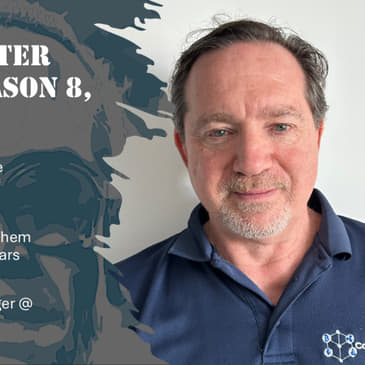

David Weisberger, Co-Founder Emeritus of CoinRoutes, has over 40 years’ experience as a capital markets executive focused on equity market structure, quantitative finance, and trading automation. He has worked either directly or alongside all aspects of the investment ecosystem from asset owners through investment managers, investment banks as well as exchanges and other market centers. This included development of portfolio trading and transition management businesses, impact and trading cost modelling, statistical and index arbitrage strategies, institutional and retail market making, smart order router and algorithm optimization, and the development of statistically valid measurement for analyzing trading effectiveness. Mr. Weisberger started his career at Morgan Stanley, in technology, where he built their first program and electronic trading systems before moving to the sales and trading business. He subsequently started the non-dollar program trading desk for Salomon Brothers, was the global architect of the firm’s equity trading platform where he designed their first trading algorithm and quantitatively managed central risk book before becoming responsible for the statistical arbitrage trading business. He later ran their smart order routing business before joining Two Sigma to develop their wholesale market making business, which he ran for several years. Next, Mr. Weisberger was the global head of equity market structure and quantitative equity products for IHS Markit befores co-founding CoinRoutes Inc, which is a market leading provider of algorithmic trading products for institutional crypto market makers, funds and trading firms.
[00:00:03] Hello, everybody, and welcome to the Crypto Hipster Podcast. This is your host, Jamil Hasan, the Crypto Hipster, where I interview founders, entrepreneurs, executives, thought leaders, amazing people all around the world of crypto and blockchain. And today I have another amazing guest. He is formerly with CoinRoutes. His name is David Weisberg. David, welcome to the show.
[00:00:27] Thanks for having me. Yeah, I mean, I helped, I founded CoinRoutes with my son, who's, it was the original idea, Ian Weisberger. So we, you know, he's now the CEO, and he's letting me ride off into the sunset to where I can go back to my roots and we'll see what happens.
[00:00:44] Nice, nice. Well, congratulations. So, so I'll ask you first, you know, what is your background and is it a logical background for what you're doing, I guess now or have been doing up to now?
[00:00:58] Well, weirdly, I started right after college in a training program at Morgan Stanley, which the idea is to train liberal arts majors. I was an econ and communications major in computer science. And so my very first project on Wall Street was automating a part of the back office system called TAC Morgan Stanley.
[00:01:21] I got involved, however, and became the lead on program trading development and actually ran electronic trading technology development for Morgan Stanley back in the 80s. I moved and have stayed on the cusp of the automation of trading ever since then.
[00:01:37] So I moved to London, where I ended up starting the global program desk at Solomon Brothers, where we innovated and created the leading impact cost bottle and portfolio predictor tools, got into the quantitative side and ended up running the, you know, the basically what became statistical arbitrage, but started as the overall technology and central first central risk book at what became Solomon Smith Barney, and then later Citigroup and ended up running StatArb and order routing.
[00:02:08] After that, I went to, you know, with some, you know, with some, a couple of bumps in between, I ended up at a company called Two Sigma, which is one of the world's most preeminent hedge fund quantitative side and ran Two Sigma Securities, once again, building market making and quantitative finance. After a short stint at what became IHS market. It was like from, it was an acquisition, a small company that I had joined German on compete.
[00:02:37] My son Ian came to me with the idea of, Hey, you know, maybe we should automate the crypto market. So my first question was what's crypto. So that was early 2017. I had no clue, but like everything I do, I started diving in and realized that crypto in fact was the future. I still believe that. And here we are today. Wow. So, okay. I was on the, I was on the other side of the wall street where I was on, I was an AIG.
[00:03:03] So, um, I, I understand what you did. Um, so your coin routes journey after your son came to you, you know, say automate, automate crypto. Oh, what, what did you say? How'd you, how'd you do it? How'd you tackle it? Well, Ian, you know, came up with an infrastructure, which actually it's patented. You know, we have the patent on a distributed smart order router, which is actually very important.
[00:03:30] As it turns out in a world where marketplace liquidity is spread throughout the world, moving from, you know, Asia to Europe to the United States. And so that mattered. My, uh, innovation was the design of our algorithms, which still outperforms most of the street, uh, to this day. So our algorithms, uh, I, I, even though I'm not with the company anymore, it's hard for me not to say our, I still wear the shirt sometimes, et cetera.
[00:03:58] But the algorithms allow for a very, very wide set of preferences. It's very customizable, but allows clients to accumulate or sell large quantities of various crypto with dramatically lower market impacts. And so understanding how algorithms work, which has basically been something I've been doing for 30 years, I like market structure. So Jamil, when I look at a market, the first thing I want to understand is how is it structured? Where are the nuances?
[00:04:28] Where are the edges? How do you get taken advantage of? How do you not get taken advantage of? And crypto is quite unique. It has no central authority telling you what tick sizes you can have. It has nobody telling you what your prices or fees could be. It doesn't tell you that you can't have a bid that's higher than somebody else's offer. You know, things, so-called rules that exist in a lot of countries. And the result of this, weirdly, is actually a pretty efficient market if you know how to navigate it. But if you don't know how to navigate it, you spend a lot more to trade.
[00:04:57] And so there's a much wider dispersion of outcomes. CoinRoute's clients get a dramatically better outcome. Actually, we calculated that based on, this is a little old, so 2024 data, our clients actually were 40% to 60% cheaper to trade than corresponding volatility equities. Trading crypto. And that surprises people when I say it, but it's a fact, right? You know, we know how many basis points of slippage there were. Everything is being monitored.
[00:05:27] And so you can see it. And to me, that was a logical extension of what I've been doing my entire career. But, you know, over time, you know, I'm ready for new challenges. And so, you know, I retired from the company earlier this year. And now I'm looking towards how can I make a difference to help the crypto industry evolve? Because crypto is going to be necessary to help asset markets evolve.
[00:05:53] Because going from analog to digital is a huge change. And the people in the traditional markets don't really know what's coming. And the people in the crypto markets don't understand what's important in the traditional markets. And I'm trying to be one of those people to build that bridge. Yep. That makes sense to me. A lot of digital natives have no idea what analog is. So... Yeah, I think it goes farther than that.
[00:06:19] A lot of people don't understand that you don't have to have rug pulls without the person pulling the rug being on a cap. I think a lot of people who trade in DeFi don't understand that market makers shouldn't have the abilities that they do to push prices around in a way that hurts you if you're buying and selling. I don't think people realize that the notion of sniper bots is probably not the best market structure for gaining confidence of the average human beings.
[00:06:48] It doesn't mean that these things don't happen in other markets, but there are ways to mitigate it. In equities, you know, if you're buying an equity, you're buying, you know, whatever, Tesla. You know, when you go to the market as a human pushing your button, either at E-Trade or Charles Schwab or wherever, you're getting the best price. You just are. You're getting tight spreads, no commission, et cetera. When you're trading crypto, you pay dramatically higher fees than institutions. It's exactly flipped. And that's not going to last forever.
[00:07:15] And that's true whether it's DeFi or you're trading on Coinbase or other exchanges. So, you know, there's a lot of work to do to bring crypto to the mainstream. Eventually, it will be more efficient, but it's not quite there yet. So let's talk about the first thing you got to talk about when you talk about markets structure, I think is this hypothesis that I teach you in finance in grad school. The market has no memory.
[00:07:44] That's, you know, Wall Street, the market has no memory. It's, you know, but a blockchain contains all the memory because everything's on the blockchain. So, you know, are we efficient? Are we inefficient? You know, which one are we? So if you start building the structure in that direction. So I disagree with the premise, but agree with the conclusion. So with the inclusion that's implied. So let me explain.
[00:08:12] So Two Sigma had, at the time I was there, five petabytes of data. That's just an enormous amount of data. Markets absolutely have memories. There are quantitative analysts in every single broker, in almost every hedge fund, that are looking at what happened last time. They understand the patterns. They know what's going on. And so the notion that market price discovery has no memory is just not true. It used to be true. It is certainly not true. There are people who are checking every single correlation all the time.
[00:08:41] And that's for price discovery. And so, no, I don't think blockchain is more efficient for that. But, huge but here, the crypto markets are by far the most transparent markets on the planet. And it's a result of two reasons. It's a result of one, obviously, the blockchain itself. You can look up every single transaction that's happened in Bitcoin or Ethereum or pretty much anybody, any other asset, and know what happened when, when it was on chain. But a lot of the transactions happen off chain.
[00:09:10] They happen on so-called centralized exchanges, which are no different than electronic trading systems and exchanges in the traditional world. The difference is, in the traditional world, all of that data is behind not just a paywall, but enormously expensive paywalls, where the exchanges are actually market data companies that provide a matching service. They make more money from selling data than they do from actual trade matching. Whereas in crypto, it's exactly the opposite.
[00:09:36] Crypto, almost all companies give away their data for free, and it's transparent, and people can see what's actually happening. And so, sleuths can figure out between the on-chain and the off-chain what's happening in a market. This makes it much easier, if you wanted to, to detect manipulation. This makes it much easier to create a level playing field. It hasn't happened fully yet, but it will be much easier when the desire to do so is done. That makes sense.
[00:10:03] So, you have what you think is these two different worlds should be butting heads, right? So, your job is to try to intermingle them somehow, right? Yes. So, where do you start? What do you tackle? How do you get there? Well, I mean, I'm kind of pursuing a bifurcated path. The first path is I am spending more time. I'm doing more education, more social media. Like, I'm hosting Crypto Town Hall this week.
[00:10:31] I'll be starting my own show to try to bring on guests to kind of bridge that gap and help educate. But I also am forming a consulting company. I don't need to advertise it here because I haven't quite pulled the trigger yet, but the name and the domain is already reserved. And where I will be helping traditional companies navigate the world of crypto, and to the extent there's crypto companies that want to understand how to bridge in traditional finance, I can do that too. So, I'll give a couple of silly examples.
[00:11:00] You know, if you are a broker and you have an automated trading system, and so you have an electronic trading product and you offer it, you're using a technology. That technology, it's almost impossible that that technology could actually operate well in crypto. Now, I know it sounds like a silly reason, but it's very different. Now, here's why. And they're simple conceptually, but technologically they're different. So, the first thing is the tick sizes.
[00:11:29] In equities or in futures, tick sizes are fixed, and every exchange trades the same. In crypto, not only are they different, each exchange can have a different tick size, and there's very little standardization. But the tick size itself is dramatically smaller, much smaller. So, that small tick size, why does that matter? It sounds like such a geeky thing to care about. Well, I'll tell you why. It's because the fees that you're paying in exchange fees are wider than the tick size.
[00:11:57] So, the price you see on screen, and I have an example screen behind me. It happens to be a CoinRoute screenshot. When you look at a price on the screen, right now Bitcoin is $83,742.9 bid and $83,731 offered. You notice the bid is higher than the offer. When you take the access fees of hitting that bid or lifting that offer into account, it's not crossed, but it looks crossed.
[00:12:19] Well, now, if you build a trading system that assumes the offer is always higher than the bid and ignores fees entirely, it won't work in crypto. You're going to go after the wrong price. You're going to look at liquidity wrongly. And it is that simple. The second reason why this matters is because those tick sizes are small. The amount of market data is so much higher. In the average equity, a trading system might look at, I don't know, five price levels that it would care about, maybe.
[00:12:48] In crypto, within literally basis points of the spread, you may have 2,000 price level combinations with exchanges. So it's two orders of magnitude more data at the point of attack. Well, anyone who builds a software system will know that understanding and having access to that data is critical, except the system doesn't have the capacity for that much data.
[00:13:12] So all the systems that are built for traditional products, whether it be futures or stocks, won't work in crypto well. They'll all have huge glaring holes in them. And it's sort of like building a house, Jamil. When you build a house, people will tell you, if you have an old house and if the historical society doesn't force you, most of the time you knock it down, you build a brand new one. Why? Because it's half to a third to maybe a tenth of the price to do it. Well, it's the same thing with technology.
[00:13:40] You want to try to build on an old platform that won't work, or do you want to build brand new? The answer is brand new is going to be a lot cheaper. And that's going to be really hard for people to navigate. And yes, there are vendors that can offer that, but just understanding that little thing matters. There's much more. Because in crypto, you also have to worry about the safety and security of their wallets and how you're going to be custodying it. How do you clear and settle when you trade in different platforms? There's a variety of different nuances to this that traditional people don't know.
[00:14:10] So that's a very long-winded answer to your question, but I hope I answered it. You did. And if you're inside a Web2, a traditional finance organization, I think the last, from my experience, is the last thing that people wanted to do was buy and start. They wanted to some kind of hybrid, some kind of create internal, but also buy from Xterna and combine the two and mesh them together. And there's none of that in crypto. Well, there is. I mean, there's companies like Talos and CoinRoutes that can do the back end.
[00:14:38] There are companies like BitGo and Anchorage that will provide custodial services as well as that. There's companies like Fireblocks that have built networks in many of their competitors. So the stuff exists, but it's not so obvious how to put it together. And then when you flip it and you're in a crypto company and you want to understand what's going on in traditional finance, there are still people in crypto, I'd say the majority, that think that order books are probably evil and you're being front-run and that DeFi is the way to go.
[00:15:06] Which, I mean, the nicest thing I can say about that is those people are ignorant. I tend to be more nasty about it because it's just so obviously wrong, right? The fact that you can arbitrage gas fees on Ethereum in DeFi and actually legally jump in front of somebody when you know that there's a big trade looming, it makes what Michael Lewis wrote about in Flash Boys, which was very, very fictionalized. A lot of what he said wasn't happening anymore, but whatever.
[00:15:35] But it makes what he was accusing people of look like child's play by comparison. This is systematic. And there's a lot of that in crypto. And the reason for that is because DeFi, when it grows up, is going to disintermediate a lot of brokerage and a lot of market-making functions. It's going to be amazing.
[00:15:52] What it is today, outside of Aave and companies that have done a really good job of building robust yield-seeking markets, outside of that use case, most of DeFi is crap. Most of it is just a way to get around the lack of regulation, to be able to trade tokens nobody's ever heard of. And we've seen what's gone on with Pump.Fun. And the numbers are staggering there, right?
[00:16:16] You know, 90 plus, 98%, I think, of people lose money in order to try to make that huge return. I mean, it's funny because, Jameel, people call lottery tickets, the state lotteries and national lotteries, a tax on the poor. So what's Pump.Fun? A tax on the stupid? I mean, I don't know. I mean, the insiders are the ones who make all the money. And, you know, is that good? Well, I mean, look, you could let it happen. If you want to play, it's fine. A lot of people go to Vegas, know they're going to lose money too.
[00:16:44] But when you want to try to put real projects with real value with project teams that are actually developing software that's going to be meaningful, and there's a lot of that in crypto, you need a better market structure. Wow. Pump.Fun is an attack on the stupid? I don't disagree. I'm just surprised it's 98% of the people who are stupid. Well, stupid or gambling. I mean, how many times do you go? Like, I'll never forget.
[00:17:13] My wife and I, one of our most fun things we do when we lived in London is we got an invite to go to Royal Ascot. And my wife bought the hat, and I got the fancy suit, and we went to Royal Ascot. And part of Royal Ascot is betting on horses. Now, I knew I was going to lose a few hundred pounds betting on horses because I didn't know what the hell I was doing. And so I lost a few hundred pounds betting on horses. I had a great day. I didn't care that I lost a few hundred pounds. It was a fun day. It was part of the experience.
[00:17:40] There are a lot of people in Pump.Fun that are hoping to get that 10,000, 100,000 times gain, and they're willing to lose while they're trying it. People buy lottery tickets when it goes to $5 billion. It goes to a billion-dollar prize. Five billion is probably in a year or two with the way debasement of the currency is going, but we'll let that not happen. The fact is you do it, and yeah, you get your entertainment. You do what you're doing, and that's fine. I think a lot of people are doing it. There's nothing wrong with it.
[00:18:07] I have nothing against it, but it's not the kind of market that you would be serious project teams really should be using. And I think that's pretty well known. Yeah. We do have a major issue, and I've had a lot of shows on this, of MEV, getting front-run by bots and paying extra spread. That is a problem. How do we solve it? I think that could be permanently solved. Yeah, it's easily solved. Easily solved. It just requires Will to do it.
[00:18:37] The problem that we have is the motivations as to why people are using DeFi in the first place. Now, there's three reasons that you should be using DeFi. One of them doesn't really exist yet, but it's going to be the one that matters, and that is disintermediate rent seekers and therefore make more money. That's true in the yield-seeking space. Aave does a better job and did a better job and survived everything when the others, whether it was Celsius or Voyage or whatever, went kerflui. It did a great job.
[00:19:07] But there are two other reasons people use DeFi to trade. They use DeFi to trade because they want to keep custody of their own assets. That's a valid reason, a very important one. The other reason is to avoid government scrutiny. And that one is interesting because if you're trying to avoid taxes or get around KYC because you're the Lazarus group, that's probably a reason that the governments of the world, when they finally get around to cooperating, they're going to stop both of those in their tracks.
[00:19:37] It doesn't mean DeFi is going to die if actually it means it's going to flourish. Because what will happen is once there's no need or once you push people who are trying to avoid taxation and avoid KYC to the periphery, the rise of DeFi markets that actually have order books that are deterministic – and there are some. I mean Arbitum is deterministic even if Ether is not.
[00:20:04] But when you get deterministic order books, what that means is the whole MEV, snipe botting, front running will either go away or it could be regulated slash overseen. So you could treat people doing that as committing fraud, which is true, by the way, and not just in financial markets, right? You know, it's like if you – there's a hot concert and you figure out how to exploit the system to buy up tickets and push the price up and then sell it to unsuspecting people,
[00:20:32] there are laws against that, right? So it's not just in crypto. And people kind of want that because the average person doesn't like being taken advantage of. But the truth is as long as the potential gains are in the orders of magnitude, people will put up with percentage points of being scalped. When the potential gain drops down to one, two to five times on average, then people may put up with basis points being scalped.
[00:21:01] When potential gains are in the percentages, then people don't put up with any being scalped. And so it really depends upon the potential of the market and what people put up with. The markets will correct eventually. And there are – this is a solved problem. You will see there are multiple – and I'm not going to name them, but I know of them. There are multiple nascent exchanges that are hybrids, which allow people to keep custody of their own assets at the same time trading in –
[00:21:27] we'll call it a central book that is being monitored and there is no MEV and no front running. And so, yeah, there are ways to solve this, but the industry has to want to solve it. The industry won't want to solve it until the potential gains get to a point where people don't – where they start thinking it's meaningful and also when the governments start really pushing against the two things they care about. Governments care about two things. I say this all the time, Jamil. They care about getting their taxes and they care about catching the bad guys and preventing the bad guys from doing bad things.
[00:21:57] That's what they care about. Now, some governments and some people want to do a lot more – not me. I'm pretty libertarian and I'm not sure that I like either the – I'm not sure I like the whole taxation idea on capital gains, particularly when you're buying and selling an asset that you're really trying to hold to mitigate the effect of currency debasement. It feels like you're being – it turns inflation into a tax at that point to an actual tax as opposed to a stealth tax. But philosophy aside, I think that's the issue.
[00:22:24] The issue is markets will evolve and there's a place and a time and a place for governments to be involved, but generally less than they are involved in the traditional markets where it's overly prescriptive in almost every single jurisdiction. That makes a lot of sense. That makes a lot of sense.
[00:22:43] So in addition to trying to merge the two industries, what other, I guess, important economic trends are impacting like the stock market – the crypto market? I mean I know we went down since December a lot and that has something to do with the tariffs, but there are other factors at play that maybe we don't all know or all see. Well, there's a lot at play.
[00:23:11] I mean look, the most important at play is liquidity. Global money supply turned down in the third quarter of last year and into the fourth quarter. It started to turn up again at the end of the year into the beginning of this year. Generally two months or so of lag is pretty important. And so you saw a market turn down because liquidity was down.
[00:23:34] We have an incredible polarization in American politics where half the country thinks – and his approval ratings are basically the highest approval ratings a president's had in a long time. So a lot of people like him. But the hysteria in the mainstream media and the left about everything Trump does, even when it turns out to be good. I mean hell, they somehow tried to make Elon Musk's SpaceX safe and rescuing NASA astronauts as a political thing.
[00:24:01] The fact is Biden wouldn't let Elon Musk do it because he didn't want to help Trump win the election. Right? You know, when you have that kind of stuff going on, there's going to be people who are going to be screaming about a lot. And what does that mean? Well, in markets we have a word that they use in audio as well, signal-to-noise ratio. When the noise goes way up, it's harder for the average person to find the signal. And so it's not really that surprising that the markets get more volatile. Now tariffs are an interesting deal.
[00:24:30] The entire post-Bretton Woods structure, and this is a much longer podcast by the way, but the entire post-Bretton Woods structure is based on the U.S. dollars reserve currency where we freely understand we're going to be exporting dollars and importing stuff. But if you want to start building more stuff near the United States, you can't have that continue. So we use words like, the administration uses words like, well, we should have reciprocal tariffs because they're fair. And that makes sense in a vacuum.
[00:24:59] Except 50 years ago, we basically told the world, you don't need to be reciprocal with us. You could tariff us more because we're okay with a few dollars and getting stuff because we're getting free stuff. We like free stuff. And that's basically been happening for a long time. Now, of course, the problem with that is it means we don't produce stuff anymore. So a pandemic hits and we have to import all the masks. Of course, the masks were useless to begin with, but that's okay. We're still importing it. We were importing stuff. And that means that people aren't building stuff.
[00:25:29] People aren't building stuff. It means that blue-collar jobs have disappeared and people don't like that or they get paid less or they can't keep up. So it's all very intertwined. I don't think that the temper tantrums about tariffs are what's hurting Bitcoin in the alt market. And I think what's hurting Bitcoin in the alt market is that there was euphoria. It started to manifest. It never really got crazy because there wasn't that much leverage in the system. But it wasn't quite as big as people hoped.
[00:25:57] And the crypto markets were waiting for something that was inevitably not going to happen. The traditional markets are buying Bitcoin. There's no question about it. You can see it. It's there. But they're buying it like this. Sorry, you can't see my hands. It's like this. The crypto market went like this. And so when it goes like this, what's going to happen? It's going to go down and meet them again. And so that's what you've seen. Now, the truth is the actual buying of Bitcoin and other crypto assets from the traditional world is going to accelerate in the back half of this year.
[00:26:26] Understand, Paul Atkins at the SEC, Brian Kintons at the CFTC, Gould at the OCC are not confirmed by the Senate yet. So the new regulations and the new supportive infrastructure for builders is not there yet. Now, in the crypto world, that's OK. We kind of know we're not being sued anymore. And so builders are starting to build. You're going to start seeing money being raised, et cetera.
[00:26:50] But the traditional finance world will wait until someone waves that checkered flag and it has not been waved yet. And they're running around the laps and they're doing some stuff, but they haven't started yet. That will happen later this year. When that happens, that's going to be a big, big change. But once again, it's slower. It's more methodical. I always joke that I've been in crypto since 2017, right? So I got eight years in crypto. And I had 35 years in traditional finance.
[00:27:17] But since crypto is like dog's years, it feels like I've been in crypto longer than it was in traditional finance. And understand that difference. It matters. It matters in terms of timescale. So I think this correction that we've seen is perfectly normal and not that surprising. In fact, it's been shallower than most pundits have predicted. And I actually personally predicted that the 70s where we got to a couple times in the last two weeks was probably the bottom. Yeah, maybe we can go a bit lower and still maintain the structure.
[00:27:46] But it doesn't matter. The fact is, it's still a constructive from a technical point of view. But crypto trades technically. And there's nothing you can do about that. It's just until you have more money in the system, it's going to be like this. I agree. I agree. It's funny. I went to – I've been in the crypto since 2017 as well. And the thing is, March or April 2018, when the crypto winter struck, right? When we were doing a 1.0, that struck.
[00:28:15] I attended a special – it was hosted by Morgan Stanley. It was a special evening with Tom Brokaw. And it's talking about the stock market. And I'm in there, and everybody's having euphoria about the stock market being awesome. I'm like, I'm living through crypto winter. I was invited to this thing. I'm like – everybody's happy, and I'm not. So I'm like, you know, how do you – I laugh about that. The reason is because my experience is different. Right.
[00:28:44] So I'm still on the board of Security Traders of New York. I'm actually the treasurer. I'm still a member of NOIP, National Organization Investment Professionals. So I go to a lot of these traditional financial conferences. Actually, we have two of them coming up at the beginning of April. So when I moved into crypto in 17, people thought I was nuts. But they looked at what was happening, and they saw Bitcoin rallying and all this other stuff. And they're like, I mean, it's interesting. Maybe he knows something we don't.
[00:29:10] In 18 – because his conferences are in the fall – in 18, they looked at me with pity. How are you doing? Are you going to live? Do we need to take away your shoelaces? You know, whatever. And I'm like, we're fine. We're fine. Everything is okay. By 19, they were like, are you sure? Are you sure you're okay? And I'm like, yes, we're okay. We've – you know, our company has investors. You know, things are starting to go. By 20, they started to say, hey, how do we get involved in crypto?
[00:29:39] And then FTX happened, and it was like – and here's how I knew we were going to make it. FTX happened, and it wasn't, oh, my God, your industry is dead. What's going to happen to your company? It would be, how is your company's exposure? Fine. Fine. Oh, good. Well, then you'll be okay. Are you looking to grow yet? I said, well, the industry is going to take some time to have to heal. But pretty much everybody kind of understood this was a Madoff-like, arguably bigger, you
[00:30:05] know, scam, you know, criminal who took out a large part of the industry. And I said this in December right after FTX, after Sam did what he did. And I had a very bird's eye seat to what happened. I basically said, listen, now it doesn't feel like it. Now it feels horrible. And like, for example, at CoinRoutes, two-thirds of our clients stopped trading after FTX. Two-thirds. Half of them went bankrupt. So yeah, this was a big event. But at that time, I said, you know what?
[00:30:34] We're going to look back on this in a few years and say this is the best thing that ever happened. Because what would have happened if Sam didn't blow up? He would have written the rules with all of his contacts. And those rules would have excluded DeFi. Because in fact, I forgot, DCCPA, I think it was called, the act he was promoting in Congress more or less would have made DeFi almost impossible in the United States. So think about that. So there is the entirety of Web3 was really at risk by him succeeding.
[00:31:01] And now the ground is clear for it to succeed. Admittedly, it's had a lot of issues, capital issues because of that and other things. But the grounds are cleared for it to succeed. And to me, that's a big deal. And if the ground is clear, then the money is going to flow back. Yeah. I mean, for real projects. I mean, you were at AIG. So you were at epicenter of what I'm about to say. You know how big the interest rate swap market is. You know how big securitization as a market is.
[00:31:29] You understand that these markets are multi-trillion dollar markets, all of which are operated by cartels right now. And those cartels extract economic rent. As soon as you can introduce DeFi-like principles and technologies into the mix, it will break the cartel, bring the margins down, and make those markets more efficient. But, of course, the people who do that are going to – there's a lot of money to be made there. Maybe not quite as much as the big banks are making right now.
[00:31:55] But add up the market caps of all the big banks around the world and understand that just in those markets, that's what DeFi could do. And that's a lot bigger than DeFi is being priced at today, I can tell you. Well, the cartel is not going to go down without a fight. No, of course not. They never do. You know, it's like one of my favorite speeches, and you can look this up. It was called The Future of Technology, I think, by Isaac Asimov. It was in the 70s.
[00:32:19] And his examples of, like, the canal operators complaining that the horse-drawn carriages that are moving things are going to hurt people because, by Bernoulli's principle, the air will be sucked out of people's lungs. And then after that, you know, people – the horse-drawn carriage industry was saying the same thing about cars, you know, the horseless carriages. And so, you know, look, every industry that gets disrupted by technology fights.
[00:32:46] Some do so effectively because they have a lot of money and they can bribe – excuse me, donate or support candidates that – and yes, that was intentional – support candidates that will back their industries. But then there's others, like booksellers, that didn't have a chance. Amazon just took them out. Kneecap. Boom. Done. Right? You know, so, you know, it depends. I would say that the financial markets, they will fight.
[00:33:13] But what we're seeing – and this brings us to last week. So last week we had this great piece of news, which is the Genius Act, which is actually a fairly well-written stablecoin act, passes out of a Senate committee. 18 to 6 was the vote. So half the Democrats voted for it. Understand people like Elizabeth Warren, who were in the pocket of the banks because she wants to keep them under her thumb. That's her avowed reason. I tend to think it's a little bit more cynical than that.
[00:33:40] But, you know, the banks wrote a criticism of the act. And it was terrible. But rather than do it, just look up Austin Campbell on Twitter and read his takedown of it. It will tell you exactly every single mistake they made. But here's the reason, Jamil, the banks want to fight it. It's simple. Banks make tens of billions of dollars a year on something called float. What is float? If I send you an ACH, I lose access to the interest on that money the instant I push the button.
[00:34:09] You don't get access to it until the money is clear. You may see it in your account, but you will not be credited interest for days. Those days add up to a lot of money. With stable coins, if I send you USDC, you have it in seconds. And if USDC were a yield-bearing instrument, I would lose it. You would have it. It would be instant. The banks will lose access to all of that float when stable coins permeate the system. That is a very, very big deal.
[00:34:37] And they are going to fight it, but I think they're going to lose. And that matters. And so there are going to be a lot of fights like this over time. We'll see. But certain things are pretty obvious. Certain things will be less obvious. But right now, the ball is rolling downhill, not uphill. And that's a welcome change from the way it was six months ago. Yeah. I'm going to reserve any comments on Elizabeth Warren.
[00:35:00] And so let's just say that whenever I see narratives in the news, I actually take a look at the net. Instead of just assuming that the people, because they're famous, are right, I challenge all the underlying assumptions of what they've said. And I think if people do that, they'll have a better understanding of what's going on in the crypto market. Yeah. I think that's right. I mean, look, I care about assumptions and critical thinking dramatically.
[00:35:29] I have offered to debate these people more often than you can imagine. They will, of course, go nowhere near me because they know that in addition to being in everything I've told you I've done, my university time was spent as the president of the Northwestern debate team. And, you know, I did lose in the quarterfinals of the national tournament twice. So I'm not a national champion, which, by the way, is my biggest eternal regret how close I came and didn't get there. But, you know, I like to argue and I like to understand it.
[00:35:58] But most importantly, I don't want to spend my time unless the argument I know to be accurate. And the one thing that I know above all else is that analog markets will be replaced by digital ones. The stock market is still based on paper certificates in a vault underneath 55 Water Street. And all the scaffolding that's come around it to try to make those paper certificates be efficient. And we could talk about that at length if you cared, but I don't really think you do. Understand analog markets are going to all go digital.
[00:36:27] There's a reason Larry Fink and others in the financial system understand that tokenization is going to be the way forward. It's because it's dramatically more efficient, less intermediation, multi-currency natively, global natively. No need for batch cycles to make the market stop like they do today. All these things are massive advantages. And I believe in that. And I'm going to stay on that leading edge for as long as I'm working. And we'll see how long that is.
[00:36:55] But I'm not planning to retire full stop anytime soon. Awesome. Awesome. Well, I want to thank you very much for your time today for speaking with me. This has been an enjoyable conversation. I have one last question. It's really simple. How can people find out more information about you, follow your next move, be involved in, you know, be a client in your consulting company when it's live? How can they do that? Well, I'll announce it on X. I'm at Dave Weisberger 1. Don't ask why I had to use the 1, but so be it.
[00:37:24] But that's where I do most of my social media. I do post on LinkedIn, and people can find me there too. You know, I could tell you the name of the company, but I haven't activated the website yet. It's called bettertrade.digital, and I have the domain. But that's not there yet. So, you know, I will tell people on X when it's going to be there because I'm doing that. And the other thing I'm doing is, funny enough, I'm writing a book.
[00:37:46] And, you know, it's a – from my own personal perspective, and I have so many funny stories about how Wall Street was essentially a big frat party and how it gradually transitioned to being more and more technological and how markets have changed. And so it's going to be – it's going to chart that. And we're talking to, you know, some people to see if we can make this action. Worst case, I'll self-publish it, but I think I can probably get a bigger thing than that.
[00:38:15] And that will probably have its own website, et cetera, et cetera. So – but stay tuned. It'll all be on X for sure. Awesome. Thank you very much for your time today. Well, thank you for having me. Thank you.