
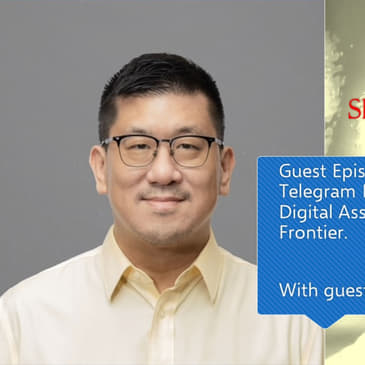

Chilip Lai brings almost 30 years of global business experience to his role as Director, Business Development and Alliances having worked in UK and across Asia. He leads LeapXpert’s partnerships with Advisories, Consultancies, Regulatory Bodies, Government, Technology and Software companies. He has an extensive background of Sales and Business Account Management with the last 15 years focused on mitigating and managing Risk with Regulatory Technology (RegTech) in global companies such as Thomson Reuters, LexisNexis, Kroll and Relativity. As an original member of the RegTech Committee of the FinTech Association of Hong Kong (FTAHK) since 2017, Chilip has helped to support their goals of advocacy, collaboration, and education for the whole ecosystem from banks, financial services, market participants, stakeholders, Government to Regulatory bodies, bringing a wealth of expertise to LeapXpert’s partners in his role.
[00:00:00] Hello everybody and welcome to the Crypto Hipster podcast. This is your host
[00:00:04] Jamil Hasan, the Crypto Hipster where I interview founders, entrepreneurs,
[00:00:08] executives, thought leaders, artists, you name it in the world of crypto and
[00:00:13] blockchain all around the world and today I have an amazing guest. His name
[00:00:18] is Chillup Lai. He is director of channels at Leap Expert. Chillup,
[00:00:23] welcome to the show today. Hey Jamil, great to be here and thank you for
[00:00:29] the opportunity looking forward to the discussion. Awesome, me too, me too. So
[00:00:35] first you know what is your background and is it a logical background for
[00:00:41] what you're doing now? Great question, logical that's to be seen but obviously
[00:00:50] I'll let your listeners decide on that. I think from my background the last 15
[00:00:55] years has really been working for companies that focus on how technology can
[00:01:00] be used to address and mitigate legal risk and compliance issues, primarily in
[00:01:06] financial services but across many different verticals. I mean I started out
[00:01:11] really with technology that did screening and background checks of
[00:01:16] employees and basic employee due diligence and then moved on more to
[00:01:21] business compliance. So more of a focus on violating sanctions, money laundering
[00:01:27] and terrorist financing and the laws and regulations associated with that.
[00:01:32] So now really with Leap Expert looking at how we address these real world
[00:01:37] issues from a communication standpoint.
[00:01:43] Great, so what is Leap Expert all about?
[00:01:46] We're really focused on how we manage the evolving world of communication.
[00:01:52] I'm sure every day you wake up, the first thing you check are your text messages,
[00:01:57] right? Your instant messaging. So this is how the world communicates. You've got
[00:02:02] probably over six billion people using instant messaging daily on all the most
[00:02:09] popular applications as people know. WhatsApp, iMessage, Signal, Telegram,
[00:02:14] WeChat and so forth, so many. So this is how real world communication happens.
[00:02:20] It's happening on texting. It's happening in instant messaging.
[00:02:24] Now the challenge for any type of business and even for the crypto
[00:02:29] industry or any decentralized finance is the ability to manage,
[00:02:35] maintain all that communication. So Leap Expert was created to address
[00:02:40] these real world problems where communication is not simply just email or
[00:02:44] even a call or a Zoom meeting or Microsoft Teams. It's gone into the instant
[00:02:50] messaging world and we've created a platform here where it's very easy to
[00:02:57] manage and to have the proper records for your business.
[00:03:03] And particularly now for the industry that really is looking for mainstream
[00:03:10] adoption and institutional investment. Crypto as well as other financial
[00:03:15] services need to fall in line and really treat this as any other
[00:03:20] communication they would have with their clients and external parties.
[00:03:24] This morning, you at Hong Kong approved a spot Bitcoin ETF.
[00:03:36] Right? I want to find what the sentiment is on the ground in Hong Kong
[00:03:43] and what you guys are excited about. Then I can get into the communication channels.
[00:03:49] I think the excitement is palpable and I think obviously we see SEC as well,
[00:03:56] really brilliant spot ETFs under the spotlight earlier this year as well.
[00:04:02] People are talking about it. People want to have the opportunity to invest
[00:04:07] but they're concerned about all the negative headlines that have surrounded
[00:04:11] the industry and to make it more regulated and seen as having oversight on the ability
[00:04:23] to do business and to invest, you need to have the proper structures in place.
[00:04:29] And part of that is communication. Right? So if you're dealing with financial
[00:04:34] services or any financial transaction, all those conversations and discussions
[00:04:41] prior to that during the transaction and after the transaction, they need to be recorded like
[00:04:47] any other financial services, instruments or any other products. So for that to see that
[00:04:53] now the regulators are looking at it as more of an opportunity for people to invest
[00:05:02] and for people to conduct business there is great for our business to see that realization
[00:05:08] that bringing it into the spotlight and showing that it can be regulated and it's not just something
[00:05:14] that is done away from the traditional markets. I see a huge opportunity for a lot of businesses
[00:05:21] including ourselves. I agree, I agree. Sounds good. So one of the things I look at,
[00:05:29] I look at the Bitcoin price and I look at the top 10 prices and a few weeks ago this
[00:05:35] crypto showed in the top 10 for the first time called TUN, TUNcoin. And I was like what is that?
[00:05:40] And I looked and it was Telegram. And you mentioned we chat, what's that, Telegram
[00:05:47] and you recently integrated your communication platform with Telegram.
[00:05:54] What do you think this integration will do for digital asset trading firms around the world?
[00:05:59] I think primarily Telegram is the default choice for the community around
[00:06:07] this new fledgling industry as such. It's the preference of communication. So
[00:06:14] if you want to discuss new coins, new offerings most of it is done on Telegram. The traditional
[00:06:22] methods of communication are really not getting to that right audience. So you're not expecting to see
[00:06:30] emails about the latest updates or getting a newsletter. So these are things that the
[00:06:38] traditional finance community have used to reach their audience but Telegram is very key.
[00:06:44] It has hundreds of millions of active users. Now, depending on how you measure that,
[00:06:53] it's up to even 800 million. So the community out there is significant. So the people you want
[00:07:00] to reach are there and with Telegram people are discussing trades. They're discussing markets,
[00:07:08] pricing, as you mentioned, new coins and new opportunities. The problem with any firm that
[00:07:16] wants to deal in that space, they need to have the record of these communications.
[00:07:23] For the protection of the investor and the transparency of the markets needs to have
[00:07:30] the ability to have these communications recorded and managed by your firm or your enterprise. So
[00:07:37] not forcing employees to switch to email or phone is significant because once you switch to
[00:07:47] more traditional communication channel, you're going to lose your audience. They're not on
[00:07:51] those channels. They don't want to receive email. They want to communicate and do business
[00:07:56] on the channels they want and Telegram is the preferred channel. And having that,
[00:08:03] and particularly for us having a use case with a Nomura backfirm laser digital,
[00:08:10] which we released not long ago, how they can secure and manage their communication
[00:08:18] for this digital asset business that they've created is critical. For them, it's not just
[00:08:25] the fact that they can get to the audience, but they can prove to their regulators, their auditors,
[00:08:31] their legal and compliance that they're doing it according to the regulations that they need to
[00:08:37] uphold. So I think that's very critical for Telegram.
[00:08:42] The Telegram is primary. How about WhatsApp? And to a lesser extent, we check because we
[00:08:50] just allow that to not allow but not popular in the US.
[00:08:56] Yeah, I think depending where you are in the US, so obviously I was just in the States.
[00:09:04] If you're dealing with any international business, so your clients may not only be
[00:09:09] in the US, in US primarily iMessage is still favorable. It's still the most popular instant
[00:09:16] messaging app. So iMessage, obviously if you're not in the Apple ecosystem, you'll be on SMS.
[00:09:25] That's still the most popular feature all the way to communicate. But outside of there,
[00:09:29] you've got obviously Europe and the rest of Asia Pacific, Latin America, Central America,
[00:09:35] they love WhatsApp. So WhatsApp is dominant there. But also, of course, you have China,
[00:09:42] which uses WeChat predominantly. You have the ability to communicate. And what we've done is to
[00:09:48] create a platform that enables all that communication. So not just Telegram, WhatsApp, iMessage and
[00:09:56] others. We formed a platform where all different messaging applications can be utilized,
[00:10:04] can be recorded, can be managed. So if you look at it from an email standpoint,
[00:10:11] if you're on a Gmail, for example, I don't need a Gmail account to Gmail you, right? I can just
[00:10:18] email you from any. So we're building that kind of same protocol where you should be able to
[00:10:26] communicate how you want to as a business to all your clients and external parties,
[00:10:31] your counterparties. So that's best done with a platform that enables communication across
[00:10:37] all these different messaging apps.
[00:10:42] I made a mistake on WhatsApp once. I had some crypto on WhatsApp, the platform
[00:10:47] protocol enabled the ability to buy and sell crypto on WhatsApp. And I switched, I thought
[00:10:55] it was Upgrad, switched from a regular WhatsApp account to a business WhatsApp account,
[00:11:00] thinking it was the same number, right? And then it went away. So, you know,
[00:11:08] I think there are still some best practices that in knowledge, they used to be communicated,
[00:11:15] you know, out to the public. So what are your recommendations for best practices
[00:11:19] for trading firms to use? You know, say Telegram, stick with that.
[00:11:26] First of all, really is to acknowledge it. The fact that, you know, you can't ignore the
[00:11:31] solution. You've seen all the fines in the last, I think it's just under 30 months,
[00:11:37] this SEC and CFTC have been finding financial services, where it's a huge sell side bank to
[00:11:45] smaller investment managers. They've really focused on off channel communications and
[00:11:51] not just the fact that they're happening, but there is no record. There is no supervision.
[00:11:58] So the fact that you have policies in place and a lot of firms have always had policies that
[00:12:03] you cannot use doesn't mean that this is the real world. The real world is people are texting,
[00:12:09] people are messaging and for the crypto industry, definitely over Telegram. So first of all,
[00:12:14] is to acknowledge that and understand the usage and how to separate that from
[00:12:20] personal and private communication, right? Because we all use Telegram. We use it not
[00:12:25] just for business purposes, but personal communication. How do you separate that?
[00:12:31] So you're not having to give up your personal info and data to your firm. So how LPEX will
[00:12:38] approach is that it is to have the ability to capture it for business purposes only and not
[00:12:45] to have it just to record and monitor all your communications on your personal or private
[00:12:51] Telegram. So the ability to elevate this to a business communication rather than treat it as
[00:12:58] a hidden invisible off channel communication is key. So to bring it to the light as such is to
[00:13:06] ensure that you're protecting not just your business and your reputation, but also
[00:13:12] your investors interests as well.
[00:13:17] Interesting. I interviewed a man about a year ago who was building a CRM on top of Telegram,
[00:13:28] right? Because there are a lot of business and I always considered it a benefit to be
[00:13:34] able to do that. So from a business perspective, what do you see as the major benefits to building
[00:13:44] their business communication channels on Telegram? I think what you have in Telegram is real world
[00:13:52] and live conversations and interactions between your business, your employees,
[00:13:58] and your clients in the external world. And I think CRM is great and it serves a purpose in every firm,
[00:14:06] but CRM typically is informed by emails, customer contact centers, transactions,
[00:14:15] and you're relying on the manual input of typically account managers and sales persons
[00:14:20] or customer support, anyone handling a transaction. So with messaging and particularly with Telegram,
[00:14:27] these are conversations that people are having and not just text, it's containing real
[00:14:35] insights into behavior and why people are engaging on these channels. Because of course,
[00:14:41] you've got emojis, you've got pictures, you've got videos and documents. So all these are very
[00:14:47] critical insights on your business, the health of your business, and what your clients are
[00:14:54] doing and why they're choosing to interact with you. So you gain a lot more insight into your
[00:15:00] business through these instant messaging channels such as Telegram, which you would never get through
[00:15:06] email filling out a survey feedback or waiting for a complaint or transaction to happen. So
[00:15:15] what is most important is using these channels is not just for the regulatory compliance aspect,
[00:15:21] but how to improve your business, how to improve that speed to transaction and to really keep that
[00:15:30] customer experience to ensure that they keep coming back and dealing with your old business.
[00:15:38] It mentioned, it sounds good for business and it sounds good for the trading firms
[00:15:42] and you mentioned regulatory compliance. So how, I know there's been a lot of,
[00:15:50] I would say that Singapore and Hong Kong are more advanced as far as changing their
[00:15:54] regulations than the US is. We're kind of wedded to 100 year old law share for some reason,
[00:16:01] but how do you help regulators and Singapore MAS and the Hong Kong Financial Conduct Authority,
[00:16:11] what are the benefits for them? I think from the regulatory standpoint is,
[00:16:17] I mean we have been recognized by a few of the banking regulators, including the Hong Kong
[00:16:24] Monetary Authority. We've been published on their website for the latest REC Tech developments
[00:16:32] and we won awards from there. I think the key is the market transparency. So they want to
[00:16:38] foster the innovation. They don't want to slow down innovation and then the day
[00:16:45] innovation creates opportunities for everyone in the market and all participants,
[00:16:49] but they want to make sure that the investors are also protected. And part of that obviously
[00:16:55] is key is the communication. Obviously they have many tools to look at transactions and data
[00:17:01] and financial information, but the key part with any financial regulatory body is that
[00:17:10] there is the audit trail, the records of all these investments and the discussions and the
[00:17:15] communications. So we've seen obviously a lot of headlines over the last few years about fraudulent
[00:17:22] behavior, scams and other malfeasance within these emerging industries. And part of that to bring it
[00:17:32] into the mainstream is to really have the same protocols where you are having the same conversations
[00:17:40] being recorded prior to an investment or discussing an opportunity that you would expect
[00:17:46] with any financial services product. So they want to see that there are companies and
[00:17:51] technologies that really help and assist these new industries and these new financial services
[00:17:59] instruments. And we're part of that community. So really the more we can do here, the more
[00:18:05] the regulatory bodies would engage. And obviously they would like to promote their financial center
[00:18:12] as being a hub for a very transparent but still innovative ecosystem for these new assets.
[00:18:22] You mentioned new products. One of the big fights here in the U.S. is some people say there
[00:18:32] will never be a central bank digital currency. Hong Kong and Singapore are two countries that
[00:18:38] are looking to implement a central bank digital currency. How do you think that the improvement
[00:18:46] in the communication channels will help foster a positive experience with that product or others?
[00:18:54] A little bit of irony, obviously some of the views of cryptocurrency and
[00:19:01] the whole DeFi communities that there isn't central bank control and it isn't
[00:19:08] governed by a particular country or government or traditional finance. So to me,
[00:19:16] it always boils down to the trust element. So you're going to trust to do business in a market,
[00:19:25] not just from the legal and financial health and well-being but also that the regulators are
[00:19:32] on board, right? We don't want to be in a situation where you invest with the potential
[00:19:39] that the regulators deem it to be not in the best interests of that market and put your
[00:19:45] investments at risk. So part of that again is that communication side. So wherever that is
[00:19:52] formalized and managed through a platform like EliteBXpert or is basically used to create
[00:20:01] that market trust. So the trust is the element. Obviously, if we look back to the emergence of
[00:20:09] the cryptocurrency, it has been borderless as they say but ultimately the money has to land
[00:20:18] somewhere and it has to be regulated in that fashion. And part of that is all the financial
[00:20:25] services regulatory framework that goes around obviously knowing your clients, knowing their
[00:20:32] risk appetite but also having a record of those communications is being key. Singapore and Hong
[00:20:40] Kong are obviously the leaders in this region but you see that happening across many jurisdictions
[00:20:47] where it's UAE or Europe and even with the states as well.
[00:20:53] Interesting. So I'm thinking of my positive and negative experiences with Telegram. I've had
[00:21:05] several positive experiences where I've been part of different groups, communities supporting
[00:21:13] cryptocurrency, different coins, different communities. I've also had the experience
[00:21:18] where some of those communities like you said the word malfeasance, a scam or something
[00:21:25] would create an identical duplicate channel to that group. It's only for the purpose of trying
[00:21:34] to defraud investors. And I actually fell for one where I lost $60. That wasn't cool but it
[00:21:43] looked exactly like the group I was in. They just duplicated it.
[00:21:49] Well hopefully that wasn't too much of a loss for you Jamil, the $60. It would still be painful
[00:21:57] just the fact that you got obviously cheated and scammed.
[00:22:01] But how do we, yeah I'm fine with that but how do we identify, like how do we help people
[00:22:06] identify with the risks? I think from my standpoint it's how the communication is managed.
[00:22:17] One of the challenges now particularly with Telegram and other instant messaging
[00:22:22] apps is that there is no real control or record keeping around it. So you're right.
[00:22:31] People can very often imitate and pretend to be representing an organization or an individual.
[00:22:39] And if you are using personal private numbers so it's not managed by an enterprise,
[00:22:45] using an official APIs and accounts that are provided by the messaging services then
[00:22:52] you do have that risk where somebody potentially joins a competitor or a new firm
[00:22:59] and takes your information, your contacts, your phone numbers, your previous conversations
[00:23:06] from their messaging account to their new firm, the new competitor.
[00:23:12] They have that information. It's not being managed by their previous firm. So the key
[00:23:17] is to have everything centralized and managed so it's not individuals using individual Telegram
[00:23:24] accounts trying to conduct business and growing communities. It should be official accounts
[00:23:33] and approved accounts by each firm and then people have the trust in that interaction
[00:23:41] to know that this is a properly managed channel and to have that communication,
[00:23:48] of course not just recorded but managed as well. So it's not easily replicated by a fraud
[00:23:55] or scammer. So these are some of the things that people should look out for.
[00:24:01] Yeah, I agree. You mentioned off channel communications earlier and I'm like
[00:24:11] there should be some kind of structure where things are formal or things are structured but
[00:24:16] regarding off channel communications, what do you see,
[00:24:22] what are some of the key strategies to managing those kind of communications,
[00:24:25] the off channel communications?
[00:24:29] I think the first point is acknowledgement. I think if you've seen the scale of the finds
[00:24:35] and it's only very recently, it's less than 30 months now since the first
[00:24:42] find started from the SAC and CFTC in US, it's almost three billion US dollars. So
[00:24:50] these aren't a few dollars or change for an organ. These are real money finds and
[00:24:59] significant sanctions against firms. Now the interesting thing is that they didn't uncover
[00:25:07] an ethical behavior. So there wasn't scamming inside a trading
[00:25:13] and other unethical behavior amongst these channels. The complaint stipulates that they were off
[00:25:22] channel, unrecorded not managed by the enterprise. And those were the finds that
[00:25:27] are being levied just based on the fact people are using this communication. So that is a clear
[00:25:34] signal to the market that even though the behavior on there has not been found to be unethical or
[00:25:43] illegal, it's just the fact that you're on there and it's not being managed by your firm,
[00:25:49] by your company, by your enterprise is reason enough to warrant such a heavy sanction.
[00:25:54] So it's made very clear that the risk is significant for any firm that has off channel
[00:26:01] communication within their enterprise and the risks associated not just to the firm itself but to
[00:26:08] investors and the market. So that's clear and to acknowledge that and understand that. Previously
[00:26:15] people would ban texting and unfortunately still all of cases that we see our clients that
[00:26:23] their previous policy for decades would be no instant messaging, no texting, which if you
[00:26:29] look back 20 years ago, it's like saying, oh, you shouldn't email. It's not secure. It's not trusted.
[00:26:33] You should only fax and post things. Unfortunately, there are actually some
[00:26:39] departments that still ask for that. But this is the way to communicate. This is how your
[00:26:44] business should communicate. And to being compliance of that is to have an enterprise-wide
[00:26:51] strategy. So not just your trading teams or your digital asset teams, but understand how all
[00:26:57] your employees communicate to the external world on instant messaging. And not to restrict it just
[00:27:03] because you can't control it, you can't record it, you can't enable it. We have some financial services
[00:27:10] where their HR use our solution because the candidates, the fresh graduates coming out,
[00:27:18] they only use texting. They're not waiting for an email or phone call about that interview
[00:27:22] or that job offer. They're waiting for a text. And if you don't offer that, you're not going to
[00:27:27] get to your candidates. You're not going to remind them about their interview tomorrow at 9am
[00:27:33] or they need to bring a copy of their ID or their resume or CV. All they'll know is if it comes
[00:27:39] through on an instant message. They're not checking their emails. They won't take phone calls.
[00:27:45] The only way for you to do business with them is to use a platform that supports
[00:27:51] instant messaging where it's iMessage, WhatsApp, Telegram, WeChat. This is the future of communication.
[00:27:58] This is happening now though. So you can ignore it. You can say email or phone call is the only
[00:28:04] approved way, but you need to manage it centrally and not just for the business or the trading
[00:28:11] arm, but actually any employee who needs to contact an external party, whether they're a client,
[00:28:17] a supplier or a potential new employee. I'm thinking of the compliance people I know and I'm
[00:28:26] thinking of companies that I know about where their employees and their sales reps and their
[00:28:33] portfolio people they have been banned or internally banned from using their phone for texting.
[00:28:40] They have to have a separate phone. They can't use their personal phone. It's a big problem
[00:28:45] here from what I understand. How do you think that transition is going to be
[00:28:51] to go towards messaging economic economy? What are the challenges?
[00:28:59] I think we're already there. Like I said earlier, we check all our messages. It's pretty much the
[00:29:07] first thing we look at who's been texting me. What's the latest text since the messages received?
[00:29:13] And that's pretty much the last thing you look at before you probably go to sleep as well. So
[00:29:17] it's the way we communicate now. You can ignore it as a business, as an enterprise.
[00:29:25] No, we have official ways of communicating. We can use all these video call collaboration tools
[00:29:33] which are great and serve their purpose. And of course, we still have email, but
[00:29:38] in the real world, that's not how we communicate. And this is not how we're going to communicate
[00:29:44] going forward. There's no way five or even a few years from now that we'd be thinking,
[00:29:50] oh, we need to email more. We need more emails because this messaging thing's going away.
[00:29:56] This messaging is a fad. I think the mass adoption you've seen of instant messaging,
[00:30:02] I think WhatsApp, for instance, has surpassed two billion active users. That's significant, right?
[00:30:08] That's more than a quarter of the population of the world is on there and they're using it. So
[00:30:16] we may have email accounts that we check maybe once a week, maybe once a month. But for me,
[00:30:23] as a customer or potential client, how are you going to reach me? How are you going to
[00:30:27] converse with me? How are you going to see if I'm interested in investing or let me know about the
[00:30:33] latest offer? Insta messaging really is the only way to go. I think that's pretty much been proof
[00:30:40] more of the last few years where the ability to send emails or even marketing via posts, which
[00:30:49] still happens. I still receive mailers and circulars. I think that's gone. We're in an
[00:30:57] era where if you're not on instant messaging as a business and using it as a communication tool rather
[00:31:04] than just purely for notification, then you're missing out on a lot of opportunities. That's
[00:31:11] what we see with our customers is that they are seeing the opportunities and the way they engage
[00:31:16] with their audience and their community in a much more different light. Now they've brought
[00:31:23] instant messaging into the enterprise. It's no longer hidden. It's not on my other phone.
[00:31:28] It's not on my private phone. It's actually just work. I can put it onto my laptop. If I have a
[00:31:34] desktop or tablet or device and use it as I would use email or zoom or team. So to me,
[00:31:41] it's just the regular part of my communication tool set.
[00:31:47] Yeah, I agree with you. And I just thought about it and I haven't looked at my Yahoo email
[00:31:51] in a month and a half. So I use emails for my different crypto accounts and stuff. So there's not
[00:32:01] one, but that's pretty much like the benefit of email to me. But yeah, I use WhatsApp and Telegram
[00:32:10] too. And Twitter. And for X, what are we going to call it? And I call that social media noise.
[00:32:19] Right? But with all the noise that remains the importance of having what is called,
[00:32:25] you guys call it single professional identity framework. Right? What is this framework?
[00:32:32] How does it work? What's it all about? I think the key for us and seeing the experience of our
[00:32:38] customers and the market really is you want to be reached on how the customer or the client
[00:32:46] prefers. Right? You don't want to dictate or order your clients say, hey, I can only receive email or
[00:32:54] I can only receive chat on this profile. What people want to have and anyone in any business
[00:33:02] really is an easy way to be reached in the easy way to be contacted. So when I want to trade,
[00:33:09] when I want to inquire about a new pricing and a new coin offering, I want to contact you
[00:33:15] the easiest way possible. And you know, maybe that's Telegram, maybe that it could be even a
[00:33:20] voice call and SMS or an iMessage of text. And the way we view it is a single professional
[00:33:27] identity to have a number managed by the business that's associated to you that I can get to you
[00:33:35] in the channels that I want to, whether it's Telegram or text or even a phone call.
[00:33:41] That's how I want to communicate whether it's with my sales rep, my relationship manager,
[00:33:45] my private banker. This is how I want to communicate because this is how I'm going to do business
[00:33:51] going forward. So we've seen that from a lot of our financial services clients where
[00:33:57] there's so many different channels you can reach people now that it's very inconsistent.
[00:34:03] It's frustrating for their clients. So the single professional identity
[00:34:09] identity is the concept where through this number, which is managed by your firm,
[00:34:15] you can reach however you want to reach to your service provider, to your financial services.
[00:34:23] And that way it reduces the time to respond to a transaction request, hopefully not a complain,
[00:34:30] but the ability to do business. It's just unquicker. If I can text you, I can send
[00:34:35] you an iMessage or Telegram or WhatsApp based on the number that I know is managed by your company.
[00:34:41] I'm a short A, you're not a fraudster or a scammer, but B, more importantly, I can do business with
[00:34:46] you as quickly as I can with the channels that I want to do business with you. So that's
[00:34:52] very key. And on top of that, employees leave organizations. That number is associated
[00:34:59] not just the employee, but that business. So I can reassign that number to the next relationship
[00:35:05] manager, your next account manager. So you don't lose that critical conversation. It's not stored
[00:35:11] on private numbers or hidden invisible chats. This is all managed by your company. So
[00:35:17] they pick it up straight away. So they know, okay, sorry, previous relationship managers no
[00:35:23] longer with us. I'm happy to take care of your business right now. I can see that you've
[00:35:28] been discussing this offering. So it really keeps that continuity of service and business
[00:35:35] for many firms, including the cryptos. I love not having to reinvent the wheel all the time.
[00:35:41] So that sounds good to me. Yeah. So actually, I want to thank you very much for your time
[00:35:48] today. Thank you for speaking with me. I enjoyed our conversation and I have one final question
[00:35:54] and it's an easy one. How can people find out more information about Leap Expert about you?
[00:36:00] How could they find out more? How can they do that?
[00:36:04] Of course, we have a website. So we still have traditional channels.
[00:36:08] That's Leap Expert, which is Leap as in L E A P expert X P R T dot com. So LeapExpert.com
[00:36:17] I'm also on LinkedIn as well. So you're gonna feel free to reach out to me there.
[00:36:23] And yeah, happy to continue that discussion and really appreciate your time, Jamil.
[00:36:28] And yeah, I've been enjoying your podcast as well. Awesome. Thank you very much for your time today.
[00:36:36] Thanks, Jamil.