
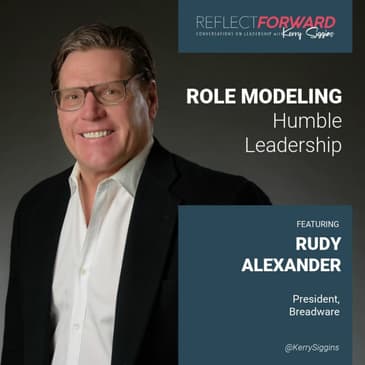

[00:00:00] Hi and welcome back to Reflect Forward. I'm your host, Kerry Siggins, and I'm so glad you are here today. Today my guest is Rudy Alexander. Rudy is the president of Breadware. Breadware
[00:00:20] is owned by Stone Age. And so I've met Rudy. Oh gosh, guess we started the interview process about this time two years ago. And so I've just had so much fun getting to know him
[00:00:33] and I really appreciate so many things about his leadership style, his humility. And I thought it would just be fun to kick off the new year with somebody who I work with. So I hope you really
[00:00:46] enjoy this conversation with Rudy. I certainly did. So hang tight and I'll be right back with him. Hi and welcome back everyone. I hope you're having a great day. I am so excited to have one
[00:01:04] of my favorite human beings on the planet on the show today, Rudy Alexander, president of Breadware. Rudy, thank you so much for joining me on the show today. Yeah, thank you, Kerry. I appreciate it. Obviously, the filming is mutual. Thanks for having me.
[00:01:16] Yeah, so Rudy and I work together. Rudy is the president of Breadware, which is an IoT solutions company. IoT stands for Internet of Things and Breadware is owned by Stone Age.
[00:01:28] And so I thought it would just be a really fun way to kick off the year by interviewing Rudy, because we work so closely together. And you get to learn a little bit more about what Breadware
[00:01:39] does because you hear about Stone Age all the time. So I thought it would be fun to bring Rudy on the show. So Rudy, can you tell us in your own words a little bit about what Breadware does? Yeah, absolutely. Breadware develops and deploys smart devices into
[00:01:53] manufacturing industry and verticals, attacking problems such as asset tracking, predictive maintenance, condition modeling, things that are very, very critical to corporations as far as their uptime related to their factory floors or anything around those things. So
[00:02:12] we're excited about the opportunity. The industry is exploding and we're just in a very good spot as a company. So one of the things I think is really unique about you coming on was that we really wanted to transform the company. When Stone Age brought
[00:02:29] Breadware, Breadware was peer consulting. I didn't have any products. They just did custom engineering services and that's a hard company to scale. And when you came on board, the mission was let's build products and build software and develop whole solutions.
[00:02:45] So can you talk a little bit about what it's like to lead such a significant business model transformation with a company? Yeah, it's challenging but fun and let me explain that a little bit. Coming in, it's going from a company that purely was more of a
[00:03:04] custom design type company, consulting based company and transforming that into a product and solutions company, product and services creates a lot of uncertainty into the workforce. There's a couple of key components to it. Number one, you're taking
[00:03:24] products to market. You're transforming yourself out of a peer consulting row and with that comes also a period of time where you're just not seeing the significant sales that you're looking for. And so that begins to test the waters related to are we doing the right thing,
[00:03:43] did we pick the right product? Is this going to be satisfactory to the marketplace? So a lot of things have to unfold and quite frankly, you don't always hit on all. So you've got to be able to pivot and pivot quickly when you don't hit your mark, Gary.
[00:04:00] Yeah, and so talk a little bit about that. When you see something's not working and shifting a little bit, can you give an example of having to do that? Because I think leaders face that
[00:04:09] all the time but let's face it, a lot of leaders wait too long and they don't move fast enough when they really need to. So can you give an example of having to pivot and what that
[00:04:18] feels like? Yeah, I can give a great example. What happened just this past year is that we started off with a sales strategy around a discovery and really call a fast IOT and being able to
[00:04:32] bring products to market quickly. And we have a product by the slice board that allowed us to do that and they asked to get through prototypes very quickly but it didn't impact our sales
[00:04:45] implementation. And so what we really had to do and do quickly is round down our product offerings so that we truly had a solution that was off the shelf and that we could go sell to our
[00:04:59] prospects, our clients and the value that we're looking for. And so that required us to go out and figure out how to make that happen and then make that happen quickly because time was not our
[00:05:09] friend. And what I mean by that is we were able to go out, identify a product, identify what we needed to do through customer interfacing. So these are products came from a customer that said,
[00:05:23] hey this is what I need. We were able to validate that that would be needed across the entire industry not just with a specific customer. And then we were able to look at, okay how long
[00:05:35] will this take for us to get to market which is critical for us to meet our objectives and our financial goals. And you know we had to pivot quickly because if we'd have waited any longer to do that unfortunately we would be in a different situation going into 2024.
[00:05:52] Absolutely. So how did you lead through this because I can imagine that it made people feel uncomfortable. I mean I know it made people feel uncomfortable. We're changing the business model, we're changing who we are at our core. What were some of the conversations with employees
[00:06:09] that you had to help them understand the change and what really worked and maybe some things that didn't work so well? Well I think the first the key to it is transparency is just being completely transparent with your people and helping them understand
[00:06:27] you know that we are looking at ways to scale the business. The business as it exists today is not an exciting business from the standpoint of scale. Does it mean it's a bad business?
[00:06:42] Does it mean that it's not something to be productive but it certainly is not aligned with what we're trying to accomplish as a company and with our growth. And so you know that meant that
[00:06:54] we traditionally had a lot of engineers that were doing custom design work. So you know they were trading time for money and they were doing fantastic work, doing fantastic work. But once the
[00:07:07] job was over it was over you had to go sell another one you had to go you know you really had to work toward this and so I had to sit down on our engineering team and explain to them that
[00:07:17] as we're transitioning from a pure consulting company to a product and solutions company it will still need custom design services and expertise. But what's going to happen is through this transformation we're going to be more successful, we're going to be more profitable and most
[00:07:37] importantly you're going to be working on projects that you really care about that really going to impact the market. And one of the conversations I've always because I've been in the technical industry for so long, engineers, software developers etc they want their they
[00:07:53] want to dissolve products that are used. They love to see them scale they don't like to see them shelved either. And so back to the transparency is just sharing with them the vision of where we were taking the company why this is important and the fact that their
[00:08:08] responsibilities and their job roles and what they're doing actually becomes more important from a product and services company than it was just from a pure services organization. I will tell you that they didn't buy into that from day one but they certainly bought into it
[00:08:23] over time especially as they began to see things transform and and and what we were saying we were getting done and and that was real proof to them from an engineering perspective. So that was pretty exciting. Yeah and I can imagine especially engineers like their naturally
[00:08:42] skeptical beans at least a lot of them are not all of them. So I can imagine where that was some there was some skepticism there of like you know is this really going to work and
[00:08:52] and how are we going to do this? How did you keep people motivated because obviously things like this transformations they always take longer than what you want them to. How do you keep people motivated as you're going through this and you're you're trying to
[00:09:07] build products and get it ready for market and introduce it to the market in a relatively short period of time but still can feel like a long time? You know obviously I said earlier about transparency but the biggest thing is every
[00:09:24] one of us wants to be a part of something that's going to be successful. Every one of us wants to contribute to that process. All of us want to see something come into come to fruition and so in order to make that happen with the employees and everything
[00:09:43] it was constant communication this is this is as you well know I spent a lot of time out in Reno I spent a lot of time on phones on teams and zoom in this world crazy world we live in now
[00:09:54] and the reality is you just got to keep that open communication it's got to be consistent and and when you do make a mistake you just admit it. You know I missed on that one
[00:10:06] guys can you bail me out? I forget you know okay how can we do this a little bit differently? Where did I go? I remember when we launched we decided as a company to invest and launch
[00:10:17] the new products some of the new products we've got coming in. I remember going to launch into dinner with the engineers and saying hey this is what I'm thinking tell me why I'm wrong
[00:10:28] tell me where I'm messing up tell me why this won't work and by the way if it truly isn't something that can tackle a large percentage of the marketplace then let's identify why now
[00:10:39] and let's pivot and go a different direction they just loved being a part of those conversations and they were real they were transparent and then they could go off and do what we
[00:10:50] needed them to do with the obviously the skill sets that they have. So they just loved it and in the bottom line there is they love being a part of it and they love owning it
[00:11:02] and they're seeing it now and so you know and what's really interesting to me is as they became more and more part of it their work ethic became better and better and better
[00:11:14] and not the work ethic was bad that's not my point but they you know they consumed you you start to really get into things and that's yeah it kind of goes back to what you're saying
[00:11:23] like that you know they're there they want to be part of something that's successful and so when you feel like oh I'm doing something for a bigger reason then you do have more ownership
[00:11:33] over it rather than okay I just have to get this done check the box okay move on to the next project you're just sparked something I'm on is that part of it is too that that you've got to have support
[00:11:45] and I just continually reiterated reiterated reiterated that we had the support of our parent company and our board for the goals that we're trying to accomplish and because people don't like the uncertainty and so we did that on an ongoing basis and you know again once we were
[00:12:03] transparent with that we you know when challenges need to be addressed we addressed them we didn't shy away from problems and they respect that and you know it's it's it's nothing different
[00:12:15] that you and I want yeah and I think it really does speak volumes the fact that through this big transformation uh that that most of everybody stayed right the only people who who've left are
[00:12:27] are people who maybe you know it wasn't the right fit and so I think that's a real testament to being able to to lead well through transition is that people are like you know what especially
[00:12:38] engineers when the market's so hot right to say I want to stay and be part of this I want to stay and be part of this I think that's I think that's a you know the proves that you're doing
[00:12:48] something right yeah and you know that's uh quite frankly um if you asked me what was what's one of the most gratifying things to me it's it's that whenever I know we're making a difference in
[00:13:02] people's lives um and and and that don't mean just on a professional level but even on a personal level we talk a lot about knowing the whole self knowing the whole being and what's important to
[00:13:14] and and when they know you know that and you care about them they they they run through walls and they and they believe in it and then that's how we run the company and I think ultimately we've
[00:13:24] been very fortunate we haven't you're right we have not lost key people um and um I'm I'm excited about that I mean it's just they just are just a great uh they're a great asset to the
[00:13:37] organization yep so I like that you said care okay building a culture of care is so important obviously you know that's something that I really believe in have you been part of other organizations led other organizations that cared like the quite like this one does like
[00:13:52] we don't how has this been a thread through your career um the the answer is no uh um I come as you well know I I have started several companies and so companies and been a part of the whole
[00:14:07] private equity world if you will uh where I went out and raised a bunch of capital and and um that's not a bad model it's not right or wrong uh but it's really about the results
[00:14:20] and nothing else and and so you just don't get the same level of commitment to culture and what that means to an organization um far as me personally I can tell you that was a shift
[00:14:33] you know um when you come from a world for so long and then you're um making a shift to really quite likely be be a minus to the person war it's a shift and that was a challenge for me
[00:14:49] for a period of time but I feel like I've come a long long way in that yeah yeah no I agree so tell me um what was the most challenging like what made you feel uncomfortable about that whole
[00:15:02] you know I had to put on this front being in the private equity world because all that mattered was results and then now here you know I'm at a place that that really values
[00:15:12] like being real showing up as your whole self like you just talked about you know what did you what was what was so uncomfortable and what did you do to get yourself more comfortable with it
[00:15:22] you know I said something earlier about transparency um and I feel like I'm a very transparent honest person but it was hard for me to just lay it all out there um
[00:15:35] and laying it all out there means um making sure that you're not just doing it with your boss but but everybody on the team you know your peers and laying it out there and saying ah you know I
[00:15:48] I didn't really think of that or I that was a mistake on my part um um I should have came to come to you sooner and we could have avoided this and the reason why that was so difficult
[00:16:00] is because in my old world I was the buck stops here guy right and so there wasn't that level of culture there's a balance between that and being too um optimistic or however you want to put it
[00:16:18] and so um that balance is what I'm really getting comfortable with now in and some some things you just got to tell boom like it is and sometimes you can um maybe soften the blow a little bit and
[00:16:33] just making sure that that's that's not appropriately and um so it's it's been a balance and I feel like in the last year and a half I've learned a lot about Rudy and so I think that's important
[00:16:46] I love that that is what I want everybody to be nice like to for everybody to say I learned about myself and hopefully became a better human being uh having you know been part of this organization that is the the greatest compliment that's the coolest thing so
[00:17:00] I'm really glad that you've been able to learn about yourself that's fantastic yeah absolutely and I'm loving it I'm loving it um did you all know it you know when I came here I came here to
[00:17:12] knowing the challenge knowing that we had a big challenge ahead of us but at the same time came here to help contribute to the vision and build and um and uh I think we're in a great spot
[00:17:22] for that I'm excited so what is the biggest thing that you've learned about yourself because I love that question right as leaders are going through something that's transformational for themselves as well uh you know what what was the uh nahaa or like I'm really glad that I know
[00:17:37] this about myself now yeah it's like that's actually an easier question now uh than I expected it to be uh don't always have to be in the sales mode yeah does that make sense I just
[00:17:50] you know um I will tell you that in the private equity world that I was used to you're always in the sales mode uh for a lot of reasons right um and and and I and I maybe that was uh the history
[00:18:06] of me but but I've learned a lot about myself in the sense that you know I don't always have to be selling I can you know I can just be Rudy which is transparent honest uh trustworthy
[00:18:19] which is things I'll take very seriously and um and when bad news these needs to be delivered just deliver it um and I don't need to I don't need to wrap it up in a bowl I mean bad news is
[00:18:30] bad news good news is good news so I've learned that about myself in last year and a half for sure and you like that better I do I do I tell you what's funny is I sleep better
[00:18:42] oh that's great you don't you don't okay this you just don't find yourself second guess right um you know if if if I've had conversations then the conversations were real and you're not second guessing the conversation or yourself afterwards and and you know it's all out there
[00:19:03] and then you just figure it out um and I think part of those to just again um not only the transparency and the trust but it's a two-way street right so I got complete trust in you
[00:19:16] and complete transparency as you well know and with the board and with our other team members are here up in my peers so um everybody's here for the right reasons I think that makes a difference
[00:19:28] yep and you know people want to work for real people real leaders I found that um as you know I'm very honest about my you know my story my past and I'm about as real as it gets right this is
[00:19:41] what you see is what you get uh some people love that some people maybe not so much but I do think that people appreciate realness and I wish more leaders could embrace that and I do think that
[00:19:54] you're right right your experience is that that you felt you really had to modify yourself for what the job required what that leadership role required I have to always be selling I can't come
[00:20:05] in and talk about culture to private equity right it's just about the numbers and and how I'm delivering and there's no concern about who I am as a person and how my team is doing
[00:20:16] and so you get conditioned to thinking like oh hey okay my work self is this uh and then I'm like this in my my my personal life my real life but when you get to work for a real
[00:20:27] leader a person who shows up as their true selves flaws and all I think it's so much more relatable for people and we as a society have put leaders on I think you know crazy undeserved pedestals
[00:20:43] and especially people who aren't really actually great leaders they might be really brilliant really smart doing innovative things but are really actually not great people leaders you know who inspire people to be their best and so um so that realness I think is something
[00:20:57] that's really important and you know I would like to understand your perspective on on working for somebody who is real how being more real has improved your ability to connect with your employees
[00:21:10] and and lead through such a significant transformation yeah I mean I could tell you that when your leaders are laying it all out there good and bad and you're sometimes a little bit stunned
[00:21:21] and that you're having that that level of conversations as part of been some of my transformation as well I can tell you that it it has it has impacted my leadership style
[00:21:32] from the standpoint that I take that and I do the exact same thing with people within breadwear and not only do with people with breadwear I do it with you know people I work with at
[00:21:41] Stone Age across the board it gives you a best way I could describe it Kerry is it gives you a comfort feeling of being able to expose yourself does that make sense because now if I was working
[00:21:56] for a leader that didn't do that I don't think I would have gone through some of the transformation I've gone through them last year and a half to be frank um that goes a long way and and I've
[00:22:06] learned that about myself and now I'm look I still fall back in the old ways every now I'm in but it but I'm a lot better than I was and that's really what this whole journey is about and it's
[00:22:15] why leadership is so important and we're role modeling every day what we want people to act like within our companies what's acceptable what's what is even expected in an organization and so if leaders are you know they want they say okay I want a culture that's transparent
[00:22:35] and open and trust but they're not willing to you know give that trust to be transparent to be vulnerable themselves why would anybody else do it and so you know I think what you just said right
[00:22:46] there is just such a great example of why role modeling matters uh and you have to really walk the walk not just talk the talk if you want to create a culture you know an intentional culture
[00:22:57] if you're not role modeling it will never happen that's right and you know what's interesting is is what's what's also important as a part of that everything you're saying is when you have this level of communication and you have this this what I call true meaningful leadership
[00:23:14] then you can have meetings that are that are uh you know that you would you disagree on things and and you don't walk away from that meeting pissed off upset uh you walk away from that
[00:23:26] meeting saying okay that's I get it or or maybe you don't get it maybe it's like you disagree to disagree but you still walk away with a strong level of comfort that you're both
[00:23:35] on the same page yeah because because because everybody's coming from an angle that we're trying to do what's best interest of the business and the company and what we're trying to do and I think
[00:23:46] if you if you have that level of comfort conversation great things can happen you know one of the things I really appreciate about you is your humility uh you just are such a
[00:23:55] humble person where did that come from and how does that really show up in your leadership style you know I think it probably has a lot to do with with the way obviously I was raised
[00:24:07] I came from the other side of the tracks as I used to as I always call it so I had to work hard at everything he did I was never always the the the best athlete I was a good one I wasn't
[00:24:19] the smartest guy in the class but I was pretty smart um and I knew I could outwork anybody and so and with that you know and and then when I run into folks that were better athletes
[00:24:31] better smarter than me and etc uh I just always looked at them and said what can I learn what can I take away from them and and then the other part of it is I'll tell you um
[00:24:40] I you know you come out of school and you you think you fund the moon a lot of times and you think you're really you're really good and I think I had some good bosses around the way
[00:24:49] that corrected me and said you know already you are good but you know you need to exercise your humility and grace and um and and I did and it's proved out to do very well for me um both in my
[00:25:04] personal life and my professional life humility really does matter and I think that it's easy to lose our grounding uh when we do achieve success in in our lives and in our careers but remembering where we came from you know especially humble beginnings like like you
[00:25:23] like myself um never we never want to forget that because it's what makes us again it's what makes us real I always tell people the names the title CEO that's just a bunch of letters behind my
[00:25:34] name yeah I am a I have a role to play in this company and my goal is to play it as well as I possibly can but my position is no better than anybody else's no you know my role is no better
[00:25:48] than anybody else I am no better than anybody else I am a contributor to this team who has a role to play and my job is to play it as well as I possibly can and I think that that's a really
[00:26:01] I wish more leaders kind of had that mentality because I think that a lot of people feel like oh you know my team's here to serve me and so the opposite right we are here to serve our teams
[00:26:14] we're here to serve our customers we're here to serve our communities we're here to serve the broader business community because businesses can make such a positive impact on the world if they're intentional about it but but yeah I think that along the way you can easily lose
[00:26:28] that service mindset when you do start to achieve success so it's always good when you have somebody who can hold you accountable and when you always remember where you came from
[00:26:35] and I have no question about it and I agree 100% with the the service mentality I mean to me one of the worst phone calls I think I get and you do get them is is whenever you have a really
[00:26:49] solid contributor who is upset about something or maybe feels like they were treated properly or whatever and we as leaders we get those calls they they I feel like I've been punched
[00:27:03] in the gut by Mike Tyson I mean it's it's just that kind of a feel and so what I immediately do is go into correction mode to listen to understand to seek some level of understanding
[00:27:17] so that so that we can get on a path to recovery I don't go talk to that person think I'm going to solve it in a single conversation you know it's because something led up to it and I
[00:27:28] think you just got it you just got to take action you know but that's that's that's one of the things that's always a bad phone call when you get you know somebody who's you know as an
[00:27:37] employee or direct reporter whatever the case may be this just not happy because of certain reasons and I always say that can be prevented well it sounds like you're really empathetic I know
[00:27:48] you are but uh you know you have a you definitely have a strong empathy streak in you have you always been that way or is that something you've had to develop uh no how have I developed that as well I mean it's just come with experience
[00:28:01] and understanding you know people and you know in our job and our role look we we always have to make tough decisions and we some of those tough decisions are unfortunately letting people go
[00:28:14] and um you know I learned a long time ago that when you do have to make that decision um you need to make sure that that individual walks away with their dignity and tact and and ever because everybody understands look we're we're a results oriented world
[00:28:31] so so you know we have to produce results that's what we're here for um it's you know business is not a playground you know you just got to make sure that um you're in that constant communication
[00:28:42] trying to resolve all the challenges along the way yep I agree all right well as we wrap things up I want to ask you my signature question uh I'm really curious your answer because I've never
[00:28:53] asked you this before so the name of this podcast is reflect forward what does reflect forward mean to you you know it's interesting reflect forward means to me a complete evaluation of my personal
[00:29:10] and professional goals and in my faith uh in what and how all those three all those things really come together because reflecting forward and and really paying attention to those things means that I have
[00:29:26] been gifted to probably make a difference in a lot of people's lives and that to me is the ultimate satisfaction you know and and that's what reflecting forward means to me in those three main areas is
[00:29:40] how can how can I really change people's lives and make an impact on them and and that's important to me you know I you've heard me say this before I don't I don't take a job at you know I jobs
[00:29:53] the job's not important to me but being able to do those things and being able to grow something and build something and make something really makes positive impacts on people's lives is
[00:30:02] reflecting forward yeah yeah and you have to pull from your past experiences to be able to do that right you have to everything that you've built you just continue to build upon yes absolutely
[00:30:12] question about it yeah that's great that's great all right well how can people find you and how can people find breadware oh fantastic they can find me at rudy.alexander at breadware.com and they can find breadware by us go on to our website breadware.com and
[00:30:33] take a look at some exciting things we're doing and reach out to me I always call you about call back I it may take me a day but I always return my calls and I'd love to hear from you and love
[00:30:45] to chat with you and and Carrie I gotta tell you I absolutely love this conversation I love that leadership calls and I appreciate your leadership and what's going on with this company
[00:30:55] and how we can move this thing forward thank you thank you I feel the same way and thanks for coming on and sharing a little bit about your background and like I said I I talk about Stone Age I talk
[00:31:04] about breadware but it was just such a great opportunity to have you come on and and and also to have you know people see like like the interaction I should have more employees on this show
[00:31:15] because I wonder sometimes that people are like yeah that culture stuff that she talks about is that real it is real well awesome I could tell you it is real and it's um it's been a it's been
[00:31:30] a good transformation it's ongoing but it's been great it's been great yeah awesome all right well thanks for coming on the show uh I really appreciate it Rudy yeah thanks for having me
[00:31:39] I appreciate it and uh I'll be talking to you guys soon thanks thanks all right hang tight everybody I'll be right back all right everyone thanks so much hope you enjoyed that interview
[00:31:55] again happy new year uh and I look forward to seeing you next week if you like this podcast please write a review share it with a friend subscribe to it it always helps with the algorithms thanks so much have a great day