
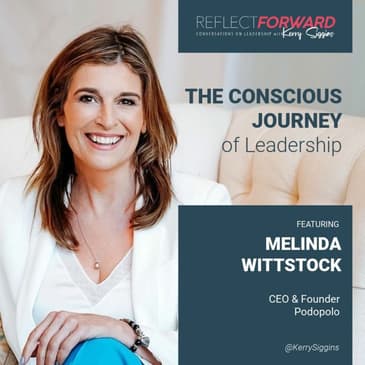

[00:00:00] Hi everyone and welcome back to Reflect Forward. I'm your host, Kerry Siggins and I'm so glad you are here today. My guest today is Melinda Whitstock and oh my gosh we have such an amazing conversation she is a serial entrepreneur. How's the podcast called The Wings of Inspired Business which I was on? She is the CEO of the
[00:00:30] CEO of Padabolo which is a new high tech podcast scene platform where people can listen to podcasts and as soon all kinds of really cool things and she is just a remarkable human being and I know you are going to absolutely love this interview so hang tight and I will be right back with Melinda.
[00:00:46] Hi everyone I am here with Melinda Whitstock. I am so excited to talk to you today Melinda. Thank you so much for joining the show. Well great to be with you Kerry.
[00:01:03] Awesome let's get started. So tell us about what you do. I mean we're going to dive in but let's talk a little bit about your current company and what you do to just give listeners a little bit of a perspective.
[00:01:16] So I'm the founder of Padabolo. It is a very big vision doing a lot of things with AI and blockchain to really revolutionize an entire ecosystem of podcasting and the AI works in many ways not just generative creator tools for podcasters to help them grow their reach.
[00:01:37] But also deep audience analytics powers a recommendation engine and search so podcasters can be more easily discovered by audiences who are already interested in their content.
[00:01:47] But also fans can more easily discover podcasts that they're actually interested in it's also quite interactive and we're innovating now also with blockchain and a really exciting way because with blockchain coming very very soon on the app everybody will automatically have a wallet on the Padabolo app.
[00:02:06] And in a really easy non black boxy way. It means that podcasters and sponsors can reward listeners just for doing what they're already doing which is listening so it's the only app where listeners actually win rewards for listening to podcasts and engaging and sharing and such.
[00:02:23] But the podcasters also get the benefit of being able to authenticate their ownership of their podcasts on the blockchain which is important in a generative AI world.
[00:02:33] And also get the benefit of really deep and actionable audience insights in terms of who is actually engaging in their podcast. And I'm just scratching the surface we do a lot of things.
[00:02:44] I cannot wait to talk to you about this offline because obviously be the podcaster. I'm very very interested in how technology can help me.
[00:02:52] So I saw on your website that it was your grandmother who first said you were so disrupter and obviously what you're doing now. So tell me a little bit about that about that disruptive thinking that just wrapped of mindset that you have and how this played out throughout your career.
[00:03:08] I think it's partly just a irrepressible curiosity. Just always asking questions and I think I grew up at a time when that wasn't good, you were supposed to be quiet if you were a good child.
[00:03:20] So not so much for me. So I always had lots of opinions and thoughts and such. But I think that comment was prompted after I went around the neighborhood with my black Labrador retriever demanding prepayment for my show.
[00:03:36] It was not my first show. It wasn't a podcast, but it did have music and costume changes and doing all kinds of car wheels through a sprinkler and whatnot. And I got a lot of neighbors to actually pay and maybe my lab was kind of my enforcer and I came back and asked my dad where I could get like 100 chairs.
[00:03:52] I was almost six years old and I think that was one of the things that prompted that you're disruptive. And I didn't really obviously understand that as anything other than something really bad, obviously in an entrepreneurial context is really good.
[00:04:07] I felt that too, disrupt in an innovative way. Right.
[00:04:11] Let's talk a little bit about your entrepreneurial journey and did you always feel that way? I know that I've heard you speak about you played it small for some aspects of your career. So how have you really evolved in your entrepreneurial journey from that little six year old who was doing this disruptive thing to maybe losing yourself along the way to where you are now.
[00:04:31] Yeah, that's a really great question because I think that happens to a lot of people, especially the women. As we go through different kind of seasons of our lives. I mean, the six year old kid didn't know what to be afraid of. Do you know what I mean? Like there was nothing holding her back.
[00:04:47] And I think along the way as we get trained by the school system and from our peers about what you should be doing and not be doing and all that kind of stuff.
[00:04:55] You sort of lose your game if you lose some confidence. And a lot of people tell you even if they're well-meaning people because they're trying to protect you, they say things like, oh, don't do that. That's too dangerous or what makes you think you could do that.
[00:05:06] And to the extent that you allow that in and you start to believe it yourself, you start playing kind of a smaller game without even knowing that you are.
[00:05:16] But like to give perspective, I was the kid in college on my student newspaper who created an advertising department.
[00:05:24] And when we didn't have enough reach, I took the paper citywide in Montreal and why would anyone in Montreal read a city newspaper is because we had the first ever English language entertainment and food listings.
[00:05:36] And like I just didn't know there was nothing that could hold me back in that period of my early 20s when people when I said, hey, I want to go to the UK and work as a journalist for one of the top newspapers there.
[00:05:48] Every single one of my friends said, what makes you think you can do that or you can't do that.
[00:05:53] And my attitude back then was watch me and I did I joined the times of London when I was 22 same thing with becoming a TV anchor all of that.
[00:06:00] And then along the way you get married, you have kids in my case not a good choice.
[00:06:04] And in terms of the person that I married, I mean, I was actually married to a narcissist.
[00:06:09] And I think their whole road map is to, you know, they're sort of threatened by even a weird way is to see you to kind of take you down.
[00:06:17] And it's kind of like a like a crab in a, or sorry, like yeah, like I lost her rather, it gets into a pan of cold water and the water gets warmer and warmer until it's kind of too late.
[00:06:28] And I think I lost a lot of kind of confidence in a weird way along the way.
[00:06:33] But on the other hand, I'm grateful for it because it spurred a very spiritual journey for me, which is integral to my entrepreneurship and coming into now playing a very big game, but from a much more solid foundation if you will.
[00:06:52] Yeah, it's amazing how those big life transformations can really cause you to do that soul searching and say, who am I? And what do I want the rest of my life to be like, you know, especially getting out of a toxic relationship is on the name being married to a narcissist has to be toxic.
[00:07:06] I don't know anybody who's been with the system.
[00:07:09] And they tend to find strong women too who are also empathetic. Yeah, sort of a weird target. So I got me not learned a lot about that.
[00:07:18] But I really do think that in our journey as humans or whatever it's, it's that adversity often and especially as entrepreneurs that makes us so much stronger and so much better.
[00:07:30] And if you think of a pearl, it's foreign because of the sand rubbing against it and looking back now and part of me says, oh my goodness, how could I let that happen to me.
[00:07:40] But it was all for a reason. And you get to a point where you're good with it and you can forgive it because it was the prompt that made you better.
[00:07:47] The only way to get good at doing hard things is by doing hard things and absolutely getting through tough relationship toxic relationships, toxic work environments finding that what you are doing doesn't bring you purpose in meaning in your work.
[00:08:00] Like all of those things are hard, but I do believe that it is part of our human journey. Our soul's journey is to go through those tough times so that you can come out of the other side going, oh yeah, this is what I was supposed to do.
[00:08:12] And this is what I was supposed to learn from it. I'm like, oh right. Okay, I got it.
[00:08:17] Yeah, I got them.
[00:08:18] The one thing that I really got.
[00:08:19] So a lot of your career has been being on stage TV anchor and producer and now you're getting into tech. Can you talk a little bit about that transition?
[00:08:28] And what was the catalyst that tech piece started more than 20 years ago.
[00:08:32] So I'm kind of unusual because I'm not only an award-winning content creator. And like you said, I used to be an anchor for the BBC ABC news, you know, doing the overnight show with Anderson Cooper and creating a show for the BBC creating financial times television, all these sorts of things.
[00:08:46] But in my first call it adult business capital news connection.
[00:08:51] I got really, really excited about the idea of using technology to turn content into conversation.
[00:08:58] And the manifestation of that at the time was an app called ask your lawmaker. It wasn't technically it was pre-iPhone.
[00:09:04] So it wasn't even an app. It was a widget. It lived on people's websites, but it was completely interactive.
[00:09:09] So anybody could ask any questions they wanted to ask of their lawmaker on Capitol Hill, you know, in the Senate or the house and increasingly also the White House and rank those questions or vote them up the order.
[00:09:21] And our correspondence on Capitol Hill would get them answered share the answers hold people to account. It's like no senator.
[00:09:30] I don't think that's what Betty was asking. Can you answer her question? And how would get uploaded for people to further comment was in share, etc.
[00:09:38] So it was a really groundbreaking interactive tool.
[00:09:41] Grue that to three million users of that in just eight months. And so that was really the beginning of where I saw the intersection of technology and media and frankly all my companies could upload my fifth.
[00:09:54] They've all been at that intersection of technology and some of it quite bleeding edge like back in 2010, 2011.
[00:10:01] I was innovating in natural language processing unstructured data search unsupervised machine learning the precursor to actual full blown AI all in the context of crowdsourced content and using data to actually understand audiences so we could more personalized content and such.
[00:10:18] So this has been a journey. And I'm kind of like partly the algorithmic heat can partly the content person. It sort of fuses in a weird way for me. It's kind of like a chocolate peanut butter thing going on in my own head.
[00:10:29] So I love it. It's a great combination. How did you start to focus on podcast? Yeah, the idea there. Well, the impetus is I sold my business and I wish it was a big accident. It wasn't a big exit. But the business I was doing at the time didn't really align with me.
[00:10:44] I've taken a break after that and a couple of people had said to me, well, no, there's a thing called podcasting and you would be really great at it. Like you should consider that because you have this whole background.
[00:10:56] And in the meantime, I was thinking of writing a book about women entrepreneurs. The book that I wish that I had had coming up as often the only woman in the room and that kind of thing.
[00:11:06] And also frustrated by the investment situation for women like women who qualify for VC back these are only getting less than 2% of that cap.
[00:11:16] And how can we catalyze an ecosystem where women were genuinely because I perceive the answer was that women really needed to step up to promote each other, mentor each other, buy from each other, invest in each other.
[00:11:27] And so the book was going to be that. And so I said about getting that done like literally start at the book and someone said, well, look, you should probably also have a podcast though to create the community that your book can sell into.
[00:11:40] And it became wings of inspired business and you were a great guest on the show recently. And really more than 860 episodes in on that, it's a wonderful thing to do. It really helps if I'm walking my talk on that mission of helping other women really succeed in business.
[00:12:00] But at the same time, it's kind of a good personal mastermind for me every day and really keeps me connected to what's going on across an entire ecosystem.
[00:12:09] Anyway, along the way in launching that for all my expertise in technology and marketing in content with so many like Edward R. Murrow awards and such.
[00:12:21] It was still hard to get discovered up against the algorithms and back in at that time it was really only Apple.
[00:12:29] And it was just there were structural problems in the industry that were preventing podcasters from growing their audience, making it really difficult to engage an audience meaningfully, I'm making it almost impossible to have really good data about who is actually listening to your show, let alone monetizing it.
[00:12:46] So that was really the first thing I like, I wonder if other people are having this problem which you know led to a lot of inquiry over the lot of other podcasters like what would it be like if you had a social platform or if you had the data insights or you know this and this and that.
[00:12:59] And it just kept getting validated like with every single person I spoke to.
[00:13:03] I thought, okay well that's great to serve the podcaster but what about the listener what kind of problems does a listener have.
[00:13:09] And I began to see too that listeners were equally frustrated at just struggling to find new podcast were relevant to them also really wanting a place where they could discuss podcasts with their friends easily and such.
[00:13:24] And then I started to realize that the advertisers were also being short changed because they were approaching podcasting as if it was broadcasting like TV or radio where you needed huge numbers to justify an ad spent on a podcast and yet podcasting is fastest growing media of all time but what makes it great is its niche like most podcasters will always have small audiences because it's such niche topic and that's what makes them great.
[00:13:51] So advertisers were losing out on 98% of the podcasting market which is a huge market so how could that advertising piece be solved made it good for the advertiser good for the podcaster so that was really I guess the intellectual or the impetus behind it and just started really working on that research phase during the pandemic and then first line of code written on this app in like the spring of 2021.
[00:14:17] And it just keeps advancing and we keep innovating your serial innovator disruptor dislike your grandmother said to you.
[00:14:25] And let me build in businesses and you know I'm a huge culture person since we spent a half an hour talking about culture so how does culture play into this innovative company that you're building now and maybe some of your past companies how do you view culture and has it changed from company to company.
[00:14:42] Well, I've learned a lot along the way yes it has and it will continue to evolve but I've come really to the conclusion that the best companies really do have a great culture so what does that actually mean you know the best teams are really aligned not only on mission like the why.
[00:14:57] But also on values and so if that's the case how do you operationalize values because you can put a whole bunch of stuff up on your website and your employee handbook and your code of conduct or work where it's going to be but if it's not real for people
[00:15:11] if it doesn't mean anything and if there's no obvious benefit to them if they don't understand it it's meaningless.
[00:15:19] And so we put a lot of effort at pedopolo into saying okay so what does it mean if we say innovation is one of our highest values what does innovation require it requires giving people a safe space to fail but also to learn from failure so then how is a leader do I make it safe for people to fail.
[00:15:40] And so it might be something as simple as just praising somebody for saying hand blocked.
[00:15:45] Oh thank you that's great you know because that's information I need to be able to course correct like it's just a CEO of a company you need to know you're kind of like a conductor of an orchestra like you need to know what's going on in the violence touch with the cello is there somebody is there screen broken somewhere because that's going to impact the whole thing so I like to have that data coming so it's useful for me but it's also useful for the team member to get the right answer.
[00:16:09] So remember to get used to doing things like asking for help and receiving help and sharing where they're blocked because everybody then can help each other and you take the sting or the shame or the embarrassment out of admitting that you don't know something nobody knows everything so it's okay not to know so things like that that's how we break it down if we say okay innovations one of our highest values.
[00:16:34] So that's a good example is abundance mindset is one of our highest values at pedoclo and that to me is very kind of spiritual in its origin for me because we can be in scarcity or lack or we can be in abundance we can be in fear or we can be at a much higher level of emotion like joy and love and such and gratitude.
[00:16:57] So the importance is fostering first of all on the team a culture where everybody feels good helping everybody else get literally is the hashtag for my wings podcast has lived as we climb because it feels good to give and a lot of people are better at giving than they are receiving so you have to get good at the receiving muscle as well so how does all that play out but then beyond that what does it mean for how we play in an entire ecosystem so in any of our deal structures everybody.
[00:17:27] We need to win it's not a zero sum game and I think the best businesses are moving more in this direction where you're thinking about not only an entire ecosystem in terms of like everybody that's in your ecosystem so how can advertisers,
[00:17:43] broadcasters, listeners, how can everybody win but it's also for us it means not being a world garden like our business model we don't have to clean spotifies clock or apples recover to succeed because we're supporting other companies that could be conceived in previous eras as being direct competitors and so it's just getting out of your own way in terms of thinking do you have to own everything no you don't have to own everything if you're just providing
[00:18:13] value to everybody and coming at it from how can we assist you win and such and in a way that's an alignment that you both do excellent so that's very much what attracts us to technologies like blockchain for instance which are inherently decentralized and interoperable where podcasters in the end own their own audiences rather than spotify or apple owning them where podcasters can literally in a social media context be able to move their audiences.
[00:18:42] People are easily discovered and just for that gets just empowering so those are some of the ways and so how do you assess that within people that you're bringing on to your team and do you believe that people can switch from a scarcity mindset to an abundance mindset I do believe that they can I believe that everybody can I believe that sets actually our natural state and it was educated out of us and so it's a journey so what I look for a team member is somebody that's open to learning like open to the world.
[00:19:12] Let's see how they're getting their own personal growth and I've made hiring mistakes where people have said all the right things but it wasn't really who they are I think we all have and you know honestly I'm just going to say it's a work in progress but I'm blessed to have a core team that is committed to this because the more your in a context of an innovative startup where there's so many things beyond your control.
[00:19:35] I'm going to believe or you grow you know what I mean and that's really been the trajectory so for instance I mean I don't know it's going to make me sound woo but you know I'll share some of the I don't know Joe dispends a meditation time to I ever went like I love Joe I love Dr. Joe yes you know and I will like make them do it but it's just sort of like it's okay to talk about it's there you know what I mean and that kind of thing and not everybody's open to it and people will say things but I like to find out
[00:20:05] but they aren't conscious journey like do they want to be do they want to be their best selves this is a journey that requires quite a lot of commitment because you never really reach a destination in terms of your spiritual growth I mean you at a certain point you die and you turn into a different form of energy or whatever.
[00:20:22] I can say but I said never done there was never really any destination so how can we also I mean I like to inculcate that what we're creating and where the power is isn't the now like right now and so are you in a state of mind that's joyous or grateful or are you having fun doing what you're doing because if you are the products going to be better but if you're stressed and all that kind of stuff it I don't know I think it gets infused into the things that we build.
[00:20:51] It gets infused into type of conversations we have it even in a sales context you know all those sorts of things like for myself how to be consistent in these practices and how to encourage other people to do it and that's not going to be for everybody but you know in my mind I wouldn't it be great for companies to be consistent in this and I think the ones that are will actually win because that's like a no brainer so it's actually important to our growth to all be in personal growth.
[00:21:18] Yeah and our thoughts matter our thoughts are energy and that's how we manifest things and we do that through words and actions so I completely agree with you when we're coming at it from a place of negativity or scarcity or fear it is it's infused into all of our conversations and into everything around us.
[00:21:34] And because like a lot of stuff is in your like I don't know it's in your subconscious based on the past it might not even be yours you might have overheard your mom saying something as somebody when you were five and he made it mean something I go on nose and we all have a brass of this stuff right to me we're not.
[00:21:54] Totally agree and I think it's really important for leaders to understand that we can't expect people to come to work as their work selves know where our whole solves and all of us have baggage some of us have more baggage than others but we know that we carry what is it in the seven generations of energy through decisions and choices and experiences that are family members have made and then to just expect people to just leave that at home I think is unrealistic but on the other hand for people have to do it.
[00:22:24] to deal with their baggage and I I tell it like when I do keynotes especially when i'm talking about self leadership I always say the best thing you can do is deal with your shit deal with your baggage do the work because.
[00:22:35] You will be so much happier and I think a lot of people either think they're swallowing the poison pill like you know i'm so angry or resentful at this person and so much while as poison pill but all it does is poison you.
[00:22:45] Or there's so attached to their trauma or anger or resentment that they don't know how to be anybody else yeah.
[00:22:53] But themselves in that state and it can be really scary to say I don't need this anymore and to shed that portion of us and as leaders I think it's really important like we have to go through that and we have employees that go through that.
[00:23:06] But if we really support that idea that personal growth is so important and personal growth is tied to business success.
[00:23:12] Then you do create that kind of culture where it makes that growth that can be really hard and messy and uncomfortable a lot safer to do how to make it safe for people to go on that is like you say it is very for people in a way because it's sort of the unknown you know people like to control things people like to be in there like controlling the how or.
[00:23:31] Blaming like when something happens to you and you feel like a victim right it can be really hard to.
[00:23:38] Get your head around oh my goodness what was it about me that actually attracted that without sounding like you're blaming the victim you know what I mean exactly so.
[00:23:46] Yeah in terms of taking responsibility just understanding how our minds work the fact that our minds look for familiarity and pattern recognition so we'll look to prove something.
[00:24:00] That was just a past experience sometimes people say okay like so you're thinking about a yellow Volkswagen you're going to see a whole bunch of yellow Volkswagen's so you're going to see what you're thinking about.
[00:24:10] It's taken me a long time to really like I understood this intellectually to begin with but it took a long time relatively to embody it to the point where it becomes second nature so if anything kind of triggers me in any way doesn't so much anymore.
[00:24:27] The thing much does I feel like it's just about everything like when something does it's kind of like oh how interesting so what belief do I have.
[00:24:38] That makes that energy resonate in some way with me and asking the question is it mine.
[00:24:44] Could be something I'm experiencing but is it actually mine if not let it go or just being kind of consciously aware of what you're thinking and like you said the words you're using all of that because it has energy.
[00:24:59] It yeah and so the other way I like to think of it is sort of like be the change that you want to be in the world you got to walk your talk you know you got to be it and it's okay for people to see you.
[00:25:11] I don't know it's a kind of tricky one to I have a question for you as much as myself on this one to what extent a CEO or a founder can show vulnerability and how much vulnerability and still be in a position to lead.
[00:25:24] It's a really tricky one and it's tricky for women.
[00:25:27] I mean that's one that is interesting to me because some people will take advantage of that and other people will be inspired by it.
[00:25:35] I'm with you.
[00:25:36] I love this conversation to kind of the first point, you know I think there's always a way to own your response your thoughts your reaction your feeling your inaction in any situation and so that's why I love what you just said is that.
[00:25:51] You don't ever have to be the victim even if you are truly a victim of something because you can always find a way to own something with it I talk about this when I talk about getting really tough feedback that doesn't resonate well there's always a way to own something in it.
[00:26:04] Even if it's just a false perception that somebody might have of you and so I love that because it is very free when you just say i'm going to look for what I can do in the situation to make it better because that's what I can own.
[00:26:16] And they don't take that on or it doesn't have to be mine but I still have to show up in this situation and deal with it effectively so how do I own it so.
[00:26:25] I think that was really beautiful of what you said and then to the vulnerability piece yeah that is it knows different for everybody.
[00:26:32] I'm a super vulnerable leader and I have absolutely not i'm an open book I share my story with my employees it was very scary to do that.
[00:26:41] But I also i'm so strong like i'm so resilient and I have overcome so many challenges most of them self imposed challenges.
[00:26:50] Well we're in the end aren't they yeah you're.
[00:26:52] Yeah you're.
[00:26:52] You know i it's mostly this whole entrepreneurial game is about.
[00:26:56] Exactly exactly so I think that that balance of I can be vulnerable but i'm also tough like i'm kindhearted but tough minded and so.
[00:27:05] For me vulnerability works because.
[00:27:08] People aren't going to take advantage of me and even if they try that's on them that's not me.
[00:27:12] But I think that yes you know we have to have that like self esteem and that confidence to be able to own that whereas.
[00:27:19] For people who want to be vulnerable but don't maybe have that same sort of kind of confidence it makes it harder and it does make it easier for people to take advantage of.
[00:27:27] Of your vulnerability yeah exactly like one of the things that I had to really learn.
[00:27:32] What's good boundaries because i'm such an off-board impath and so that has been really really critical because i know so many female founders.
[00:27:42] Who have struggled with this at some point or another.
[00:27:45] Where they've given people kind of a pass on things but I think as part of us were raised to be nice.
[00:27:52] And right we're sort of like the hostesses in high heels balancing a drink tray or something as we go through our lot you know right i'm just like wait no you know and also afraid of the b word right so if you're.
[00:28:03] Direct which i'm very direct as well if you're direct and if you say what you mean and whatnot there are people who.
[00:28:09] And some men feel amazulated by that some women feel threatened by it like you just have to own it I don't i forget who said this maybe it was on a coffee mug somewhere it's like what you think of me is not in my business you know.
[00:28:22] That's exactly exactly yeah yeah now i totally agree and you know for me it was the way that my empathy showed up is that I always wanted to help people I wanted to save people.
[00:28:34] And you know then it gets you into these relationships with your employees like not inappropriate relationships relationships where i'm trying to help you i'm trying to save you.
[00:28:43] And you can't be that you can be a support system and you can listen and you can point them in the direction to get the help but you can't be that level of help like you know we're all of a sudden you're like a therapist or something or.
[00:28:55] You're trying to save somebody's job when they are interested in saving it themselves and that's the boundary that I had to really set is I can't save people.
[00:29:04] People have to save themselves and it's my responsibility to give them the space to be able to do that whether that's inside the company or outside the company but that was a tough boundary that I had to really learn early and my leadership journey was.
[00:29:17] Don't save people you can't take that stuff on and you always have to have that appropriate boundary as a CEO and an employee.
[00:29:26] Especially one who's in trying to create a culture of care but that doesn't mean that your responsibility to save your employees is so true that was tough for me I think i'm still learning i mean i'm so much better in that area than I was but i'm sure there's just so much.
[00:29:41] I just feel like i'm learning so this one I love about entrepreneurship by the way it's usually learning all the time if you love to learn.
[00:29:47] This is a great gig.
[00:29:50] I know i'm with you i'm with you and so what are some of the things that you do to learn obviously you're on this continued personal and professional growth journey which I love about you are there some specific things that you do that would be good tips for listeners 100% it took me a long time to do this but just getting a lot more consistent in meditation.
[00:30:10] Whether it's blinded or not but like you know it's so hard for me to quiet in my mind oh my god just so many stray thoughts and you know I still sometimes have that i'm like wait a minute what is that by I don't need that thought.
[00:30:24] i'm i'm getting much more consistent at doing it and to begin with I had to be in movement like I had to be either walking or doing yoga or like anything listening to dry i don't know something.
[00:30:35] But meditation is critical to me the other thing that's really really critical is intention setting.
[00:30:41] And also gratitude and acknowledgement and i just want to do the gratitude and acknowledgement that they're two different things as we can be grateful for the sunshine and for things that have nothing to do with us at all.
[00:30:56] But very rarely do people and especially women take the time to celebrate their wins.
[00:31:03] And a win might have just been like man i woke up this morning a win might just be okay i got through my crazy to-do list or i did this one thing that was really important or.
[00:31:15] I took time out of my crazy day to actually have quality time with my child or whatever it is and i've worked with a lot of women and also like in mastermind groups and whatnot where.
[00:31:25] Women achieve all this stuff and i get to the end of the day and they can't remember anything that they've done to acknowledge themselves for.
[00:31:31] Literally like i don't know i haven't done it what you've done like a whole bunch of things.
[00:31:37] The more we acknowledge that the more those things come to us just like the more we're grateful for what we already have the more we invite an abundance of other things that will be grateful for as well so like every night before bed i do my gratitude i do my acknowledge.
[00:31:54] I don't have a lot of knowledge about this much.
[00:31:58] I just write them down like sometimes i'll spend a long time and sometimes it's really cursory it's just kind of point for them took 30 seconds to do it but i do it and the intentions are really important writing those is if they've already happened.
[00:32:10] And then being able to just surrender it to like i remember there was a day where things were really tough there was no way i was going to make payroll.
[00:32:18] It's a proverbial hitting the fan and i was just like i felt sort of a bit broken and I was like so on my knees in this meditation that I was like okay.
[00:32:27] You know that I know that I can't do this on my own, so you know source.
[00:32:32] Shoot of course it just.
[00:32:35] Just tell me what to do you know what I mean like literally that yeah I hear you yes surrender.
[00:32:40] And so that's render with intentions has become a bigger part of my practice as well.
[00:32:46] And then there's other things just the constant reminder stay present stay in the present.
[00:32:50] So things from my past or things that like where you have a regret whatever it is just acknowledge it it was in your past thank you pass you learn from it.
[00:33:00] Past is of no concern to me.
[00:33:02] And like literally because all that matters is right here right now so I try and be as present as possible in everything just on an hour by hour day by day kind of way and just make sure I get my exercise you know rolling around the floor with my dog whatever I do you know being in nature all these sorts of really important.
[00:33:23] I have a great advice on that is a great segue to my final question which is the name of this podcast is reflect forward and you just talked a lot about being in that present moment in the past and the future what does reflect forward mean to you.
[00:33:37] Oh gosh you know in a way it's kind of what I was just about intentions.
[00:33:41] You know it's kind of like really knowing actually what you want but not only knowing what you want but being able to get to a place where well why do you want it what's the feeling you'll have when you do.
[00:33:52] Have it what you do actually want and assuming that you do can you imagine it can you see the detail in your mind's eye can you feel.
[00:34:04] What it feels like and you know it's interesting in practicing that because with full disclosure there's some things that I think I know I want.
[00:34:13] And then I'll be in an intention but I can't find the feeling like okay just to design me and that I don't actually want that thing or is it just too far out like it's too big a thing that my mind is sabotaging me from being able to visualize it.
[00:34:27] But I think if you're a visionary founder like I am all my businesses have been in essence reflect forward businesses being Canadian I think I like Wayne Gretzki who says things like go where the hockey puck is going like not where it is.
[00:34:43] Right now and so my brain works not way anyway even without the spiritual kind of aspect to it and I think you have to know.
[00:34:55] Where you're going but with a caveat without expectation that's the other thing because we can having tensions we can have a vision we can have all that stuff but as soon as we start to get into the realm of expectation.
[00:35:09] We're expecting that it's going to work out how exactly we wanted us to work out or it's going to work out like somebody somewhere is going to do something for us and if they don't do it we're going to be unhappy.
[00:35:23] And this is the stuff actually it's a great book like anyone on this just go read becoming.
[00:35:28] Natural right to dispensate because I feel like I'm just saying a lot of his stuff just go read from the source or overcoming the habit of being you.
[00:35:37] That's a really good one to another one that I just read that is really.
[00:35:41] Aligns with this is Michael singers and a surrender experiment which is this whole idea that we suffer when we're attached to things when we have these expectations of.
[00:35:50] How things are going to work out and we can put our intentions out there but sometimes we just need to trust to trust that.
[00:35:56] Life knows best for.
[00:35:59] I can be in the it can be a part of the let go because we have such an especially on the arms now I know because yeah earlier in my career you know and I still have remnants of this full transparency of just that willfulness.
[00:36:12] It's going to happen by this time and this and this and all these pieces and you can see it but like.
[00:36:19] I don't know like that might not be there might be a better plan so like I love Michael singers work the surrender experiment was a huge on untethered soul I guess that was his first one.
[00:36:29] Oh good was game changing for me those two books.
[00:36:35] Yeah yeah yeah me too as we get we get attached all these things and you know but you know what's so funny about this carry I don't know if you found this to begin with when I started this journey all these things seem very complicated to me.
[00:36:47] How do you do this how do you do that how you know all that kind of stuff and it felt almost like.
[00:36:52] It was intellectualized was very much in my head it was it was hard and seemed very complex to me.
[00:36:59] It increasingly seems just so simple.
[00:37:05] I mean and so like that but that's what we do right we get in our heads and we overthink things yeah it's just so simple and 10 what you want give it to the universe forget about it be grateful for what you have you know.
[00:37:17] acknowledge yourself acknowledge others be a kind person.
[00:37:22] It is so simple unfortunately it's not always easy to do.
[00:37:27] No because we have all this clutter like I think was so interesting it wasn't Michael singers work is just his journey of like how do you quiet your brain like if you have a very active and like most of us do.
[00:37:37] Just that incessant chatter I remember his book saying oh my god just stop stop talking.
[00:37:43] That's right well and I love I love that in that journey of surrendering realizing that it's not the enemy like the voice in your head is not the enemy.
[00:37:56] It's what makes us human right and so how do you coexist with your ego in that voice and our greater purpose here are souls journey.
[00:38:05] And that was a real turning point for me to because I know when I started early in my meditation journey it was like I wish I could just stop thinking is like no that's not it that's part of what makes us human and I'm glad to be human.
[00:38:18] And I thought that was a really brilliant insight that he had after becoming a hermit and then realizing that maybe this isn't what life is all about and what my purpose is about just shutting off the voice it's about how do I work with it to bring something.
[00:38:34] A gift to the world which he did so many gifts to the world yes every single one of us can do that but yeah we've got to do that spiritual work that inner work and it can be really hard when we have all that clutter and the busyness of life and what and the first social media and everything that just throws up.
[00:38:52] Yeah like all the in I can call it infobesity right there's just like so much clutter and the world goes at this incredible.
[00:38:59] I heard that yeah infobesity that is amazing like it's like information empty calories just stuff that just doesn't matter and that specifically designed to trigger you and rewire your brain at outrage because it makes money.
[00:39:13] I mean just being conscious of that that's what that business model is with social media and a lot of us have to be on social media for businesses and whatnot but right.
[00:39:22] I you know I sort of imagine in my mind's eye going to the future a little bit and then this is one of the aspects of top low it's big vision is how can.
[00:39:32] Sponcasting is so authentic like having a conversation like this which is just very real yeah and how can it elevate social like how we connect with each other online in a way that's.
[00:39:44] Meaningful and I think some of these technologies really can be like we pick up a knife it can be like a tool or a weapon it's how it's used but I think.
[00:39:55] Always really like the blockchain stuff is really interesting is the decentralized nature of it puts more control in the hands of the community that you want to create.
[00:40:06] And what you kind of want to do so that's very much part of where we're coming from is how can we enlighten and empower people and help not just our team go on this journey.
[00:40:17] But can podcasting on you know listening on pedopolis we all be part of a thing that lifts the world's vibration is that crazy to think but like you know what I mean because I'm just like I think big so it's possible it's possible.
[00:40:32] We know we know when there's been those studies that are done when you know a thousand people get together and and meditate together that crime drop and I love it science is coming out saying.
[00:40:42] Conscious is all connected I just read something in popular mechanics and it's like will do you know but you know even with now through the scientific method people are proving that we all are connected everything is connected and yeah I think it's a really fantastic mission of.
[00:40:59] Giving people this platform to be able to connect and to celebrate and be grateful for each other in something that can be a much more productive media source.
[00:41:09] Exactly I think we're just so close to media it's so funny as a founder of you ever felt this where you know you have your vision which is so huge but what you've built so far is a ways away from that like innovative and resilient ways like.
[00:41:23] Superprice technology is done all these fancy things whatever and I remember for so long in previous businesses and even with this one thinking oh man i'm so behind where I want to be know go that kind of.
[00:41:34] Clatter inside and I remember one of my mentors said to me one day is like okay blended do you remember your first phone like your first mobile phone.
[00:41:44] And I was like oh yeah like I do that i'm old enough that it was like a brick thing because I was as a correspondent on the London times you know I had I got one of these first things.
[00:41:55] Because I was running around all around London interviewing all these people like people like Steve jobs and such so I was really self important with my.
[00:42:03] With my phone and and so she paused.
[00:42:07] And she said how did it make you feel to have that I was like well really empowered really important you know like you know all the things.
[00:42:13] And she said okay was it the iPhone.
[00:42:18] That's it.
[00:42:19] You know so in other words okay exactly.
[00:42:23] Pop beating yourself up about where you are because you stay on your vision you stay on the Y and there's going to be all kinds of things that distract you all kinds of things you can't control all kinds of things that go wrong all kinds of stuff and it's just.
[00:42:36] Another metaphor as I grew up doing a lot of sailing.
[00:42:40] You cannot sail in a straight line it is impossible because there's currents there's winds there's weather there's all the stuff so the only way you can get.
[00:42:50] From point A to point B on a boat a sailboat is to zigzag because you have all these other things that you cannot control and so actually accepting that.
[00:43:03] In your entrepreneurial journey is important because there's so many unexpected things and so you lay out the perfect plan.
[00:43:12] And and it goes a whole different direction.
[00:43:15] No, I know may work out like that but you can't expect necessarily that it will now and I think it's hilarious well I could talk to you about this all day but we know things of like now this was so much fun.
[00:43:27] So real quick before we go how can people find you.
[00:43:29] Oh well the best way is actually on LinkedIn like it's just really easy to just blend with stock on LinkedIn and I tend to all the social platforms are more likely.
[00:43:38] To answer that and such and also via pedopelope but opelo app when you download pedopelo it's pre and either app store you know apple Google whatever follow me on the app DM me I think I'm Melinda CEO.
[00:43:52] The top level and so that's a really easy way to find me as well.
[00:43:57] Wonderful I'll include that all in the show notes and thank you so much for this really beautiful beautiful conversation. This is so much fun.
[00:44:04] It was lovely it's always a light talking to you and like and anyone listening to this you got to go back and listen to the wings of its part business episode also with carry a few missed that because that was great conversation as well.
[00:44:15] It was here I'll include that in the show notes as well.
[00:44:18] Yeah, perfect. Okay, well thank you so much everybody I hang tight and I'll be right back.
[00:44:27] All right everyone I hope you enjoyed that inspiring insightful and spiritual conversation. I know I sure did with that I will leave you to your day and we'll see you next week on reflect forward
[00:44:39] and if you like this podcast please write a review subscribe to it share it with a friend it so helps with the algorithms spread amazing stories like this one.
[00:44:48] Be sure to check out my book The Ownership Mindset if you want to hear more about owning it as Melinda and I talked about you can find it on Amazon or you can go to my website carry seconds calm and get everything there.
[00:44:58] All right thanks so much we'll see you next week. Bye.