
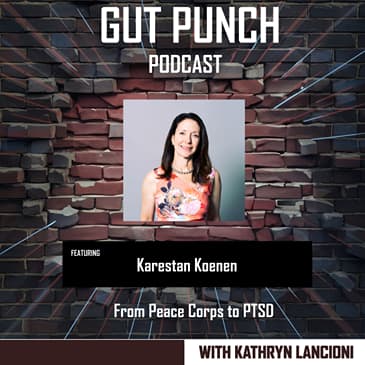

From Peace Corps to PTSD (S4 -E3 )
Host: Kathryn Lancioni
Guest: Karestan Koenen
Episode Overview:
In this episode, Kathryn Lancioni welcomes Karestan Koenen, a psychologist and trauma researcher, for an in-depth conversation about the aftermath of life-altering trauma. They share not only scientific perspectives but also deeply personal experiences—Kathryn’s journey surviving a near-death health crisis, and Karestan’s own story of trauma, recovery, and transformation. Together, they discuss the definitions of trauma, how the brain and body are affected, why storytelling matters, and what it really means to be “resilient.”
5 Key Lessons from This Episode:
𝟱 𝗞𝗲𝘆 𝗟𝗲𝘀𝘀𝗼𝗻𝘀𝗳𝗿𝗼𝗺𝗧𝗵𝗶𝘀𝗘𝗽𝗶𝘀𝗼𝗱𝗲
1. Trauma Redefines Your World
Trauma often shatters basic assumptions about safety and predictability. Kathryn describes waking up from a coma and feeling completely unmoored—her world turned upside down overnight. According to Karestan, this sense of having your core beliefs rocked is at the heart of trauma, and recognizing this is the first step toward understanding the long road to recovery.
2. Recovery Begins with Meaning and Connection
Healing from trauma isn’t just about physical recovery. Karestan has found, both in her personal journey and research, that making meaning out of a traumatic experience and building connections with others are powerful tools for getting better. Kathryn shares how connecting with others through her podcast helped her process her ordeal and inspired further growth, highlighting that humans are “hardwired to connect.”
3. The Effects Go Beyond the Physical
Trauma lasts long after physical wounds have healed. Kathryn’s story shows how enduring scars—both visible and invisible—linger. Karestan emphasizes that trauma can be “written on the body” and impact everything from genetics (through epigenetics) to self-image. Learning to acknowledge and adapt to these changes, instead of trying to erase them, is a crucial part of healing.
4. Resilience Is Not Exceptional, But Human
Despite the narrative of trauma survivors as “exceptionally strong,” Karestan insists that resilience is a very ordinary, human trait. Many people recover from unimaginable events—not because they are superheroes, but because they find ways to regain control, rediscover their purpose, and lean on their communities. Kathryn and Karestan remind us that resilience looks different for everyone, but it’s always about moving forward, even if imperfectly.
5. Telling Your Story Has Real Power
Sharing a traumatic story is both terrifying and liberating. Kathryn discusses the vulnerability of sharing what she went through—choosing what, how, and when to open up. Karestan validates that telling your story on your own terms is deeply healing and can create a ripple effect, inspiring others to face their own gut punch moments and realize they’re not alone.
If you’ve been hit hard by life and feel forever changed, this episode is a reminder that you can rebuild. As Kathryn and Karestan so powerfully demonstrate, even after the most unimaginable gut punches, it is possible to find a new sense of purpose, form new connections, and reshape your path. There’s always a way forward—and your story may just become someone else’s hope.
Connect with Karestan Koenen:
Listeners will benefit from connecting with Karestan Koenen for her deep expertise in trauma, resilience, and post-traumatic stress disorder, as well as her compassionate approach to making meaning out of life-altering experiences. Her research and personal story offer valuable insights into recovery, the science of trauma, and building resilience after hardship.
- LinkedIn: https://www.linkedin.com/in/karestan-koenen-596a481/
- Website: https://hsph.harvard.edu/profile/karestan-koenen/
Produced by the Digital Transformation Broadcast Network.