
In this era of relentless technological advancements and market volatility, the capacity to evolve company operations is becoming essential for staying ahead in the competitive landscape and, in many instances, for survival.
🏛 Join the FREE Enterprise Transformation & AI Hub → cxotransform.com/p/hub
🔍 Follow Rob Llewellyn on LinkedIn → in/robllewellyn
🎥 Watch Rob’s enterprise transformation videos → youtube.com/@cxofm
🎙 Part of the Digital Transformation Broadcast Network (DTBN)
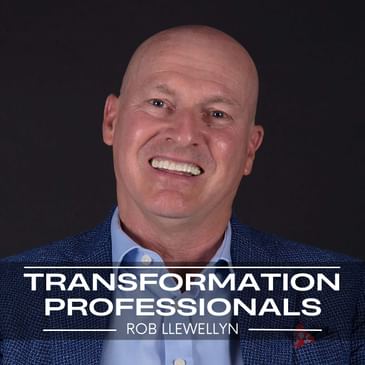
[00:00:00] Welcome to another episode of Transformation Professionals, sponsored by CXO Transform. Crafted to enhance the strategic acumen of ambitious managers' leaders and consultants. We hope you enjoy this episode about BTM², the Management Toolkit. Here's Rob Llewellyn. In this era of relentless technological advancements and market volatility, the capacity
[00:00:30] to evolve company operations is becoming essential for staying ahead in the competitive landscape, and in many instances for survival. While the concept of agility is high on the agendas of numerous CEOs, the practical challenges of transforming a large, rigid, process-oriented company into an agile, responsive entity
[00:00:52] can be daunting. The reality is that the traditional command and control hierarchical structures of modern corporations can be traced back to the early industrial revolution. Organizational processes entrenched in transaction-based technologies perpetuate cultural norms.
[00:01:11] In an era where a transformation program was a rare experience for many managers, this approach might have sufficed. However, in a time when one transformational challenge rapidly follows another in a whirlwind of initiatives, such traditional organizational systems and cultures are becoming obsolete.
[00:01:30] Dealing with ongoing transformation demands new, more dispersed management models and a comprehensive shift in organizational instrumentation from retrospective periodic and hierarchical reporting to immediate insights and instantaneous peer communication. The model should be more akin to a symphony orchestra than a solo performance.
[00:01:50] In an orchestra, various instruments come together, each playing its unique role, yet all contributing to a harmonious and cohesive performance. And the Management Tool which enables you to do that is BTM squared, the business transformation management methodology, for managers, leaders and consultants.
[00:02:11] BTM squared emerges as a pioneering and integrative methodology for holistic business transformation, renowned for its meticulous academic research and practical commercial application. This methodology presents a well-defined framework with distinct phases, deliverables and methodologies, adaptable across various business transformation scenarios.
[00:02:35] Its universal design transcends the boundaries of specific business functions, technologies or industries. At its core, BTM squared draws its strength from solid academic foundations and real world business insights. In Hansen credibility among professionals and industry peers.
[00:02:56] As a neutral objective framework, it plays a crucial role in pinpointing and resolving diverse business challenges. It's an indispensable tool for regular and prompt assessments within the realm of business transformation. Addressing both rational and emotional elements, BTM squared distinguishes leaders who embrace a proven approach to drive transformation.
[00:03:19] Its implementation can forge a competitive edge as it remains agnostic to specific technologies or companies. This makes BTM squared versatile and universally adoptable by any organization independent of external partnerships. In essence, BTM squared offers vital guidance, support, and the structural framework necessary for effective transformation management,
[00:03:44] making it a go-to choice for organizations seeking to navigate the complexities of change in today's fast-paced business environment. There are four phases in the BTM squared business transformation management methodology life cycle, which are envision, engage, transform and optimize.
[00:04:04] It also consists of nine transformation management disciplines, which are metermannagement, strategy management and value management. Risk management, project and program management. Business process management and IT transformation management. Then, organizational change management and competence and training management.
[00:04:25] Delving into the nine management disciplines of the business transformation management methodology, we find distinct yet interconnected areas that support and enhance the transformation journey. Metermannagement forms the backbone, offering a comprehensive framework that interlinks all disciplines and shapes the management structure essential for effective transformation.
[00:04:49] It addresses several facets, including leadership, culture, values, communication and specific guidelines for each discipline. Energy management comes next primarily focused on the envision phase of the transformation life cycle.
[00:05:04] It involves selecting the right team, gathering and analyzing data, understanding transformation needs and readiness, creating a visionary business model and defining an integrated transformation plan. Value management is about defining the business benefits and identifying the changes required to achieve these benefits.
[00:05:25] It emphasizes creating a robust business case and a plan for realizing benefits with a strong focus on stakeholder engagement for knowledge building and commitment. Risk management plays a key role during the entire change process.
[00:05:40] It deals with handling any dangers related to the process of change, and the risks that come with the new changes possibly becoming outdated or not as effective as hoped. Business process management defines the scope of process changes required for performance improvement.
[00:05:57] It goes beyond process modeling, focusing on the interplay between IT, business and people related tasks. Identifying end to end processes and assigning responsible owners are key aspects here. IT transformation management assesses the impact of current IT processes and systems on business transformation.
[00:06:20] It involves evaluating solution readiness, assessing gaps between current and future IT states, deploying IT operations and implementing IT governance. Then there's organizational change management which tackles the human aspect of transformation.
[00:06:35] It encompasses managing the change in work practices of individuals and includes establishing effective governance, assessing change readiness and implementing stakeholder communication and performance management strategies. Competence and training management addresses the qualification needs for business transformation.
[00:06:54] It identifies training requirements, develops measures to bridge competency gaps, supports learning transfer, and evaluates the effectiveness of training initiatives. Finally, project and program management supports the implementation of the transformation strategy to achieve the outline business benefits.
[00:07:14] Program management focuses on the high level specification of transformation, including stakeholder management and benefit realization. While project management zeros in on detailed specification and control of activities to deliver the project output, each discipline plays a vital role contributing uniquely to the holistic transformation of a business.
[00:07:36] As we conclude today's podcast, let's reflect on the importance of evolving and adapting in the ever-changing business landscape. We've delved into the intricacies of business transformation, exploring the comprehensive framework provided by the nine management disciplines of BTM squared.
[00:07:54] Remember, successful transformation is not just about adopting new technologies or strategies. It's about a holistic approach that encompasses strategy processes, people and technology. By understanding and implementing these key disciplines, you're not just changing your business, you're preparing it for a future of sustained success and innovation.
[00:08:16] Thank you for joining me on this journey of discovery and transformation. Until next time, keep pushing the boundaries and driving meaningful change in your organization. This podcast is sponsored by CXO Transform. Professional development for managers, leaders and consultants who strive for excellence.
[00:08:36] If you want to perform at your very best in the most sought after transformation roles, visit CXOTransform.com.